
A current major issue in my town of Montclair, New Jersey, is a massive school-budget deficit. As I continued to write about that each week in my “Montclairvoyant” topical-humor column, thoughts came to mind about fictional people facing debt and related financial troubles — a situation that provides much dramatic fodder while often evoking sympathy for those money-challenged characters.
Not knowing in advance that it would fit this topic, I happened last week to read a Richard Paul Evans novel called The Walk in which Seattle ad executive Alan Christoffersen loses his home, his car, and most of his other possessions because of huge medical bills for his paralyzed-in-an-accident wife McKale, being cheated by his work partner, and other reasons.
When reading about any character in fiscal peril, we wonder how they will react and what the ultimate outcome for them will be. In Evans’ 2009 novel, a despairing Alan ends up starting a long walk to Key West, Florida…nearly 3,500 miles away!
The pricey and problematic health-care system in the U.S. — the world’s only “developed” country without some form of government-run national insurance for all — also takes a huge financial toll on Shep Knacker when his wife Glynis becomes ill in (Ms.) Lionel Shriver’s compelling part-satirical novel So Much for That (2010).
Moving from the 21st-century United States to 19th-century France, we have Honore de Balzac’s 1837 novel Cesar Birotteau — whose Parisian title character is a successful shop owner and deputy mayor who becomes bankrupt after getting manipulated into property speculation. He spends the rest of the book on a mission to restore his honor by trying to pay off his debt.
A later French novel, Emile Zola’s The Drinking Den (1877), features another initially successful businessperson: Gervaise Macquart, who manages to open her own laundry through very hard work. She is happily married until her husband’s life spirals downward after he falls from a roof. Coupeau’s descent drags the family into poverty and alcoholism.
In-between those books came Gustave Flaubert’s 1857 novel Madame Bovary, in which the adulterous title character gets into serious debt spending on luxuries. When the debt is called in and can’t be paid, Emma Bovary decides to…
Over in 19th-century England, there was Charles Dickens’ also-published-in-1857 novel Little Dorrit — whose title character (first name Amy) was born and grows up in a debtors’ prison where her father William has been incarcerated. Partly inspired by Dickens’ childhood.
Back in France, Guy de Maupassant’s classic 1884 short story “The Necklace” is about a woman who loses a glittery borrowed necklace and goes into years of life-ruining debt after paying for a replacement. The tale has one of the most famous surprise endings in literature.
Authors themselves have of course also experienced money troubles. For instance, Sir Walter Scott in later life tried to frantically write his way out of debt after a banking crisis caused the collapse of a printing business in which the Scottish author had a large financial stake.
Also later in life, Mark Twain filed for bankruptcy after years of investing heavily in a mechanical typesetter that didn’t catch on. He survived financially and paid off debt by giving up his ornate Hartford, Connecticut, mansion and later embarking on a worldwide speaking tour.
Your thoughts about, and examples of, this theme?
Misty the cat says: “I didn’t know my apartment complex was zoned for a car dealership.”
My comedic 2024 book — the part-factual/part-fictional/not-a-children’s-work Misty the Cat…Unleashed — is described and can be purchased on Amazon in paperback or on Kindle. It’s feline-narrated! (And Amazon reviews are welcome. 🙂 )
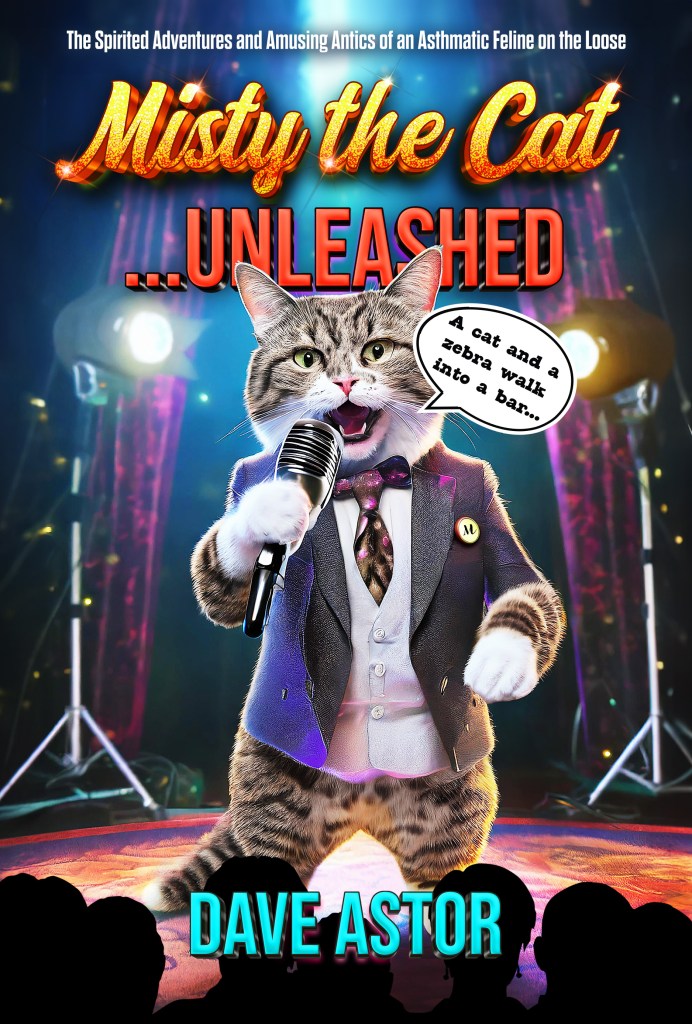
This 90-second promo video for the book features a talking cat: 🙂
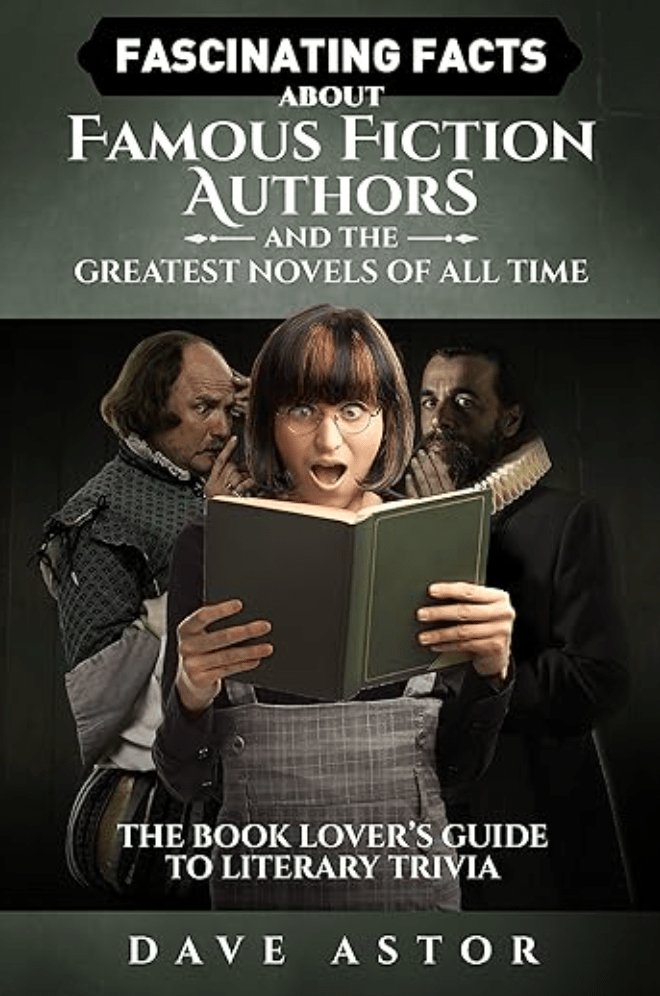
I’m also the author of a 2017 literary-trivia book…
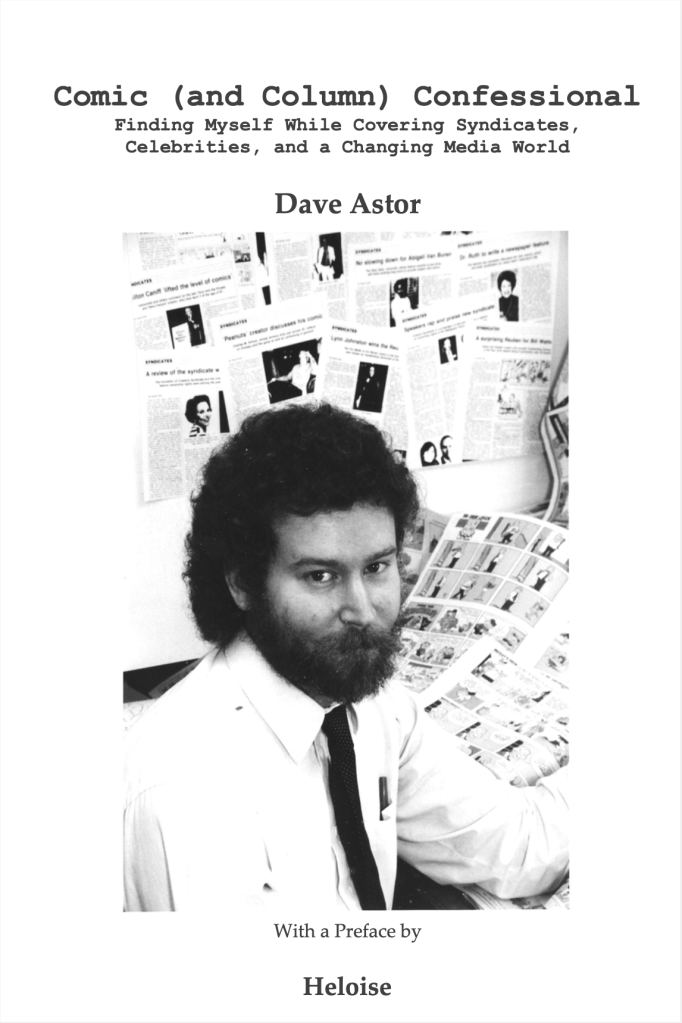
…as well as a 2012 memoir that focuses on cartooning and more, and includes many encounters with celebrities.
In addition to this weekly blog, I write the 2003-started/award-winning “Montclairvoyant” topical-humor column every Thursday for Montclair Local. The latest piece — about my local Township Council’s welcome vote to support a proposed state bill to protect immigrants from the Trump regime — is here.
 Dave Astor on Literature
That’s a powerful and unfortunately very timely theme to explore, especially with the real-life issues you’re tracking in your “Montclairvoyant” column. Debt truly is a universally relatable and dramatically potent subject for fiction. http://www.melodyjacob.com
LikeLiked by 2 people
Thank you for the comment, Melody! Yes, unfortunate how timely discussing debt and other money troubles is these days. 😦
LikeLike
Weirdly – it seems that I was “unsubscribed” to your blog. Not sure what’s happening there. Anyway – the example that springs to mind for me – and it’s proper literature for a change – is Silas Marner when his savings are stolen. This though turns out to be a good thing though since it forces him to value Eppie the young girl he adopts.
LikeLiked by 1 person
Thank you, Joe! Sorry about that unsubscribed thing — I certainly didn’t do it. 🙂 Blog platforms can be squirrelly sometimes. Anyway, great mention of “Silas Marner,” which I think is a great novel by one of the best novelists ever. Money, or lack of, definitely had a huge impact on the title character’s life.
LikeLiked by 1 person
I can’t think of any additional example, but I enjoyed reading yours. I follow a local photographer on Instagram, Gale Filter,who goes around asking people why are they homeless and the stories are not dissimilar to the stories you mentioned. Also, in “ The People of the Abyss”, Jack London asks homeless people about how they ended up on the streets and a story of injury or disease often surfaces.
LikeLiked by 1 person
Thank you, Alessandra! The photographer you follow is doing important work! And while I haven’t read any nonfiction writing by Jack London, several of the novels of his I’ve read definitely have an understanding about what impoverished people face.
LikeLike
Dave,
I had to think on this one. The second thing I came up with was The Good Earth by Pearl S. Buck.
It’s an epic story. Although it focuses on one man’s (Wang Lung and his family) rise from poverty to wealth, other wealthy families fall from luxury to the street.
And his rise to wealth is not a straight line. From a healthy farm life to abject poverty due to nature (the locusts freaked me out the most, as they actually ate through the mud dwellings) – to begging in the streets, then to massive wealth… in the end his sons squander it all.
The first thing I thought of was a short by Stephen Leacock written in 1910 – My Financial Career.
The reality behind the humour is dated, but it’s still funny to me. The Canadian Film Board animated it, years ago. It is word for word.
https://www.nfb.ca/film/my_financial_career/
LikeLiked by 2 people
Thank you, Resa! “The Good Earth” is a great example of novel with sad and memorable poverty elements. There are indeed various variations of economic distress in all kinds of fictional and real-life scenarios — as you note, from poor to rich, rich to poor, etc. And “the next generation” of the rich are indeed not always the brightest bulbs in the chandelier.
Re your link, I’m unfortunately getting a “not available to view in your area” message. 😦
LikeLiked by 1 person
Try this link!
LikeLiked by 1 person
I’m getting a message saying: “The uploader has not made this video available in your country.” Might be a Canada/U.S. thing. 🙂 Thanks for trying!
LikeLiked by 1 person
Okay, Welcome!
LikeLiked by 1 person
A number of examples come to mind. F. Scott Fitzgerald. George Orwell. H. P. Lovecraft. All died in poverty.
LikeLiked by 2 people
Thank you, Mike! A real shame when talented writers such as the ones you mentioned die in poverty — because their work doesn’t sell as much as it deserves to and/or poor personal choices, etc.
Then there’s the case of Gabriel Garcia Marquez, who gave up paying work and went into poverty for 18 months to concentrate on writing his debut novel “One Hundred Years of Solitude.” That “bet” paid off, of course.
LikeLike
Just mentioning about some indie writers who have self-published books – like Audrey Driscoll who did well, just down there (pointing). I’m pretty sure they (like me) have not spent much. Then flinging them wherever they land on Amazon (mainly eBooks), and that’s fine, I would say. I have only a small drawer under my table where my own books lie undisturbed.
LikeLiked by 2 people
Thank you, Chris! Great when self-published writers, such as yourself and Audrey, don’t overspend on the process. When I do my next book, I’m going to be more conscious of that.
LikeLiked by 1 person
Interesting post and delightful comments, Dave. I don’t have a book that comes to mind, but I can say I am grateful that Mark Twain’s house is established now as a Hartford landmark which we can visit. It even has a Paige Compositor on display. My daughter gave me an evening of writing in the library of that house, as a birthday gift when I was beginning my writing journey.
Another author who didn’t write about debt, but experienced it, is Edgar Allen Poe. I believe the chief cause of his debt was gambling.
LikeLiked by 2 people
Thank you, Dan! Mark Twain’s home IS an incredible destination. (I’ve visited it and its adjacent museum twice, and have seen the ill-fated Paige Compositor.) And a bonus is Twain’s home being next to Harriet Beecher Stowe’s home. A gift evening of writing in Twain’s home — that must have been an amazing experience for you!
And, yes, Poe faced a lot of impoverishment, much of it of his own doing (as you noted). Alcoholism and bad health didn’t help, either.
LikeLiked by 1 person
Hi Dave! I’m tempted to say I really like this post! But I don’t want you to conclude that I didn’t really like your previous posts!!! That would be very incorrect!!
However, I really enjoyed this week’s post!! I particularly perked up reading the term ‘fiscal peril’ which is new to me, but brilliantly describes the subject matter!
All the books you listed sound fantastic, especially, ‘Madam Bovary’
as I’m keen to find out what she did to get herself out of the red!!! ☺
Great, topical post Dave! A lot of good books to delve into! Thank you.
All the best for a great week! Sharon
LikeLiked by 1 person
Thank you, Sharon! Glad you’ve been enjoying various posts, and I totally understand when a reader likes certain ones better than other ones. 🙂 I guess the post IS rather topical given the glaring and growing gap between the rich and the poor these days. 😦 (A topic we’ve recently discussed.)
“Madame Bovary” is definitely a classic — among quite a few terrific novels by various 19th-century French authors (Flaubert, Balzac, Zola, Hugo, Dumas, George Sand, etc.).
Hope you have a great week, too!
LikeLiked by 1 person
You know, Dave! I can’t tell you how much l enjoy reading about books!! So, with your weekly posts, the pleasure is all mine! Thank you, Dave!
Yes, ‘Madame Bovary’ sounds like a good read and will be added to that ever increasing pile! 😊. I have not had the pleasure of reading any of the French authors you have mentioned, but will be correcting that, soon!! 😊
As we have discussed previously, the state of things economically in both our counties, is less than desirable! Terrible! So when fiction mimics real-life issues, I am personally, very interested!!
Thank you Dave, for your kind wishes for the week! 🤗
LikeLiked by 3 people
I appreciate the kind words, Sharon, and I hear you — it’s enjoyable reading books, and reading about books. 🙂 And, yes, hard economic times in novels unfortunately echo real life, whether in this century or previous ones. 😦
LikeLiked by 1 person
You are welcome, Dave! Thanks again! 😊
LikeLiked by 1 person
🙂
LikeLike
Lily Bart from The House Of Mirth gets herself in a fair financial pickle as does Mildred Pierce who gets out of one just to get in another. . I really like the writing of the financial mess in both these books, the way that once things were out of control, they just continued to get worse. .
LikeLiked by 2 people
Thank you, Shehanne! Lily Bart is a great example, and her money woes were a sharp contrast to the wealthy society she was adjacent to. Things indeed went inexorably downhill for her. 😦 (I have yet to read “Mildred Pierce” but want to.)
LikeLiked by 1 person
Well Mildred starts the book down so there’s a lot of facing of realities to do which she does magnificently. but then alas comes the day where things no longer add up, largely because she’s got too magnificent for her own boots. I forgot I’ve actually got a heroine who accrues debt the way pockets do discarded sweetie wrappers, a trait she inherited from her father, a teacher and all round genius who yet couldn’t add up the fact that 2 and 2 made 4.
LikeLiked by 1 person
I appreciate the excellent summary of “Mildred Pierce,” Shehanne, and the vivid/part-comedic description of your own debt-ridden character. 🙂
LikeLiked by 1 person
I likes a good debtor. Characterwise, they are often such architects of their own doom.
LikeLiked by 1 person
I see your point there, Shehanne, and like the way you expressed it. 🙂 (Though of course some characters could get into debt for reasons beyond their control — such as medical debt in the U.S. given that there’s no national health insurance for everyone.)
LikeLiked by 1 person
But of course.
LikeLiked by 1 person
🙂
LikeLiked by 1 person
Great post, as usual, Dave. I’ve read many of the great texts you name here, although I have the Shriver book on my TBR and need to get there soon. I’m looking for books to add and also as usual will get back to you. To be going on with is one of my favourite books, oft-mentioned by me, ‘New Grub Street’ by George Gissing, where impecunious author Edwin Reardon struggles with writers’ block whilst trying to support his wife and child. A lesser character, even-more-impoverished author Harold Biffen, lives in a garret and pawns his overcoat in winter, tutoring to live while he writes his precious novel. He risks death in a building fire to rescue his manuscript. Have-and-Have-Not is a major theme of the story. Going back in time, Bassanio in ‘The Merchant of Venice’ being hard-up and needing funds to woo an heiress drives the action of the story. Oh, and there’s Jean Valjean stealing a loaf to feed his family forming the background of ‘Les Miserables’., plus the fall from riches of the eponymous protagonist of Balzac’s ‘Pere Goriot’. Money makes the world go round, unfortunately, and also makes for some excellent reading. I’ll leave it there and come back if and when I think of any others. Thanks for this, and have a great week. 🙂
LikeLiked by 2 people
Thank you, Laura! The downbeat “New Grub Street” is very relevant to a discussion of money troubles. Great summary of that novel, and I’m happy you’ve discussed it more than once. Thanks, also, for the Shakespeare, Hugo, and Balzac mentions. Certainly LOTS of poverty in pre-1900 times, as well as plenty today. 😦
Have a great week, too!
LikeLiked by 1 person
Thanks, Dave. 😊
LikeLiked by 2 people
You’re welcome, Laura! 🙂
LikeLiked by 1 person
Bonfire of the Vanities by Tom Wolfe and The Attendant by Tony Powers come to mind.
LikeLiked by 3 people
Thank you, Liz, for those two mentions! I’ve somehow never read “Bonfire of the Vanities,” but did see Tom Wolfe speak once at a National Cartoonists Society gathering in the early or mid-1990s. He was dressed in his usual white suit, of course. 🙂
LikeLiked by 2 people
Of course he was. He had an image to maintain. I thought the book was very good (better than the movie), it should come with a need-a-shower-afterward warning.
You’re welcome, Dave.
LikeLiked by 2 people
Yes! A fancier outfit than many authors wear. 🙂 Glad to hear that the shower-inducing ( 😂 ) book (at least somewhat) lived up to the hype. The 1980s were an interesting time…
LikeLiked by 2 people
“Interesting,” for sure!
LikeLiked by 1 person
That decade definitely deserved the quote marks around “interesting.” 🙂
LikeLiked by 1 person
😁
LikeLiked by 1 person
🙂
LikeLiked by 1 person
The problematic healthcare system in the US has always struck me as very difficult to navigate and unfair. Richard Paul Evans novel, The Walk, sounds like a great read, Dave! I agree with Rebecca about Fascinating Facts being a most excellent book, especially as a Christmas present!💜
LikeLiked by 3 people
Thank you, Ada! “…very difficult to navigate and unfair” is sadly a REALLY accurate description of the U.S. healthcare system. What a too-profit-driven mess. 😦
“The Walk” is very good, albeit more a B+ than an A. I believe it has several sequels that continue the titular “stroll”; the first novel doesn’t leave Washington State.
I greatly appreciate the kind words about “Fascinating Facts.” 🙂 Thank you! I should probably do a social media blurb next month about the holiday-gift thing you kindly mentioned. 🙂
LikeLiked by 1 person
I can’t suggest a book, but I do have a suggestion for fellow authors: do not publish a book with borrowed money.
LikeLiked by 5 people
Thank you, Audrey! That is very good advice. It is not easy to make one’s money back on a self-published book. 😦
LikeLiked by 2 people
One thing I’ve managed is to publish my books without spending much money.
LikeLiked by 2 people
Good for you, Audrey!
I probably spent too much (on a self-publishing consultant) to help put out my 2017 and 2024 books, although the help was valuable. I made some money back on the 2017 one. The 2024 one? To be determined. 🙂
LikeLiked by 1 person
Hi Dave, I’m reading A House Full of Daughters by Juliet Nicolson, the granddaughter of Vita Sackville-West. She traces her ancestry back across seven generations of amazing women. My daughter gifted the book for my birthday. It’s Bloomsbury Group context literature to me, meaning a mandatory read, but highly recommended regardless. Anyway, lots of monetary vicissitudes and preoccupations in this book. Brace yourself.
LikeLiked by 3 people
Thank you, Dingenom! That memoir sounds fascinating! Certainly a renowned family tree there. One can just imagine all the good and bad stuff that happened over seven generations. Love the title, too.
LikeLike
One can have health insurance and still get high medical bills. What about this despicable administration wanting to gut the ACA making insurance costs out of reach of millions by raising premiums to exorbitant levels,thus not being able to have insurance.
Most of the money the government spends could be 1 out of 4 dollars is healthcare. Note all health-care costs for everyone will increase if Republicans do not meet my our party at the table for subsidies to continue. Reps have no other program other than ACA and red states will he effected at higher premiums, those folks who voted DJT to help them with grocery prices. 🙄
To get to your book/story topic, I planto read The Necklace this afternoon, thank you for the blog:)
Michele
E & P way back
LikeLiked by 2 people
Thank you, Michele! So true that people often pay high medical bills even when insured. The fact that the U.S. doesn’t have national health insurance for all is an absolute disgrace, and of course the Trump regime is making things worse, as you note — including for his own voters, as you also note.
I think you’ll find “The Necklace” pretty compelling. It’s O. Henry-like ending predates O. Henry. 🙂
LikeLike
Sad about your massive school budget deficit, Dave.
“Little Dorrit” and “The Necklace” fit your theme perfectly, and are so memorable for me! Great post. 🙂
LikeLiked by 2 people
Thank you, Jennifer! My town is definitely up in arms about that $19.6-million deficit — which was caused by incompetence, bad oversight, possible fraud, and an annual state cap on school spending lower than the rising costs of salaries, medical insurance, etc.
Great that you read “Little Dorrit”! Not among Dickens’ best-known novels but indeed memorable!
LikeLiked by 1 person
That is definitely a reason to be up in arms!
I probably wouldn’t have known about Little Dorrit only for my husband. He is a huge bookworm, especially for the classics.
LikeLiked by 1 person
Nice to have a spouse who’s also a big reader — and can recommend books. 🙂 I’m lucky to also be in that situation with my wife. 🙂
LikeLiked by 1 person
Wonderful! It’s a big plus. 🙂
LikeLiked by 1 person
It is! 🙂
LikeLiked by 1 person
I recall reading Guy de Maupassant’s classic 1884 short story “The Necklace” for its surprise ending. Financial woes can certainly add interesting plot twists to a novel.
LikeLiked by 2 people
Thank you, Rosaliene! That ending packed quite a punch, didn’t it? I think I first read “The Necklace” in a high school class.
And financial woes can definitely make for powerful novels. Among the ones in that “category” I didn’t mention were “The Grapes of Wrath,” Upton Sinclair’s “The Jungle,” and Edith Wharton’s “The House of Mirth.”
LikeLiked by 1 person
I think I also read it in high school. Great storytelling stays with us. Since I read more non-fiction than fiction, The Big Short: Inside the Doomsday Machine by Michael Lewis (2010), about the 2008 USA/global financial crisis, came to mind.
LikeLiked by 1 person
Yes, Rosaliene! Reading something great as a teen indeed sticks in one’s mind for decades. I’ve never reread “The Necklace” since then, but can still remember the basic story.
I’ve never read “The Big Short,” but know it’s a very admired book.
That economic crash “helped” cause me to lose my full-time journalism job (2008) and eventually my house (2014), so I “lived” that crash like millions of others. Of course, most of the bankers and other elites that caused that crash suffered no consequences and even ended up getting richer. 😦
LikeLiked by 1 person
Dave, I’m saddened to learn that you were also hit by the subprime financial crisis 😦 To quote Mahadai Das from her poem “My Final Gift to Life” (Guyana, 1982):
“Who can inhale the stench of wickedness / or dwell whole in this leprous air?”
LikeLiked by 1 person
Thank you, Rosaliene! It took a while, but things turned out for the best. Freelancing gives me more flexibility — and time at home — than a full-time job did, and I’m happy to live in an apartment complex where I no longer have to do things like yard work and house repairs. 🙂
Mahadai Das has a very impressive way with words! Thanks for excerpting her poetry here.
LikeLiked by 1 person
Great post Dave, thank you.
It seems none of us knew about Sir Walter Scott’s financial problems.
You know there is a monument in Edinburgh City Centre built in his honour.
I wonder who paid for that 😉
LikeLiked by 3 people
Thank you, Maggie! It seems Sir Walter Scott’s late-in-life financial problems are indeed not that well known these days. Good that he’s better known for writing “Ivanhoe,” “Rob Roy,” etc. 🙂
I’ve heard about and seen photos of the Scott monument, and I imagine several readers of this blog have visited it in person. As for how it was financed, I just looked online and found this: “The Sir Walter Scott Monument in Edinburgh was paid for by a public subscription campaign that raised nearly £17,000 from the writer’s readers and admirers.”
LikeLiked by 2 people
Hi Dave, my pleasure always 🤗
Yes, it probably is better 😉
I used to live in Edinburgh.
The monument is very high, I have never climbed it, nor would I like to!
£17,000 wow!
Thank you for clarifying.
Have a good new week my friend.
LikeLiked by 1 person
Great that you used to live in Edinburgh, a city I’d love to visit. I didn’t realize the Scott monument was climbable!
Have a good week, too, Maggie!
LikeLiked by 1 person
Yes, there are are stairs in the middle of it, but no, not for me.
Thanks Dave 🤗
LikeLiked by 1 person
I hear you, Maggie. 🙂 I would do things like that when I was younger. 🙂
LikeLiked by 1 person
Those were the days Dave 😉😁
LikeLiked by 1 person
Yes! 😂 🙂 😦
LikeLiked by 1 person
Dave, another powerful topic! Stories of debt have been with us for centuries because money, too much or the lack of it, has always tested the human spirit. Shakespeare himself filled his plays with people caught in financial traps: Antonio and Shylock bound by a dangerous contract, Falstaff dodging his creditors with wit and charm, and London’s debtor prisons appearing in the background like a warning bell. Writers return to these stories because debt is never just about numbers. It’s about fear, hope, survival, and the fragile choices people make when they’re backed into a corner. These books become cautionary tales, reminding us how easily gambling, consumerism, or simple bad luck can pull someone under.
I agree! We read these stories/books not only for the drama, but because they help us understand the world we live in now. Adam Smith said that no society can be truly happy if most of its people are in poverty. Literature keeps returning to this truth in every era, including our own. Thank you for a great topic that prompted a wonderful follow-up discussion.
“What can be added to the happiness of a man who is in health, out of debt, and has a clear conscience?” Adam Smith
LikeLiked by 3 people
Thank you, Rebecca! Yes, money — and, in some cases, debt — is all over literature as it’s all over real life. Great examples from Shakespeare, and I thought these very well stated lines of yours were totally on point: “Writers return to these stories because debt is never just about numbers. It’s about fear, hope, survival, and the fragile choices people make when they’re backed into a corner. These books become cautionary tales, reminding us how easily gambling, consumerism, or simple bad luck can pull someone under.”
Last but not least, I agree with the words of Adam Smith that you cited.
LikeLiked by 2 people
This was a great topic Dave, especially in this complex time.
LikeLiked by 1 person
Thank you again, Rebecca! True about this current time — many people are facing major financial challenges. 😦
LikeLiked by 1 person
Hi Dave, there are a lot of books that feature financial problems that lead to unfortunate circumstances for the characters. War and Peace features the Rostov family who gradually lose their fortune due to poor financial management and gambling debts. Tess of the d’Urbervilles gets into trouble due to the accidental death of the family horse that leaves them in financial distress. In The Scarlet Letter, Hester’s disgrace leads to her being cast out of the village and living in poverty on the outskirts of society.
LikeLiked by 6 people
Thank you, Robbie! Three great examples from three second-half-of-the-19th-century classics by three authors from three different countries!
LikeLiked by 3 people
I thought if a few more, Dave: Oliver Twist by Charles Dickens, also Great Expectations and Nicholas Nicolby. The family in The Railway Children after the father is arrested for a crime he didn’t commit and the family in Enid Blyton’s The Enchanted Wood series.
LikeLiked by 1 person
Thanks for the additional excellent examples, Robbie! Plenty of poverty in a number of Dickens novels; he never forgot his own childhood poverty even after becoming very rich.
LikeLiked by 1 person
I don’t think you would forget a childhood like his 😩
LikeLiked by 1 person
Very true, Robbie!
LikeLiked by 1 person
I didn’t know that Sir Walter Scott had financial problems either.
I found your post really interesting
LikeLiked by 5 people
Thank you, Luisa! Glad you found the post interesting! Some authors seem to be not great with financial stuff and/or have bad financial luck.
LikeLiked by 2 people
Thanks a lot for your kind reply, dear Dave🙏
LikeLiked by 2 people
You’re very welcome, Luisa! 🙂
LikeLiked by 2 people
Pingback: dean ramser
Sir Walter Scott’s staggering debt of honour, instead of bankruptcy route that can damage innocent creditors… In longhand too – Imagine the agonies of writer’s cramp.
Debts, of any kind ? Trollope, every time, from Barchester and the Plllisers to The Way We Live Now.
Including his fairy tale, Dr Thorne, and the terrific American heiress, , Miss Dunstable. of ‘ Ointment Hall;’ ,
LikeLiked by 4 people
Thank you, Esther! Yes, Scott’s writing hand got quite a workout as he endlessly wrote. He could have used a computer… And I appreciate the other debt-related examples! Someday I need to read more Trollope. (I’ve only gotten to two his novels, long ago…)
LikeLiked by 2 people
You’ve already mentioned LITTLE DORRIT, but when I think of debt, I also think of Wilkins Micawber from DAVID COPPERFIELD. He, too, spent time in debtors’ prison. He’s famous for always thinking good luck was just around the corner (“Something will turn up”), but instead, he keeps getting himself and his friends into trouble. At least he redeems himself at the end of the book by exposing Uriah Heep as a villain.
LikeLiked by 5 people
Thank you, Kim! Excellent mention of Mr. Micawber — one of the greatest Dickens characters among many great Dickens characters. I enjoyed your description of him! And, yes, nothing very redeeming about Uriah Heep, but one has to admire that name of his. 🙂
LikeLiked by 4 people
Yes, with that name you can only be a baddie. And I remember that he keeps talking about how “humble” he is in a creepy way.
LikeLiked by 1 person
Yes! So unctuous…
LikeLike
I liked those stories about famous writers frantically trying to write themselves out of debt. It’s however my personal believe that most contemporary writers are writing themselves into debt. After having run a PR campaign of three weeks for my latest novel, and spend several hundreds, I realized that I can’t compete with the PR machines of the traditional publishers and book distributers. 106 copes went over the counter and when I stopped to feed this money eating PR campaign, the sales also ground to a standstill. I don’t care about sales anymore: I’m an artist, not a sales person. I don’t do this to become rich or famous, but to grow as a person.
LikeLiked by 4 people
Thank you, Shaharee! I hear you. It can cost quite a bit of money to market a book (and also quite a bit of money to self-publish it). There’s definitely the creative urge/satisfaction of writing a book, whether it finds a large audience or not, but of course many writers hold out hope that they can get more sales with a certain amount of just-right promotion.
LikeLiked by 3 people
I’m afraid that book selling works a little bit as the US elections: those with the biggest budgets get the votes. The just-right promotion is usually the biggest fundraiser.
LikeLiked by 2 people
I agree, Shaharee. In most cases, the most money wins out. 😦
LikeLiked by 2 people
So very well said – you ARE an artist. I am thankful for writers who work tirelessly to create stories. I wish I had more time to read!!!
LikeLiked by 2 people
Time is our most precious commodity. Money comes and goes, but wasted time can never be recuperated.
LikeLiked by 2 people
Amen!!!
LikeLiked by 1 person
So true, Shaharee!
LikeLiked by 1 person
I didn’t know that about Sir Walter Scott. Interesting!
LikeLiked by 4 people
Thank you, Marie! I hadn’t known that, either, until reading a biography of Scott a few years ago. He might have been able to get out of debt by selling his huge Abbotsford estate, but wanted to keep it.
LikeLiked by 3 people
I love reading biographies!!
LikeLiked by 2 people
Me, too, Rebecca! I haven’t read many lately — because of concentrating on novels to feed this blog 🙂 — but I used to read them all the time. Actually, good biographies can be as page-turning as novels. 🙂
LikeLiked by 1 person
My go-to book for great biographical stories is “Fascinating Facts about Famous fiction Authors”, Dave!!!
LikeLiked by 3 people
Thanks so much, Rebecca, for the kind mention of my book! 🙂 Very appreciated. 🙂 I did read many biographies of authors as part of the research for “Fascinating Facts.” 🙂
LikeLiked by 3 people
What is brilliant about your book, Dave, is that is speaks to society’s evolving attention spans when it comes to reading. You give readers a tantalizing prompt to dig deeper into the larger story.
LikeLiked by 3 people
Great observation, Rebecca! I deliberately made the chapters short while hoping they might be the jumping-off point for people to read more elsewhere. 🙂
LikeLiked by 2 people
Thank you to Arlene for recommending Richard Paul Evans!
LikeLiked by 2 people