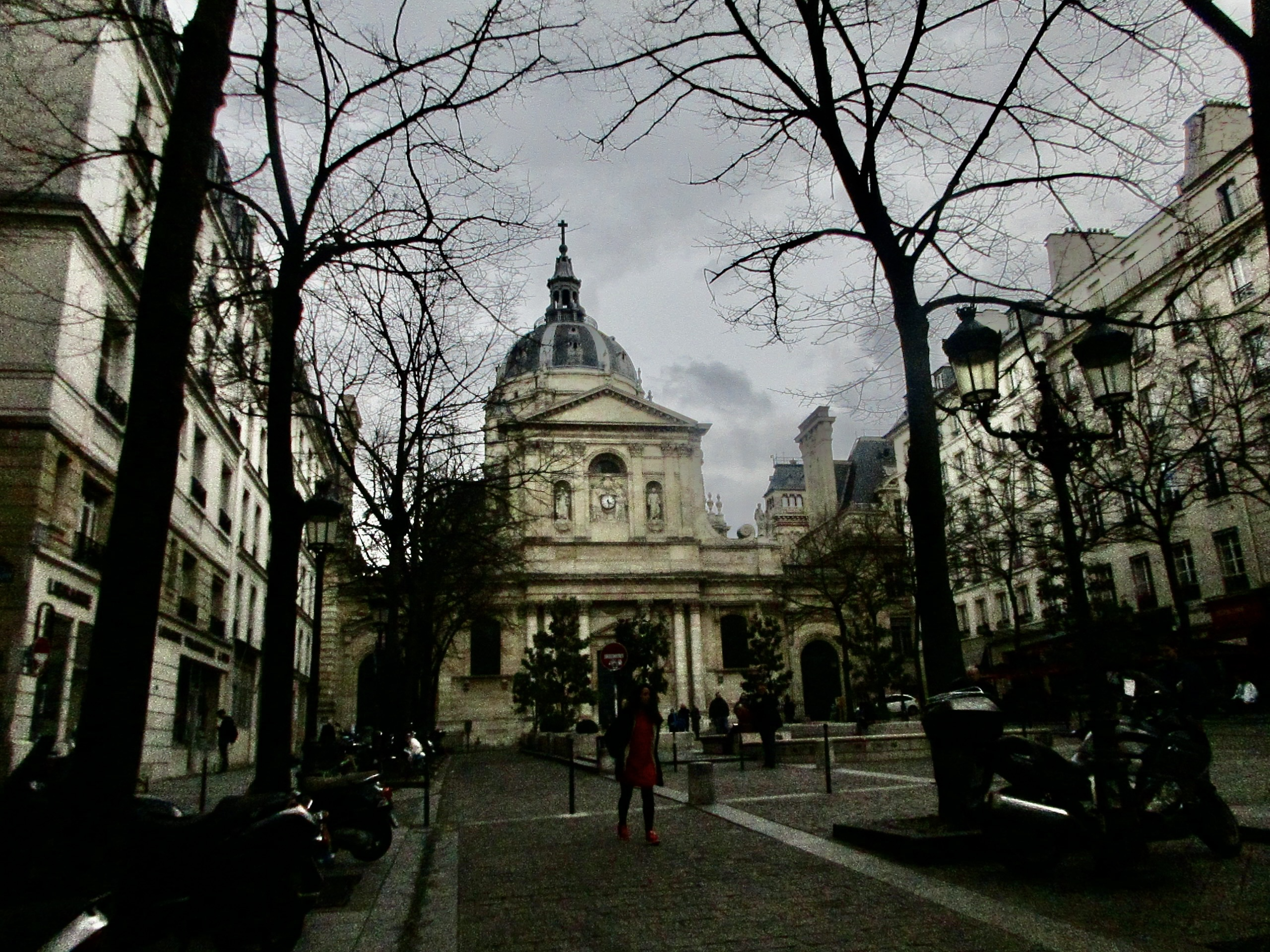
The Pantheon. (Photo by me during a 2018 trip to Paris.)
It’s been years since some things happened.
For instance, the New York Knicks last night won their first NBA championship since 1973 — a whopping 53 years ago. (A talented/unselfish basketball team unfortunately owned by nasty/despised billionaire James Dolan, who’s best buds with U.S. criminal-in-chief Donald Trump.)
Also, last Sunday the Canadian band Rush launched a sold-out worldwide concert tour — their first since 2015. It’s the Rock & Roll Hall of Fame group’s first tour with virtuoso drummer Anika Nilles of Germany replacing revered drummer/lyricist/multi-book-author Neil Peart, who died in 2020. Nilles joined with Rush singer/bassist/composer Geddy Lee, guitarist/composer Alex Lifeson, and touring keyboardist Loren Gold. (See two videos at the end of this post.)
Both of the above developments remind me that there are also a number of book-related things that happened way in the past, and I’ll discuss some of them today.
The first libraries opened approximately 5,000 years ago in Mesopotamia (now Iraq) as repositories of clay tablets.
Around the 1st century AD, the earliest physical bookstore that historians are aware of appeared in Rome.
What many scholars consider the first novel was written in Japan circa 1010 AD — more than a millennium ago. That was The Tale of Genji, and a woman (Murasaki Shikibu) was the author. Not the most riveting read overall, but it has a number of interesting moments.
Construction of London’s Westminster Abbey as we know it began around 1245. Renowned writers buried there include Chaucer, Charles Dickens, Thomas Hardy (partly), and many more. Those memorialized in that building include Jane Austen, the three Bronte sisters, Frances Burney, Lewis Carroll, George Eliot, Henry James, Shakespeare, and numerous others.
It was in 1440 or thereabouts that the Gutenberg printing press was invented, mechanizing book production. That of course led to lower costs for readers, more literacy, etc.
Paris! The Pantheon in that city was completed in 1790, and a number of famous French authors would be among the notables entombed there. Alexandre Dumas, Victor Hugo, Voltaire, Emile Zola…
The Nobel Prize in literature dates back to 1901. Among the high-profile novelists to win that honor are Pearl S. Buck, Albert Camus, William Faulkner, Gabriel Garcia Marquez, Nadine Gordimer, Kazuo Ishiguro, Doris Lessing, Ernest Hemingway, Hermann Hesse, Sinclair Lewis, Thomas Mann, Toni Morrison, and John Steinbeck.
Seventeen years later, in 1918, saw the arrival of the Pulitzer Prize for novels — renamed the Pulitzer Prize for fiction in 1948. Among the early winners more than a century ago were Willa Cather (for One of Ours), Booth Tarkington (The Magnificent Ambersons), and Edith Wharton (The Age of Innocence).
The first modern paperback book was published in 1935. (There were of course pamphlets and such before that.) That paperback was Ariel: The Life of Shelley by André Maurois.
Thoughts on this topic — whether about books, Rush, or the Knicks? Other book-related milestones you’d like to mention?
Literature-inspired song alert! Rush playing “Tom Sawyer” last Sunday: (Watch for the iconic drum fill at around the 3:20 mark.)
Rush this past Thursday performing “The Camera Eye,” with Neil Peart-penned lyrics inspired by the stream-of-consciousness poems in The U.S.A. Trilogy by novelist John Dos Passos:
Misty the cat says: “My speech is about to begin, and the ants will have to listen.”
My comedic 2024 book — the part-factual/part-fictional/not-a-children’s-work Misty the Cat…Unleashed — is described and can be purchased on Amazon in paperback or on Kindle. It’s feline-narrated! (And Amazon reviews are welcome. 🙂 )
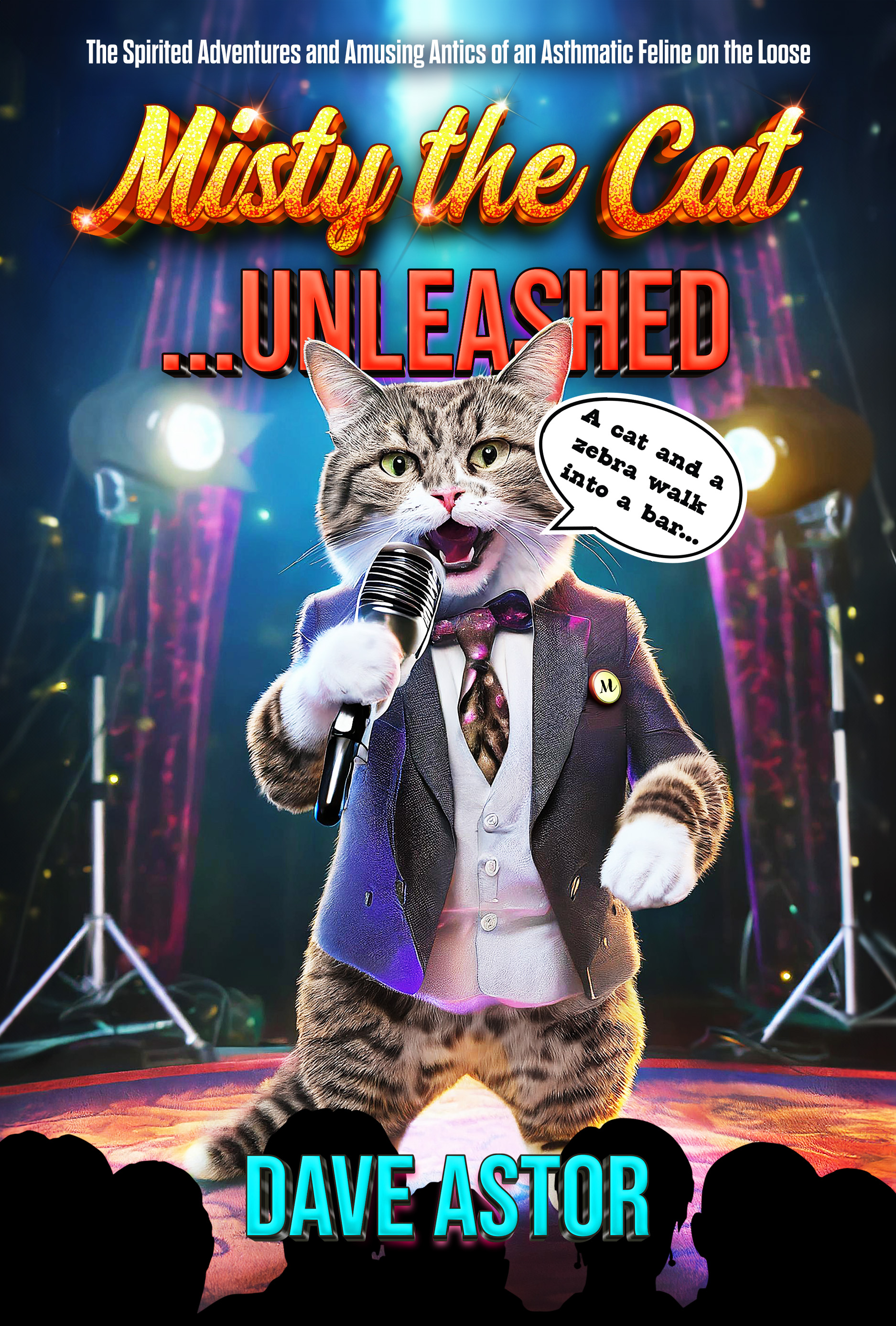
This 90-second promo video for the book features a talking cat: 🙂
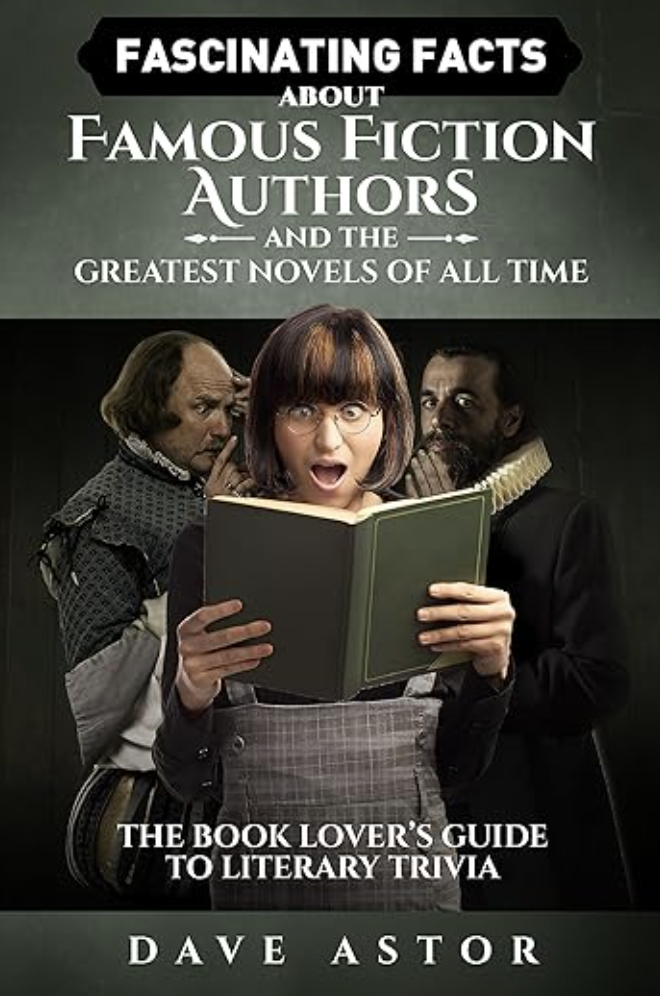
I’m also the author of a 2017 literary-trivia book…
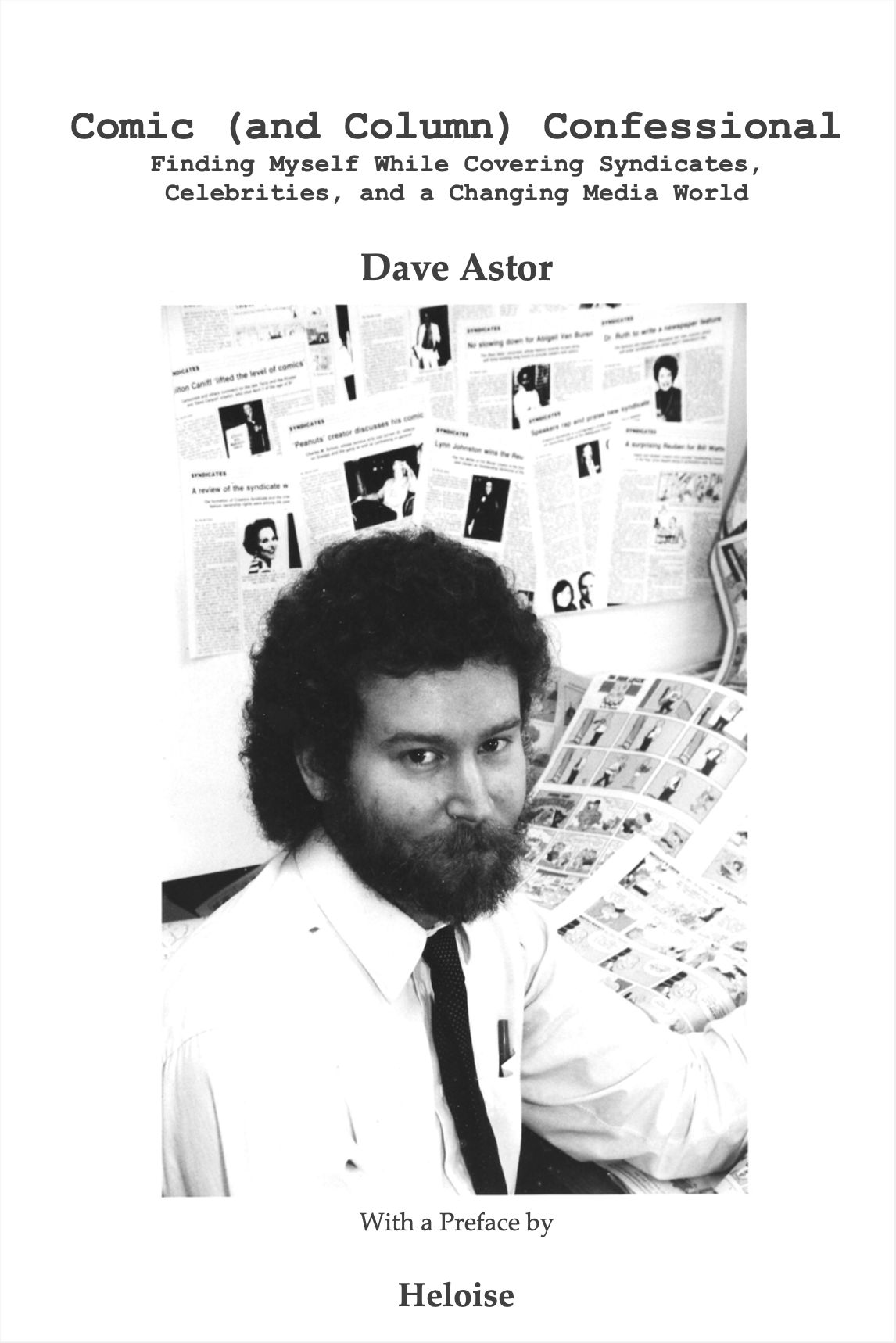
…and a 2012 memoir that focuses on cartooning and more, including many encounters with celebrities.
In addition to this weekly blog, I write the 2003-started/award-winning “Montclairvoyant” topical-humor column every Thursday for Montclair Local. The latest piece — which comments on my town’s reported use of a bank with financial ties to private operators of cruel for-profit immigration detention centers, and the departure (firing?) of a beloved employee who worked with my town’s seniors — is here.


Lots of good information here, Dave. We loved watching the Knicks win. Exciting to say the least. But I loved the entire post. Enjoy your weekend!
LikeLiked by 2 people
Thank you, Lauren!
Yes, very exciting about the Knicks — and I’m not even much of a basketball fan anymore compared to when they previously won when I was a teen in the early ’70s.
Have a great weekend, too!
LikeLike
Well written
LikeLiked by 2 people
Thank you, Swamigalkodi Astrology!
LikeLike
A lot of great information, and I really like the Misty the Cat Unleashed video. Of course, Rush performing Tom Sawyer was excellent.
LikeLiked by 3 people
Thank you very much, Edward! Glad you enjoyed the post, the Misty video, and the Rush song. 🙂
LikeLiked by 1 person
You’re very welcome, Dave.
LikeLiked by 1 person
🙂
LikeLiked by 1 person
Literary awards: there is the Booker Prize which was won by Margaret Atwood in 2029 for The testaments and Pat Barker in 1991 for the Ghost Road. There is also the Guardian Children’s Fiction prize, Eva Ibbotson was a runner up for her book Journey to the River Sea. The Carnegie medal was won by Walter de la mare in 1947, Mary Norton for the borrower’s in 1952, CS Lewis for The Last Battle in 1956, Terry Prachett in 2001 for The Amazing Maurice and his educated mice, Patrick ness in 2011 and 2012. I’ve only mentioned authors I know 😃
LikeLiked by 2 people
Thank you, Robbie, for the mention of the important/prestigious Booker Prize and other literary awards! You named some excellent authors. I’m a big fan of Margaret Atwood, among others, and thought “The Testaments” was a very good sequel to “The Handmaid’s Tale.”
LikeLike
As far as I’m aware, these sort of awards are run for authors in specific countries. I’m not sure if there is an international author specific award.
LikeLiked by 1 person
I guess some awards are country-centric and others (including the Nobel for literature) are more international.
LikeLike
Yes, Nobel is international. That the only international one I know. It’s probably about funding and prizes.
LikeLiked by 1 person
I think authors in a number of English-speaking countries are eligible for the Booker Prize?
LikeLike
Yes, Commonwealth countries, South African and Zimbabwe according to my research.
LikeLiked by 1 person
🙂
LikeLike
Great read
LikeLiked by 1 person
Thank you, Swamigalkodi Astrology!
LikeLiked by 1 person
Hey, Dave and Misty… what are those ants up to? Those are the tiniest ear plugs I’ve ever seen.
Rush’s new drummer is fabulous. I am so impressed.
Book millstones… erm milestones , let’s see?
I must mention Sherlock Homes. The first book, A Study in Scarlet, was published in 1887; 139 years ago.
Plays, movies and tv productions are endless. Young Sherlock, a pastiche to the original character and books, is a popular TV show today… up for Emmy nominations.
I just did a mural post Sherlock Holmes Walk.
Does Sherlock Holmes count?
LikeLiked by 2 people
Thank you, Resa!
“Those are the tiniest ear plugs I’ve ever seen” — ha ha! 😂
I agree that Rush’s new drummer is absolutely amazing.
There actually is a novel called “The Millstone” by Margaret Drabble. 🙂 Not a bad book, though I like some of her other works better.
Sherlock Holmes is definitely super-important in literature in general and in detective fiction specifically!
LikeLiked by 1 person
Huh… Never heard of Margaret Drabble.
Cool..
Well, Misty, don’t let those ants bug you. They don’t listen to anyone. They are sooo cultish – in sects.
LikeLiked by 1 person
Not the most known of novelists, but pretty good. Her sister, A.S. Byatt, is a little more famous.
Ha! 😂 I like cultish ants more than cultish Trumpers. 🙂
LikeLike
As always, Dave, your posts make me think, think, think. We really are youngsters here in the U.S., aren’t we? I think the foundation of my love for Europe is old stone — giving testament to the passage of time. I smiled when I read the modern paperback didn’t arrive until 1935. I suppose I’d heard that at some point…but stunning, really, as a counterpoint to other tidbits shared here. Makes me think about gatherings in the past, people coming together to listen to an orator when storytelling was more congregate. Thoughts swirling for me! Thanks much! 😊💝😊
LikeLiked by 1 person
Thank you, Vicki! So true that the U.S. is a relatively young nation in the scheme of things. One of the pleasures of visiting Europe is indeed the age of some of the architecture. And, yes, storytelling was an oral tradition for many, many centuries — with the social aspect definitely an important aspect of that.
LikeLiked by 1 person
Love how you put my wheels in motion. Good fodder for my afternoon walk. Thank you, Dave! (And please give my best to Misty!) 💝😊💝
LikeLiked by 1 person
You’re welcome, Vicki, and Misty says hello! (Or maybe he said “meow”? 🤔 )
LikeLiked by 1 person
Of course! Meow back to Misty! 😜❤️😜
LikeLiked by 1 person
🙂
LikeLiked by 1 person
Hi Dave!
Thank you for such an interesting post!
I wouldn’t mind reading that first novel by the Japanese writer. I wonder what it was about!!
I also really appreciated the information about the origins of the literature awards. I didn’t realise, ‘The Age of Innocence’ won the Pulitzer Prize! A great book! The film is excellent too!
A great post!
Thanks again!
Sharon 📚
LikeLiked by 1 person
Thank you, Sharon!
It’s been at least a decade since I read “The Tale of Genji,” but, if I’m remembering right, the title character was some kind of royal guy in 11th-century Japan. Basically, a look at his life.
Edith Wharton was the first woman to win the Pulitzer in the prize’s early days, so quite a thing! “The Age of Innocence” IS a great novel (I’ve never seen the movie).
LikeLiked by 1 person
Thank you Dave!
‘Tale of Genji’ that must have been a fascinating read!!
I didn’t realise that Edith Wharton was the first woman to win the Pulitzer Prize!! It is well deserved and earned. Now you’ve mentioned it, I want to read it again!!
Thanks once again.
Hope your Monday is going well.
With best wishes,
🙂
LikeLiked by 1 person
I agree that Wharton deserved the Pulitzer, Sharon! I think a couple of her earlier novels — “The House of Mirth” and “Ethan Frome” — are also great (albeit depressing).
Hope your Monday is going well, too!
LikeLiked by 1 person
That was going my next question: have you read anything else by Edith Wharton?! I don’t think I have come across ‘The House of Mirth’ or ‘Ethan Frome’. But if they are depressing I think I’ll avoid them for now!! 🙂
Many thanks for the feedback, Dave!
My Monday is going well!
😊
LikeLiked by 1 person
Yes, great but downbeat novels, Sharon. I don’t blame anyone for avoiding books like that when the news in real-life is so depressing.
LikeLiked by 1 person
Exactly right Dave! Real life can be downright depressing, in my opinion! I prefer a book to offer a sense of escapism!
It could just be me!
🙂
LikeLiked by 1 person
I hear you, Sharon. I try to mix escapist and non-escapist books, but these days I look forward more to the escapist ones. Of course, some escapist novels include serious, consequential content — at least in part.
LikeLiked by 1 person
Good idea Dave! Mix the themes! And yes, some escapist works do contain serious content! Especially effective if it is done by a very good writer!
LikeLiked by 1 person
Yes! 🙂
LikeLiked by 1 person
I didn’t know that Westminster abbey memorialized Jane Austen and the three Bronte sisters! I’ve never visited it before. Thanks for researching these book-related milestones!
LikeLiked by 1 person
Thank you, Ada! There definitely seems to be things like “stone plaques” (if there is such a term) in Westminster in addition to the tombs. I visited so many years ago that I can’t picture it in my mind anymore, but it’s quite a place.
LikeLike
I’ll add a fact! Remember that before books, there were scrolls. The first bound books, which were handwritten, were called codices (singular = codex), and by the 5th century, the Christian church had replaced scrolls with codices for everything they wrote. It makes sense. Imagine trying to find a passage of the Bible to cite when you had to go through a thirty-foot scroll! Imagine storing the scrolls!
LikeLiked by 1 person
Thank you, Kim! A terrific historical mention of scrolls and codices (the latter quite a word 🙂 ). Yes, scrolls were/are rather unwieldy. But nice that the term is still in use today — including scrolling through our social media feeds.
LikeLiked by 1 person
And I think they’re still a staple in some universities’ graduation ceremonies: certificates rolled into scrolls and tied with ribbon.
LikeLiked by 1 person
Yes! I’ve seen that!
LikeLike
I’ve a couple of thoughts today, rather radical I felt. The Big Bang Theory for the universe seems appropriate, or at least in part of CERN. This place is very important by Geneva and there are some interesting books; there like The Particle at the End of the Universe: How the Hunt for the Higgs Boson Leads Us to the Edge of a New World by Sean Carroll, also Massive: The Missing Particle That Sparked the Greatest Hunt in Science by Ian Sample. However, the best is this – Weaving the Web: The Original Design and Ultimate Destiny of the World Wide Web by Tim Berners-Lee – back in the day, I never thought this WWW would ever catch on. How wrong I was!
LikeLiked by 1 person
Thank you, Chris! Great mentions! The creation of the Internet was certainly an ENORMOUS thing — in all kinds of ways, including for books. I remember how exotic the “World Wide Web” seemed when I first logged into it at work in the mid-1990s.
LikeLiked by 1 person
I’m not great on dates, Dave, I don’t even mark ‘milestone’ events in my own life (like 50 years married last December), so I’ll sit this one out. Interested to see some of those you’ve noted though, including those Mesapotamian libraries from which fragments of ‘The Epic of Gilgamesh’ was dug up–thereby enabling me to blog about it a few weeks back! Have a good week and catch you next time. 🙂
LikeLiked by 1 person
Thank you, Laura! Sitting something out once in a while is a good thing, but I’m glad you first made that Mesopotamian mention. 🙂 And congratulations on your 50th wedding anniversary a few months ago! Have a good week, too!
LikeLiked by 1 person
🩷🩷
LikeLiked by 1 person
🙂
LikeLiked by 1 person
Fascinating post Dave. Take a bow.
LikeLiked by 1 person
Thank you very much, Shehanne! Now I just have to find out when bows were invented. 🙂
LikeLiked by 1 person
The stop slacking!!!!!!!! Get Misty on the case.
LikeLiked by 1 person
Ha ha, Shehanne! 😂 Detective Misty. 🙂 He learned to sleuth by reading Poe’s “The Murders in the Rue Meow.”
LikeLiked by 1 person
You sure that wasn’t the Meow Morgue???
LikeLiked by 1 person
😂
Hmm…I thought meows lived forever. 🙂
LikeLiked by 1 person
I think Misty needs a French beret….
LikeLiked by 1 person
Ha ha, Shehanne! 😂 With a twirling baguette on top of the beret. 🙂
LikeLiked by 1 person
I am sure it would look beret fetching.
LikeLiked by 1 person
Fetching and…edible! 🙂
LikeLiked by 1 person
Maybe the best thing about technology is that we can learn about books that have been tucked away in odd corners of the world forever.
I recently read about the (what they think is) the first poem written in English being discovered in Rome. It was written more than 1,300 years ago. It pretty much had to be translated to modern English but it’s very cool find.
LikeLiked by 2 people
Thank you, Dan! Yes, technology does have some benefits. 🙂
And — wow — that’s an exciting poetic find you mentioned!
LikeLiked by 1 person
I really enjoyed reading this post, which leads us across history. As you mention the first libraries in Mesopotamia I would like to mention the very interesting “There are rivers in the sky” by Elif Shafak, which shows as how everything that happened and still happens is connected. And that, for example, the very educated king Ashurbanipal from Mesopotamia, who was very educated, was not for that less cruel! The clay tablets also ended in the British Museum!
LikeLiked by 1 person
Thank you, Martina, for that interesting information! I guess a lot of things ended up in the British Museum — with some of those things really belonging more to their place of origin. And a leader who’s very educated and cruel can do a lot of damage.
LikeLike
🤣🌻
LikeLiked by 1 person
🙂
LikeLike
Interesting literary beginnings and milestones, Dave. I was surprised to learn that a woman wrote the very first novel. Other book-related milestones I would like to add relate to the Anglophone Caribbean Region. These include Derrick Walcott (1930-2017) and V.S. Naipaul (1932-2018), Caribbean authors who received the Nobel Prize in Literature in 1992 and 2001, respectively. The British Booker Prize for Fiction was first awarded in 1969.
LikeLiked by 2 people
Thank you, Rosaliene, for that info about Caribbean writers and the start of the important Booker Prize! I would’ve have thought the Booker started earlier.
LikeLiked by 1 person
Hmm, apropos of book, I just listened to a podcast wherein the podcaster posited that the mass market trade paperback as gone the way of the dodo bird. ☹️
LikeLiked by 2 people
I’d press the like button, Liz, but…
LikeLiked by 3 people
but . . . .
LikeLiked by 2 people
Thank you for that info, Liz. Did the podcaster say why? Competition from Kindle and audiobooks? Other reasons?
LikeLiked by 1 person
I hear you, Dan, about reluctance to click the like button under Liz’s comment.
LikeLike
Both of the above, plus the current supply chain disaster and the price of paper. Mass market paperbacks are no longer as profitable to the Big Five as they once were.
LikeLiked by 1 person
Ah, supply chain problems and paper prices, Liz. Definitely has an effect on things.
LikeLiked by 1 person
I fear we haven’t seen the worst of it yet.
LikeLiked by 1 person
I’ve made sure all my books exist in paperback form (not mass market size, though). The idea is maybe one or two will survive the coming apocalypse to be read by lamplight in the post-electronic future. (Or maybe serve to light fires; who knows?)
LikeLiked by 3 people
Thank you, Audrey! Great that you make sure all your books include a paperback format. I’ve done the same with my books. Paperbacks do feel more permanent and capable of possibly surviving the apocalypse. 🙂 I enjoyed your dark humor there. 😂
LikeLiked by 1 person
Now, I haven’t seen that particular vision of the future before!
LikeLiked by 2 people
It could happen. Without electricity, it’s goodbye internet. And AI too. 😜
LikeLiked by 2 people
I would need some advance warning so I could print out my entire like from the computer. 😯
LikeLiked by 2 people
I hope you are wrong, Audrey. I love audiobooks and have recently discovered that my Speechify subscription has all the classics – I’m so excited 😝. But, just in case, I have all my favourites books as hard copies. 3,000 in total. I’ve asked my sons to build me a book pyramid when I pass and bury me inside it.
LikeLiked by 2 people
The book pyramid–truly a fitting monument for you!
LikeLiked by 1 person
😃🧡
LikeLiked by 2 people
I’m sure you’re right, Liz. 😦
LikeLiked by 1 person
I take no pleasure in being right. We got our electric bill today, and it has skyrocketed, although we still consumed about the same number of kilowatt hours.
LikeLiked by 1 person
That and higher gas prices, higher food prices, etc. 😦
LikeLiked by 1 person
Yes, those, too.
LikeLiked by 1 person
Thank you Dave for a wonderful walk through history, music and books. A great way to start my day. You reminded me, once again, how remarkable it is that some voices can travel across thousands of years and still speak to us. One of my favourite examples is Sappho. More than 2,500 years ago she wrote:
“Someone, I tell you, will remember us, even in another time.”
And here we are, still reading and talking about her words. Always a joy to stop by and enter the discussion!!
LikeLiked by 4 people
Thank you, Rebecca! Sappho’s words really resonate; it’s comforting that “some voices can travel across thousands of years and still speak to us.” Given how much words, images, etc., are written down/filmed/saved/etc. in modern times, some of those things will be known several millennia from now (if humankind survives).
LikeLiked by 3 people
A thought to consider – if humankind survives. Another great discussion!!!
LikeLiked by 1 person
Human fingers crossed! 🙂
LikeLiked by 1 person
Well, for all his otherworldly intelligence he wasn’t necessarily what I’d call a nice character. But, yes, his intellectual prowess and his exploits and achievements were pretty unique.
LikeLiked by 1 person
So true, unfortunately, that some geniuses and otherwise “consequential” people are not nice at all.
LikeLiked by 1 person
I just finished reading The Maniac by Julian Bigelow. The Maniac is a dazzling fictionalized biography of János (“John”) Neumann, the Hungarian born mathematician, who not only built the first computer (operational in 1951), with all core features of modern computers (CPU, RAM, and programmable), but theorized, wrote about and laid the foundations for artificial intelligence as we see that skyrocket in our time.
LikeLiked by 2 people
Thank you, Dingenom! That fictionalized biography of János (“John”) Neumann does sound amazing, as were Neumann’s accomplishments — which I was not aware of until seeing your comment. What an influential person!
LikeLiked by 1 person
Such a long history, but I was surprised how new the paperback is. We visited the Gutenberg Museum in Germany. It was quite fascinating. Did you go to the Rush concert?? Maggie
LikeLiked by 1 person
Thank you, Maggie! I was surprised at how new the modern paperback was, too!
The Gutenberg museum must indeed be fascinating. I see that it’s in Mainz; I’ve been to Germany only once — mostly in Frankfurt.
Rush’s concerts this past week were in Los Angeles, and I’m across the country in New Jersey. Would love to attend one of their concerts in NYC this summer, but the shows are sold out and resale tickets are a bit beyond my budget. But it’s fun watching some of the MANY videos posted. 🙂
LikeLike
Thank you so much for sharing this post, it’s so full of really interesting information.
I enjoyed it a lot, dear Dave
LikeLiked by 1 person
Thank you very much, Luisa! 🙂 It was fun to research some of those book-related milestones; I learned a lot. 🙂
LikeLiked by 1 person
Thanks a lot for this kind reply 💗
PS: I also learn a lot while preparing my posts!
LikeLiked by 1 person
Yes, Luisa! Researching a post is a great way to learn new things! And you usually post every day. 🙂
LikeLiked by 1 person
🙏🌹🙏
LikeLiked by 1 person
🙂
LikeLiked by 1 person