Various elements go into a good book title, with alliteration one of them. It helps (alliteration alert) a novel’s name to flow nicely and can make a title much more memorable (additional alliteration).
Before continuing with today’s theme, I want to mention that the end of this post will feature details about a podcast focusing on my cat Misty! 🙂 There’s a link, too. 🙂
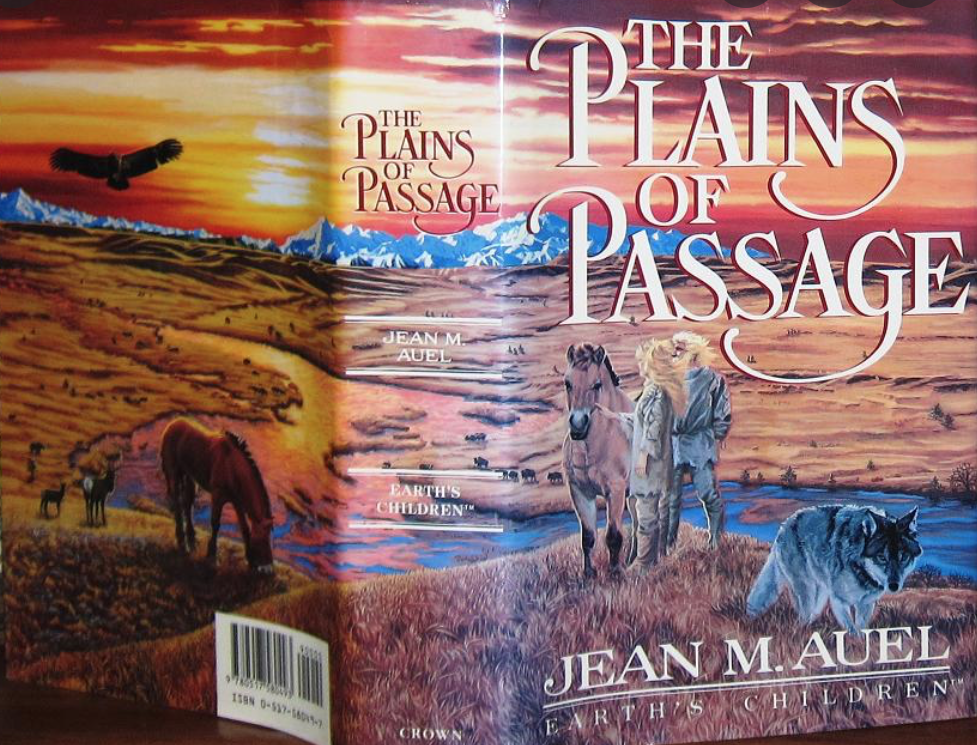
I thought of writing this alliteration article while reading The Plains of Passage, the fourth installment of Jean M. Auel’s compelling “Earth’s Children” series that began with The Clan of the Cave Bear. Not only is the title mellifluously alliterative, but it’s also informatively descriptive — Ayla and Jondalar take a long journey along Europe’s prehistoric plains as they attempt a passage to where Jondalar’s people live.
Of course, some alliterative titles are the names of the protagonists themselves — with notable examples including George Eliot’s dramatic Daniel Deronda, Sir Walter Scott’s rousing Rob Roy, Herman Melville’s brilliant Billy Budd, and Herman Wouk’s masterful Marjorie Morningstar.
Among ultra-famous examples of catchy title alliteration without full character names are Jane Austen’s Pride and Prejudice and Sense and Sensibility, F. Scott Fitzgerald’s The Great Gatsby, Charles Dickens’ The Pickwick Papers, Wilkie Collins’ The Woman in White, John Steinbeck’s East of Eden, Mark Twain’s A Connecticut Yankee in King Arthur’s Court, L.M. Montgomery’s Anne of Green Gables, and Carson McCullers’ The Heart Is a Lonely Hunter, among others.
Somewhat less famous but still well known are Emile Zola’s The Drinking Den, Fyodor Dostoevsky’s The Insulted and Injured, Aldous Huxley’s Point Counter Point, Willa Cather’s A Lost Lady, Jean Rhys’ Wide Sargasso Sea, Buchi Emecheta’s Second Class Citizen, Fannie Flagg’s The Whole Town’s Talking, Jaroslav Hasek’s The Good Soldier Svejk, etc.
More recent general fiction? A few titles that come to mind are Toni Morrison’s Song of Solomon, Liane Moriarty’s Big Little Lies, Gillian Flynn’s Gone Girl, and Michael Chabon’s The Amazing Adventures of Kavalier and Clay.
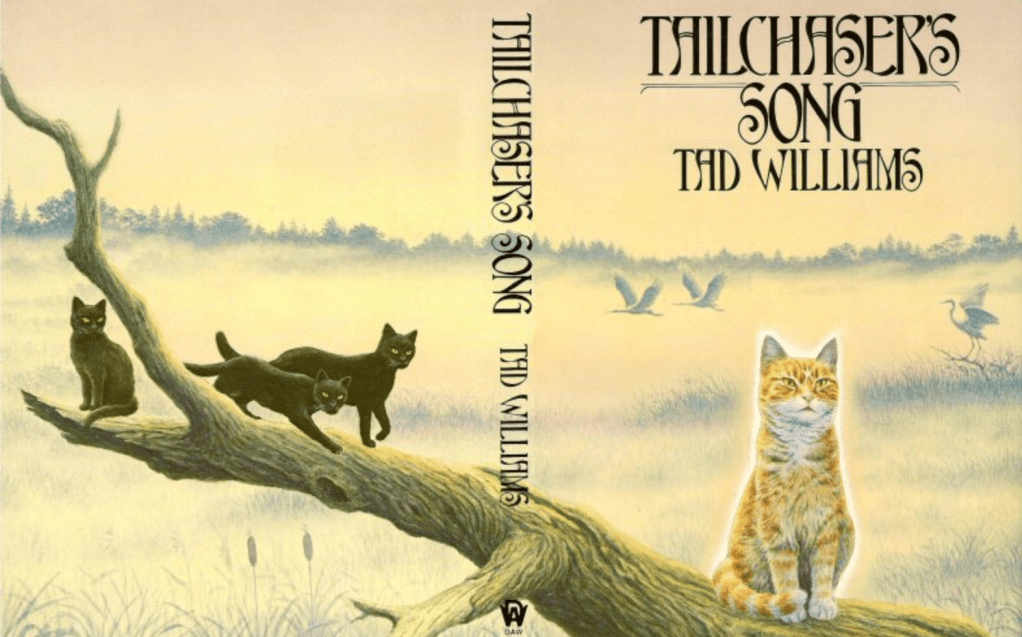
Genre fiction (crime, sci-fi, and so on) is in the alliteration mix, too. Sue Grafton’s alphabet mysteries such as B Is for Burglar. Michael Connelly’s The Lincoln Lawyer. Dorothy Gilman’s Mrs. Pollifax Pursued. Robert Heinlein’s Stranger in a Strange Land. Douglas Adams’ The Hitchhiker’s Guide to the Galaxy. Susan Moore Jordan’s Augusta McKee mysteries starting with The Case of the Slain Soprano. And more.
Any alliterative titles you’d like to name?
About that aforementioned podcast: The great Canadian interviewer/blogger Rebecca Budd, who often comments here under the name Clanmother, talked with me about my cat Misty. That wonderful feline has an interesting history of being walked on a leash every day, living with asthma, etc. The conversation runs about 16 minutes, and is accompanied by a really nice three-minute clip featuring some of the best photos and videos of Misty (outdoors and in) over the years. Put together by Rebecca and her production-wiz husband Don. The link is here.
My literary-trivia book is described and can be purchased here: Fascinating Facts About Famous Fiction Authors and the Greatest Novels of All Time.
In addition to this weekly blog, I write the 2003-started/award-winning “Montclairvoyant” local topical-humor column for Baristanet.com. The latest weekly piece — about my town’s mayor overdoing the raising of campaign money — is here.