Creative bursts! They can happen at the start of novelists’ careers, or after they become established enough to quit time-consuming day jobs, or after they become parental empty-nesters with more writing hours, or near the end of careers when authors know their remaining years are limited, or because they’re creating series rather than stand-alone books, or for momentum reasons, or for other reasons, or for no discernible reasons at all. Readers are the beneficiaries.
One memorable burst occurred when George Eliot wrote her first, second, and third novels in rapid succession — all classics. Adam Bede in 1859, The Mill on the Floss in 1860, and Silas Marner in 1861. Eliot’s novel-writing career began relatively late — she turned 40 in 1859 — so there was plenty of pent-up literary energy and ideas.
During the same 1859-61 period in England, the prolific-for-more-than-two-decades Charles Dickens penned a pair of novels that were unquestionably among his best: A Tale of Two Cities and Great Expectations.
In the U.S. a decade earlier, Nathaniel Hawthorne produced The Scarlet Letter (1850) and The House of the Seven Gables (1851) back-to-back.
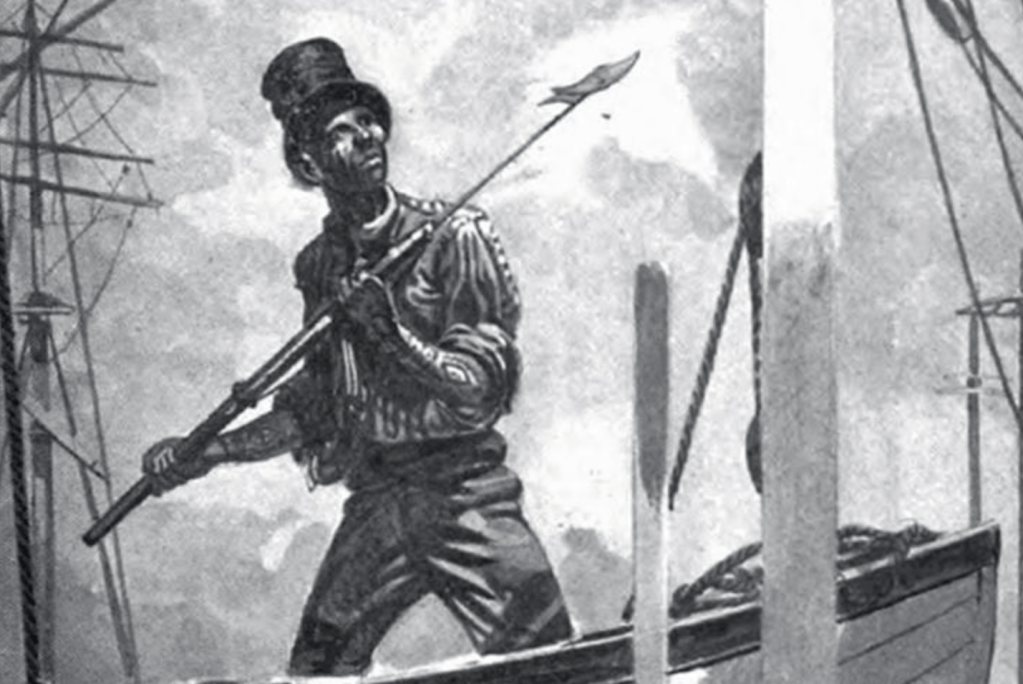
Hawthorne’s friend Herman Melville churned out seven novels between 1846 and 1852. Only one all-time classic (1851’s Moby-Dick), but all very good — and the last the underappreciated near-classic Pierre (1852). Then came 1853’s extraordinary short story “Bartleby, the Scrivener.”
Also impressively prolific for a long time was Alexandre Dumas — but his two most-famous novels, The Count of Monte Cristo and The Three Musketeers, were both completed in a single year! That was 1844.
Still earlier in the 19th century, between 1811 and 1818, Jane Austen’s classics Sense and Sensibility, Pride and Prejudice, Mansfield Park, Emma, Northanger Abbey*, and Persuasion were all published — the last two titles posthumously. (*Well, I’m not sure Northanger Abbey is a classic. 🙂 ) Work on some of those novels began well before 1811, but it was still an amazing few years of productivity.
Austen contemporary Sir Walter Scott was 43 in 1814 when he finally became a published novelist after achieving fame as a poet, and proceeded to write a barrage of novels — about 25 — before his 1832 death 18 years later. His two best-known titles, Rob Roy and Ivanhoe, were released three years apart (1817 and 1820).
Moving forward in time, the also-very-prolific Henry James had some creative bursts with his more notable novels — for instance, Washington Square in 1880 and The Portrait of a Lady in 1881. But perhaps his most impressive feat was writing The Wings of the Dove (1902), The Ambassadors (1903), and The Golden Bowl (1904) in three consecutive later-career years. All highly ambitious (some might say overwritten) novels.
Later in the 20th century and into the 21st, some novelists have created canons so copious it seems like much of their respective writing careers have been one creative burst — with some books better than others, of course. Among those fertile “fictioneers” were/are Agatha Christie, Isaac Asimov, Joyce Carol Oates, Stephen King, Walter Mosley, Lee Child, and John Grisham, to name just a few.
Finally, we have famous familial fiction frenzies. In that realm, it’s hard to top the three Bronte sisters — with Charlotte’s classic Jane Eyre, Emily’s classic Wuthering Heights, and Anne’s good Agnes Grey all released in 1847. Then came Anne’s excellent The Tenant of Wildfell Hall in 1848.
Any authorial creative bursts you’d like to mention?
The great Canadian podcaster Rebecca Budd, who often comments here under the name Clanmother, invited Russian-literature blogger Elisabeth van der Meer of Finland and myself in Montclair, New Jersey, to a long-distance, three-way conversation about enduring themes in fiction. Among the works we discussed were Pride and Prejudice, The Handmaid’s Tale, All Quiet on the Western Front, Animal Farm, Lorna Doone, Eugene Onegin, One Day in the Life of Ivan Denisovich, and The Lord of the Rings. The podcast can be heard here.
My literary-trivia book is described and can be purchased here: Fascinating Facts About Famous Fiction Authors and the Greatest Novels of All Time.
In addition to this weekly blog, I write the 2003-started/award-winning “Montclairvoyant” topical-humor column for Baristanet.com. The latest weekly piece — about an upcoming referendum for an elected school board — is here.