 Some novels FOAC. Some don’t.
By FOAC, I mean “fire on all cylinders.” Yes, some novels get all or most things right — excellent prose, believable dialogue, three-dimensional characters, interesting plot, maybe a memorable surprise or two, etc. Those books just flow. Other novels? Not so much.
Obviously without planning to, I consecutively read two novels during the past week that exemplified each extreme.
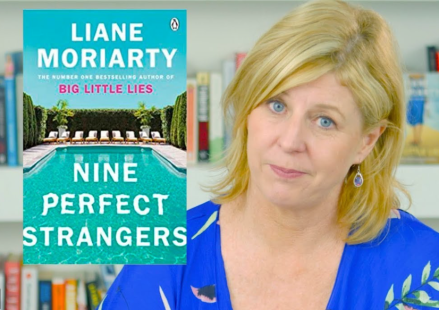
Yesterday, I finished 2018’s Nine Perfect Strangers by Liane Moriarty. At 53, the Australian author is at the peak of her writing powers, and Nine Perfect Strangers is among the best of her eight novels — maybe second only to 2014’s Big Little Lies.
The newer book is set in a health resort where nine guests experience MUCH more than they bargained for, and Moriarty expertly makes all 12 major characters memorable, very human individuals. (The main cast also includes has-a-screw-loose resort owner Masha and two staffers.) The nine guests are to some degree “types” — a romance novelist (perhaps partly based on Moriarty?), a former athlete, a depressed divorcee, an extremely handsome gay lawyer, a young couple who won the lottery, and a teacher and a midwife and their Generation Z daughter — yet they all feel like real people.
Moriarty’s prose in Nine Perfect Strangers is, well, perfect — plus there’s intense drama, heartbreaking backstories, plenty of humor, always-smooth transitions, and more. The length of the book is also, well, perfect — 450 pages in the paperback edition I read.
A bonus is that Nine Perfect Strangers evokes other great novels — such as T.C. Boyle’s The Road to Wellville (set in a sanitarium) and Agatha Christie’s And Then There Were None (about 10 people stuck together in an isolated place) — while still feeling totally original.
Then there’s the novel I read immediately before the Moriarty one: Martin Cruz Smith’s The Siberian Dilemma (2019) — the ninth installment of the suspenseful crime series starring weary, principled, sympathetic Russian investigator Arkady Renko that began nearly 40 years ago with 1981’s Gorky Park. The first eight books all ranged from excellent to enthralling as Smith transitioned from Brezhnev’s to Gorbachev’s to Yeltsin’s to Putin’s Russia — with side trips to the U.S., Cuba, and a ship. Then the series fell off a literary cliff with The Siberian Dilemma. Too short, blah plot, very disjointed, strained dialogue, and underdeveloped secondary characters — plus the novel quickly dissipated whatever little suspense it occasionally built.
Things happen, of course, and I would definitely try Smith again if he wrote another novel. (He’s also authored several great non-Renko books, including Rose.) In Smith’s case, The Siberian Dilemma may have been a clunker at least partly because of his advancing age (he’s 77) and health issues (he has Parkinson’s disease). And many a notable author of ANY age can occasionally write a bad book — whether that happens in early career (such as the great Jack London’s laughable A Daughter of the Snows), mid-career (such as the great Stephen King’s disappointing Cell), or late career.
The wonderful author Willa Cather’s last novel Sapphira and the Slave Girl was atrocious, and the also-wonderful author Richard Russo’s most recent novel Chances Are was so-so. In the case of those authors, reading their peak works — such as Cather’s My Antonia and Russo’s Empire Falls — is the way to go.
Of course, late-career novels don’t always have to be clunkers. While I haven’t read it yet, Margaret Atwood’s The Testaments (2019) — The Handmaid’s Tale sequel released just before the author’s 80th birthday — got excellent reviews. And Billy Budd, begun three years before the author’s death and published posthumously, is one of Herman Melville’s best works. Last but not least, how about Fyodor Dostoyevsky’s classic The Brothers Karamazov for an author’s final novel?
Among other living authors still firing on all cylinders are J.K. Rowling and Lee Child. Rowling’s four recent crime novels starring investigators Cormoran Strike and Robin Ellacott are fantastic — just a small step below the author’s iconic Harry Potter series in quality and appeal. And Child’s Jack Reacher thriller series, which dates back to the 1997 debut novel Killing Floor, is now well past 20 books yet the recent ones are as good as the early ones.
Some novels you’d like to mention that do or do not “fire on all cylinders”?
The terrific Canadian podcaster Rebecca Budd once again interviewed me about literature and writing. In this 15-minute segment, we discussed the comfort of books during a difficult time, how people become authors, how great authors were often not great at first, the need for authors to read books, how to deal with writers’ block, and the growth of indie publishing.
My literary-trivia book is described and can be purchased here: Fascinating Facts About Famous Fiction Authors and the Greatest Novels of All Time.
In addition to this weekly blog, I write the award-winning “Montclairvoyant” topical-humor column for Baristanet.com. The latest piece — about a new rent-regulation measure and more — is here.
 Every decade has its share of memorable novels. Today I’m going to focus on the 1880s.
 I don’t think I’ve ever published a blog post on my birthday before, so I’ll “celebrate” by listing some novelists I love or like and how old they are. Why? Because it’s easier to make a list than to write a regular blog post of the kind I’ll resume next week. 🙂
 “War is hell,” but it can also be almost an abstraction. Unless you’re directly affected, it might not seem quite as horrible as it actually is or as senseless as it usually is. Novels and other kinds of fiction can help.
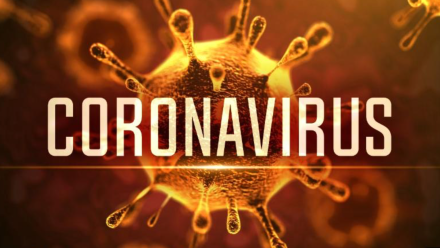 With the coronavirus wreaking havoc throughout the world — and American “leader” Donald Trump predictably responding to that pandemic in the most incompetent, empathy-lacking, and self-serving way imaginable — it would be understandable if book lovers would want to read only escapist fiction for a while. But if you’re a glutton for punishment, there are some very compelling novels out there with pandemic themes — many pessimistic about the situation and the reaction to it, others a bit more optimistic.
 I’ve blogged about fiction written by
  Have you ever read a novel that’s mostly low-key, subtle, understated, and even seemingly simple yet is compelling or charming or funny or emotionally wrenching or all of the above? Sure you have, and I have, too.
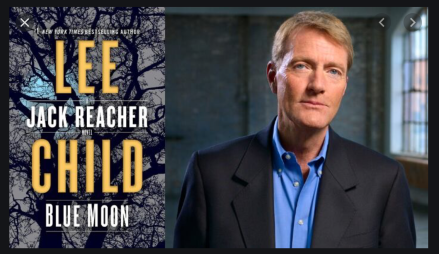 After reading Lee Child’s latest Jack Reacher novel last week, I thought about how page-turning that series is and how it reflects our times. Heck, there’s an amazing/harrowing “fake news” reference near the end of that recent book, which chronicles Reacher’s battle against rival mobs that ruthlessly control a city.
 It’s anniversary time again! With a month-plus of 2020 “in the books,” I’d like to mention some of my favorite (not necessarily the best) novels that were published in 1970, 1920, 1870, and various other years ending in that big ol’ round number of zero. And then you can tell me some of your favorites.
 Dave Astor on Literature