 All authors are influenced by other authors, whether that influence is conscious or unconscious. Most writers are not plagiarists, of course, but their reading of other writers has an impact — often manifested in their early work before developing a more original voice.
One of the most famous quotes about authorial influence was Dostoyevsky supposedly saying, “We all come out from Gogol’s Overcoat.” Fyodor was referring to Nikolai Gogol’s nightmarishly great 1842 short story “The Overcoat,” which had an effect on some of the legendary 19th-century Russian authors whose prime writing days would follow. A group that of course included Dostoyevsky, Leo Tolstoy, Ivan Turgenev, and Anton Chekhov.
Gogol (1809-1852) was a contemporary — albeit a geographically distant one — of Edgar Allan Poe (1809-1849), who was also a major influence on a number of later writers. Poe managed to do this in at least three genres, being a horror-story pioneer who helped inspire the fiction of H.P. Lovecraft, Stephen King, and others; a detective-story pioneer (with tales such as “The Murders in the Rue Morgue”) who influenced subsequent sleuth writing by Wilkie Collins (The Moonstone), Arthur Conan Doyle (Sherlock Holmes), etc.; and a producer of sea fiction (including The Narrative of Arthur Gordon Pym of Nantucket) that helped inspire Herman Melville’s Moby-Dick.
Staying with 19th-century influencers for a while, Mary Shelley, then Jules Verne, and then H.G. Wells were science-fiction trailblazers who paved the way for Isaac Asimov, Ray Bradbury, Octavia E. Butler, Arthur C. Clarke, Robert A. Heinlein, Ursula K. Le Guin, and others in the 20th century.
Charles Dickens’ funny, sprawling, socially conscious novels have some ancestral elements to what we see in John Irving’s books.
One 19th-century author influencing another was Honore de Balzac, whose realism and the placing of the same characters in different novels helped inspire Emile Zola.
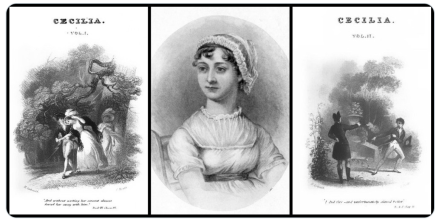
Going back further in time, 18th-century novelist Fanny Burney was a favorite of Jane Austen, who even found her Pride and Prejudice title in a sentence from Burney’s 1782 novel Cecilia. (Austen is pictured with that book atop this blog post.)
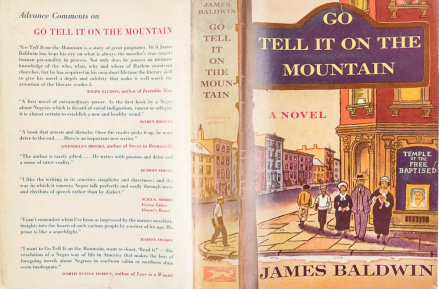
Moving to more recent authors, a young Toni Morrison was an avid reader of Austen and Tolstoy — and it shows in her work, along with influences from such writers as Gabriel Garcia Marquez (magic realism), Zora Neale Hurston (rural/folklore elements), and James Baldwin (a finely tuned radar on racism).
Hurston was also one of the influences on Alice Walker, who found what was believed to be Hurston’s unmarked Florida grave in 1973 and then wrote an influential 1975 Ms. magazine article about Zora that helped revive Hurston’s unfairly faded reputation.
Again mentioning Marquez, his One Hundred Years of Solitude was clearly a partial template for Isabel Allende’s The House of the Spirits. Both are multigenerational sagas with plenty of magic realism and political awareness.
A keen political/feminist sensibility, while almost never getting preachy, makes the 1955-born Barbara Kingsolver somewhat a literary descendant of the 1939-born Margaret Atwood.
Atwood’s canon of course includes several dystopian/speculative-fiction novels, which reminds me that George Orwell in Nineteen Eighty-Four was obviously influenced by Aldous Huxley’s earlier Brave New World — if only to take a different approach to the future in having a society controlled by terror rather than through “pleasurable” distraction. Heck, Huxley was even briefly one of Orwell’s teachers at Eton.
Back in the USA, there’s a direct line of dark antiwar humor running from Joseph Heller’s Catch-22 (1961) to Kurt Vonnegut’s Slaughterhouse-Five (1969).
America’s Southern Gothic genre also has its connections. Cormac McCarthy, with his rich prose and unsettling situations, is a literary heir to William Faulkner. In the more humorous Southern Gothic realm, Erskine Caldwell kind of led to Charles Portis.
Ernest Hemingway’s terse prose influenced numerous writers — with one of my current favorites being Lee Child of Jack Reacher series renown.
And when it comes to modernist, often-nonlinear fiction, contemporaries James Joyce and Virginia Woolf (both with 1882-1941 life spans) had some major literary similarities.
I realize I’ve just scratched the surface here. Any authors influencing other authors you’d like to discuss — including ones I mentioned or didn’t?
My literary-trivia book is described and can be purchased here: Fascinating Facts About Famous Fiction Authors and the Greatest Novels of All Time.
In addition to this weekly blog, I write the award-winning “Montclairvoyant” topical-humor column for Baristanet.com. The latest piece — about a high school graduating class that went through a lot — is here.
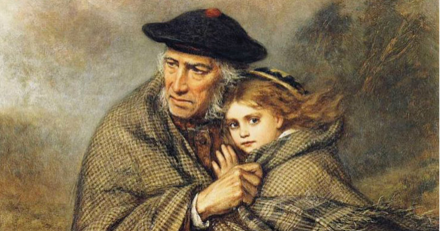 Today is Father’s Day, so, in an effort to write a blog post with the most unoriginal theme ever, I’m going to discuss some of my favorite dads in literature — seven to be exact. I’ll go backward in time, starting with the most recent releases.
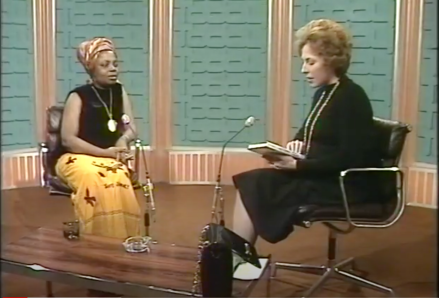 Last week’s post featuring author videos received a nice response, so I thought I’d do a second column spotlighting some other authors. As before, I made sure all the clips were short — and again started with living writers and concluded with deceased ones.
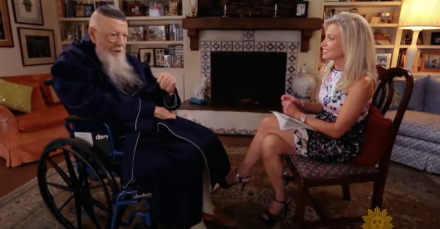 Avid fiction readers aren’t seeing any authors live during the pandemic, but we can watch clips of them on YouTube. Here are some short videos, with the first group featuring some great living writers followed by several clips showing famous novelists who are no longer with us. Most speak as skillfully as they write, though you can’t tell in the silent, pre-1910 footage of Mark Twain and Leo Tolstoy that ends this post.
 When it comes to depicting relationships, great novelists are not machines. That means the relationships — whether good, bad, unrequited, potential, etc. — are sometimes believable and sometimes not as much.
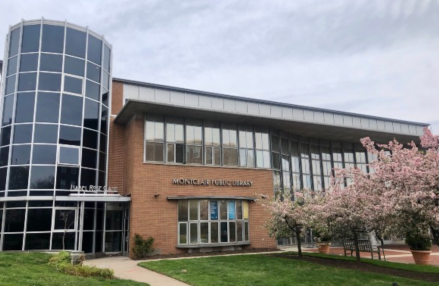 With libraries shuttered during the pandemic, fictional characters in those book-filled buildings are bored enough to be doing some interesting things the public is not seeing. I’m going to give you some examples, based on reports I received from private investigators Kinsey Millhone (of Sue Grafton’s “alphabet mysteries”) and Easy Rawlins (of the Walter Mosley novels that often have a color in their titles). In return for the inside info from those sleuths, I purchased their co-authored thriller D Is For Devil in a Blue Dress.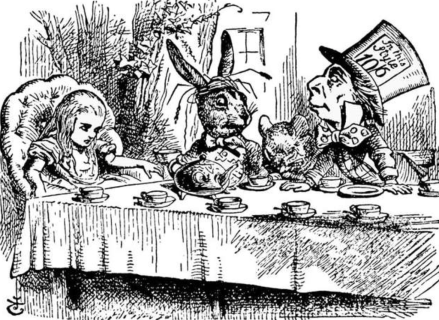
 With life changing so much during the current pandemic, reading can obviously change, too. The content of what we read, of course, but also our reading routines. I’m going to describe what has been different for me, and then ask what has been different for you. If your reading life has not changed during the coronavirus crisis, well, that’s okay! 🙂
 Dave Astor on Literature