 One of literature’s pleasures is reading an established living author for the first time, loving the novel, and knowing you not only have past books but (most likely) future ones to enjoy by that writer.
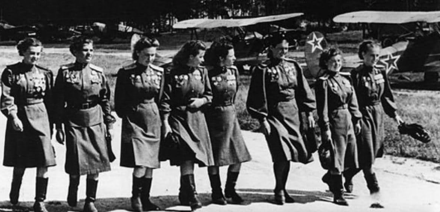
That was certainly my feeling when I recently finished The Huntress. Set during the World War II era, Kate Quinn’s fabulous 2019 historical novel focuses on the attempt to bring to justice a Nazi woman who murdered many children and adults before changing her identity, escaping Europe, and marrying into an American family. Her young-adult Boston stepdaughter Jordan grows to love her but is also suspicious of her, even as three Nazi hunters (including English war correspondent Ian Graham and Soviet aviator Nina Markova) team up to try to find her. Nina — who grew up abused, uneducated, and in grinding rural poverty to become one of the USSR’s famed “Night Witches” bomber pilots (shown in real life in the above photo) — is an especially memorable character creation: brave, brainy, feisty, funny, profane, vengeful, and a bit nuts.
The Huntress is one of the best books I’ve read in years by a living novelist. It’s masterfully written (as it jumps between different years and characters), it’s a thriller, it’s romantic, etc.
So, I’m very happy that there will be more Kate Quinn reading in my future. She has authored about a dozen books, and, given that she’s only 38, many more are sure to come.
A sampling of several other living novelists who fit this theme? I’ll go alphabetically.
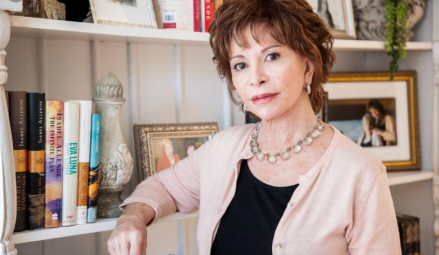
I didn’t read Isabel Allende’s classic The House of the Spirits until about 20 years after its 1982 publication, so by that time there were plenty of other books in the Allende canon. (I’ve read Zorro, and am now in the middle of Daughter of Fortune, which is terrific so far; I’ll discuss it as part of next week’s post.) And Allende is still churning out fiction in her 70s.
My reading of Lee Child’s thrillers started several years ago with 2010’s 61 Hours — the 14th book in the riveting Jack Reacher series about a roaming loner righting wrongs. I soon doubled back to Child’s earlier novels and also moved forward to his later novels. His newest was published this fall, and he’s still cranking out one a year.
It was about a quarter-century after it was written before I got to Fannie Flagg’s enduring 1987 gem Fried Green Tomatoes at the Whistle Stop Cafe — meaning there were quite a few other Flagg novels to read by then. I’ve since polished off all but one, including two the author wrote after I finished Fried Green Tomatoes. The second was published in 2016 (The Whole Town’s Talking), so Flagg was still writing novels fairly recently.
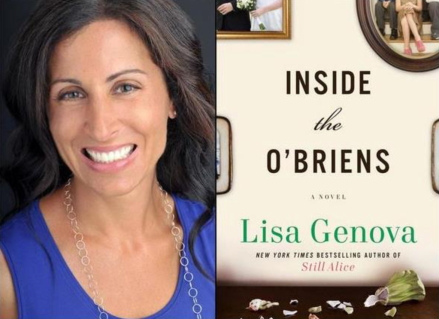
I’ve mentioned novelist/neuroscientist Lisa Genova a couple of times in recent posts after reading Still Alice (2007) earlier this year. That moving chronicle of a woman with early-onset Alzheimer’s quickly led me to two other excellent works by Geneva, who’s still only 49 with a long writing future.
John Grisham? I read that compelling author for the first time when I picked up his fourth novel, 1993’s The Client, around 2012 or so. I’ve since read four of his other novels — one pre-’93 (1991’s The Firm) and three post-’93 — from among the 30-plus he’s penned. His writing pace has yet to slow at 64.
It was also a fourth novel — 2011’s The Hypnotist’s Love Story — that introduced me to one of today’s best authors: Australia’s Liane Moriarty. I’ve yet to read her first three (darn local library doesn’t stock them), but have “consumed” her fifth, sixth (the especially engrossing Big Little Lies), and seventh novels. She’s just 53.
I finally read Walter Mosley’s first two Easy Rawlins mysteries (1990’s Devil in a Blue Dress and 1991’s A Red Death) a couple of years ago, and now there are 12 others in that series from which to choose — as well as many other Mosley novels. He’s still going strong at 67, with a new book set for 2020 release.
Lionel Shriver? I read her superb So Much For That a few years after it came out in 2010, and have since enjoyed three of her 14 other novels. She’s now 62, and — like Mosley — has another novel in the 2020 pipeline.
I was introduced to Zadie Smith’s work with On Beauty (2005), and then doubled back to her even better debut novel White Teeth (2000). Few authors depict our multicultural world better, and there are surely many more books in the 44-year-old’s future.
More than three-dozen years went by before I finally picked up Martin Cruz Smith’s gripping 1981 novel Gorky Park. That led me to read seven Gorky sequels and two of his standalone novels. He’s still writing at 77.
And Donna Tartt? I first read her third and most recent novel, the great The Goldfinch (2013), before going back to The Little Friend (2002) and The Secret History (1992). Yes, Tartt has penned just one novel every decade or so — meaning, at age 55, perhaps we might see two or three more?
Which living authors (whether mentioned by me or not) were you gratified to read for the first time — and gratified that there were many more of their novels available from their pasts and in their futures?
My literary-trivia book is described and can be purchased here: Fascinating Facts About Famous Fiction Authors and the Greatest Novels of All Time.
In addition to this weekly blog, I write the award-winning “Montclairvoyant” topical-humor column for Baristanet.com. The latest weekly piece — which has a Thanksgiving theme — is here.
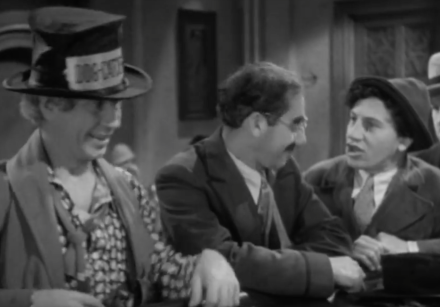 In Marx Brothers movies, we have the talkative Groucho and Chico and the mute Harpo. “So it goes” with novels — there are some loquacious characters as well those who say little or nothing, though of course most are somewhere in between on the speaking scale.
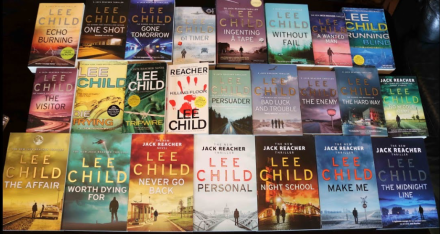 Some fiction authors are rather formulaic while others vary their approach with almost every novel — and I like both kinds of writers.
 One of the many jaw-dropping spectacles offered by the dumpster fire of the corrupt and incompetent Trump administration is seeing how low Rudy Giuliani (pictured above) can go.
 In the case of many novels, readers basically know the general parameters of what will happen. In the case of many other novels, the plot destination is a complete or near-complete unknown (unless a review or too-talkative friend gives things away 🙂 ). Either type of novel has the potential to be compelling.
 The first residents of what’s now the United States were Native Americans, but they haven’t often been first in the casts of novels. Still, there are a number of such characters, including more in recent years.
 Have you ever read just one novel by an author — her or his most famous work — but then waited years to read some of their other, lesser-known books?
 Last week, I listed my favorite novels published between 2010 and 2019. This week, I’ll go back a decade to rank my favorite novels with 2000-to-2009 releases. Don’t worry, there’ll be no list of 1990s fiction in next week’s post… 🙂
 As visitors to this blog know, I often write about novels that date back decades or centuries. But I also read some recent fiction, and thought I’d list my favorite novels published since 2010 — some literary, others mass-audience-oriented. Not necessarily the best novels of the past nine years (that’s so subjective anyway) but my personal favorites. Then I’ll ask for yours!
 Dave Astor on Literature