
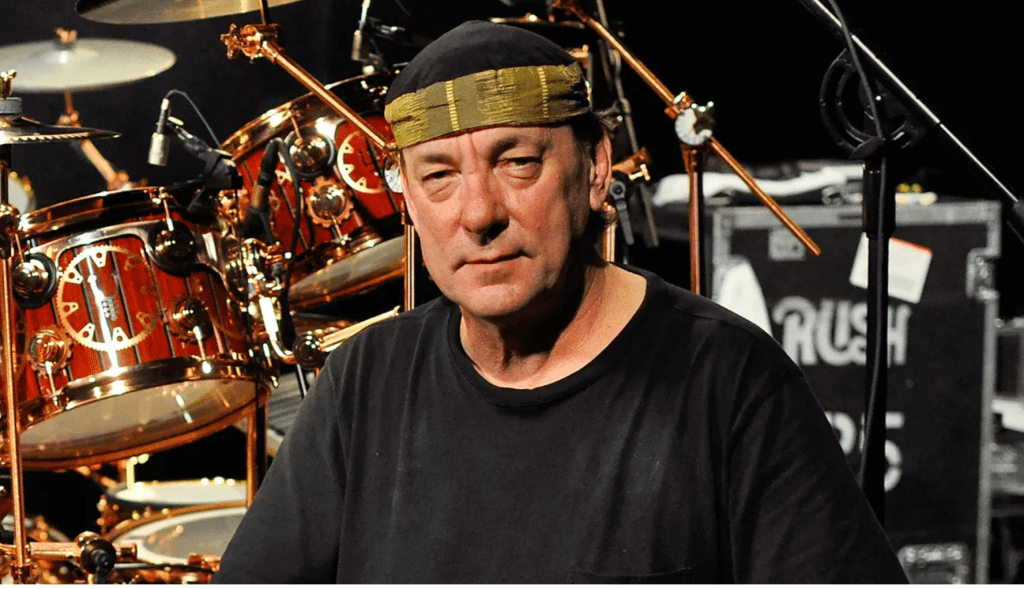
Clockwise from top left, Rush bandmates Geddy Lee and Alex Lifeson (photo credit: Rush), new Rush drummer Anika Nilles (Richard Ecclestone/Redferns), and the late Neil Peart (Clayton Call/Getty Images).
Last week, the band Rush announced it would go on a concert tour again in 2026 for the first time in 11 years. (Stick with me here; this will eventually be a literature post. 🙂 )
A lot has happened since 2015 with one of my favorite bands. Rush stopped touring mostly because the Canadian group’s legendary drummer/lyricist Neil Peart needed to end the physical and mental strain of more than four decades of hard-slamming, intricate percussion work. His bandmates — vocalist/bassist/keyboardist Geddy Lee and guitarist Alex Lifeson, the friends from childhood who co-created the music paired with Peart’s words — decided not to continue the Rock and Roll Hall of Fame band without their close pal and went on to do other things. That included Lifeson playing in another band (Envy of None) and Lee writing a best-selling memoir and a coffee-table book focusing on bass guitars.
Peart himself was a prolific nonfiction-book author whose Rush lyrics included many literary references; see below for a 2020 post of mine about that. Sadly, “The Professor” (as Peart was known) died that year of brain cancer. It definitely looked like Rush was done — until last week’s news.
The grand conclusion to all this? Brilliant drummer Anika Nilles of Germany was chosen by Lee and Lifeson to sit in Peart’s spot behind the kit — with the permission of Peart’s widow and daughter.
Anyway, this is a long intro to a literature theme Rush’s announcement made me think of — authors going a long time before writing a novel again. (I’ve previously done variations on this theme, including instances of a long gap between a famous novel and its sequel.)
The first author that came to mind was Herman Melville, whose last published novel in his lifetime came out in 1857 despite him not dying until 1891. Poor sales, negative reaction from critics, and other factors put a halt to a decade-plus of very prolific book writing, though Melville in his non-novel years did do some poetry in addition to his customs inspector job. Still, Melville started the novel Billy Budd a few years before his death — and it became a success when published posthumously in 1924 and republished in a more complete 1962 edition.
Melville’s friend Nathaniel Hawthorne’s first novel, 1828’s Fanshawe, didn’t sell well and the author turned to short stories and other things for a long 22 years before The Scarlet Letter arrived in 1850. That became an instant classic, and several other novels followed fairly quickly.
Then there’s Marilynne Robinson, whose debut novel Homecoming came out in 1980 — followed by a 24-year gap before her second novel Gilead was published. Why? Robinson turned to nonfiction writing and to teaching. The author released novels more often after 2004.
Arundhati Roy also wrote an acclaimed debut novel — 1997’s The God of Small Things — before two decades went by until her second novel, 2017’s The Ministry of Utmost Happiness. Like Robinson, Roy wrote nonfiction in between and was also involved in plenty of political activism in India.
Of course, some novelists come out with a new title only once in a while because they’re slower writers and/or write ambitious books that take a lot of time. That’s the case, for instance, with Donna Tartt — whose only three novels were published in 1992, 2002, and 2013; now 12 years and counting until a possible fourth. A similar trajectory for Jeffrey Eugenides — only three novels, in 1993, 2002, and 2011, with other years taken up by plenty of short stories as well as teaching.
To reference the title of one of Rush’s most famous songs, there can be a long gap between time in the “Limelight,” and inspiration doesn’t always arrive like clockwork. (Clockwork Angels was Rush’s last studio album.)
Your thoughts on, and/or any examples of, this topic?
Misty the cat says: “As Robert Frost wrote, ‘Good fences make good YouTube videos.'”
My comedic 2024 book — the part-factual/part-fictional/not-a-children’s-work Misty the Cat…Unleashed — is described and can be purchased on Amazon in paperback or on Kindle. It’s feline-narrated! (And Amazon reviews are welcome. 🙂 )
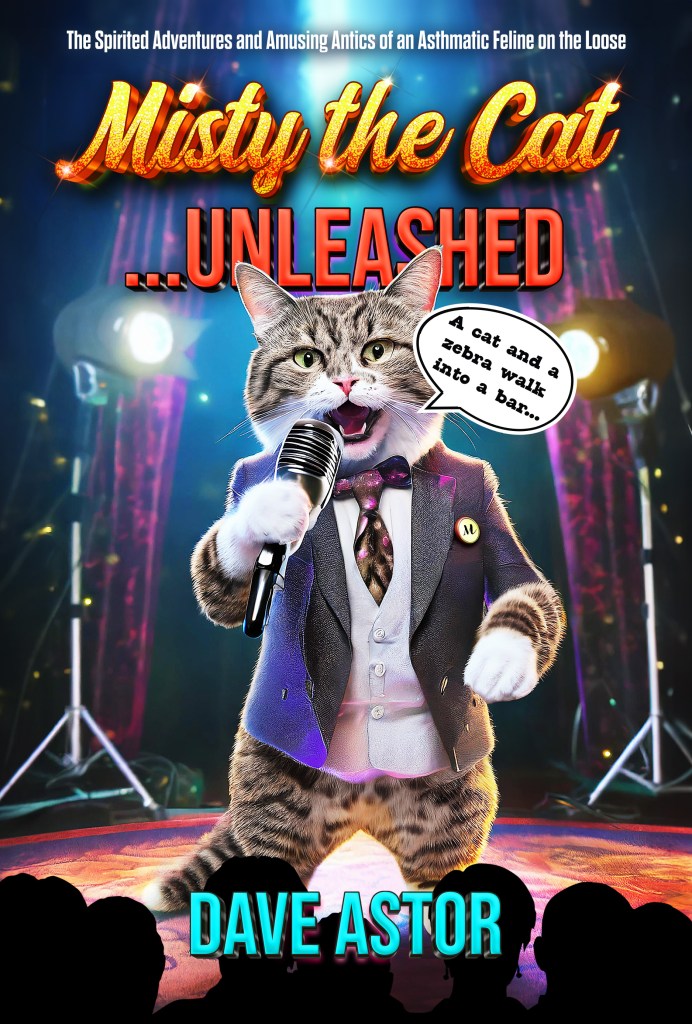
This 90-second promo video for the book features a talking cat: 🙂
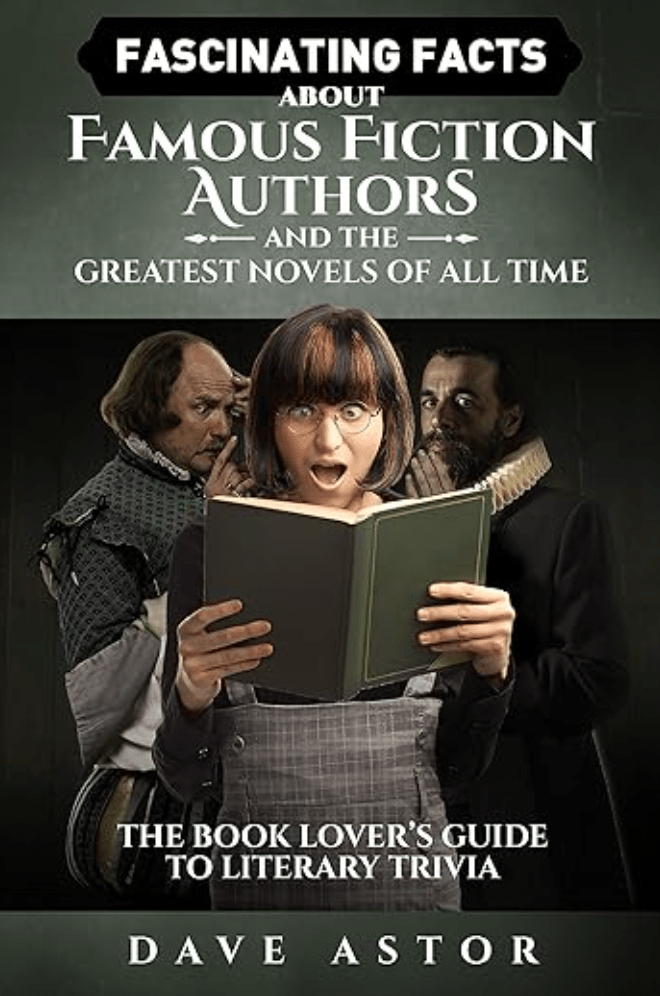
I’m also the author of a 2017 literary-trivia book…
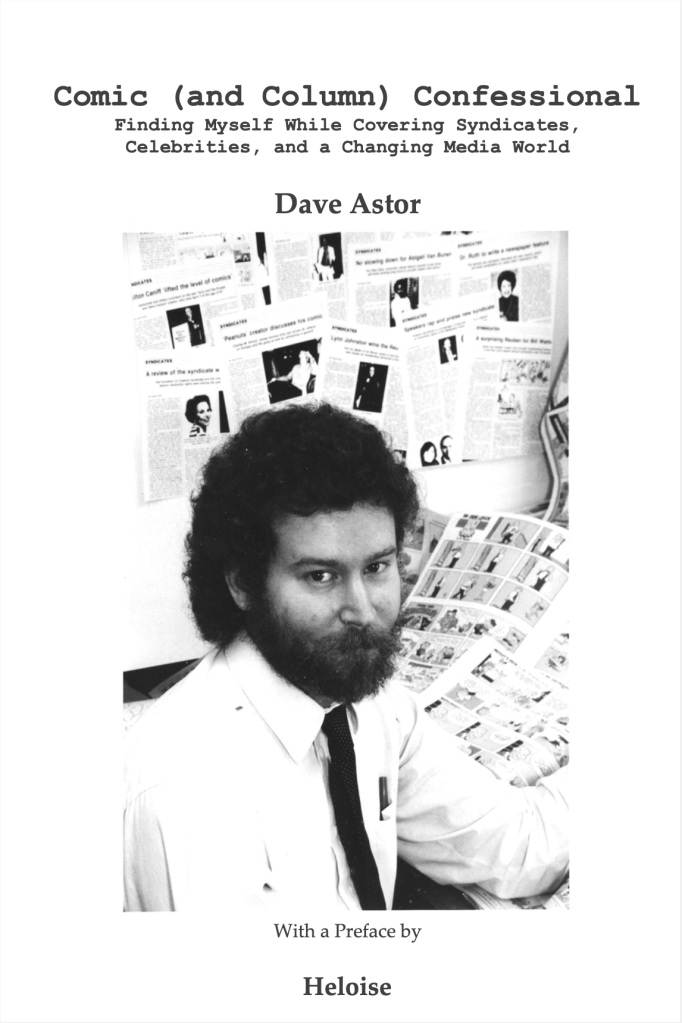
…as well as a 2012 memoir that focuses on cartooning and more, and includes many encounters with celebrities.
In addition to this weekly blog, I write the 2003-started/award-winning “Montclairvoyant” topical-humor column every Thursday for Montclair Local. The latest piece — about a new councilor and a deficit referendum decision — is here.
 Dave Astor on Literature