Cars Can Help Drive the Plots of Novels

Our 2014 Toyota Prius leaving its apartment-complex garage. (Driven by my wife Laurel/photographed by me.)

My wife Laurel and I drove from New Jersey to Michigan and back this weekend for a memorial service in Ann Arbor for a cherished family member. It was a crazily compressed November 14-16 car journey of more than 1,200 miles round trip — a travel method we chose to avoid possible flight problems in the aftermath of the U.S. government shutdown.

Anyway, all that automotive time means I have driving on my mind, so I’m resurrecting a piece about cars in literature that I wrote for The Huffington Post in 2013, a year before starting this WordPress blog. Here it is, slightly edited and slightly rewritten:

In literature, sometimes a car is just a car. But sometimes it’s a “vehicle” for authors to write about independence, loneliness, progress, sex, death, wealth, poverty, and more.

Whether or not book-based cars are weighted with symbolism, most readers relate to driving. So I’d like to steer you to some novels in which cars are important “characters,” and then hear about your favorite fictional works that feature those on-the-road contraptions.

Which reminds me of Jack Kerouac’s On the Road novel and the way some cars in literature are used to search (futilely or otherwise) for freedom and/or pleasure, and can speak to characters’ restlessness, aimlessness, and/or discontent.

That’s the case in Paul Auster’s The Music of Chance. Protagonist Jim Nashe spends the first part of the novel endlessly crisscrossing the U.S. in a car after his wife leaves him. The ex-firefighter, who finances his marathon road trip with an unexpected inheritance, eventually ends up involved in a high-stakes poker game at the mansion of two eccentric/heartless rich guys. Then things get really weird before the novel concludes with (wait for it!) one more car ride.

There’s another fateful auto scene — though not at the end of the book — in Jeffrey Eugenides’ Middlesex. It’s a car chase that features Calliope’s dad Milton driving too fast on the Ambassador Bridge between Detroit and Canada.

Motor vehicles also figure prominently in Booth Tarkington’s The Magnificent Ambersons, with successful automaker Eugene Morgan representing turn-of-the-20th-century progress while Major Amberson and his dwindling fortune represent the vanishing horse-and-buggy age. New money vs. old money and all that.

Tarkington contemporary L.M. Montgomery offers a scene in The Blue Castle of Valancy Stirling sharing an exuberant car ride with “misfit” Barney Snaith. Many people in their straitlaced town are suspicious of Barney, but Valancy finds him very interesting — so the car ride is a symbol of Valancy’s break from the conventions of her place, time, and family.

Novels of the Montgomery-Tarkington era were usually subtle about sex, but that’s not the case with many books of recent decades. For instance, there’s a scene in Ken Grimwood’s time-travel novel Replay that shows how cars can potentially be bedrooms on wheels.

Speaking of time travel, there’s a great section of Jack Finney’s Time and Again in which Simon accompanies Julia from her present (1880s) to his present (around 1970), and Julia is of course stunned by the experience of riding in a modern motor vehicle.

Readers are the ones who might be stunned as they peruse Charles Dickinson’s The Widows’ Adventures, a novel starring two women on a long road trip. The one doing the driving is…blind!

Then there are supernatural thrills in car-oriented Stephen King novels such as Christine and From a Buick 8. The latter book includes a spooky gas station scene before various law-enforcement people enter the story.

Two memorable moments in Cormac McCathy’s Suttree involve what the title character does to a police car (to avenge racist cop behavior) and what Suttree’s girlfriend does to the couple’s own car. And in Fay Weldon’s The Bulgari Connection, the spurned older wife is jailed after using an auto to do a certain something to the trophy wife who “replaced” her.

Or how about that tense yet hilarious Harry Potter and the Chamber of Secrets scene in which J.K. Rowling has Harry and Ron travel to Hogwarts in a flying car? An auto can definitely be a “vehicle” for humor.

On a much more serious note, a car converted into a truck of sorts is how the Joad family travels from drought-stricken/agribusiness-devastated Oklahoma to a hoped-for better life in California. But the reality out west for the non-rich is as dismal as the Joads’ aged jalopy in John Steinbeck’s The Grapes of Wrath.

People take long car trips for various reasons. In John Grisham’s The Client, attorney Reggie Love and her beleaguered 11-year-old client Mark drive from Memphis to New Orleans to try to locate the body of a murdered U.S. senator.

What are your favorite fictional works with motor vehicle motifs?

Misty the cat says: “The Lincoln Tunnel has been renovated!”

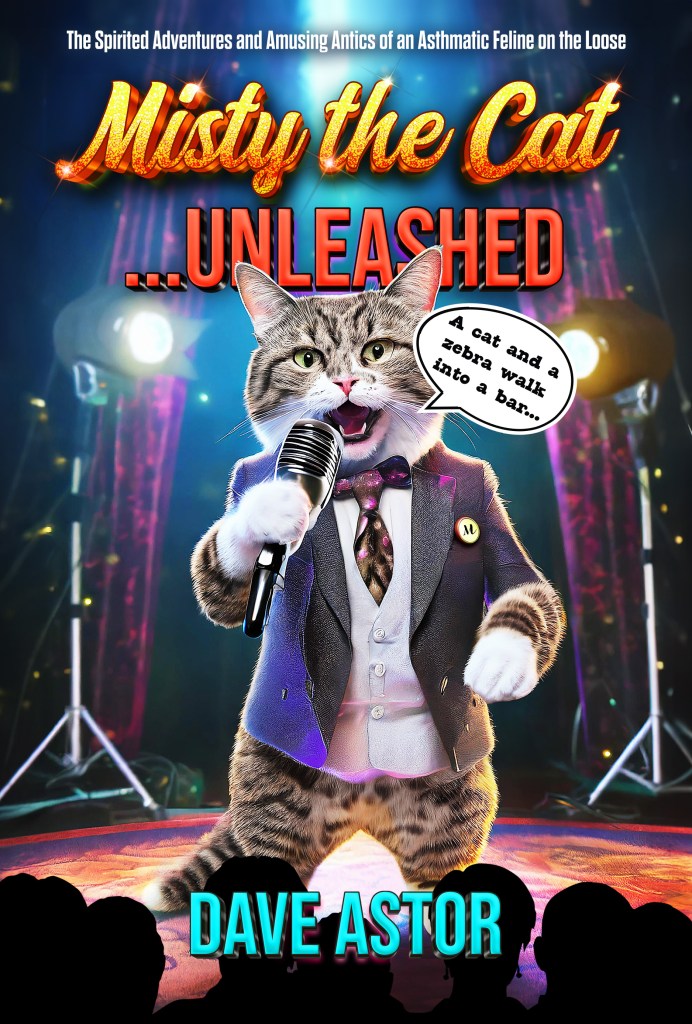
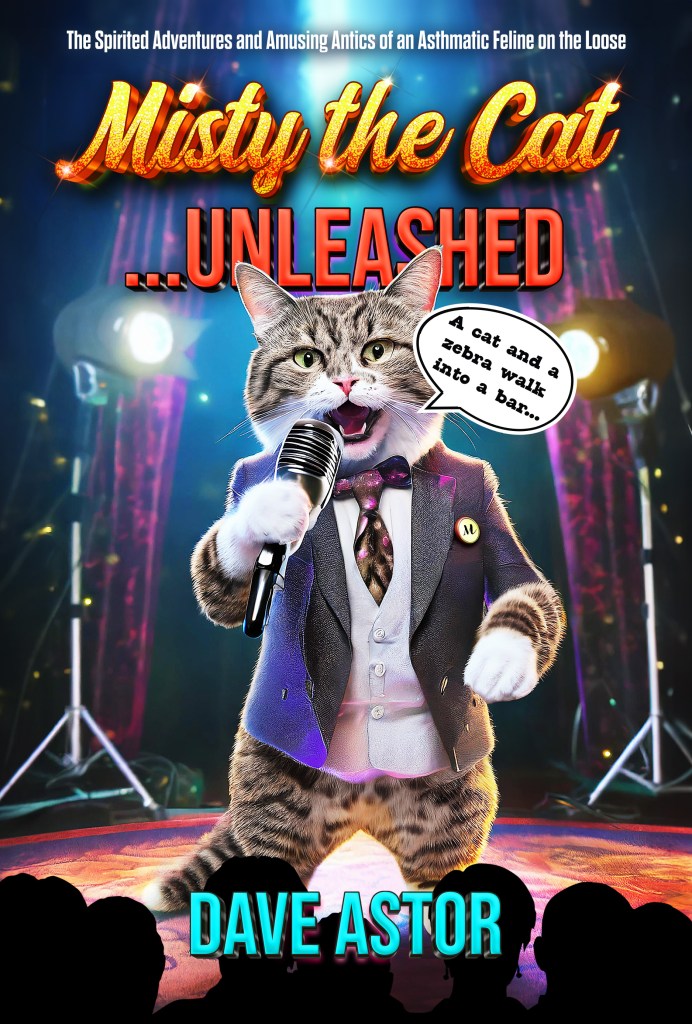
My comedic 2024 book — the part-factual/part-fictional/not-a-children’s-work Misty the Cat…Unleashed — is described and can be purchased on Amazon in paperback or on Kindle. It’s feline-narrated! (And Amazon reviews are welcome. 🙂 )
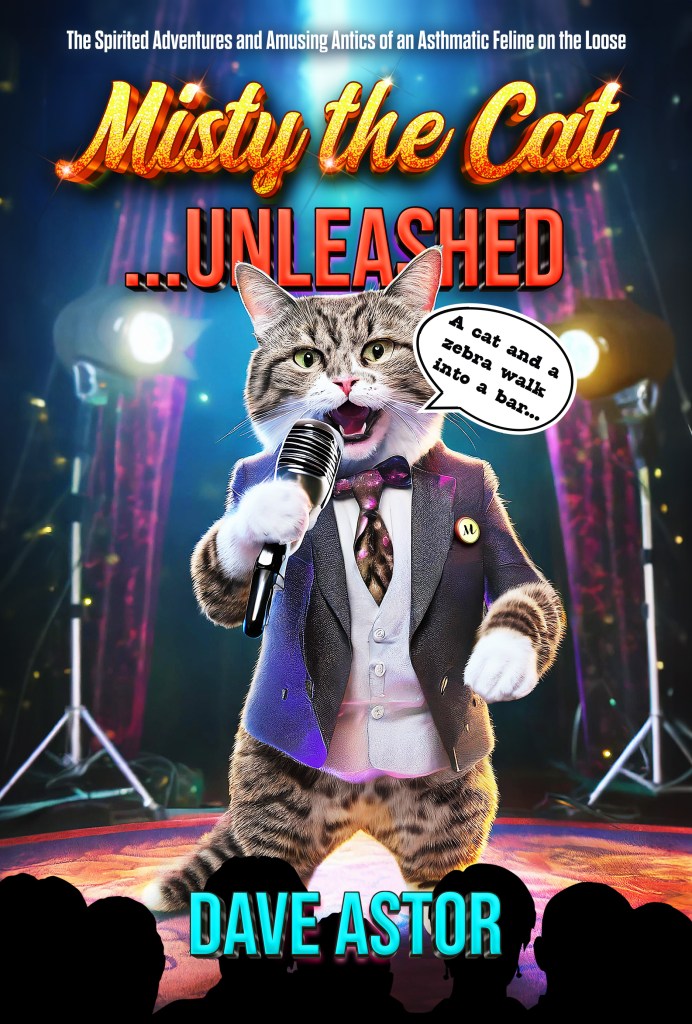
This 90-second promo video for the book features a talking cat: 🙂

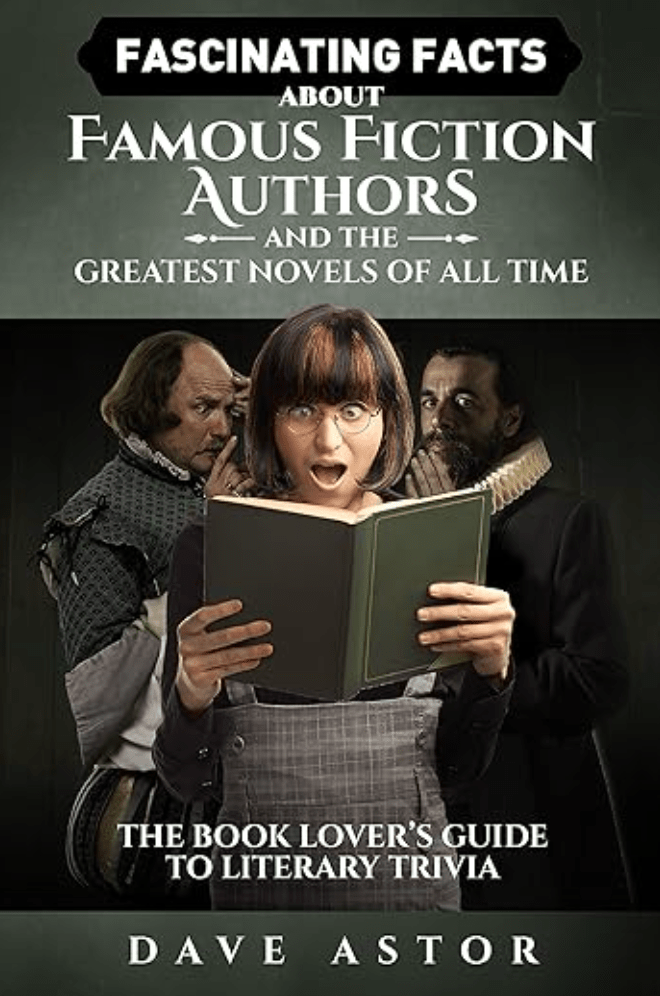
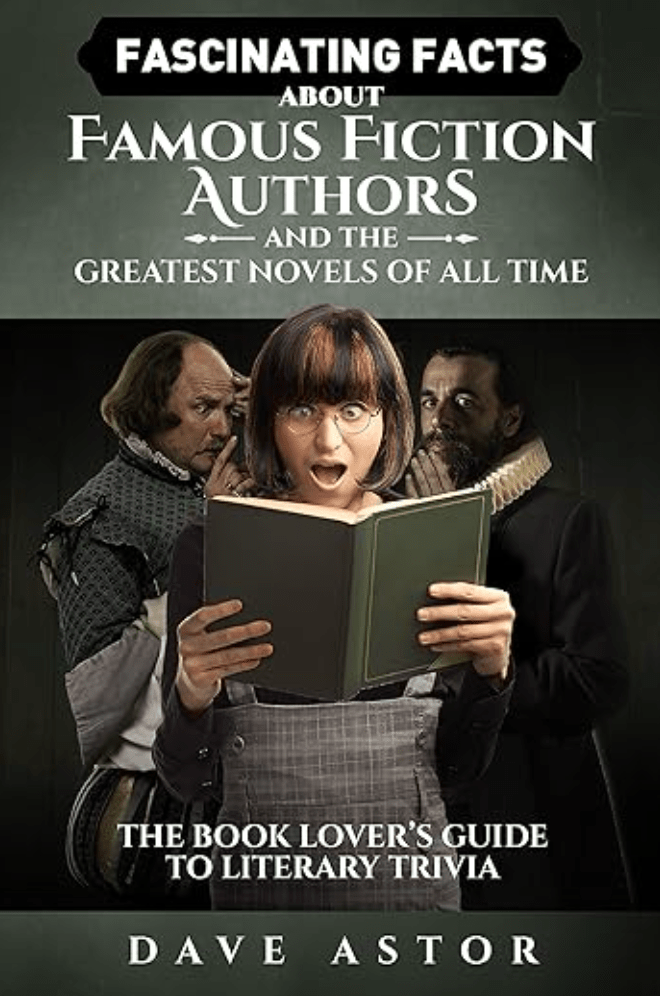
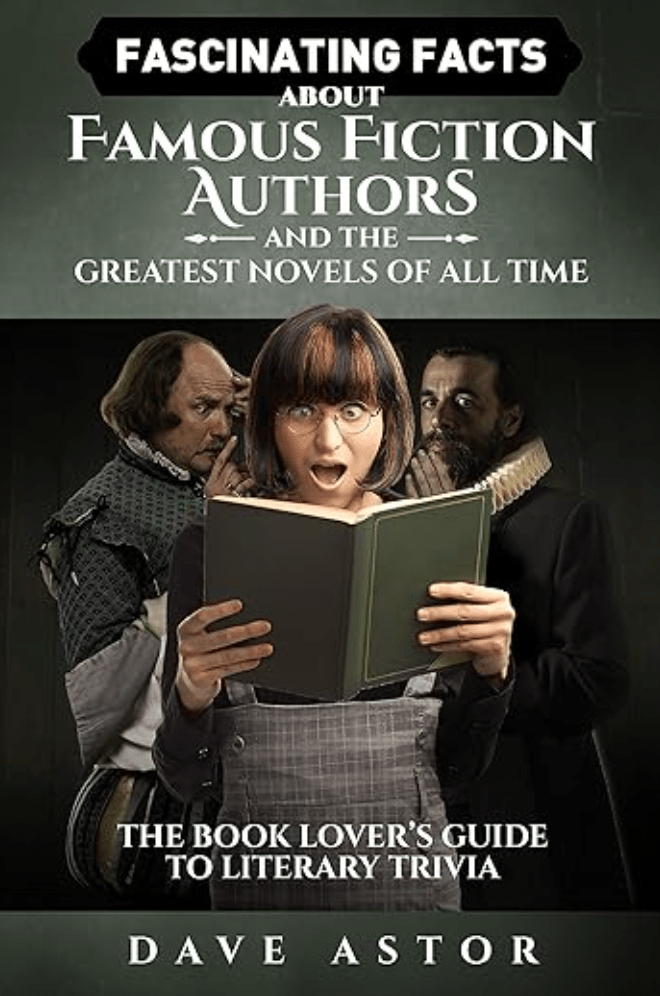
I’m also the author of a 2017 literary-trivia book

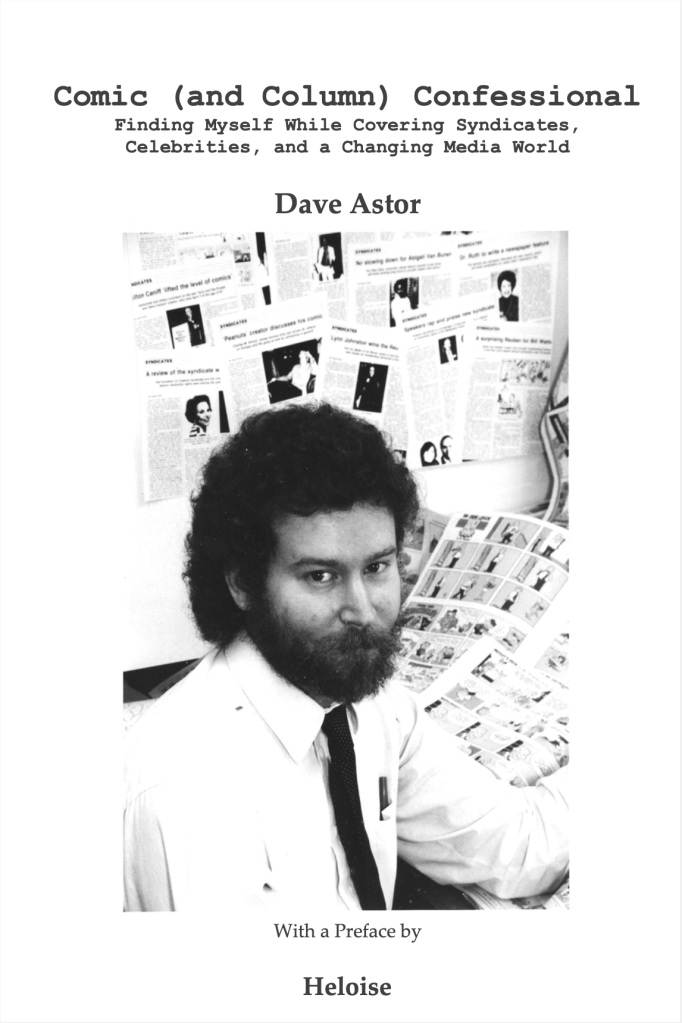
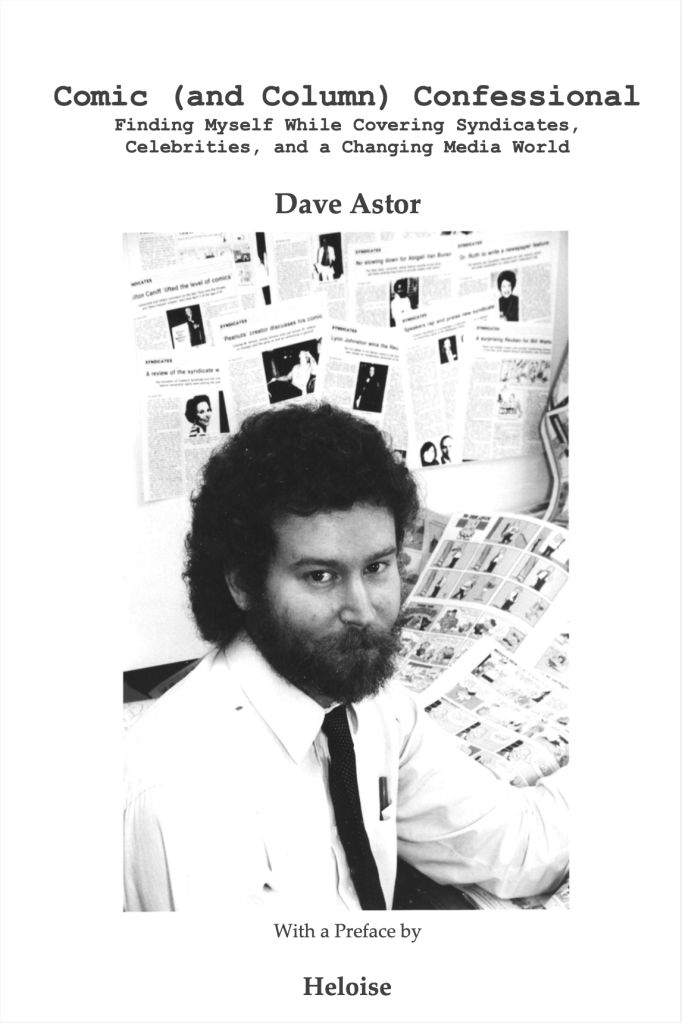
…and a 2012 memoir that focuses on cartooning and more, including many encounters with celebrities.
In addition to this weekly blog, I write the 2003-started/award-winning “Montclairvoyant” topical-humor column every Thursday for Montclair Local. The latest piece — about two flawed local ballot questions relating to a massive school budget deficit — is here.

When There’s No ‘Rush’ Between Novels

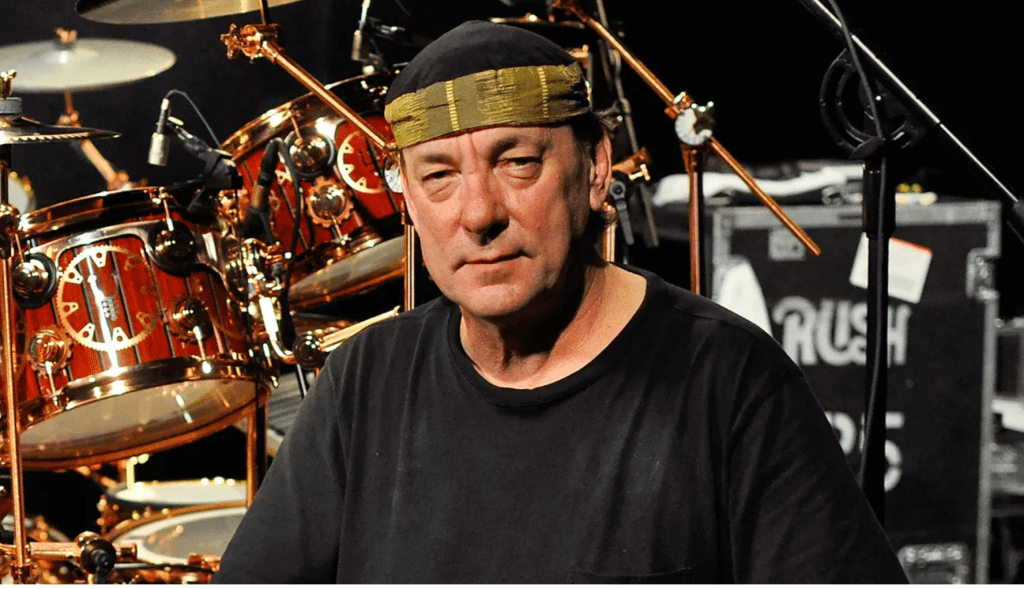
Clockwise from top left, Rush bandmates Geddy Lee and Alex Lifeson (photo credit: Rush), new Rush drummer Anika Nilles (Richard Ecclestone/Redferns), and the late Neil Peart (Clayton Call/Getty Images).

Last week, the band Rush announced it would go on a concert tour again in 2026 for the first time in 11 years. (Stick with me here; this will eventually be a literature post. 🙂 )

A lot has happened since 2015 with one of my favorite bands. Rush stopped touring mostly because the Canadian group’s legendary drummer/lyricist Neil Peart needed to end the physical and mental strain of more than four decades of hard-slamming, intricate percussion work. His bandmates — vocalist/bassist/keyboardist Geddy Lee and guitarist Alex Lifeson, the friends from childhood who co-created the music paired with Peart’s words — decided not to continue the Rock and Roll Hall of Fame band without their close pal and went on to do other things. That included Lifeson playing in another band (Envy of None) and Lee writing a best-selling memoir and a coffee-table book focusing on bass guitars.

Peart himself was a prolific nonfiction-book author whose Rush lyrics included many literary references; see below for a 2020 post of mine about that. Sadly, “The Professor” (as Peart was known) died that year of brain cancer. It definitely looked like Rush was done — until last week’s news.

The grand conclusion to all this? Brilliant drummer Anika Nilles of Germany was chosen by Lee and Lifeson to sit in Peart’s spot behind the kit — with the permission of Peart’s widow and daughter.

Anyway, this is a long intro to a literature theme Rush’s announcement made me think of — authors going a long time before writing a novel again. (I’ve previously done variations on this theme, including instances of a long gap between a famous novel and its sequel.)

The first author that came to mind was Herman Melville, whose last published novel in his lifetime came out in 1857 despite him not dying until 1891. Poor sales, negative reaction from critics, and other factors put a halt to a decade-plus of very prolific book writing, though Melville in his non-novel years did do some poetry in addition to his customs inspector job. Still, Melville started the novel Billy Budd a few years before his death — and it became a success when published posthumously in 1924 and republished in a more complete 1962 edition.

Melville’s friend Nathaniel Hawthorne’s first novel, 1828’s Fanshawe, didn’t sell well and the author turned to short stories and other things for a long 22 years before The Scarlet Letter arrived in 1850. That became an instant classic, and several other novels followed fairly quickly.

Then there’s Marilynne Robinson, whose debut novel Homecoming came out in 1980 — followed by a 24-year gap before her second novel Gilead was published. Why? Robinson turned to nonfiction writing and to teaching. The author released novels more often after 2004.

Arundhati Roy also wrote an acclaimed debut novel — 1997’s The God of Small Things — before two decades went by until her second novel, 2017’s The Ministry of Utmost Happiness. Like Robinson, Roy wrote nonfiction in between and was also involved in plenty of political activism in India.

Of course, some novelists come out with a new title only once in a while because they’re slower writers and/or write ambitious books that take a lot of time. That’s the case, for instance, with Donna Tartt — whose only three novels were published in 1992, 2002, and 2013; now 12 years and counting until a possible fourth. A similar trajectory for Jeffrey Eugenides — only three novels, in 1993, 2002, and 2011, with other years taken up by plenty of short stories as well as teaching.

To reference the title of one of Rush’s most famous songs, there can be a long gap between time in the “Limelight,” and inspiration doesn’t always arrive like clockwork. (Clockwork Angels was Rush’s last studio album.)

Your thoughts on, and/or any examples of, this topic?

Misty the cat says: “As Robert Frost wrote, ‘Good fences make good YouTube videos.'”

My comedic 2024 book — the part-factual/part-fictional/not-a-children’s-work Misty the Cat…Unleashed — is described and can be purchased on Amazon in paperback or on Kindle. It’s feline-narrated! (And Amazon reviews are welcome. 🙂 )

This 90-second promo video for the book features a talking cat: 🙂

I’m also the author of a 2017 literary-trivia book

…as well as a 2012 memoir that focuses on cartooning and more, and includes many encounters with celebrities.

In addition to this weekly blog, I write the 2003-started/award-winning “Montclairvoyant” topical-humor column every Thursday for Montclair Local. The latest piece — about a new councilor and a deficit referendum decision — is here.