A Semi-Comprehensive Look at Semi-Autobiographical Novels

In early 2016, I wrote about semi-autobiographical novels. Now that nearly 10 years have passed, I suppose it would be semi-okay to write about those books again — mentioning semi-autobiographical novels I’ve read since then or had read before then but didn’t mention in that previous post. So, with this semi-decent first paragraph nearly done, here goes:

As I wrote in ’16, semi-autobiographical novels “can be the best of both worlds for authors and their readers. That mix of memoir and fiction takes facts and embellishes them and/or dramatizes them and/or smooths them into more coherent form. A partly autobiographical approach also allows authors to potentially pen very heartfelt books — after all, they lived the emotions — and perhaps provides those writers with some mental therapy, too.” I also wrote that a semi-autobiographical novel is often, but of course not always, a debut novel — at least partly because that kind of book might be easier to write; the author can use aspects of her or his own past.

Back here in late 2025, I just read The Cat’s Table by Michael Ondaatje, whose 2011 coming-of-age novel was inspired to an extent by the author’s life and a ship voyage he took as a boy from his native Sri Lanka to rejoin his mother in England after his parents had separated several years earlier. A boy named…hmm…Michael. The Cat’s Table is another compelling book by The English Patient author, who went on to live in Canada.

Another semi-autobiographical/coming-of-age novel (those two things often go together) is Betty Smith’s 1943 bestseller A Tree Grows in Brooklyn — about a brainy girl (Francie) growing up in an impoverished urban family.

Then there’s Little Women by Louisa May Alcott, who loosely based her classic 1868-69 novel on herself and her three sisters.

A few decades earlier, Mary Shelley’s apocalyptic 1826 novel The Last Man featured three principal characters based on herself, her late husband Percy Bysshe Shelley, and their friend and fellow writer Lord Byron.

Aldous Huxley also used famous people as models for characters in his 1928 novel Point Counter Point — including himself, Nancy Cunard, D.H. Lawrence, and Katherine Mansfield.

The characters in Harper Lee’s To Kill a Mockingbird (1960) are somewhat modeled on the author’s father (attorney Atticus Finch in the novel), herself (Scout in the book) and Lee’s childhood friend Truman Capote (fictionally named Dill).

Kurt Vonnegut’s horrific World War II experiences were fuel for his sci-fi-infused 1969 novel Slaughterhouse-Five, and Jack Kerouac’s travel experiences provided fodder for his On the Road (1957).

Some of the semi-autobiographical novels mentioned in my 2016 post include James Baldwin’s Go Tell It on the Mountain, Ray Bradbury’s Dandelion Wine, Charlotte Bronte’s Villette, Rita Mae Brown’s Rubyfruit Jungle, Charles Bukowski’s Hollywood, Willa Cather’s My Antonia, Colette’s The Vagabond, Charles Dickens’ David Copperfield, E.L. Doctorow’s World’s Fair, Fyodor Dostoevsky’s The House of the Dead, George Eliot’s The Mill on the Floss, Nathaniel Hawthorne’s The Blithedale Romance, Zora Neale Hurston’s Their Eyes Were Watching God, Jack London’s Martin Eden, W. Somerset Maugham’s Of Human Bondage, Herman Melville’s Typee, L.M. Montgomery’s Emily trilogy, Sylvia Plath’s The Bell Jar, Erich Maria Remarque’s All Quiet on the Western Front, John Steinbeck’s East of Eden, and Amy Tan’s The Joy Luck Club.

Your thoughts about, and examples of, this topic?

Misty the cat says: β€œWhen Christmas-tree lights reflect off the window, it’s a pane in the grass.”

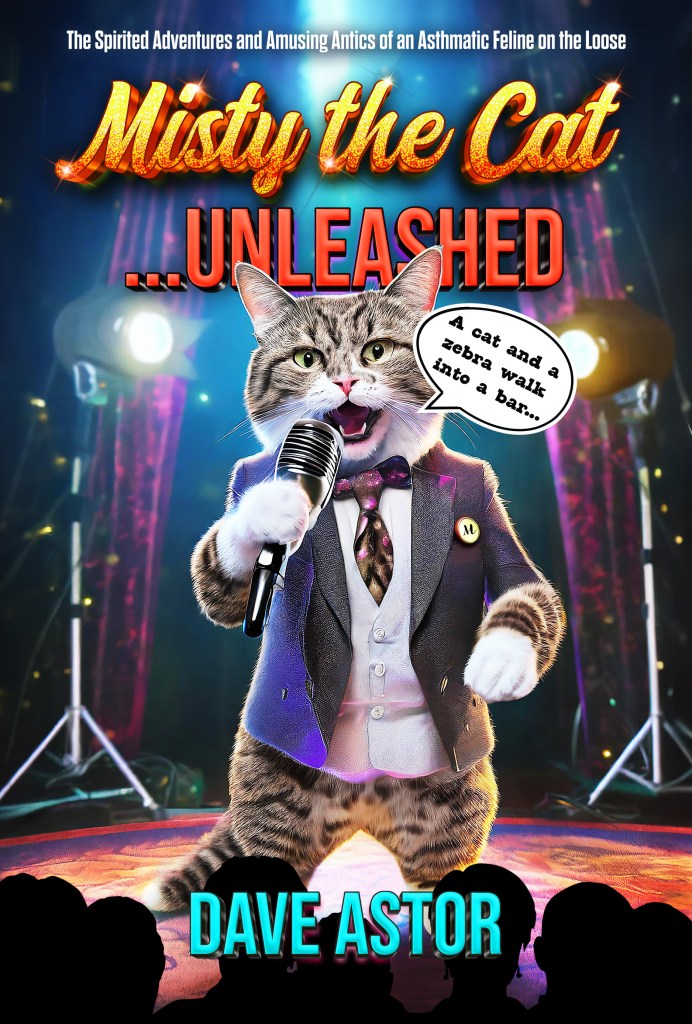
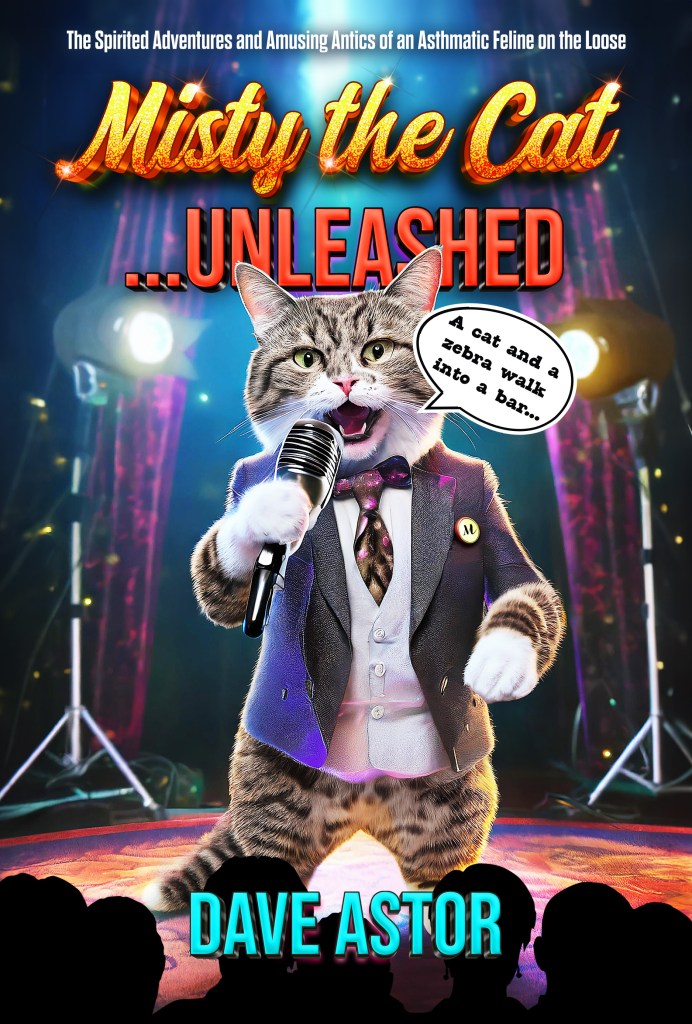
My comedic 2024 book — the part-factual/part-fictional/not-a-children’s-work Misty the Cat…Unleashed — is described and can be purchased on Amazon in paperback or on Kindle. It’s feline-narrated! (And Amazon reviews are welcome. πŸ™‚ )

This 90-second promo video for the book features a talking cat: πŸ™‚

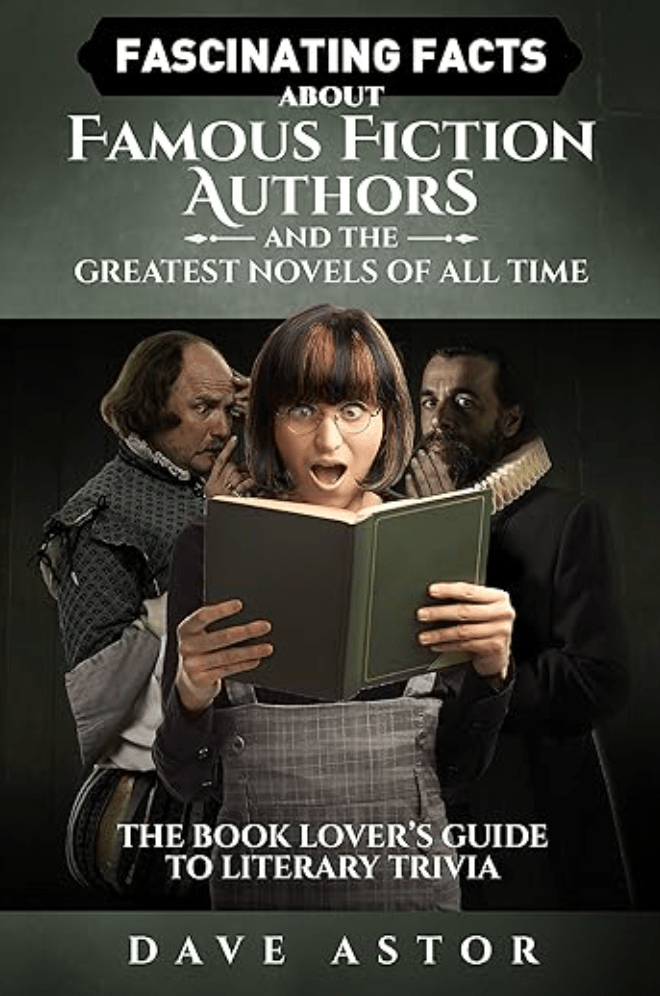
I’m also the author of a 2017 literary-trivia book

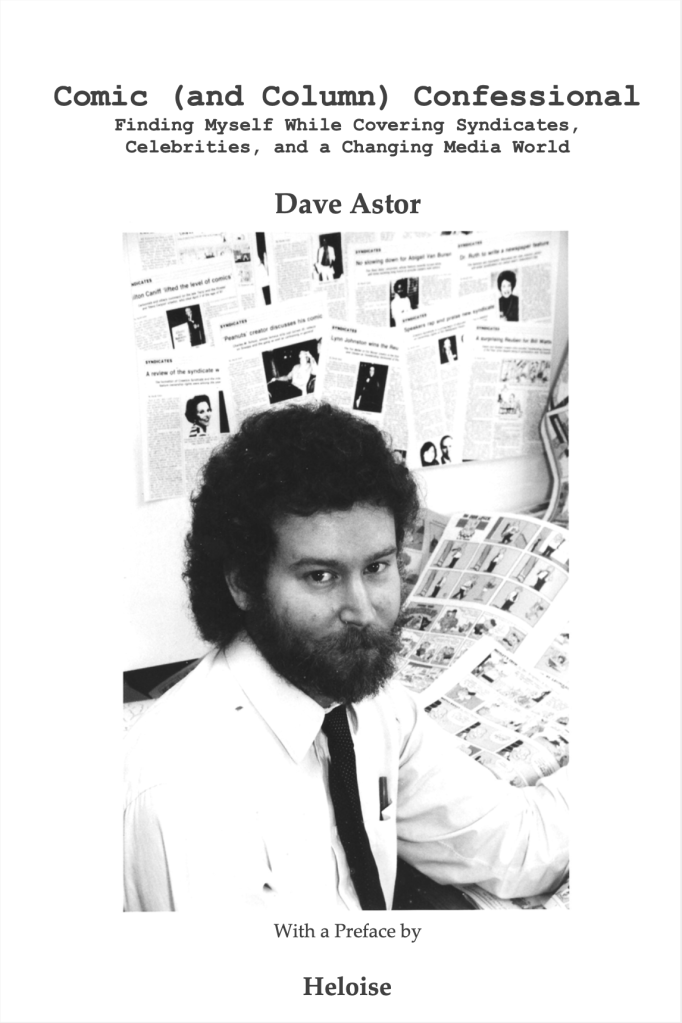
…and a 2012 memoir that focuses on cartooning and more, including many encounters with celebrities.
In addition to this weekly blog, I write the 2003-started/award-winning “Montclairvoyant” topical-humor column every Thursday for Montclair Local. The latest piece — which contains a tale of two meetings — is here.
Summer in the City? No, Summer with a Kitty

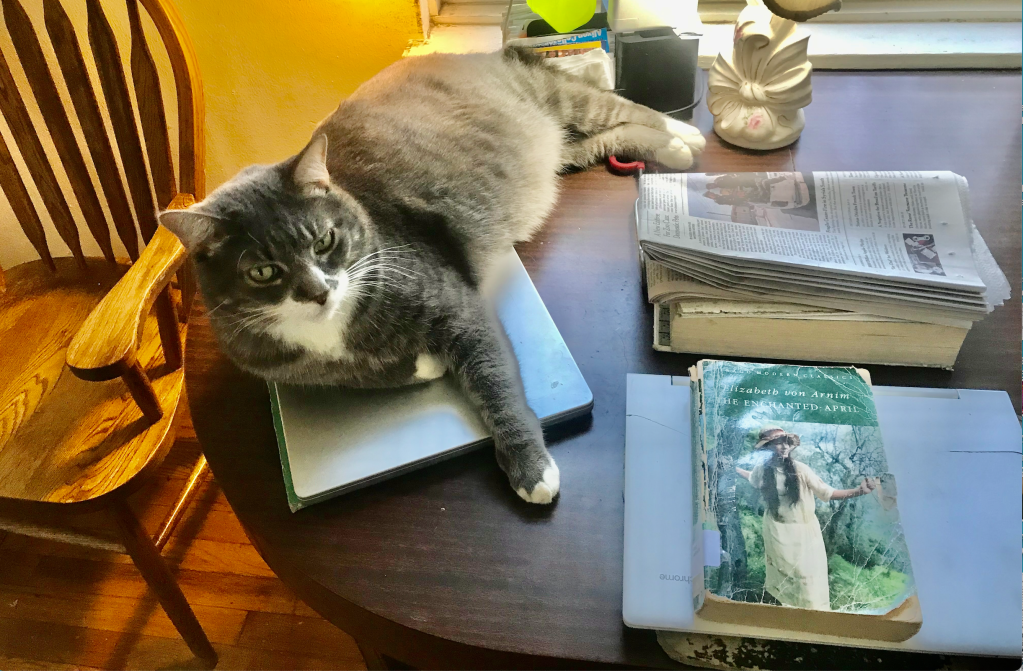
My feline self sprawled next to Elizabeth von Arnim’s The Enchanted April, which I will not discuss today because I haven’t finished reading it yet. The first letters of that novel’s title spell “tea,” which I don’t drink. Thank you for your attention to these two matters. (Photo by Dave.)

Misty the suburban cat here with my every-two-month blog post. My previous guest piece was in June, this one is in August, and the next one will be in October. Except that U2’s October album was released in 1981, so I’m not sure how my next blog post will be in…October. There IS a song on that album called “Stranger in a Strange Land,” which is about me at the vet for my yearly check-up.

Anyway, my adult humans Dave and Laurel saw the Superman movie this month, and enjoyed its thrills, acting, and empathy. But I, Misty, was not allowed in the theater because of being a cat. I was actually kind of relieved, because sitting through 25 minutes of ads and previews would have had me yowling loud enough to be heard on Mars — which billionaire bozo Elon Musk, aka the Tesla dude, wants to not only colonize but have The Martian Chronicles author Ray Bradbury write a 2025 sequel called The SpaceX Chronicles. Given that Bradbury died in 2012, he…missed the pleasure of seeing the catastrophic flop of Musk’s stupid Cybertruck.

The Superman film reminds me and other kitties of Michael Chabon’s The Amazing Adventures of Kavalier & Clay, the 2000 novel partly based on the real-life Jerry Siegel/Joe Shuster duo who created the Superman character for comic books in 1938 — the year the iPhone minus-69 was released.

More generally, the 2025 movie starring the “Man of Steel” also reminds my meowing self of fictional characters possessing abilities beyond the capacity of most mortals. One is the Lee Child-created Jack Reacher — who’s not a superhero but displays unusual strength, incredible fighting abilities, great intellect, and other attributes in the 29-book series that began in 1997. Exactly a century after Bram Stoker’s Dracula (1897), which stars a vampire who acts out in all kinds of ways after Frankenstein defeats him in pickleball. A tip of the hat to Mary Shelley.

Another character who combines exceptional brains with exceptional physical abilities is the prehistoric protagonist Ayla of Jean M. Auel’s The Clan of the Cave Bear and its sequels. Ayla’s many accomplishments included inventing things and being the only person able to ride Baby the lion (a feline like me!), although she never played pickleball with her horse Whinney.

Some fictional people even rise in the air or fly — in magic-realism novels and other books. Among them are Remedios in Gabriel Garcia Marquez’s One Hundred Years of Solitude, Margarita in Mikhael Bulgakov’s The Master and Margarita, and the title character of J.M. Barrie’s Peter Pan — which was first a play, then a novel, then an animated movie, then a live TV film, and finally a jar of peanut butter which also flew when Dave tossed it out the window to compare its hang time with a jar of Skippy peanut butter. Denying me the opportunity to swat both brands off the counter with my cat paws.

There are also characters who might not be extraordinarily adept in a brute physical way but are really, really smart. Hermione Granger of J.K. Rowling’s Harry Potter books, Sherlock Holmes of Arthur Conan Doyle’s detective fiction, Hercule Poirot of Agatha Christie’s mysteries, Lisbeth Salander of Stieg Larsson’s The Girl with the Dragon Tattoo and its sequels, etc. Lisbeth sadly did not have a cat tattoo, but I forgive her because she’s Swedish and thus might toss some Swedish meatballs my way.

Dave will reply to comments so that I have time to eat the aforementioned meatballs. Rest assured that I maintain a balanced diet — one meatball in each side of my mouth.

I, Misty the cat, say: “After years of study, I’m finally qualified to inspect Belgian blocks.”

My and Dave’s comedic 2024 book — the part-factual/part-fictional/not-a-children’s-work Misty the Cat…Unleashed — is described and can be purchased on Amazon in paperback or on Kindle. It’s feline-narrated! (And Misty says Amazon reviews are welcome. πŸ™‚ )

This 90-second promo video for the book features a talking cat: πŸ™‚

Dave is also the author of a 2017 literary-trivia book

…and a 2012 memoir that focuses on cartooning and more.

In addition to this weekly blog, Dave writes the 2003-started/award-winning “Montclairvoyant” topical-humor column every Thursday for Montclair Local. The latest piece — about my school district’s huge, recently discovered deficit — is here.

‘No Book Panic Syndrome’ Is a Novel Problem

Do you occasionally suffer from NBPS? Yes, I’m talking about No Book Panic Syndrome.

Let me explain. You’re a literature lover, and you’ve finished all the not-read novels in your home. You need to go to the library or bookstore, but you can’t get there quite yet — maybe the next day. Or you’ve ordered a title or two online, and it won’t be arriving in the mail until, say, the weekend. And (this is important!) you read books the old-fashioned way, not on a Kindle.

What to do? You can of course click on some free short stories online, and read them there. But you crave print.

I suffered from NBPS this past week. On Tuesday, I finished Louise Penny’s excellent mystery How the Light Gets In — mostly set in a small Canadian town filled with memorable characters. Two other library books I borrowed in August — Octavia Butler’s sci-fi novel Parable of the Sower and Lee Child’s Jack Reacher adventure Night School — had already been read, admired, and put aside. But I couldn’t get to the library until Thursday because of chores and car availability.

(Yes, Car Availability would make a great name for a rock band.)

Why not go a couple days without reading, I asked myself? Yeah, right, I answered — ain’t happening.

Perusing the back of cereal boxes was not a tempting option, and I had already read too much about Hurricane Irma and What a Pain Donald Trump in the print and online New York Times. So, although I’ve promised myself the past few years not to reread books I own (too many never-tried novels and authors out there), I was desperate enough to start scanning my living-room shelves. There I spotted Ray Bradbury’s R Is For Rocket, a yellowing paperback collection of 17 short stories I hadn’t read since I was a teen. Just 184 pages — the perfect length for a bridge to that Thursday library visit.

And what evocative, exquisitely written tales — about kids (as well as adults) longing to travel in space, and the occasional pitfalls of doing so; about a huge, ancient sea creature falling in love with a lighthouse and foghorn; and the classic “A Sound of Thunder” that depicts how the killing of a tiny butterfly during a trip back in time revises the present the travelers return to just enough to have a nightmarish result.

After Bradbury filled that two-day gap, I found reinforcements on Thursday when my library visit got me Fannie Flagg’s The Whole Town’s Talking, Isak Dinesen’s Seven Gothic Tales, Larry McMurtry’s The Last Kind Words Saloon, and John Green’s The Fault in Our Stars. I’ll undoubtedly mention all those fictional works in future posts.

What do you do when you temporarily have no book you want to read? Do you reread something? Do extra non-reading things? Sob uncontrollably?Β  πŸ™‚

Or maybe the crying will happen when I get to the above-mentioned John Green novel…

I’ll end today’s post with this video of a 2017 U2 song called “The Little Things That Give You Away.” Such as suffering from No Book Panic Syndrome…Β  πŸ™‚

My 2017 literary-trivia book is described and can be purchased here: Fascinating Facts About Famous Fiction Authors and the Greatest Novels of All Time.

In addition to this weekly blog, I write the award-winning “Montclairvoyant” topical-humor column for Baristanet.com. The latest weekly piece, about a way-way-too-big project that became way too big, is here.