When Entertainers Enter Novels

The French author Colette (1873-1954).

Among the memorable characters in literature are entertainers: actors, actresses, singers, musicians, etc.

Many dramatic possibilities with these fictional “show biz” people — including creative highs and lows, how they handle fame or lack of fame, how they handle wealth (if wealthy), how they deal with loneliness on the road, and so on. These characters might be flamboyant, charismatic, egotistic, shallow, surprisingly decent, beloved, wedded to their work at the expense of relationships…

I thought about all that last week as I read The Parasites, a lesser-known novel by Daphne du Maurier. The absorbing 1949 book focuses on three siblings – intermittently depicted as kids and as adults – whose self-centered parents were acclaimed stage performers. Two of those siblings become performers themselves (one’s an actress and the other is a pianist who composes fluffy, very popular songs) and they are spoiled/often-irresponsible sights to behold.

More novels I’ve read with performers at the center or as notable supporting characters? One of them is Colette’s semi-autobiographical The Vagabond (1910), about an independent-minded divorcee who becomes a music-hall dancer to support herself. I’ve read most of Colette’s novels, and I think this is her best.

Also semi-autobiographical is Charles Bukowski’s Hollywood (1989), a fictionalized/satirical version of the author’s experiences as a screenwriter for the 1987 film Barfly starring Mickey Rourke and Faye Dunaway.

Then there’s The Song of the Lark (1915), a poignant Willa Cather novel about an ambitious young woman from a small town who becomes a famous opera singer — and the joys and sacrifices that went along with that.

Ann Patchett’s Bel Canto features an opera singer, too. In the 2001 novel, that singer and others are taken hostage during a private concert she’s giving for bigwigs.

A significant supporting player in Jonathan Franzen’s Freedom (2010) is a rock musician who was a college friend of one of the novel’s two main characters and later has a brief affair with that friend’s wife (the book’s other co-star).

Also in the secondary character realm is the teen Hollywood actress who becomes infatuated with the married male protagonist in F. Scott Fitzgerald’s Tender Is the Night (1934). Another semi-autobiographical novel.

The protagonist in Tom Perrotta’s The Wishbones (1997) is a musician in a New Jersey wedding band trying to decide between being with a fairly conventional New Jersey woman or a more “hip”/edgy New York City woman.

Wilkie Collins’ 1862 novel No Name includes a character whose acting skills from her theatrical career come in handy when navigating an unusual family crisis.

While the main character in Walker Percy’s The Moviegoer (1961) is a film-watching stockbroker rather than an entertainer, I feel that novel deserves an honorable mention here.

I’ll add that some writers of novels have been actors/actresses or worked in other parts of the entertainment world — including Fannie Flagg, Thomas Tryon, Steve Martin, and David Duchovny, to name four.

Thoughts about, and examples of, today’s theme?

Misty the cat says: “Here’s where ‘Singin’ in the Rain’ was filmed, but I didn’t hear any singing.”

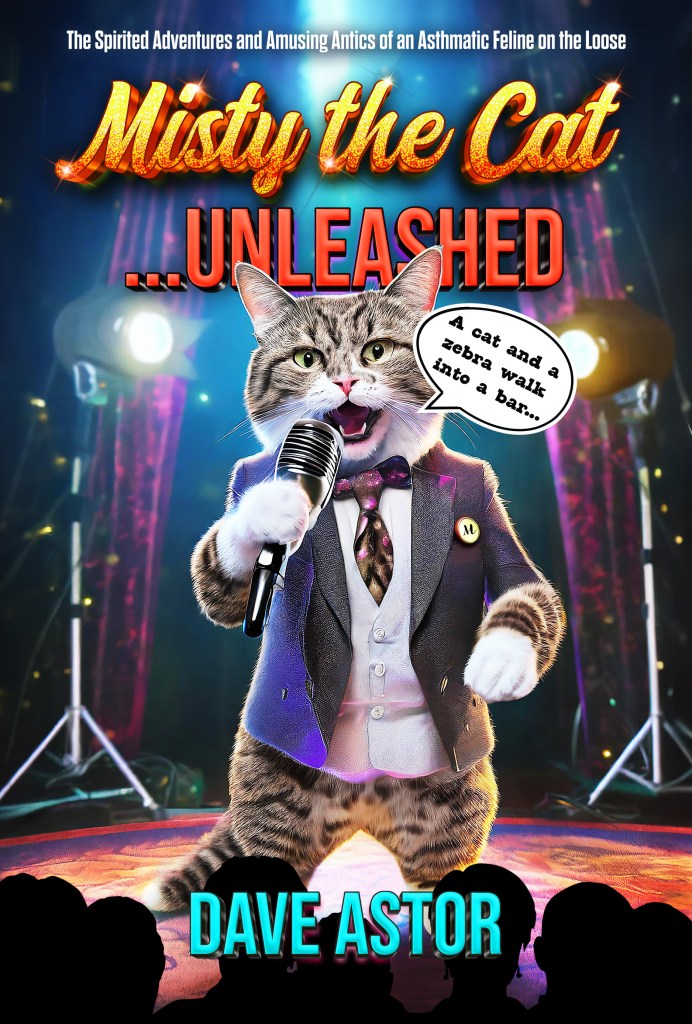
My comedic 2024 book — the part-factual/part-fictional/not-a-children’s-work Misty the Cat…Unleashed — is described and can be purchased on Amazon in paperback or on Kindle. It’s feline-narrated! (And Amazon reviews are welcome. 🙂 )

This 90-second promo video for the book features a talking cat: 🙂

I’m also the author of a 2017 literary-trivia book

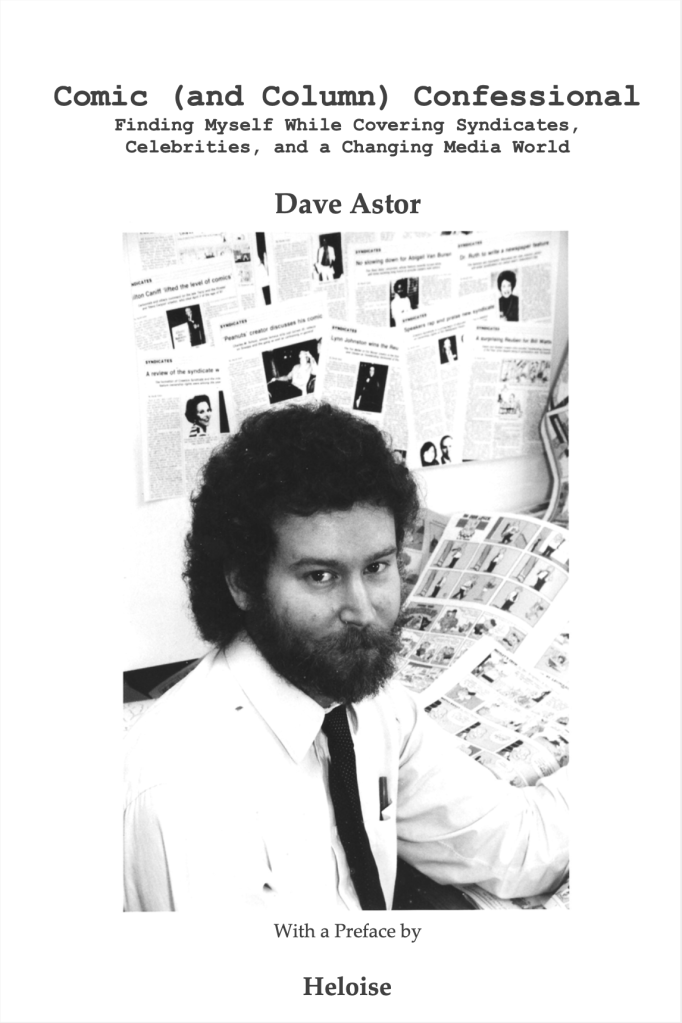
…and a 2012 memoir that focuses on cartooning and more, including many encounters with celebrities.

In addition to this weekly blog, I write the 2003-started/award-winning “Montclairvoyant” topical-humor column every Thursday for Montclair Local. The latest piece — which comments on a not-needed name change for a future park, my town’s hopeful divestment from a bank helping to fund cruel federal immigration detention centers, and another hiring of a high-paid administrator in a school district (mine) where teachers have been laid off — is here.

A Semi-Comprehensive Look at Semi-Autobiographical Novels

In early 2016, I wrote about semi-autobiographical novels. Now that nearly 10 years have passed, I suppose it would be semi-okay to write about those books again — mentioning semi-autobiographical novels I’ve read since then or had read before then but didn’t mention in that previous post. So, with this semi-decent first paragraph nearly done, here goes:

As I wrote in ’16, semi-autobiographical novels “can be the best of both worlds for authors and their readers. That mix of memoir and fiction takes facts and embellishes them and/or dramatizes them and/or smooths them into more coherent form. A partly autobiographical approach also allows authors to potentially pen very heartfelt books — after all, they lived the emotions — and perhaps provides those writers with some mental therapy, too.” I also wrote that a semi-autobiographical novel is often, but of course not always, a debut novel — at least partly because that kind of book might be easier to write; the author can use aspects of her or his own past.

Back here in late 2025, I just read The Cat’s Table by Michael Ondaatje, whose 2011 coming-of-age novel was inspired to an extent by the author’s life and a ship voyage he took as a boy from his native Sri Lanka to rejoin his mother in England after his parents had separated several years earlier. A boy named…hmm…Michael. The Cat’s Table is another compelling book by The English Patient author, who went on to live in Canada.

Another semi-autobiographical/coming-of-age novel (those two things often go together) is Betty Smith’s 1943 bestseller A Tree Grows in Brooklyn — about a brainy girl (Francie) growing up in an impoverished urban family.

Then there’s Little Women by Louisa May Alcott, who loosely based her classic 1868-69 novel on herself and her three sisters.

A few decades earlier, Mary Shelley’s apocalyptic 1826 novel The Last Man featured three principal characters based on herself, her late husband Percy Bysshe Shelley, and their friend and fellow writer Lord Byron.

Aldous Huxley also used famous people as models for characters in his 1928 novel Point Counter Point — including himself, Nancy Cunard, D.H. Lawrence, and Katherine Mansfield.

The characters in Harper Lee’s To Kill a Mockingbird (1960) are somewhat modeled on the author’s father (attorney Atticus Finch in the novel), herself (Scout in the book) and Lee’s childhood friend Truman Capote (fictionally named Dill).

Kurt Vonnegut’s horrific World War II experiences were fuel for his sci-fi-infused 1969 novel Slaughterhouse-Five, and Jack Kerouac’s travel experiences provided fodder for his On the Road (1957).

Some of the semi-autobiographical novels mentioned in my 2016 post include James Baldwin’s Go Tell It on the Mountain, Ray Bradbury’s Dandelion Wine, Charlotte Bronte’s Villette, Rita Mae Brown’s Rubyfruit Jungle, Charles Bukowski’s Hollywood, Willa Cather’s My Antonia, Colette’s The Vagabond, Charles Dickens’ David Copperfield, E.L. Doctorow’s World’s Fair, Fyodor Dostoevsky’s The House of the Dead, George Eliot’s The Mill on the Floss, Nathaniel Hawthorne’s The Blithedale Romance, Zora Neale Hurston’s Their Eyes Were Watching God, Jack London’s Martin Eden, W. Somerset Maugham’s Of Human Bondage, Herman Melville’s Typee, L.M. Montgomery’s Emily trilogy, Sylvia Plath’s The Bell Jar, Erich Maria Remarque’s All Quiet on the Western Front, John Steinbeck’s East of Eden, and Amy Tan’s The Joy Luck Club.

Your thoughts about, and examples of, this topic?

Misty the cat says: “When Christmas-tree lights reflect off the window, it’s a pane in the grass.”

My comedic 2024 book — the part-factual/part-fictional/not-a-children’s-work Misty the Cat…Unleashed — is described and can be purchased on Amazon in paperback or on Kindle. It’s feline-narrated! (And Amazon reviews are welcome. 🙂 )

This 90-second promo video for the book features a talking cat: 🙂

I’m also the author of a 2017 literary-trivia book

…and a 2012 memoir that focuses on cartooning and more, including many encounters with celebrities.

In addition to this weekly blog, I write the 2003-started/award-winning “Montclairvoyant” topical-humor column every Thursday for Montclair Local. The latest piece — which contains a tale of two meetings — is here.

Partly Autobiographical Literature Is More Than Partly Interesting

The semi-autobiographical novel can be the best of both worlds for authors and their readers. That mix of memoir and fiction takes facts and embellishes them and/or dramatizes them and/or smooths them into more coherent form, etc.

A partly autobiographical approach also allows authors to potentially pen very heartfelt books — after all, they lived the emotions — and perhaps provides those writers with some mental therapy, too. Meanwhile, readers learn stuff about an author’s life that they might not learn otherwise. (Of course, many memoirs also have some fictional elements, but that’s a topic for another day.)

Often, a semi-autobiographical work is an author’s first novel. After all, that kind of book can be easier to write because the author just has to remember aspects of her or his own life. And perhaps such a novel psychologically declutters an author’s brain so that s/he can more easily move on to writing novels with fewer or no autobiographical elements.

Examples of semi-autobiographical debut novels include James Baldwin’s Go Tell It On the Mountain (teen has problems with religion and harsh stepfather), Rita Mae Brown’s Rubyfruit Jungle (growing up lesbian), Amy Tan’s The Joy Luck Club (Chinese-American immigrant experience), F. Scott Fitzgerald’s This Side of Paradise (college years), and Herman Melville’s Typee (tropical island adventure).

(Melville went on to pen several other partly autobiographical novels — Omoo, Redburn, and White-Jacket — before writing that little thing you may have heard of called Moby-Dick.)

In other cases, authors don’t go the selfie route until later in their literary careers, as did Charlotte Bronte with Villette (English loner teaches in France) and W. Somerset Maugham with Of Human Bondage (personal and professional struggles of a would-be doctor). Authors might want to wait until their writing is developed enough to best convey their own experiences, or wait to become famous/established enough to risk writing something more personal, or wait for enough years to go by to have more perspective on what they’re writing about, etc.

Nathaniel Hawthorne let a decade pass before penning The Blithedale Romance, a fictionalized version of his experiences living on a communal farm. But Charles Bukowski waited only two years to write Hollywood — a minimally disguised account of doing the screenplay for, and seeing the making of, the movie Barfly starring Mickey Rourke in a Bukowski-ish role. (I read the very funny Hollywood this month.)

Occasionally, disguising is a necessity. It’s obvious to readers that Fyodor Dostoevsky was part-fictionally recounting his own Siberian internment experiences in Notes From a Dead House, but to get the novel approved by Russian government censors he couched it as the recollections of a murderer rather than those of a political prisoner like Dostoevsky had been. (I’m in the middle of reading the fascinating Dead House now.)

Other semi-autobiographical works written in early, mid, or late career? George Eliot’s The Mill on the Floss (Maggie and Tom’s troubled sibling relationship was partly based on the dynamics between Eliot and her brother), Willa Cather’s My Antonia (Cather channeled male character Jim Burden), Charles Dickens’ David Copperfield (the author reversed his CD initials to DC), Jack London’s Martin Eden (the ME initials signify the London “me”), Colette’s The Vagabond (partly based on the author’s time performing in music halls), L.M. Montgomery’s Emily trilogy (the struggle to become a successful writer), and Zora Neale Hurston’s Their Eyes Were Watching God (set in the hometown of the author’s youth and featuring a relationship inspired by a real-life relationship Hurston had).

Also: Mark Twain’s The Adventures of Tom Sawyer (Tom is an amalgam of the young Twain and two of his schoolmates), John Steinbeck’s East of Eden (which includes characters based on the author’s ancestors and features a brief cameo by a young John himself), Erich Maria Remarque’s All Quiet on the Western Front (World War I trauma), Cormac McCarthy’s Suttree (living down-and-out in Tennessee), Ray Bradbury’s Dandelion Wine (small-town Illinois childhood), E.L. Doctorow’s World’s Fair (growing up in the Bronx during the 1930s), Sylvia Plath’s The Bell Jar (depression), and Joanne Greenberg’s I Never Promised You a Rose Garden (schizophrenia).

What are your favorite semi-autobiographical novels?

(The box for submitting comments is below already-posted comments, but your new comment will appear at the top of the comments area — unless you’re replying to someone else.)

I’m writing a literature-related book, but still selling Comic (and Column) Confessional — my often-funny memoir that recalls 25 years of covering and meeting cartoonists such as Charles Schulz (“Peanuts”) and Bill Watterson (“Calvin and Hobbes”), columnists such as Ann Landers and “Dear Abby,” and other notables such as Hillary Clinton, Coretta Scott King, Walter Cronkite, and various authors. The book also talks about the malpractice death of my first daughter, my remarriage, and life in Montclair, N.J. — where I write the award-winning weekly “Montclairvoyant” humor column for The Montclair Times. You can email me at dastor@earthlink.net to buy a discounted, inscribed copy of the book, which contains a preface by “Hints” columnist Heloise and back-cover blurbs by people such as “The Far Side” cartoonist Gary Larson.