Formidable Fiction Is ‘Furmidable’ to a Feline

I, Misty the cat, might be the first kitty to write a blog post while asleep. (Photo by my human Dave.)

Last week, Dave blogged about the appeal of escapist fiction as a diversion from the dire 2025 political climate faced by people, cats, and blue-footed booby birds who migrated from red-footed states. This week, as I, Misty the cat, do the every-two-month feline takeover of Dave’s blog, I’ll discuss a few of the many challenging novels I’ve read amid the escapist stuff, if only to keep up my paw strength as I swatted those weighty books off the table.

Currently, Dave and I are in the middle of Orfeo by Richard Powers, who later wrote the acclaimed environmental tree saga The Overstory — a novel not about me hovering over a short story. Orfeo is a book featuring a rather complex musical motif as well as sudden swings between the present and past, yet it’s still quite readable in its way. How did I, Misty the cat, learn a word like “motif”? In The Idiot’s Guide to Pretentious Vocabulary.

Some other challenging novels? James Joyce’s Ulysses comes to mind, but I haven’t read it because of my lack of interest in American Civil War general Ulysses S. Grant. There’s also Marcel Proust’s many-volume In Search of Lost Time, of which I managed to finish the initial Swann’s Way book. Here’s what I discovered: gorgeous language, kind of a slog to get through, and a swan and blue-footed booby will both eat a madeleine if it’s slathered in A1 steak sauce.

Plenty of food for thought (but no madeleine) in Toni Morrison’s Beloved, set after the American Civil War in which the aforementioned Grant waged battle against alliterative author names like James Joyce. I also liked Morrison’s The Bluest Eye, even though my cat eyes are green. Everything is not all about me! 99.9% about me? Sure, but not 100%.

Then there’s late-career Henry James. Those novels contain plenty of long and convoluted sentences, but, yes, Long and Convoluted would make a great name for a rock band. Dave and my feline self did enjoy James’ late-career novel The Ambassadors, which was about the Ambassador cars from India and the United States meeting cute before asking James to write The Turn of the Ignition. Or maybe that novel was about an American’s trip to Paris to try to bring back a young man to the family business. The Family Business would be a so-so name for a rock band.

An early-career novel by Eleanor Catton, published when the author was still in her 20s, is also quite ambitious. That would be The Luminaries, which combined a plot about the 1860s New Zealand gold rush with an astrological motif. (I’m a Sagittarius cat.) There’s that fancy word “motif” again, which I was moved to reuse after reading The Idiot’s Guide to Repeating One’s Self in a Blog Post.

I liked Virginia Woolf’s Mrs. Dalloway a lot despite it not being the easiest of reads. The whole book unfolds in a day, which makes me wonder if it’s a multigenerational saga unfolding across several centuries. Let me think about that.

There’s also Leo Tolstoy’s War and Peace, about the yin and yang of my relationship with the chipmunk I often see during my daily leashed walks. Given its tiny size, the chipmunk only reads one-page novels, and gets its musical fix solely by watching NPR “Tiny Desk Concerts” — including excellent ones featuring Taylor Swift and Chappell Roan. It’s a small world after all…

Speaking of Russian novels, Fyodor Dostoevsky’s tome The Brothers Karamazov is a challenge, too, with many chapters that are wonderful and some chapters that sort of drag. But when it’s good it’s GOOD. The Sisters Karamazov didn’t leave as much of an impression on my feline self because that book doesn’t exist. The Second-Cousins-Once-Removed Karamazov? A real banger. Which reminds me to bang on my food bowl because it feels like I haven’t been served my chow since the 19th century in Russia. It’s been almost five minutes!

Gabriel Garcia Marquez’s sweeping One Hundred Years of Solitude echoed my angst when I was once forced to endure One Hundred Nanoseconds of Solitude. Fortunately, I also read The Idiot’s Guide to Being Alone for Under a Minute.

Dave told me he twice tried William Faulkner’s The Sound and the Fury but couldn’t get past the first few chapters, unlike that author’s more readable Light in August and As I Lay Dying. I tried The Sound and the Fury myself, and went into a reading coma. Or maybe it was a food coma “as I lay digesting” too many cat treats.

Comments will be answered by Dave as I read The Idiot’s Guide to Recovering from Digesting Too Many Cat Treats.

I, Misty the cat, say: “I see the ghost, but where’s Mrs. Muir?”

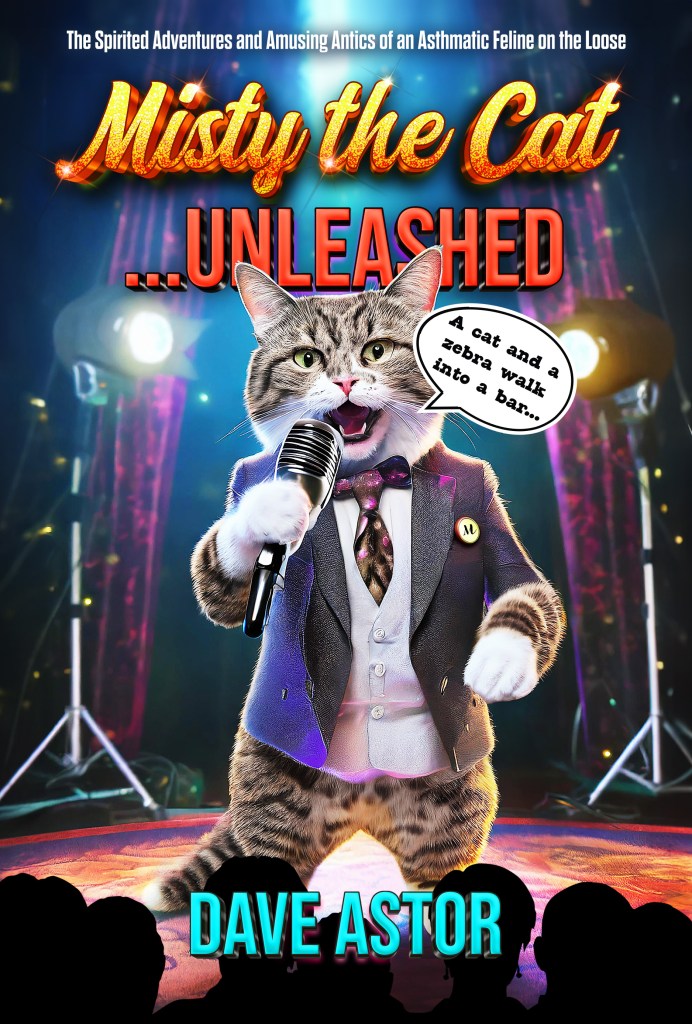
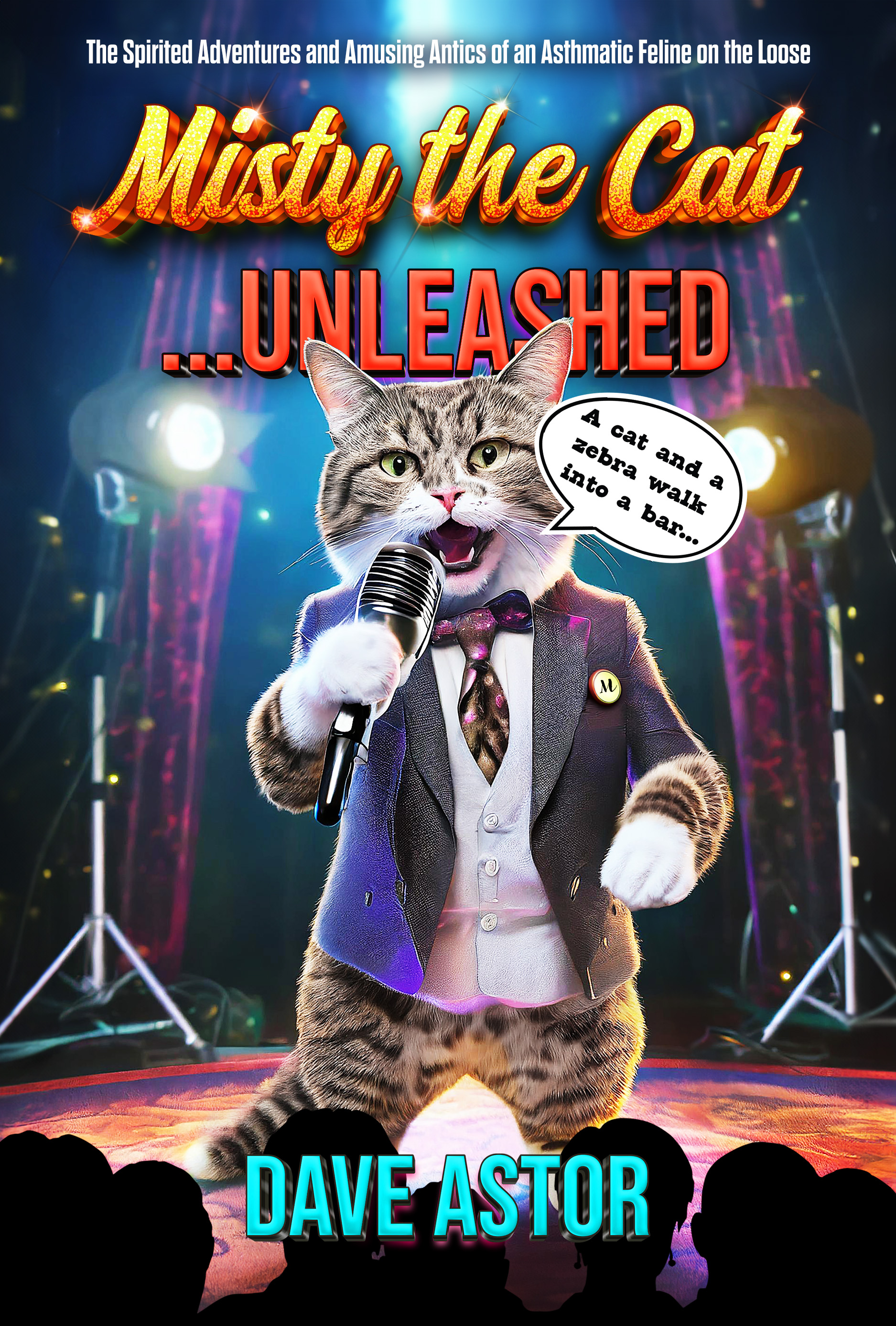
Dave and I’s comedic 2024 book — the part-factual/part-fictional/not-a-children’s-work Misty the Cat…Unleashed — is described and can be purchased on Amazon in paperback or on Kindle. It’s feline-narrated! (And Amazon reviews are welcome. 🙂 )
This 90-second promo video for the book features a talking cat: 🙂

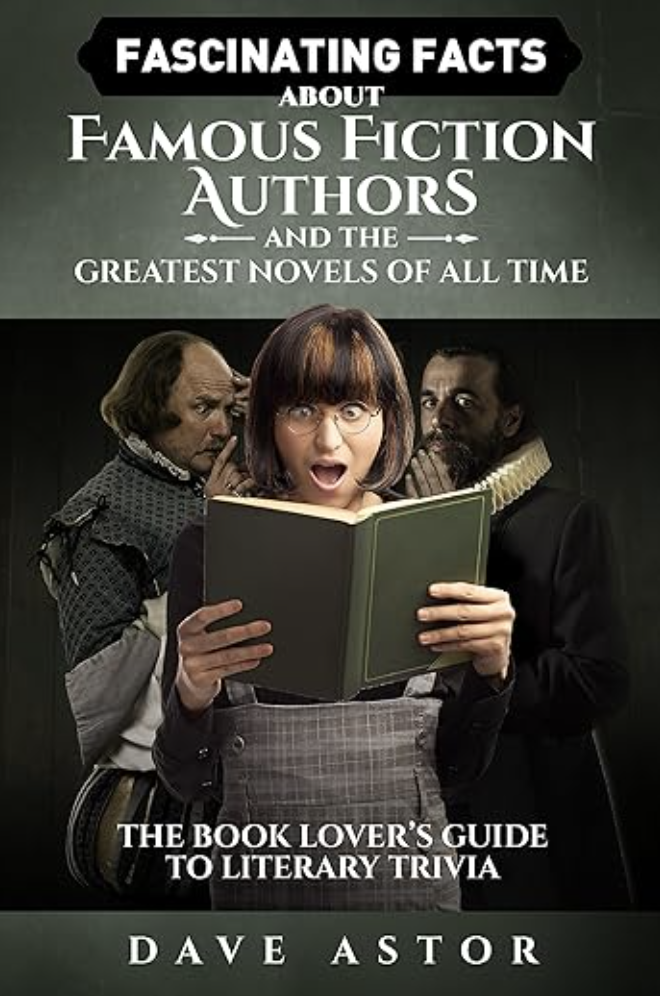
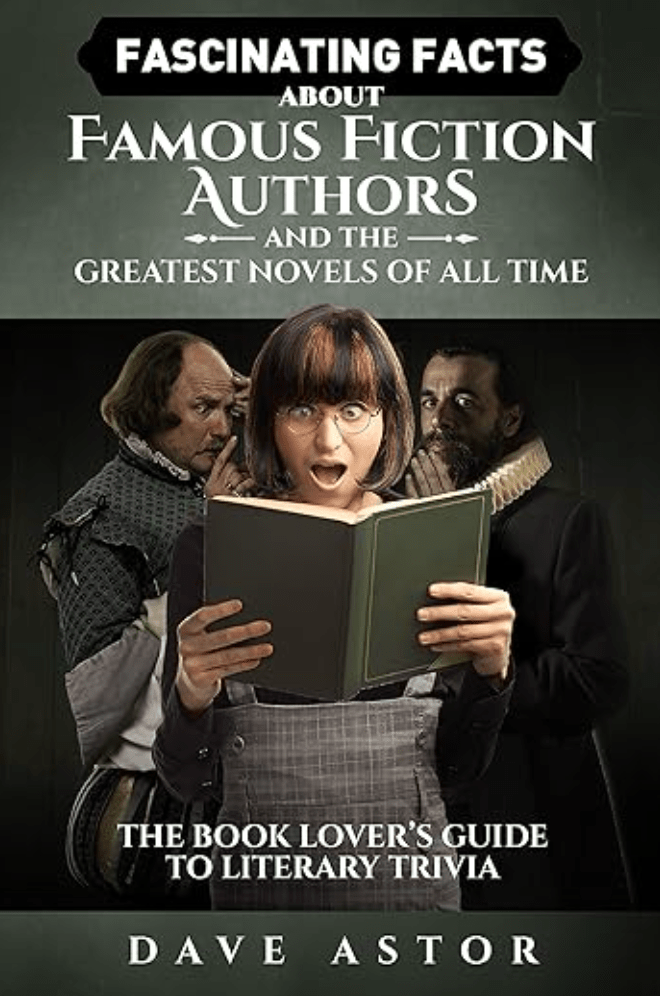
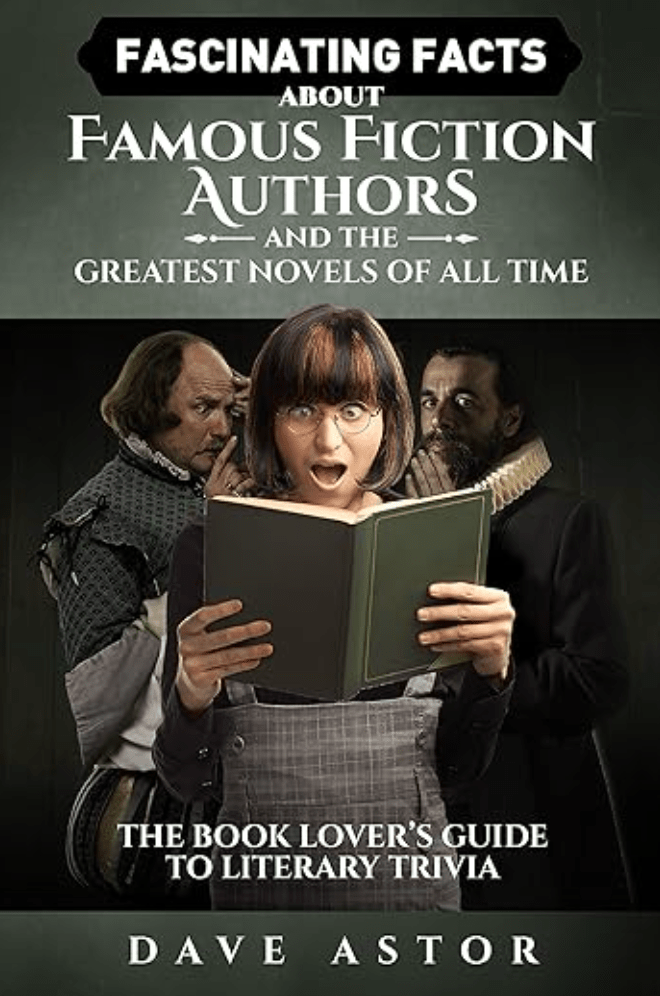
Dave is also the author of a 2017 literary-trivia book

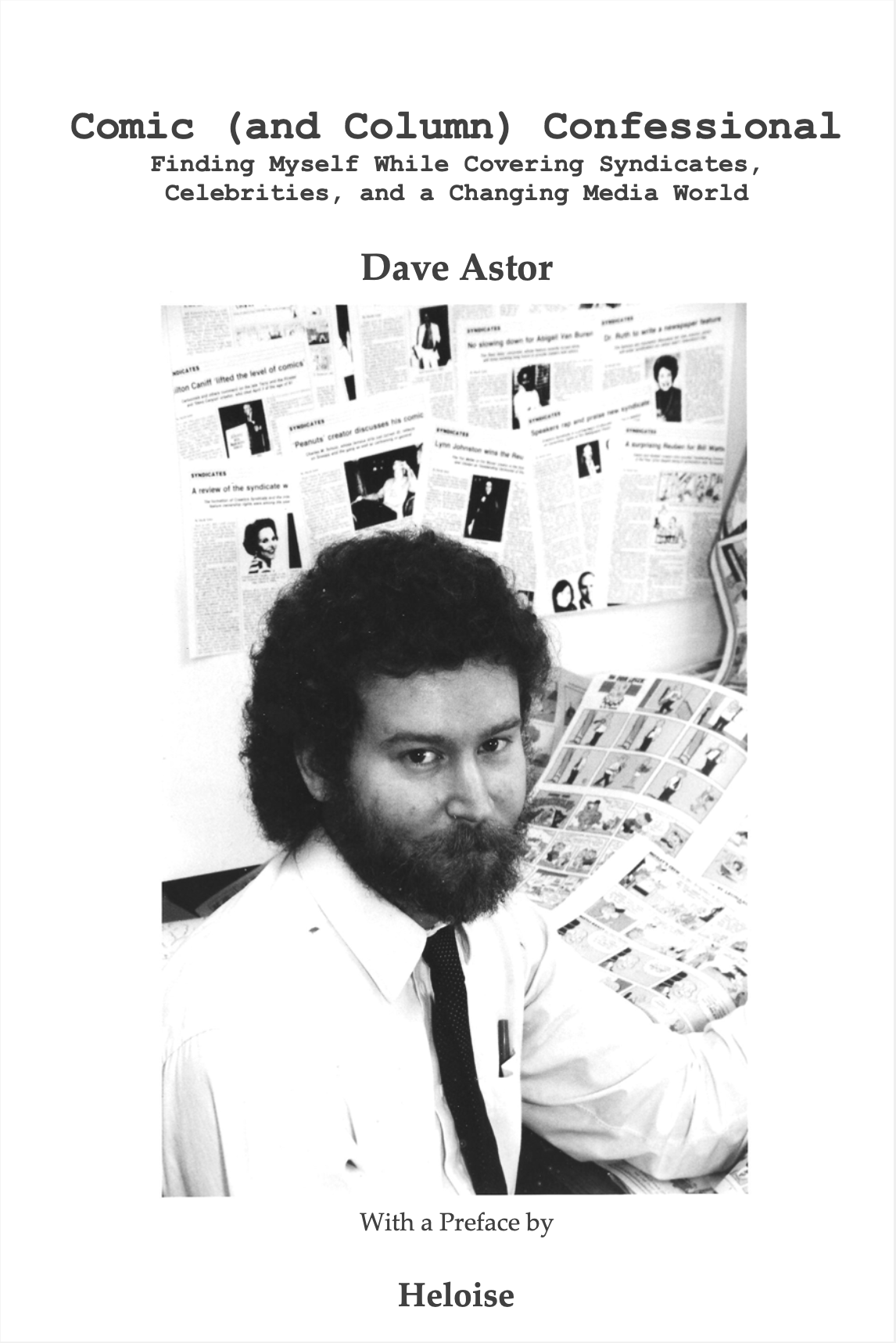
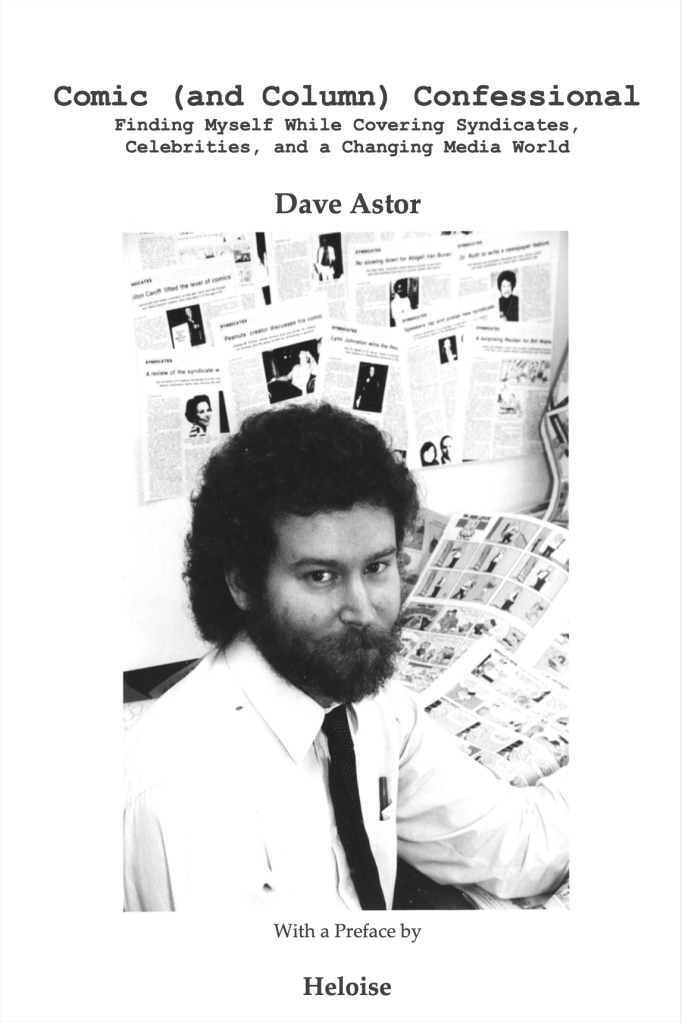
…and a 2012 memoir that focuses on cartooning and more, and includes many encounters with celebrities.

In addition to this weekly blog, Dave writes the 2003-started/award-winning “Montclairvoyant” topical-humor column every Thursday for Montclair Local. The latest piece — about a huge school budget deficit that grew even larger — is here.

A Kitty Tries to Be Witty

“Perhaps I should wake up and write a blog post,” says Misty. (Photo by Maria.)

I, Misty the cat, guest-blog for Dave every two months. I last did this on April 13 and today is June 8, so that’s…hmm…actually not quite two months. Reminds me of when Dave returned some novels to the library five days before their due date, and the indignant book drop expelled said novels with such force that they traveled back in time and landed on the heads of the three Karamazov brothers. Fortunately, each of the books was under 400 pages.

But Fyodor Dostoevsky’s 824-page The Brothers Karamazov is even longer than my average nap, during which I experience “Dreams” more often than Fleetwood Mac did at their 1977 concerts. And Dostoevsky’s 1880 novel might have been the first volume of an even longer work if the Russian author hadn’t died in early 1881. Perhaps a trilogy of sorts — like Suzanne Collins’ The Hunger Games (about me nudging my cat-food bowl so that each serving lands in the exact center) and J.R.R. Tolkien’s The Lord of the Rings (about my epic quest to be a male feline version of the Ernestine telephone operator played by Lily Tomlin).

I recommend shopping at Pop Culture R Us for all your celebrity-name-dropping needs.

Speaking of decades-ago entertainment, do you remember the 1978 movie Same Time, Next Year about a married woman and a married man who have a multi-year annual affair? That film partly inspired the long-term romance of Mallory Blessing and Jake McCloud in Elin Hilderbrand’s 2020 novel 28 Summers, which I read last week and found to be a wonderful, poignant book. It’s 422 pages in hardcover, which explains why various other 19th-century Russian fictional characters are donning helmets to avoid concussions. Helmets with stickers saying “Please Don’t Name Your Cat Anna Karenina.”

I’ll add that 28 Summers has an alternate-history element, with Jake’s wife Ursula DeGournsey running for President of the United States in 2020. Reminds me that my aforementioned cat-food bowl is shaped sort of like the Oval Office, and even has a tiny edible desk.

Other novels featuring politicians? Stephen King’s The Dead Zone, Robert Penn Warren’s All the King’s Men, J.K. Rowling’s The Casual Vacancy, Fannie Flagg’s Standing in the Rainbow, and Sinclair Lewis’ It Can’t Happen Here, to name a few. When my cat-food bowl was empty for five seconds, you know what I screamed? Yes, I screamed “It can’t happen here!!!”

A century ago, Lewis had quite a run of notable novels: Main Street (1920), Babbitt (1922), Arrowsmith (1925), Elmer Gantry (1927), and Dodsworth (1929). It Can’t Happen Here was published in 1935, eight decades before my 2015 birth year — which means that in 2025 I’m now…furry.

I’m sometimes asked how I, the kitty Misty, consume literature. Smeared with tasty cat food, of course. But, seriously, I read novels in the traditional print-book format rather than via eBook or audiobook. I guess I’m “old school,” like the 1636-founded Harvard University. I expect only a few members of The Class of 1640 to be at Harvard’s 2040 alumni reunion; they’re the ones who reside with cats, who help humans live longer.

Long-lived humans in literature? The over-2,000-year-old Lazarus Long of five Robert Heinlein novels; Ayesha, who also clocks in at about two millennia in H. Rider Haggard’s She; the 250-year-old High Lama of James Hilton’s Lost Horizon; etc. I assume they had well-funded retirement accounts.

One of the oldest of my fellow cats is Garfield, who has starred in Jim Davis’ 1978-founded comic strip for 47 years! Which reminds me that my next guest blog post will appear in 47 years — minus 46 years and 10 months. So, August 2025. That’s also when my teen human Maria is starting college, which means her bedroom will be…mine!

Dave will reply to any comments because I, Misty the cat, am busy consulting with an interior decorator about changes in Maria’s room (where you see me in the photo atop this post). A kitty can’t have enough scratching posts, treat dispensers, and paintings of hairballs playing poker.

Misty the cat says: “That railing’s shadow means 4,378 more days of spring.”

Dave’s comedic 2024 book — the part-factual/part-fictional/not-a-children’s-work Misty the Cat…Unleashed — is described and can be purchased on Amazon in paperback or on Kindle. It’s feline-narrated! (And Misty says Amazon reviews are welcome. 🙂 )

This 90-second promo video for Dave’s book features a talking cat: 🙂

Dave is also the author of a 2017 literary-trivia book

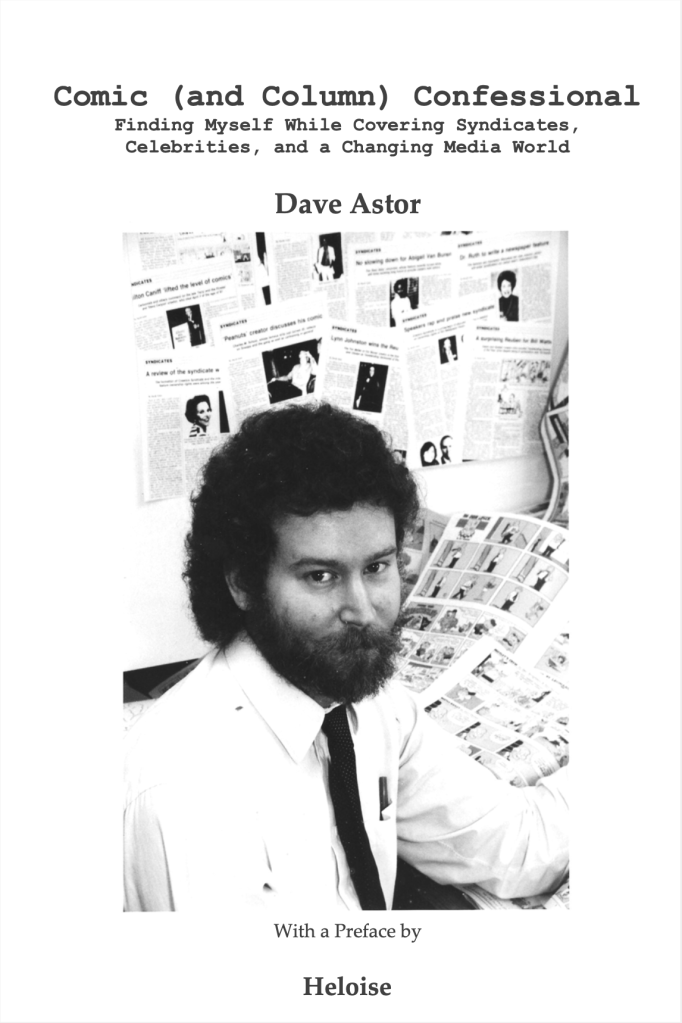
…and a 2012 memoir that focuses on cartooning and more.

In addition to this weekly blog, Dave writes the 2003-started/award-winning “Montclairvoyant” topical-humor column every Thursday for Montclair Local. The latest piece — about New Jersey’s upcoming primary election and much more — is here.

Russian Fiction Is Much Better Than Trump’s Diction

With the corrupt Trump administration’s ties to Russia all over the news, I’d like to offer a different Russia-related topic this week: Russian literature.

Which includes an amazing array of dark/compelling/unforgettable fiction, particularly in the 19th century. Even Trump would be impressed reading Crime and Punishment — as long as Fyodor Dostoyevsky’s novel was shortened to a one-paragraph memo.

Crime and Punishment is my favorite Russian novel, and one of my favorites from any country. Riveting, feverish, psychological (it was said to have influenced Sigmund Freud). The high points of The Brothers Karamazov may be even better, but there are some slog-through pages and chapters that the never-a-dull-moment Crime and Punishment doesn’t suffer from. Dostoyevsky reportedly planned to make The Brothers Karamazov the first of a trilogy, but death intervened.

There are several other Dostoyevsky works well worth discussing, so please have at it in the comments section! But now I’ll turn to Leo Tolstoy, whose War and Peace and Anna Karenina are as famous as novels can be. I was impressed with those two classics (though I’m more a fan of Crime and Punishment and The Brothers Karamazov) as well as with several of Tolstoy’s magnificent short stories, some almost novella length. “The Kreutzer Sonata,” “The Death of Ivan Ilyich,” “Master and Man” — wow!

Speaking of short stories, you can’t go wrong with Tolstoy’s pal Anton Chekhov. A pioneering writer of tales that are more character-oriented and human-emotion-focused than plot-oriented, plus Chekhov of course was also a master playwright.

Earlier-in-the-19th-century Russian authors can also knock your socks off (though I wouldn’t advise that during a Moscow or St. Petersburg winter). Alexander Pushkin’s The Captain’s Daughter novel is among that writer’s great reads, as is Nikolai Gogol’s Dead Souls novel and his “The Overcoat” short story. Dostoyevsky contemporary Ivan Turgenev also wrote some really good novels, including Fathers and Sons.

Moving near/into the 20th century (experienced by the 1910-deceased Tolstoy for a decade), we have socialist-realist writers such as Maxim Gorky and Nikolai Ostrovsky. The latter’s How the Steel Was Tempered (a novel I purchased during a 1980s trip to Russia) is quite gripping for a while before getting a bit tedious.

Then there was Boris Pasternak, whose Doctor Zhivago novel drew the ire of Soviet officials despite it being somewhat nuanced about socialism; and the dissident writer Aleksandr Solzhenitsyn, who was adept at both fiction and nonfiction (and the subject of this “Mother Russia” song by Renaissance). I’m not fond of the way Solzhenitsyn’s politics turned very right-wing, but he did go through imprisonment hell.

Renaissance has a lead female singer and a female lyricist, but Russian literature (unlike fiction from a number of other nations) has been dominated by men. Unfortunately, lots of patriarchy, machismo, and sexism in that country — which might be one reason why Trump is so attracted to Putin and Russia’s oligarchs.

Russia’s history of authoritarianism and oppression certainly has had an effect on its writers, as has that country’s politics, poverty, income inequality, geographic size, high rate of alcoholism, aforementioned machismo, and huge war casualties — including the carnage resulting from Napoleon’s and Hitler’s invasions. But the most famous Russian writers would most likely be literary geniuses no matter where they had lived.

Obviously I’ve left some writers out, so please fill in some of those blanks in your comments. Who are your favorite Russian authors, either ones I mentioned or didn’t mention?

Here’s a review of, and a video interview about, my new literary-trivia book Fascinating Facts About Famous Fiction Authors and the Greatest Novels of All Time.

In addition to this weekly blog, I write the award-winning “Montclairvoyant” topical-humor column for Baristanet.com, which covers Montclair, N.J., and nearby towns. The latest weekly column — set in the year 4034 AD! — is here.