1930s Novels Remind Us of Today

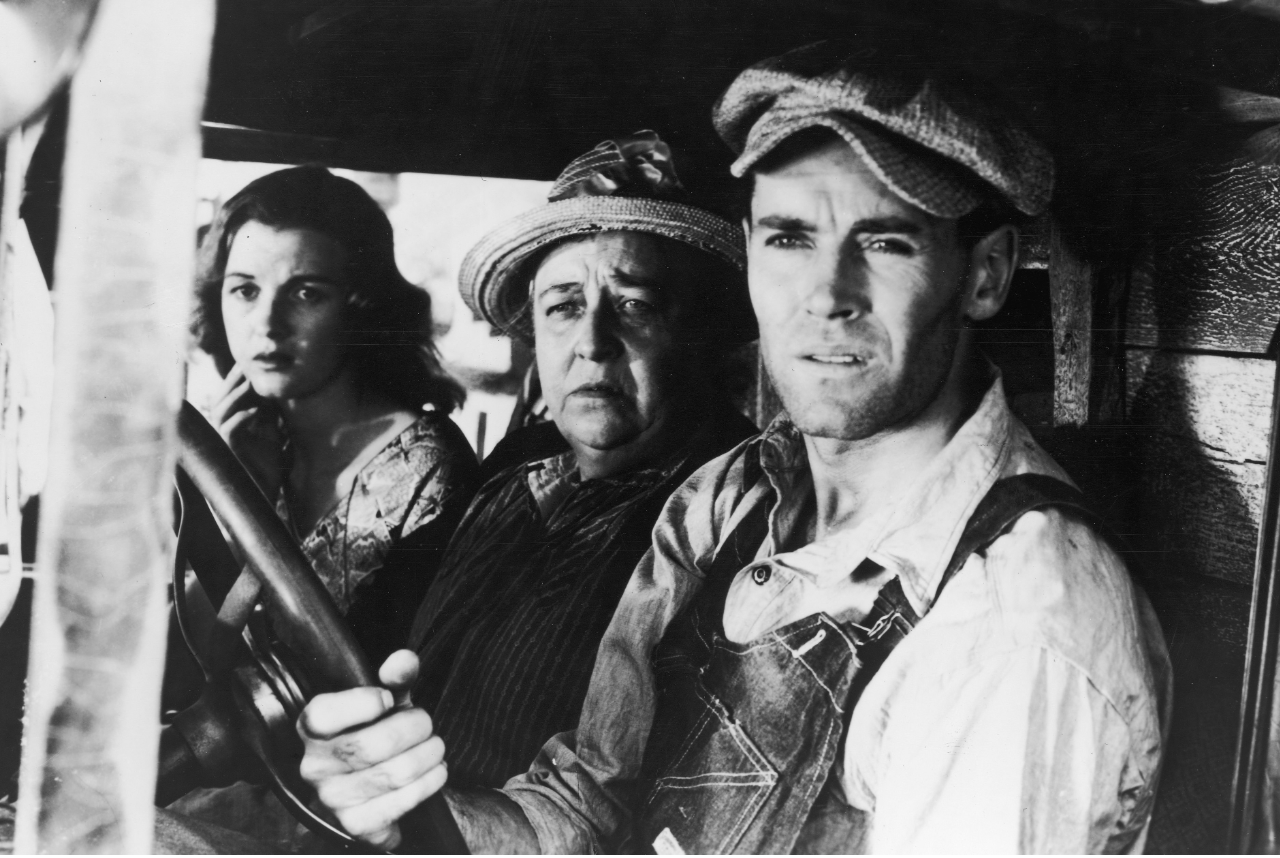
From The Grapes of Wrath movie. (20th Century Fox/Getty Images.)

After mentioning Daphne du Maurier’s great 1938 novel Rebecca in last week’s post about Gothic fiction, I thought of other books from that decade and how those years were a significant time in literature as well as quite relevant to the 2020s. After all, both decades had/have war, a rise in authoritarianism, major economic problems, and more.

So, I’m going to discuss a number of novels I’ve read, and a few I haven’t, that were published in the 1930s.

One that immediately came to mind is John Steinbeck’s 1939 classic The Grapes of Wrath, which focused on the Joad family but also took a wider look at the impact of The Great Depression bedeviling the U.S (and most of the world) that decade.

Steinbeck also wrote other notable 1930s novels — including Tortilla Flat (1935), In Dubious Battle (1936), and Of Mice and Men (1937) — that reflected social conditions. In Dubious Battle focused on a strike, fitting for a decade when labor flexed its muscles.

It Can’t Happen Here (1935) is a dystopian Sinclair Lewis novel imagining the rise of fascism in the U.S. — making it almost a primer for current dictator wannabe Donald Trump. (Although Trump is notoriously known for not reading books.)

War? Two of Erich Maria Remarque’s lesser-known novels: The Road Back (1931) and Three Comrades (1936) — have World War I elements. (The Road Back was a sequel of sorts to Remarque’s 1929-published All Quiet on the Western Front.) The American Civil War is a backdrop to Margaret Mitchell’s Gone with the Wind (1936). And Dalton Trumbo’s Johnny Got His Gun (1939) makes a powerful antiwar statement.

The 1930s were also significant writing years for William Faulkner: As I Lay Dying (1930), about a family and its journey to bury their matriarch; Light in August (1932), whose characters include a multiracial (?) drifter; and other works.

Then there was the 1934 publication of F. Scott Fitzgerald’s perhaps second-best novel, the semi-autobiographical Tender Is the Night.

Three years later, Zora Neale Hurston’s Their Eyes Were Watching God (1937) featured the memorable experiences of protagonist Janie Crawford.

That decade’s other notable book releases included — to name just a few — Mildred Benson’s The Secret of the Old Clock (1930), the first Nancy Drew mystery; Dashiell Hammett’s The Maltese Falcon (1930), featuring private investigator Sam Spade; Dorothy L. Sayers’ Strong Poison (1930), with mystery writer Harriet Vane and Lord Peter Wimsey; Pearl S. Buck’s China-set classic The Good Earth (1931); Aldous Huxley’s dystopian classic Brave New World (1932); and Erskine Caldwell’s Tobacco Road (1932).

Also: James Hilton’s Lost Horizon (1933), set in a mythical paradise; Daphne du Maurier’s Jamaica Inn (1936), which was also mentioned in last week’s blog post about Gothic fiction; Ernest Hemingway’s To Have and Have Not (1937), starring a fishing captain; J.R.R. Tolkien’s The Hobbit (1937), the fantasy novel that became the prequel to the 1950s-published The Lord of the Rings trilogy; Marjorie Kinnan Rawlings’ The Yearling (1938), about a boy and his fawn; Agatha Christie’s mystery And Then There Were None (1939); and Raymond Chandler’s The Big Sleep (1939), starring sleuth Philip Marlowe.

While writing this, I remembered that I had done a 2023 piece focusing on novels published in 1937. But the other years in that decade were not included in that post. 🙂

My list of 1930s novels is of course incomplete. Your favorites from that decade, whether mentioned by me or not?

Misty the cat says: “I own all this land, but where did I put the deed?”

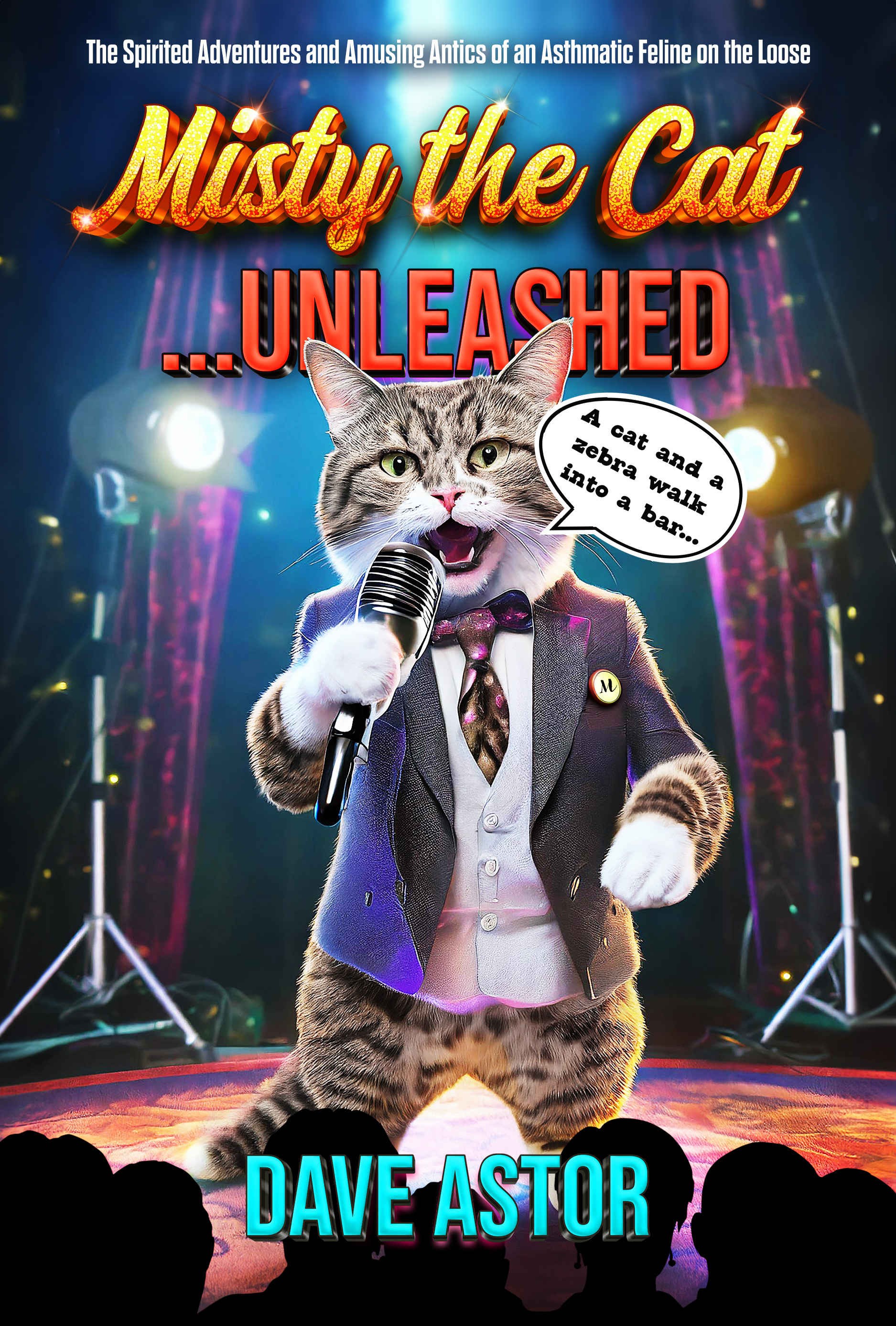
My comedic 2024 book — the part-factual/part-fictional/not-a-children’s-work Misty the Cat…Unleashed — is described and can be purchased on Amazon in paperback or on Kindle. It’s feline-narrated! (And Amazon reviews are welcome. 🙂 )
This 90-second promo video for the book features a talking cat: 🙂

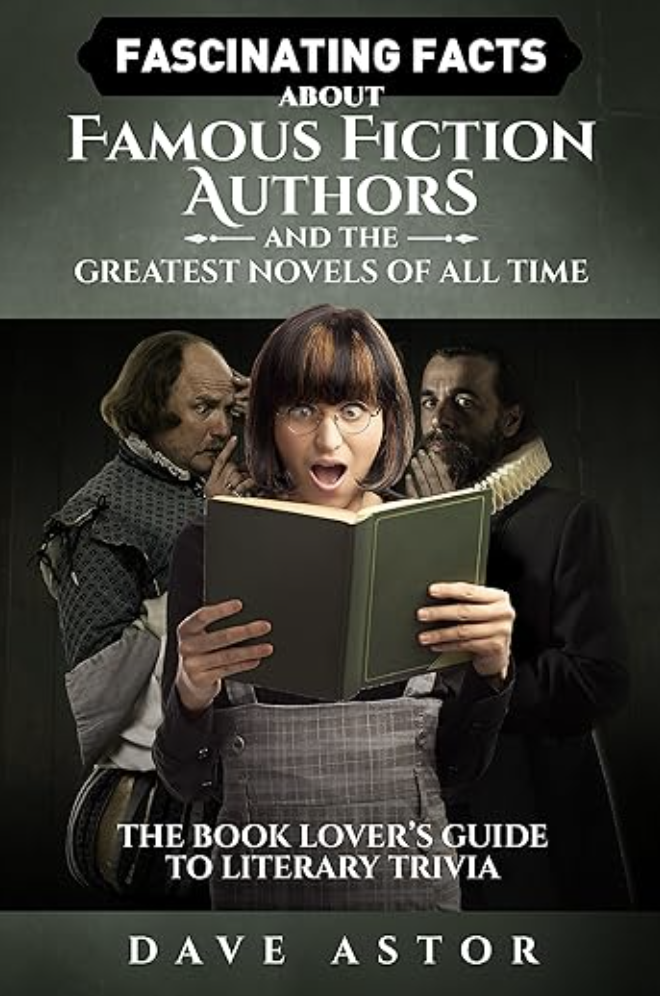
I’m also the author of a 2017 literary-trivia book

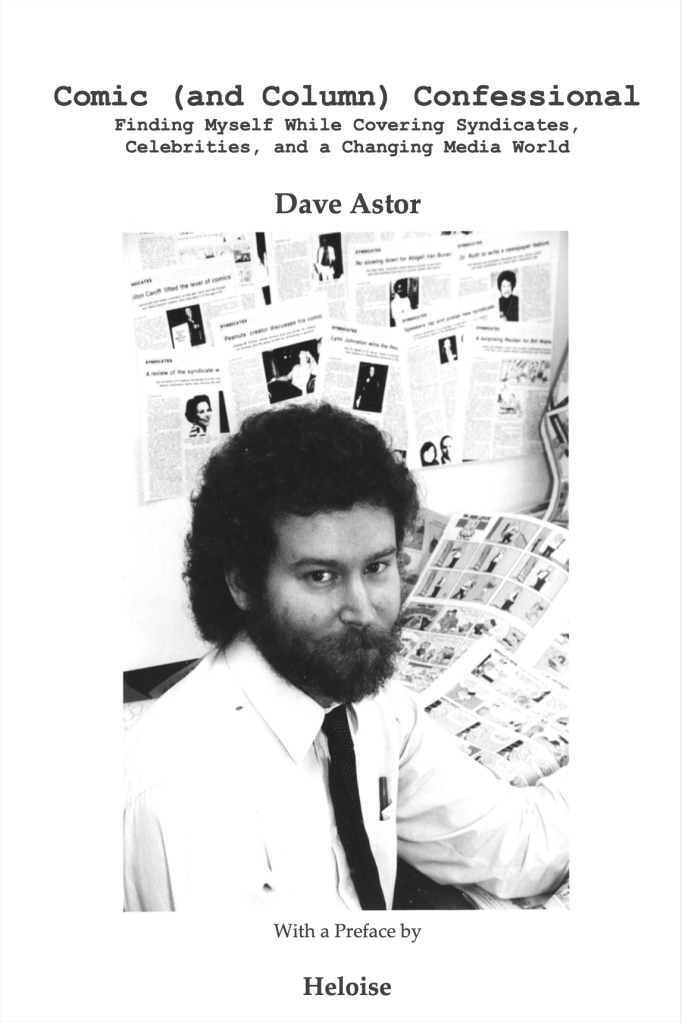
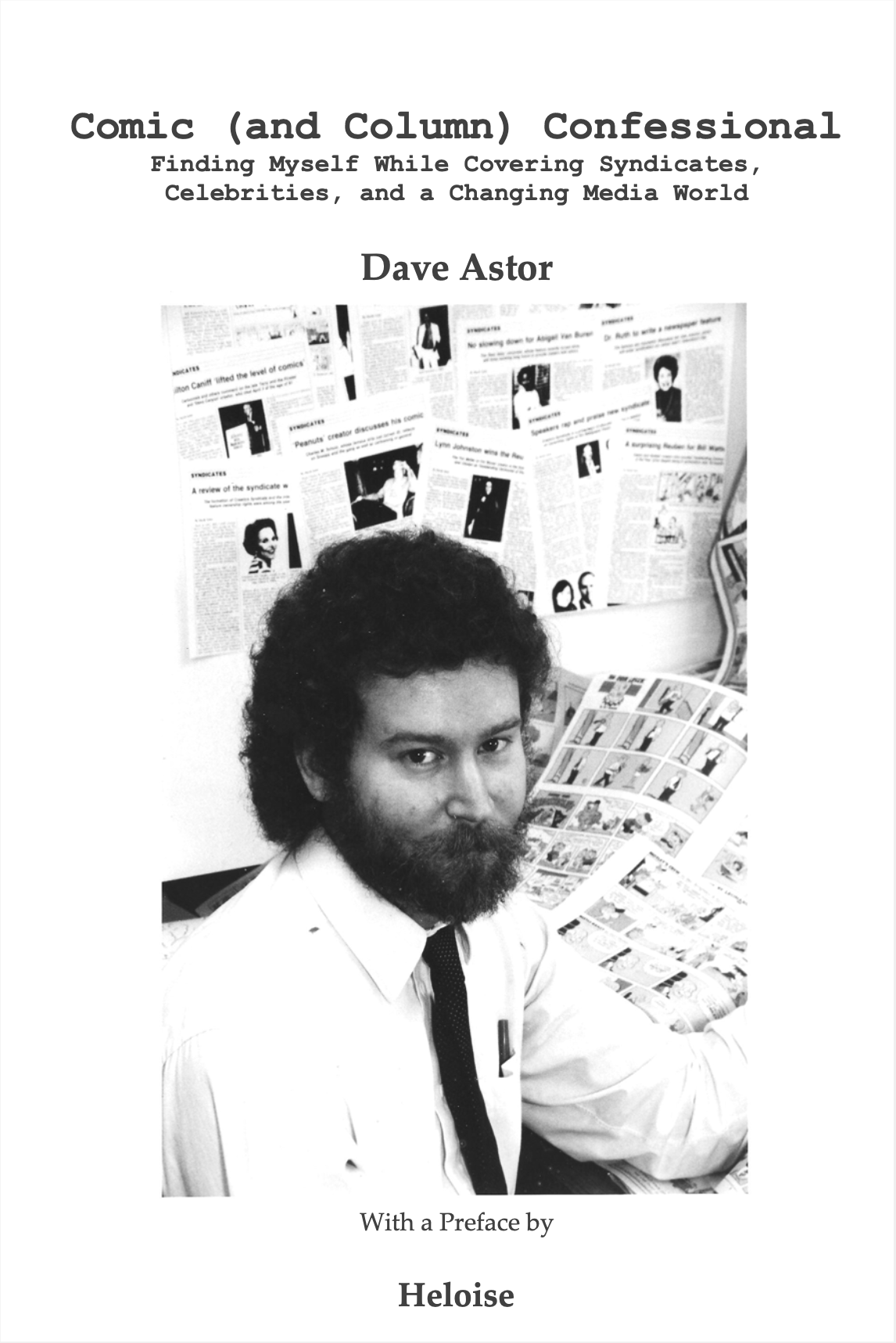
…and a 2012 memoir that focuses on cartooning and more, including many encounters with celebrities.
In addition to this weekly blog, I write the 2003-started/award-winning “Montclairvoyant” topical-humor column every Thursday for Montclair Local. The latest piece — which has a literature theme connected to local news in my town — is here.

Formidable Fiction Is ‘Furmidable’ to a Feline

I, Misty the cat, might be the first kitty to write a blog post while asleep. (Photo by my human Dave.)

Last week, Dave blogged about the appeal of escapist fiction as a diversion from the dire 2025 political climate faced by people, cats, and blue-footed booby birds who migrated from red-footed states. This week, as I, Misty the cat, do the every-two-month feline takeover of Dave’s blog, I’ll discuss a few of the many challenging novels I’ve read amid the escapist stuff, if only to keep up my paw strength as I swatted those weighty books off the table.

Currently, Dave and I are in the middle of Orfeo by Richard Powers, who later wrote the acclaimed environmental tree saga The Overstory — a novel not about me hovering over a short story. Orfeo is a book featuring a rather complex musical motif as well as sudden swings between the present and past, yet it’s still quite readable in its way. How did I, Misty the cat, learn a word like “motif”? In The Idiot’s Guide to Pretentious Vocabulary.

Some other challenging novels? James Joyce’s Ulysses comes to mind, but I haven’t read it because of my lack of interest in American Civil War general Ulysses S. Grant. There’s also Marcel Proust’s many-volume In Search of Lost Time, of which I managed to finish the initial Swann’s Way book. Here’s what I discovered: gorgeous language, kind of a slog to get through, and a swan and blue-footed booby will both eat a madeleine if it’s slathered in A1 steak sauce.

Plenty of food for thought (but no madeleine) in Toni Morrison’s Beloved, set after the American Civil War in which the aforementioned Grant waged battle against alliterative author names like James Joyce. I also liked Morrison’s The Bluest Eye, even though my cat eyes are green. Everything is not all about me! 99.9% about me? Sure, but not 100%.

Then there’s late-career Henry James. Those novels contain plenty of long and convoluted sentences, but, yes, Long and Convoluted would make a great name for a rock band. Dave and my feline self did enjoy James’ late-career novel The Ambassadors, which was about the Ambassador cars from India and the United States meeting cute before asking James to write The Turn of the Ignition. Or maybe that novel was about an American’s trip to Paris to try to bring back a young man to the family business. The Family Business would be a so-so name for a rock band.

An early-career novel by Eleanor Catton, published when the author was still in her 20s, is also quite ambitious. That would be The Luminaries, which combined a plot about the 1860s New Zealand gold rush with an astrological motif. (I’m a Sagittarius cat.) There’s that fancy word “motif” again, which I was moved to reuse after reading The Idiot’s Guide to Repeating One’s Self in a Blog Post.

I liked Virginia Woolf’s Mrs. Dalloway a lot despite it not being the easiest of reads. The whole book unfolds in a day, which makes me wonder if it’s a multigenerational saga unfolding across several centuries. Let me think about that.

There’s also Leo Tolstoy’s War and Peace, about the yin and yang of my relationship with the chipmunk I often see during my daily leashed walks. Given its tiny size, the chipmunk only reads one-page novels, and gets its musical fix solely by watching NPR “Tiny Desk Concerts” — including excellent ones featuring Taylor Swift and Chappell Roan. It’s a small world after all…

Speaking of Russian novels, Fyodor Dostoevsky’s tome The Brothers Karamazov is a challenge, too, with many chapters that are wonderful and some chapters that sort of drag. But when it’s good it’s GOOD. The Sisters Karamazov didn’t leave as much of an impression on my feline self because that book doesn’t exist. The Second-Cousins-Once-Removed Karamazov? A real banger. Which reminds me to bang on my food bowl because it feels like I haven’t been served my chow since the 19th century in Russia. It’s been almost five minutes!

Gabriel Garcia Marquez’s sweeping One Hundred Years of Solitude echoed my angst when I was once forced to endure One Hundred Nanoseconds of Solitude. Fortunately, I also read The Idiot’s Guide to Being Alone for Under a Minute.

Dave told me he twice tried William Faulkner’s The Sound and the Fury but couldn’t get past the first few chapters, unlike that author’s more readable Light in August and As I Lay Dying. I tried The Sound and the Fury myself, and went into a reading coma. Or maybe it was a food coma “as I lay digesting” too many cat treats.

Comments will be answered by Dave as I read The Idiot’s Guide to Recovering from Digesting Too Many Cat Treats.

I, Misty the cat, say: “I see the ghost, but where’s Mrs. Muir?”

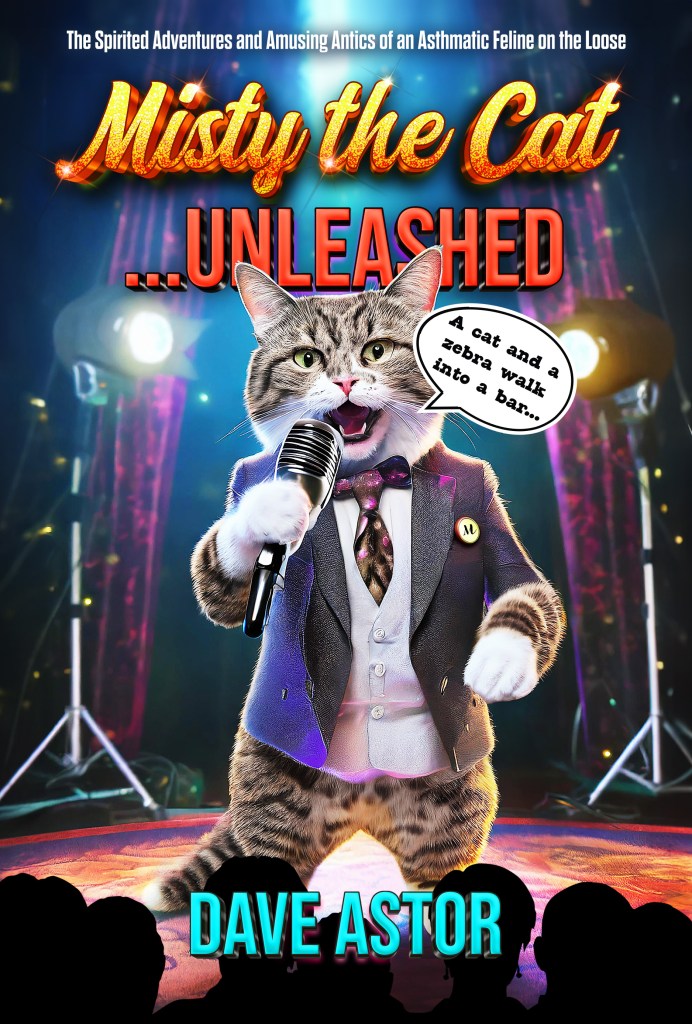
Dave and I’s comedic 2024 book — the part-factual/part-fictional/not-a-children’s-work Misty the Cat…Unleashed — is described and can be purchased on Amazon in paperback or on Kindle. It’s feline-narrated! (And Amazon reviews are welcome. 🙂 )

This 90-second promo video for the book features a talking cat: 🙂

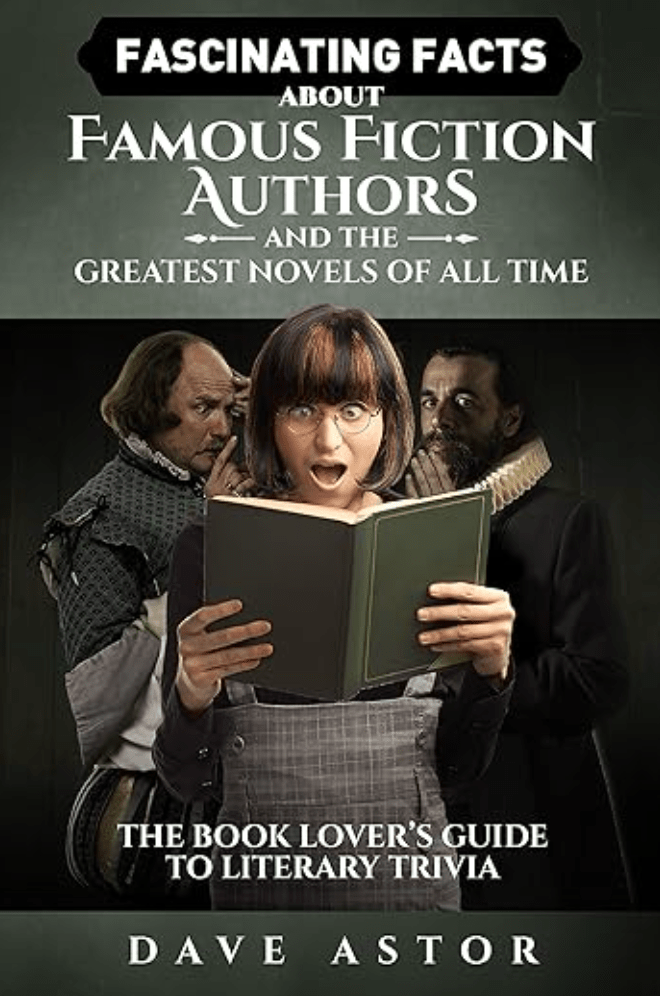
Dave is also the author of a 2017 literary-trivia book

…and a 2012 memoir that focuses on cartooning and more, and includes many encounters with celebrities.

In addition to this weekly blog, Dave writes the 2003-started/award-winning “Montclairvoyant” topical-humor column every Thursday for Montclair Local. The latest piece — about a huge school budget deficit that grew even larger — is here.