Were Fictional Characters in Epstein’s Orbit, Too?

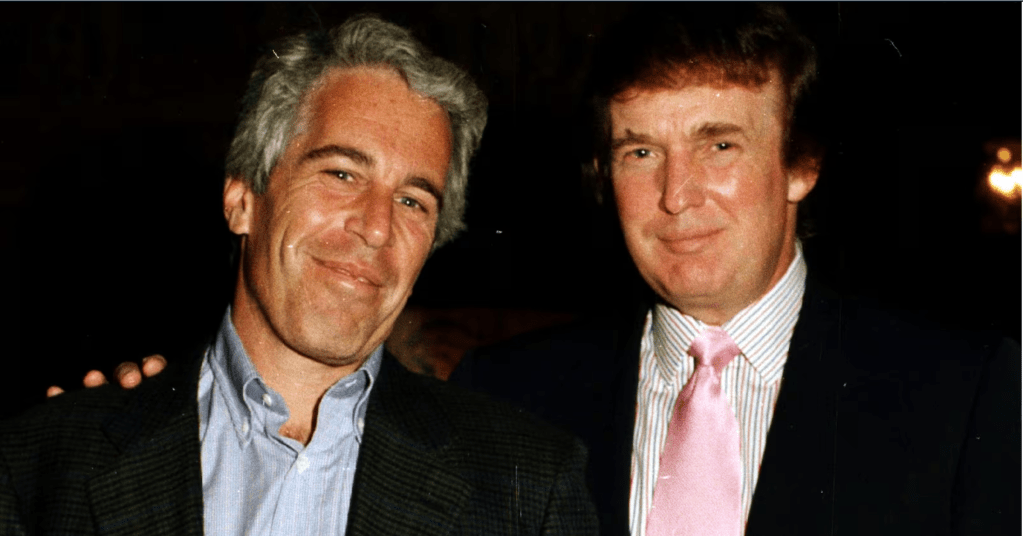
Jeffrey Epstein with Donald Trump. (Davidoff Studios Photography/Getty Images.)

After the welcome February 19 arrest of the former Prince Andrew over his tawdry and traitorous ties to the late Jeffrey Epstein, much can be said before I somehow turn this into a literature post:

— The monstrous Epstein was an abusive pedophile, sex trafficker of girls and young women, blackmailer, possible Russian and/or Israeli intelligence agent, etc.

— Major consequences for the elite (mainly rich white men) who were in Epstein’s orbit have mostly been meted out to those outside the United States.

— Nearly all the prominent Americans who were in that orbit have faced little more than some public scorn. A small number lost jobs or other positions, but none have faced Epstein-related criminal charges.

— Americans who were in Epstein’s orbit include President Trump (who has VERY suspiciously fought like hell to keep The Epstein Files secret); Trump cabinet members Howard Lutnick and Robert F. Kennedy Jr.; Trump strategist Steve Bannon; former President Bill Clinton; former Clinton cabinet member Lawrence Summers; tech billionaires Elon Musk, Peter Thiel, and Bill Gates; former Victoria’s Secret CEO Leslie Wexner; attorney Alan Dershowitz; filmmaker Woody Allen; intellectual Noam Chomsky; Giants football team co-owner Steve Tisch; and others.

All the debauchery and lack of accountability have not gone unnoticed by famous characters in literature, even if their thoughts on Epstein never quite made it into the novels they inhabit. For instance, fictional pedophile Humbert Humbert is perverted enough to hypothetically admire Epstein, even if Epstein was only two years old when Vladimir Nabokov’s Lolita got published in 1955. Perhaps HH was prescient in addition to deviant.

A Game of Thrones, the first novel in George R.R. Martin’s “A Song of Ice and Fire” series, includes 13-year-old Daenerys being forced to marry the adult warlord Drogo. Maybe she found some of her courage by anticipating the perseverance of Epstein survivors who continue to seek justice despite their attempts at that being blocked or ignored for decades — most recently by the Trump regime’s ghoulishly sycophantic attorney general Pam Bondi.

While thirsting for revenge against her sexual abuser, the resourceful Lisbeth Salander of Stieg Larsson’s The Girl with the Dragon Tattoo and its sequels might have theoretically considered also unleashing retribution on the depraved Epstein. At minimum, the computer-savvy Salander was capable of hacking into Epstein’s grotesque email conversations with various wealthy sickos.

While looking down from heaven in Alice Sebold’s The Lovely Bones, raped-then-murdered teen Susie Salmon could have also kept a disgusted eye on Epstein before he started looking up from hell after his 2019 death. (It has been said that Epstein committed suicide in prison, but many feel he was killed to prevent him from possibly spilling the beans on his fellow guilty elites.)

The female collaborators to the grossly misogynist men in Margaret Atwood’s The Handmaid’s Tale might wish they could contact Epstein collaborator Ghislaine Maxwell for extra collaboration advice, or even ask to join Maxwell in the cushy Texas jail the Trump regime transferred her to as a way to increase the chances of her not implicating former close Epstein pal Trump.

Finally, a reader could wonder if Jane Eyre, after becoming aware of Edward Rochester’s marital history, suspected Rochester of having Epstein ties despite the two men existing two centuries apart and one of them being fictional. Thankfully, British author Charlotte Bronte lived during Queen Victoria’s time rather than the former Prince Andrew’s time.

Comments on, or additions to, this rather fraught topic?

Misty the cat says: “Trying to outrun the big predicted snowstorm is a new Winter Olympics sport.”

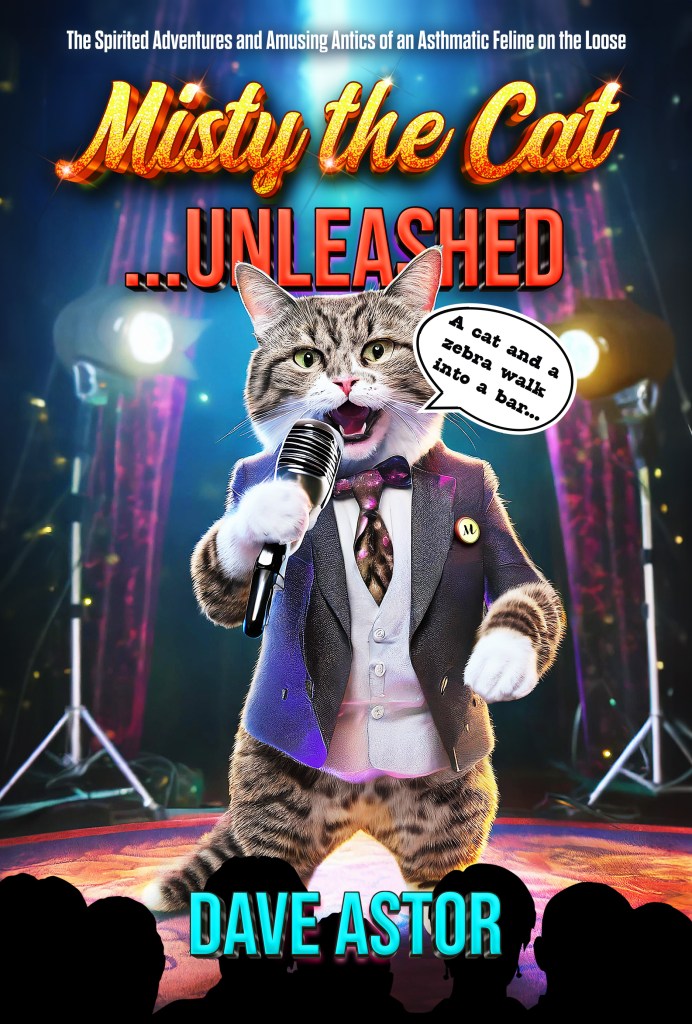
My comedic 2024 book — the part-factual/part-fictional/not-a-children’s-work Misty the Cat…Unleashed — is described and can be purchased on Amazon in paperback or on Kindle. It’s feline-narrated! (And Amazon reviews are welcome. πŸ™‚ )

This 90-second promo video for the book features a talking cat: πŸ™‚

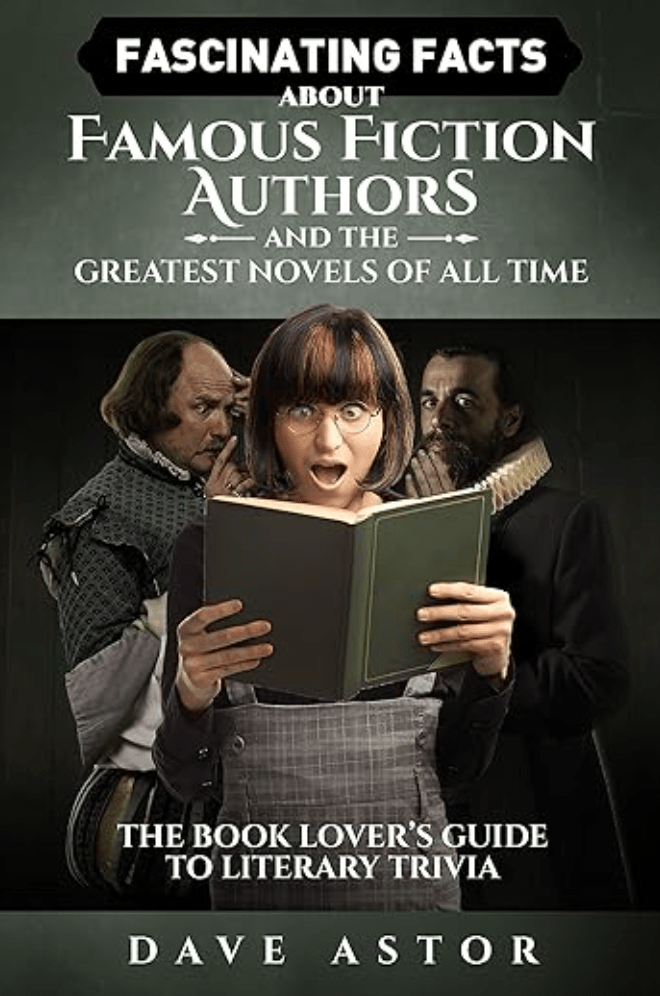
I’m also the author of a 2017 literary-trivia book

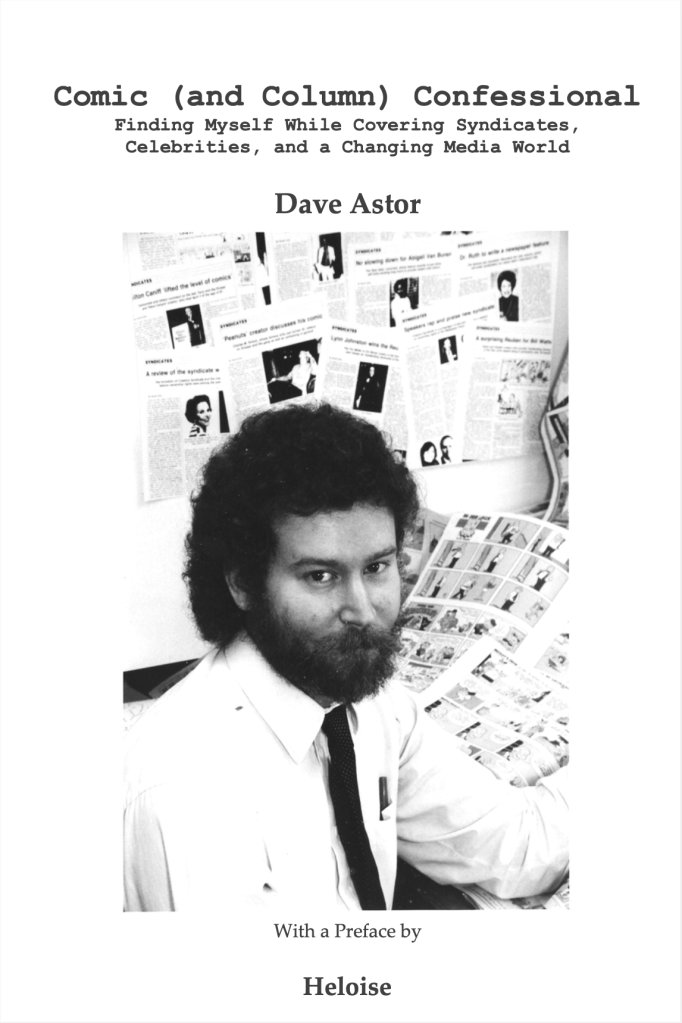
…and a 2012 memoir that focuses on cartooning and more, including many encounters with celebrities.
In addition to this weekly blog, I write the 2003-started/award-winning “Montclairvoyant” topical-humor column every Thursday for Montclair Local. The latest piece — about a bad tax deal and a controversial upcoming school vote — is here.
The Many-Decade Spans of Some Sequels and Series

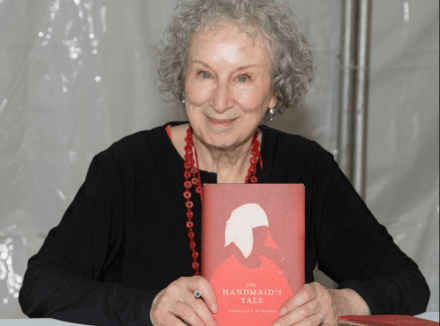
After reading last week that Margaret Atwood is writing a follow-up to The Handmaid’s Tale, I thought about which sequels — and series — spanned the most time.

Atwood’s famous, feminist, dystopian novel came out in 1985, and The Testaments will be published in 2019 — making for a gap of 34 years. Not quite the 36-year-period between Stephen King’s The Shining (1977) and its sequel Doctor Sleep (2013), but plenty long.

Why gaps like that? Authors such as King and Atwood (pictured above) are of course busy writing many other books, and may not want to revisit the same characters — at least until several decades go by. In Atwood’s case, one spur for the coming sequel is the high popularity of the current The Handmaid’s Tale television series. Also, the Republican Party’s current far-right/misogynist politics make her 1985 novel prescient and very relevant to today.

The Testaments will reportedly begin 15 years after The Handmaid’s Tale ends. Other sequels can of course be set closer or farther away in time from the original novel.

Can many-years-later sequels be better? Sometimes. Heck, the authors have often become more mature writers. But they might also be past their prime, a bit tired, and not have as many new ideas. Still, numerous fans don’t mind if a sequel isn’t as good; they’re just happy it exists. Plus there’s money to be made for the authors — not that superstar writers like Atwood and King need it. πŸ™‚

Other one-sequel, multiple-sequel, or series scenarios spanning many a decade?

P.G. Wodehouse wrote his Jeeves novels and stories over a stunning period of nearly 60 years — 1915 to 1974!

Agatha Christie featured Hercule Poirot in 40-plus novels and short-story collections for more than a half-century — from 1920’s The Mysterious Affair at Styles into the 1970s. And Christie’s Miss Marple character starred in more than 10 books from 1930 (The Murder at the Vicarage) into the ’70s.

John Updike’s four Rabbit novels were published over a period of 30 years (1960, 1971, 1981, 1990) — with a novella added to the mix in 2001. So, 41 years total.

Other large spans include 35 years between Sue Grafton’s first and 25th “alphabet mysteries” starring Kinsey Millhone (“A” Is for Alibi, 1982/“Y” Is for Yesterday, 2017); 32 years between Martin Cruz Smith’s first and eighth Arkady Renko novels (Gorky Park, 1981/Tatiana, 2013); 26 years between Walter Mosley’s first and 14th Easy Rawlins novels (Devil in a Blue Dress, 1990/Charcoal Joe, 2016); 25 years between Jack Finney’s Time and Again (1970) and From Time to Time (1995); 24 years between Janet Evanovich’s first and 25th Stephanie Plum novels (One for the Money, 1994/Look Alive Twenty-Five, 2018); and 23 years between Richard Russo’s Nobody’s Fool (1993) and Everybody’s Fool (2016).

Then there are Honore de Balzac’s and Emile Zola’s many-book sagas containing stand-alone but interlinked novels featuring characters who pop in and out, sometimes as lead protagonists and sometimes as supporting players. Balzac wrote his La Comedie Humaine works from 1830 to the late 1840s — not that long a period because of his relatively early death, but an extraordinarily prolific period that produced a whopping 90-plus novels (such as Old Goriot and Cousin Bette) and stories! Zola penned his 20 Rougon-Macquart novels (The Drinking Den, Germinal, etc.) from 1871 to 1893.

Other sequels and series you can name with many-year publishing spans? And/or any comments about the ones I mentioned?

I will not be posting columns on December 9 and 16 (because of another trip to Florida to deal with my late mother’s estate and some other reasons). Back on December 23! I’ll still reply to comments under already-published columns. πŸ™‚

My 2017 literary-trivia book is described and can be purchased here: Fascinating Facts About Famous Fiction Authors and the Greatest Novels of All Time.

In addition to this weekly blog, I write the award-winning “Montclairvoyant” topical-humor column for Baristanet.com. The latest weekly piece — written by my cat! — is here.

The Talent and Relevance of Margaret Atwood

The Handmaid’s Tale television series based on Margaret Atwood’s iconic 1985 novel is a smash hit — helped by the fact that this screen adaptation is very relevant during the time of a Trump administration that’s profoundly mean, sexist, macho, misogynist, anti-women, and patriarchal. Also, I just finished reading Atwood’s 2013 novel MaddAddam — the great third installment of the speculative-fiction trilogy whose first two books were Oryx and Crake and The Year of the Flood.

So I thought I’d write an Atwood appreciation — one that combines new material with some material from the first literature blog post I ever published, on June 2, 2011. That post was an Atwood appreciation, too.

MaddAddam is one of those novels that has it all: memorable characters, adventure, scares, intrigue, humor, satire, snappy dialogue, romance of a sort, non-preachy social commentary (ranging from the environment to gender relations), and more. The postapocalyptic story of a small group of people who survived the almost total eradication of Earth’s population shows that Atwood is still a terrific novelist in her 70s — and that she has a way of sounding so current and up-to-date that one could mistake her for a writer in her 20s or 30s.

The 1939-born Canadian author is well known for bestselling fiction set in a dismal near-future. Heck, The Handmaid’s Tale is one of the 20th century’s great dystopian novels — up there with Brave New World and Nineteen Eighty-Four — about a U.S. society in which women have lost their rights and the relatively small number of fertile ones are forced to become “handmaids” basically raped for reproductive purposes.

But there’s an astonishing variety to Atwood’s canon. She has also written gripping historical fiction (the well-researched Alias Grace about a 19th-century double murder), many contemporary novels (such as Cat’s Eye about a middle-aged Canadian artist and The Robber Bride about three longtime friends dealing with a nemesis), and even a book from the perspective of Odysseus’ wife Penelope as her legendary hubby is off adventuring (The Penelopiad). Other Atwood novels contain elements of mystery (Surfacing) and surrealism (The Edible Woman). And the ultra-prolific author has penned short stories, children’s books, nonfiction books, poetry, and more. In fact, Atwood was a widely published poet for several years before her first novel was released — a career arc like Sir Walter Scott’s.

Atwood’s fiction is also quite layered. She often shifts scenes from the present to the past to the present — MaddAddam does this quite a bit — while managing not to confuse her readers. The Blind Assassin even includes a novel within that Booker Prize-winning novel. And several of Atwood’s novels contain poems, letters, newspaper stories, and other devices. Plus her characters are complex, three-dimensional people — with the “good” ones usually having some negative traits and the “bad” ones usually having some positive attributes.

No appreciation of Atwood would be complete without an example of her wonderful prose. In the “Hairball” story that’s part of her 1991 short-story collection Wilderness Tips, Atwood describes a character’s name this way: “During her childhood, she was a romanticized Katherine, dressed by her misty-eyed, fussy mother in dresses that looked like ruffled pillowcases. By high school she’d shed the frills and emerged as bouncy, round-faced Kathy, with gleaming freshly washed hair and enviable teeth, eager to please and no more interesting than a health-food ad. At university she was Kath, blunt and no-bullshit in her Take-Back-the-Night jeans and checked shirt and her bricklayer-style striped-denim peaked hat. When she ran away to England, she sliced herself down to Kat. It was economical, street feline, and pointed as a nail.”

Give this author a much-deserved Nobel Prize!

If you’ve read Atwood, what do you think of her work? And, in your opinion, what other living authors deserve a future Nobel for literature? A list of past winners can be seen here.

My 2017 literary-trivia book is described and can be purchased here: Fascinating Facts About Famous Fiction Authors and the Greatest Novels of All Time.

In addition to this weekly blog, I write the award-winning “Montclairvoyant” topical-humor column for Baristanet.com. The latest weekly piece, with a silly focus on the date August 10 through the centuries, is here.