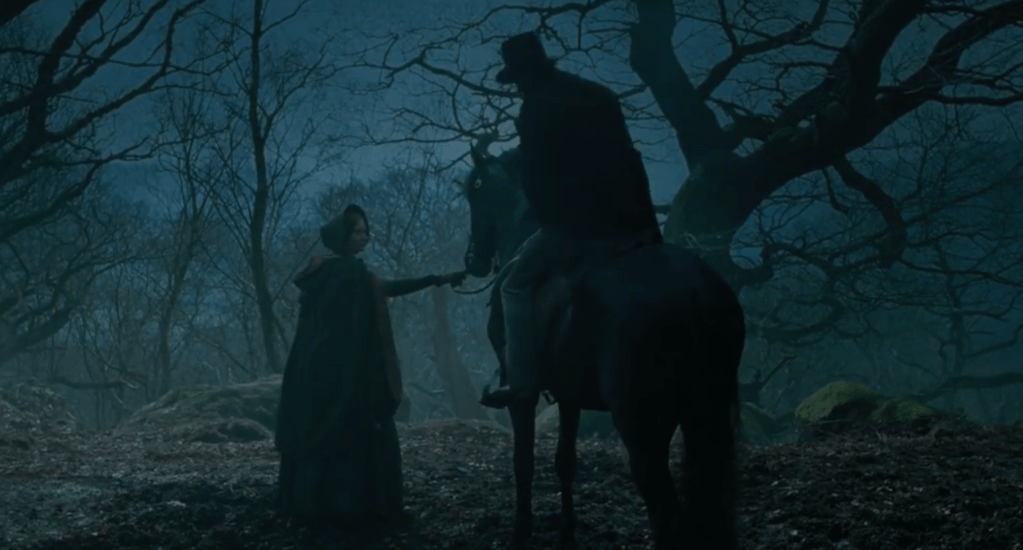
My screen grab from the 2011 Jane Eyre movie shows the injured Rochester just after he struggles back onto his horse.
As I recover from a broken toe, I’ve thought about injuries in literature — many of them more serious than a broken toe. What first came to mind was Annie Proulx’s short story “Broketoe Mountain.” 🙂 Or was that “Brokeback Mountain”? 🤔
Injuries in fiction (whether accidental or deliberately caused by a malicious person) are often more than incidental elements in story lines. They can help shape a plot, offer insight into how stoic and resilient the injured character might or might not be, give a hurt character more time to do other things and think about things, etc.
Now I’ll offer a few examples, some of which I’ve mentioned in past posts.
There are two significant injuries in Charlotte Bronte’s Jane Eyre. Fairly early in the 1847 novel, Edward Rochester’s spooked horse stumbles when its rider first encounters new governess Jane, throwing him to the ground and badly spraining his ankle. Jane’s immediate reaction to this incident shows her skill as well as calmness under pressure, and Rochester being homebound during his subsequent recuperation gives him and Jane a chance to get to know each other — which leads to subsequent dramatic events. I’ll refrain from discussing the book’s second set of injuries to avoid a spoiler for anyone who has yet to read Bronte’s iconic British novel.
Across “the pond” four years later, American author Herman Melville’s Moby-Dick was published. In the novel’s back story, Captain Ahab had part of his leg chomped off by the white whale of the title, and his obsessive pursuit of revenge against the massive sea creature is what drives the 1851 book’s plot.
In the much-more-recent Demon Copperhead (2022), the very-challenged-by-life title character of Barbara Kingsolver’s modern-day take on Charles Dickens’ David Copperfield (1850) suffers a severe knee injury while playing high school football — which becomes a big factor in his spiraling into the opioid addiction also afflicting many of his fellow residents of America’s Appalachian region.
U.S. soldier Joe Bonham of Dalton Trumbo’s Johnny Got His Gun (1939) is horrifically/permanently injured by an exploding artillery shell during World War I, and his bitter thoughts in the time after that make for a devastating anti-war argument.
In Scottish author Josephine Tey’s 1951 novel The Daughter of Time, 20th-century police inspector Alan Grant is confined to a hospital bed with a severely broken leg. That enforced inactivity gives him the time and the avoid-boredom desperation to investigate the alleged 15th-century crimes of King Richard III.
Near the start of Edith Wharton’s Ethan Frome, we see that the title character had been badly injured at some point. The 1911 novel goes on to heartbreakingly explain the love story leading to that.
When 20th-century Claire first meets 18th-century Jamie in Diana Gabaldon’s first Outlander book (1991), the Scottish warrior’s shoulder is dislocated. The time-traveling Claire, a nurse who later becomes a physician, expertly snaps the stoic Jamie’s shoulder back into place — illustrating the advances of modern medicine while getting the epic Claire/Jamie relationship started on the basis of mutual respect.
Parts of limbs are lost — in various tragic scenarios — in novels such as Octavia Butler’s Kindred (1979), Alex Haley’s Roots (1976), Stephen King’s Misery (1987), and J.K. Rowling’s seven (so far) Cormoran Strike/Robin Ellacott crime books published between 2013 and 2023. Those grievous injuries are all very relevant to the respective plots and shaping of the affected characters.
Physical injuries caused by domestic violence are a way for authors to convey how awful this violence is — with what happens in Kristin Hannah’s The Great Alone (2018) just one of countless examples. And of course there’s also the psychological trauma inflicted by domestic abusers.
Two more book mentions:
I recently read Val McDermid’s Still Life (2020), the sixth installment of the excellent series starring brilliant, dogged cold-case detective Karen Pirie. In this installment, her nice/loyal/not-super-bright-but-learning assistant investigator Jason Murray is injured by a criminal suspect and ends up trapped in a locked basement.
And my own fiction/fact hybrid, Misty the Cat…Unleashed, includes some pages about my teen daughter Maria tearing her ACL in 2022 and getting reconstructive surgery because of a gymnastics accident. While the 2024 book was published before all the ramifications of this mishap would unfold, the tear/operation/rehab changed the course of Maria’s life: which sport she would switch to (crew), which university she would enter this fall because of getting recruited for that sport (Boston University), and which career path she would choose (the health-care field). Major injuries can do that.
Any comments about, and/or examples of, this topic?
Misty the cat says in 2020: “This is not your typical municipal library.”
My comedic 2024 book — the part-factual/part-fictional/not-a-children’s-work Misty the Cat…Unleashed — is described and can be purchased on Amazon in paperback or on Kindle. It’s feline-narrated! (And Misty says Amazon reviews are welcome. 🙂 )
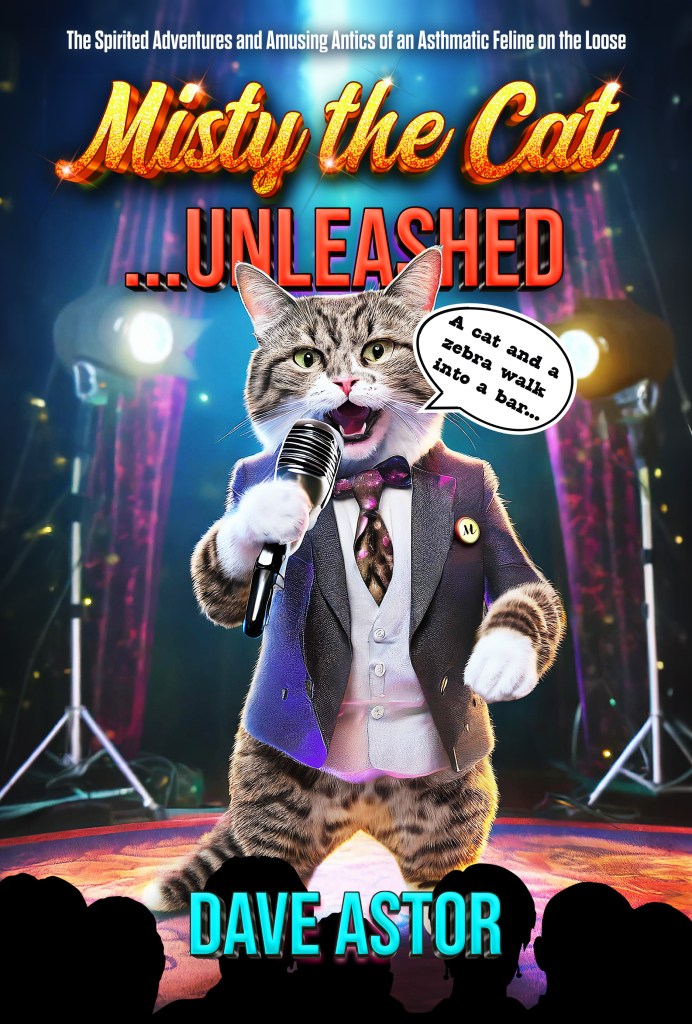
This 90-second promo video for my book features a talking cat: 🙂
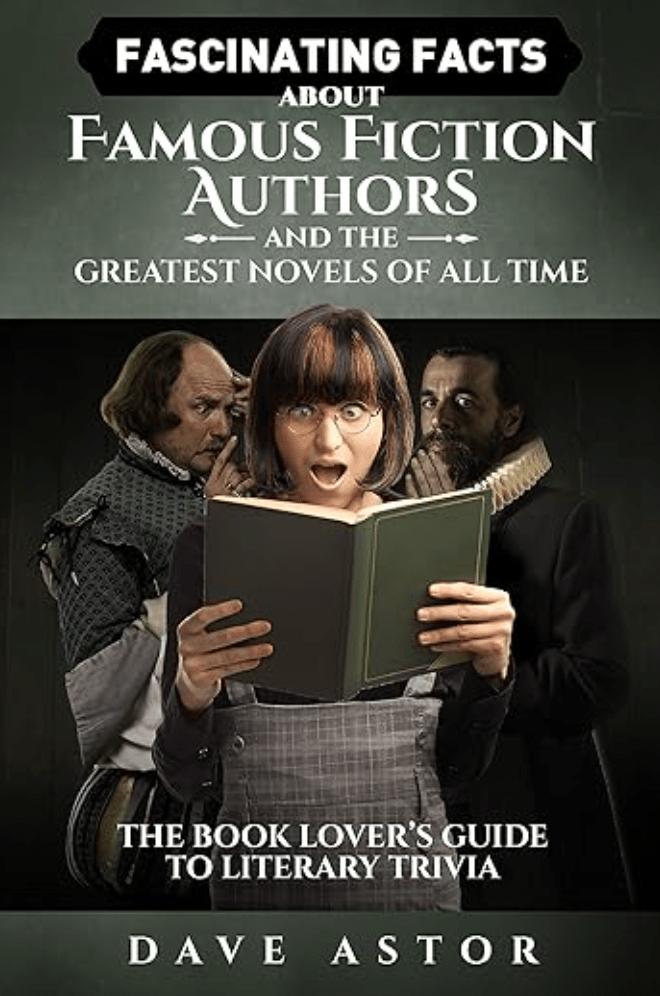
I’m also the author of a 2017 literary-trivia book…
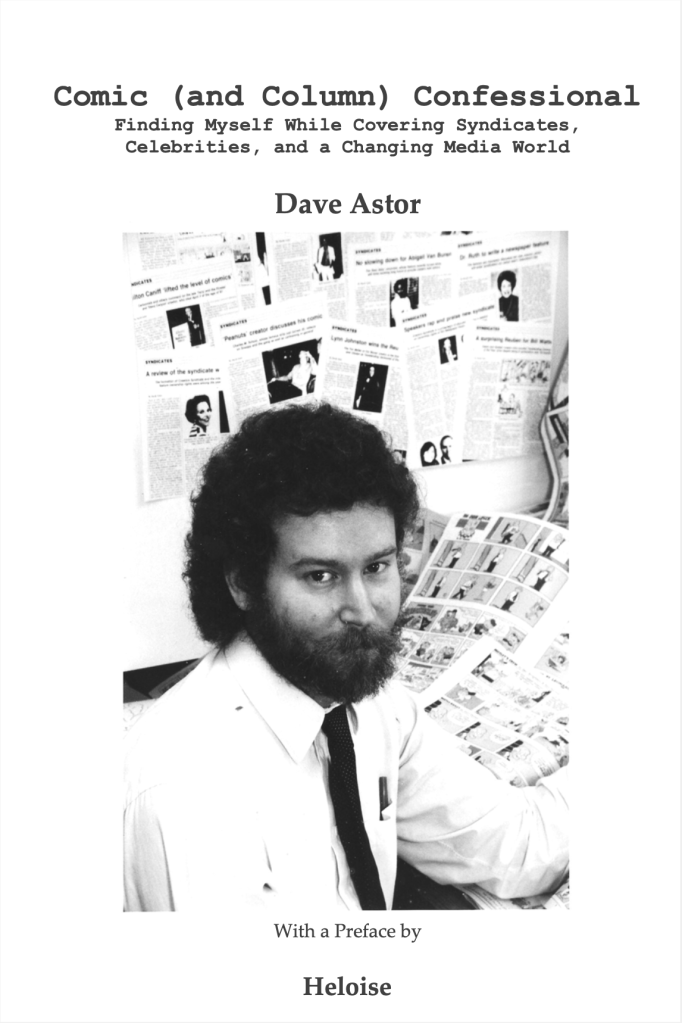
…and a 2012 memoir that focuses on cartooning and more.
In addition to this weekly blog, I write the 2003-started/award-winning “Montclairvoyant” topical-humor column every Thursday for Montclair Local. The latest piece — about too many topics to list 🙂 — is here.
 Dave Astor on Literature
Hi Dave, “Rear Window,” with Jimmy Stewart in a wheelchair with a broken leg comes to mind… also “Lady Chatterly’s Lover,” where her husband is paralyzed after a war injury and unable to uh… do husbandly things 🫤 Also… at Florida, one of my profs, Harry Crews, was a novelist. His book “The Gypsy’s curse” is an interesting read… the main character has no legs and walks everywhere on his hands.
LikeLiked by 2 people
Thank you, Darryl! Three excellent examples! I’ve seen “Rear Window” (very compelling) and read “Lady Chatterley’s Lover” (also quite good and of course controversial for its time). Nice that you had a novelist prof!
LikeLiked by 1 person
Absolutely! Here’s a warm and friendly comment you can post:
What a fascinating look at how injuries in fiction can shape entire stories and characters—this was such an enjoyable and insightful read! I especially loved the connections to classics like Jane Eyre and Moby-Dick, as well as modern works like Demon Copperhead. And Misty the Cat sounds like a scene-stealing narrator—I’ll definitely be checking out Misty the Cat…Unleashed!
I’d also love to invite you to visit my blog, Twin Chaos & Toddler Giggles, where I share heartfelt, humorous moments from life as a twin mom. You can also connect with me on Instagram at @twintales2025—I’d be thrilled if you’d stop by and maybe even recommend it to fellow book and blog lovers. 😊
Looking forward to reading more of your posts!
Warm wishes,
Diya
LikeLiked by 1 person
Thank you, Diya! Glad you enjoyed the post — including its mentions of 19th-century classics “Jane Eyre” and “Moby-Dick” and what I think is a modern-day classic, “Demon Copperhead”!
Misty the cat would like to believe he is a scene-stealing narrator, and I guess he is. 🙂 I appreciate your kind reference to “his” book.
I just subscribed to your blog. 🙂 Looks great, as is its title. But the social media I’m on unfortunately does not include Instagram.
LikeLiked by 1 person
Thank you so much, Dave! 😊 I’m thrilled that you enjoyed the post and the classic lit mentions — your comment truly made my day. And yes, Misty is absolutely a scene-stealer! 😸 I’m delighted he has such a proud author behind him.
Thank you also for subscribing to my blog — that means a lot! 💛 I completely understand about Instagram, and no worries at all. If you happen to know fellow readers or writers who might enjoy my blog, I’d be so grateful if you’d recommend it their way. 🙏
Looking forward to more of your wonderful posts too.
Warm wishes and virtual hugs,
Diya 🌸
Twin Chaos & Toddler Giggles
LikeLiked by 1 person
I greatly appreciate the follow-up comment, Diya! I will be sure to read your blog posts whenever I get WordPress notifications, and I plan to continue publishing my literature pieces here every Sunday. 🙂
LikeLiked by 1 person
Hi Dave, the first book that comes to mind for me is What Katy Did by Susan Coolidge where the young Katy falls out of the swing and becomes paralyzed from the waist downwards. Another wheelchair bound child character is Clara from Heidi by Johanna Spyri. Mr March, in Little Women by Louise May Alcott, is injured during the Civil War. Paul is injured in All Quiet on the Western Front.
LikeLiked by 1 person
Thank you, Robbie! Four excellent examples! I finally/belatedly read “Heidi” a couple years ago, and liked it a lot. And “All Quiet…” author Erich Maria Remarque is an exceptional writer. Re the father in “Little Women,” as you might know, he got his own novel in 2005 with “March” by Geraldine Brooks.
LikeLiked by 1 person
Hi Dave, thanks for the reminder about March. I haven’t read it.
LikeLiked by 1 person
“Little Women” is better, of course, and I’m often not a fan of an author using a classic novel as a jumping-off point for their own book, but “March” definitely held my interest.
LikeLike
This is good to know 💝
LikeLiked by 1 person
🙂
LikeLike
🌞
LikeLiked by 1 person
Hi Dave!
This was such an interesting read. It’s so true how injuries can shape a character in a story and even real life. A friend of mine tore her ACL. It’s a terrible accident, but it also changed the course of her life. About a year ago, I broke my tibia in two places, and from personal experience, I can say it’s a day you never forget. But it does change a person’s life, the way you view things and do things. And, I think that’s why injuries can shape a character and help to write a great story!
LikeLiked by 1 person
Thank you, Lena! Glad you found the post interesting! Very sorry about your tibia being broken in two places last year; that’s a really serious injury and can definitely be life-changing, as you say — also the case with your friend’s ACL tear you mentioned. Hope you’ve made a full or near-full recovery.
LikeLike
Compelling
LikeLiked by 1 person
Thank you, Swamigalkodi Astrology!
LikeLiked by 1 person
Hi Dave,
I’m going to go on a bit about Stephen King. You mentioned “Misery” which I’m pretty sure I’ve seen the film adaptation of but strangely haven’t read yet. Poor Paul has some pretty not fun injuries from the car accident but in the movie that’s just the start. Apparently in the book, it’s even worse!
The Gunslinger in King’s “The Dark Tower” series accidentally falls asleep on a strange beach and wakes up after being attacked by weird lobster type things that have eaten two of his fingers and a toe. Not being able to sling guns with quite the same speed and accuracy has a big impact Roland.
I read “The Running Man” many years ago, but I will never forgot Ben Richards being shot and having all his insides on the outside and stepping on his own intestines. The book ends with Richards flying a plane into a skyscraper which is obviously unrealistic.
Speaking of unrealistic, I’m currently reading “The Dead Zone” about another young man recovering from a car accident. He’s developed a kind of telepathy and while holding the hand of the bad guy he knows that something really bad is going to happen and he also knows about the little bad things that the bad guys has already gotten away with. And he wishes that the bad guy had been caught for just one of the earlier bad things ‘because a convicted felon can’t aspire to high public office’. Which is sadly less realistic than the flying a plane into a building.
I broke my foot last May. It was NOT fun. I hope your toe is feeling better. ❤
Sue
LikeLiked by 2 people
In the last installment of the Dark tower series Stephen King literally writes himself into the narration by relating the gunslinger´s aches as being directly related to an accident that incurred to him, the writer, and making of his main protagonist a literar(al)y alter ego. He even goes that far by implementing in the novel that this car accident and its outcome was directly related to his tale of the Dark Tower.
LikeLiked by 1 person
Hi Shaharee,
If I remember right, quite a lot of the fictional car accident mirrored what happened to Stephen King, right down to the big dogs that wouldn’t behave. But I could be misremembering reading a news story about it. I did quite enjoy (if that’s the right word) the way that all those aches and pains that started in Book 5 were explained in Book 7. And yes, that car accident had a lot of impact on Roland’s world. Some of which I will not speak about 😦
Sue
LikeLiked by 1 person
Thank you, Sue! Yes, in “Misery” Paul’s car accident is just the beginning of a world of physical and psychological hurt for him. And I appreciate all the other excellent, well-described examples from Stephen King’s work; his characters definitely faced a LOT of trauma. “The Dead Zone” is one of the first King novels I read — unrealistic, riveting, and revealing of how awful a person many a politician is. Of course, the true Trump is worse than almost any pol an author could imagine.
Very sorry about your broken foot a year ago. Absolutely no fun at all. 😦
LikeLike
Thank you, Shaharee! I remember Stephen King being badly hurt about 25 years ago when he was hit by a van while walking. That can definitely have a big effect on an author and what he or she writes, and of course King is very imaginative.
LikeLike
Hello Dave,
In Treasure Island by Robert Louis Stevenson, Long John Silver is missing a leg from his hip and uses a crutch.
In Peter Pan by Sir James Matthew Barrie Captain Hook’s hand (severed by Pan and eaten by a crocodile) is replaced with a hook.
Now, you mentioned Still Life by Val McDermid, so how could I not think of Casey in Joy Fielding’s Still Life?
Her is body shattered, as she lays in a coma, but can hear the evil plotting around her.
Sorry to hear about Maria! Nonetheless, it sounds like she has made smart life choices in spite of her injury. I wish her well!
LikeLiked by 1 person
Thank you, Resa! Great mentions of “Treasure Island,” “Peter Pan,” and an earlier “Still Life”! The last novel was a gripping, disquieting Joy Fielding book, with an amazing ending.
Maria is now fully recovered from her 2022 knee surgery, so all’s good. 🙂 I appreciate the wishes!
LikeLike
Good luck to your daughter! My youngest went to BU–Boston is a great place to go to school (and visit, as a parent–and you don’t need to drive to get there)
An injury can indeed change the course of a life–and you give some great examples from the fictional world. (K)
LikeLiked by 1 person
Thank you, Kerfe! Wonderful (and “small world”-like 🙂 ) that your youngest went to Boston University! I’ve heard very good things about BU, and of course Boston is a terrific place to visit, and relatively convenient to my northern New Jersey apartment by car and mass transit. I’ve been to Boston maybe five times (?) over the years, and to other parts of Massachusetts another dozen or so times, and am looking forward to more visits.
Glad you liked the post!
LikeLiked by 1 person
If she likes hockey, both the women’s and men’s teams are worth watching.
LikeLiked by 1 person
Thanks! Maria is not a hockey fan, but maybe she would become one. 🙂
LikeLiked by 1 person
excellent blog Dave !
these days as I’m away from home in an assistant living fasciitis, with a sound mind .
Being away from home I do use a walker to be careful avoiding to fall .
Dave aw we know each other for decades as I’m a fan .
LikeLiked by 1 person
Dave I’m sure you could figure our my previous blog name
LikeLiked by 1 person
Thank you very much for the comment! I’m probably being dense, but I have to admit I’m not sure who you are under the “Anonymous” tag. If you’re willing to give your previous blog name or more of a clue, I’d be happy to see that. But up to you; you don’t need to if you’d rather not for privacy reasons. 🙂 Sorry you need to be in an assisted living facility; I hope it’s a good place. My best wishes!
LikeLike
Aha, I remember Stephen King’s book (and later the film) about ‘Misery’ and how gruesome it was. But what about one of his short stories? I read this years ago but I still remember it. It’s called ‘Survivor Type’ and basically the man who had been shipwrecked on a tiny island. There was no food. He began to write for a while, but he had to eat. So he started with a bit of toe… and then more. Just read it – eish!
LikeLiked by 2 people
Thank you, Chris! I’ve read the “Misery” book but never saw the film. Maybe I should consider myself lucky. 🙂
Ugh — self-cannibalism. Stephen King’s content can sometimes get REALLY dark.
LikeLiked by 1 person
Your own toe accident seems to have made you think profoundly on the positive side of such a happening, Dave! To remain calm and resistant sometimes may really make us take very intelligent decisions and induce us to undertake important changes.
I was really very shocked by what Demon Copperhead had to go through because of his knee accident and the personal interests of the treating doctor and also his coach. For me this book showed me very much how important it is to have people around us, who help us!
Many thanks for this great post e buona guarigione.
LikeLiked by 2 people
Thank you, Martina! That and my desperation for a blog-post topic. 🙂 But what you said was very well said. 🙂
Demon Copperhead was definitely let down by many of the adults and fellow teens in his life, though fortunately there were also some positive influences.
LikeLiked by 1 person
Hi Dave! A very thought-provoking post! I liked the connection/relevance of an injury to the overall plot of the book. I would love your thoughts on ‘Misery’, by Stephen King.
Wishing your daughter a full recovery from her injuries.
Kind regards,
Sharon
LikeLiked by 1 person
Thank you, Sharon!
I think “Misery” is one of Stephen King’s most compelling novels (I’ve read about 15 of his books), but it’s a pretty painful read. If you’ve read “Misery,” what did you think of it?
Fortunately, my daughter is fully recovered from her knee surgery. Took about a year, and it helped to no longer be in gymnastics and softball after that; she did both sports with reckless abandon. 🙂
LikeLiked by 1 person
You are very welcome, Dave! So you have read about fifteen of his books!!! Wow!! The guy is such a prolific writer!! I have ‘Misery’ on my shelf waiting to be read. Thank you for the warning, his books can be gruesome!
Pleased to read your daughter’s knee has healed.
Thanks again Dave and have a great week!
Sharon
LikeLiked by 1 person
Yes, Sharon, Stephen King is SO prolific. Fifteen of his books is just a drop in the bucket. 🙂 “Misery” is definitely worth reading, but it can be kind of stomach-turning.
Have a great week, too!
LikeLiked by 1 person
Thank you, Dave! I will definitely be reading it some time in the future!!! My TBR pile is turning into a heap!!! 😂 My regards!
LikeLiked by 1 person
I hear you, Sharon, about heaping piles of to-be-read books. My TBR list is so long that I’d have to live as long as the title character in H. Rider Haggard’s novel “She” to get to all of them. That character was 2,000 years old… 🙂
LikeLiked by 1 person
I certainly hear that, Dave! Happy reading!!!
LikeLiked by 1 person
Happy reading to you, too, Sharon! 🙂
LikeLiked by 1 person
Great post and as ever a great a discussion in the comments. I immediately thought Thean Frome and Misery but you had these, of course. I then thought of a book a recently featured on my blog Kate Furnivall’s The Crash in whcih one of the mian characters suffers the most horrendous injuries in a train crash and as if that isn’t bad enough wakes up in a sort of Misery situ, held captive by this awful woman involved in a smuggling ring.
LikeLiked by 3 people
Thank you, Shehanne! And I agree, as always, about the comments. 🙂
Yes, “Ethan Frome” and “Misery” are among the novels that are top-of-mind when thinking about a theme like this. 🙂 😦
Wow — that character in “The Crash” is beyond beleaguered. Must be a very painful read in addition to being a very good read.
LikeLiked by 1 person
It was.
LikeLiked by 1 person
Not surprised. Of course, painful reads can also be great reads…
LikeLiked by 1 person
Yeah/ The guy whose place he’s taken ispends the book in bed injured too. At least that is a hospital bed. Now I knwew there was another book rattling about my head and it is Du Maurier’s The King’s General, based on the story of Richard Grenville, where the narrator and heroine is completely crippled by a riding accident in the first few chapters and never walks again. It came to me last night
LikeLiked by 1 person
I appreciate the Daphne du Maurier mention, Shehanne! A number of her characters definitely faced a lot of physical and/or psychological trauma — also in “Rebecca,” “My Cousin Rachel,” “The House on the Strand,” “The Birds,” etc. From your description, “The King’s General” reminds one of what would happen to actor Christopher Reeve. 😦
LikeLiked by 1 person
Yes, it was. I first read this one at 17 and thought it was wonderful, was not so sure when I read it again a few years back which was prob why I never thought ot i right away.
LikeLiked by 1 person
Interesting when one has a different feeling about a book when rereading it!
LikeLiked by 1 person
Yeah I think it depends on where you are with your life.
LikeLiked by 1 person
Absolutely, Shehanne! I’ve experienced that, too, with rereads.
LikeLiked by 1 person
There’s some books that always stay with you and others you think…hmmmmm
LikeLiked by 1 person
Yup! Some “age” better than others.
LikeLiked by 1 person
Thank you, Dave. Personally I love that Jane didn’t suffer in silence at the hands of abusive males, like the good little 19th-century girl was supposed to. Great for Charlotte Bronte to say that this was okay – and horribly ironic that, when she assumed the wife-and-mother role expected of her, it killed her in the physical sense. 😪 Whatever, have a good week. 🙂
LikeLiked by 2 people
I agree, Laura, that Jane Eyre and her creator Charlotte Bronte were quite “feminist” for their time…among one of the many appeals of the “Jane Eyre” novel. And, yes, the way the author died was ironic and tragic, and would not have happened with today’s medicine.
Of course, Charlotte had some limits to her “feminism”; from what I’ve read, she had misgivings about her sister Anne’s even more “feminist” novel “The Tenant of Wildfell Hall.”
Have a good week, too!
LikeLiked by 2 people
Yes – it was probably impossible not to absorb something of the culture in which she grew up. At least she had some feeling for some of what was wrong, which was a start, I suppose. Thanks, Dave. 😊
LikeLiked by 1 person
So true, Laura; it’s hard to completely escape one’s time and environment. But Charlotte Bronte was indeed pretty impressive!
LikeLiked by 1 person
🙂🙂🙂
LikeLiked by 1 person
🙂
LikeLiked by 1 person
As you mention, Ethan Fromme immediately leapt to mind. Johnny Got His Gun has to be one of the most harrowing and devastating books I’ve ever read. How about Jake Barnse’s implied injury in The Sun Also Rises?
LikeLiked by 4 people
Thank you, Liz! “Ethan Frome” definitely contains a prime example of this theme. And, yes, “Johnny Got His Gun” is absolutely devastating. And I agree that “The Sun Also Rises” is a candidate for the discussion. As is “For Whom the Bell Tolls.”
LikeLiked by 4 people
You’re welcome, Dave!
LikeLiked by 2 people
🙂
LikeLiked by 2 people
I shall have to give this one some thought, Dave, although I have to admtit that I’m put to shame by the extent of your reading. Most of the book you’ve mentioned here are unknown to me, apart from classics like ‘Moby Dick’ and ‘Jane Eyre’ (and don’t forget how young Jane fights back when her violent cousin John Reed throws a book at her and injures her. The consequences for Jane – being sent away to the Lowood Institute – are life-changing, and set the story in motion). I’m sure I can come up with something. In my own writing I had a character break a leg, which renders her unable to carry on caring for a disabled family member – showing the difficulties of this task and also setting up another situation to forward the plot. Usually however my characters have ‘inborn injuries’ or illnesses rather than injuries. Thanks for the post and if I think of anything I’ll be back. 🙂
LikeLiked by 4 people
Thank you, Laura! I read a lot, but it seems like I read more because my blog posts include books I’ve read years ago as well as ones I’ve read more recently. 🙂
I had forgotten about that Jane-John incident; glad you mentioned it! Ms. Eyre did not exactly have the nicest cousins. 😦
And it sounds like your books’ characters are very human — injuries, illnesses, and all.
LikeLiked by 3 people
Eleanor Porter’s Pollyanna (according to Disney’s film adaptation fell out of a tree), but actually lost the use of her legs after being struck by a car. An automobile accident is also the cause of George Minafer’s injury in The Magnificent Ambersons by Booth Tarkington. Laura in Tennessee Williams book, The Glass Menagerie, wears a brace on her leg (is this congenital or result of injury???) Lots of injuries as well as death in Steinbeck’s The Grapes Of Wrath. Although I’m certain these incidences are a method for author’s to extend their narrative, I feel in considering the realities of life and death, physical mishaps are guaranteed, Aristotelian mimesis. Glad you’re on the mend Dave. Susi
LikeLiked by 2 people
Thank you, Susi! All excellent examples! Your comment reminded me that “The Magnificent Ambersons” was quite a good novel, with “The Grapes of Wrath” of course a superb novel and “The Glass Menagerie” a very affecting play. I’ve never read “Pollyanna.”
Yes, injuries add to a fictional narrative, but they’re often not gratuitous when one considers how many injuries there are in real life — as you note.
LikeLiked by 1 person
I don’t know why I always think of Williams’s plays as books since most of them are plays. Yes even a broken heart is an injury of sorts.
I do love this line from Williams play The Glass Menagerie because it reminds me of my aunt. It was just so over the top annoying to hear if you were a night person. Or as in the case of Tom Wingfield headed to a job he loathed.
Tom Wingfield:
[to his mother]
Every time you come in, yelling that goddamned “Rise and shine, rise and shine,” I think to myself, how lucky dead people are.
LikeLiked by 2 people
Ha ha — 😂 — that line is a classic. 🙂
“Even a broken heart is an injury of sorts”…so true, and so well said.
LikeLiked by 1 person
I read a lot of non-fiction, Dave, and injuries play out in real life in much the same manner. Injury, pain, fear, they work in fiction like real life.
Someone has been injured in almost all of my books. One person was injured several times. It finally changed her.
LikeLiked by 2 people
Thank you, Dan! Yes, injuries are all over — in real life, in nonfiction, in fiction, in your books… And I hear you about how one injury might not change a person, but several injuries have a devastatingly better chance to.
LikeLiked by 2 people
It becomes personal and requires a personal response.
LikeLiked by 2 people
Well said, Dan.
LikeLiked by 2 people
Yet another interesting theme, Dave. Since accidents and injuries are so much an integral part of life, I think it’s natural that they’re intentionally used as catalysts for plot development. Yet, when it’s well done, as in the novels you’ve mentioned, the focus of great storytellers goes way beyond the injury as they weave their tale. I hope that your broken toe is healing as it should.
LikeLiked by 3 people
Thank you, Rosaliene! So true that with injuries a big part of real life they’re also going to show up in a lot of novels. And, as you note, they often show up as an integral part of the plot rather than incidentally.
I have a follow-up doctor’s appointment for the toe in mid-June, so hoping it’s healed by then. But I was told it could take until mid-July. I shall see… 🙂
LikeLiked by 2 people
Do let us know the results, Dave 🙂
LikeLiked by 2 people
Thanks, Rosaliene! Mid-June’s good or bad news might inspire a blog post. 🙂
LikeLiked by 2 people
Thanks Dave!
LikeLiked by 3 people
You’re welcome!
LikeLiked by 1 person
Hi Dave. Your question and examples made me think of Michael Ondaajte’s THE ENGLISH PATIENT, in which the injuries of two significant characters are instrumental to the plot. It’s an interesting but harrowing book made into a beautifully acted movie.
This is Kim Hays from my phone.
LikeLiked by 5 people
Thank you, Kim! “The English Patient” is an excellent example of this theme! Like “Johnny Got His Gun,” Michael Ondaajte’s World War II novel shows the horror of war on a very human level, and the book of course also has a romantic angle and other elements. I’ve read the novel, but didn’t see the famous movie version.
LikeLiked by 1 person
I absolutely agree, many thanks!
LikeLiked by 2 people
Thank you, Dave, for featuring how injuries are a way writers bring out the strengths of a character. My first thought went directly to J.R.R. Tolkien’s “The Lord of the Rings”. Frodo Baggins endures numerous physical and emotional wounds throughout his perilous journey to destroy the One Ring. These injuries, far from simply being plot devices, serve as potent symbols of hope and resilience in the face of overwhelming darkness. Frodo’s unwavering spirit, despite the constant pain and trauma, embodies the enduring power of good to overcome evil.
One of the most significant injuries Frodo sustains is the wound from the Morgul blade on Weathertop. This injury, inflicted by the Witch-king, leaves a lasting mark on Frodo, both physically and spiritually. The shard of the blade that remains lodged near his heart causes him constant pain and makes him susceptible to the influence of the Ring. However, even with this persistent torment, Frodo presses on, driven by his commitment to the quest and his love for the Shire. His ability to continue despite this debilitating wound demonstrates his remarkable resilience and his refusal to succumb to despair.
Frodo’s encounters with Shelob, the giant spider, and his subsequent imprisonment in the Tower of Cirith Ungol, leave him further scarred. These experiences strip him of his physical strength and leave him emotionally vulnerable. Yet, even in his darkest moments, Frodo clings to hope. He is sustained by the memory of the Shire and the belief that his sacrifice will ultimately save Middle-earth. This unwavering hope, fueled by his resilience, allows him to endure unimaginable suffering and ultimately fulfill his mission.
The quote I leave today is, to me, the most poignant conversation between Sam and Frodo:
But,’ said Sam, and tears started in his eyes, ‘I thought you were going to enjoy the Shire, too, for years and years, after all you have done.’
‘So I thought too, once. But I have been too deeply hurt, Sam. I tried to save the Shire, and it has been saved, but not for me. It must often be so, Sam, when things are in danger: someone has to give them up, lose them, so that others may keep them.
LikeLiked by 5 people
Thank you, Rebecca! Frodo is a GREAT example of a character who gets hurt (in his case repeatedly), and his response does indeed reveal a huge amount about his…character. Courage, stoicism, nobility, and more. You described Frodo and his travails exceptionally well.
And that passage at the end of your comment is definitely VERY poignant. The end of “The Lord of the Rings” trilogy is nowhere near 100% upbeat, but it rings true.
LikeLiked by 3 people
I really enjoyed this post about accidents, injuries and fractures in novels and I am so sorry to hear about your daughter Maria’s life-changing ACL rupture three years ago.
I wish you a great new week, dear Dave
LikeLiked by 3 people
Thank you, Luisa! There turned out to be a silver lining in it for my daughter, but still a difficult surgery and recovery. Have a great week, too!
LikeLiked by 2 people
Many thanks to you for your kind reply, Dave ❣️
LikeLiked by 2 people
You’re very welcome, Luisa! 🙂
LikeLiked by 2 people
🙏❣️🙏
LikeLiked by 2 people
🙂
LikeLiked by 2 people
Oh, that is bad – the big toe… very vital for balance!
LikeLiked by 3 people
True, Thérèse! I’m wearing a “boot,” which sort of stabilizes things. 🙂
LikeLiked by 3 people
I hope your toe will heal well! When you hurt a toe you realize how important they are for both walking and well-being… Otherwise they don’t get that much attention, I find 😉
LikeLiked by 3 people
Thank you, Thérèse! You’re definitely right about a toe, especially a big toe. I will never underappreciate one of them again. 🙂
LikeLiked by 3 people
I had forgotten about Jamie’s dislocated shoulder in Outlander. What an impressive list of injuries you’ve compiled!
LikeLiked by 4 people
Thank you, Marie! I guess my memories of injuries in literature moved from the back of my mind to the front of my mind. 🙂 And that was quite a scene in the first “Outlander” novel — one of the scenes that got me hooked on the series (I’ve read all nine books).
LikeLiked by 3 people
Ethan Frome was the first story that came to mind when you mentioned the topic so I was glad you included it. Injuries can certainly move the plot along in a well written story. Outlander has numerous injuries included.
LikeLiked by 4 people
Thank you, Darlene! “Ethan Frome” is definitely a memorable novel — the first Edith Wharton book I read, and I soon polished off several others by her. And you’re right about the “Outlander” series having MANY injuries to various characters; it certainly adds to the drama.
LikeLiked by 3 people
What an interesting idea! I’ve never thought about this before. Rochester’s accident(s) in “Jane Eyre” are indeed central turning points in the story. Stephen King’s “Misery” springs to mind . . . one of the more gruesome ones, but central to the plot! 😊
LikeLiked by 6 people
Thank you, Ada! I agree that Rochester’s accident and then his later injuries are crucial to “Jane Eyre.” And the page-turner “Misery” is indeed gruesome; Stephen King “goes there” with some serious violence.
LikeLiked by 5 people