Today is the first day of winter in the Northern Hemisphere, but it was also still autumn for a few hours. So, a two-faced day.
As in real life, some fictional characters also have two faces — offering different personas at different times and in different situations. This can be among the many building blocks involved in making a character complex, nuanced, and three-dimensional.
Perhaps the most literal depiction of a Janus-like character is the star of Strange Case of Dr. Jekyll and Mr. Hyde. The duality in Robert Louis Stevenson’s 1886 novel happens when Jekyll, a basically good man with some repressed dark tendencies, takes a potion that turns him into the evil Hyde.
But things are usually somewhat more subtle when it comes to characters with binary tendencies.
For instance, the villainous Count Fosco can also be quite charming in Wilkie Collins’ 1860 classic The Woman in White.
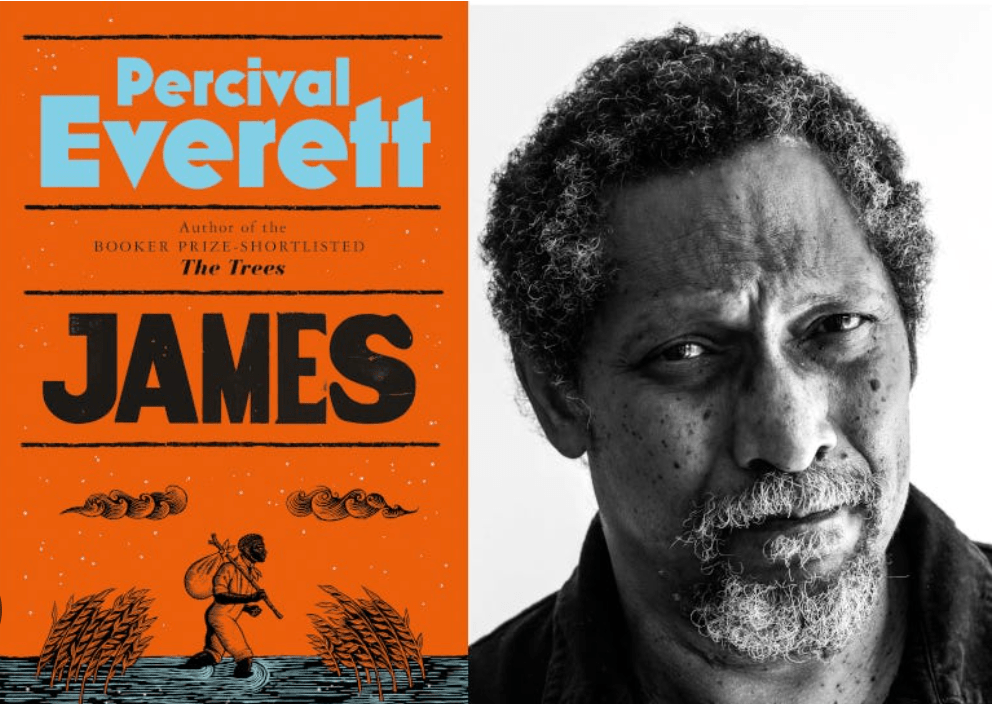
Much more recently, we have Percival Everett’s 2024 novel James, which reimagines Mark Twain’s Adventures of Huckleberry Finn from the vantage point of escaped slave Jim — after Twain mostly focused on Huck in his 1884 book. The duality here is that James, in a recognizable self-preservation maneuver, speaks in a different way (intellectually) to his fellow Black people than to white people (with whom he plays dumb). James, which I read last week, won the Pulitzer Prize for fiction earlier this year.
Jim’s dual persona reminds me of female characters who are smarter and/or more strategic than they let on. Daisy Buchanan of F. Scott Fitzgerald’s The Great Gatsby (1925) would be one example.
Returning to contemporary literature, we have Val McDermid’s crime series about cold-case detective Karen Pirie. She is mostly tough while on the job — both with suspects and with the people (including sexist men) she works with — while Pirie’s more vulnerable side emerges in her personal life.
Then there are the characters who are warrior-like in battle even as they can have more-tender aspects when not fighting. Jamie Fraser of Diana Gabaldon’s Outlander series certainly has those two elements.
Sometimes, two parts of a personality exist more consecutively than simultaneously — as with young Neville Longbottom of J.K. Rowling’s Harry Potter series. He starts off bumbling and insecure, but eventually becomes quite courageous. Perhaps that arc is more maturity than duality.
Any comments about and/or examples of this topic?
Misty the cat says: “It’s the first day of winter. Autumn must still be around here somewhere.”
My comedic 2024 book — the part-factual/part-fictional/not-a-children’s-work Misty the Cat…Unleashed — is described and can be purchased on Amazon in paperback or on Kindle. It’s feline-narrated! (And Amazon reviews are welcome. 🙂 )

This 90-second promo video for the book features a talking cat: 🙂
I’m also the author of a 2017 literary-trivia book…

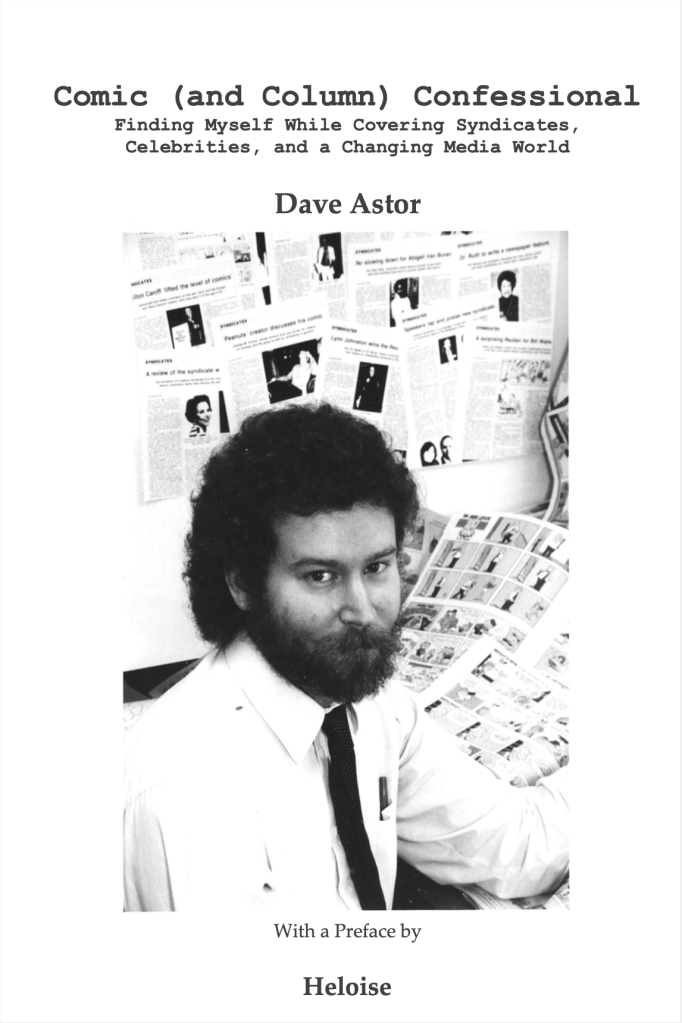
…and a 2012 memoir that focuses on cartooning and more, including many encounters with celebrities.
In addition to this weekly blog, I write the 2003-started/award-winning “Montclairvoyant” topical-humor column every Thursday for Montclair Local. The latest piece — which has a dystopian novel theme as it discusses 19 school-district jobs saved and 84 not saved (evoking George Orwell’s 1984) — is here.
 Dave Astor on Literature
I’ve been thinking about this! It would be good to read some more semi autobiographical novels too
LikeLiked by 1 person
Thank you! Glad this post coincided with you thinking about the same topic. 🙂
LikeLike
Hi Dave. It’s fun to think about characters in books who have dual personalities. There are lots of hypocrites, like Dimmesdale, who pretend to be better than they are, but there are others, like Sir Percy Blakeney in THE SCARLET PIMPERNEL, who pretend to be worse than they are. Sir Percy plays a cowardly, lazy fop, but he is actually a daring hero, always rushing off to France to save aristocrats from the guillotine. I also thought of Bertie Wooster and Jeeves. Officially, they are master and servant, but in fact Bertie is a nincompoop, and Jeeves’s job is to tell him what to do and get him out of the trouble he gets himself into.
LikeLiked by 1 person
Thank you, Kim! Great example of characters pretending to be better than they are or worse than they are! And I love the dynamic in P.G. Wodehouse’s oft-hilarious Jeeves/Bertie Wooster stories and novels; it is indeed a “servant/master” role reversal, with smarter-that-Bertie servant Jeeves basically calling the shots.
LikeLiked by 1 person
Interesting topic! Thanks for sharing. Happy Holidays!
LikeLiked by 1 person
Thank you, Dawn! Happy Holidays to you, too!
LikeLike
Thank you! ☺
LikeLiked by 1 person
You’re welcome, Sharon! 🙂
LikeLiked by 1 person
Sorry, I meant *for your generous replies…* It’s late in London…☺
LikeLiked by 1 person
You are very welcome, Dave!
The ending to, ‘The Great Gatsby’ is THAT good!! I have to read it very soon. I will report back 😊
Before I go, what else would you recommend by Edgar Allan Poe? I think I started, The Fall of the House of Usher at some point, but it’s a vague memory.
I’ve taken up enough of your time, Dave especially as it’s the holiday season.
Thank you for generous replies.
Sharon
LikeLiked by 1 person
Favorite Poe stories? That could be a long list. 🙂 “The Cask of Amontillado,” “The Masque of the Red Death,” “The Pit and the Pendulum,” “The Premature Burial,” “MS. Found in a Bottle,” “The Murders in the Rue Morgue,” etc.!
Always happy to converse with you, Sharon!
LikeLiked by 1 person
Wonderful! I will definitely look these stories up! That’s great and thank you for your reply!
I really enjoy conserving with you also, Dave. It’s always a pleasure discussing the many books that are out there. With thanks.
Happy times and happy reading!
🎄 ☺
LikeLiked by 1 person
You’re very welcome, Sharon, and happy reading to you as well! 🙂
LikeLiked by 1 person
You are welcome, Dave! A great post!
If you read ‘The Strange Case of Dr. Jekyll and Mr. Hyde’ again, please let me know how you find it! I remember thinking it was one of the greatest stories I had ever read at the time! A bit like, ‘The Tell-Tale Heart by Edgar Allan Poe! (in impact).
‘James’ does sound like it would be a bit depressing, thanks Dave but I might not read it for a while then! I do not want to read anything too depressing!!! ☺
‘The Great Gatsby’ does sound appealing, although I completely take your point about characters who are affluent!! However, if it’s well-written, I might put up with it! 😂
Thank you for the feedback, it is much appreciated.
Your kind wishes for the season to me and mine, again is greatly appreciated.
All best wishes to you from London. 🎄
LikeLiked by 1 person
“Strange Case of Dr. Jekyll and Mr. Hyde” was indeed pretty memorable, Sharon. And I agree that “The Tell-Tale Heart” was creepily riveting (like a number of Poe’s other stories).
“The Great Gatsby” prose is iconic, including one of the most famous closing passages in all of literature. And the novel is actually pretty short — not much more than 200 pages.
Thank you for the follow-up comment, and the season wishes, from London. 🙂
LikeLike
Many thanks, Dave, for your highly interesting post! I have recently really asked myself, if we not all have at least two faces, if we look at the fact in a consecutive sense, or because of all the life expiriences we make! I very much think that it is thanks to literature that we become often aware of this. I have recently read “Tell me what I am” by Una Mannion and think that this book is another good exemple concerning your topic
LikeLiked by 2 people
Thank you, Martina! I think you’re right that many people have two or more faces, especially when one thinks about that in consecutive rather than simultaneous terms. I know I’m definitely happier with the person I eventually became as an adult vs. the person I was as a kid being raised by problematic parents who divorced in my early teens. I appreciate your “Tell Me What I Am” example of this theme, and agree that literature can make us aware of a lot of things. 🙂
LikeLiked by 2 people
Thank you very much, Dave, for your words and I can very well imagine your situation as a child, because mine was also full of violence, whereas now I live in peace:)
LikeLiked by 2 people
So sorry about your childhood situation, Martina. That’s not easy to overcome. Very glad your life is peaceful now.
LikeLiked by 2 people
Fortunately there are always people who help us, Dave !🥂
LikeLiked by 2 people
So true, Martina. 🙂
LikeLiked by 1 person
I recently read Look Closer by David Ellis, where most of the characters have an outward-facing persona and then a very different private persona. The Vanishing Half by Brit Bennett, is the story of twins, one of whom vanishes and reinvents herself. And The Personal Librarian by Marie Benedict, another story of a black person who “passes” as white. The father in Four Letters of Love by Niall Williams, has a before and after kind of personality–one as a 9-5 worker in an office and then as a painter.
LikeLiked by 2 people
Thank you, Madeline, for those four excellent examples! Your mention of Black (or biracial) characters passing as white reminds me of people in other novels such as William Faulkner’s “Light in August,” Wilkie Collins’ “Armadale,” Alexandre Dumas’ “Georges” — and one of the supporting characters in the mentioned-in-my-post “James.”
LikeLiked by 1 person
How about The Picture of Dorian Gray by Oscar Wilde, his only novel, in fact a novella. The book revolves around Dorian Gray, a charming and erudite man whose portrait ages and warps as a result of his debauchery while he remains unblemished and youthful. Wilde explores the nature of beauty, the dangers of indulgence, and the rot that lurks under a seemingly perfect façade. Nice?
LikeLiked by 2 people
Thank you, Chris! “The Picture of Dorian Gray” definitely fits this theme! Maybe one of the most memorable depictions of duality in fiction. You summarized that novel — which I don’t think I’ve read since college — quite well!
LikeLiked by 2 people
Ummm, thinking … thinking. Reverend Auther Dimmesdale from The Scarlett Letter fits this bill. He has his ministerial face and his lovers fave and the interaction of the two ultimately cause his death. Angel from Tess of the d’Urbervilles also goes from being judgmental and self righteous to understanding and forgiving but it’s too late.
LikeLiked by 4 people
Thank you, Robbie! Two excellent mentions! Dimmesdale is indeed a severely conflicted character in the puritanical 17th-century New England in which Hawthorne places “The Scarlet Letter.” As for “Tess,” it’s always a shame when things don’t end well for a character who evolves. Thomas Hardy, like tons of other authors and people, knew that life is too often unfair.
LikeLiked by 2 people
Yes, Hardy did acknowledge the unfairness of life. This seems to have changed over time which is perhaps why I find a lot of contemporary fiction irritatingly unrealistic 🌞
LikeLiked by 1 person
Do you think that the protagonist of “The Talented Me Ripley” can be considered a double character?
LikeLiked by 5 people
I do! Many con men can be described that way. And Patricia Highsmith was a very interesting author. Thank you, Luisa!
LikeLiked by 3 people
My thanks go to YOU for your interesting posta and this kind reply
LikeLiked by 2 people
sorry: posts
LikeLiked by 1 person
You’re very welcome, Luisa! 🙂
LikeLiked by 2 people
Hi Dave! This is a super-fascinating post! Duality in characters?! I have never thought of characters in that way before! Specifically relating to how their personality may change, depending on the situation. Very curious!
I love Dr Jekyll and Mr Hyde! I haven’t read it in decades, it would make a great winter season read.
‘James’ by Percival Everett, sounds like an instant classic. Again, I have not come across the book/author before. So, thanks Dave I am going to add it to my TBR pile!!
I have always wanted to read; ‘The Great Gatsby’.
A very interesting post!
Wishing you and your family a delightful Christmas!
With all best wishes,
Sharon 🎄
LikeLiked by 2 people
Thank you, Sharon! Glad you liked the post!
I also haven’t read “Strange Case of Dr. Jekyll and Mr. Hyde” in ages. I don’t reread many books, but that’s among the ones I’d consider.
“James” is definitely compelling, though a large part of it is of course depressing.
And “The Great Gatsby,” though not one of my all-time favorites (I have mixed feelings reading novels set among the wealthy) is one of the best-written books ever.
Wishing you and yours very Happy Holidays, too!
LikeLiked by 2 people
So, I don’t want to confuse a dual type personality with personality disorder.
My sister was diagnosed with schizophrenia, then personality disorder. No one was ever clear about it, but it is difficult at best, and frightening at worst to deal with someone like this.
Which brings to mind the non-fiction book by Flora Rheta Schreiber – Sybil.
Character arcs and a dual personality can be conflated, so I’m thinking beyond that.
How about Winston Smith in 1984? And Julia as well. They act one way, the proper way, under the purview of Big Brother.
When alone, they are different in thought mind and deed.
What a sad ending… yet, it is made even more important to read now, by the fact that its inherent warning is coming true.
Thanks Dave!
LikeLiked by 5 people
Hi Resa, Winston and Julia care a very good mention.
LikeLiked by 3 people
I agree, Robbie, about Resa’s great (and sadly timely) “1984” mention and thoughts!
Resa, I totally hear you about how personality disorder shouldn’t (well, most of the time) be confused with someone who intentionally displays two faces to the world. Very sorry about your sister; that is very difficult. 😦 My brother has been in a somewhat similar situation for decades. 😦
LikeLiked by 2 people
🙏🤗
LikeLiked by 2 people
Thanks Robbie!
LikeLiked by 2 people
“A Christmas Carol” by Dickens stays in my mind this season, what a redemption, he saved his soul Scrooge did indeed. How about The Grinch, too. T’is the season. 🌲
Michele
E @ P ,way back
LikeLiked by 4 people
Thank you, Michele! Glad you mentioned Scrooge and the Grinch. Very seasonal indeed! Scrooge’s sudden ghost-induced “journey” from greed to redemption is definitely iconic.
LikeLiked by 2 people
A thought-provoking question and discussion! The character that immediately came to mind is Elphaba in Gregory Maguire’s novel Wicked. The duality that got to me in the novel wasn’t between the Wicked Witch of the West and Glinda the Good Witch. Who Elphaba was and what she became was heartbreaking to me.
LikeLiked by 3 people
Thank you, Liz! Great mention of a great character! I haven’t read “Wicked,” but did see the play — in which Elphaba is definitely much more sympathetic, nuanced, and three-dimensional than she is as the witch in the classic 1939 “Wizard of Oz” movie.
LikeLiked by 4 people
You’re welcome, Dave. I think Wicked is well worth reading.
LikeLiked by 2 people
I put “Wicked” on my 2026 list. 🙂
LikeLiked by 2 people
Oh, good! I look forward to finding out what you think of it.
LikeLiked by 2 people
Hoping my local library will have “Wicked.” If it does, it will definitely become part of a post sometime next year. 🙂
LikeLiked by 2 people
I would be very surprised if your library didn’t have it!
LikeLike
Seems likely that it would. 🙂
LikeLiked by 1 person
I have it on my to be read pile this year!!!
LikeLiked by 2 people
Nice, Rebecca! 🙂
LikeLiked by 1 person
I’ll be very interested to hear what you think of it!
LikeLiked by 2 people
📚📚📚 I will let you know!
LikeLiked by 2 people
I’m not long home from a weekend away, Dave, so I’ll have to sleep on this one. For the time being, however, I’ll give you Angelo, the hypocritical deputy in Shakespeare’s ‘Measure for Measure’, who sentences Isabella’s brother to death for pre-marital sex with his fiance and goes on to sexually harass Isabella. Or how about Iago, so-called loyal servant to Othello, while in fact plotting his master’s downfall? Thanks for yet another workout of the little grey cells! 🙂
LikeLiked by 4 people
Thank you, Laura! Two great examples of two-facedness, hypocrisy, and/or being guilty of double standards. Angelo and Iago will not be invited to many holiday parties this year. 🙂
LikeLiked by 3 people
No. Absolutely persona non grata! 😂😂
LikeLiked by 2 people
Yes! 😂
LikeLiked by 2 people
I always thought that Hester Prynne had a bit of a split personality vibe going on.
The other book that comes to mind is One Flew Over the Cuckoo’s Nest, where just about everybody has something else tucked away inside.
LikeLiked by 3 people
Thank you, Dan! I agree about Hester Prynne — conventional yet unconventional, private but some outgoing tendencies, etc. — and “One Flew Over the Cuckoo’s Nest.” The latter novel of course illustrates that people with mental illness (or alleged mental illness) can definitely have some widely varied behaviors.
LikeLiked by 3 people
Dave, another great topic of conversation that gave me a great deal to think about. I’m very much looking forward to seeing how the discussion unfolds. I’ve often thought that The Strange Case of Dr. Jekyll and Mr. Hyde tells us a great deal about ourselves. It asks an unsettling question: how does evil arrive, and what happens when we pretend it isn’t part of the human makeup at all? The possibility of having two sides reaches back even further, to the figure of Janus — not as deceit, but as an emblem of thresholds and complexity.
I also appreciate your point that sometimes what looks like duality is actually becoming. Growth can masquerade as two selves when it’s really one self finding courage over time. What stays with me is that the most compelling characters aren’t split cleanly into light and dark, strength and gentleness, but carry these elements in tension. Like winter and autumn sharing a single day, the overlap is where the truth lives. I think this quote sums it all up.
“I learned to recognise the thorough and primitive duality of man; I saw that, of the two natures that contended in the field of my consciousness, even if I could rightly be said to be either, it was only because I was radically both.” Robert Louis Stevenson, Dr. Jekyll and Mr. Hyde
LikeLiked by 4 people
Thank you, Rebecca! I agree that “Strange Case of Dr. Jekyll and Mr. Hyde” is quite an unsettling/profound work on one level while kind of a page-turning pulp thriller on another level.
“Growth can masquerade as two selves when it’s really one self finding courage over time” — perfectly said!
As the great quote that ends your comment indicates, Robert Louis Stevenson sure knew how to write. 🙂
LikeLiked by 3 people
He certainly did, Dave. Reading this at my age compared to when I was fifteen is very enlightening. There something to be said for living a few decades and then rereading a book.
LikeLiked by 2 people
I totally agree about rereading a novel many years later, Rebecca! I probably should do that with “Strange Case of Dr. Jekyll and Mr. Hyde,” which I read a long time ago.
LikeLiked by 2 people
Some authors depict the dual personality and/or triad by creating a whole person such as the Brothers Karamazov or the Tinman, Lion, and Scarecrow in Oz. They are aspects of the self which could be incorporated yet are better separate e.g. Dorothy vs the witch. Often the duality is somewhat escapable in that manner rather than turning them into an obviously bad vs good individual such as above and as in Jekyl and Hyde. I mean who wants to deal with the dark side of a woodcutter. Yikes!. Characters are easier to work with I would think. Can’t get the Sesame Street Song out of my head: one of these things is not like the other. It makes a more intriguing and interesting read to have an individual with a Ripley or Raskolnikov type persona. Of course the evil one has to be sweet natured and handsome as Shakespeare would say “The devil hath power to assume a pleasing shape”. So that may indeed be our only give away before everything goes south. Thanks Dave. Susi
LikeLiked by 5 people
Thank you, Susi! Interesting angles on this topic! If I’m understanding you correctly, the brothers in “The Brothers Karamazov” or Dorothy’s companions in Oz could symbolize the various aspects of one multifaceted person but are separate characters.
“…the dark side of a woodcutter” — yikes, and hilarious! 😂
And, yes, there’s duality in a way (at least in the eyes of some appearance-conscious observers) when a good-looking person turns out to be an evil person. One of the main male characters in Liane Moriarty’s “Big Little Lies” comes to mind.
LikeLiked by 3 people
Yes re the brothers Karamazov one is physical and earthy, one is intellectual and rationale and one is spiritual and compassionate. Difficult in combining that in one person, but I’m sure it’s possible. Lion, scarecrow and Tinman are quite similar fear, brain, heart each being an aspect of Dorothy. Much easier to develop a character like Ripley. He’s easy because he is so two dimensional. Good vs. bad, less Jungian more Freudian. Tell me about your dreams or tell me about your mother. Susi
LikeLiked by 2 people
I can definitely see that with “The Brothers Karamazov,” Susi. All three siblings are indeed a certain “type” — with qualities that would be unusual to see combined in one character. And I never thought before that the Scarecrow, Tin Man, and Lion were aspects of Dorothy, but of course one of the reasons that makes sense is that Dorothy is essentially dreaming the whole Oz scenario. And, yes, Ripley is two-dimensional — but still quite memorable.
LikeLiked by 1 person
Dorothy’s pre- shadow work. “Until you make the unconscious conscious, it will direct your life and you will call it fate.” C.G. Jung
LikeLiked by 2 people
I think Jung had a point there. 🙂
LikeLike
I’m reading James right now for library book club. I was certainly surprised to see that duality of speech depending on the situation! Such an intriguing book.
LikeLiked by 3 people
Thank you, Becky! A coincidence that we both read/are reading “James” at around the same time. 🙂 Yes, that duality of speech was very striking; it has been years since I read “Adventures of Huckleberry Finn,” but I don’t think Twain got into that specific language duality much — though he certainly got into other, partly related kinds of duality in “The Prince and the Pauper” and “Pudd’nhead Wilson.”
LikeLiked by 3 people
Right!
LikeLiked by 2 people
🙂
LikeLiked by 2 people
Dave, thanks for bringing Percival Everett’s 2024 novel James to our attention. Though no other two-faced fictional characters come to mind, I would add that such skills of deception are essential for fictional spies, con-artists, serial killers, vampires, and superheroes.
LikeLiked by 4 people
Thank you, Rosaliene! So true that deception skills are essential for all the categories of people you mentioned. Great observation(s)! Made me think of novels such as some Agatha Christie mysteries, Patricia Highsmith’s Ripley books, Stephenie Meyer’s “Twilight,” James Fenimore Cooper’s “The Spy,” etc.
LikeLiked by 4 people
Duplicitous characters, even minor ones, add spice to any plot 🙂
LikeLiked by 2 people
Definitely, Rosaliene! And we can handle those type of people better in fiction (because they’re, well, fictional) than in real life. 🙂
LikeLiked by 1 person
Indeed 🙂
LikeLiked by 1 person
🙂
LikeLiked by 1 person
As you write, duality can be among the many building blocks involved in making a character complex, nuanced, and three-dimensional. I agree. Almost all literary characters of some import are and perhaps must be marked by duality or ambiguity. I just moved house (a habit that I gratify every four or five years or so) and poring over my rearranged library I found that the greater challenge would be to mention a novel where the main character(s) are entirely free from duality. When looking at authors themselves, the most striking duality is perhaps found in those who succumbed to romantized ideas of fascism, such as (in alphabetical order) Céline, D’Annunzio, Hamsun, Wyndham Lewis (and there are many more). They were artists first and foremost, yet they allowed the innocence of their art (often pure by itself) to be marred by and become disdained as a result from their foolish flirtation with the most damning and despicable of all ideologies (any ideology being contemptible by definiton).
LikeLiked by 3 people
Thank you, Dingenom! Excellent points! Yes, almost any really interesting fictional character has at least some duality — whether subtle or more overt.
As for your take on authors who have flirted with fascism, I agree that there’s some duality — disconnect, too — when a person is creative (as writers are) while also wedded to an ideology that in a real sense stifles creativity and free-thinking. In a different creative realm, Nazi-era German filmmaker Leni Riefenstahl comes to mind.
Hope your move went well! Never an easy thing, even when the person wants to do it every few years.
LikeLiked by 2 people
Thank you to “mariezhuikov” for recommending “James”!
LikeLiked by 2 people
I’m glad you found it worthy!! Happy holidays to you, Dave.
LikeLiked by 2 people
I did find “James” to be engrossing — and of course often harrowing.
Happy Holidays to you, too, Marie!
LikeLiked by 2 people