March is my birthday month, so I thought I’d list and discuss famous March-born authors I’ve read at least one book by.
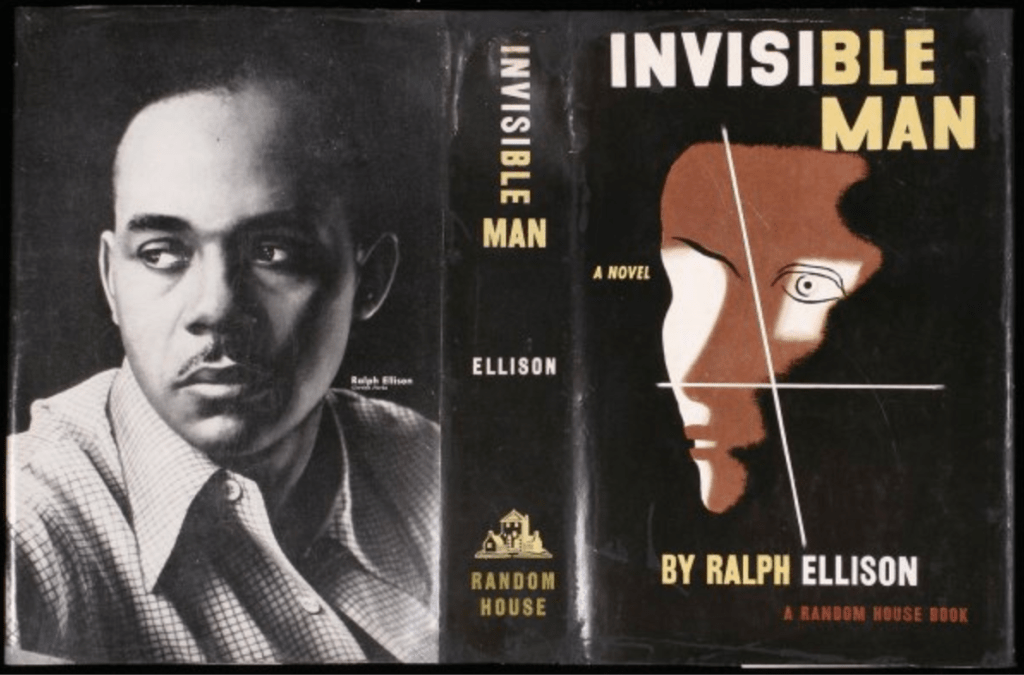
March 1: Ralph Ellison (1913-1994). He of course wrote Invisible Man, which says more about racism and other aspects of United States life than most other novels have ever done.
March 2: John Irving (1942-). I’ve read four of his novels, with The Cider House Rules my favorite. He’s really skilled at combining the quirky and the profound, with social commentary also a big part of the mix.
March 2: Peter Straub (1943-2022). His intricate Ghost Story was quite good but could have been somewhat shorter.
March 4: Khaled Hosseini (1965-). His debut novel The Kite Runner is very compelling, although one loses a lot of sympathy for protagonist Amir after his nasty act of betrayal.
March 6: Gabriel Garcia Marquez (1927-2014). I’ve read five of his novels — One Hundred Years of Solitude is obviously his best — and he was masterful at mixing magic realism, political elements, pathos, romance, and more.
March 8: Jeffrey Eugenides (1960-). His Middlesex novel memorably depicts an intersex character while also having plenty to say about family dynamics, the immigrant experience, etc.
March 11: Douglas Adams (1952-2001). His The Hitchhiker’s Guide to the Galaxy is an enjoyable read, though I think somewhat overrated.
March 12: Jack Kerouac (1922-1969). I also think On the Road is overrated, but it does say a lot about wanderlust, The Beat Generation, and the culture of its time.
March 13: Viet Thanh Nguyen (1971-). His novel The Sympathizer and its sequel The Committed — both starring an unnamed part-Vietnamese spy — offer an impressive page-turning amalgam of war commentary, multiculturalism, humor, and more.
March 13: Tad Williams (1957-). His Tailchaser’s Song is an epic fantasy novel starring…cats.
March 18: John Updike (1932-2009). The only novel of his I’ve read is Rabbit, Run, and, while I admired the writing, I was not a big fan of the book’s brew of white-male angst and misogyny.
March 19: Philip Roth (1933-2018). This author can also be annoying amid the great writing chops, but the neurotic Portnoy’s Complaint is funny as hell.
March 20: Lois Lowry (1937-). Her young-adult dystopian novel The Giver is quite good, and its sequels aren’t bad, either.
March 20: Louis Sachar (1954-). His eccentric Holes is one of the better YA novels I’ve read, including its feminist and antiracist aspects.
March 22: Louis L’Amour (1908-1988). He’s best known for western novels, but his Soviet Union-set Last of the Breed is pretty exciting, too.
March 22: James Patterson (1947-). Tried just one of his novels; wasn’t a fan. Also not a fan of his “factory” approach of using a team of co-authors to churn out book after book.
March 23: Julia Glass (1956-). I’ve read her very good Three Junes, which, as the title implies, has an interesting/interrelated three-part format.
March 25: Flannery O’Connor (1925-1964). She’s best-known for chilling short stories such as “A Good Man Is Hard to Find,” but also wrote the intriguing novel Wise Blood.
March 27: Julia Alvarez (1950-). Her novel In the Time of the Butterflies is a gripping piece of historical fiction about sisters bravely opposing the former Dominican Republic dictatorship.
March 28: Russell Banks (1940-2023). I’ve only read his Rule of the Bone, a gritty look at characters living in the underbelly of the U.S. and Jamaica.
March 28: Mario Vargas Llosa (1936-2025): His offbeat Aunt Julia and the Scriptwriter definitely held my interest.
March 31: Nikolai Gogol (1809-1852). His novel Dead Souls is an eye-opener, and his short story “The Overcoat” is a classic tale that influenced great Russian writers later in the 19th century. (Some sources say Gogol was born on April 1.)
March 31: Marge Piercy (1936-). Her Woman on the Edge of Time is an original combination of social justice and science fiction writing.
March 31: Judith Rossner (1935-2005). Her Looking for Mr. Goodbar was quite a sensation in its 1970s time.
Notable March-born writers I’ve read who are known for work other than novels include children’s book author Dr. Seuss, playwright Tennessee Williams, and poets Robert Frost and Elizabeth Barrett Browning, among others.
Any thoughts on this post, or examples of other March-born writers you’ve read?
As he runs in the direction of NYC, Misty asks: “How can cats live in ‘the city that never sleeps’?”
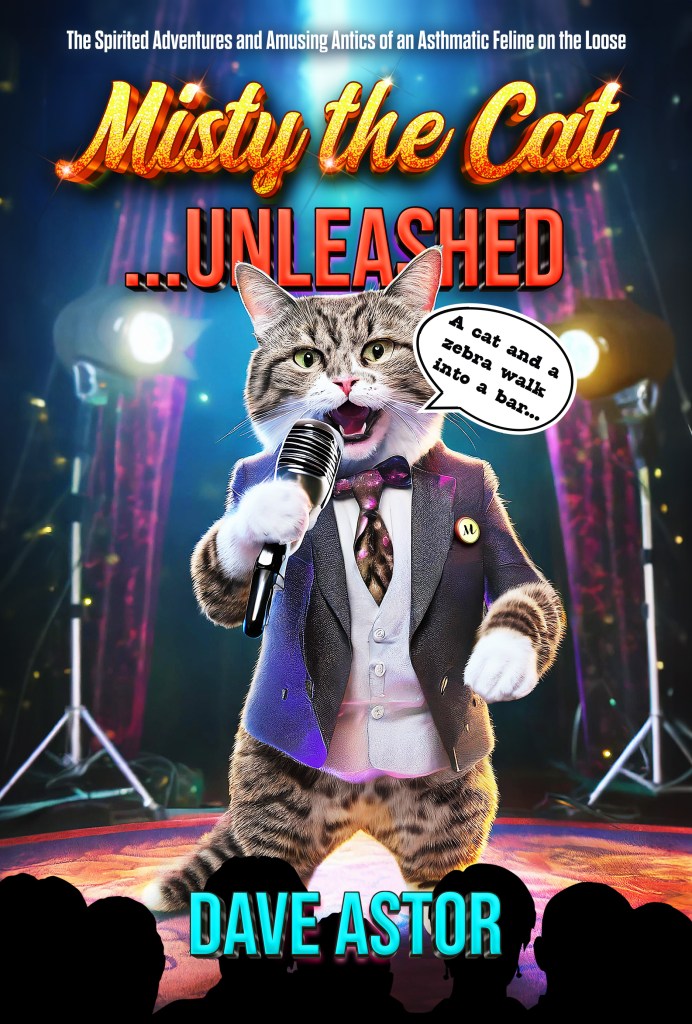
My comedic 2024 book — the part-factual/part-fictional/not-a-children’s-work Misty the Cat…Unleashed — is described and can be purchased on Amazon in paperback or on Kindle. It’s feline-narrated! (And Amazon reviews are welcome. 🙂 )
This 90-second promo video for the book features a talking cat: 🙂
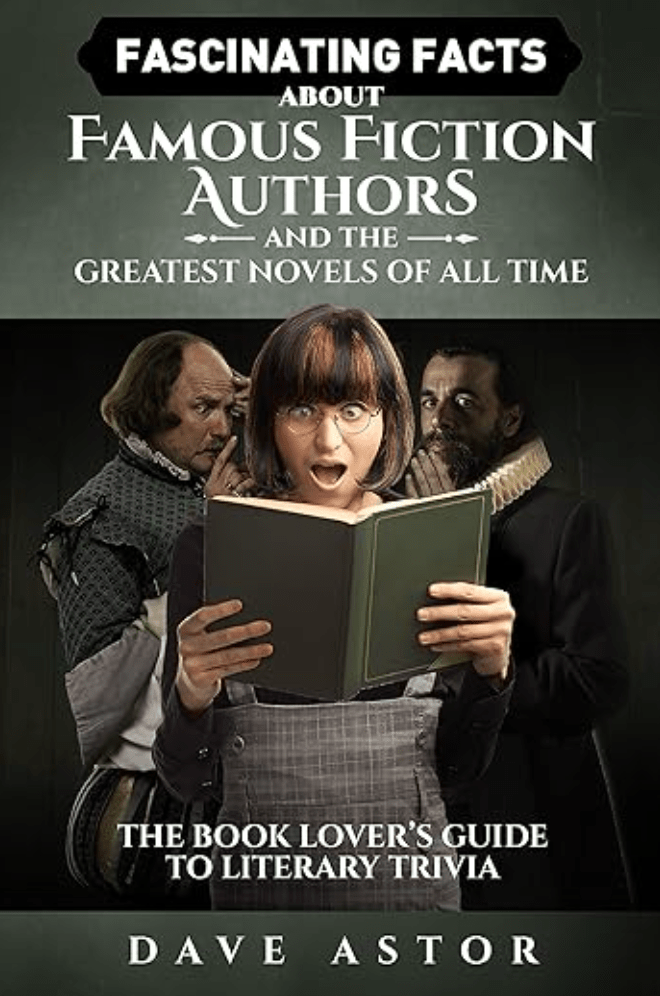
I’m also the author of a 2017 literary-trivia book…
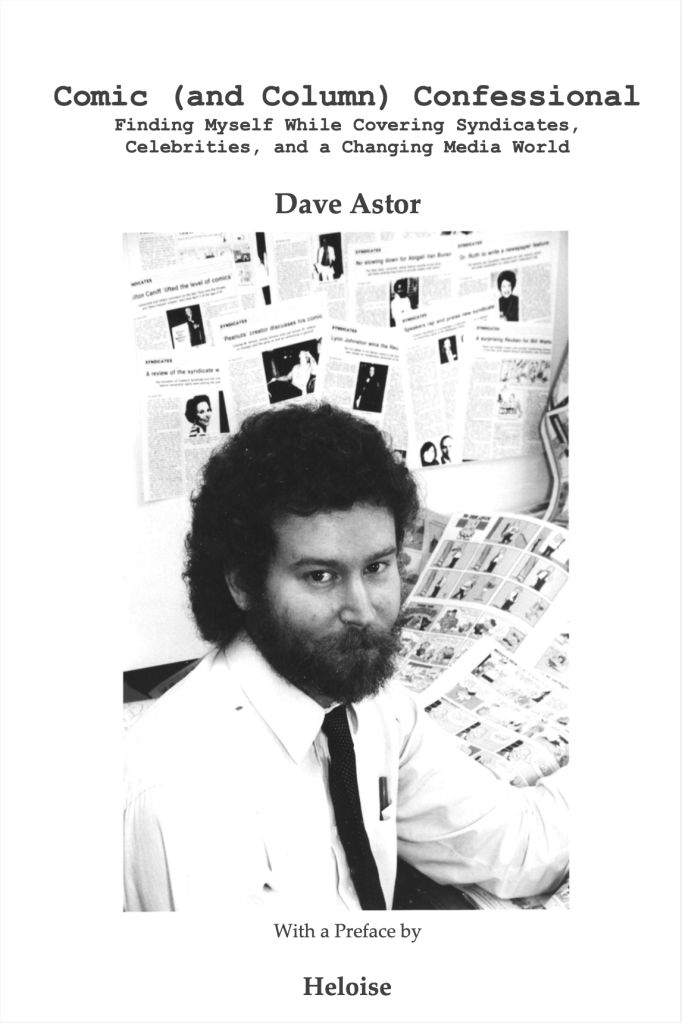
…and a 2012 memoir that focuses on cartooning and more, including many encounters with celebrities.
In addition to this weekly blog, I write the 2003-started/award-winning “Montclairvoyant” topical-humor column every Thursday for Montclair Local. The latest piece — containing commentary on a big snowstorm and all kinds of controversial news in my town — is here.
 Dave Astor on Literature
Hi Dave,
Oyinkan Braithwaite was born in Nigeria on 21st March. I recently read her “My Sister, the Serial Killer” (already mentioned, but that’s what I get for waiting three days to post!) which was kind of about what you’d expect it to be about, but much more fun than the title suggests. Somehow, the sister’s boyfriends needed to be killed in self defence, even if maybe they hadn’t actually done anything wrong. Throw in some insane jealousy and fierce loyalty, and there really was a lot to like about this book.
Sue
PS. Happy birthday for later in the month ❤
LikeLiked by 2 people
Thank you, Sue, for the birthday wishes and the additional mention of Oyinkan Braithwaite, an author I haven’t read but should give a try. “My Sister, the Serial Killer” is quite a title; glad you enjoyed that memorably named book! 🙂
LikeLike
Ah! Aries! Enjoy your day when it arrives!
Thanks Dave!
LikeLiked by 2 people
Much appreciated, Sharon! 🙂
LikeLiked by 1 person
Most welcome! ☺
LikeLiked by 1 person
🙂
LikeLiked by 1 person
Exactly right, Dave! It’s not admirable!!
Have a wonderful birthday, once again. I think that makes you a Pisces!!
With kindest regards,
Sharon 🎂 🍸
LikeLiked by 2 people
Thanks, Sharon! A little beyond Pisces to Aries (March 29 birthday). 🙂
LikeLiked by 1 person
Hi Dave!
Wishing you a delightful birthday!!!
You have mentioned some great books! They all sound worthy of reading. I absolutely take your point about James Patterson. Good writer that he used to be. Now he is killing the art of creativity by churning out book after book with other writers. It does feel like a ‘factory line’. He doesn’t need the money and frankly, it’s disappointing.
Great post!
Have a great week.
Sharon 💥🤗😊
LikeLiked by 1 person
Thank you, Sharon, for the birthday wishes and comment! Yes, it’s disappointing that James Patterson is obsessed with putting out book after book. Producing fiction in that kind of “factory” way doesn’t feel very admirable.
Have a great week, too!
LikeLiked by 1 person
HAPPY BIRTHDAY!
Guess what? Joy Fielding’s birthday is March 18. Lol
Also Tom Wolfe is March 2 – Electric Acid Kool-Aid Test & Bonfire of the Vanities.
I must mention the poet – Sonnet write Supreme – Elizabeth Barrett Browning – March 6
When is Misty’s birthday?
LikeLiked by 2 people
Thank you, Resa, for the birthday wishes and comment! Darn — I should have included Joy Fielding, who, as you know, I’ve read and enjoyed several novels by on your recommendation. Very glad you mentioned her! I spotted Tom Wolfe’s March birthday in my research, but have never read any of his books — not even “The Bonfire of the Vanities.” I included Elizabeth Barrett Browning at the end of the post, but too obscurely. 🙂
Misty’s birthday is December 8 (2015). He became a part of our household on December 8, 2017, at about age 2, so we made up his birthday. 🙂 When is Misha the cat’s birthday?
LikeLiked by 1 person
Ahh, I missed EBB!
Electric Acid is the one I read. Bonfire … I saw the movie. It was okay, not great.
I have to remind Norm to wish his cousin a Happy Birthday!
Misha was about 51/2 when she came here. I saw the exact date the other day, but can’t remember. It is mid January, so her day is around January 14th. She’s been here just over a year now.
That was one fast year!
Best Bossy Cat ever! 😼
LikeLiked by 1 person
Mid-January it is! And given that Misha is the Best Bossy Cat, she must be a fan of the BBC. 🙂
I met Tom Wolfe once when he spoke at a National Cartoonists Society gathering in NYC sometime in the ’90s. I guess I wasn’t impressed enough to read his work, but he sure dressed memorably in a white suit!
LikeLiked by 1 person
Well, we do watch the BBC, and she sits with us…sort of. (treat dependant)
Ahh, WSS – White Suit Syndrome. Many authors are infected at some point!
LikeLiked by 1 person
Ha, Resa! 😂 Cats will do almost anything with a treat incentive — except vote for a bad politician. 🙂
LikeLiked by 1 person
A cat should run for president!
LikeLiked by 1 person
Yes! 🙂 A feline president wouldn’t attack a Persian (Iranian) cat for no good reason.
LikeLike
Happy birthday month!!!
LikeLiked by 1 person
Thank you very much, M.B.! 🙂
LikeLiked by 1 person
Hi Dave, an impressive list of March authors. I don’t know any March born authors but I do know Charles Dickens and John Steinbeck were born in February which is my birth month.
LikeLiked by 1 person
Thank you, Robbie! Charles Dickens, John Steinbeck, and you — that’s quite a birth month!
LikeLike
Yours is pretty impressive too. Interestingly, I looked authors born in Feb up after reading your post and Laura Ingalls Wilder, my favourite children’s book author, is also born in February.
LikeLiked by 1 person
Thanks, Robbie! 🙂 I just remembered that Misty the cat wrote this post last year about February author birthdays: 🙂
https://daveastoronliterature.com/2025/02/09/in-february-there-are-authors-born-between-january-and-march/
LikeLike
Ah, yes, I remember this post now and I saw I commented on it at the time. Jules Verne is another author I enjoy.
LikeLiked by 1 person
I enjoyed Verne, too, when I read his most famous sci-fi/adventure novels many years ago.
LikeLike
😊💚
LikeLiked by 1 person
🙂
LikeLike
Happy birthday, Dave. I have never thought about author’s birthdays, so an interesting perspective.
Marge Piercy’s Woman on the Edge of Time deepened my understanding of women’s roles, values and vulnerabilities in our country.
Khaled Hosseini’s The Kite Runner rocked my world because I had a similar experience to Amir, but unlike Hosseini, I didn’t think the incident had much impact on me (I was not the victim). This book helped me see how my life was affected by being present. Like Amir, I did nothing–out of fear for my life, fear of abandoning the person being raped, just plain terror at what was happening. I am, I think a bit more compassionate toward Amir because I know what it is like to be rooted in place, paralyzed by fear.
LikeLiked by 1 person
Thank you, Madeline, for the birthday wishes and the comment!
You’re right that “Woman on the Edge of Time” has a LOT to say about a woman’s place in society, especially a lower-income woman and/or a woman of color.
Very sorry about the experience you had that “The Kite Runner” reminded you of. I totally hear you about having compassion for Amir’s frozen reaction in that situation; I was more upset by something else he did in the novel. (Don’t want to mention it here to avoid a spoiler alert for anyone reading this comment who hasn’t gotten to “The Kite Runner.”)
LikeLike
Oh, I have read quite a few of those ones! My favourite of those would be Aunt Julia and the Scriptwriter. I really enjoyed that. And my least favourite was On the Road – I never managed to finish it. Other ones I have read are these: Love in the Time of Cholera by Gabriel Garia Marquez (I found it fine), and A Thousand Splendid Suns by Khaled Hosseini (enjoyed it a lot). Also, on my list, but not read it yet is My Sister, the Serial Killer by Oyinkan Braithwaite. Fun eh?
And do enjoy your birthday month, Dave. 😊
LikeLiked by 1 person
Thank you, Chris, for the birthday wishes and the list of what you’ve read combined with your excellent brief descriptions of each. We agree that “On the Road” is overrated. 🙂
“My Sister, the Serial Killer” — yikes! Now that’s a book title!
LikeLiked by 1 person
My father loved Louis L’Amour. He read those books over and over again. I’ve never read him though.
I’m very fond of Wind in the Willows by Kenneth Grahame
And my favorite John Irving book is A Prayer for Owen Meany (K)
LikeLiked by 1 person
Thank you, Kerfe! Nice memory of having a parent be a big fan of a particular novelist. 🙂 And I appreciate the addition of another March-born author in Kenneth Grahame. “A Prayer for Owen Meany” IS excellent; my second-favorite novel from John Irving after “The Cider House Rules.”
LikeLiked by 1 person
Mickey Spillane, king of the pulps!
LikeLiked by 2 people
Thank you, Liz! Great mention and four-word description (“king of the pulps”)! I’ve never read Mickey Spillane, but have certainly heard of him. 🙂
LikeLiked by 1 person
My brother and I watched the “Mike Hammer” series because it was a primo mocking opportunity. I read one of the books out of curiosity. Really bad.
LikeLiked by 1 person
It can be REALLY fun mocking something on TV. 🙂
LikeLiked by 1 person
Birthday greetings to you, Dave! Of the authors mentioned, I’ve only read novels by Hosseini, Marquez, Nguyen, L’Amour, and Patterson. I’ve watched the film adaptation of Lowry’s “The Giver,” but have never read the novel.
LikeLiked by 1 person
Thank you, Rosaliene! From what you said, you have done some good reading. 🙂 I hadn’t remembered that there was a movie version of “The Giver” — just looked it up…hmm…the cast included Meryl Streep and Taylor Swift, among others!
LikeLiked by 1 person
Impressive to ferret out March authors,books you read, birth dates.
Not a book but March of The Wooden Soldiers old Laurel and Hardy b & w film,was on for many years after the Thanksgiving day parade. I am dating myself but so be it. 🙂
Michele
E @ P way back
LikeLiked by 1 person
Thank you, Michele! The “Internets” were a big help. 🙂
I’ve heard about that Laurel and Hardy film but have never seen it.
LikeLike
You are in great company Dave! A very happy birthday when it comes.
LikeLiked by 1 person
Thank you very much, Shehanne! 🙂
LikeLiked by 1 person
Happy Birthday month Dave 🎉🎉
LikeLiked by 1 person
Thank you very much, Maggie! 🙂
LikeLiked by 1 person
Dave 🤗 my pleasure always.
LikeLiked by 1 person
🙂
LikeLiked by 1 person
Cheers to your birthday month, Dave! And thank you for conjuring a sweet memory! I’d forgotten all about Lois Lowry’s “The Giver” until I saw it pop up on your list. It was one of daughter Delaney’s favorites, years ago, and she urged me to read it and I never did. Popping it on my TBR list…better late than never!
😊❤️😊
LikeLiked by 1 person
Thank you, Vicki, for the comment and birthday wishes! I had never read “The Giver” until just a few years ago; glad I finally did! My younger daughter enjoyed it, too. 🙂 Despite being dystopian, it has inspiring elements as well.
LikeLiked by 1 person
That’s what I recall from Delaney’s description…thanks so much, Dave. She’ll be tickled it’s come up today!
😊❤️😊
LikeLiked by 1 person
You’re very welcome, Vicki! Nice when we read a blog post (or anything) that sparks a nice memory. 🙂
LikeLike
Dave, what a wonderful way to celebrate your birthday month🎂!!! This is an incredible post that honours the writers who have accompanied you along the way. gesture. Your words are like a reading autobiography in miniature. It’s a reminder that March has gifted the literary world with writers unafraid of complexity, writers who press into identity, exile, belief, power, longing, and human contradiction.
I appreciate that you don’t simply praise. You evaluate honestly. Sometimes the books we “admire” are not the ones we “love,” and there’s wisdom in making that distinction.
If I were to add one March-born (March 6) writer who has stayed with me, it would be Elizabeth Barrett Browning. As Robert Frost (another March baby) once wrote: “In three words I can sum up everything I’ve learned about life: it goes on.” Happiest birthday month, Dave! Wishing you a month filled not only with reflection, but with fresh pages yet to be turned.
LikeLiked by 2 people
Thank you, Rebecca! Definitely some excellent writers in March, as there was an excellent writer in the March family (Jo of “Little Women”). 🙂 Glad you enjoyed the post and the little discussions of each novelist, whether positive or partly positive. Also glad you mentioned Elizabeth Barrett Browning and Robert Frost, both of whom I included too obscurely at the end of the post.
I appreciate your citing of Frost’s wise words, and your birthday wishes!
LikeLiked by 2 people
The adventures continue!! You have prompted me to look at authors that were born in my birth month. Here’s a hint!! Shakespeare!! Happiest Birthday month!
LikeLiked by 1 person
April! 🙂 Not that far away, Rebecca. Hard to top being born in the same month as “The Bard.”
LikeLiked by 1 person
You inspired me, Dave, as always!!!
LikeLiked by 1 person
🙂
LikeLiked by 1 person
Happy birthday month, Dave! My birthday is also in March! I’d like to read Flannery O’Connor’s short stories, as I’m a fan of this genre. I think March is a great time to celebrate a birthday, as it’s the start of spring! 🌷
LikeLiked by 2 people
Thank you, Ada! Happy birthday month to you, too! I agree that March is a good month to have a birthday. 🙂
As for Flannery O’Connor, reading her short stories is quite an experience! She definitely “goes there” with some pretty intense content.
LikeLiked by 2 people
I’ll name some of the Italian writers born in March whose works I’ve read: Torquato Tasso (1544): Poet, famous for Jerusalem Delivered. – Alessandro Manzoni (1785): Author of The Betrothed. – Gabriele D’Annunzio (1863): Writer, poet, and playwright. – Umberto Saba (1883): poet – Carlo Cassola (1917): Novelist. – Alda Merini (1931): Poet.
I’d like to take this opportunity to wish you a happy birthday, dear Dave.
LikeLiked by 3 people
Thank you, Luisa, for all those mentions of Italian authors born in March! Very sorry I haven’t read any of them (yet). And I appreciate the birthday wishes. 🙂
LikeLiked by 2 people
You’re more than welcome 🩵✨
LikeLiked by 2 people
🙂
LikeLiked by 2 people
Ive read only a small handful of these authors, including Mr. Astor. Like Laura, I did not appreciate Marquez. Maybe I don’t have the right gene, given how many readers love One Hundred Years of Solitude.
I’m a March-born author myself. 😊
LikeLiked by 3 people
Thank you, Audrey! Marquez definitely evokes mixed feelings. From what I’ve read of him, he wrote one masterpiece and then several very good but not extraordinary novels. Happy Birthday on whichever March date you were born!
LikeLiked by 4 people
I loved One Hundred Years of Solitude, but when I tried Love in the Time of Cholera, I just couldn’t get into it.
LikeLiked by 2 people
Thank you, Liz! While “Love in the Time of Cholera” is good (albeit sexist in some ways), I agree that “One Hundred Years of Solitude” is light years better.
LikeLiked by 1 person
You’re welcome, Dave!
LikeLiked by 1 person
🙂
LikeLiked by 1 person
Thanks, Dave, and Happy Birthday to you as well!
LikeLiked by 1 person
You’re welcome, Audrey, and thank you! 🙂
LikeLiked by 1 person
Looks like you were born in a good month, Dave.
LikeLiked by 3 people
Thank you, Dan! Definitely more high-profile authors than I expected!
LikeLiked by 2 people
First of all I would like to wish you all the best for your March birthday, Dave! As I do not know any writer’s birthday, I just would like to say that I really loved “Invisible Man” when I read it a very long time ago, and I could truely feel that the main character finally needed to become invisible. Many thanks for all your book proposals!
LikeLiked by 3 people
Thank you, Martina! I was born on the 29th, so another four weeks. 🙂 “Invisible Man” IS a powerful novel, and, yes, the unnamed narrator certainly was metaphorically invisible in the 1930s/1940s USA — and needed to be.
LikeLiked by 2 people
I’ll try to not forget it and many thanks for your words!:)
LikeLiked by 2 people
You’re very welcome, Martina! 🙂
LikeLiked by 1 person
I had the same experience reading Invisible Man.
LikeLiked by 1 person
Many thanks, Liz, for your words, and I think if you have tried in so many ways to show the difference of treatment or living conditions to the people of the other skin colour and they do not understand it, one has jus to give in!
LikeLiked by 2 people
You’re welcome, Martina.
LikeLiked by 2 people
🌷🥰☘️
LikeLiked by 2 people
It seems March is a good month to be born if you aspire to be a successful author 😉 Congratulations, Dave!!
LikeLiked by 2 people
Thank you, Thérèse! There does seem to be a number of quite notable authors born this month!
LikeLiked by 2 people
I found thru the Internet search Robert Frost who I like a lot . His poetry is timeless.
As for Nikolay Gogol he was one of those Ukrainians who belongs to the great Russian writers. I have a copy of his book with illustrations. The genre is magical realism, horror and / or fairy tale. Absolutely brilliant and unique writing, I’m still a big fan of Gogol.
LikeLiked by 4 people
Thank you, Milena! I agree that Robert Frost’s poetry is timeless and very appealing.
I also agree that Gogol’s work is memorable! Sounds like you have quite a good copy of his book. “Dead Souls” is a unique work of satire and more.
As you might know, Gogol’s name plays a big part in Jhumpa Lahiri’s novel “The Namesake.”
LikeLiked by 2 people
yes, i remember that now. dead souls is the one we have to read in high school in Ukraine, i remember it very vaguely but it’s got that super dark humor that i love
LikeLiked by 1 person
“…super dark humor” — exactly!
LikeLiked by 1 person
the best kind that ever existed
LikeLiked by 1 person
Definitely up there! 🙂
LikeLiked by 1 person
So many books there, Dave, most of which I haven’t read. ‘Looking for Mr Goodbar’ I remember reading, as well as ‘The Hitchhiker’s Guide’ and some Marquez, although I wasn’t too keen on the latter. As to any others, I have no clue. I’m not great at checking authors’ birthdays. I did read a book by a certain Dave Astor though, which I thoroughly enjoyed. Happy birthday for when it comes. 🙂
LikeLiked by 6 people
Thank you, Laura, for the comment and the kind words about Misty’s “meownum o’puss”! 🙂 I also have no idea about most authors’ birth dates; I needed a lot of online help for this post.
I must admit that I wasn’t totally bowled over by the other Gabriel Garcia Marquez novels I read in addition to “One Hundred Years of Solitude,” although they (most notably “Love in the Time of Cholera”) definitely held my interest.
LikeLiked by 4 people
Thanks, Dave. Good to know it’s not just me that has issues with Marquez. Personal taste; what can you do? Have a good week. 🙂
LikeLiked by 3 people
Yes, Laura, we like what we like. 🙂 Have a good week, too!
LikeLiked by 3 people