In many cases, the children and grandchildren of the rich and/or famous don’t turn out so well. Growing up in privileged families can leave them spoiled, nasty, entitled, coldhearted, etc. Not always, of course, but often enough.
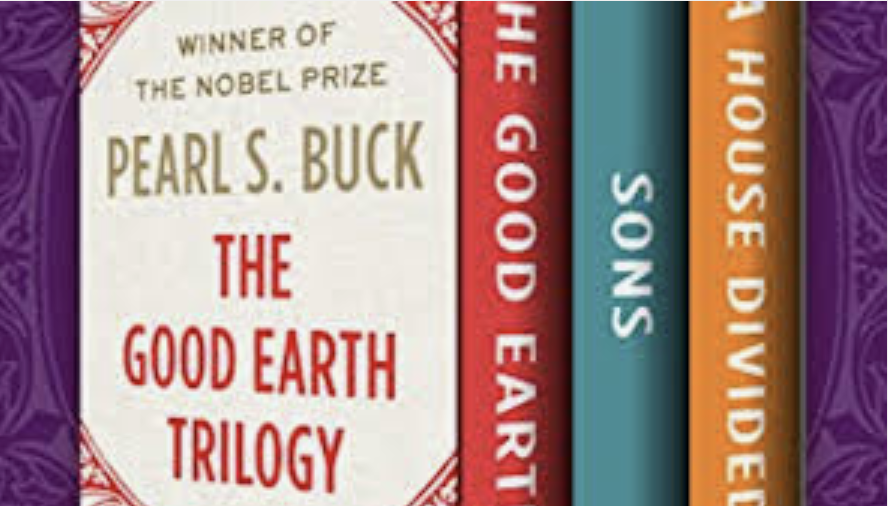
This is also the case in novels — which, as we know, usually mirror real life in some way. My most recently read example involves the title characters in Sons, Pearl S. Buck’s sequel to The Good Earth. In that first China-set book, Wang Lung built himself up from being a poor farmer to a rich landowner via endless toil and strategic smarts. He did exhibit some very problematic behavior in his older age, but overall was more admirable than not.
His three sons in the sequel? Not as admirable. With no worries about money after being among the inheritors of his father’s land, the eldest son becomes fat, lazy, and weak-minded. The more-intelligent second son works hard but is exceptionally greedy and miserly. The ambitious third son becomes a brave but antisocial war lord who forces his son — a gentle soul — into a military life. One wouldn’t want any of that sibling trio on their holiday card list.
Other novels in which the next or next-next generation isn’t so scintillating?
The title character of Alexander Pushkin’s novel-in-verse Eugene Onegin is a son of privilege who becomes a bored and selfish man making some unfortunate decisions.
Vernon and Petunia Dursley (more upper-middle-class than rich in J.K. Rowling’s Harry Potter series) are not-nice human beings who raise an even-worse son, Dudley — who’s petulant, pampered, and beyond spoiled.
Another novel with a depressing descendant is Booth Tarkington’s The Magnificent Ambersons, in which the grandson of the family’s aristocratic patriarch is an arrogant jerk.
Obviously, rich and/or famous parents themselves can be problematic, with their children often following suit but sometimes becoming decent human beings.
In George Eliot’s Silas Marner, for instance, Squire Cass is quite unlikable, and his sons Godfrey and Dunstan are no picnic, either. Things are more mixed in Fyodor Dostoevsky’s The Brothers Karamazov, in which the repulsive dad’s sons include Dmitri (who behaves kind of like his wealthy father), Ivan (an intellectual who’s a relatively decent person), and the compassionate Alexei.
Your thoughts about, and examples of, this topic?
Misty the cat says: “As Robert Frost sort of noted, good Belgian blocks make good neighbors.”
My comedic 2024 book — the part-factual/part-fictional/not-a-children’s-work Misty the Cat…Unleashed — is described and can be purchased on Amazon in paperback or on Kindle. It’s feline-narrated! (And Amazon reviews are welcome. 🙂 )
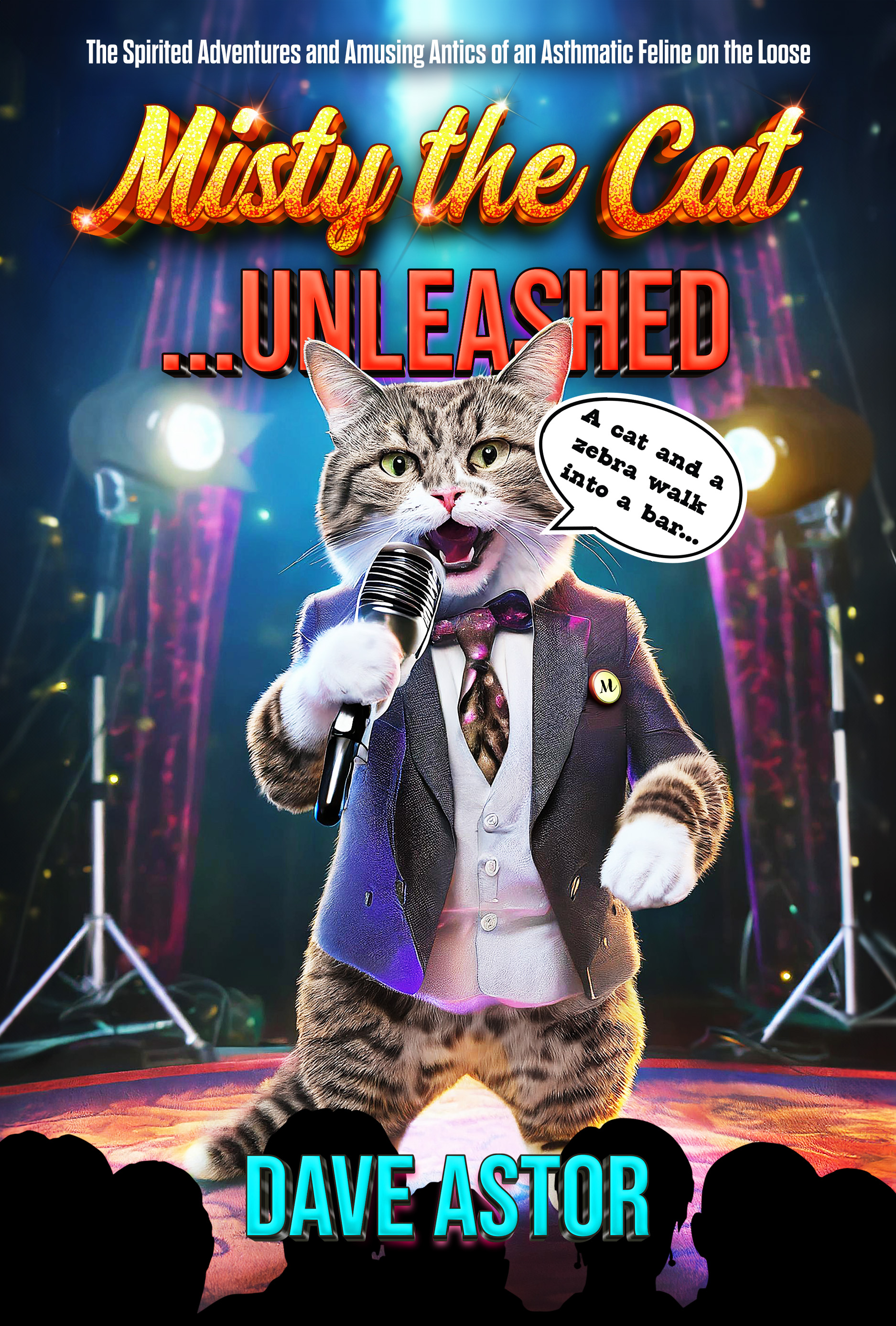
This 90-second promo video for the book features a talking cat: 🙂
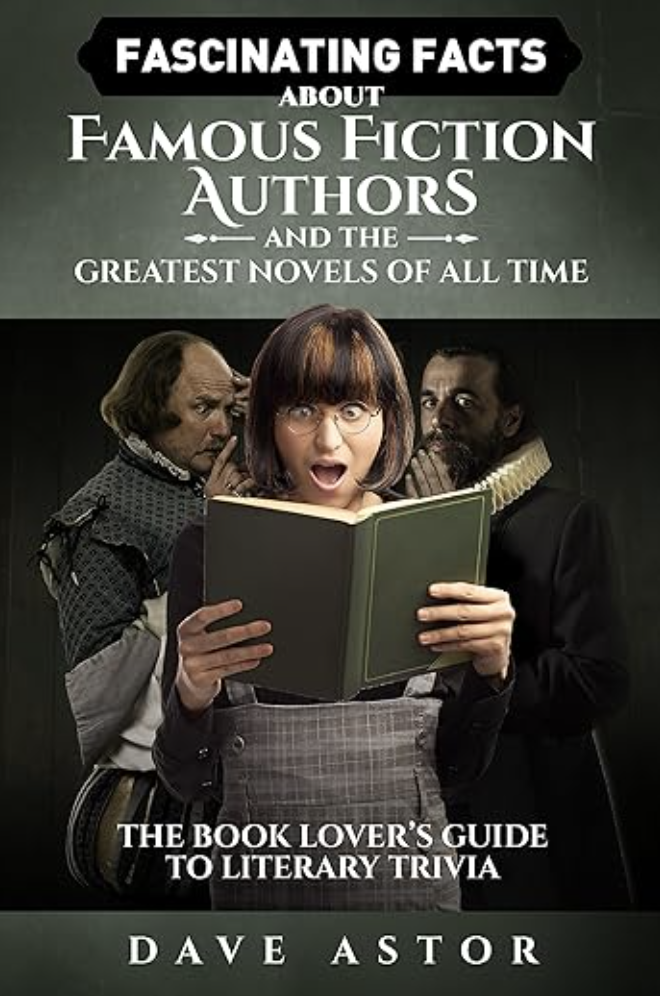
I’m also the author of a 2017 literary-trivia book…
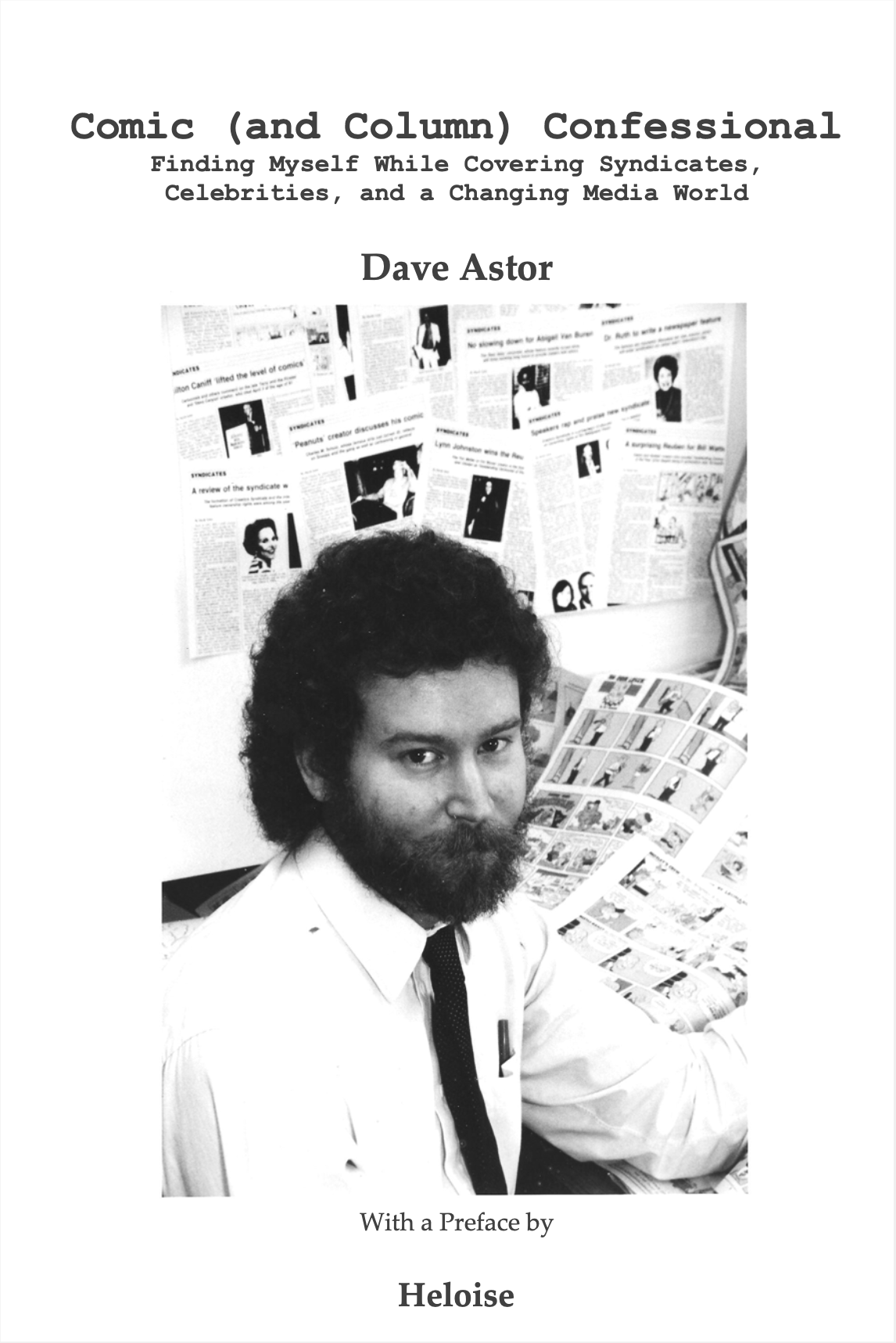
…and a 2012 memoir that focuses on cartooning and more, including many encounters with celebrities.
In addition to this weekly blog, I write the 2003-started/award-winning “Montclairvoyant” topical-humor column every Thursday for Montclair Local. The latest piece — about a lingering snow-dump fiasco, an immigrant-protection vote, an animal-protection vote, and an upcoming election, all with a dose of Hemingway and the band Rush — is here.
 Dave Astor on Literature
DJT and vile family term nepo baby slang for nepotism ,live off wealth grift, silvers spoons ,children of wealthy not having to really work.
Michele
E & P way back
LikeLike
You have set a difficult one today Mr Astor….LOL. I need to go away and think!
LikeLike
Having worked for several family companies where the sons were spoiled and worthless additions to the companies their fathers built, I can attest to the reality of the stereotype. I can’t think of any books offhand, but I’m sure I must have read some. (K)
LikeLike
Hi Dave. It’s late here, and although I’ve got a couple of texts in mind I’m falling asleep so will have to come back to you tomorrow on thid. PS. congratulations to your daughter on her rowing achievements; taking part is the most important thing, as in the Olympic spirit, because nobody could win if lots of people didn’t take part. So well done her. Night night for now and catch you tomorrow. 🙂
LikeLiked by 1 person
Thank you, Laura! Will look forward to your comment tomorrow! And I appreciate the kind words about my daughter and her college rowing team. Yes, competing in itself is great — plus the team camaraderie, the time management of juggling a sport and academic work, etc. She had a lot of winning in high school, so there can be a lesson in tougher times.
LikeLike
Hello Dave, I just wanted to thank you for having had the thought of this topic, which seems very important to me, but unfortunately no other novel that copes it comes to my mind! I loved “The Good Earth” when I was young!
LikeLiked by 1 person
Thank you, Martina! Definitely a topic we see in real life, too. 😦 I also had trouble thinking of a lot of fictional examples, which explains why my post this week is on the short side. 🙂 “The Good Earth” IS a great novel.
LikeLike
An excellent topic for our times. I’ve read Pearl S. Buck’s “The Good Earth,” but missed the sequel “Sons.” No similar fictional character comes to mind, though the fictional stories we tell are filled with the mischief and cruelty of such privileged miscreants.
LikeLiked by 1 person
Thank you, Rosaliene! “…privileged miscreants” — a great way to describe some people, real and fictional. “Sons” is actually pretty good; maybe about 75% as compelling as the very compelling “The Good Earth.”
LikeLiked by 1 person
Thanks for the recommendation of “Sons.” ❤
LikeLiked by 1 person
You’re very welcome, Rosaliene! 🙂
LikeLike
Kind of hard-pressed for an apposite comment, especially considering that, in real life, I much prefer my children’s over their mother’s character and general attitude towards society. That aside, A House Full of Daughters by Juliet Stevenson (I mentioned it in a comment to another post) does seem to do justice to the theme, portraying generations of daughters who, if not always worse than their mothers, broadly failed to be better than them.
LikeLiked by 1 person
Thank you, Dingenom! Certainly some children (in real life and in novels) are more appealing and admirable than their parents; Huck Finn, a kid with both a conscience and a problematic father, is one fictional character who comes to mind. And I appreciate the “A House Full of Daughters” example!
LikeLiked by 1 person