A Mix of Funny and Not Funny Might Be On the Money

Anne Tyler (photo by Eamonn McCabe).

There can be a balancing act with novels. One such act is making sure the top book on a towering to-read pile doesn’t fall off — 🙂 — but what I’m actually referring to is how some novels find the sweet spot between serious and comic. Dare they be called “seriocomic”?

When done right, seriocomic novels offer readers the best of both worlds. Gravitas leavened by humor, but not so much humor that the book is perhaps perceived as insubstantial. Also, earnest fiction with a jokey edge can feel like real life — which, as we know, periodically combines the consequential with the farcical.

One such novel is Anne Tyler’s Breathing Lessons, the Pulitzer Prize-winning 1988 book I read for the first time last week. It’s partly a sober, nuanced look at the complexities of marriage — in this case, the marriage of middle-aged couple Maggie and Ira Moran — but also funny. That’s because the good-hearted Maggie is hilariously spacey, awkward, annoying, and intrusive, while the stoic Ira is basically the straight man: his George Burns to her Gracie Allen, or, to keep gender out of it, his Zeppo Marx to her Groucho/Harpo/Chico. And Breathing Lessons features extended scenes — including one at a funeral service — that elicit many uncomfortable chuckles. 

Tyler is also quite seriocomic in The Accidental Tourist, among other novels.

Another author who often takes a funny/not-funny approach is Tyler contemporary John Irving (they’re both 80 years old) in such works as The World According to Garp and A Prayer for Owen Meany.

Nineteenth-century literary giants Charles Dickens and Mark Twain also offer a seriocomic blend in most of their novels. Think of the memorably amusing Mr. Micawber in Dickens’ semi-autobiographical David Copperfield, and the mix of laugh-out-loud humor and grave anti-war sentiment in Twain’s A Connecticut Yankee in King Arthur’s Court. Speaking of Twain, The Gilded Age features a clear divide between uproariously satirical chapters written by Mark T. and okay romantic chapters from Charles Dudley Warner. 

Staying with the 1800s for a minute, Herman Melville doesn’t have a reputation for comedy but was VERY amusing in parts of Moby-Dick and Pierre.

The same can be said for 20th-century author John Steinbeck, who was 99% serious in The Grapes of Wrath, East of Eden, and The Winter of Our Discontent but quite funny in much of Tortilla Flat, Cannery Row, and Sweet Thursday.

Getting back to contemporary writers, Zadie Smith is both highly humorous and dead-on serious in novels such as White Teeth. Margaret Atwood makes the post-apocalypse both devastating and devastatingly funny in Oryx and Crake, which includes some REALLY clever wordplay.

Other authors over the centuries who expertly placed a few or many comic moments in at least some of their novels include Miguel de Cervantes, Voltaire, Henry Fielding, Fanny Burney, Jane Austen, Fyodor Dostoevsky, Colette, L.M. Montgomery, Jaroslav Hasek, J.R.R. Tolkien, Bel Kaufman, Kurt Vonnegut, Joseph Heller, Philip Roth, Fannie Flagg, Richard Russo, Terry McMillan, Lee Child, Maria Semple, J.K. Rowling, and Liane Moriarty, to name just a few.

Your thoughts on this topic? Seriocomic authors and novels you like?

My literary-trivia book is described and can be purchased here: Fascinating Facts About Famous Fiction Authors and the Greatest Novels of All Time.

In addition to this weekly blog, I write the 2003-started/award-winning “Montclairvoyant” topical-humor column for Baristanet.com every Thursday. The latest piece — which has a Muppets theme 🙂 — is here.

More Than a Slice of Life 

It’s not a genre per se, but a type of novel I find interesting is “The Whole Life in One Book” book. Yes, while many novels span a few years or less, some span the main character’s entire existence — whether she or he dies relatively young or in old age.

Of course a multigenerational saga can do that for a number of lives, but for this post I’m focusing on novels that concentrate the majority of their contents on one person — showing a complete life in a sometimes surprisingly small number of pages. It can be fascinating and poignant to see decades of a character’s family relationships, romantic relationships, jobs, right decisions or wrong decisions, good luck or bad luck, etc. — as well as the real-world news events that swirled around her or him. All while we’re reminded of our own mortality and that life — even if lengthy — is quite short in the great scheme of things.

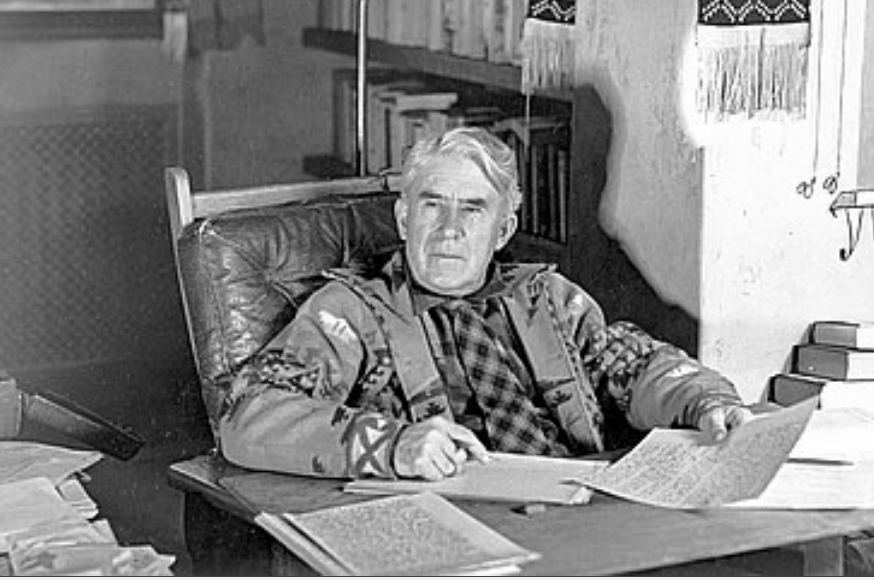
A whole-life novel I just read is The Stone Diaries by Carol Shields (pictured above) — who depicts her protagonist, Daisy Goodwill Flett, from birth in 1905 to death in the early 1990s. Daisy is often rather passive (partly explained by being young and then middle-aged before the modern feminist era) and experiences more disappointments than good times. Yet she actually has a pretty interesting life.

Shields’ melancholy, beautifully written 1993 novel is medium-length, so, like most books that span a protagonist’s entire life, some literary shorthand has to be used. After all, if we had a comprehensive chronicle of a character’s existence, it could run thousands of pages. In the case of The Stone Diaries, each chapter of the  Pulitzer Prize-winning book jumps roughly a decade forward in time, though there’s some back story describing the intervening years. This approach works quite well. 

Among the other excellent “Whole Life in One Book” novels (or “Most or Much of a Life in One Book” novels) are John Williams’ Stoner, George Eliot’s The Mill on the Floss, Goethe’s The Sorrows of Young Werther, Thomas Hardy’s Jude the Obscure, Jack London’s Martin Eden, John Irving’s The World According to Garp, and Junot Diaz’s The Brief Wondrous Life of Oscar Wao (the title is a bit of a giveaway there 🙂 ). All feature their protagonist’s name in the title other than The Mill on the Floss, which stars the memorable Maggie Tulliver.

Any thoughts on this topic?

My literary-trivia book is described and can be purchased here: Fascinating Facts About Famous Fiction Authors and the Greatest Novels of All Time.

In addition to this weekly blog, I write the 2003-started/award-winning “Montclairvoyant” topical-humor column for Baristanet.com every Thursday. The latest piece — about a local anti-gun-violence gathering and more — is here.

If Gun Ghouls Messed With Literature

America’s ghastly Republican politicians and ghastly gun makers continue to support the proliferation of military-style weapons repeatedly used to massacre people, and continue to oppose common-sense measures such as universal background checks. But they won’t be completely satisfied until the world’s great novels are rewritten to reflect their sick preference for gun “rights” over human lives.

For instance, they might argue that Jane Austen really meant Pride and Prejudice‘s first line to be “It is a truth universally acknowledged that a single man in possession of a good fortune must be in want of an AR-15.” 

I guess early-19th-century publishers who avoided positive assault-rifle mentions in their books were “woke” liberal commies who backed banning Trump from Twitter.

The far-right death cult also believes the opening of Charlotte Bronte’s Jane Eyre would be much improved if it read “There was a strong possibility of an elementary-school shooting that day.”

If there were no shooting, it would be a disappointment for that cult far exceeding Jane and Rochester’s regret about not having met on The Dating Game TV show.

Moby-Dick? America’s “pro-life” weapon worshippers feel Herman Melville would have had much higher initial sales if his masterpiece started with “Call me Rambo” rather than “Call me Ishmael.” 

Heck, if that novel’s narrator had been packing enough heat to dispatch Pequod first mate Starbuck, perhaps a certain coffee chain wouldn’t be seeing all that “socialist-icky” unionization. (A 2022 development I’m thrilled about.)

Many U.S. bullet bros tend to be fans of Russia’s murderous leader Putin, but are miffed at Russia’s Leo Tolstoy for not starting Anna Karenina with a different first line. The NRA’s literary pros have that prose fixed: “Happy families are all alike; every unhappy family is unhappy because it doesn’t have as many guns as Tolstoy had children.”

If inquiring minds want to know, Leo and Sophia had 13 kids — but only two were manufactured by Smith & Wesson.

America’s gun ghouls are doubly mad at Charles Dickens for not using his immortal first and last A Tale of Two Cities passages to mention hardware that inflicts maximum 21st-century carnage. The revisions: “It was the best of body armor; it was the bestest of body armor” and “It is a far, far bigger stash of ammo that I have than I ever had before.” 

Our Mutual Friend might be the undertaker. Or, rather, one of many undertakers. 

F. Scott Fitzgerald was a prose master, but the Republican killer cadre would want the last passage of The Great Gatsby to be even more sublime: “So we bleat on, a minority against a gun-safety majority, putting U.S. citizens ceaselessly into their graves.”

Actually, the ultra-conservative sickos who think gun “rights” are more important than human lives wouldn’t like the way I rewrote Fitzgerald’s famous closing line. They can all go to hell — though Satan might consider them too evil to welcome.

My literary-trivia book is described and can be purchased here: Fascinating Facts About Famous Fiction Authors and the Greatest Novels of All Time.

In addition to this weekly blog, I write the 2003-started/award-winning “Montclairvoyant” topical-humor column for Baristanet.com every Thursday. The latest piece — which also discusses guns, as well as some landlords ignoring my town’s new rent-control law — is here.

A Tree Grows in…Various Novels

Some memorable characters branch out in novels. Yes, I’m talking about trees.

The Overstory, the masterfully written and researched novel I haven’t quite finished yet, features a wide-ranging cast that comes together to try to save centuries-old trees on America’s West Coast. The amazing descriptions of those trees and other trees in Richard Powers’ heartfelt, heartbreaking, monumental book make them feel almost as human as the humans.

There’s also the titular tree in Betty Smith’s poignant and compelling A Tree Grows in Brooklyn that survives in a tough urban environment, illustrating not only its own tenacity but symbolizing the tenacity of many of the neighborhood’s residents.

Another book with “tree” in its title — in this case plural — is Barbara Kingsolver’s very good debut novel The Bean Trees.

Many decades earlier, Edith Wharton wrote Ethan Frome with a story line that hinges around a tree-related occurrence — as we find out late in the emotionally wrenching novel.

What happens to a tree during a storm portends what will happen with the relationship of Jane Eyre and Edward Rochester in Charlotte Bronte’s classic work. 

A 20th-century classic, Gabriel Garcia Marquez’s brilliant One Hundred Years of Solitude, has its gone-mad character Jose Arcadio Buendia tied to a tree in the later years of his life. A weird metaphor for being the patriarch of the Buendia family tree?

In J.R.R. Tolkien’s celebrated The Lord of the Rings, major supporting characters include the tree-like Ents. Those delightful beings are a major force for good as the trilogy’s climax nears.

Anne Shirley’s love of beautiful trees is among the traits that make her endearing in L.M. Montgomery’s beloved Anne of Green Gables. For instance, the precocious Anne — when first brought to Green Gables in a horse-drawn wagon — is driven under a canopy of blossoming apple trees and memorably names that road “The White Way of Delight.”

Children’s books also fit this week’s theme, with Shel Silverstein’s much-read The Giving Tree one of them.

Any novels with prominent trees that grew on you?

“One Tree Hill” by U2:

My literary-trivia book is described and can be purchased here: Fascinating Facts About Famous Fiction Authors and the Greatest Novels of All Time.

In addition to this weekly blog, I write the 2003-started/award-winning “Montclairvoyant” topical-humor column for Baristanet.com every Thursday. The latest piece — which discusses an appalling number of teacher layoffs in my town — is here.

Favorite Pulitzer-Winning Books

With the recent naming of a new Pulitzer Prize winner for fiction, I thought of past winners and wondered how many of those American-authored books I had read. So I looked at the Pulitzer website and counted 35 perused-by-me titles honored from 1918 to 1947 (when the category was for novels only) and 1948 to now (when the category became “fiction” to include short-story collections).

Then I decided to rank my favorites. Why? Because I needed a blog idea for this week. 🙂 I’ll note before I offer my in-descending-order list that I liked most of the 35 books — including the lower-ranked ones, so there were definitely many deserving victors. Yes, I liked most, but not all. 🙂

35. Gilead, Marilynne Robinson (2005 Pulitzer winner): Some consider this novel a subtle gem, but I found it boring. I was also put off by the old man/young woman marriage. I much prefer Ms. Robinson’s novel Housekeeping.

34. The Confessions of Nat Turner, William Styron (1968 winner): I wanted to like this historical novel — Nat Turner was a hero — but the writing annoyed me. Maybe it was partly because a white author was not-so-successfully trying to get inside the head of the insurgent African-American slave.

33. The Old Man and the Sea, Ernest Hemingway (1953 winner): A short classic in the eyes of many, but I thought it was so-so. Give me Hemingway’s For Whom the Bell Tolls any day of the week.

32. The Shipping News, E. Annie Proulx (1994 winner): Appealingly quirky and unappealingly quirky.

31. One of Ours, Willa Cather (1923 winner): Hardly Ms. Cather’s best work, yet a pretty absorbing World War I novel.

30. Interpreter of Maladies, Jhumpa Lahiri (2000 winner): I’m more a fan of novels (including Ms. Lahiri’s) than short stories, but this collection has a nice ratio of excellent tales vs. good tales.

29. The Fixer, Bernard Malamud (1967 winner): Compelling story of an unjustly imprisoned Jewish man in Czarist Russia.

28. Tales of the South Pacific, James Michener (1948 winner): A novel comprised of interrelated short stories is usually not my cup of tea. Still, this is quite good — and it of course inspired the musical South Pacific.

27. Olive Kitteridge, Elizabeth Strout (2009 winner): Similar short-stories-as-novel format as the above Michener work. The acerbic Olive is an abrasive “hoot.”

26. Tinkers, Paul Harding (2010 winner): A mesmerizing blend of the past and present through the eyes of a dying man.

25. March, Geraldine Brooks (2006 winner): Interesting concept of focusing on the American Civil War experiences of the father from Louisa May Alcott’s Little Women.

24. The Road, Cormac McCarthy (2007 winner): A post-apocalyptic novel that doesn’t match the author’s best work (such as Blood Meridian) while still being memorable.

23. The Orphan Master’s Son, Adam Johnson (2013 winner): A strange but very readable novel set in North Korea.

22. Gone With the Wind, Margaret Mitchell (1937 winner): I’d rank this higher if the troubling racial dynamics weren’t so painful.

21. The Magnificent Ambersons, Booth Tarkington (1919 winner): Progress vs. tradition, and some disturbing family relationships. 

20. The Bridge of San Luis Rey, Thornton Wilder (1928 winner): Very poignant novel.

19. The Good Earth, Pearl S. Buck (1932 winner): Classic set in China.

18. Arrowsmith, Sinclair Lewis (1926 winner): A doctor indelibly depicted.

17. A Confederacy of Dunces, William Kennedy (1981 winner): Weird and absolutely hilarious.

16. All the King’s Men, Robert Penn Warren (1947 winner): One of the best political novels.

15. Ironweed, William Kennedy (1984 winner): Masterfully sad look at characters on the street.

14. Foreign Affairs, Alison Lurie (1985 winner): The affairs are of the romantic variety, and the professor protagonist is very original.

13. The Brief Wondrous Life of Oscar Wao, Junot Diaz (2008 winner): A novel about a nerd, the United States, and the Dominican Republic — with amazing footnotes.

12. The Yearling, Marjorie Kinnan Rawlings (1939 winner): A boy and his fawn. Among the greatest young-adult novels ever written. 

11. The Amazing Adventures of Kavalier & Clay, Michael Chabon (2001 winner): About two cartoonists roughly based on the co-creators of Superman.

10. The Caine Mutiny, Herman Wouk (1952 winner): Gripping shipboard saga.

9. The Color Purple, Alice Walker (1983 winner): A powerful look at racism, sexism, and more via letters.

8. Middlesex, Jeffrey Eugenides (2003 winner): An eye-opening story featuring gender confusion, immigration, and other elements.

7. Beloved, Toni Morrison (1988 winner): The iconic work set after the American Civil War.

6. The Overstory, Richard Powers (2019 winner): A tour de force starring people and trees that I’m currently reading, so its rank might change by the time I finish. Will discuss it more in a future blog post.

5. The Age of Innocence, Edith Wharton (1921 winner): Unforgettable novel about (among other things) choosing between the conventional and the unconventional in a relationship.

4. The Goldfinch, Donna Tartt (2014 winner): Wide-ranging book about the impact a priceless painting has on the protagonist’s life. 

3. Empire Falls, Richard Russo (2002 winner): Enthralling novel that’s sort of low-key until the emotional fireworks arrive.

2. To Kill a Mockingbird, Harper Lee (1961 winner): There’s nothing I can say about this book that hasn’t been said before.

1. The Grapes of Wrath, John Steinbeck (1940 winner): The uprooted, beleaguered Joad family in a riveting novel that brims with outrage against injustice.

Your favorite Pulitzer-winning books (including those I mentioned and those I haven’t read)? Anything you’d like to say about them?

My literary-trivia book is described and can be purchased here: Fascinating Facts About Famous Fiction Authors and the Greatest Novels of All Time.

In addition to this weekly blog, I write the 2003-started/award-winning “Montclairvoyant” topical-humor column for Baristanet.com every Thursday. The latest piece — which discusses an “event horizon” of sorts — is here.

Alternate Paths

The top of the 2011 blog post that changed the direction of my writing life.

I just read The Midnight Library, and Matt Haig’s thought-provoking 2020 novel is one of those books that make you contemplate how life’s voluntary choices and involuntary occurrences can set us on alternate paths we might not have expected.

The Midnight Library stars a suicidal 30-something woman named Nora Seed, who, when in a sort of limbo between life and death, experiences various personal timelines that might have been. She’s a rock star in one existence, a scientist in another, an Olympic swimmer in yet another, unhappily married in one life, happily married in another, and so on.

Readers of novels like that could be reminded of previous books in which the fate of the protagonist turns in a pivotal way. We might ask: What if the title character in George Eliot’s Silas Marner hadn’t been betrayed by his best friend? What if the title character in Alexander Pushkin’s Eugene Onegin hadn’t rejected Tatyana Larin? What if the unjustly jailed Edmond Dantes of Alexandre Dumas’ The Count of Monte Cristo hadn’t met Abbe Faria in prison? What if young Anne Shirley of L.M. Montgomery’s Anne of Green Gables hadn’t been allowed to stay with the Cuthberts, who were expecting a male orphan? What if Guitar hadn’t misinterpreted what his friend Milkman was doing when the former spotted the latter helping someone with a crate in Toni Morrison’s Song of Solomon? What if Magdalen Vanstone’s parents hadn’t been disgraced in Wilkie Collins’ No Name? What if the family in Khaled Hosseini’s The Kite Runner hadn’t fled Afghanistan for the United States?

I could keep naming novels, but thought I’d diverge into how I became a weekly book blogger without really planning to — an example of an alternate path that happened to happen.

After losing my full-time magazine job in The Great Recession of 2008, I tried to make ends meet with freelance gigs while also contributing humor pieces to The Huffington Post — which scandalously didn’t pay its guest bloggers but idiots like me reluctantly went along with that because of the large audience. Anyway, one of my freelance gigs was proofreading for a service that helped polish the work of writers. The service did pay, but little enough for me to also write pieces for its blog for extra cash.

That group blog was mainly a place for how-to writing content, but I decided on one occasion in 2011 to go the how-to route under the guise of an appreciation of Margaret Atwood’s well-crafted novels — several of which I had just read. But the service wasn’t interested in that idea, so, what to do with a piece I had already written? It occurred to me to stray from The Huffington Post’s comedy section and submit the Atwood piece to the site’s book page. I did that, and suddenly got many more readers and comments than I was getting for my humor columns. So, I kept submitting literature posts and soon built a pretty large following — “meeting” a number of wonderful commenters along the way.

Although I’ve always read lots of fiction, it had never occurred to me until then to regularly write about literature.

Things eventually went downhill at HP — often-unresponsive staff (probably overworked) if bloggers had a question, problematic and slow moderation of comments (some killed for no reason and some not appearing for days), my tiring of the no-pay-for-bloggers exploitation even as I was bringing lots of visitors to the site, etc. In 2014, I finally stopped contributing and took an alternate path from my alternate path — starting this book blog on WordPress. There I “met” another wonderful community of people (all of you) who love literature and love discussing it, even as some commenters followed me from HP. 

My town’s library isn’t open at midnight, but it’s always great spending time there looking for books (many recommended by you) to enjoy and feed this blog.

Which novels have you read that made you wonder about alternate paths the characters traveled or might have taken? You’re also welcome to discuss that same question about your own life.

My literary-trivia book is described and can be purchased here: Fascinating Facts About Famous Fiction Authors and the Greatest Novels of All Time.

In addition to this weekly blog, I write the 2003-started/award-winning “Montclairvoyant” topical-humor column for Baristanet.com every Thursday. The latest piece — which includes thoughts on the U.S. Supreme Court’s awful draft decision to end Roe v. Wade — is here.

Police Misconduct in Literature

John Grisham and Stephen King

Many media outlets treat law enforcement positively. Among the reasons? They rely on the police for information, and they know that mostly avoiding negative coverage about law enforcement is the “safe” thing to do given that most of those in power and a significant percentage of the public have positive views of the police. 

Of course, law-enforcement people deserve admiration to an extent, but there are too many instances of cops being untruthful, corrupt, racist, far right in ideology, guilty of using excessive force, etc. Interestingly, a number of novelists haven’t hesitated to take a warts-and-all approach when law enforcement is part of some of their books.

I was struck by this when just reading John Grisham’s page-turning Rogue Lawyer, which is chock-full of police misbehavior that will make your blood boil. The 2015 novel offers some wish-fulfillment of law enforcement not totally getting away with dismaying deeds (justice that rarely happens in real life) yet there is not always punishment in Grisham’s book.

In the early pages of another recent novel, Angie Thomas’ 2017-published The Hate U Give, a white police officer needlessly shoots an unarmed young black male who’s a childhood friend of the book’s teen protagonist Starr Carter. The rest of the excellent novel explores the impact and aftermath of that awful murder.

During the 1990s, among the novels that were no fan of some law-enforcement people were Arundhati Roy’s The God of Small Things, with its very likable “Untouchable” character Velutha being savagely beaten by police; and Stephen King’s Rose Madder, in which Rose’s policeman husband Norman Daniels is viciously abusive to her. King’s 2002 novel From a Buick 8 takes a more positive view of law-enforcement officers.

In the back story of James Baldwin’s 1953 classic Go Tell it On the Mountain, we learn that the biological father of young African-American protagonist John Grimes was brutally beaten by racist police after being wrongfully arrested for stealing and refusing to confess to a crime he didn’t commit. 

Les Miserables? Grimly obsessed Inspector Javert doesn’t exactly leave Jean Valjean alone in Victor Hugo’s 1862 novel.

Of course, detectives are frequently the heroes or heroines (albeit often flawed ones) in crime novels. But they tend to be lone-wolf private investigators or amateur sleuths rather than directly aligned with the police. Among the many examples of those characters are Agatha Christie’s Miss Marple and Hercule Poirot, Arthur Conan Doyle’s Sherlock Holmes, Raymond Chandler’s Philip Marlowe, Dashiell Hammett’s Sam Spade, Dorothy L. Sayers’ Lord Peter Wimsey and Harriet Vane, Walter Mosley’s Easy Rawlins, Sue Grafton’s Kinsey Millhone, Carolyn Keene’s Nancy Drew, and Lee Child’s former military police guy Jack Reacher. (Reacher is not a detective per se but is certainly great at investigating things.)

Any literary works you’d like to mention that fit this theme?

My literary-trivia book is described and can be purchased here: Fascinating Facts About Famous Fiction Authors and the Greatest Novels of All Time.

In addition to this weekly blog, I write the 2003-started/award-winning “Montclairvoyant” topical-humor column for Baristanet.com every Thursday. The latest piece — which comments on a local hotel with rich ownership not paying what it owes to my town — is here.

When the Unexpected Is Author-Directed

A photo I took in Venice many years ago.

Among the novels I like are ones that go in unexpected directions. Readers think they have an approximate idea of what will happen, but the authors have other ideas. 🙂

That was certainly the case with Miss Garnet’s Angel, the Salley Vickers novel I just read. It stars a lonely, reserved, socially awkward, middle-aged Englishwoman who, after the death of her housing mate, decides to throw caution to the wind for once in her life and spend six months in beautiful Venice.

With a scenario like that, one expects the protagonist to be quite likable. But Julia Garnet is not particularly likable.

We also expect Julia to find romance in romantic Venice. She sort of does, for a while, but things go sour in a highly unpredictable way.

Add a weird, ancient, quasi-religious parallel story, and Miss Garnet’s Angel turns out to be far from clichĂ©d. (Though I guess the “Angel” in the title offered a clue to the quasi-religious content.)

Other novels with different content than one might expect? Of course, authors of mysteries and detective stories can be masters of misdirection — throwing out red herrings and such. But more general literature might surprise us as well. Here are some examples:

When one prepares to read Herman Melville’s epic Moby-Dick, total seriousness and gravitas would appear to be on the menu. Then, before the Captain Ahab-helmed Pequod sets sail on its fateful voyage, we’re treated to a hilarious room-in-an-inn scene involving Ishmael and Queequeg.

If you were told before starting George Eliot’s 1799-set Adam Bede that a major character would be a preacher, you wouldn’t bat an eyelash. But the preacher turns out to be a woman (Dinah Morris) — hardly typical for the patriarchal 18th century. 

Two characters are attracted to each other in Edith Wharton’s The Age of Innocence. Life and their marriages to other people get in the way. Years later, they have the opportunity to meet again in more favorable circumstances. The decision one of them makes kind of floored me.

We expect the unexpected in John Irving’s quirky novels. Still, the scene involving a baseball in A Prayer for Owen Meany? Didn’t expect THAT.

Early in Robertson Davies’ Murther & Walking Spirits, the protagonist is killed by his wife’s lover. It would be an understatement to say I didn’t anticipate the victim spending his afterlife as a ghost at a very personal film festival.

A Jewish Eskimo is among the cast in another novel by a Canadian author, Mordecai Richler’s Solomon Gursky Was Here. Not the most probable secondary character.

In John Green’s The Fault in Our Stars, we are led to believe that one particular protagonist will die and another will survive. But….

Some novels you’ve read that contained unexpected elements?

My literary-trivia book is described and can be purchased here: Fascinating Facts About Famous Fiction Authors and the Greatest Novels of All Time.

In addition to this weekly blog, I write the 2003-started/award-winning “Montclairvoyant” topical-humor column for Baristanet.com every Thursday. The latest piece — which has a local high-school softball theme — is here.

In Novels, Emotional Variety Includes Joy and Anxiety

My daughter Maria pitching a no-hitter on April 11. (Photo by my wife, Laurel Cummins.) 

As is the case with people in real life, a fictional character often experiences intense happiness and deep sadness in one novel — or even in just a few pages of one novel. Certainly no surprise there — life always has its peaks and valleys — but the roller-coaster ride can make for interesting reading as the character’s emotions, and readers’ emotions, get whipsawed.

An admittedly rather trivial real-life example of the above is my teen daughter Maria’s recent softball experience, which went from a losing-filled Spring 2021 travel season to a so-far-undefeated Spring 2022 high school season that included her pitching a no-hitter last week.

Examples in fiction? A countless number; I’ll discuss a few that came to mind.

One is the Joad family’s experiences in California after having to leave their Oklahoma farm in The Grapes of Wrath. John Steinbeck’s characters mostly fared miserably on the West Coast, but there was that brief positive interlude of them making some decent money and living in a humane government camp.

Also in California, the title character in Jack London’s Martin Eden goes through lengthy lows as a struggling writer, followed by the brief highs of publishing success, and then…

Love affairs — whether in or out of marriage — can be euphoric, yet the joy might not last as things gradually or quickly go south. The title of Erich Maria Remarque’s wartime romance A Time to Love and a Time to Die telegraphs that, and there are also various ups and downs for the relationships in Jane Austen’s Persuasion, Charlotte Bronte’s Jane Eyre, Leo Tolstoy’s Anna Karenina, Emile Zola’s The Beast in Man, Zora Neale Hurston’s Their Eyes Were Watching God, Boris Pasternak’s Doctor Zhivago, Gabriel Garcia Marquez’s Love in the Time of Cholera, and numerous other novels.

Silas Marner? Life is mostly good for George Eliot’s protagonist before a grave betrayal sends him into solitude and depression. After which… 

In Morgan’s Run by Colleen McCullough, things are also going well for 18th-century Englishman Richard Morgan before he’s unjustly imprisoned and shipped to a penal colony to Australia, where he faces daunting hardships while managing to carve out some contentment. 

Preteens and teens can certainly have major swings of happiness and sadness. Think orphan Anne Shirley in L.M. Montgomery’s Anne of Green Gables — who, in addition to experiencing major life events such as finding a home — navigates the tricky situations of friendship, school, and more faced by most young people. Or the title character in The Adventures of Tom Sawyer, who engages in some enjoyable kid hi-jinks while also facing a scary situation later in Mark Twain’s novel.

Any examples you’d like to offer that fit this theme?

My literary-trivia book is described and can be purchased here: Fascinating Facts About Famous Fiction Authors and the Greatest Novels of All Time.

In addition to this weekly blog, I write the 2003-started/award-winning “Montclairvoyant” topical-humor column for Baristanet.com every Thursday. The latest piece — about a problematic approach to potential overdevelopment near one of my town’s six train stations — is here.

Clothing in Literature

This post includes edited content from a 2013 piece along with new material.

(Almost) every fictional character wears something, so clothing is a big part of literature, right? Actually, often not. But apparel can be unusually prominent in certain novels — and can say a lot about protagonists and how they’re viewed by others.

After all, a character’s garb might signify wealth or poverty, good taste or bad taste, a certain ethnicity, major life changes, flirtatiousness, machismo,and much more. So, let’s get in “gear” and cite some examples…

I’m still reading Irving Stone’s The Agony and the Ecstasy, and one memorable part of that biographical novel about Michelangelo is the contrast between him and another legendary artist — Leonardo da Vinci. Michelangelo (1475-1564) is the scrappy younger upstart who’s often too poor and always too obsessed with work to pay much attention to what he wears, while the more patrician da Vinci (1452-1519) dresses quite well.

Then there’s the scene in Margaret Mitchell’s Gone with the Wind in which Scarlett O’Hara wears a dress made from a green curtain. That illustrates her determined attempt to persevere during bad times, though it doesn’t help her get a much-needed $300 from Rhett Butler to pay the taxes on Tara.

Take away a “t” from the name Scarlett, and you have part of The Scarlet Letter title. In Nathaniel Hawthorne’s classic, Hester Prynne is required to wear an outfit with a sewed-on “A” for adultery that obviously spotlights her outcast status, though Hester’s likable stoicism is such that we feel the “A” stands for “admirable.”

Also admirable is the down-to-earth title character in Charlotte Bronte’s Jane Eyre who refuses to dress like a wealthy woman after getting engaged to the rich Rochester — a big contrast to the finery worn by Blanche Ingram, the shallow snob Rochester was supposedly interested in. Jane even wears modest attire to her fateful wedding ceremony.

And the Jane Eyre scene featuring a certain major character dressed as a fortune-teller exemplifies how clothing can be used as a disguise in literature. Quite the case as well in Isabel Allende’s Daughter of Fortune, in which protagonist Eliza Summers disguises herself as a man to help get by in the male-dominated milieu of California’s 1849 Gold Rush.

It wasn’t the case with Jane, but one’s income usually affects the way a character dresses. There are few better examples of that than in the Mark Twain role-reversal novels The Prince and the Pauper and Pudd’nhead Wilson. If a rich person looks poor and a poor person looks rich, clothes are a big cue for buying into that mistaken identity.

When Delia Grinstead suddenly leaves her husband and almost-grown children in Baltimore to live in a small Maryland town, she buys a distinguished-looking gray dress that helps change her psychological identity from unappreciated homemaker to assured professional. That’s in Anne Tyler’s Ladder of Years.

Former Irani military man Massoud Behrani leaves his American abode each day wearing an immaculate suit before changing into a work outfit for his menial job picking up litter in Andre Dubus III’s House of Sand and Fog. Obviously, clothing can say a lot about ego, pride, and keeping up appearances.

In sports novels, the way characters look in uniform vs. everyday togs can be telling. Baseball phenom Joe Castle is the picture of youth and success in his Chicago Cubs uniform, but becomes a poignant figure in small-town groundskeeper garb after tragedy strikes in John Grisham’s Calico Joe.

Speaking of genre novels, it would take a whole other post to describe how important a person’s and a society’s wardrobe is in many time-travel, science-fiction, and fantasy books.

Novels can even have clothing references in their titles, which certainly give garments a prominent place in such books. One example is Herman Melville’s White-Jacket, named after a 19th-century naval uniform (military attire is often found in fictional works). There’s also Sloan Wilson’s The Man in the Gray Flannel Suit, about matters such as conformity and materialism; and Ann Brashares’ The Sisterhood of the Traveling Pants.

And clothing can be a major book theme in addition to something characters wear. For instance, Emile Zola’s The Ladies’ Delight is set in a 19th-century department store that sells all kinds of women’s apparel, even as that big-box behemoth devastates small shops and the surrounding Parisian neighborhood. Not a result that leaves readers in “stitches,” though the novel also has a romantic aspect.

What are you favorite fictional works in which clothing plays an important part? The comments area will include conversation “threads.” 🙂

My literary-trivia book is described and can be purchased here: Fascinating Facts About Famous Fiction Authors and the Greatest Novels of All Time.

In addition to this weekly blog, I write the 2003-started/award-winning “Montclairvoyant” topical-humor column for Baristanet.com every Thursday. The latest piece — about a big school-bonding ask and more — is here.