
Back in 2014, I wrote a blog post about songs with literary references — mentioning tunes such as Led Zeppelin’s “Ramble On” (which contained lines about The Lord of the Rings), Bruce Springsteen’s “The Ghost of Tom Joad” (The Grapes of Wrath), Jefferson Airplane’s “White Rabbit” (Alice’s Adventures in Wonderland), 10,000 Maniacs’ “Hey Jack Kerouac,” Rosanne Cash’s “The Summer I Read Colette,” etc.
Today, after the death last month of Rush’s great drummer/lyricist Neil Peart, I’d like to focus on some of the lit-influenced songs he wrote for that renowned Canadian band. Few rock groups referenced fictional works more than Rush did, and the main reason is that Peart was a voracious reader — as well as an author of seven books himself. “The Professor,” as he was called, even worked with science-fiction author Kevin J. Anderson on a novelization of Rush’s last album, Clockwork Angels (2012), a “concept” record that was astoundingly good for a rock band that had been together 38 years at that point. For many bands, the creative well has long run dry after several decades (“ahem,” I’m talking about you, The Rolling Stones…).
Clockwork Angels‘ final track — the gorgeous, heartbreaking “The Garden” — includes the phrase “infinite jest” from the title of the David Foster Wallace novel, from the phrase in Hamlet, or both.
Hamlet is also represented with “to sleep, perchance to dream” being among the subtitles of Rush’s colossal instrumental “La Villa Strangiato.”
And Peart references Shakespeare’s iconic “all the world’s a stage” line from As You Like It in one of Rush’s most famous songs: “Limelight,” about how an introvert (Peart) reacts to being a celebrity.
Just as famous, if not more so, is Rush’s “Tom Sawyer” — about a modern version of Mark Twain’s renowned character.
Sharing Side One with “Tom Sawyer” and “Limelight” on Rush’s classic 1981 Moving Pictures album is “Red Barchetta,” a car-related song inspired by Richard S. Foster’s short story “A Nice Morning Drive.”
With “the bell tolls for thee” line in “Losing It,” Peart referenced Ernest Hemingway’s novel For Whom the Bell Tolls — whose title came from a John Donne poem. And the title of Rush’s Grace Under Pressure album pays homage to the famous Hemingway quote.
Peart was influenced for a time in his younger years by Ayn Rand, which led to a Rush song (“Anthem”) named after a Rand novella. “The Professor” eventually left that philosophy behind; Peart and his two bandmates (vocalist/bassist/keyboardist Geddy Lee and guitarist Alex Lifeson, both of whom co-wrote the music that accompanied Peart’s lyrics) all turned out to be rather liberal, compassionate people — whereas the “selfishness is good” Rand is lionized by some nasty figures on America’s far right.
Though there are various other lit-influenced Rush songs, I’ll conclude with just one more: “Xanadu,” which I also mentioned in a post last month. That epic tune was inspired by the Samuel Taylor Coleridge poem “Kubla Khan.”
Your favorite songs with literary references, whether by Rush or anyone else?
I realize I’m posting this piece during the Super Bowl, but…I…don’t…care. 🙂 (I hate the violence of football, the NFL’s ultra-conservative owners, etc.) Also, my next blog post will appear on a Monday (February 10) rather than the usual Sunday (February 9).
My literary-trivia book is described and can be purchased here: Fascinating Facts About Famous Fiction Authors and the Greatest Novels of All Time.
In addition to this weekly blog, I write the award-winning “Montclairvoyant” topical-humor column for Baristanet.com. The latest piece — about an interim schools superintendent’s controversial remark on race — is here.
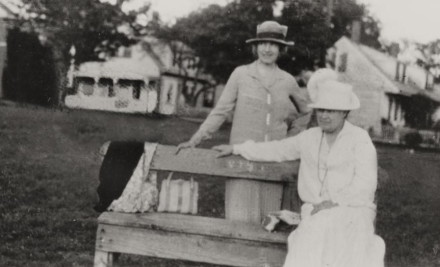 Back in 2013, when I was writing about literature for The Huffington Post, I did a piece about female-written novels that star male characters and male-written novels that star female characters. I’d like to expand on that today by discussing novels with other author/character dichotomies: those by writers who create protagonists of another race, ethnicity, sexual orientation, religion, etc.
 For a country that’s supposedly a great democracy, the United States has a breathtaking amount of virulent prejudice in its past and present — making the country a great democracy mostly for (rich) white males.
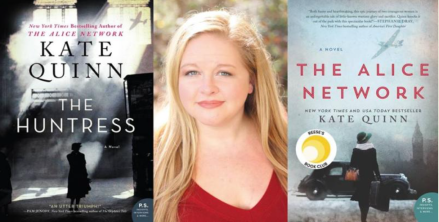 Many novels of course contain character groupings — family members, or friends, or work partners, or other associations. Interesting interactions often result, and things can get even more interesting when the people are very different from each other.
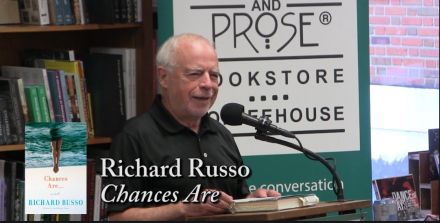 Some novels grab you from the first page or even first sentence, while others build more slowly. Sometimes so slowly — or so confusingly or so off-puttingly — that one flings the book away. (Hopefully not while reading it on an electronic device. 🙂 )
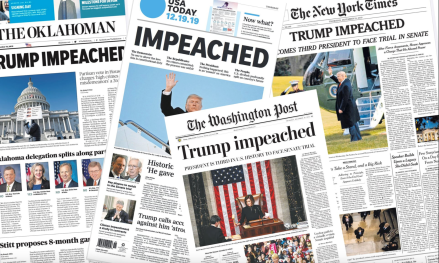 It’s always nice when wrongdoers suffer consequences, as was the case last week when the ultra-corrupt Trump was impeached by the U.S. House of Representatives. Sure, the repellent Republican majority in the U.S. Senate will acquit the Ogre-in-Chief after ignoring the huge trove of proof that he’s a criminal, but at least Trump got some comeuppance.
 Today’s theme? Novelists who keep readers off-balance by defying expectations with certain characters.
 One of literature’s pleasures is reading an established living author for the first time, loving the novel, and knowing you not only have past books but (most likely) future ones to enjoy by that writer.
 Dave Astor on Literature