One problematic literary trope over the centuries involves “first world” characters spending time in “third world” countries and having much bigger roles than the residents, who often serve as little more than “colorful” background.
It can be frustrating seeing white Americans or white Europeans star in those novels, get fleshed out more three-dimensionally than the people they’re amid, and too often act in patronizing or even racist ways toward the visited countries’ citizens — although novels of the past few decades, such as Barbara Kingsolver’s masterful The Poisonwood Bible, are thankfully likelier to take a critical view of, or satirize, this alleged “superiority.”
That said, some “first world in the third world” novels can of course still be damn good, and some of their European or American protagonists are decent people who at least treat the residents somewhat respectfully.
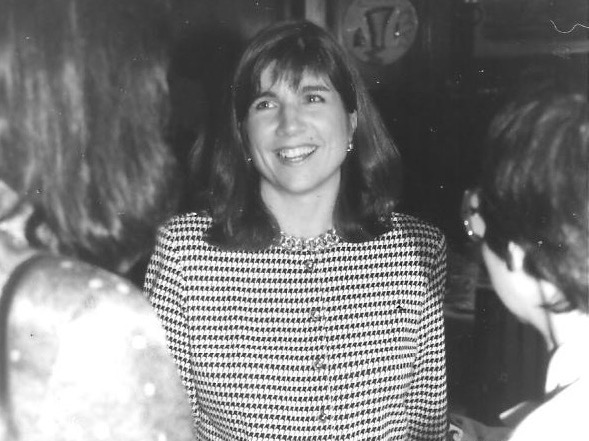
I thought about this subject the past few days while reading Malcolm Lowry’s Under the Volcano — an often-compelling, emotional, melancholy novel containing wonderfully rich prose. But dampening my pleasure a bit was the white-people-in-Mexico thing (with several “first world” bases covered by Lowry’s major characters: mopey alcoholic Geoffrey from England, his adventurous half-brother Hugh from England, former film actress/Geoffrey’s ex-wife Yvonne from the United States, and film director Jacques from France). Still, one can acknowledge that the 1947-published/1930s-set book was “of its time” and that Lowry (pictured above) gave some Mexican characters, such as physician Arturo Diaz Vigil, secondary roles a bit beyond the bare minimum.
There’s also the American-south-of-the-border trope in such novels as Cormac McCarthy’s All the Pretty Horses, featuring Texas teen John Grady Cole and his dramatic experiences in Mexico; James Michener’s Mexico, in which American journalist Norman Clay at least has some Hispanic blood; and Paul Theroux’s The Mosquito Coast, starring the rather nutso U.S. dad Allie Fox who yanks his family from Massachusetts to Honduras. All excellent books, but…
American or European characters in Africa? We have nasty Georgia evangelical Nathan Price, in the aforementioned The Poisonwood Bible, dragging his wife and four daughters to what was then the Belgian Congo to try to arrogantly convert the populace to Christianity; troubled New York couple Kit and Port enduring some disquieting experiences in North Africa in Paul Bowles’ The Sheltering Sky; three Englishmen traveling to East Africa to meet the imposing 2,000-plus-year-old (white) title character in H. Rider Haggard’s mesmerizing She; and that voyage along the Congo River in Joseph Conrad’s Heart of Darkness that would inspire the movie Apocalypse Now (in which the setting was transferred to Vietnam). On the part-fictional (?) memoir front, there’s Out of Africa by Danish author Karen Blixen.
Asian countries such as China and Japan are obviously now among the planet’s most developed nations, and China is a superpower, but those places used to be considered “third world” by the West. So, novels such as W. Somerset Maugham’s The Painted Veil (set in 1920s Hong Kong and China) and James Clavell’s Shogun (circa-1600 Japan) fit this blog post’s theme. Both of those compelling books have English protagonists.
Of course, many African and Latin American countries are also more industrialized today than at the time books such as She (1886) and Heart of Darkness (1902) were published.
Any “first world in the third world” novels you’d like to mention? And you’re of course welcome to discuss this blog post’s general theme. 🙂
My literary-trivia book is described and can be purchased here: Fascinating Facts About Famous Fiction Authors and the Greatest Novels of All Time.
In addition to this weekly blog, I write the 2003-started/award-winning “Montclairvoyant” topical-humor column for Baristanet.com. The latest piece — which eases up on the satire for a week to take a positive look at various things in my town — is here.