Post offices are on the minds of many people these days as Trump and other Republicans try to decimate the United States Postal Service.
Why the decimation attempt, which includes opposing any desperately needed pandemic aid for the USPS and recently appointing a postmaster general who’s an unqualified Trump lackey/Trump donor who owns stock in private competitors of the USPS? The reason is that the USPS would of course be crucial in delivering ballots for this fall’s election, and mail voting favors Democrats for reasons such as increased turnout.
Also, Trump and his fellow racist/misogynist/anti-union Republicans hate the fact that the USPS provides good unionized jobs to employees who include many people of color and women.
Anyway, I thought I’d pay tribute to post offices by mentioning authors, fictional characters, books, and more with a connection to those all-important stamp sites/letter locales.
For instance, William Faulkner (1897-1962) was a poor-performing postmaster at the University of Mississippi from 1922 to 1924, and poet/novelist Charles Bukowski (1920-1994) was a letter carrier and later a mail clerk in mid-century Los Angeles before turning more definitively to writing. His first novel: Post Office.
Across “the pond,” English novelist Anthony Trollope (1815-1882) spent decades working for his country’s postal service, even as he wrote his many books.
Rita Mae Brown’s mysteries include the character Mary Minor “Harry” Harristeen, who runs a small-town post office while doing amateur detective work with some animal friends.
A real-life American mail carrier (for a while) with a literary connection was Henry Crowder, a jazz musician most remembered for the relationship he and heiress/poet/editor/political activist Nancy Cunard had for several years in Europe. Crowder assisted Cunard on various publishing projects, and helped inspire her famous 800-plus-page Negro: An Anthology that included the work of Zora Neale Hurston, Langston Hughes, and many others. Cunard dedicated the 1934 book to Crowder. (Henry later married May Frances “Frankie” Turner, Eleanor Roosevelt’s seamstress at the White House.)
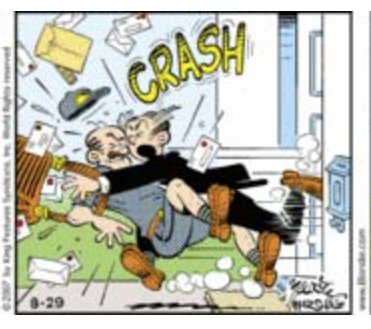
I’ll cheat here a bit and also mention Mr. Beasley, the hapless mail carrier who often gets knocked over by the rushing-to-work Dagwood in the Chic Young-created, 90-year-old “Blondie” comic strip — which of course has been gathered in various book collections. (See the image atop this blog post — sort of a metaphor for what Trump is trying to do to the USPS.)
Oh heck, crusty Mr. Wilson of Hank Ketcham’s “Dennis the Menace” comic was also a mail carrier — albeit retired.
And I loved Reba the mail carrier in the Pee-wee’s Playhouse children’s TV show that was really kind of for adults, too. Reba was played by S. Epatha Merkerson, an excellent actress raised by a single mother who worked for the…USPS!
Any literature/post-office connections you’d like to mention? Or you could just comment on the awful, incompetent, never-reads-a-book Trump and the fellow Republicans who allow him to get away with countless cruel words and actions.
My literary-trivia book is described and can be purchased here: Fascinating Facts About Famous Fiction Authors and the Greatest Novels of All Time.
In addition to this weekly blog, I write the 2003-started, award-winning “Montclairvoyant” topical-humor column for Baristanet.com. The latest piece — which discusses, among other things, a 150-year-old bus company suspending operations because of the pandemic — is here.
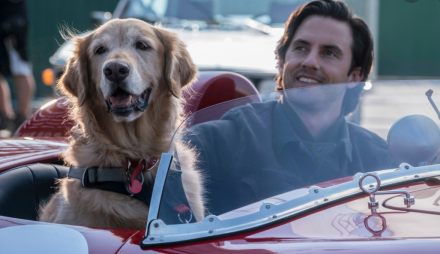 When I read novels, themes for blog posts occur to me. So, after finishing Garth Stein’s The Art of Racing in the Rain last week, the logical theme would have been to write about memorable dogs in literature. But I already did that two weeks ago, which led to several commenters recommending I read…The Art of Racing in the Rain.
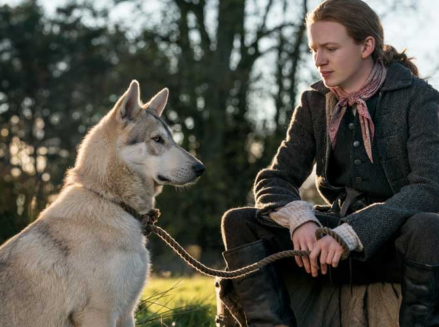 I’ve never lived with a dog, though I’ve gratefully shared my household with seven wonderful cats over the years. 🙂 I developed an appreciation of canines by meeting those who’ve lived with people I know and via…literature.
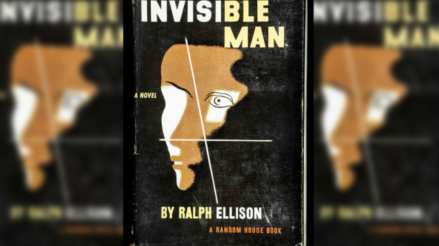 There have been countless protests around the world in recent weeks against the evils of racism and police brutality. Many of the admirable participants have been young people of all colors, providing hope for a future where…Black Lives Matter.
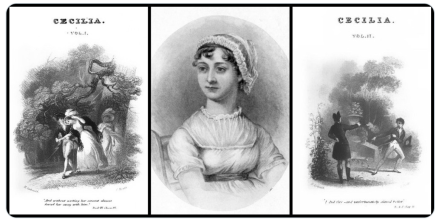 All authors are influenced by other authors, whether that influence is conscious or unconscious. Most writers are not plagiarists, of course, but their reading of other writers has an impact — often manifested in their early work before developing a more original voice.
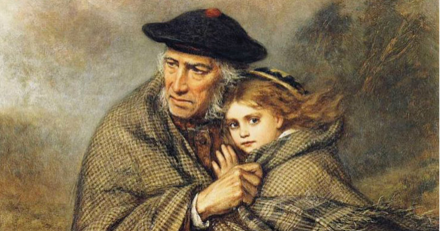 Today is Father’s Day, so, in an effort to write a blog post with the most unoriginal theme ever, I’m going to discuss some of my favorite dads in literature — seven to be exact. I’ll go backward in time, starting with the most recent releases.