Novels with a Sunshine State of Mind

A Delray Beach retirement community in 2018. (Photo by me.)

Florida! Beaches. Palm trees. Retired senior citizens. Disney World. Miami Vice. Kennedy Space Center/Cape Canaveral. Many nationally known pro and college teams in football and other sports. A once-blue but now-red state led by far-right/mean-spirited Governor Ron DeSantis. The home state of far-right/mean-spirited President Donald Trump, a New York native.

“The Sunshine State” has personal elements for me, too. After she retired, my New York-born/later-New Jersey-based mother lived in Delray Beach from the early 1990s to her death in 2018. My wife has extended family in Florida, where I also have friends. I covered conferences in Orlando, Sarasota, and Boca Raton when I was a magazine writer.

As you might expect, I’m also going to discuss Florida’s various literary connections. It’s one of the places where Ernest Hemingway lived — in Key West. The state is associated as well with novelists Zora Neale Hurston and Marjorie Kinnan Rawlings, columnists/authors Dave Barry and Carl Hiaasen, and other wordsmiths. And it’s the state where “The Wizarding World of Harry Potter” is located — a theme park inspired, of course, by the blockbuster J.K. Rowling series.

I didn’t plan this, but the last two novels I read were set a little or mostly in Florida. First there was James Leo Herlihy’s Midnight Cowboy (known more for the iconic movie), a riveting book about a down-and-out Texas hustler in New York City who ends up taking a fraught bus ride to Miami. Then I proceeded to James Michener’s Recessional, which takes a poignant and very absorbing look at a senior facility near Tampa. It was Michener’s final novel — published when he was 87 — so the author really “lived” the subject matter.

Other novels with partial or mainly Florida settings? Referencing authors already mentioned in this post, there was Zora Neale Hurston’s compelling classic Their Eyes Were Watching God starring a memorable independent woman, Marjorie Kinnan Rawling’s Pulitzer Prize-winning The Yearling featuring a boy and his fawn, and Ernest Hemingway’s fishing-boat saga To Have and Have Not.

I’ve read the columns of Dave Barry and Carl Hiaasen, and met and written about both men, but have not tried any of their books.

But I have read Rita Mae Brown’s Rubyfruit Jungle, in which the lesbian protagonist leaves Florida for more-tolerant New York City; Colson Whitehead’s The Nickel Boys, much of which is set at a problematic reform school in Florida; Joy Fielding’s Cul-de-sac, a page-turner about the families living on one suburban Florida street; John Grisham’s thriller Camino Island, in which manuscripts of F. Scott Fitzgerald play a prominent role; and Peter Straub’s Ghost Story, which — not surprisingly for a novel partly set in Florida — prominently features senior citizens in its cast.

Thoughts about and/or examples of this theme?

Misty the cat says: 🎵 “There’s something happening here/what it is ain’t exactly clear.” 🎵

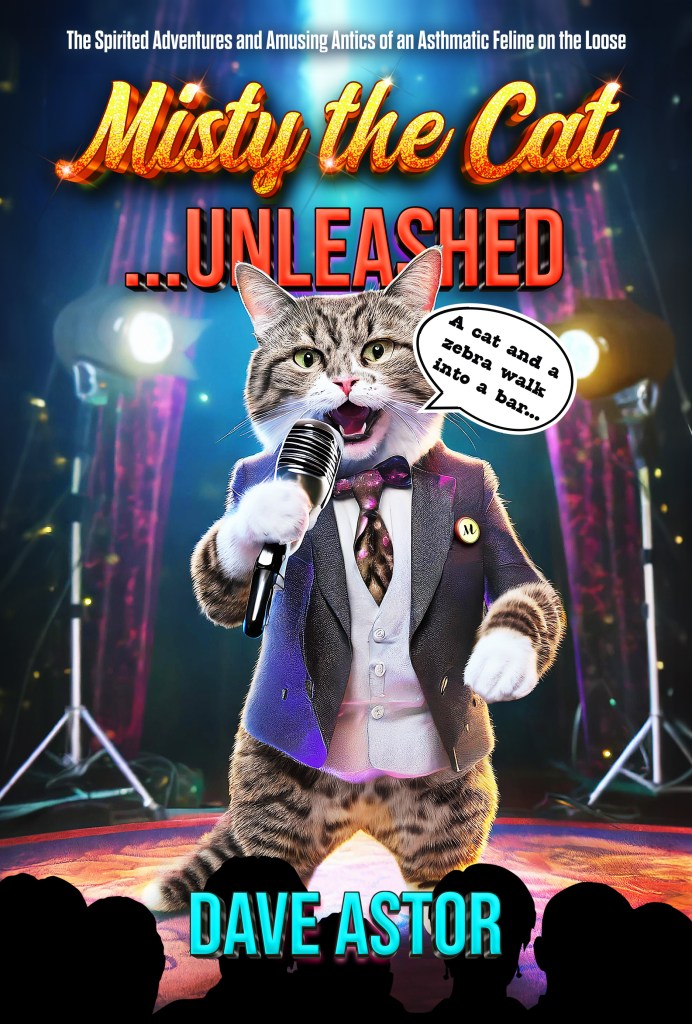
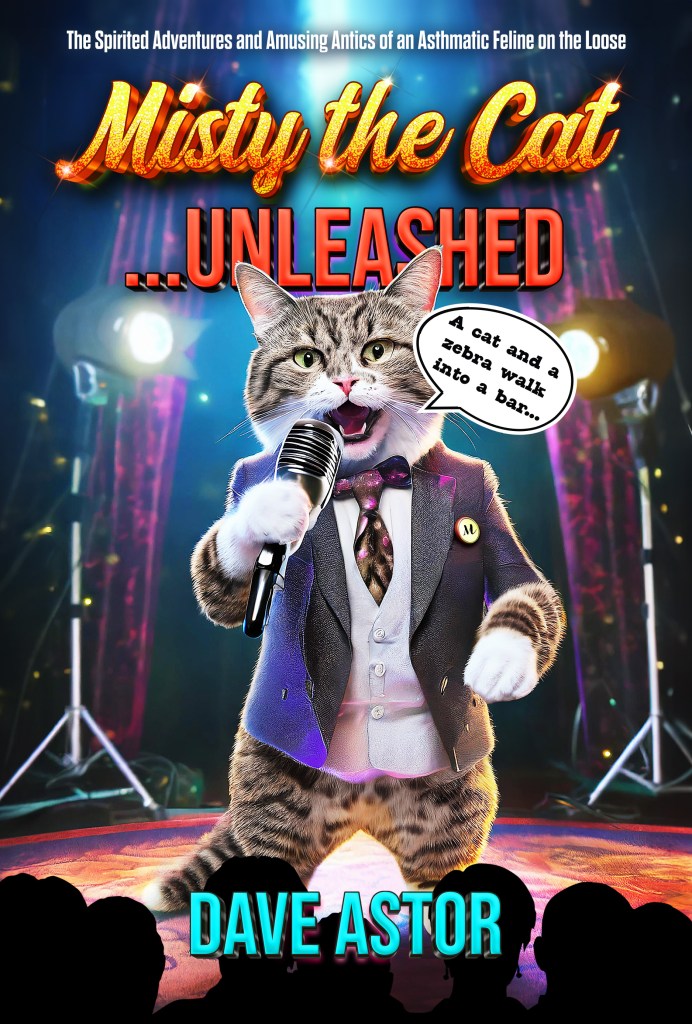
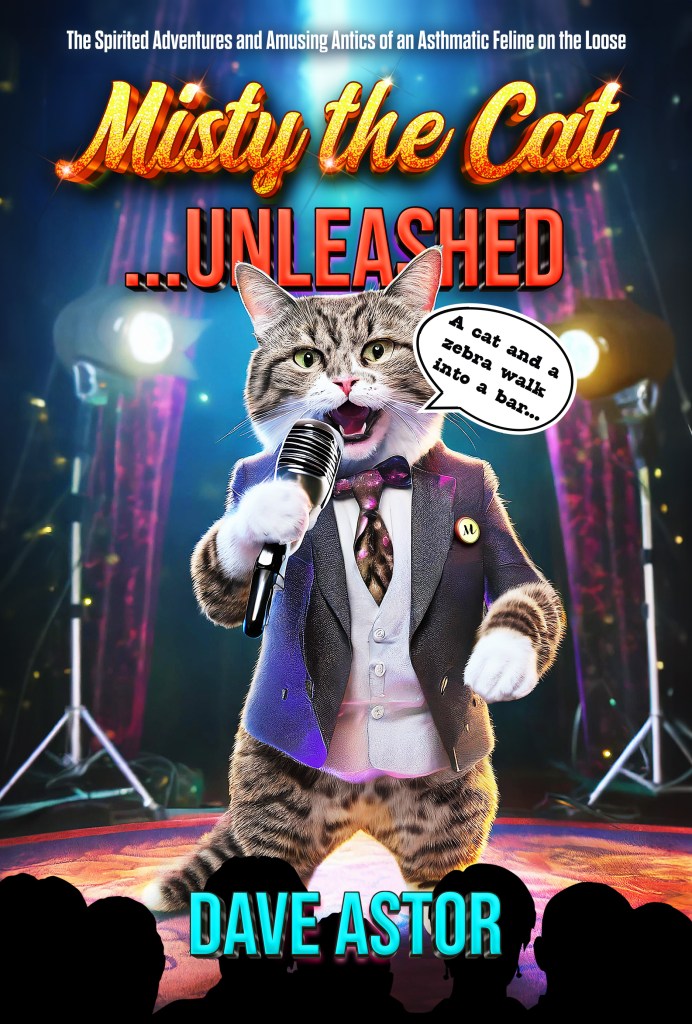
My comedic 2024 book — the part-factual/part-fictional/not-a-children’s-work Misty the Cat…Unleashed — is described and can be purchased on Amazon in paperback or on Kindle. It’s feline-narrated! (And Amazon reviews are welcome. 🙂 )
This 90-second promo video for the book features a talking cat: 🙂

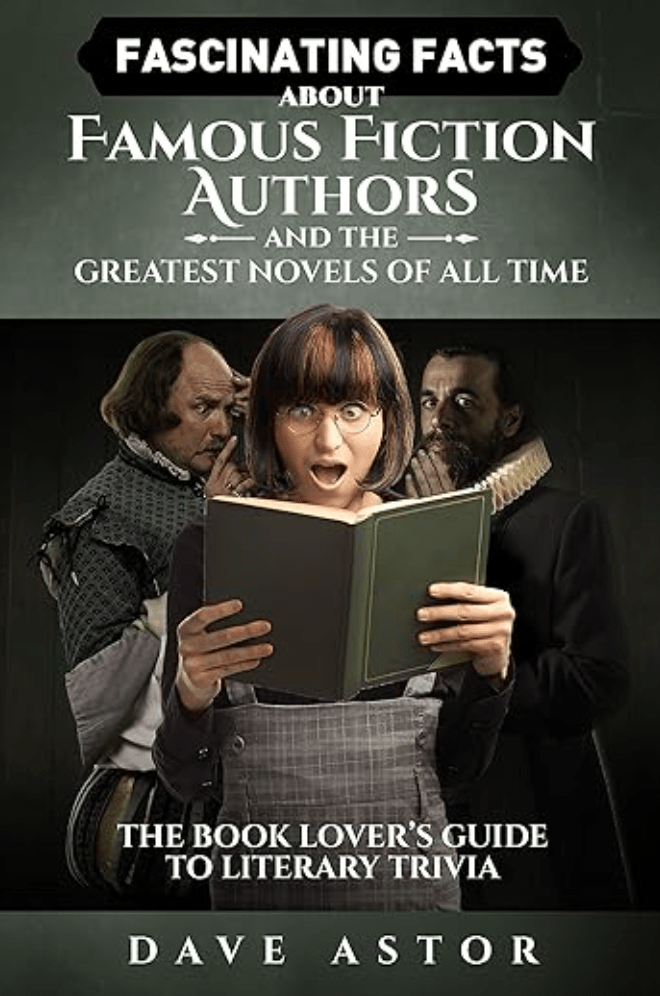
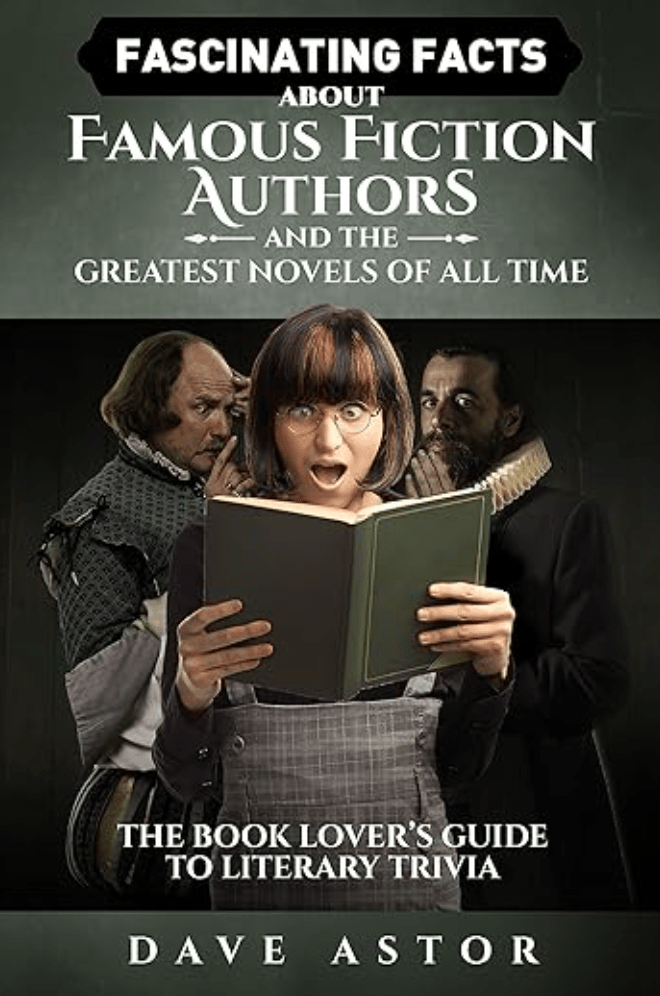
I’m also the author of a 2017 literary-trivia book

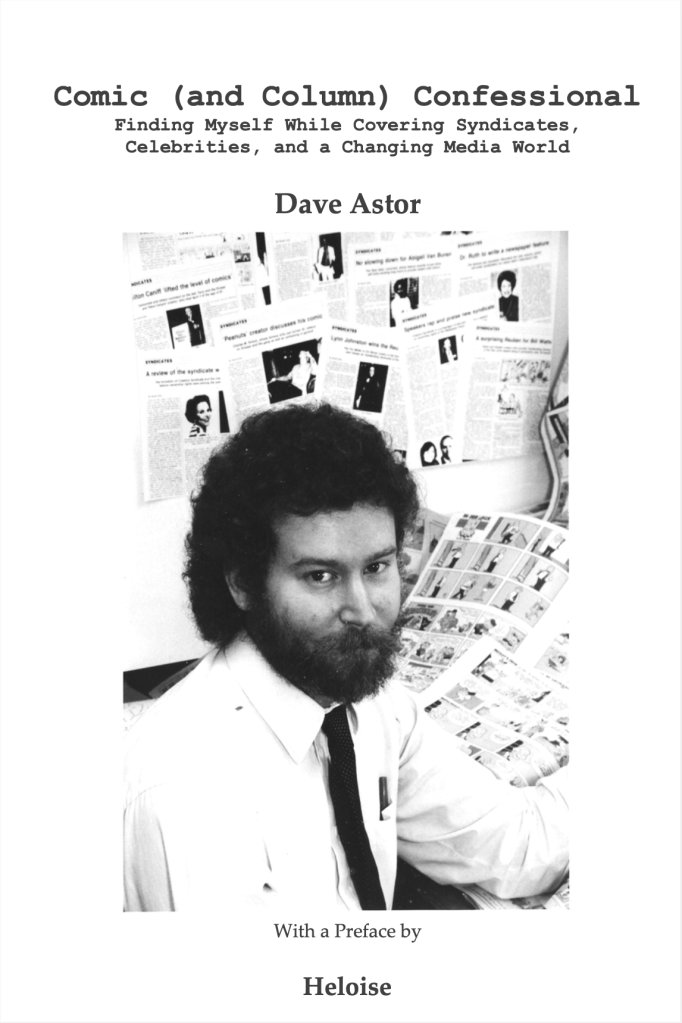
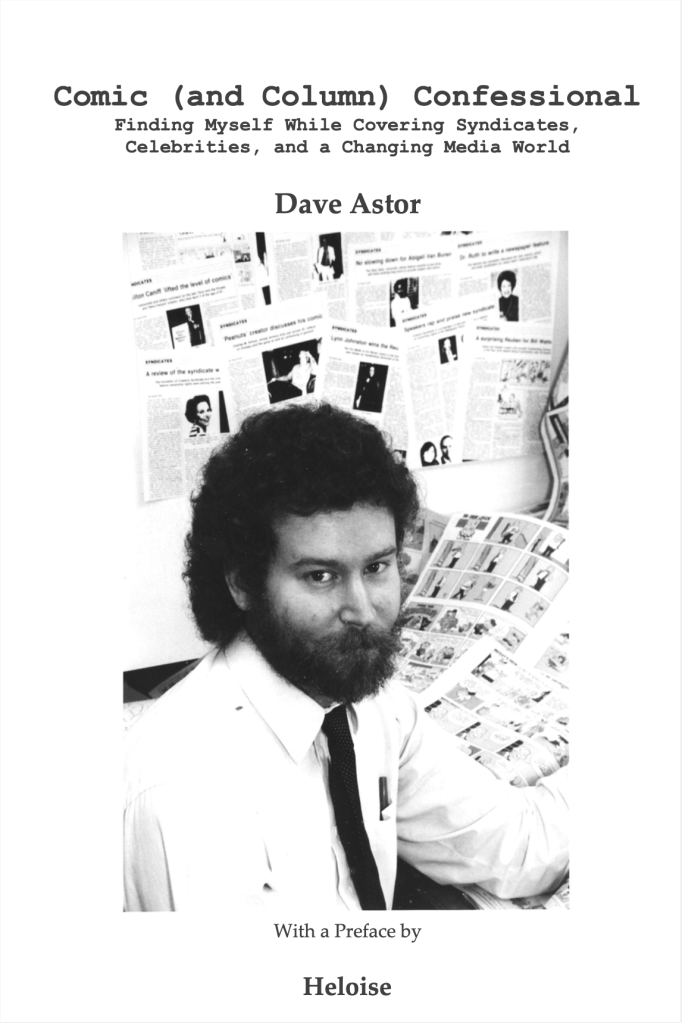
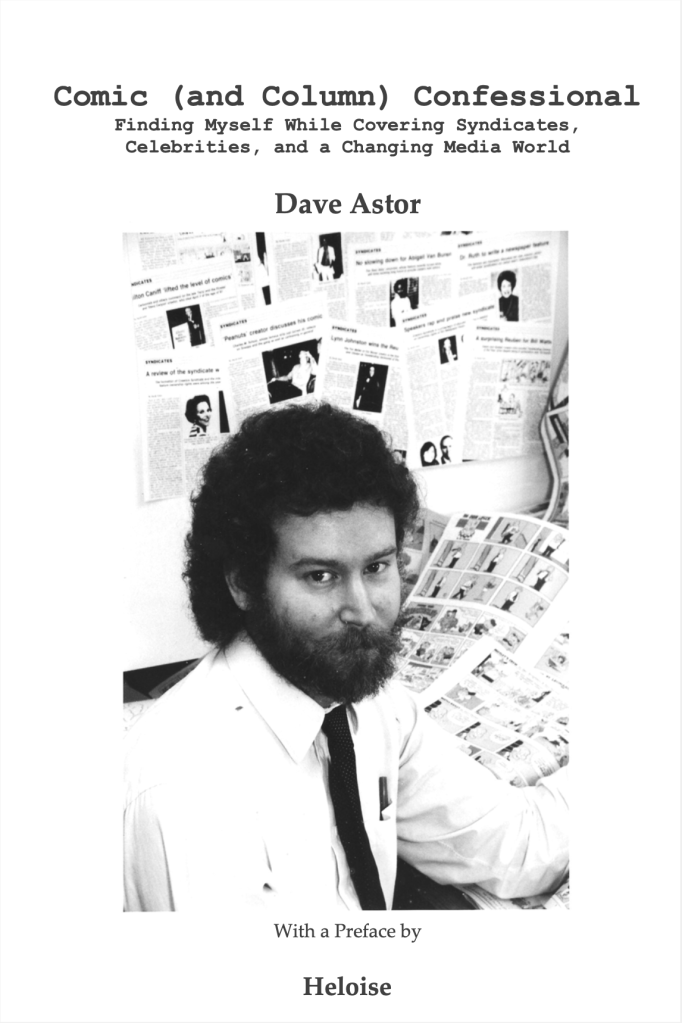
…and a 2012 memoir that focuses on cartooning and more, with many encounters with celebrities.

In addition to this weekly blog, I write the 2003-started/award-winning “Montclairvoyant” topical-humor column every Thursday for Montclair Local. The latest piece — about awful massive layoffs in my school district, upcoming elections, and more — is here.

Novelists Have the Facility to Depict Nobility

Yesterday, a massive total of nearly seven million people attended the 2,700-plus “No Kings” rallies in the United States and abroad to protest Trump’s fascist/authoritarian regime as that Republican administration ignores Congress, enriches itself, cracks down on peaceful dissent, arrests innocent people of color, invades American cities for no good reason, meddles in other countries’ affairs, starts or supports wrongful military actions around the world, etc. Which, as a literature blogger, reminded me of kings and other royalty in fiction — including historical fiction.

Of course, some royalty can be partly benevolent, but in many cases all that power heightens a ruler’s nasty instincts, makes a corrupt person even more corrupt, and increases the entitlement of the already entitled. Also, being a member of royalty doesn’t exactly involve the merit system.

I’ve never deliberately sought out novels containing royal characters, much preferring to read about the lives of “everyday” people. But privileged aristocrats have popped up here and there in my reading.

For instance, when long ago working through many a great book by Mark Twain, I polished off The Prince and the Pauper (two boys changing places) and A Connecticut Yankee in King Arthur’s Court (in which a certain king appears).

Another 19th-century novel, Alexandre Dumas’ 17th-century-set The Three Musketeers, includes King Louis XIII and Queen Anne as secondary characters.

In Charles Dickens’ A Tale of Two Cities, King Louis XVI and King George III are referenced.

Some novels written in the 20th and 21st centuries also include royal characters. Hilary Mantel’s Wolf Hall has Henry VIII and other monarchical personages, Josephine Tey’s The Daughter of Time harkens back to King Richard III, Robert Graves’ I, Claudius features the Roman emperor of the book’s title, J.R.R. Tolkien’s The Lord of the Rings has the would-be king Aragorn, and Philippa Gregory’s Earthly Joys has the Duke of Buckingham.

There’s also William Goldman’s The Princess Bride, Meg Cabot’s The Princess Diaries, Antoine de Saint-Exupery’s The Little Prince, Lewis Carroll’s Alice’s Adventures in Wonderland and its Queen of Hearts, C.S. Lewis’ The Chronicles of Narnia and its King Tirian, Diana Gabaldon’s Outlander and its King Louis XV appearance, Margaret Landon’s Anna and the King of Siam that inspired The King and I musical, and so on.

Of course there’s royalty, too, in various Shakespeare plays and in other stage creations such as Eugene O’Neill’s The Emperor Jones, Lin-Manuel Miranda’s Hamilton (King George III), etc.

I’m sure I’ve only touched the surface here. Any additional examples of, or thoughts about, this topic?

Misty the cat asks: “What’s the new White House ballroom doing here?”

My comedic 2024 book — the part-factual/part-fictional/not-a-children’s-work Misty the Cat…Unleashed — is described and can be purchased on Amazon in paperback or on Kindle. It’s feline-narrated! (And Amazon reviews are welcome. 🙂 )

This 90-second promo video for the book features a talking cat: 🙂

I’m also the author of a 2017 literary-trivia book

…and a 2012 memoir that focuses on cartooning and more, and includes many encounters with celebrities.

In addition to this weekly blog, I write the 2003-started/award-winning “Montclairvoyant” topical-humor column every Thursday for Montclair Local. The latest piece — about wondering how to vote in a controversial local tax referendum that will be held this December because of a huge school district deficit — is here.

Anti-‘Woke’ Folk Should Do a Literary Soak

Colson Whitehead photo by Chris Close/Doubleday.

The Trump Administration’s countless nasty actions during its first six weeks include a crusade against DEI (Diversity/Equity/Inclusion) in the United States — a crusade that once again shows that Donald and company are white supremacists. They’re also sexist, anti-LGBTQ+, uncaring about people with disabilities, etc.

Their wrongheadedness has meant, among other things, firings of many federal employees who are not white males and crackdowns on merit-based multicultural hiring. Buttressing everything is the Trump Administration’s racist view that Caucasian men are the most competent people for any job — a view proven false time and time again, including when one looks at Trump’s grossly unqualified white male picks for Cabinet posts and other high positions.

Some on the anti-DEI bandwagon acknowledge that racism, misogyny, and homophobia once existed but contend that they’re now things of the past. Yes, things have gotten better, but true equality is still a distant goal. Also, there has of course been much recent backsliding into intolerance “thanks” to Trump, many of his fellow Republicans, some Democrats, and others.

One way people can see the very problematic nature of an anti-DEI attitude is to read novels. Many fictional works spotlight talented characters who are not white males, and often depict the challenges those characters face in a world still teeming with bias.

For instance, I’m currently reading Kate Quinn’s excellent 2021 novel The Rose Code — in which the abilities of World War II codebreakers Osla Kendall, Mab Churt, and Beth Finch are inspiring, as are the struggles of those three young Englishwomen against sexism and being underestimated.

But for the rest of this post, I’m going to only mention novels featuring impressive Black female and male characters who give the lie to alleged white male superiority as they often deal with a LOT in a society that devalues them and too often threatens them.

Just before starting The Rose Code, I read Colson Whitehead’s Pulitzer Prize-winning 2019 novel The Nickel Boys — and there’s no doubt that African-American character Elwood Curtis is smarter, nicer, and harder-working than any other teen (Black or white) we “meet” in the segregated northern Florida of the early 1960s. But a racist criminal “justice” system sends Elwood to a brutal juvenile reformatory on a charge he’s innocent of, and the results are not pretty — including what we learn in the powerful twist near the book’s conclusion.

But that was more than 60 years ago, you say? Whitehead, who also sets The Nickel Boys in more-recent times, shows how prejudice never completely goes away; it continues to reverberate. Trauma lingers across many a decade (as does a much smaller amount of intergenerational wealth among Black people compared to white people).

A few other memorable characters whose lives were at least partly affected by America’s warped racial dynamics include Joe King Oliver of Walter Mosley’s Down the River unto the Sea (2018), Starr Carter of Angie Thomas’ The Hate U Give (2017), Ifemelu of Chimamanda Ngozi Adichie’s Americanah (2013), Kiki Belsey of Zadie Smith’s On Beauty (2005), Celie of Alice Walker’s The Color Purple (1982), Dana Franklin of Octavia E. Butler’s Kindred (1979), Macon Dead III of Toni Morrison’s Song of Solomon (1977), Kunta Kinte of Alex Haley’s Roots (1976), John Grimes of James Baldwin’s Go Tell It On the Mountain (1953), the unnamed narrator of Ralph Ellison’s Invisible Man (1952), Bigger Thomas of Richard Wright’s Native Son (1940), and Janie Crawford of Zora Neale Hurston’s Their Eyes Were Watching God (1937). I found every one of those novels well worth reading, and I wish everyone trashing DEI would read them, too.

There are of course many bias-slammed Black characters skillfully created by white authors, too. Among them are Donte Drumm, a teen who ends up on Death Row for a murder he didn’t commit in John Grisham’s The Confession (2010); and the also falsely accused Tom Robinson in Harper Lee’s To Kill a Mockingbird (1960). Hmm…kind of similar story lines, 50 years apart.

Some of the characters mentioned in this post “overcome,” some do not.

Your thoughts about, and examples of, this topic?

Misty the cat says: “The grass will get greener this spring or when I buy a big can of green paint.”

My comedic 2024 book — the part-factual/part-fictional/not-a-children’s-work Misty the Cat…Unleashed — is described and can be purchased on Amazon in paperback or on Kindle. It’s feline-narrated! (And Misty says Amazon reviews are welcome. 🙂 )

This 90-second promo video for my book features a talking cat: 🙂

I’m also the author of a 2017 literary-trivia book

…and a 2012 memoir that focuses on cartooning and more.

In addition to this weekly blog, I write the 2003-started/award-winning “Montclairvoyant” topical-humor column every Thursday for Montclair Local. The latest piece — about a newly hired township manager, bad sidewalks, and more — is here.

Immigration in Lit Amid the Latest Nativist Snit

AP Photo/Gregory Bull

With Donald Trump back in the White House, many (mostly non-white) immigrants are threatened with deportation and more. Not just “illegal” immigrants, but “legal” ones, too. Deportation is of course a cruel, messy, expensive, family-shattering process that might wreak havoc on the United States economy.

Immigrants bring many positives to their new country — hard work, diversity, doing jobs many native-born citizens won’t do, etc. And studies have shown that immigrants, whether “legal” or “illegal,” commit fewer crimes than their native-born peers.

Why do so many people want to move to the U.S. or other countries? They might be fleeing poverty or danger. They might be seeking opportunities not available to them in their nation of birth, or seeking to live amid different social mores. And “first world” nations have created conditions in less-powerful countries that increase immigration — including economically exploiting those “third world” countries, sanctioning them or backing their dictatorial leaders, and hurting them with the global climate change that energy-overusing “first world” populations largely cause.

Then there’s the scapegoat scenario — blaming immigrants (not to mention trans people) when the real problems in countries such as the U.S. are oligarchs, billionaires, too-powerful corporations, widening income inequality, etc.

I should add that any country needs some limitations on how many new citizens it lets in. Unfortunately, the over-the-top way Trump is going about things in the United States is not the smart or decent immigration approach — certainly not deserving to be a role model for the rest of the world.

Anyway, now that I’ve blathered on for five paragraphs, it’s time to mention novels with memorable immigrant protagonists. These characters are depicted expertly by their authors, and we can of course relate to these fictional creations for all kinds of reasons — including partly because many of us are descendants of immigrants, or have immigrants in our extended families, or are immigrants ourselves. (I’m the U.S. grandson of immigrants from Eastern Europe, and my adopted younger daughter is from Guatemala.)

Given that the U.S. is a “nation of immigrants,” a number of examples I’ll offer are novels I’ve read with characters who came to America from various countries. But there will be other countries of destination cited, too.

Characters who move to the U.S. are from Nigeria in Chimamanda Ngozi Adichie’s Americanah, from Afghanistan in Khaled Hosseini’s The Kite Runner, from India in Jhumpa Lahiri’s The Namesake, from China in Amy Tan’s The Joy Luck Club, from Vietnam in Viet Thanh Nguyen’s The Sympathizer, from the Dominican Republic in Junot Diaz’s The Brief Wondrous Life of Oscar Wao, from Iran in Andre Dubus III’s House of Sand and Fog, from Ireland in Colm Toibin’s Brooklyn, and from Greece in Jeffrey Eugenides’ Middlesex.

Among literature’s examples of immigration to countries other the U.S. are Nigeria to England in Bucha Emecheta’s Second Class Citizen, Bangladesh to England in Zadie Smith’s White Teeth, New Zealand to Australia in Colleen McCullough’s The Thorn Birds, and Morocco to France and back to Morocco in J.M.G. Le Clezio’s Desert, to cite a few examples from those I’ve read.

The immigration themes in these and other novels can be compelling in various ways: the drama of leaving one’s homeland for reasons (some mentioned earlier in this post) such as war, repression, threat of death, poverty, and wanting better opportunities; the culture shock involved in settling in a new place; how the immigrants — and their children and grandchildren — adapt to that new place; nostalgia for one’s former country; negative encounters with those native citizens who are anti-immigrant even though their ancestors might have been immigrants…

As readers get absorbed in all this drama, they also learn a lot about the places the characters left and move to. Learning can go down especially easy in fiction; I’ve read nonfiction books about various countries, but often better understand the history, customs, culture, and other aspects of those nations when reading novels with immigration themes.

By the way, two of Trump’s three wives — including current spouse Melania — were immigrants. And Usha, wife of Trump’s vice president JD Vance, is the daughter of immigrants.

Any immigration-themed novels you’d like to mention and discuss? Any general thoughts on this topic?

Misty the cat says: There are at least three ‘King of Pain’ novels, but I’m the King of Pane.

My comedic 2024 book — the part-factual/part-fictional/not-a-children’s-work Misty the Cat…Unleashed — is described and can be purchased on Amazon in paperback or on Kindle. It’s feline-narrated! (And Misty says Amazon reviews are welcome. 🙂 )

This 90-second promo video for my book features a talking cat: 🙂

In addition to this weekly blog, I write the 2003-started/award-winning “Montclairvoyant” topical-humor column every Thursday for Montclair Local. The latest piece — which has a passport theme — is here.

The Good and the Bad Are Half-Ugly (Inside)

Martin Luther King Jr. (right) and Donald Trump (wrong).

Tomorrow, January 20, will see a mind-boggling juxtaposition of the good and the bad. It’s when the United States marks Martin Luther King Jr. Day to honor the renowned civil rights leader (actually born on January 15) and also when the reprehensible Donald Trump is again inaugurated as President of the United States.

Makes one think of excellent novels I’ve read that have very good and very bad characters and/or dizzying highs and dizzying lows.

Such as Fyodor Dostoevsky’s The Brothers Karamazov, in which one of the three brothers (Alyosha) is in the MLK category and another (Mitya) is closer to a Trump type.

Or Wilkie Collins’ The Woman in White, whose characters range from upstanding (such as Walter Hartright and Marian Halcombe) to evil (Percival Glyde and charismatic Count Fosco).

Or Henry James’ The Portrait of a Lady, which features the sympathetic Isabel Archer and the scheming Gilbert Osmond.

Or Charlotte Bronte’s Jane Eyre, whose title character deals with the lows of a painful orphan upbringing, an awful boarding school, romantic heartbreak, and homelessness. And the highs of finding some independence and that aforementioned romance.

Or Jane Austen’s Persuasion — in which its protagonist, Anne Elliot, faces romantic loss and romantic found.

Or George Eliot’s Silas Marner, whose title character suffers betrayal and later an unexpected event that turns his life around.

Or Harriet Beecher Stowe’s Uncle Tom’s Cabin, in which one character (Eliza) makes a harrowing escape from slavery and another (Tom himself) eventually succumbs to slavery’s awful yoke.

Or Robert Louis Stevenson’s Strange Case of Dr. Jekyll and Mr. Hyde. I don’t think I have to explain that one. 🙂

Good and bad, and highs and lows, are of course part and parcel of real life — and great fodder for making novels more dramatic. If anything, many fictional works enhance the roller-coastering of personalities, emotions, and events. Which Trump would know if he ever read a book.

Though my post concentrated on 19th-century literature, you’re welcome to name novels from any time period that fit today’s theme. 🙂

Misty the cat says: “I jump in windows to avoid Aldous Huxley’s ‘The Doors of Perception.'”

My comedic 2024 book — the part-factual/part-fictional/not-a-children’s-work Misty the Cat…Unleashed — is described and can be purchased on Amazon in paperback or on Kindle. It’s feline-narrated! (And Misty says Amazon reviews are welcome. 🙂 )

This 90-second promo video for my book features a talking cat: 🙂

In addition to this weekly blog, I write the 2003-started/award-winning “Montclairvoyant” topical-humor column every Thursday for Montclair Local. The latest piece — about more lawsuit news in my town and other topics — is here.

How Some Protagonists Respond to Provocation

White House occupant Donald Trump pulled the U.S. out of a perfectly good nuclear agreement with Iran — an agreement Iran was honoring — and followed that up with intense economic pressure and military threats. So naturally Iran started to push back, though the almost-always-lying Trump administration is surely exaggerating the extent of that.

This reminded me of a number of scenarios in literature where a character is unfairly provoked to the point of she or he retaliating. Sometimes the retaliation is effective (providing readers with satisfying wish fulfillment); other times the retaliating party suffers (which frustrates readers even as that suffering scenario can often be more realistic).

One of the most famous provoked-to-retaliate novels is Billy Budd, in which the popular-among-his-fellow-sailors protagonist is badgered by the envious, nasty John Claggart. After Claggart falsely accuses Herman Melville’s kindly title character of trying to incite mutiny, a shocked Billy strikes John with no premeditation and accidentally kills him. But we don’t get a happy ending after that. (A photo from the Billy Budd movie is above.)

In modern fiction, we have Lisbeth Salander of Stieg Larsson’s The Girl With the Dragon Tattoo. Wrongly declared legally incompetent as a child, her appointed guardian Nils Bjurman sexually abuses her. Eventually, Lisbeth ruthlessly revenges herself on the sadistic Bjurman without killing him but in a way that deservedly ruins his life.

Sometimes in literature, abusive or otherwise despicable men ARE justly killed. That’s the case with the Karamazov father in Fyodor Dostoyevsky’s The Brothers Karamazov and Ruth’s husband Frank Bennett in Fannie Flagg’s Fried Green Tomatoes at the Whistle Stop Cafe. (If you feel it’s weird to put those two novels in the same sentence, Flagg’s sprawling book is quite deep amid its entertaining aspects.)

Perhaps the greatest revenge novel of all is Alexandre Dumas’ The Count of Monte Cristo, in which a false accusation puts young Edmond Dantes into a remote island prison for many years. After escaping, he dedicates his life to some epic payback.

Then there’s Stephen King’s Gerald’s Game, in which Jessie Burlingame is treated shabbily by her husband before and during a sexual game he wants to play more than she does. Jessie, partly spurred by subconscious memories of also being abused by her father, kicks Gerald away and inadvertently gives him a fatal heart attack. The ensuing problem? Jessie is handcuffed to the bed, now alone in a remote lakeside house.

And various scenarios in various Jack Reacher novels have Jack minding his own business before being surrounded by a group of bad guys who feel they greatly outnumber Lee Child’s protagonist enough to give him a pounding. Reacher, who almost always welcomes the challenge, invariably wins convincingly.

Your favorite novels that fit this topic?

One final note: Iran is hardly an exemplary democracy, but neither is the U.S. under Trump and his cynical enablers in the Republican-controlled Senate, right-wing media, conservative corporate circles, and right-wing religious circles.

My literary-trivia book is described and can be purchased here: Fascinating Facts About Famous Fiction Authors and the Greatest Novels of All Time.

In addition to this weekly blog, I write the award-winning “Montclairvoyant” topical-humor column for Baristanet.com. The latest weekly piece — which discusses a middle-school controversy and an endangered 1890s mansion — is here.

Donald Trump Meets Jack Reacher

Yesterday marked the one-year anniversary of Donald Trump’s disastrous time in the White House. Also, I finished reading Lee Child’s latest Jack Reacher novel last week. The Trump-Reacher connection? There is no connection. But I’m going to make a connection. “Fake news” and all that.

First my brief review of 2017’s The Midnight Line, Child’s 22nd Reacher novel. (I’ve read 20 of them, and will eventually get to the two I missed! As Jack says, “Good to go.”)

The Midnight Line has some of the visceral action Reacher fans love — various villains get battered by Jack in innovatively choreographed ways. But this book also features a more mature, reflective Reacher — the big guy is now 57, after all — and there are poignant passages amid the page-turning excitement. Plus plenty of social commentary about America’s drug scourge and grievously wounded veterans — with the roaming Reacher getting a firsthand look at both problems while trying to locate a woman whose West Point ring he finds in a Wisconsin pawn shop. Last but not least, Child’s writing is as lean and impressive as ever, and includes the usual touches of humor.

My “fake news” connection between Jack (a good-hearted man of integrity) and Trump (a heartless man of no integrity)? I’m going to seriocomically discuss America’s Predator-in-Chief using the titles of all 22 Reacher novels. As I do that, I’ll keep in mind that Trump has boasted about sexually assaulting women, called majority-black countries “shitholes,” made life hell for immigrants, pushed awful tax “reform” that benefits only the ultra-rich, tried to yank away health care from millions, removed environmental protections, and more.

Killing Floor: Trump’s words and actions are so low there’s no floor to them. He killed the floor.

Die Trying: What happened to the woman in Charlottesville, Virginia, who bravely tried to counter Neo-Nazis the white-supremacist Trump would then praise.

Tripwire: What might keep Trump’s hair in place when he exits Air Force One after flying on a windy day.

Running Blind: If the didn’t-protect-his-eyes Trump had looked longer at last year’s major eclipse, this book title would have described his reelection effort in 2020.

Echo Burning: Sort of like Eco Burning — Trump has hurt the U.S. ecology in many ways.

Without Fail: The almost-always-wrong Trump never admits he’s almost always wrong.

Persuader: Trump has expertly persuaded everyone he’s a jerk.

The Enemy: Today’s GOP — including Trump, Paul Ryan, and other cruel far-right Republicans.

One Shot: All the out-of-shape Trump would manage to heave up on a basketball court.

The Hard Way: Democrats trying to win elections despite Republican voter suppression, gerrymandering, big corporate money, and biased right-wing media.

Bad Luck and Trouble: Nicknames for Trump’s two adult sons.

Nothing to Lose: Trump figured that was the case when claiming bone spurs to avoid the Vietnam War draft, even though he was healthy enough back then to play intense sports. His scam worked.

Gone Tomorrow: We wish. But then there would be Mike Pence. 😦

61 Hours: How long it takes Trump to read a paragraph.

Worth Dying For: No war that Trump might start with his reckless words.

The Affair: Not just one adulterous relationship for Trump while he has been married.

A Wanted Man: How law enforcement should label the corrupt Trump.

Never Go Back: The current White House occupant cowardly avoids visiting his posh Trump Tower home in New York City, where he’s loathed.

Personal: Trump takes criticism very personally.

Make Me: What Trump told his father, who bankrolled his not-self-made son’s real-estate career.

Night School: The incurious/ignorant Trump could use some schooling any time of the day.

The Midnight Line: Any repugnant sentence Trump spews out on Twitter when most of us are asleep.

Conclusion: Reacher would know what to do with someone like Trump.

I’m sure you could come up with other ways to discuss Trump via those Lee Child titles! Try if you’d like!  🙂

My 2017 literary-trivia book is described and can be purchased here: Fascinating Facts About Famous Fiction Authors and the Greatest Novels of All Time.

In addition to this weekly blog, I write the award-winning “Montclairvoyant” topical-humor column for Baristanet.com. The latest weekly piece — about the complicity of my town’s Republicans re the vile Trump — is here.

Russian Fiction Is Much Better Than Trump’s Diction

With the corrupt Trump administration’s ties to Russia all over the news, I’d like to offer a different Russia-related topic this week: Russian literature.

Which includes an amazing array of dark/compelling/unforgettable fiction, particularly in the 19th century. Even Trump would be impressed reading Crime and Punishment — as long as Fyodor Dostoyevsky’s novel was shortened to a one-paragraph memo.

Crime and Punishment is my favorite Russian novel, and one of my favorites from any country. Riveting, feverish, psychological (it was said to have influenced Sigmund Freud). The high points of The Brothers Karamazov may be even better, but there are some slog-through pages and chapters that the never-a-dull-moment Crime and Punishment doesn’t suffer from. Dostoyevsky reportedly planned to make The Brothers Karamazov the first of a trilogy, but death intervened.

There are several other Dostoyevsky works well worth discussing, so please have at it in the comments section! But now I’ll turn to Leo Tolstoy, whose War and Peace and Anna Karenina are as famous as novels can be. I was impressed with those two classics (though I’m more a fan of Crime and Punishment and The Brothers Karamazov) as well as with several of Tolstoy’s magnificent short stories, some almost novella length. “The Kreutzer Sonata,” “The Death of Ivan Ilyich,” “Master and Man” — wow!

Speaking of short stories, you can’t go wrong with Tolstoy’s pal Anton Chekhov. A pioneering writer of tales that are more character-oriented and human-emotion-focused than plot-oriented, plus Chekhov of course was also a master playwright.

Earlier-in-the-19th-century Russian authors can also knock your socks off (though I wouldn’t advise that during a Moscow or St. Petersburg winter). Alexander Pushkin’s The Captain’s Daughter novel is among that writer’s great reads, as is Nikolai Gogol’s Dead Souls novel and his “The Overcoat” short story. Dostoyevsky contemporary Ivan Turgenev also wrote some really good novels, including Fathers and Sons.

Moving near/into the 20th century (experienced by the 1910-deceased Tolstoy for a decade), we have socialist-realist writers such as Maxim Gorky and Nikolai Ostrovsky. The latter’s How the Steel Was Tempered (a novel I purchased during a 1980s trip to Russia) is quite gripping for a while before getting a bit tedious.

Then there was Boris Pasternak, whose Doctor Zhivago novel drew the ire of Soviet officials despite it being somewhat nuanced about socialism; and the dissident writer Aleksandr Solzhenitsyn, who was adept at both fiction and nonfiction (and the subject of this “Mother Russia” song by Renaissance). I’m not fond of the way Solzhenitsyn’s politics turned very right-wing, but he did go through imprisonment hell.

Renaissance has a lead female singer and a female lyricist, but Russian literature (unlike fiction from a number of other nations) has been dominated by men. Unfortunately, lots of patriarchy, machismo, and sexism in that country — which might be one reason why Trump is so attracted to Putin and Russia’s oligarchs.

Russia’s history of authoritarianism and oppression certainly has had an effect on its writers, as has that country’s politics, poverty, income inequality, geographic size, high rate of alcoholism, aforementioned machismo, and huge war casualties — including the carnage resulting from Napoleon’s and Hitler’s invasions. But the most famous Russian writers would most likely be literary geniuses no matter where they had lived.

Obviously I’ve left some writers out, so please fill in some of those blanks in your comments. Who are your favorite Russian authors, either ones I mentioned or didn’t mention?

Here’s a review of, and a video interview about, my new literary-trivia book Fascinating Facts About Famous Fiction Authors and the Greatest Novels of All Time.

In addition to this weekly blog, I write the award-winning “Montclairvoyant” topical-humor column for Baristanet.com, which covers Montclair, N.J., and nearby towns. The latest weekly column — set in the year 4034 AD! — is here.

Do the Republicans Trashing Your Health Care Also Root for Literature’s Villains?

Most fiction readers root for the characters who are nice and admirable, not the villains. But after America’s far-right Republicans voted May 4 for a Trumpcare bill that would heartlessly yank medical insurance from millions of non-rich citizens, I’m thinking the majority of those soulless GOP scoundrels might identify with literature’s “bad guys.” So…

— When Donald Trump, Paul Ryan, etc., read Charlotte Bronte’s Jane Eyre, they love them some Mr. Brocklehurst — the wealthy “religious” hypocrite who cruelly allows Jane and the other girls at the Lowood institution to freeze, be badly fed, and more. Some of the girls die as a result, as would many Americans “thanks” to Trumpcare.

— Many far-right Republicans perusing John Steinbeck’s The Grapes of Wrath would undoubtedly cheer when a thug murders compassionate fighter against injustice Jim Casy — whose sharing of initials with the humane (not the GOP version of) Jesus Christ is no coincidence.

— A good number of GOP ghouls are most likely thrilled when brutal slave-owner Simon Legree viciously abuses the brave/kindly Tom in Harriet Beecher Stowe’s Uncle Tom’s Cabin.

— In George Eliot’s Silas Marner, William Dane frames the sympathetic title character and steals his fiancee — making Dane a hero to many a far-right Republican.

— Nathan Price of Barbara Kingsolver’s The Poisonwood Bible is a sexist and racist missionary, earning him the undying love of countless reactionary GOPers — including various Christian-evangelical leaders.

— The despicable, patriarchal men ruling the roost in Margaret Atwood’s The Handmaid’s Tale? Thousands of Republican ultraconservatives want to party with them.

— In Emile Zola’s The Ladies’ Delight, department store owner Octave Mouret is a ruthless capitalist who drives mom-and-pop shops out of business — a Walmart approach that sends numerous right-wing Republicans into ecstasy. But Mouret does have a bit of humanity, so that’s troublesome to the Paul Ryan crowd.

— The far-right GOP also has mixed feelings about Samad Iqbal. That character in Zadie Smith’s White Teeth is obnoxious, overbearing, sexist, and not as smart as he thinks — all catnip for Trump and his ilk. But Samad is Muslim, which mostly disqualifies him from Republican admiration.

— The husband of the title character in Stephen King’s Rose Madder is a policeman who’s a racist and a wife abuser — two qualities very endearing to Trump and other lowlife GOP leaders.

— Erich Maria Remarque’s Spark of Life? Many far-right Republicans may feel a kinship to that novel’s Nazi concentration-camp guards. (And Trumpcare’s motto should be the second half of the title of Remarque’s A Time to Love and a Time to Die.)

— Finally, pathological right-wingers pull for Lord Voldemort in J.K. Rowling’s Harry Potter series. Role model!

Of course, who knows how much literature America’s reactionary GOP bigwigs actually read? Maybe the occasional Ayn Rand novel…

Any novels you’d like to mention featuring villains far-right Republicans would adore?

Here’s a review of, and a video interview about, my new literary-trivia book Fascinating Facts About Famous Fiction Authors and the Greatest Novels of All Time.

In addition to this weekly blog, I write the award-winning “Montclairvoyant” topical-humor column for Baristanet.com, which covers Montclair, N.J., and nearby towns. The latest weekly column is here.

Even the Plots of Past Novels Change in the Disruptive Era of Trump

With President Trump and America’s far-right-Republican-controlled Congress changing everything for the worse (trying to yank away medical insurance, gut environmental regulations, lower taxes on the rich, etc.), it’s only a matter of time before the content of past novels changes to more accurately reflect what’s currently going on. Here’s what we might see:

— John Kennedy Toole’s A Confederacy of Dunces becomes the story of today’s vile GOP politicians.

— Nikolai Gogol’s Dead Souls becomes the biography of House and Senate leaders Paul Ryan and Mitch McConnell.

— Marilynne Robinson’s Housekeeping becomes the saga of Republicans trying to retain control of the House via gerrymandering and suppression of Democratic votes.

— Joseph Conrad’s Heart of Darkness becomes the story of Vice President Mike Pence.

— Robin McKinley’s Rose Daughter becomes the tale of dad-enabler Ivanka Trump’s rise.

— Toni Morrison’s Beloved becomes about the admirable people who oppose Trump, Ryan, McConnell, and their GOP ilk.

— Henry James’ Washington Square becomes a confirmation that the far right now in DC is just plain un-hip.

— Edith Wharton’s The Custom of the Country becomes a description of the custom of many lower-income whites in rural areas (“the country”) to vote against their self-interest for the cater-to-the-rich Trump.

— George Orwell’s 1984 becomes about the IQ Trump thinks he has (but doesn’t).

— (Ms.) Lionel Shriver’s Big Brother becomes an Orwellian novel rather than a book about an obese sibling.

— Salman Rushdie’s The Satanic Verses becomes Trump’s self-published book of bawdy limericks.

— Margaret Atwood’s The Year of the Flood becomes a list of all the lies flowing out of Trump’s mouth in 2017. Annual sequels to follow.

— Arundhati Roy’s The God of Small Things becomes an anatomical look at Trump’s small fingers and his small…

— Willa Cather’s Shadows on the Rock becomes the story of how Trump and his expanding waistline loom over Melania’s huge wedding ring.

— Joseph Heller’s Catch-22 becomes about the first 22 law-abiding, hard-working undocumented immigrants the Trump administration cruelly nabs and deports.

— Colette’s The Shackle becomes the description of a prison device Trump wants to use on innocent Muslims.

— Margaret Mitchell’s Gone With the Wind becomes about climate change melting polar ice and causing various species to become extinct.

— Malcolm Lowry’s Under the Volcano becomes about the coolest place to huddle after climate change worsens.

— Vladimir Nabokov’s Pale Fire becomes the story of the all-white, cross-burning Ku Klux Klan that enthusiastically supports Trump and other GOP leaders.

— Gabriel Garcia Marquez’s One Hundred Years of Solitude becomes a treatise on the length and type of prison sentence deserved by Attorney General Jeff Sessions.

— James Baldwin’s Go Tell It On the Mountain becomes the story of Mount Rushmore’s four sculpted heads getting so disgusted with Trump that they actually speak.

— Terry McMillan’s Waiting to Exhale becomes speculative fiction about anticipating the day Trump leaves or gets kicked out of the White House.

— Jean-Paul Sartre’s Nausea and Theodore Dreiser’s An American Tragedy become the go-to collections of our physiological and verbal reactions to today’s far-right GOP rule.

Any novels with new meanings you’d like to add to my list? Would love to see them!

Here’s a review of, and a video interview about, my new literary-trivia book Fascinating Facts About Famous Fiction Authors and the Greatest Novels of All Time.

In addition to this weekly blog, I also write the award-winning “Montclairvoyant” topical-humor column for Baristanet.com, which covers Montclair, N.J., and nearby towns. The latest weekly column is here.