A Kitty Tries to Be Witty

“Perhaps I should wake up and write a blog post,” says Misty. (Photo by Maria.)

I, Misty the cat, guest-blog for Dave every two months. I last did this on April 13 and today is June 8, so that’s…hmm…actually not quite two months. Reminds me of when Dave returned some novels to the library five days before their due date, and the indignant book drop expelled said novels with such force that they traveled back in time and landed on the heads of the three Karamazov brothers. Fortunately, each of the books was under 400 pages.

But Fyodor Dostoevsky’s 824-page The Brothers Karamazov is even longer than my average nap, during which I experience “Dreams” more often than Fleetwood Mac did at their 1977 concerts. And Dostoevsky’s 1880 novel might have been the first volume of an even longer work if the Russian author hadn’t died in early 1881. Perhaps a trilogy of sorts — like Suzanne Collins’ The Hunger Games (about me nudging my cat-food bowl so that each serving lands in the exact center) and J.R.R. Tolkien’s The Lord of the Rings (about my epic quest to be a male feline version of the Ernestine telephone operator played by Lily Tomlin).

I recommend shopping at Pop Culture R Us for all your celebrity-name-dropping needs.

Speaking of decades-ago entertainment, do you remember the 1978 movie Same Time, Next Year about a married woman and a married man who have a multi-year annual affair? That film partly inspired the long-term romance of Mallory Blessing and Jake McCloud in Elin Hilderbrand’s 2020 novel 28 Summers, which I read last week and found to be a wonderful, poignant book. It’s 422 pages in hardcover, which explains why various other 19th-century Russian fictional characters are donning helmets to avoid concussions. Helmets with stickers saying “Please Don’t Name Your Cat Anna Karenina.”

I’ll add that 28 Summers has an alternate-history element, with Jake’s wife Ursula DeGournsey running for President of the United States in 2020. Reminds me that my aforementioned cat-food bowl is shaped sort of like the Oval Office, and even has a tiny edible desk.

Other novels featuring politicians? Stephen King’s The Dead Zone, Robert Penn Warren’s All the King’s Men, J.K. Rowling’s The Casual Vacancy, Fannie Flagg’s Standing in the Rainbow, and Sinclair Lewis’ It Can’t Happen Here, to name a few. When my cat-food bowl was empty for five seconds, you know what I screamed? Yes, I screamed “It can’t happen here!!!”

A century ago, Lewis had quite a run of notable novels: Main Street (1920), Babbitt (1922), Arrowsmith (1925), Elmer Gantry (1927), and Dodsworth (1929). It Can’t Happen Here was published in 1935, eight decades before my 2015 birth year — which means that in 2025 I’m now…furry.

I’m sometimes asked how I, the kitty Misty, consume literature. Smeared with tasty cat food, of course. But, seriously, I read novels in the traditional print-book format rather than via eBook or audiobook. I guess I’m “old school,” like the 1636-founded Harvard University. I expect only a few members of The Class of 1640 to be at Harvard’s 2040 alumni reunion; they’re the ones who reside with cats, who help humans live longer.

Long-lived humans in literature? The over-2,000-year-old Lazarus Long of five Robert Heinlein novels; Ayesha, who also clocks in at about two millennia in H. Rider Haggard’s She; the 250-year-old High Lama of James Hilton’s Lost Horizon; etc. I assume they had well-funded retirement accounts.

One of the oldest of my fellow cats is Garfield, who has starred in Jim Davis’ 1978-founded comic strip for 47 years! Which reminds me that my next guest blog post will appear in 47 years — minus 46 years and 10 months. So, August 2025. That’s also when my teen human Maria is starting college, which means her bedroom will be…mine!

Dave will reply to any comments because I, Misty the cat, am busy consulting with an interior decorator about changes in Maria’s room (where you see me in the photo atop this post). A kitty can’t have enough scratching posts, treat dispensers, and paintings of hairballs playing poker.

Misty the cat says: “That railing’s shadow means 4,378 more days of spring.”

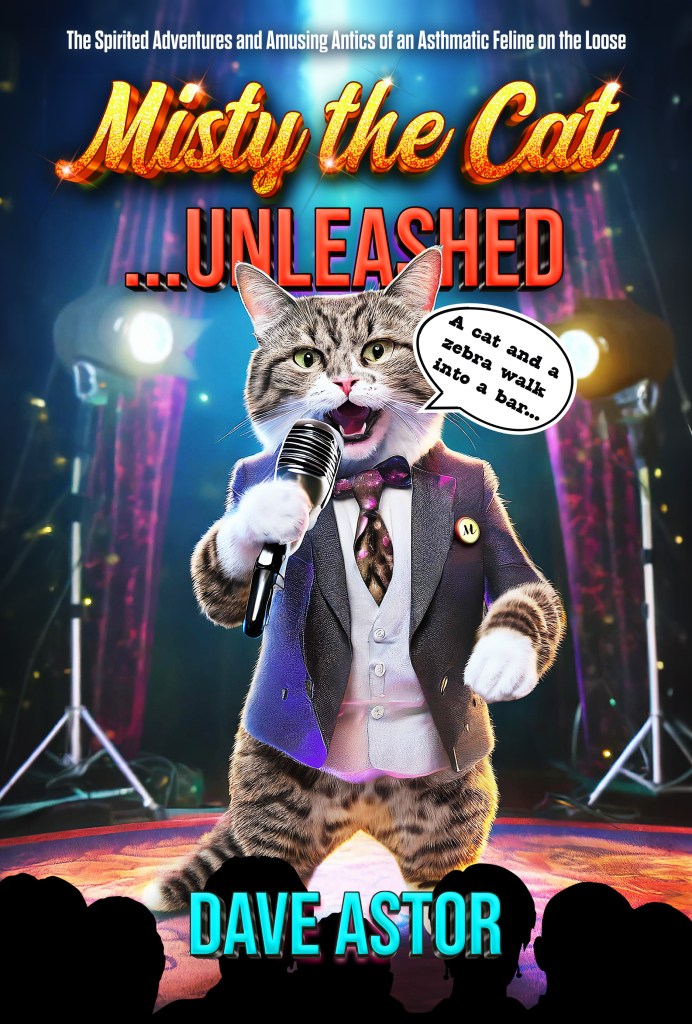
Dave’s comedic 2024 book — the part-factual/part-fictional/not-a-children’s-work Misty the Cat…Unleashed — is described and can be purchased on Amazon in paperback or on Kindle. It’s feline-narrated! (And Misty says Amazon reviews are welcome. 🙂 )

This 90-second promo video for Dave’s book features a talking cat: 🙂

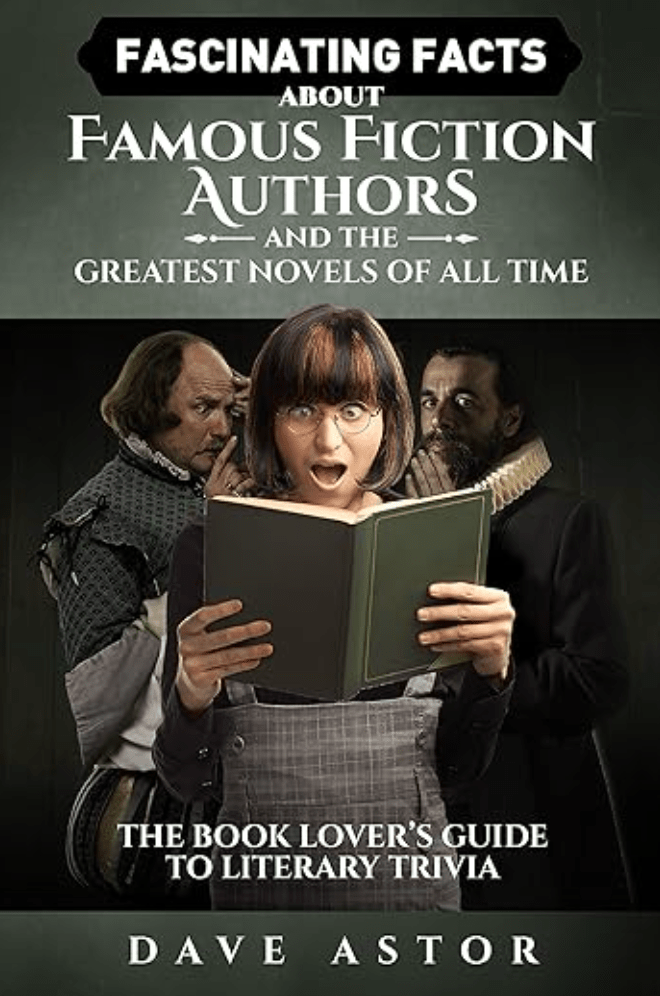
Dave is also the author of a 2017 literary-trivia book

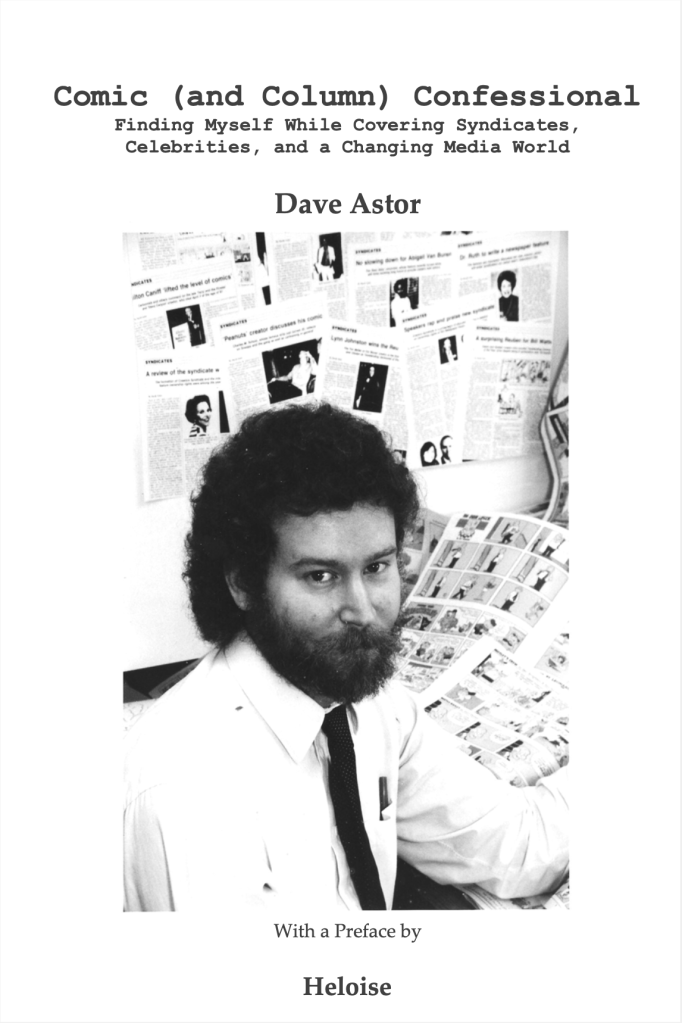
…and a 2012 memoir that focuses on cartooning and more.
In addition to this weekly blog, Dave writes the 2003-started/award-winning “Montclairvoyant” topical-humor column every Thursday for Montclair Local. The latest piece — about New Jersey’s upcoming primary election and much more — is here.
When Authors Insert Hurt

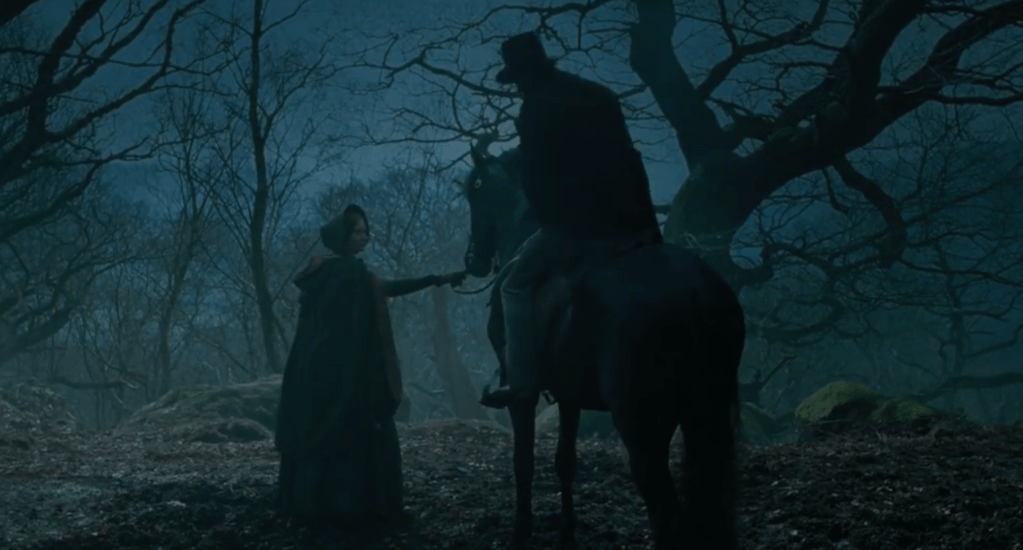
My screen grab from the 2011 Jane Eyre movie shows the injured Rochester just after he struggles back onto his horse.

As I recover from a broken toe, I’ve thought about injuries in literature — many of them more serious than a broken toe. What first came to mind was Annie Proulx’s short story “Broketoe Mountain.” 🙂 Or was that “Brokeback Mountain”? 🤔

Injuries in fiction (whether accidental or deliberately caused by a malicious person) are often more than incidental elements in story lines. They can help shape a plot, offer insight into how stoic and resilient the injured character might or might not be, give a hurt character more time to do other things and think about things, etc.

Now I’ll offer a few examples, some of which I’ve mentioned in past posts.

There are two significant injuries in Charlotte Bronte’s Jane Eyre. Fairly early in the 1847 novel, Edward Rochester’s spooked horse stumbles when its rider first encounters new governess Jane, throwing him to the ground and badly spraining his ankle. Jane’s immediate reaction to this incident shows her skill as well as calmness under pressure, and Rochester being homebound during his subsequent recuperation gives him and Jane a chance to get to know each other — which leads to subsequent dramatic events. I’ll refrain from discussing the book’s second set of injuries to avoid a spoiler for anyone who has yet to read Bronte’s iconic British novel.

Across “the pond” four years later, American author Herman Melville’s Moby-Dick was published. In the novel’s back story, Captain Ahab had part of his leg chomped off by the white whale of the title, and his obsessive pursuit of revenge against the massive sea creature is what drives the 1851 book’s plot.

In the much-more-recent Demon Copperhead (2022), the very-challenged-by-life title character of Barbara Kingsolver’s modern-day take on Charles Dickens’ David Copperfield (1850) suffers a severe knee injury while playing high school football — which becomes a big factor in his spiraling into the opioid addiction also afflicting many of his fellow residents of America’s Appalachian region.

U.S. soldier Joe Bonham of Dalton Trumbo’s Johnny Got His Gun (1939) is horrifically/permanently injured by an exploding artillery shell during World War I, and his bitter thoughts in the time after that make for a devastating anti-war argument.

In Scottish author Josephine Tey’s 1951 novel The Daughter of Time, 20th-century police inspector Alan Grant is confined to a hospital bed with a severely broken leg. That enforced inactivity gives him the time and the avoid-boredom desperation to investigate the alleged 15th-century crimes of King Richard III.

Near the start of Edith Wharton’s Ethan Frome, we see that the title character had been badly injured at some point. The 1911 novel goes on to heartbreakingly explain the love story leading to that.

When 20th-century Claire first meets 18th-century Jamie in Diana Gabaldon’s first Outlander book (1991), the Scottish warrior’s shoulder is dislocated. The time-traveling Claire, a nurse who later becomes a physician, expertly snaps the stoic Jamie’s shoulder back into place — illustrating the advances of modern medicine while getting the epic Claire/Jamie relationship started on the basis of mutual respect.

Parts of limbs are lost — in various tragic scenarios — in novels such as Octavia Butler’s Kindred (1979), Alex Haley’s Roots (1976), Stephen King’s Misery (1987), and J.K. Rowling’s seven (so far) Cormoran Strike/Robin Ellacott crime books published between 2013 and 2023. Those grievous injuries are all very relevant to the respective plots and shaping of the affected characters.

Physical injuries caused by domestic violence are a way for authors to convey how awful this violence is — with what happens in Kristin Hannah’s The Great Alone (2018) just one of countless examples. And of course there’s also the psychological trauma inflicted by domestic abusers.

Two more book mentions:

I recently read Val McDermid’s Still Life (2020), the sixth installment of the excellent series starring brilliant, dogged cold-case detective Karen Pirie. In this installment, her nice/loyal/not-super-bright-but-learning assistant investigator Jason Murray is injured by a criminal suspect and ends up trapped in a locked basement.

And my own fiction/fact hybrid, Misty the Cat…Unleashed, includes some pages about my teen daughter Maria tearing her ACL in 2022 and getting reconstructive surgery because of a gymnastics accident. While the 2024 book was published before all the ramifications of this mishap would unfold, the tear/operation/rehab changed the course of Maria’s life: which sport she would switch to (crew), which university she would enter this fall because of getting recruited for that sport (Boston University), and which career path she would choose (the health-care field). Major injuries can do that.

Any comments about, and/or examples of, this topic?

Misty the cat says in 2020: “This is not your typical municipal library.”

My comedic 2024 book — the part-factual/part-fictional/not-a-children’s-work Misty the Cat…Unleashed — is described and can be purchased on Amazon in paperback or on Kindle. It’s feline-narrated! (And Misty says Amazon reviews are welcome. 🙂 )

This 90-second promo video for my book features a talking cat: 🙂

I’m also the author of a 2017 literary-trivia book

…and a 2012 memoir that focuses on cartooning and more.

In addition to this weekly blog, I write the 2003-started/award-winning “Montclairvoyant” topical-humor column every Thursday for Montclair Local. The latest piece — about too many topics to list 🙂 — is here.