A Semi-Comprehensive Look at Semi-Autobiographical Novels

In early 2016, I wrote about semi-autobiographical novels. Now that nearly 10 years have passed, I suppose it would be semi-okay to write about those books again — mentioning semi-autobiographical novels I’ve read since then or had read before then but didn’t mention in that previous post. So, with this semi-decent first paragraph nearly done, here goes:

As I wrote in ’16, semi-autobiographical novels “can be the best of both worlds for authors and their readers. That mix of memoir and fiction takes facts and embellishes them and/or dramatizes them and/or smooths them into more coherent form. A partly autobiographical approach also allows authors to potentially pen very heartfelt books — after all, they lived the emotions — and perhaps provides those writers with some mental therapy, too.” I also wrote that a semi-autobiographical novel is often, but of course not always, a debut novel — at least partly because that kind of book might be easier to write; the author can use aspects of her or his own past.

Back here in late 2025, I just read The Cat’s Table by Michael Ondaatje, whose 2011 coming-of-age novel was inspired to an extent by the author’s life and a ship voyage he took as a boy from his native Sri Lanka to rejoin his mother in England after his parents had separated several years earlier. A boy named…hmm…Michael. The Cat’s Table is another compelling book by The English Patient author, who went on to live in Canada.

Another semi-autobiographical/coming-of-age novel (those two things often go together) is Betty Smith’s 1943 bestseller A Tree Grows in Brooklyn — about a brainy girl (Francie) growing up in an impoverished urban family.

Then there’s Little Women by Louisa May Alcott, who loosely based her classic 1868-69 novel on herself and her three sisters.

A few decades earlier, Mary Shelley’s apocalyptic 1826 novel The Last Man featured three principal characters based on herself, her late husband Percy Bysshe Shelley, and their friend and fellow writer Lord Byron.

Aldous Huxley also used famous people as models for characters in his 1928 novel Point Counter Point — including himself, Nancy Cunard, D.H. Lawrence, and Katherine Mansfield.

The characters in Harper Lee’s To Kill a Mockingbird (1960) are somewhat modeled on the author’s father (attorney Atticus Finch in the novel), herself (Scout in the book) and Lee’s childhood friend Truman Capote (fictionally named Dill).

Kurt Vonnegut’s horrific World War II experiences were fuel for his sci-fi-infused 1969 novel Slaughterhouse-Five, and Jack Kerouac’s travel experiences provided fodder for his On the Road (1957).

Some of the semi-autobiographical novels mentioned in my 2016 post include James Baldwin’s Go Tell It on the Mountain, Ray Bradbury’s Dandelion Wine, Charlotte Bronte’s Villette, Rita Mae Brown’s Rubyfruit Jungle, Charles Bukowski’s Hollywood, Willa Cather’s My Antonia, Colette’s The Vagabond, Charles Dickens’ David Copperfield, E.L. Doctorow’s World’s Fair, Fyodor Dostoevsky’s The House of the Dead, George Eliot’s The Mill on the Floss, Nathaniel Hawthorne’s The Blithedale Romance, Zora Neale Hurston’s Their Eyes Were Watching God, Jack London’s Martin Eden, W. Somerset Maugham’s Of Human Bondage, Herman Melville’s Typee, L.M. Montgomery’s Emily trilogy, Sylvia Plath’s The Bell Jar, Erich Maria Remarque’s All Quiet on the Western Front, John Steinbeck’s East of Eden, and Amy Tan’s The Joy Luck Club.

Your thoughts about, and examples of, this topic?

Misty the cat says: “When Christmas-tree lights reflect off the window, it’s a pane in the grass.”

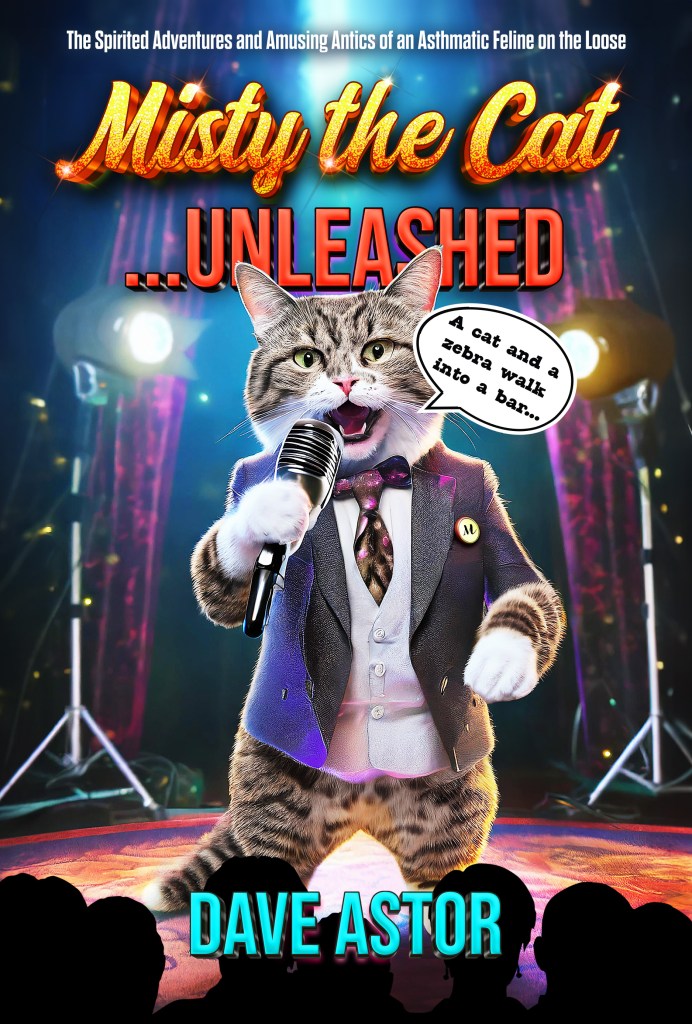
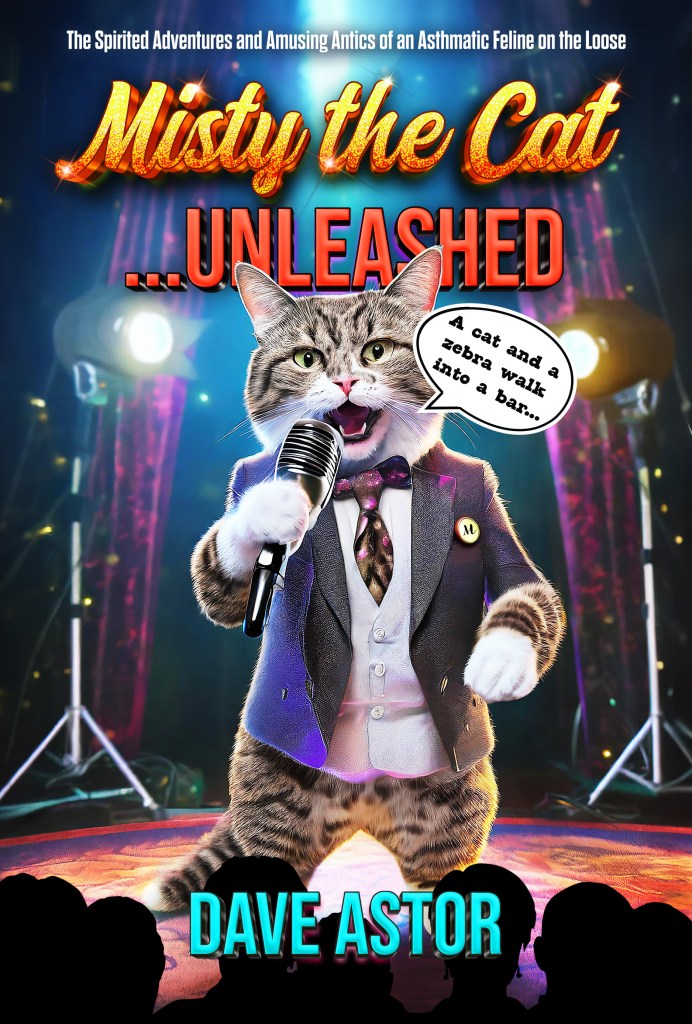
My comedic 2024 book — the part-factual/part-fictional/not-a-children’s-work Misty the Cat…Unleashed — is described and can be purchased on Amazon in paperback or on Kindle. It’s feline-narrated! (And Amazon reviews are welcome. 🙂 )
This 90-second promo video for the book features a talking cat: 🙂

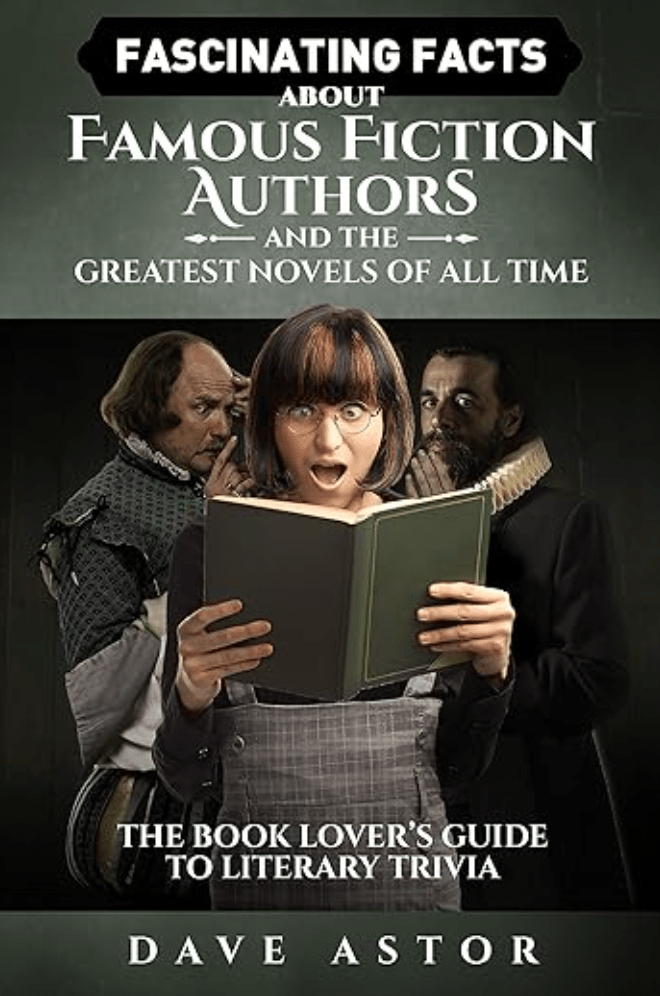
I’m also the author of a 2017 literary-trivia book

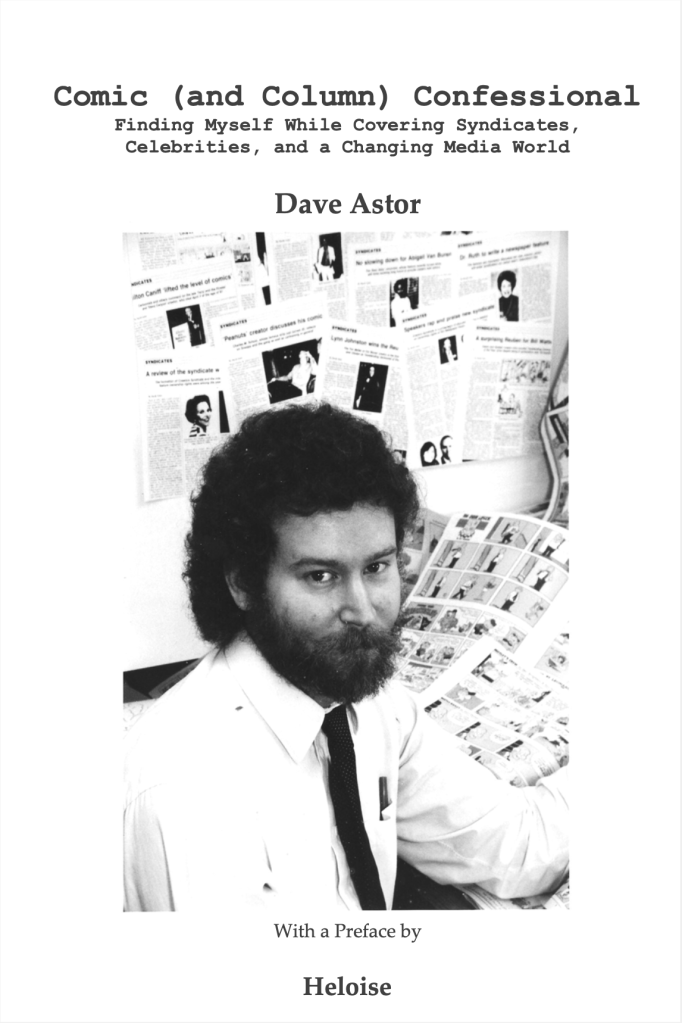
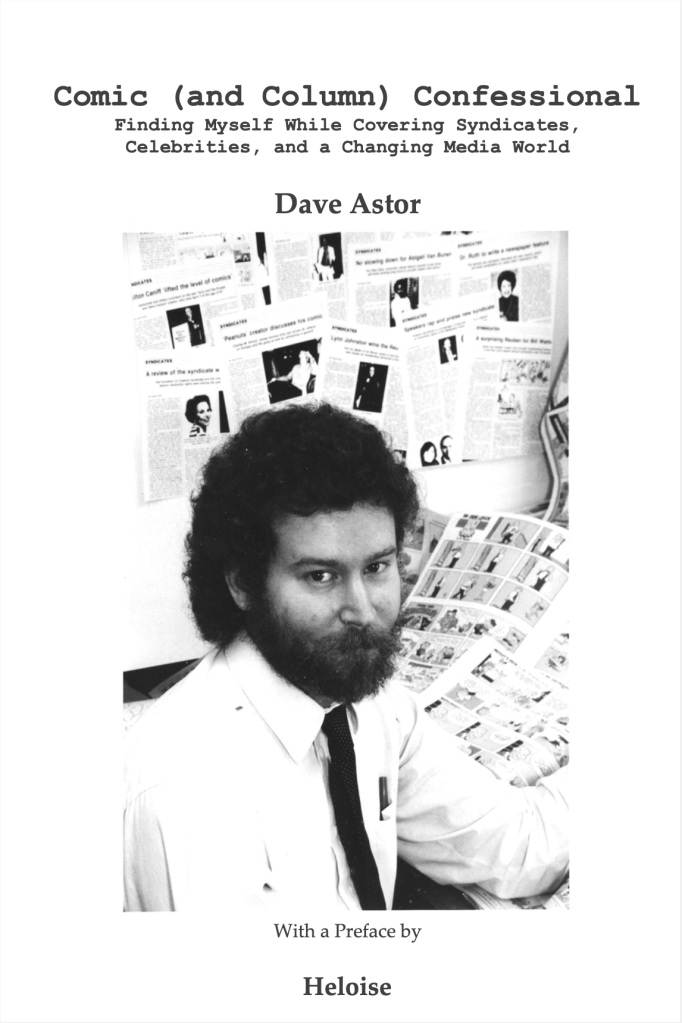
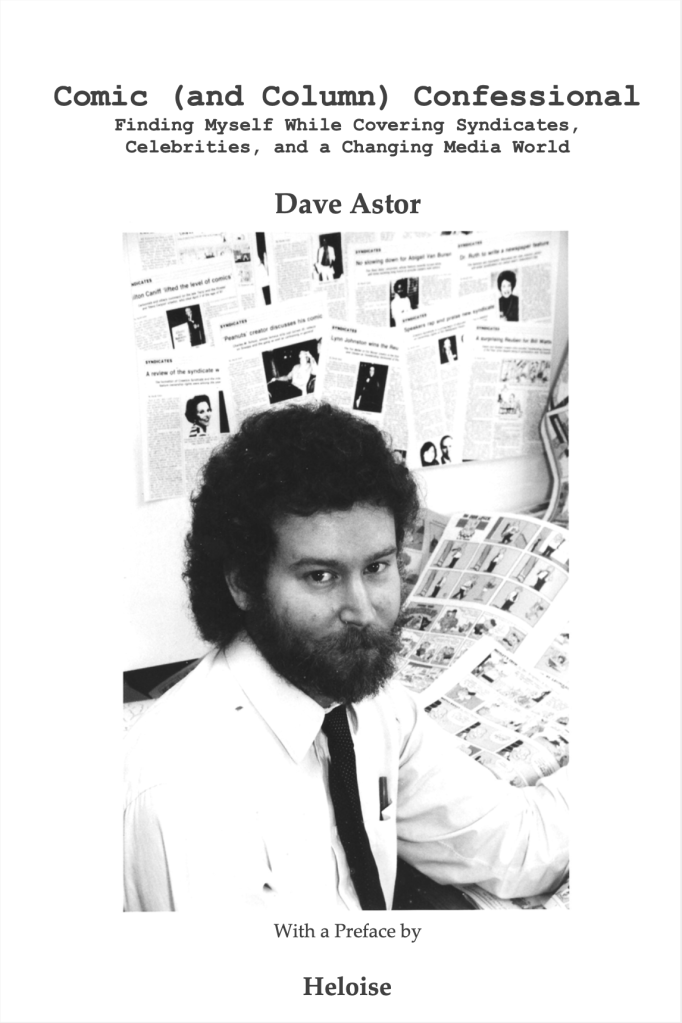
…and a 2012 memoir that focuses on cartooning and more, including many encounters with celebrities.
In addition to this weekly blog, I write the 2003-started/award-winning “Montclairvoyant” topical-humor column every Thursday for Montclair Local. The latest piece — which contains a tale of two meetings — is here.

Optimistic Fiction Can Be Optimal

Election Day on November 4 brought some good news during a very dark year for American politics. Various progressive and centrist candidates decisively won state and local races that were in part votes against the cruel, far-right Trump regime — providing some hope for people who want kinder and gentler government.

The highlight for me was the resounding victory of Zohran Mamdani over Andrew Cuomo for mayor of New York City, where I used to live and work — and just 12 miles east of my current apartment in New Jersey. Mamdani ran a masterful campaign focusing on affordability, enabling the 34-year-old Democrat/democratic socialist to become NYC’s youngest mayor in over a century and its first Muslim mayor when he’s sworn in on January 1. Cuomo — who ran as an independent after losing the Democratic primary to Mamdani in June — is a mean-spirited, Trump-like figure (even endorsed by the Republican president!) who resigned in disgrace as New York governor in 2021 after being credibly accused of sexual misconduct by 13 women, after causing many deaths by allowing nursing homes to readmit hospital patients with Covid, etc.

Being in a good mood, I thought I’d write a post about novels that are utopian — or at least contain a lot of hope, feature extraordinarily nice characters, etc. I’ve written before about dystopian novels, so it’s a pleasure to go the opposite route today. 🙂

One utopian novel I thought of is Edward Bellamy’s Looking Backward (1888), in which Boston-based protagonist Julian West travels forward in time from 1887 to 2000 and finds that society is doing pretty well in a democratic socialist sort of way. (Reminded me a bit of the Star Trek franchise’s often sunny view of the future.) We get the added bonus in Looking Backward of the debit card being invented by the author — who, incidentally, was a cousin of “Pledge of Allegiance” writer Francis Bellamy.

I also thought of Island (1962), Aldous Huxley’s final novel. As utopian as the author’s Brave New World was dystopian, Island features a cynical journalist who lands on an…island…and finds himself observing a very appealing society. Not one of Huxley’s best novels, but it was interesting to get a feel-good story from him.

There’s also Lost Horizon, James Hilton’s 1933 novel about a visit to an idyllic place called Shangri-La. The part-utopian tale is mesmerizing.

Both utopian and cautionary is Nathaniel Hawthorne’s A Blithedale Romance (1852), set in a commune that’s not as wonderful as it ideally could be. In fact, the semi-autobiographical novel kind of satirizes would-be utopian life.

Not-utopian novels that are mostly upbeat and/or heartwarming are semi-utopian in a way, as can be books that offer happy endings after the protagonist faces challenges. I’m looking at you, L.M. Montgomery; her novel The Blue Castle (1926) and its Valancy Stirling star are real mood-lifters. There are of course many other nice, kind characters — such as Tiny Tim of Charles Dickens’ A Christmas Carol (1843) — with positive outlooks on life even if life, in some cases, has dealt them a bad hand.

The novel I read most recently, The Chemist (2016) by Stephenie Meyer of Twilight fame, is a page-turning thriller that focuses on the tough, brainy, loner, brave-but-often-insecure female title character who goes by different names. As this small-in-physical-stature former government agent tries to fend off multiple murder attempts, she meets a teacher (Daniel) who is about as sweet and amiable as it gets.

Thoughts about and/or examples of this theme?

My next post will appear either later than usual on Sunday, November 16, or on Monday the 17th.

Misty the cat says: “As leaves turn brown, it’s either autumn or Snickers bars have a new look.”

My comedic 2024 book — the part-factual/part-fictional/not-a-children’s-work Misty the Cat…Unleashed — is described and can be purchased on Amazon in paperback or on Kindle. It’s feline-narrated! (And Amazon reviews are welcome. 🙂 )

This 90-second promo video for the book features a talking cat: 🙂

I’m also the author of a 2017 literary-trivia book

…and a 2012 memoir that focuses on cartooning and more, including many encounters with celebrities.

In addition to this weekly blog, I write the 2003-started/award-winning “Montclairvoyant” topical-humor column every Thursday for Montclair Local. The latest piece — commenting on election results in my town, New Jersey, and New York City — is here.

When There’s No ‘Rush’ Between Novels

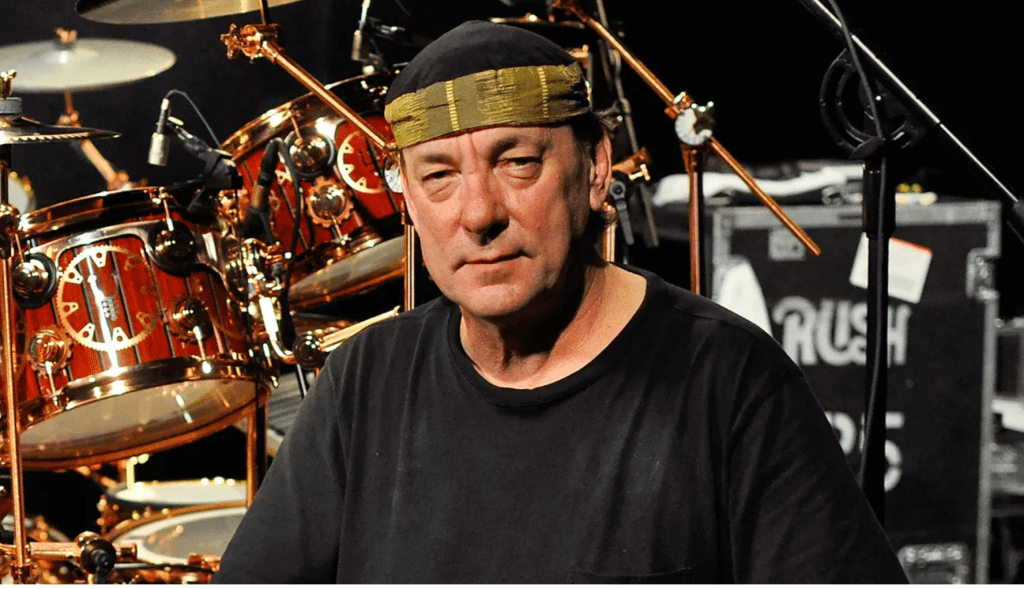
Clockwise from top left, Rush bandmates Geddy Lee and Alex Lifeson (photo credit: Rush), new Rush drummer Anika Nilles (Richard Ecclestone/Redferns), and the late Neil Peart (Clayton Call/Getty Images).

Last week, the band Rush announced it would go on a concert tour again in 2026 for the first time in 11 years. (Stick with me here; this will eventually be a literature post. 🙂 )

A lot has happened since 2015 with one of my favorite bands. Rush stopped touring mostly because the Canadian group’s legendary drummer/lyricist Neil Peart needed to end the physical and mental strain of more than four decades of hard-slamming, intricate percussion work. His bandmates — vocalist/bassist/keyboardist Geddy Lee and guitarist Alex Lifeson, the friends from childhood who co-created the music paired with Peart’s words — decided not to continue the Rock and Roll Hall of Fame band without their close pal and went on to do other things. That included Lifeson playing in another band (Envy of None) and Lee writing a best-selling memoir and a coffee-table book focusing on bass guitars.

Peart himself was a prolific nonfiction-book author whose Rush lyrics included many literary references; see below for a 2020 post of mine about that. Sadly, “The Professor” (as Peart was known) died that year of brain cancer. It definitely looked like Rush was done — until last week’s news.

The grand conclusion to all this? Brilliant drummer Anika Nilles of Germany was chosen by Lee and Lifeson to sit in Peart’s spot behind the kit — with the permission of Peart’s widow and daughter.

Anyway, this is a long intro to a literature theme Rush’s announcement made me think of — authors going a long time before writing a novel again. (I’ve previously done variations on this theme, including instances of a long gap between a famous novel and its sequel.)

The first author that came to mind was Herman Melville, whose last published novel in his lifetime came out in 1857 despite him not dying until 1891. Poor sales, negative reaction from critics, and other factors put a halt to a decade-plus of very prolific book writing, though Melville in his non-novel years did do some poetry in addition to his customs inspector job. Still, Melville started the novel Billy Budd a few years before his death — and it became a success when published posthumously in 1924 and republished in a more complete 1962 edition.

Melville’s friend Nathaniel Hawthorne’s first novel, 1828’s Fanshawe, didn’t sell well and the author turned to short stories and other things for a long 22 years before The Scarlet Letter arrived in 1850. That became an instant classic, and several other novels followed fairly quickly.

Then there’s Marilynne Robinson, whose debut novel Homecoming came out in 1980 — followed by a 24-year gap before her second novel Gilead was published. Why? Robinson turned to nonfiction writing and to teaching. The author released novels more often after 2004.

Arundhati Roy also wrote an acclaimed debut novel — 1997’s The God of Small Things — before two decades went by until her second novel, 2017’s The Ministry of Utmost Happiness. Like Robinson, Roy wrote nonfiction in between and was also involved in plenty of political activism in India.

Of course, some novelists come out with a new title only once in a while because they’re slower writers and/or write ambitious books that take a lot of time. That’s the case, for instance, with Donna Tartt — whose only three novels were published in 1992, 2002, and 2013; now 12 years and counting until a possible fourth. A similar trajectory for Jeffrey Eugenides — only three novels, in 1993, 2002, and 2011, with other years taken up by plenty of short stories as well as teaching.

To reference the title of one of Rush’s most famous songs, there can be a long gap between time in the “Limelight,” and inspiration doesn’t always arrive like clockwork. (Clockwork Angels was Rush’s last studio album.)

Your thoughts on, and/or any examples of, this topic?

Misty the cat says: “As Robert Frost wrote, ‘Good fences make good YouTube videos.'”

My comedic 2024 book — the part-factual/part-fictional/not-a-children’s-work Misty the Cat…Unleashed — is described and can be purchased on Amazon in paperback or on Kindle. It’s feline-narrated! (And Amazon reviews are welcome. 🙂 )

This 90-second promo video for the book features a talking cat: 🙂

I’m also the author of a 2017 literary-trivia book

…as well as a 2012 memoir that focuses on cartooning and more, and includes many encounters with celebrities.

In addition to this weekly blog, I write the 2003-started/award-winning “Montclairvoyant” topical-humor column every Thursday for Montclair Local. The latest piece — about a new councilor and a deficit referendum decision — is here.