Murder They Wrote

Today is “The Ides of March,” the March 15 date on which Roman dictator Julius Caesar was assassinated in the year 44 BC. So, I’m going do a word salad rather than a Caesar salad discussing some memorable murders in literature — while trying to avoid too many spoilers in the specific details.

Murders are of course awful, even as they’re sometimes almost merited for righteous revenge reasons. Whatever the motives behind them, they can be a key plot device and make for painfully dramatic reading.

One novel’s title that literally telegraphs a killing is Chronicle of a Death Foretold by Gabriel Garcia Marquez. Written in a journalistic reconstruction fashion, the book is far from the author’s best work but still interesting.

Also quite interesting is Albert Camus’ The Stranger and its puzzling murder by the novel’s detached protagonist.

The brutal double-killing early in the iconic Crime and Punishment is…iconic. Then we spend the rest of Fyodor Dostoevsky’s psychological novel observing Rodion Raskolnikov’s angst, his attempts to justify his action, his worry about capture, and more.

Other novels with multiple murders? We’ve read a few — including Agatha Christie’s classic And Then They Were None and its many dispatched characters. They deserve some punishment, but do they deserve dying? Murders, of course, are a staple of mysteries, detective fiction, and thrillers.

Totally innocent is Black teen Donte Drumm, who’s wrongly accused of killing a white high school girl in John Grisham’s The Confession. Will that murder by someone else lead to another murder — the execution of Drumm — by racist authorities?

Which reminds me of the unjust killings by law enforcement of characters in novels such as Angie Thomas’ The Hate U Give (another Black teen is the victim) and John Steinbeck’s The Grapes of Wrath (a white man is the victim).

Retaliatory killings? We see righteous ones in Alexandre Dumas’ The Count of Monte Cristo, Erich Maria Remarque’s Arch of Triumph, and Percival Everett’s James — the last book a reimagining of Mark Twain’s Adventures of Huckleberry Finn. Speaking of Twain, he wrote about the execution of a real-life heroine in Personal Recollections of Joan of Arc — a novel in the historical-fiction genre also inhabited by Margaret Atwood’s Alias Grace and its double-murder.

If we include genocide in this discussion, various grim novels come to mind — including Holocaust ones such as William Styron’s Sophie’s Choice and Herman Wouk’s War and Remembrance.

In the short-story realm, there many murder-in-the-mix tales to choose from: “The Lottery” by Shirley Jackson, “A Good Man Is Hard to Find” by Flannery O’Connor, “A Jury of Her Peers” by Susan Glaspell, “The Tell-Tale Heart” and “The Cask of Amontillado” by Edgar Allan Poe, etc., etc.

Your thoughts about, and examples of, this topic?

I will probably be offline much of tomorrow (Monday, March 16) while in New York City but will reply to comments after I return. 🙂

Misty the cat asks: “Is it necessary for my building to have a steering wheel?”

My comedic 2024 book — the part-factual/part-fictional/not-a-children’s-work Misty the Cat…Unleashed — is described and can be purchased on Amazon in paperback or on Kindle. It’s feline-narrated! (And Amazon reviews are welcome. 🙂 )
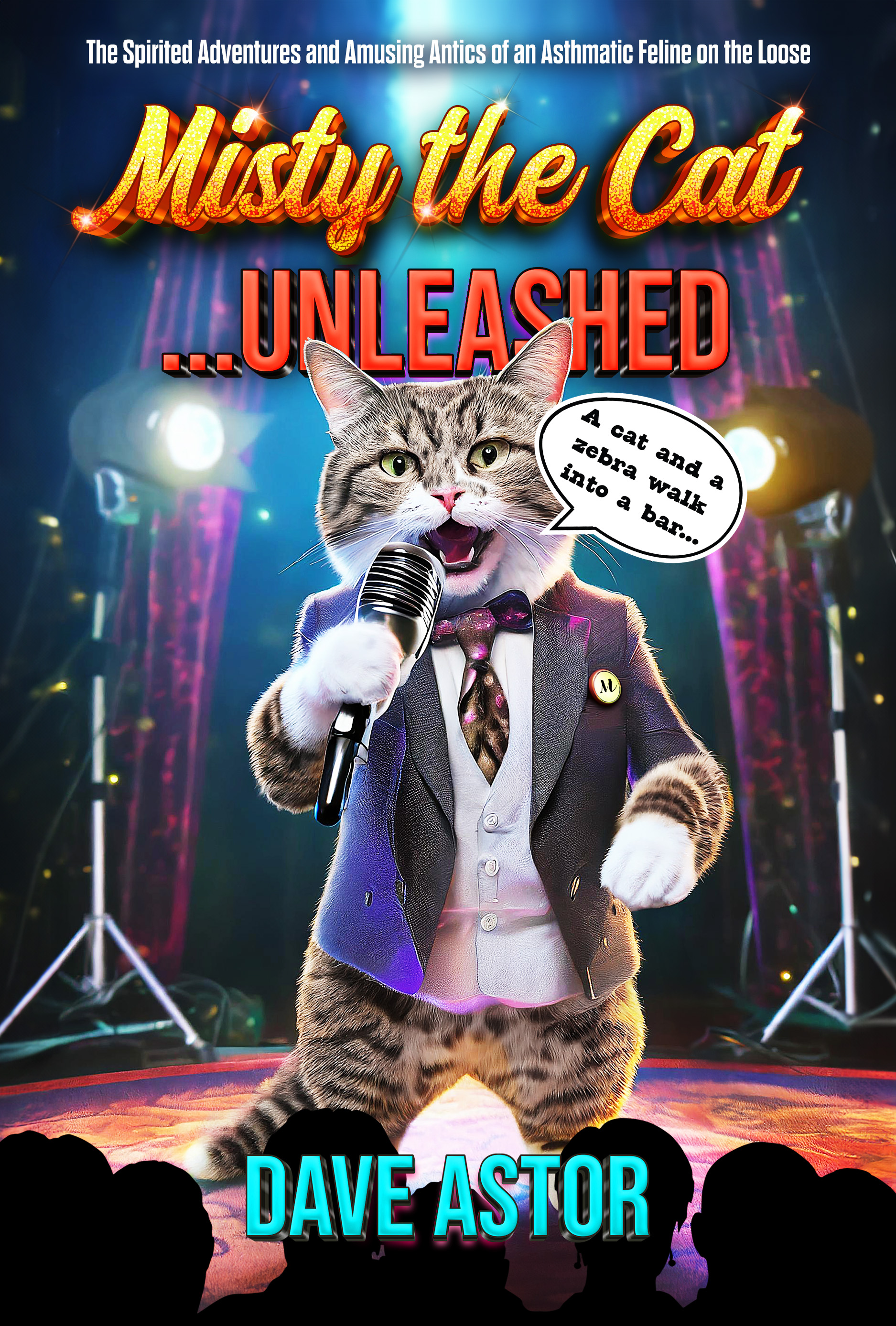
This 90-second promo video for the book features a talking cat: 🙂

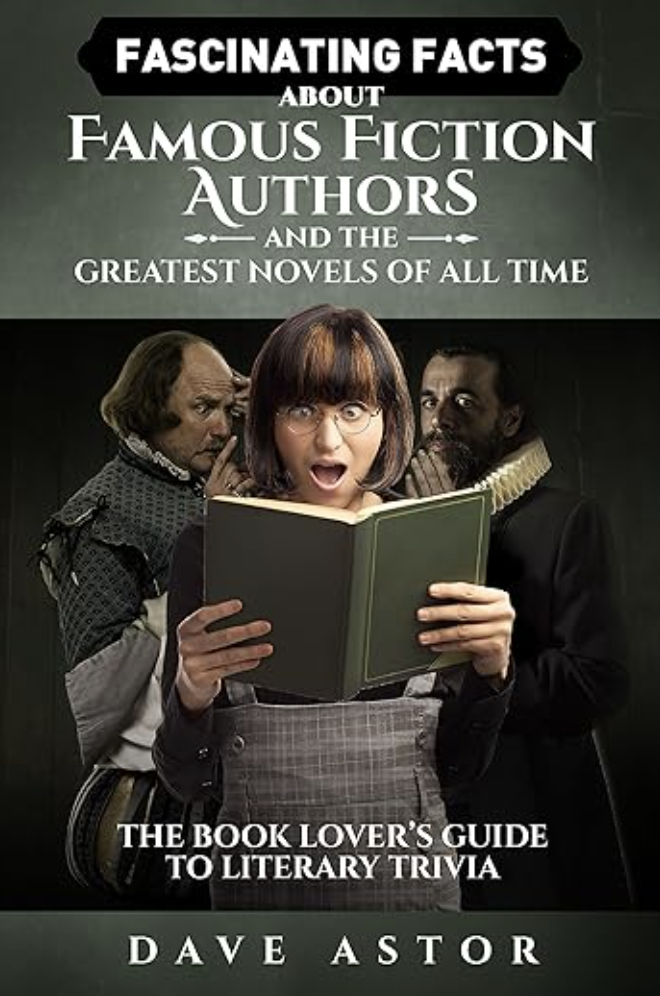
I’m also the author of a 2017 literary-trivia book

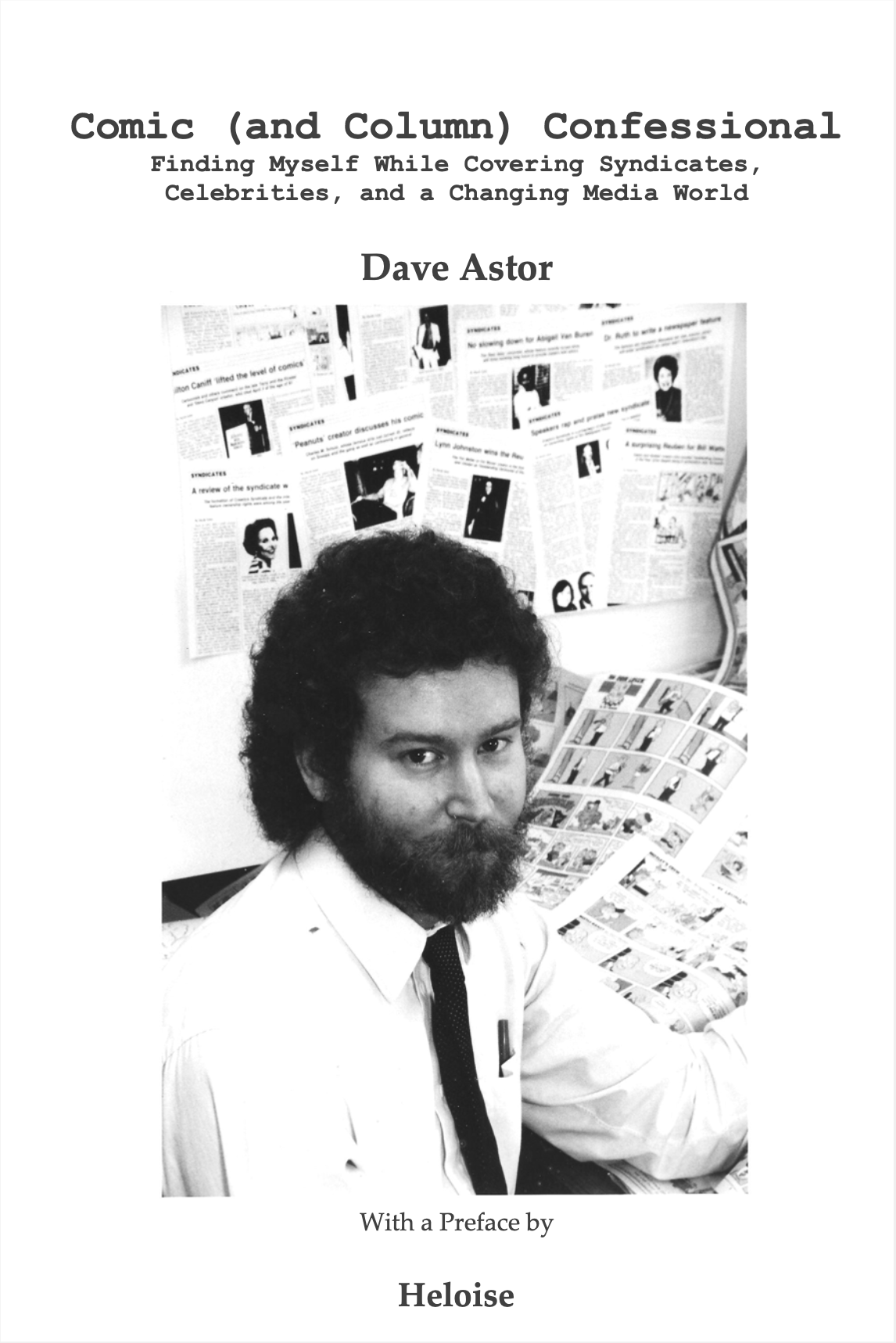
…and a 2012 memoir that focuses on cartooning and more, including many encounters with celebrities.
In addition to this weekly blog, I write the 2003-started/award-winning “Montclairvoyant” topical-humor column every Thursday for Montclair Local. The latest piece — with my thoughts about unofficial voting results on a school deficit matter roiling my town — is here.

Crime: All the Time or Some of the Time

The ever-popular category of crime fiction — which can include detective novels, mysteries, thrillers, etc. — has different categories of authors.

There are those writers — such as Raymond Chandler, Lee Child, Agatha Christie, Michael Connelly, Arthur Conan Doyle, Janet Evanovich, Sue Grafton, Dashiell Hammett, Patricia Highsmith, P.D. James, Walter Mosley, Louise Penny, Dorothy L. Sayers, and Lisa Scottoline — known mostly for their crime fiction, even as they occasionally roam/roamed outside that genre. Then there are authors known more for their non-crime-fiction work, even as they produce/produced some strong offerings in the detective/mystery/thriller realm. This blog post will be about the latter group — which includes people like Wilkie Collins, Charles Dickens, Edgar Allan Poe, J.K. Rowling, and Mark Twain.

I’ll first discuss Rowling, who, as “Robert Galbraith,” writes the series starring fascinating private investigator Cormoran Strike. I read the debut installment, The Cuckoo’s Calling, this week — and was bowled over by how smoothly Rowling moved into crime fiction after conquering the young-adult/magical-fiction world with her iconic Harry Potter series and then writing the compelling general-adult-fiction book The Casual Vacancy. Rowling will always be associated more with Harry Potter than anything else, but her versatility is off-the-charts.

Collins is best known for The Woman in White, an ultra-suspenseful mystery; and The Moonstone, an early example of detective fiction. But most of his novels were in the realm of general fiction.

Poe is of course almost synonymous with horror fiction, but he wrote several earlier-than-The Moonstone detective stories starring C. Auguste Dupin — the most famous of which were “The Murders in the Rue Morgue” and “The Purloined Letter.”

Twain’s late-career novel Pudd’nhead Wilson, with its important plot-solving element of fingerprint analysis, placed that author somewhat in the crime-solving genre. Two years later, Twain came out with Tom Sawyer, Detective — one of his lesser novels.

Dickens turned to the mystery genre with his last, unfinished book — The Mystery of Edwin Drood — after more than 30 years of penning more general literary works.

Obviously, authors who write crime fiction most of the time can really master that genre, but the potential drawback can be a certain sameness in some of their work. Those pros and cons can of course flip for writers who turn to crime fiction only occasionally.

Any thoughts on the two categories of crime-fiction authors discussed in this blog post? Your favorite works in each category?

(BTW, one reason Jim Grant took the name Lee Child was because that alias alphabetically placed his Jack Reacher novels in libraries and bookstores between the works of crime-fiction greats Raymond Chandler and Agatha Christie — just like Child ended up between Chandler and Christie in this blog post’s second paragraph.)

My 2017 literary-trivia book is described and can be purchased here: Fascinating Facts About Famous Fiction Authors and the Greatest Novels of All Time.

In addition to this weekly blog, I write the award-winning “Montclairvoyant” topical-humor column for Baristanet.com. The latest weekly piece — about overdevelopment run amok in my town — is here.

It’s a Crime That I Waited This Long to Write About Crime Fiction

Why do many readers love mysteries, detective novels, and thrillers? The obvious answer is that those kinds of books are often escapist and exciting — and exercise our brains as we try to figure out “whodunnit” and/or how things will end.

Sometimes books from the three above genres are as much literary fiction as genre fiction — with examples including Donna Tartt’s compelling The Little Friend (which I’m currently reading), Wilkie Collins’ The Moonstone (an early detective novel), Umberto Eco’s The Name of the Rose (14th-century monk as sleuth), and even Charlotte Bronte’s Jane Eyre (more romance than mystery, yet there’s that central puzzle over who’s living in the attic). But if genre fiction is often not literary fiction, no big deal.  🙂

I have not read as many mysteries, etc., as some of the regular commenters here, but I’ve polished off more of those books during the past couple of years thanks in large part to recommendations from you. Some of my favorites, in no particular order: Sue Grafton’s A Is for Alibi, Lisa Scottoline’s The Vendetta Defense, Walter Mosley’s Devil in a Blue Dress and A Red Death, Dorothy L. Sayers’ Strong Poison and Gaudy Night, John Grisham’s The Client and The Firm, P.D. James’ The Lighthouse, Anita Shreve’s The Weight of Water, Raymond Chandler’s The Big Sleep, Michael Connelly’s The Lincoln Lawyer, John Ajvide Lindqvist’s Harbor, Peter Hoeg’s Smilla’s Sense of Snow, Alistair MacLean’s Where Eagles Dare, Richard Matheson’s Hunted Past Reason, and Dean Koontz’s Seize the Night.

Then there are Lee Child’s Jack Reacher novels, of which I’ve read eighteen in less than two years. My addiction to that series illustrates how thrillers, detective novels, and mysteries with an intriguing, recurring protagonist can get readers VERY addicted. Of course, it helps when those series offer riveting plots and “bad guys” who raise one’s blood pressure.

Also riveting is Stieg Larsson’s Millennium Trilogy: The Girl With the Dragon Tattoo, The Girl Who Played With Fire, and The Girl Who Kicked the Hornets’ Nest. Lisbeth Salander is one of the most original thriller protagonists in modern literature, and her computer skills exemplify how digital technology has greatly influenced the ways crimes are solved in novels of the past twenty years or so.

Larsson’s books, like many of the other novels mentioned in this post, also mix in all kinds of social issues — which I think can be a good thing along with the escapism. Though of course it can be nice once in a while to read genre fiction that intends to do nothing more than entertain.

Great mystery, detective, and thriller novels I’ve read less recently include several Agatha Christie novels (the iconic And Then There Were None deserves its stupendous sales), Arthur Conan Doyle’s Sherlock Holmes novels and stories, Edgar Allan Poe’s groundbreaking detective tales (such as “The Murders in the Rue Morgue”) starring amateur sleuth C. Auguste Dupin, Dashiell Hammett’s The Maltese Falcon, and other authors and titles. Plus Margaret Atwood’s Alias Grace — a murder saga of a more literary sort.

Though I’m reading more of what might also be called crime fiction, I still like to mix things up with lots of literary fiction and “general-interest” novels — classic and modern — that are detective-free. It’s nice to jump from P.D. James to Henry James, from a Sue Grafton mystery to Elsa Morante’s History, and from a suspicious car wreck to something by John Steinbeck. And then jump back again.

What are some of your favorite mystery, detective, and thriller novels? Any thoughts about those genres and the attractions they hold?

(The box for submitting comments is below already-posted comments, but your new comment will appear at the top of the comments area — unless you’re replying to someone.)

My new book Fascinating Facts About Famous Fiction Authors and the Greatest Novels of All Time: The Book Lover’s Guide to Literary Trivia will be published soon.

But I’m still selling Comic (and Column) Confessional — my often-funny memoir that recalls 25 years of covering and meeting cartoonists such as Charles Schulz (“Peanuts”) and Bill Watterson (“Calvin and Hobbes”), columnists such as “Dear Abby” and Ann Landers, and other notables such as Coretta Scott King, Walter Cronkite, and various authors. The book also talks about the malpractice death of my first daughter, my remarriage, and life in Montclair, N.J. — where I write the award-winning weekly “Montclairvoyant” humor column for The Montclair Times. You can email me at dastor@earthlink.net to buy a discounted, inscribed copy of the book, which contains a preface by “Hints” columnist Heloise and back-cover blurbs by people such as “The Far Side” cartoonist Gary Larson.