Can Escapist Fiction Be Completely Escapist?

Barbara Taylor Bradford. (Credit: Bradford Enterprises.)

As I’ve mentioned here and there in recent months, I’ve been mixing my more-serious novel reading with a larger percentage of mass-audience and/or escapist fiction these days as I seek diversion from the distressing words and actions of America’s repulsive Trump regime. But of course those categories of literature are not always mostly upbeat.

Take Barbara Taylor Bradford, who was known for best-selling novels starring impressive, plucky women. Those characters are inspiring, yes, but some of them go through some really depressing things. I just read Bradford’s Everything to Gain, and while I enjoyed rooting for its protagonist Mallory Keswick, what happens to her family would not help the mood of any reader appalled at the latest Trump-related news.

Meanwhile, I continued this year to read many novels by Elin Hilderbrand. She is known for what have been called summer “beach reads” — most of them set on the beautiful Massachusetts island of Nantucket — but Hilderbrand is actually a much more complex and nuanced author than that. So, while I first tried her novels with escapist intent on my part, I’ve seen plenty of illness, death, and other sad developments in those books. But plenty of lighter content and entertainment, too, and I always eagerly went back for more even as I don’t get 100% relief from Trump and what he says and supports.

Detective fiction, to which I devoted a separate blog post earlier this month, can also make one temporarily forget the real world — one reason why I’ve read quite a few books in that genre this year. Then again, any novel with crime as a major element can make a reader not only sadly think about the victims but also think about one of America’s biggest criminals, who happens to currently live in the White House rather than in a jail cell where he belongs.

It can also be a refreshing interlude to read very funny fiction. The Pickwick Papers, anyone? But even that Charles Dickens book and most other comedic novels by various authors have some downbeat sections amid the humor.

One of these days I’m going to give a third reread to L.M. Montgomery’s Anne of Green Gables. That iconic novel always brings a smile to my face, yet it contains some fraught moments and a heartbreaking death.

All this makes me wonder if I’ve ever read a completely upbeat novel. Not sure that even exists, and, if it did, I suppose such a book would lack adequate drama. But it would give readers a complete mental break. 🙂

Any thoughts on this post, and on novels that might be relevant to its theme?

Misty the cat says: “Pumpkins but no spice? I turn my back.”

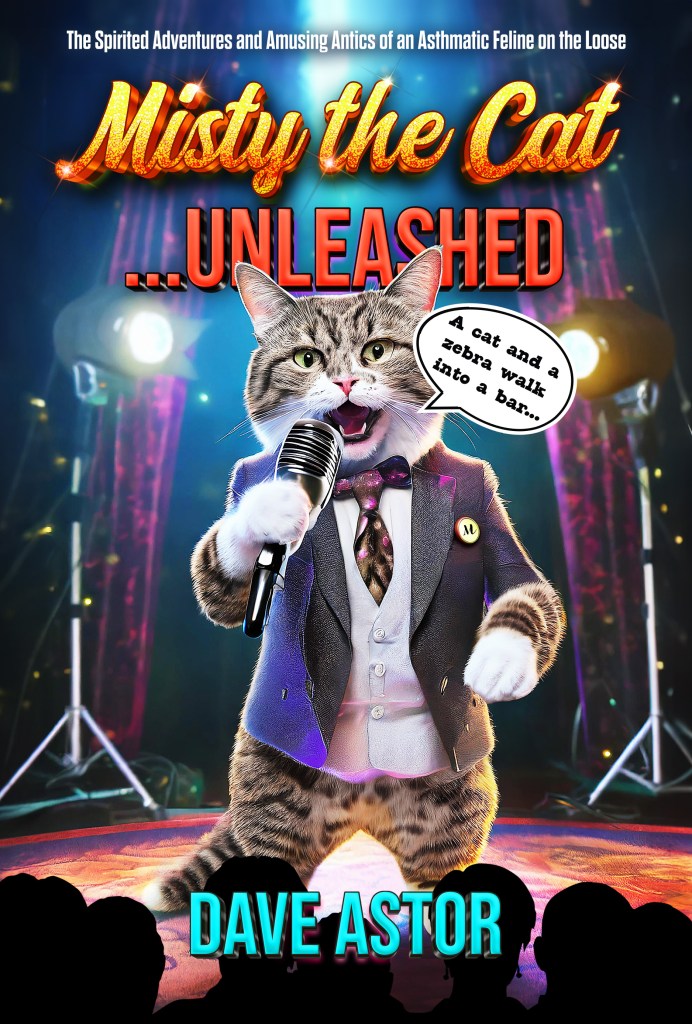
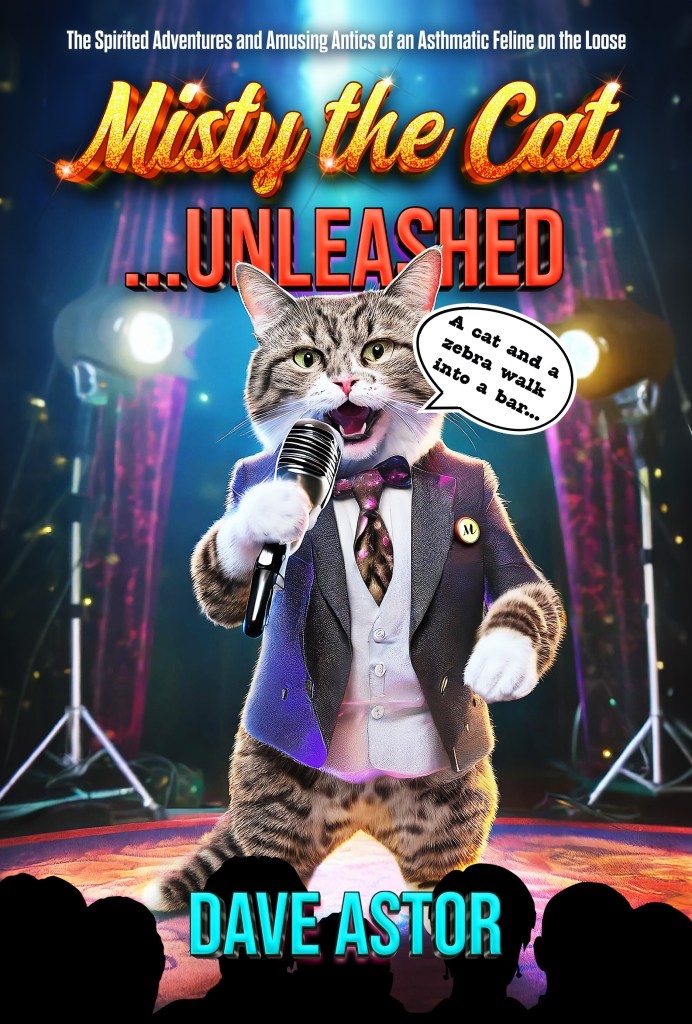
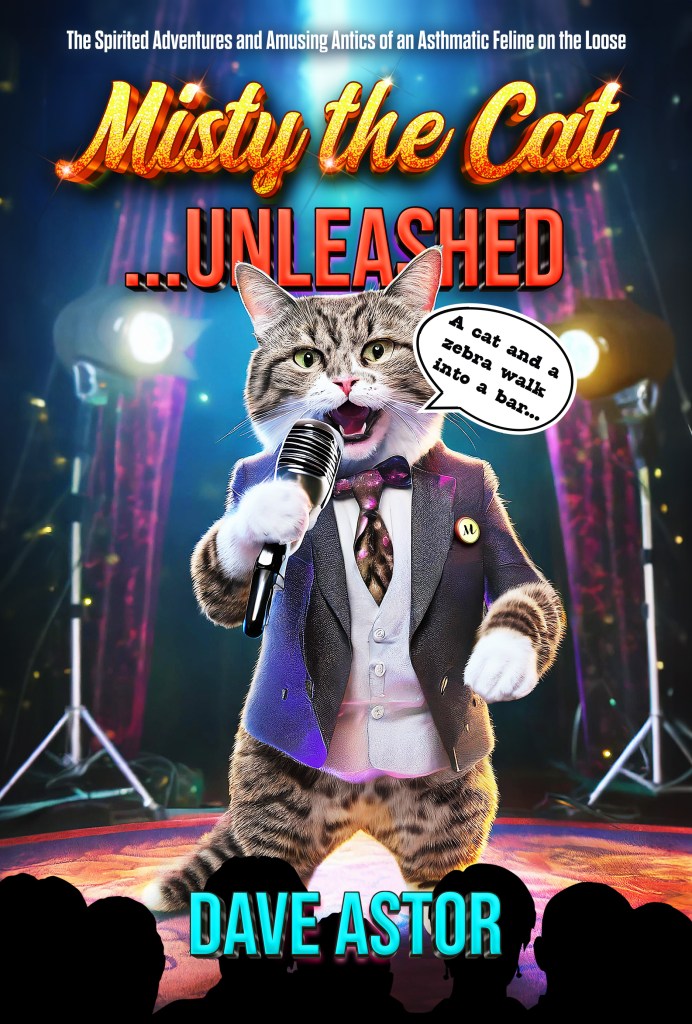
My comedic 2024 book — the part-factual/part-fictional/not-a-children’s-work Misty the Cat…Unleashed — is described and can be purchased on Amazon in paperback or on Kindle. It’s feline-narrated! (And Misty says Amazon reviews are welcome. 🙂 )

This 90-second promo video for the book features a talking cat: 🙂

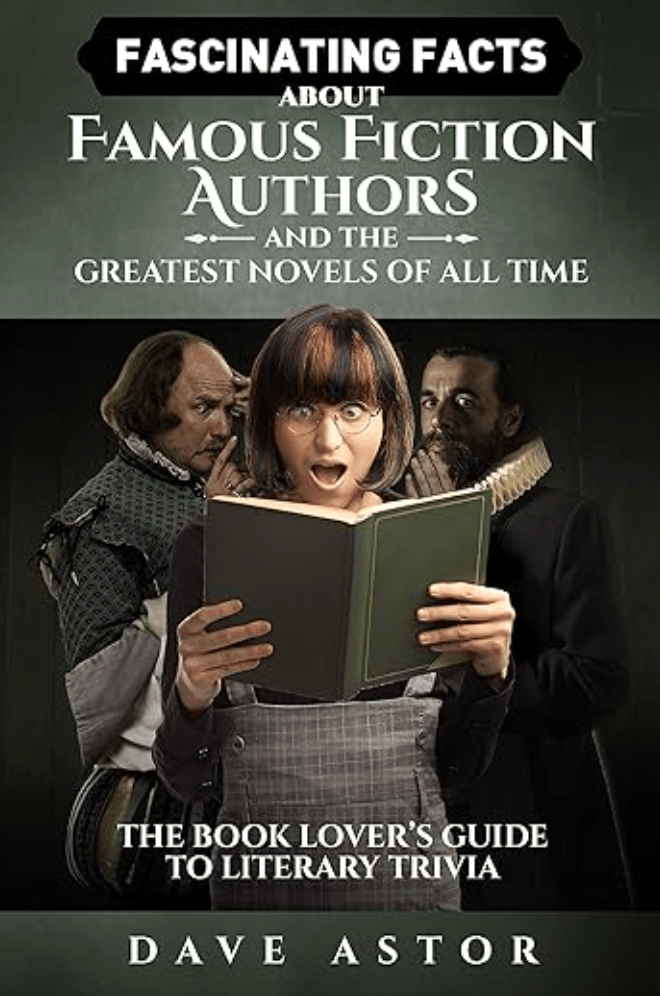
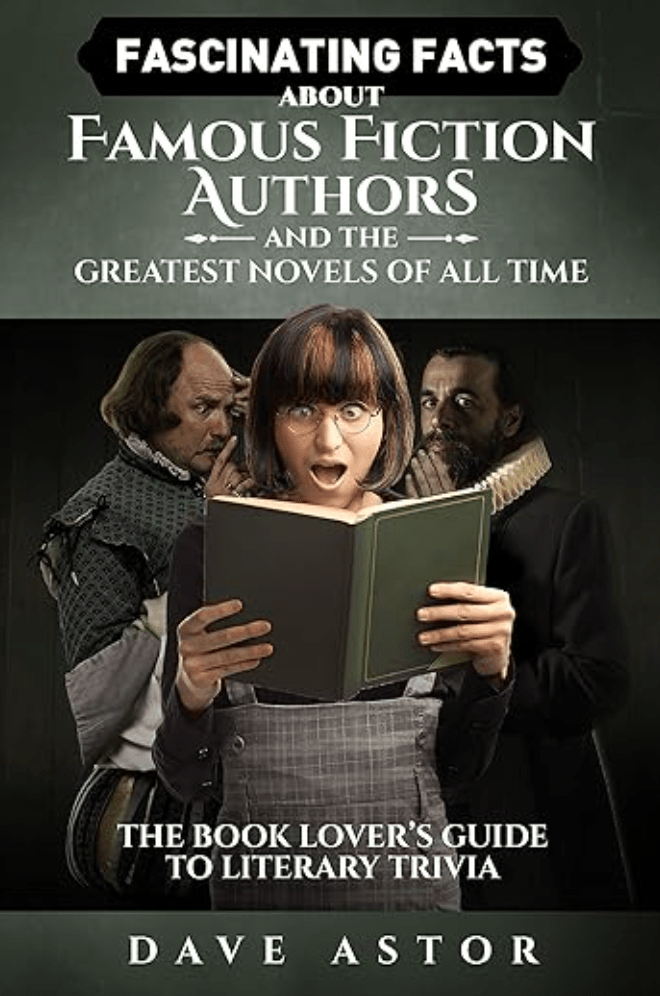
I’m also the author of a 2017 literary-trivia book

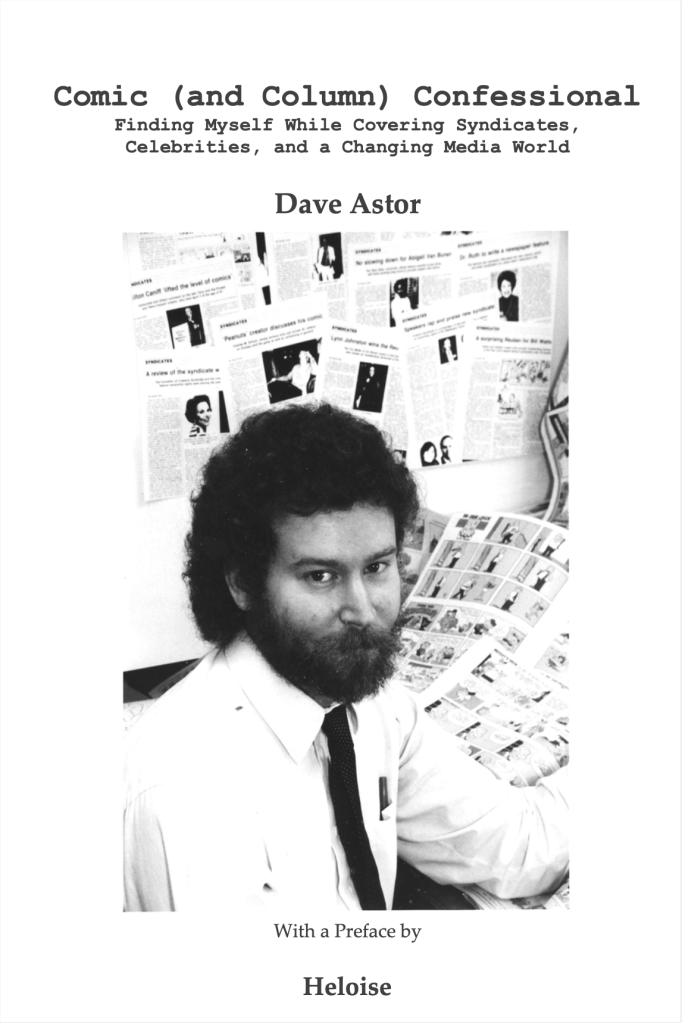
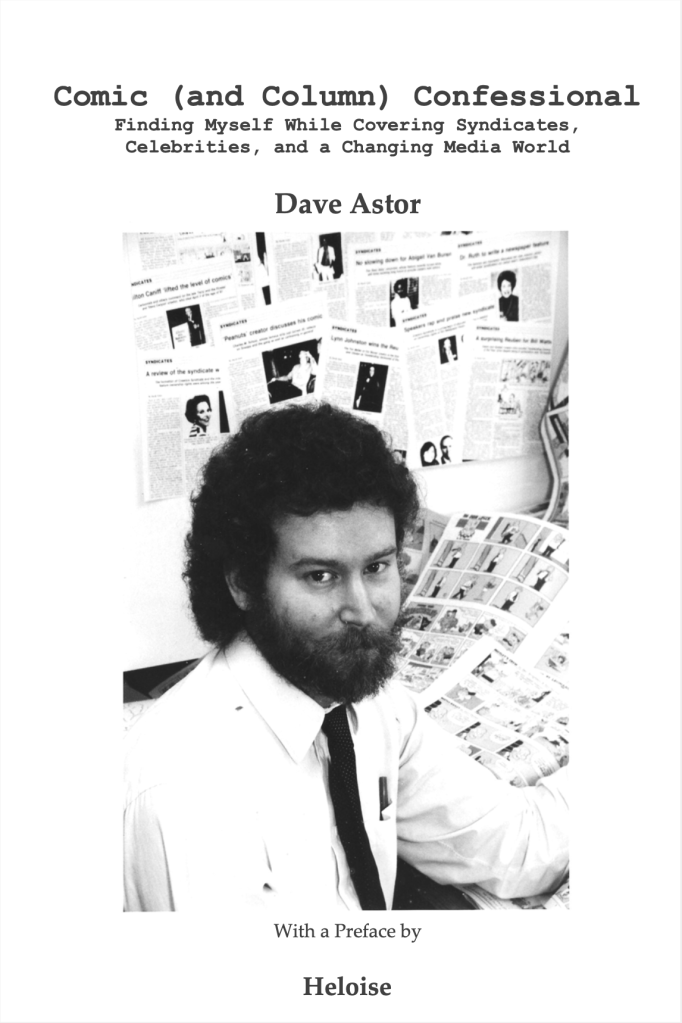
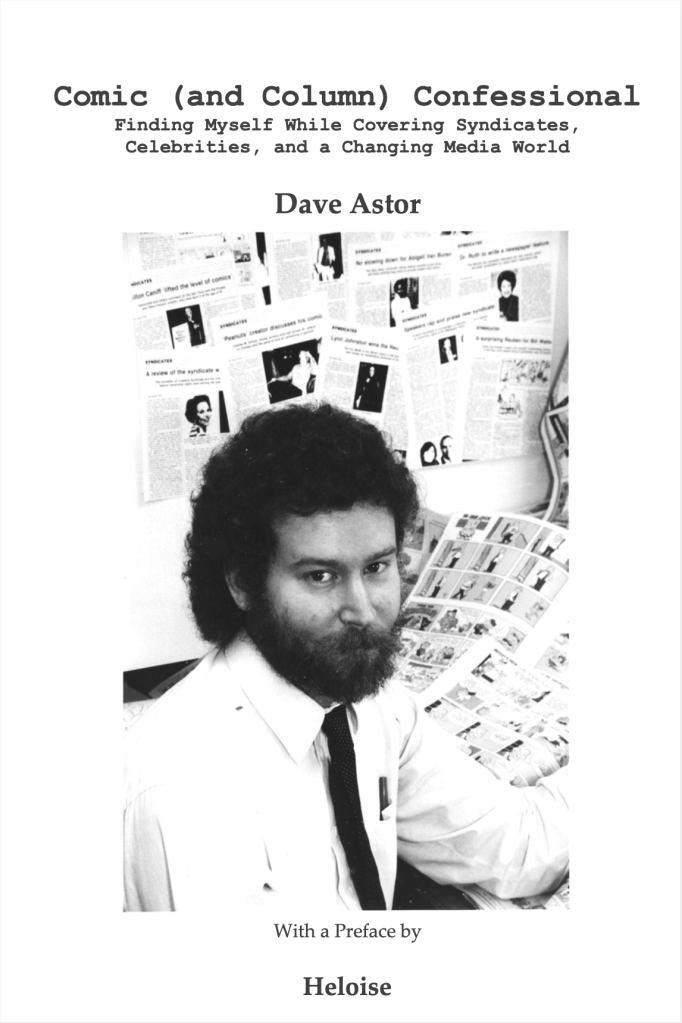
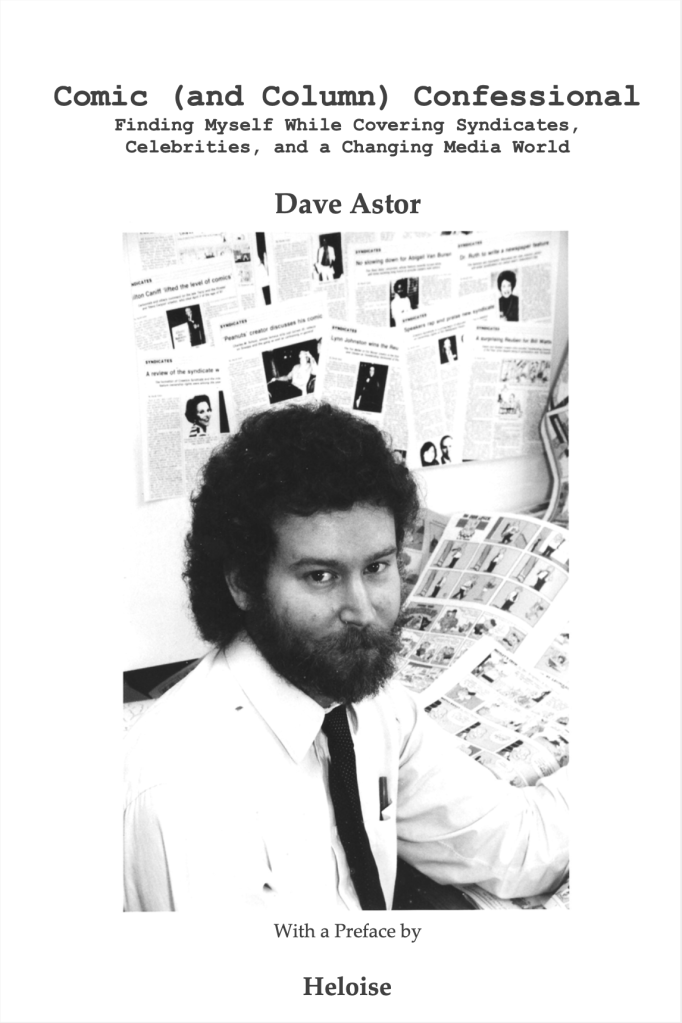
…and a 2012 memoir that focuses on cartooning and more, and includes many encounters with celebrities.
In addition to this weekly blog, I write the 2003-started/award-winning “Montclairvoyant” topical-humor column every Thursday for Montclair Local. The latest piece — about topics such as a local Charlie Kirk flag controversy and a local bookstore canceling the appearance of a Palestinian-American children’s book author — is here.
Books Helped Robert Redford’s Film Career Shine

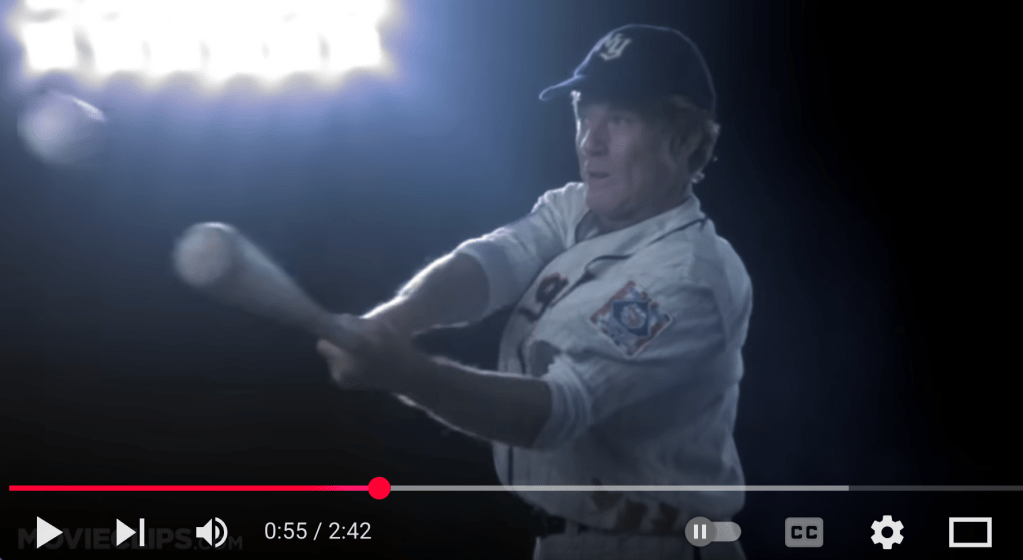
A screen shot from The Natural movie starring a man who hit a home run in life.

Like many other performers, Robert Redford appeared in a number of films inspired by books. I’ll discuss several of those screen adaptations in this post, which appears five days after the sad news of the iconic star’s September 16 death at age 89.

The first movie that came to mind was The Natural (1984), based on Bernard Malamud’s 1952 novel of the same name. Redford starred as baseball player Roy Hobbs, who returns to the game in midlife after being shot as a young man. (The Hobbs name is an amalgam of real-life baseball legends Ty Cobb and Rogers Hornsby.) Quite a compelling and affecting motion picture, which — as is often the case with Hollywood — has a happier ending than the one in the more nuanced book.

A decade earlier, another major role for Redford was in the 1974 movie version of F. Scott Fitzgerald’s 1925 classic The Great Gatsby. Redford was Jay Gatsby to Mia Farrow’s Daisy Buchanan.

I didn’t realize until researching this post that 1973’s The Way We Were movie — in which Redford co-starred with Barbra Streisand — was based on Arthur Laurents’ 1972 novel rather than on a totally original screenplay.

Redford was not only an actor but a director, producer, longtime champion of independent films, and laudable activist for the environment and other causes. Several of those multiple talents came together for the 1988 movie version of John Nichols’ 1974 novel The Milagro Beanfield War. The film — whose cast included Ruben Blades and Sonia Braga — didn’t do well at the box office, but Redford received praise for his direction of it.

I’ve read Nichols’ and Malamud’s books, but not Judith Guest’s 1976 novel Ordinary People, for which Redford won the directing Oscar for the 1980 movie version starring Mary Tyler Moore, Donald Sutherland, and Timothy Hutton. I’ve seen the film, which is excellent.

Redford of course also acted in movies based on notable nonfiction books — including 1937’s Out of Africa memoir by Isak Dinesen (Redford co-starred with Meryl Streep in the 1985 film) and 1974’s Watergate-scandal-focused All the President’s Men by Washington Post reporters Bob Woodward and Carl Bernstein (Redford played Woodward opposite Dustin Hoffman as Bernstein in the 1976 movie). I’ve read both books, and the films did each of them justice even as their main characters were more glamorous than their written-page counterparts.

A great late-career role for Redford was in the 2017 screen adaptation of Kent Haruf’s very poignant 2015 novel Our Souls at Night, about an older couple’s twilight-years romance. He co-starred with Jane Fonda, repeating a charismatic pairing from several earlier films.

I’ll close with this: Redford lived a life that we’ll remember with affection and admiration for his talent, his kindness, and his social conscience. People such as the cruel Trump and his dreadful toadies will be remembered quite differently when they’re gone.

Any thoughts on Redford, the films and books mentioned in this post, or any book-inspired Redford movies I might have missed? (My post included only titles for which I read the book or saw the film or both.)

Misty the LGBTQ-friendly cat says: “I have two mums, and I’m fine with that.”

My comedic 2024 book — the part-factual/part-fictional/not-a-children’s-work Misty the Cat…Unleashed — is described and can be purchased on Amazon in paperback or on Kindle. It’s feline-narrated! (And Misty says Amazon reviews are welcome. 🙂 )

This 90-second promo video for the book features a talking cat: 🙂

I’m also the author of a 2017 literary-trivia book

…and a 2012 memoir that focuses on cartooning and more, and includes many encounters with celebrities. (But not Robert Redford. 🙂 )

In addition to this weekly blog, I write the 2003-started/award-winning “Montclairvoyant” topical-humor column every Thursday for Montclair Local. The latest piece — about an exploding school budget deficit and a Township Council member’s sudden resignation — is here.

Spies in Literature

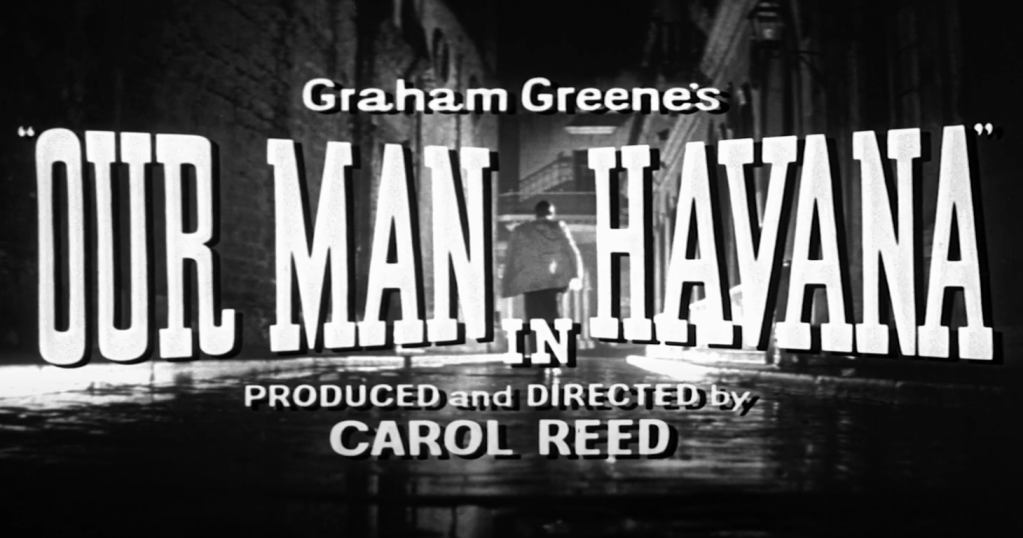
From the trailer for 1959’s film version of Our Man in Havana.

I should have posted this “Spies in Literature” piece last Sunday the 7th in honor of Agent 007 James Bond, but I hadn’t yet finished the novel that inspired what you’re about to read.

That interesting 1958 book is Graham Greene’s Our Man in Havana, and while its protagonist James Wormold is not a typical spy (he’s a vacuum-cleaner salesperson who reluctantly accepts recruitment as an agent), he nonetheless ends up in espionage.

Wormold is a satirical creation — the reports he submits to headquarters are pure fiction — but many other spies in literature are quite serious characters even if some humor might occasionally enter the mix. These secret agents can make for compelling reading as they get into adventures, risk their lives, save lives, end lives, do undercover work for good or evil patrons, inhabit a milieu of geopolitical machinations, etc.

I initially mentioned James Bond, and have seen a couple of movies starring him, but must admit I’ve never read any of the Ian Fleming novels that inspired the long-running 007 film franchise.

But I have enjoyed a handful of other books with spy characters. One author quite famous for that genre is John le Carré, whose The Russia House (1989) is the only novel of his I’ve read. It unfolds near the end of the Cold War — just before the breakup of the Soviet Union — and is pretty absorbing.

The Cold War of course has inspired many a spy novel, which could include Viet Tranh Nguyen’s The Sympathizer if the Vietnam War is considered partly a manifestation of that era’s United States/Soviet Union tensions. His seriocomic 2015 novel — set in 1975 and subsequent years — is told by an unnamed North Vietnamese mole in the South Vietnamese army who remains embedded in a South Vietnamese immigrant community in the U.S. Its sequel, The Committed, was published in 2021.

Obviously, not all espionage novels have a Cold War connection. For instance, James Fenimore Cooper’s 1821-released The Spy (hmm…I wonder what its title character is 🙂 ) takes place during the American Revolutionary War of several decades earlier.

And in the Harry Potter series, Severus Snape is a spy of sorts — and the most complex and morally ambivalent character in those seven J.K. Rowling novels.

I’ve barely touched the surface here, as I haven’t read that many books with secret-agent characters. Any thoughts on spies in literature? Your favorite characters and novels in this realm?

Misty the cat says: “I see thorns but not birds, so ‘The Thorn Birds’ novel doesn’t exist.”

My comedic 2024 book — the part-factual/part-fictional/not-a-children’s-work Misty the Cat…Unleashed — is described and can be purchased on Amazon in paperback or on Kindle. It’s feline-narrated! (And Misty says Amazon reviews are welcome. 🙂 )

This 90-second promo video for the book features a talking cat: 🙂

I’m also the author of a 2017 literary-trivia book

…and a 2012 memoir that focuses on cartooning and more.

In addition to this weekly blog, I write the 2003-started/award-winning “Montclairvoyant” topical-humor column every Thursday for Montclair Local. The latest piece — about another LONG Township Council meeting and more — is here.

The Books of Sleuth

It’s been a while since I wrote a post focusing on crime novels, so let’s get fictionally felonious again! Today, I’m going to discuss some of my favorite detectives/investigators in literature.

Their exploits can be compelling and satisfying for various reasons, including the wish-fulfillment aspect of seeing criminals get their comeuppance — though not always, and even those caught or killed can wreak a lot of havoc before their illegal work is done. Then there’s the appeal of intricate plots, trying to guess the culprits, seeing how fictional sleuths solve cases, enjoying the interesting and at-times weird personality traits of the detectives and criminals, etc.

Fictional sleuths — some professional, some amateur — are on my mind after having read four of Tarquin Hall’s India-set mysteries the past few weeks. They star private investigator Vish Puri — a brilliant, incorruptible, overeating, occasionally comedic, unfortunately a bit sexist character who solves various quirky cases. Just how quirky is telegraphed by the titles of some of Hall’s books, including The Case of the Man Who Died Laughing (2010) and The Case of the Deadly Butter Chicken (2012).

Yes, sleuths are often in multiple novels — including J.K. Rowling’s superb crime series starring Cormoran Strike and Robin Ellacott. Those two characters are brave, brainy, charismatic investigators who carry some serious physical or psychological baggage and, while work partners, are secretly in love with each other. It’s saying something that I find that 2013-launched series — written under the pen name Robert Galbraith — almost as compelling as Rowling’s earlier Harry Potter books.

Also excellent are Walter Mosley’s novels starring another expert investigator: Easy Rawlins, an African-American World War II veteran who lives in Los Angeles. The series began with the 1990-published Devil in a Blue Dress, and now has 16 installments set from the 1940s to 1960s.

Absorbing, too, are Louise Penny’s atmospheric Canada-set novels featuring inspector Armand Gamache.

And there are Val McDermid’s great books starring cold case detective Karen Pirie that I won’t get into today because I’ve recently written about them in other contexts.

Some other contemporary authors have created characters who are not detectives per se but do plenty of incisive sleuthing to solve crimes. Among them are bounty hunter Stephanie Plum in Janet Evanovich’s mysteries, attorney Mickey Haller in Michael Connelly’s books, and the roaming Jack Reacher in the novels by Lee Child (with recent titles co-written by Andrew Child).

Then of course there are past authors who created detectives — many quite iconic. Arthur Conan Doyle’s Sherlock Holmes (in novels and short stories), Edgar Allan Poe’s C. Auguste Dupin (in short stories), Agatha Christie’s Hercule Poirot and Miss Marple (of course!), Wilkie Collins’ Sgt. Richard Cuff (of The Moonstone), Umberto Eco’s William of Baskerville (in The Name of the Rose), Sue Grafton’s Kinsey Millhone (of alphabet mysteries fame), Dorothy L. Sayers’ Peter Wimsey/Harriet Vane duo, Raymond Chandler’s Philip Marlowe, Dashiell Hammett’s Sam Spade, P.D. James’ Adam Dalgliesh, etc.

And, in books penned by multiple authors over the years…Nancy Drew!

Comments about this post? Fictional sleuths you’ve liked?

Misty the cat says: “The leaves turned after I installed steering wheels on them.”

My comedic 2024 book — the part-factual/part-fictional/not-a-children’s-work Misty the Cat…Unleashed — is described and can be purchased on Amazon in paperback or on Kindle. It’s feline-narrated! (And Misty says Amazon reviews are welcome. 🙂 )

This 90-second promo video for the book features a talking cat: 🙂

I’m also the author of a 2017 literary-trivia book

…and a 2012 memoir that focuses on cartooning and more.

In addition to this weekly blog, I write the 2003-started/award-winning “Montclairvoyant” topical-humor column every Thursday for Montclair Local. The latest piece — about the start of school and more — is here.