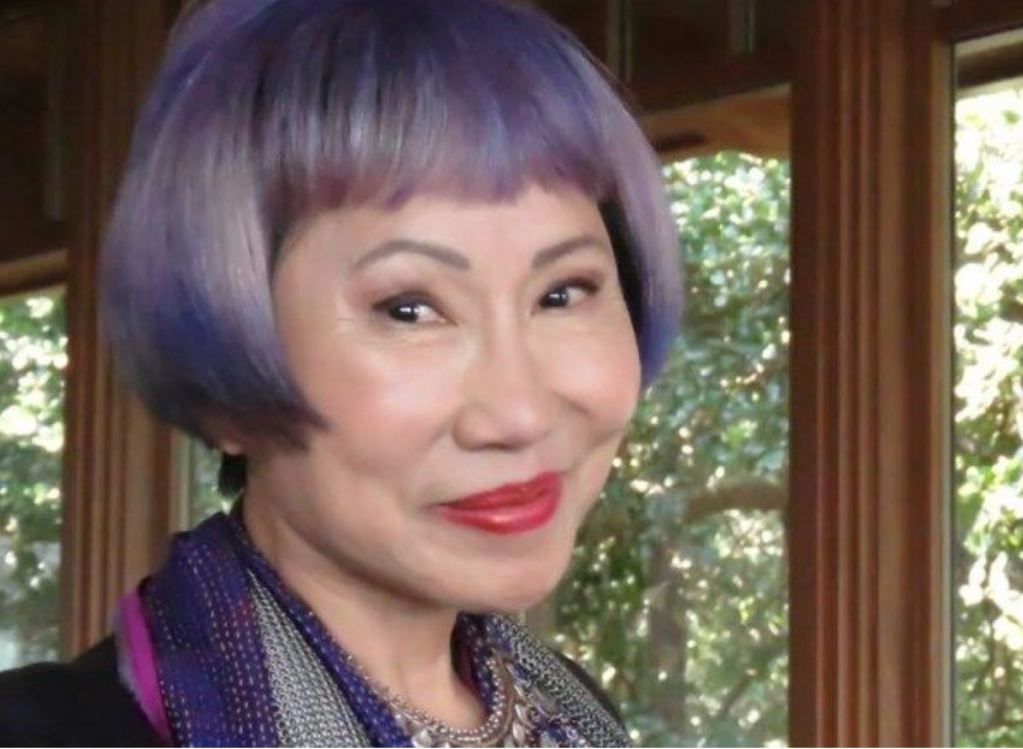
Author Amy Tan
Many of us have or had them: problematic parents. (I’ve been there.) Then we add insult to injury by voluntarily reading the depictions of problematic parents in more than a few novels. Of course, that can be also be cathartic, depending on the book — and great novels are worth reading even when they, and because they, push our emotional buttons.
There was certainly a less-than-stellar parent in the San Francisco-set first half of Amy Tan’s excellent The Bonesetter’s Daughter, which I read last week. Ruth’s elderly mother LuLing is pushy and embarrassing — and has undermined, and not respected the privacy of, the now-40-something Ruth since Ruth was a kid. We cheer for Ruth when she pushes back at least somewhat against this exasperating parent.
Then things get more complex in the novel’s second half, which chronicles LuLing’s life in China as a girl and young woman. LuLing goes through so much trauma that we understand why she became so neurotic — neuroticism that ends up coloring Ruth’s personality, too.
Will LuLing and Ruth reach some sort of reconciliation when things return to San Francisco near the book’s conclusion?
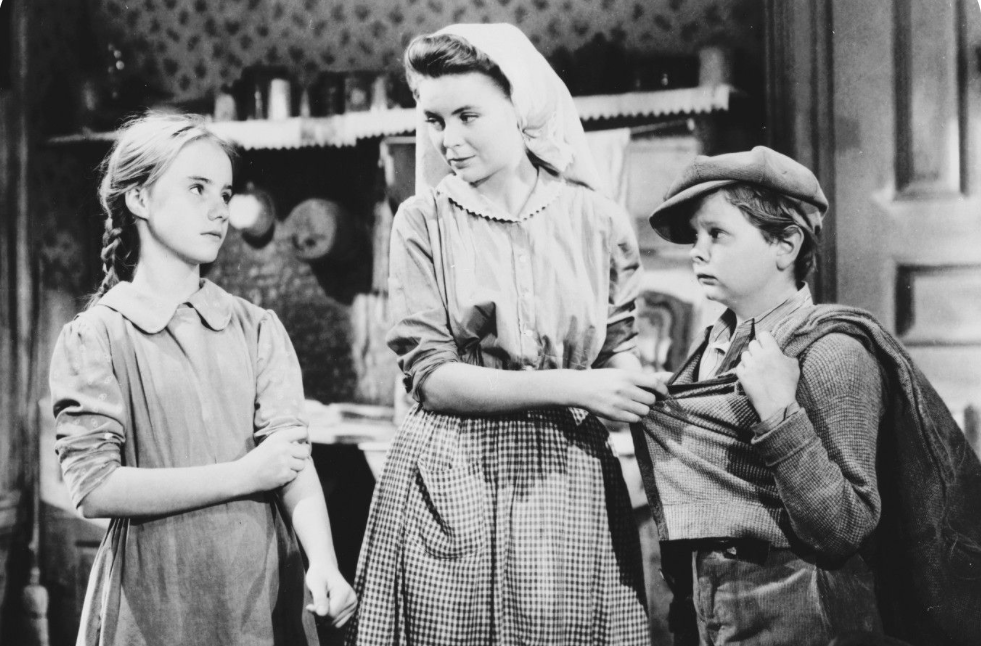
Relationships with problematic parents can improve (as is the case between daughter Anne and her adoptive mother Marilla in L.M. Montgomery’s Anne of Green Gables) or they can remain bad or worsen (think daughter Bela and her mother Gauri who abandons Bela in Jhumpa Lahiri’s The Lowland). Another abandoning parent, the evil Cathy in John Steinbeck’s East of Eden, is no peach, either.
The novel I read before The Bonesetter’s Daughter — Betty Smith’s A Tree Grows in Brooklyn, which I discussed last week in a different context — also features parents with some issues. Johnny the dad and Katie the mom are basically good-hearted people, but the former is an often-irresponsible alcoholic and the latter favors son Neeley over her bright daughter Francie — the book’s appealing young protagonist.
Echoes of George Eliot’s The Mill on the Floss, in which the parents favor son Tom Tulliver over their smarter and more likable daughter Maggie.
The bad choice to play favorites not only involves male vs. female children but can also have an orphan angle. The titular character in Charlotte Bronte’s Jane Eyre is treated badly by her Aunt Sarah in a household where Sarah’s children (Jane’s cousins) fare much better. Also the situation for Harry Potter in the home of his Aunt Petunia and Uncle Vernon, both of whom dote on their thuggish son Dudley while behaving abominably toward Harry.
Returning to hard-drinking dads in fiction, among the many examples is Huck Finn’s father in Mark Twain’s The Adventures of Huckleberry Finn. “Pap” Finn is a drifter who resents Huck bettering himself even as he begs his son for booze money.
Many other 19th-century novels also have irksome parents. For instance, the father of the three brothers in Fyodor Dostoevsky’s The Brothers Karamazov is a vile guy who took little interest in his trio of boys when they were growing up. Things are no better after they reach adulthood — with dirty-old-man dad even competing with eldest son Dmitri for the affections of the young woman Grushenka.
One last nod to recent literature: daughter Jordan is suspicious of her stepmother in Kate Quinn’s The Huntress. Could the new wife of Jordan’s American father be an escaped Nazi with a murderous past? That’s a LOT more than problematic.
Some annoying (and worse) fictional parents you’d like to mention?
My literary-trivia book is described and can be purchased here: Fascinating Facts About Famous Fiction Authors and the Greatest Novels of All Time.
In addition to this weekly blog, I write the 2003-started/award-winning “Montclairvoyant” topical-humor column for Baristanet.com. The latest piece — about a councilor in my town criticizing scandal-plagued New York Gov. Cuomo, for whom he used to work — is here.