When Authors Insert Hurt

My screen grab from the 2011 Jane Eyre movie shows the injured Rochester just after he struggles back onto his horse.

As I recover from a broken toe, I’ve thought about injuries in literature — many of them more serious than a broken toe. What first came to mind was Annie Proulx’s short story “Broketoe Mountain.” ๐Ÿ™‚ Or was that “Brokeback Mountain”? ๐Ÿค”

Injuries in fiction (whether accidental or deliberately caused by a malicious person) are often more than incidental elements in story lines. They can help shape a plot, offer insight into how stoic and resilient the injured character might or might not be, give a hurt character more time to do other things and think about things, etc.

Now I’ll offer a few examples, some of which I’ve mentioned in past posts.

There are two significant injuries in Charlotte Bronte’s Jane Eyre. Fairly early in the 1847 novel, Edward Rochester’s spooked horse stumbles when its rider first encounters new governess Jane, throwing him to the ground and badly spraining his ankle. Jane’s immediate reaction to this incident shows her skill as well as calmness under pressure, and Rochester being homebound during his subsequent recuperation gives him and Jane a chance to get to know each other — which leads to subsequent dramatic events. I’ll refrain from discussing the book’s second set of injuries to avoid a spoiler for anyone who has yet to read Bronte’s iconic British novel.

Across “the pond” four years later, American author Herman Melville’s Moby-Dick was published. In the novel’s back story, Captain Ahab had part of his leg chomped off by the white whale of the title, and his obsessive pursuit of revenge against the massive sea creature is what drives the 1851 book’s plot.

In the much-more-recent Demon Copperhead (2022), the very-challenged-by-life title character of Barbara Kingsolver’s modern-day take on Charles Dickens’ David Copperfield (1850) suffers a severe knee injury while playing high school football — which becomes a big factor in his spiraling into the opioid addiction also afflicting many of his fellow residents of America’s Appalachian region.

U.S. soldier Joe Bonham of Dalton Trumbo’s Johnny Got His Gun (1939) is horrifically/permanently injured by an exploding artillery shell during World War I, and his bitter thoughts in the time after that make for a devastating anti-war argument.

In Scottish author Josephine Tey’s 1951 novel The Daughter of Time, 20th-century police inspector Alan Grant is confined to a hospital bed with a severely broken leg. That enforced inactivity gives him the time and the avoid-boredom desperation to investigate the alleged 15th-century crimes of King Richard III.

Near the start of Edith Wharton’s Ethan Frome, we see that the title character had been badly injured at some point. The 1911 novel goes on to heartbreakingly explain the love story leading to that.

When 20th-century Claire first meets 18th-century Jamie in Diana Gabaldon’s first Outlander book (1991), the Scottish warrior’s shoulder is dislocated. The time-traveling Claire, a nurse who later becomes a physician, expertly snaps the stoic Jamie’s shoulder back into place — illustrating the advances of modern medicine while getting the epic Claire/Jamie relationship started on the basis of mutual respect.

Parts of limbs are lost — in various tragic scenarios — in novels such as Octavia Butler’s Kindred (1979), Alex Haley’s Roots (1976), Stephen King’s Misery (1987), and J.K. Rowling’s seven (so far) Cormoran Strike/Robin Ellacott crime books published between 2013 and 2023. Those grievous injuries are all very relevant to the respective plots and shaping of the affected characters.

Physical injuries caused by domestic violence are a way for authors to convey how awful this violence is — with what happens in Kristin Hannah’s The Great Alone (2018) just one of countless examples. And of course there’s also the psychological trauma inflicted by domestic abusers.

Two more book mentions:

I recently read Val McDermid’s Still Life (2020), the sixth installment of the excellent series starring brilliant, dogged cold-case detective Karen Pirie. In this installment, her nice/loyal/not-super-bright-but-learning assistant investigator Jason Murray is injured by a criminal suspect and ends up trapped in a locked basement.

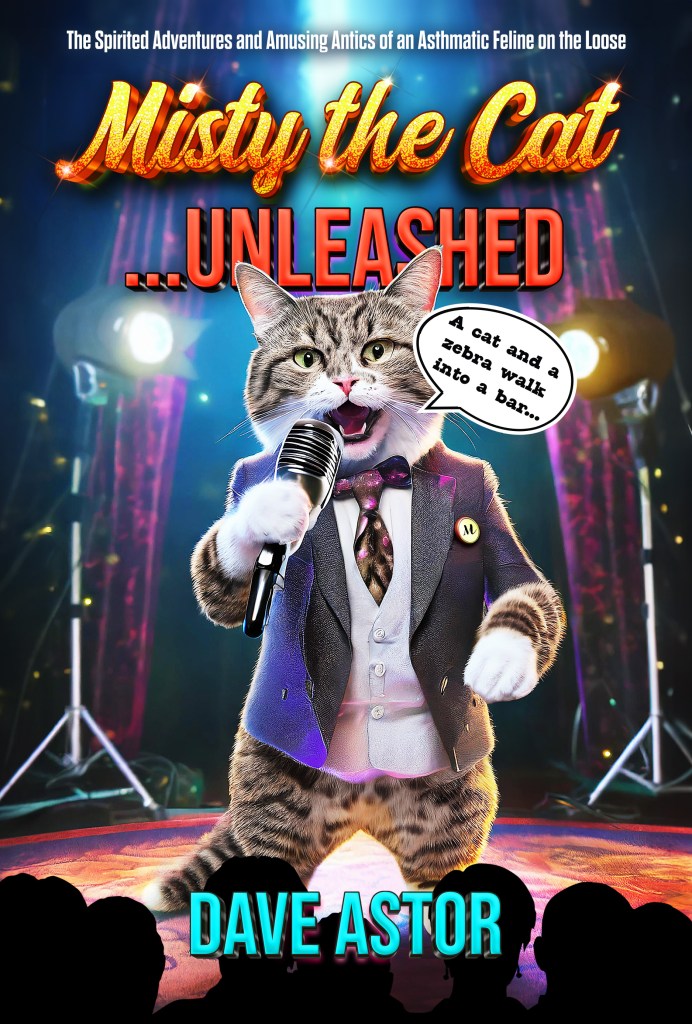
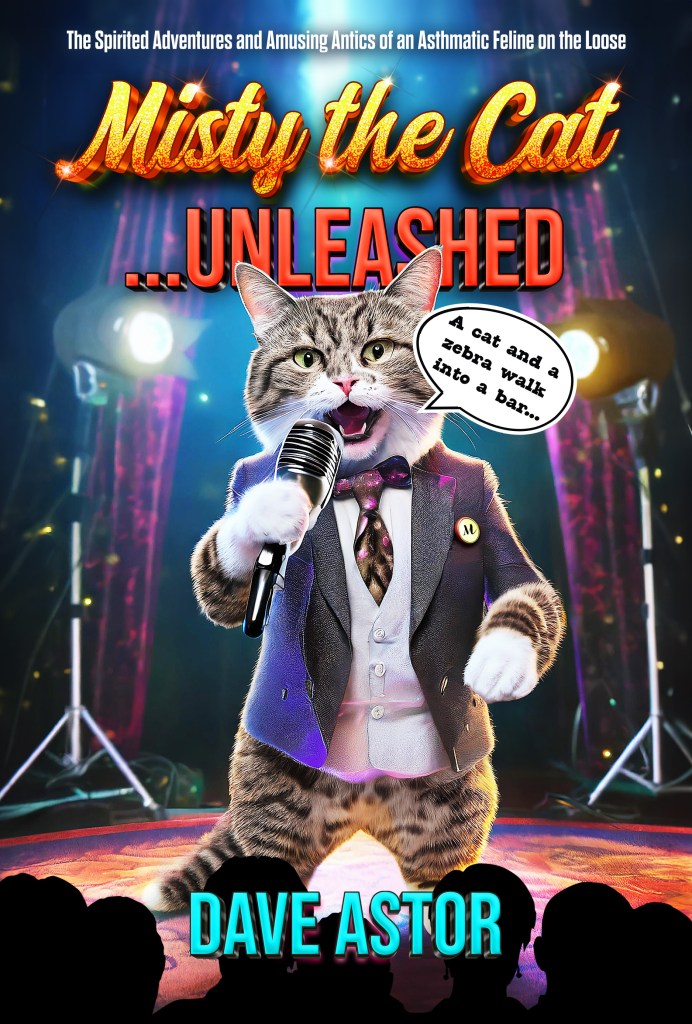
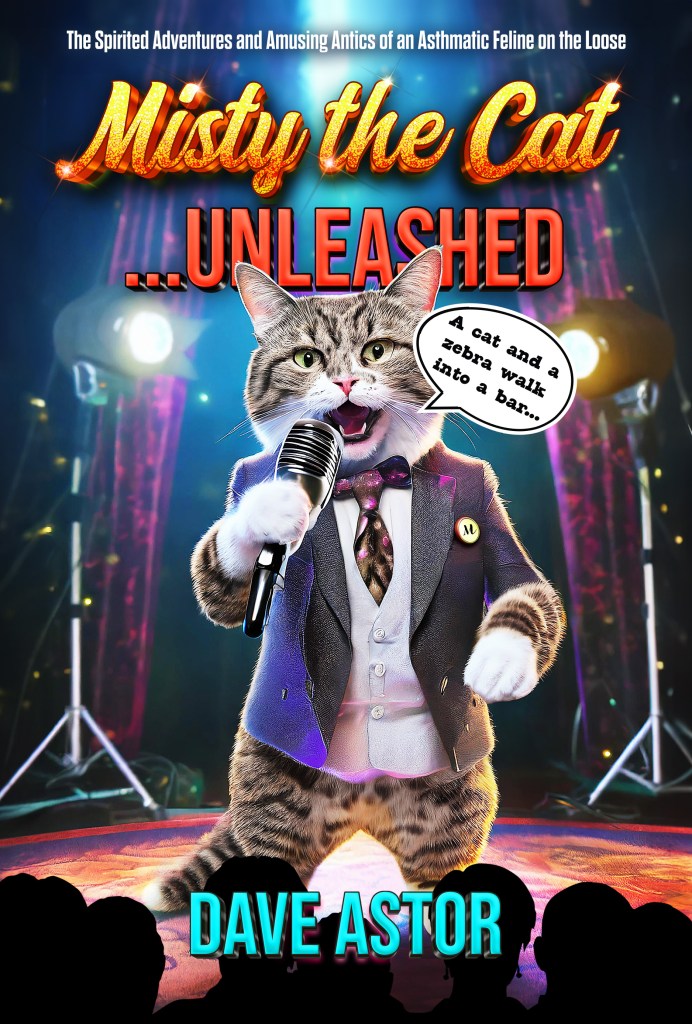
And my own fiction/fact hybrid, Misty the Cat…Unleashed, includes some pages about my teen daughter Maria tearing her ACL in 2022 and getting reconstructive surgery because of a gymnastics accident. While the 2024 book was published before all the ramifications of this mishap would unfold, the tear/operation/rehab changed the course of Maria’s life: which sport she would switch to (crew), which university she would enter this fall because of getting recruited for that sport (Boston University), and which career path she would choose (the health-care field). Major injuries can do that.

Any comments about, and/or examples of, this topic?

Misty the cat says in 2020: “This is not your typical municipal library.”

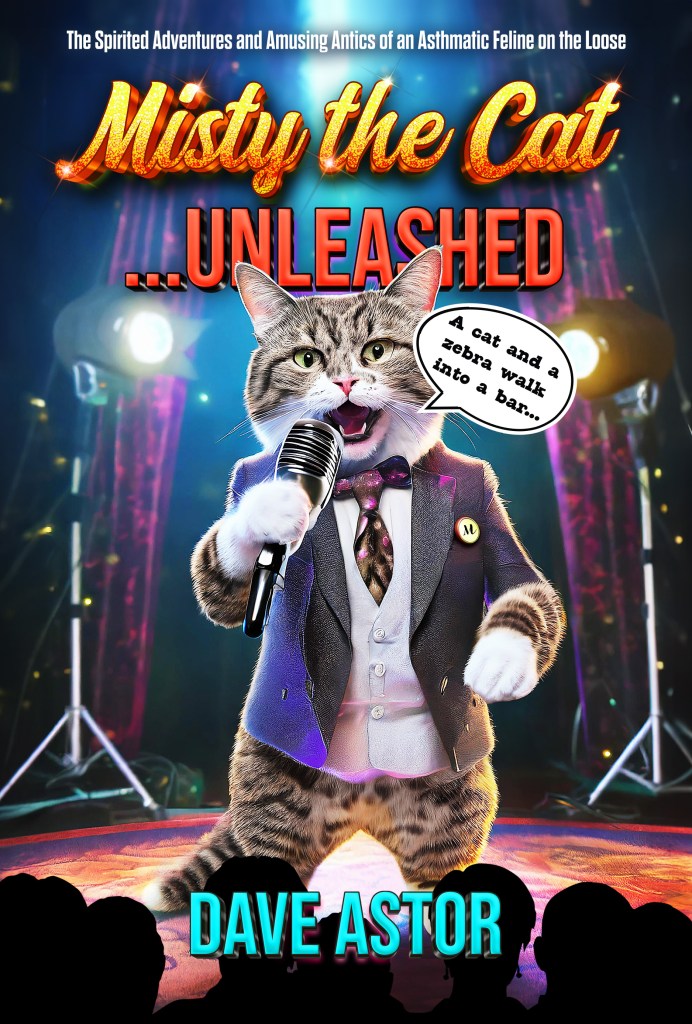
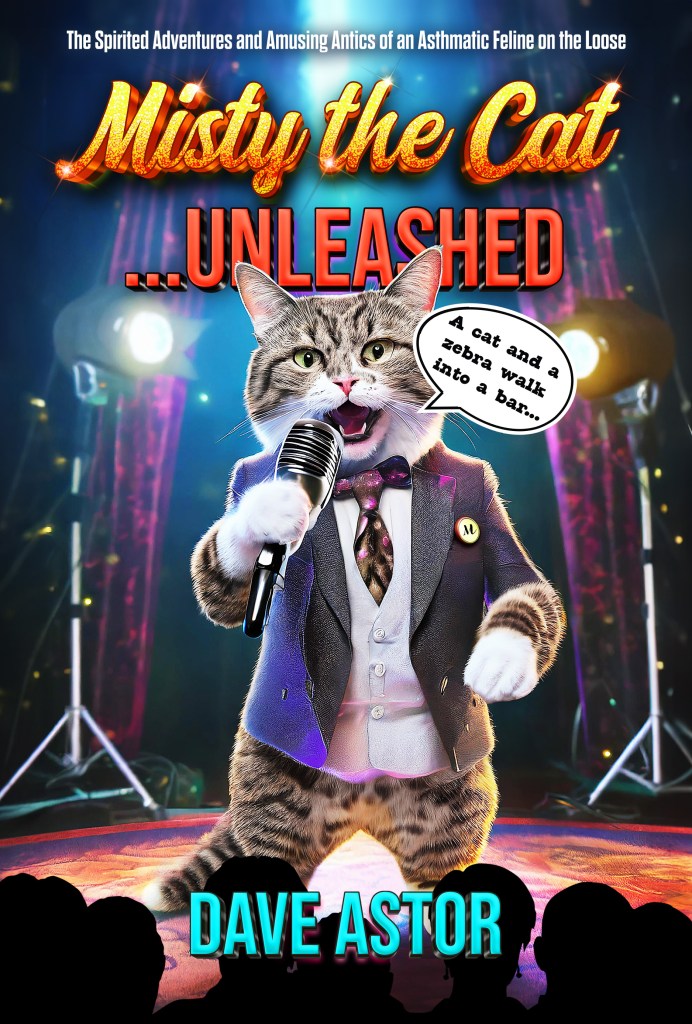
My comedic 2024 book — the part-factual/part-fictional/not-a-children’s-work Misty the Cat…Unleashed — is described and can be purchased on Amazon in paperback or on Kindle. It’s feline-narrated! (And Misty says Amazon reviews are welcome. ๐Ÿ™‚ )

This 90-second promo video for my book features a talking cat: ๐Ÿ™‚

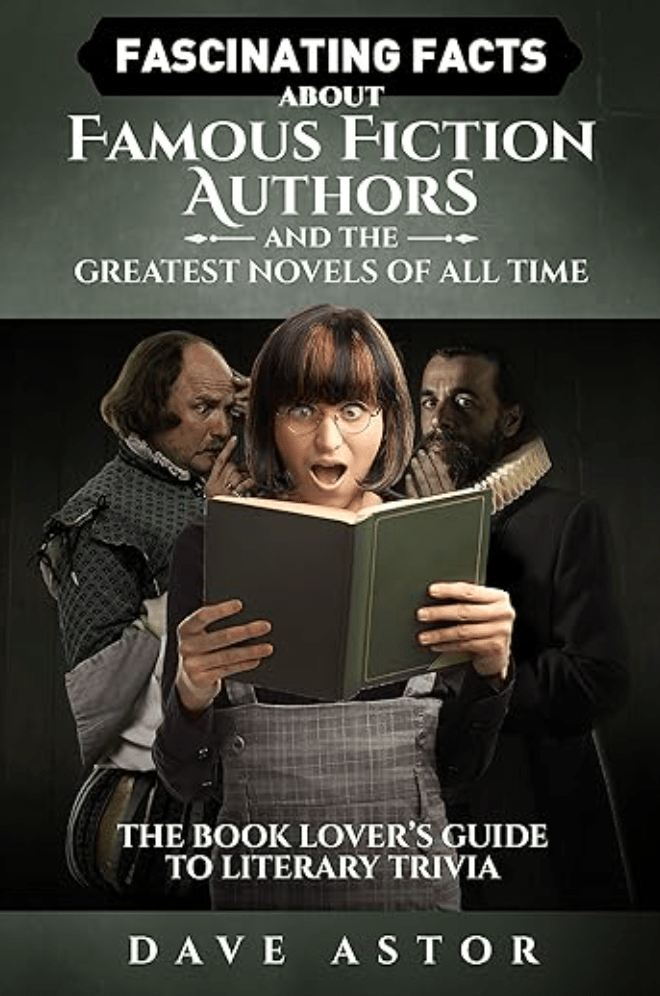
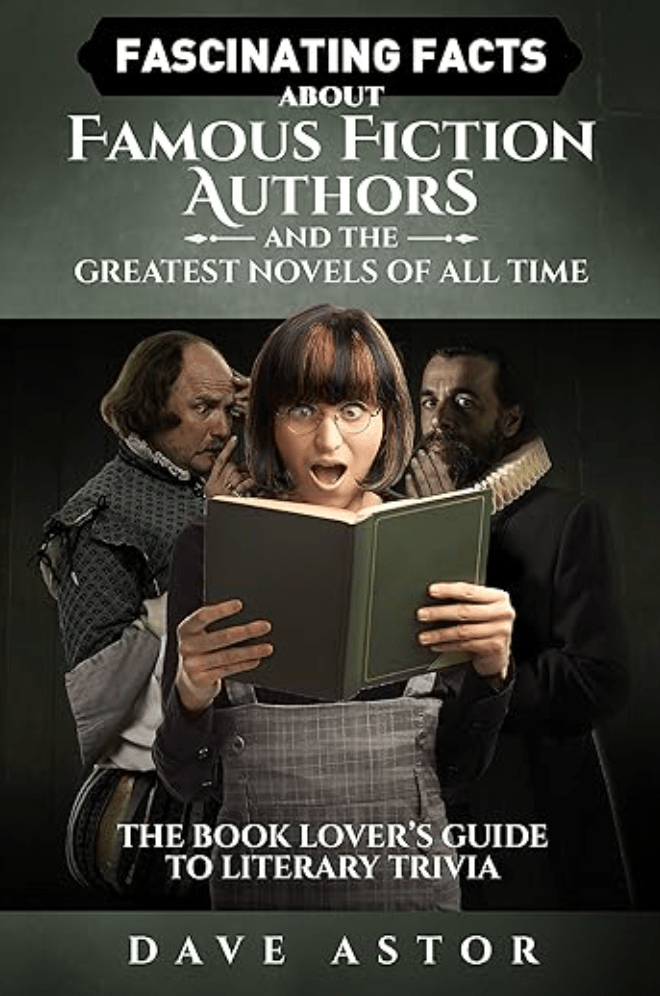
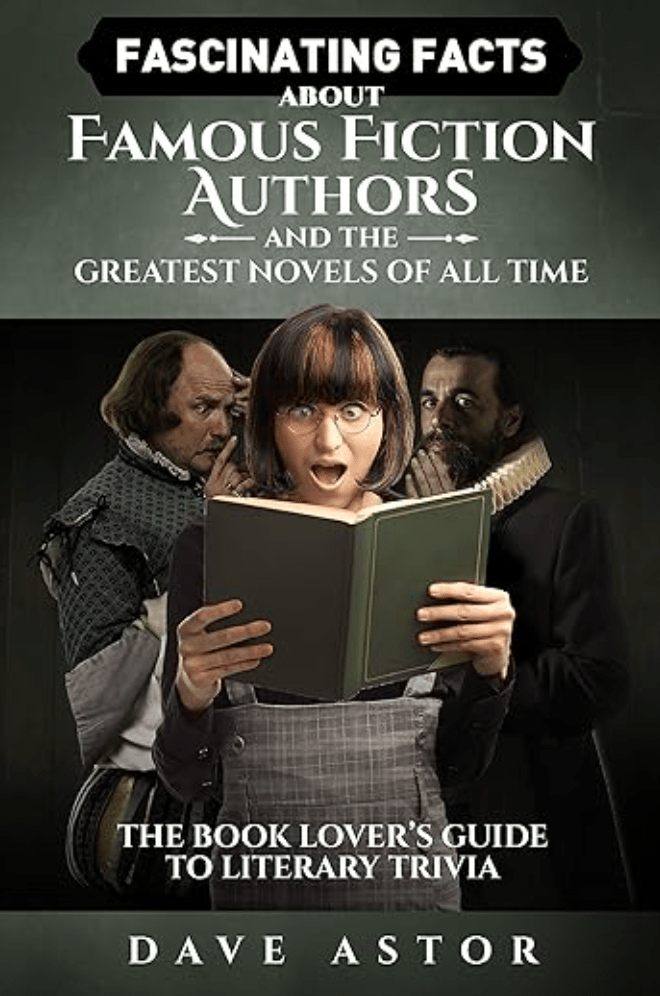
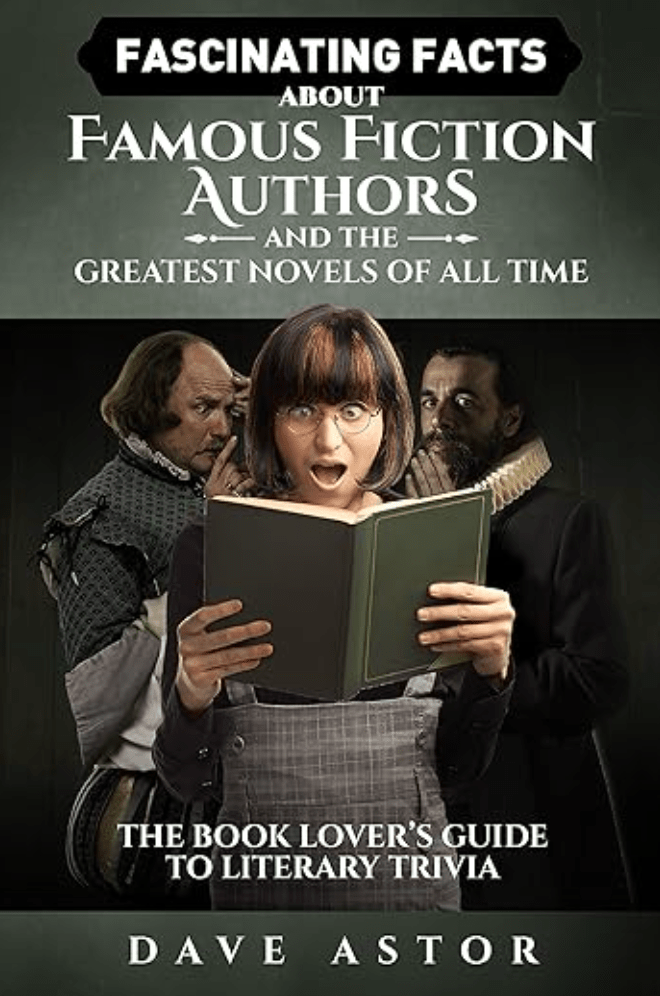
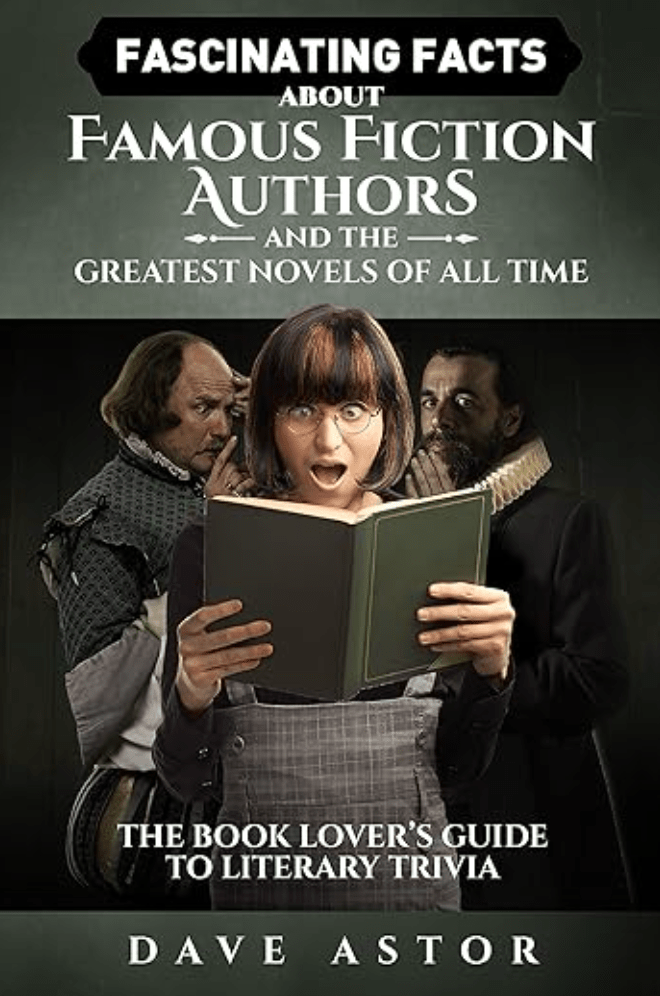
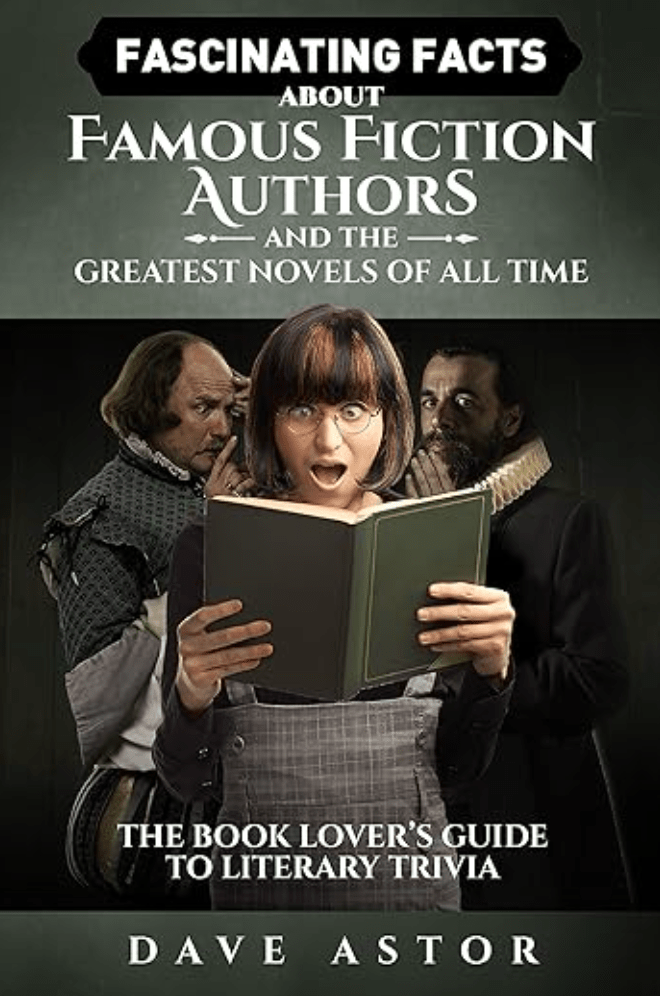
I’m also the author of a 2017 literary-trivia book

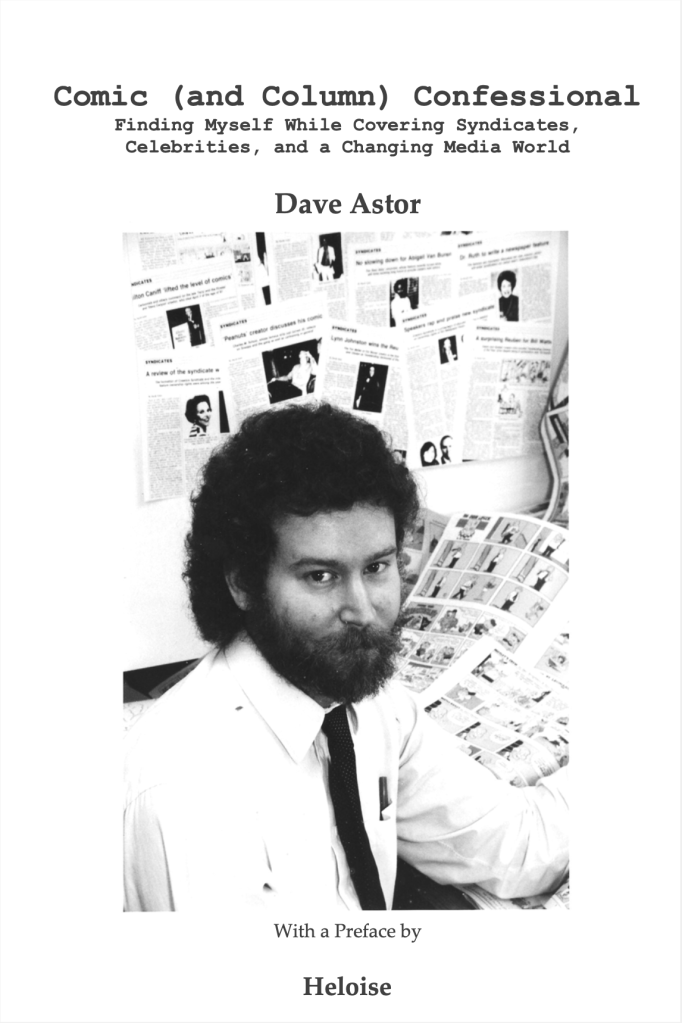
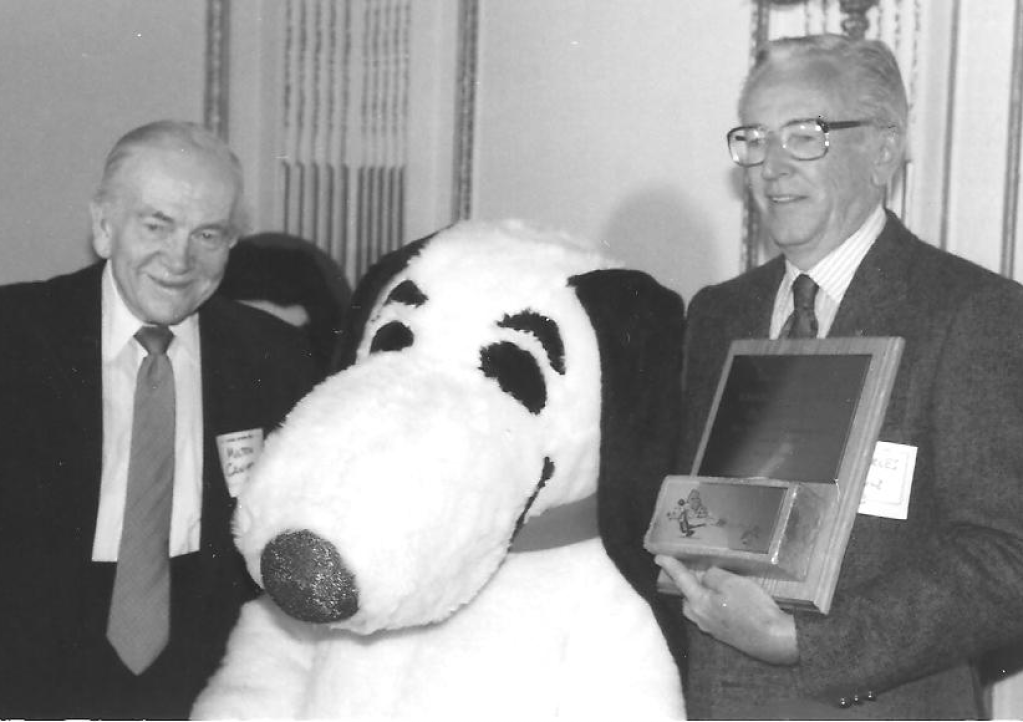
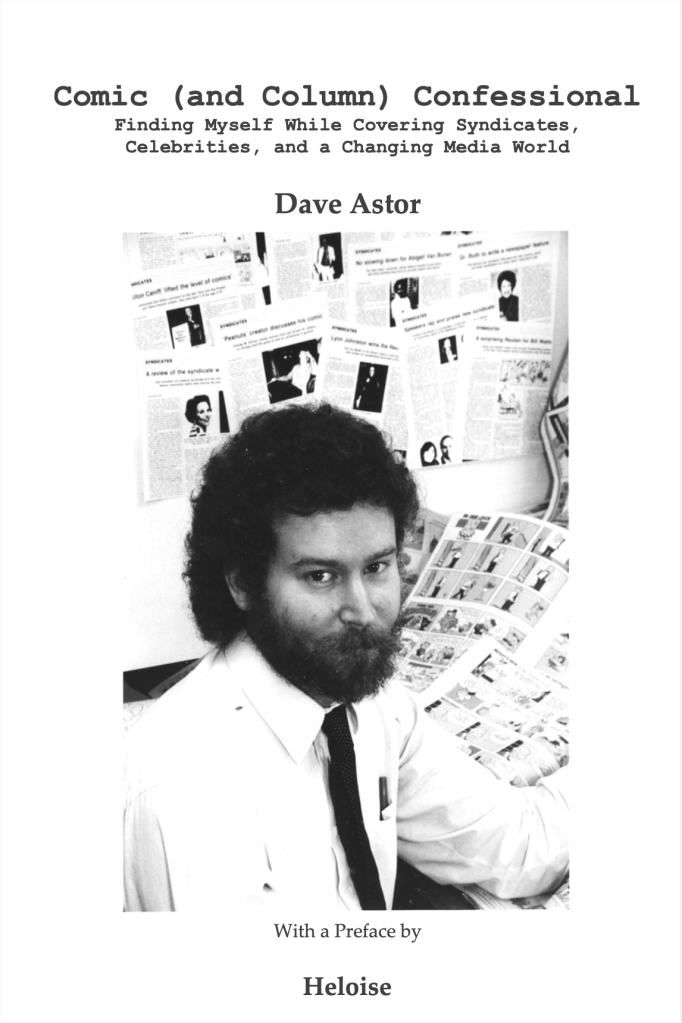
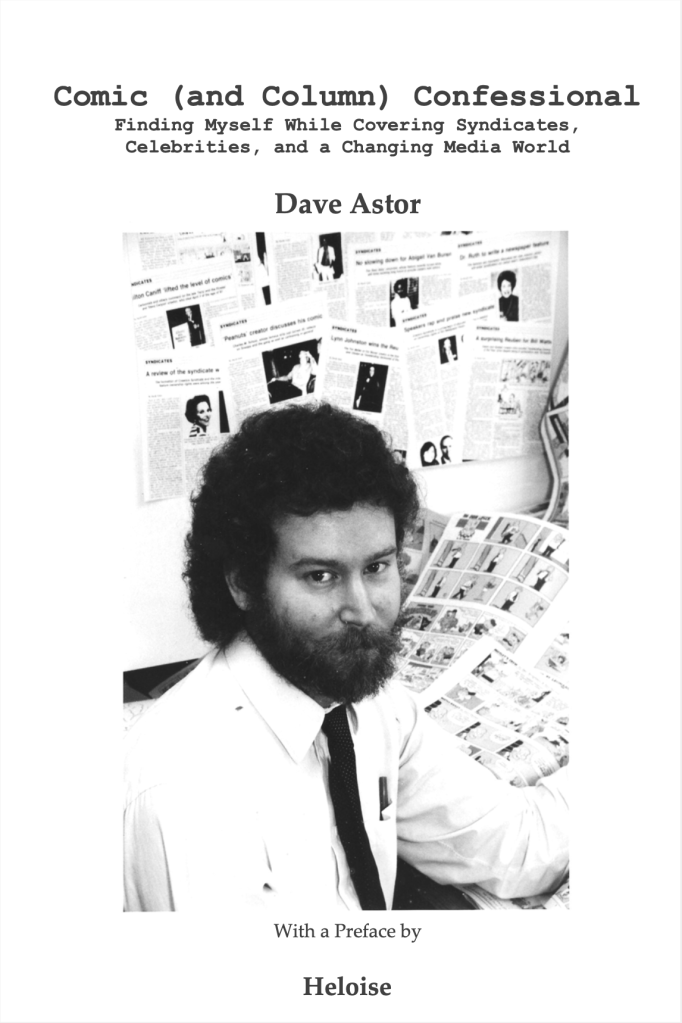
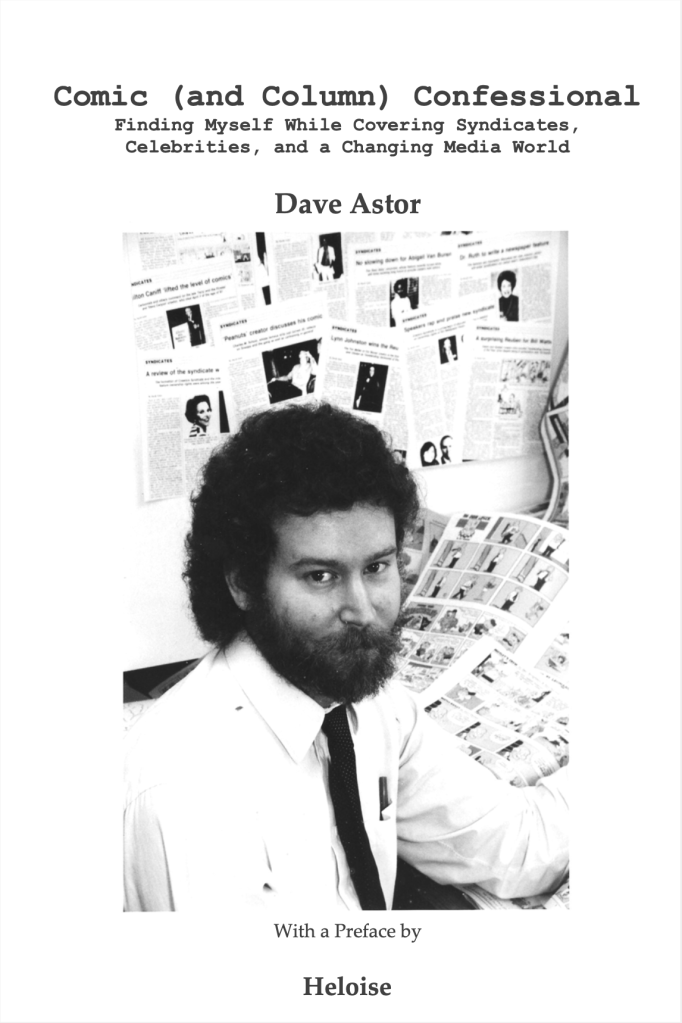
…and a 2012 memoir that focuses on cartooning and more.

In addition to this weekly blog, I write the 2003-started/award-winning “Montclairvoyant” topical-humor column every Thursday for Montclair Local. The latest piece — about too many topics to list ๐Ÿ™‚ — is here.

Briefly Rome-ing Through Italian Literature

Last week I used the ascendancy of American-born Pope Leo XIV as an excuse to write about literature set in his hometown of Chicago. The new pontiff is of course now based in Vatican City, so I’ll use that as an excuse to write about literature set in…Italy. ๐Ÿ™‚

I’m no expert on Italy, or on fiction by Italian authors, or on Italy-set fiction by non-Italian authors, but know enough to eke out a short blog post. ๐Ÿ™‚ I’ve visited Venice twice, Florence once, and Rome once, and have read a handful of novels by Italian authors — of which these three are my clear favorites:

1. Elsa Morante’s History (1974), a gripping World War II-era novel about a beleaguered schoolteacher, her two sons (one VERY precocious), a beloved dog, and more in fascist-ruled Rome.

2. Giuseppe Tomasi di Lampedusa’s posthumously published The Leopard (1958), about seismic changes during the time of Italy’s 19th-century unification. Certainly one of the most beautifully written novels I’ve ever read.

3. Umberto Eco’s The Name of the Rose (1980), a riveting historical murder mystery set in a 14th-century monastery.

Some Italian literature I’ve read that I was not as fond of include Eco’s Foucault’s Pendulum novel, Elena Ferrante’s The Lost Daughter novel, and Italo Calvino’s Marcovaldo book of linked short stories.

I have not gotten to Dante Alighieri’s The Divine Comedy — a fact that is not divine and not comedic. ๐Ÿ™‚

Then there are of course novels by non-Italian authors set or partly set in Italy/what is now Italy. Among those I’ve read are Stendhal’s The Charterhouse of Parma (starring a young Italian nobleman); Henry James’ The Portrait of a Lady (my favorite HJ work), The Aspern Papers (set in Venice), and Daisy Miller (Rome); Robert Grave’s I, Claudius (ancient Rome intrigue); Anthony Burgess’ The Kingdom of the Wicked (which also unfolds around 2,000 years ago); Irving Stone’s The Agony and the Ecstasy (about Michelangelo); Martin Cruz Smith’s The Girl from Venice (set near the end of World War II); Sally Vickers’ Miss Garnet’s Angel (Englishwoman moves to Venice for six months); and John Grisham’s Playing for Pizza (American quarterback joins a football team in Italy).

Your thoughts about, and examples of, this week’s theme? (After posting this piece, I realized I completely forgot that I had already written about Italian literature in 2022 — as in 2022 AD, not 2022 BC. ๐Ÿ™‚ Sorry about that. This piece is somewhat different, at least.)

A note from Misty the cat: “Dave has a broken big left toe and can’t walk me for a while. My female humans Laurel or Maria are now taking me out every morning, but the daily videos you’ll be seeing for a while are ‘reruns’ filmed by Dave in years past, with new captions. The video below is from 2020.”

Misty the cat says: “Here I am in the ‘Up the Down Staircase’ movie.”

My comedic 2024 book — the part-factual/part-fictional/not-a-children’s-work Misty the Cat…Unleashed — is described and can be purchased on Amazon in paperback or on Kindle. It’s feline-narrated! (And Misty says Amazon reviews are welcome. ๐Ÿ™‚ )

This 90-second promo video for my book features a talking cat: ๐Ÿ™‚

I’m also the author of a 2017 literary-trivia book…
…and a 2012 memoir that focuses on cartooning and more.

In addition to this weekly blog, I write the 2003-started/award-winning “Montclairvoyant” topical-humor column every Thursday for Montclair Local. The latest piece — about the impending departure of my town’s skilled CFO, New Jersey’s governor race, a section of a venerable fallen tree turned into a bench, and more — is here.
The Windy City Is a Written-About City

Chicago’s skyline. (Photo by Kelly Liu/Getty Images.)

Newly named Pope Leo XIV was born Robert Prevost in Chicago, so that’s as good an excuse as any to write a blog post about novels partly or fully set in “The Windy City” off Lake Michigan.

With a population of more than 2.6 million, Chicago is America’s third-largest city after New York City and Los Angeles, so there were and are plenty of stories to be told in a Midwest metropolis known for its diversity, urban architecture, commerce, arts institutions, sports teams, etc., etc.

On a personal note, my wife Laurel Cummins (Happy Mother’s Day!) was born in Chicago. Also, I went to graduate school at Northwestern University, just north of Chicago in Evanston, Illinois. Needless to say, I often took the “El” to Chicago during that year, and have since visited the city several times.

One of the best-known novels with a Chicago setting is Upton Sinclair’s The Jungle, a searing 1906 book depicting the struggles of its working-class characters and the horrendous conditions in the meat-packing industry.

Another Chicago-based classic is Richard Wright’s Native Son (1940) — which, among other things, depicts the city’s very complicated racial dynamics.

Theodore Dreiser’s two best-known novels are mostly or partly set in Chicago; those books being Sister Carrie (1900) and An American Tragedy (1925).

Published during one of the years between those Dreiser books was Willa Cather’s 1915 novel The Song of the Lark, in which future opera singing star Thea Kronborg studies music in Chicago.

Then there’s W. Somerset Maugham’s The Razor’s Edge (1944), in which the traumatized World War I pilot protagonist is from Chicago.

A 21st-century novel — Audrey Niffenegger’s 2003 bestseller The Time Traveler’s Wife — is an ode to Chicago amid its offbeat love story and frequent time-jumping.

The main character in Stephen King’s Rose Madder (1995) escapes an abusive police officer husband by fleeing to an unnamed big city that’s almost certainly Chicago.

Saul Bellow set a number of his novels in Chicago, but the only one of his I’ve read (Seize the Day) unfolded in New York City. ๐Ÿ™‚

The title character of John Grisham’s 2012 baseball novel Calico Joe has a brief career with the Chicago Cubs.

I’ll add that while Eliot Asinof’s 1963 baseball book Eight Men Out is basically nonfiction, it does have some fictional elements. And the true story about eight Chicago White Sox players paid to “throw” the 1919 World Series for the benefit of gamblers is almost novelistic in its drama.

Your thoughts about, and examples of, this topic?

Misty the cat says: “Me eating. Birds eating. It’s a Sunday brunch frenzy.”

My comedic 2024 book — the part-factual/part-fictional/not-a-children’s-work Misty the Cat…Unleashed — is described and can be purchased on Amazon in paperback or on Kindle. It’s feline-narrated! (And Misty says Amazon reviews are welcome. ๐Ÿ™‚ )

This 90-second promo video for my book features a talking cat: ๐Ÿ™‚

I’m also the author of a 2017 literary-trivia book

…and a 2012 memoir that focuses on cartooning and more.

In addition to this weekly blog, I write the 2003-started/award-winning “Montclairvoyant” topical-humor column every Thursday for Montclair Local. The latest piece — about an aging ice rink, a probably doomed-to-fail affordable housing plan, and more — is here.
Older Women, Younger Men, and a Newborn Blog Post

As in real life, many novels feature couples consisting of a younger woman and a man older than she is. So it’s refreshingly different when the age gap goes in the opposite gender direction.

I most recently experienced this last week when reading Elin Hilderbrand’s excellent early-career novel Barefoot, which includes a man in his early 20s who has an affair with a woman in her early 30s during a summer in Nantucket, Massachusetts. The relationship works for multiple reasons, even as both characters’ life situations are rather complicated.

One of the best-known examples of this “genre” is Terry McMillan’s How Stella Got Her Groove Back, which stars a divorced 42-year-old woman who finds romance during a Jamaica vacation with a man half her age.

Three-quarters of a century earlier, Colette offered a similar 40-something/20-something dynamic in Cheri — which was followed by The Last of Cheri sequel.

Bernhard Schlink’s The Reader features a 36-year-old woman (a former Nazi guard) and a 15-year-old teen boy. As you can imagine, things get rather fraught personally and politically.

Then there’s Harold and Maude — released as a movie and a Colin Higgins-written novelization of that movie at roughly the same time. In the film, which became a cult classic, Harold is about 20 and Maude is 79, with the “hook” that Maude has a more youthful personality and sunnier outlook on life than the morbid Harold.

Another novel lesser known than its film version is Charles Webb’s The Graduate, in which Benjamin has an affair with Mrs. Robinson, the wife of his father’s business partner.

There are obviously many examples in fiction of a woman being only a modest number of years older than the man with whom she is romantically involved. For instance, the time-traveling Claire is Jamie’s senior by about five years in Diana Gabaldon’s Outlander books.

Of course, novels with an older man and a younger woman can also work, but it depends. One reason I found Marilynne Robinson’s Gilead kind of off-putting was because its elderly pastor was so much older than his wife. (He was sort of a fictional religious version of celebrities such as The Rolling Stones’ Mick Jagger and football coach Bill Belichick, who are both in relationships with much-younger women.) But somehow the romance between Jane Eyre and the two-decades-older Edward Rochester felt right — partly because Jane was emotionally and intellectually very mature for her age in Charlotte Bronte’s novel.

We will not mention what goes on in Vladimir Nabokov’s Lolita

Your thoughts about, and examples of, this topic?

Misty the cat says: “All those flowers are white? Trump’s anti-DEI efforts have gone too far.”

My comedic 2024 book — the part-factual/part-fictional/not-a-children’s-work Misty the Cat…Unleashed — is described and can be purchased on Amazon in paperback or on Kindle. It’s feline-narrated! (And Misty says Amazon reviews are welcome. ๐Ÿ™‚ )

This 90-second promo video for my book features a talking cat: ๐Ÿ™‚

I’m also the author of a 2017 literary-trivia book

…and a 2012 memoir that focuses on cartooning and more.

In addition to this weekly blog, I write the 2003-started/award-winning “Montclairvoyant” topical-humor column every Thursday for Montclair Local. The latest piece — about a confusing proposed school district budget — is here.

The Philosophy Club of Characters and Authors

Rodin’s “The Thinker.” (Photo by me during a long-ago trip to Paris.)

There are more action heroes than philosophers in fiction, but novels do occasionally feature characters who think deeply about the human condition.

One such protagonist is Isabel Dalhousie of Alexander McCall Smith’s The Sunday Philosophy Club. (Hmm…that title points to the novel’s frequent metaphysical content.) And 40-something intellectual Isabel is actually kind of an action heroine, too, as she tries to solve the mystery of a young man’s death amid her musings about the meaning of life and such.

By the way, I thought The Sunday Philosophy Club — which I read last week — was good but not great; perhaps some of its many sequels are better?

Larry Darrell of The Razor’s Edge by W. Somerset Maugham is hyper-focused on trying to find a transcendent explanation for why things are. This is after the pilot is traumatized by his World War I experiences, including the death of a comrade. Death and war can clearly make a person philosophical.

Raskolnikov of Fyodor Dostoevsky’s Crime and Punishment is fixated on good vs. evil, how an individual’s actions affect society, and so on. Perhaps we can call him a murderer-philosopher.

Albus Dumbledore, headmaster of the Hogwarts School of Witchcraft and Wizardry, clearly has a philosophical bent in J.K. Rowling’s Harry Potter series. Harry’s mentor is wise, reflective, and thinks deeply about deep things.

Of course, some people play-act at being philosophical while not really being deep thinkers. Such is the case with Rev. Edward Casaubon, who puts on intellectual airs in George Eliot’s Middlemarch but is actually rather dull, shallow, and not particularly nice — as young Dorothea Brooke learns after marrying him.

Additional characters with philosophical leanings in other novels I’ve read include Lelia of George Sand’s Lelia, Harry Haller of Hermann Hesse’s Steppenwolf, Binx Bolling of Walker Percy’s The Moviegoer, and the unnamed narrator in Ralph Ellison’s Invisible Man, to cite a few.

Authors not previously mentioned in this post who wrote philosophically in at least some of their work include James Baldwin, Italo Calvino, Albert Camus, Umberto Eco, Gabriel Garcia Marquez, Goethe, Aldous Huxley, Franz Kafka, Herman Melville, Iris Murdoch, Marcel Proust, Jean-Paul Sartre, Mary Shelley, Voltaire, and Virginia Woolf, among others.

Your thoughts about, and examples of, this topic?

Misty the cat asks: “Can’t I get an actual throne from which to survey my kingdom?”

My comedic 2024 book — the part-factual/part-fictional/not-a-children’s-work Misty the Cat…Unleashed — is described and can be purchased on Amazon in paperback or on Kindle. It’s feline-narrated! (And Misty says Amazon reviews are welcome. ๐Ÿ™‚ )

This 90-second promo video for my book features a talking cat: ๐Ÿ™‚

I’m also the author of a 2017 literary-trivia book

…and a 2012 memoir that focuses on cartooning and more.

In addition to this weekly blog, I write the 2003-started/award-winning “Montclairvoyant” topical-humor column every Thursday for Montclair Local. The latest piece — about a pizza mural controversy and more — is here.

At This Thematic Stop, We Hop on ‘Pop’

Alexander McCall Smith. (Photo by Chris Watt.)

Being an accomplished author doesn’t mean that every character she or he creates will “pop.”

Novelists are not machines; they don’t operate at 100% capacity with every word. Also, they might be more interested in certain characters than in other ones, perhaps because some characters have elements that are more quirky, unusual, etc. Authors might even make some characters deliberately boring because some people are boring and it might work for the story. And then of course there’s the matter of villains often having a level of charisma that nicer characters might not possess.

A great way to observe this phenomenon is with a novel featuring an ensemble cast in which no one is really the sole star. Such is 44 Scotland Street by Alexander McCall Smith, who populates his first-in-a-series 2005 book with residents of an apartment building (located at the Edinburgh address of the title) and with several other people who are friends or co-workers of said residents.

The “fulcrum” of 44 Scotland Street is probably Pat, a 20-year-old woman who opens the novel visiting the titular address in which she’ll soon share a multi-person apartment. But Pat is not that fascinating a person — partly because of her young age and relatively small amount of life experience. On the other hand, 60-something building resident Domenica is quite memorable, as is her 50-something artist friend — soon also Pat’s friend — Angus. Pat’s narcissistic apartment-mate Bruce is more annoying than interesting.

Of course, someone quite young can also be compelling. In McCall Smith’s novel, that would be five-year-old Bertie — a very precocious kid buckling under the pressure of a “helicopter” mom-from-hell forcing him to learn Italian and play a saxophone almost as big as he is.

Now I’ll fit three classics into this theme, although there are of course many other novels that could also be included.

The “hero” of Wilkie Collins’ 1860 mystery/adventure The Woman in White is the brave and devoted Walter Hartright, who has “the right heart” but doesn’t really “pop” into three-dimensionality. The characters who stand out include the deliciously wicked Count Fosco and the resourceful, not conventionally attractive, possibly lesbian (?) Marian Halcombe.

In Edith Wharton’s 1920 novel The Age of Innocence, protagonist Newland Archer is mildly interesting while his fiancee and subsequently wife May Welland is rather bland and conventional. The character who really “pops” is free-spirited bohemian Ellen Olenska — to whom Newland becomes attracted. This is clearly intentional on Wharton’s part as she sets up Newland’s internal struggle between what he wants and his societal “obligations” as a young man from an upper-class family.

Frodo Baggins might be “first among equals” in J.R.R. Tolkien’s The Lord of the Rings trilogy (published 1954-55). He’s admirable and courageous, but the low-key, earnest hobbit doesn’t “pop” like some other characters such as Frodo’s equally courageous but more spirited and quick-witted “servant” companion Samwise Gamgee and the anguished, part-villainous/part-sympathetic Gollum.

As I’ve written in a couple of past posts, supporting characters can frequently be more interesting than the so-called leads they might bounce off of in novels.

Your thoughts about, and examples of, this topic?

Misty the cat says: “My wagon flipped, so I’m walking the rest of the way to Mars.”
https://www.youtube.com/shorts/jNRBuJU6YFI

My comedic 2024 book — the part-factual/part-fictional/not-a-children’s-work Misty the Cat…Unleashed — is described and can be purchased on Amazon in paperback or on Kindle. It’s feline-narrated! (And Misty says Amazon reviews are welcome. ๐Ÿ™‚ )

This 90-second promo video for my book features a talking cat: ๐Ÿ™‚

I’m also the author of a 2017 literary-trivia book

…and a 2012 memoir that focuses on cartooning and more.

In addition to this weekly blog, I write the 2003-started/award-winning “Montclairvoyant” topical-humor column every Thursday for Montclair Local. The latest piece — about my town’s newly appointed schools superintendent — is here.

A Cat Named Misty Writes a Post That’s Twisty

Misty aboveground with The Underground Railroad. (Photo by Dave.)

I, Misty the cat, guest-blog for Dave every two months or so. I last did that on February 9 — after which March winds brought April winds that knocked me from a standing position onto my side. Hence the above photo.

Anyway, as I embody “suburban sprawl” I’m contemplating the just-finished The Underground Railroad. Ouch…a searing novel set during 19th-century slavery times in the U.S. — which now consists of 50 states, only seven of which have cats as governors. One thing Colson Whitehead’s book made me realize is that felines are not as hung up on color as many white humans were and are. Heck, whether a cat is gray or black or orange or another hue, I glare at each one equally if they bother me during my daily leashed walks. After all, I’m the mayor of my apartment complex, though I don’t remember being elected. Maybe it was a coup.

The novel Dave and I read before The Underground Railroad was another installment of Val McDermid’s excellent series starring cold-case detective Karen Pirie, who Dave emulates by bringing home cold cases of cat food every winter. The Pirie novel was Broken Ground — a title that intrigued me because I also broke ground when I vigorously scratched in the dirt, searching for the paperwork certifying my mayoral election win.

Next in my near-future reading queue are the first novels I’ll be trying by Alexander McCall Smith, who makes me also want a multi-part name — perhaps Misty McKitty Bloggerslogger, which would sure beat being known as the title character in Wilkie Colllins’ novel No Name. Anyway, both soon-to-be-read-by-me McCall Smith books — 44 Scotland Street and The Sunday Philosophy Club — kick off respective series, and the latter title has already inspired me not to be philosophical Monday through Saturday. I also want to read another McCall Smith series opener — The No. 1 Ladies’ Detective Agency — but it’s not currently in my local library. As a cat lacking opposable thumbs, I couldn’t have grabbed hold of it anyway.

I do like strolling library aisles on my four paws, and have noticed that novels are shelved alphabetically by author. How Jane Austen shelved her own books — alphabetically or otherwise — in my town’s 1955-built library I have no idea; she passed away in 1817. Maybe she had Charles Dickens do it for her. Or the shelver might have been Dickens’ friend, the aforementioned Wilkie Collins, who also wrote the early detective novel The Moonstone. Dogs howl at its cover.

Dickens was born in 1812, so his and Austen’s lives overlapped for five years — giving them enough time to collaborate on the novel Sense and Nicholas Nickleby. Epic, albeit lacking in Sensibility.

Another writing pair is Vicki Myron and Bret Witter, who co-authored the heartwarming nonfiction book Dewey: The Small-Town Library Cat Who Touched the World. The library my fellow feline Dewey inhabited was in Iowa, one of the 43 states without a feline governor. Iowa has 75% vowels, though.

Returning to discussion of The Underground Railroad, that 2016 novel published a year after my 2015 birth still strongly resonates in 2025 given that the U.S. has a president (Donald Trump), a “co-president” (Elon Musk), and a vice president (JD Vance) so racist they renamed the late Amy Winehouse’s “Back to Black” album “Back to White.” Trump then exempted it from high tariffs.

Dave will respond to comments because I, Misty the cat, will be busy swatting high tariffs off the kitchen counter. They then become lower tariffs.

Misty the cat says: “I’m doing the annual Flower Walk to raise money for the annual Flower Walk.”

I and Dave’s comedic 2024 book — the part-factual/part-fictional/not-a-children’s-work Misty the Cat…Unleashed — is described and can be purchased on Amazon in paperback or on Kindle. It’s narrated by me, Misty! (And I say Amazon reviews are welcome. ๐Ÿ™‚ )

This 90-second promo video for my and Dave’s book features a talking cat (sort of me, Misty): ๐Ÿ™‚

Dave is also the author of a 2017 literary-trivia book

…and a 2012 memoir that focuses on cartooning and more.

In addition to this weekly blog, Dave writes the 2003-started/award-winning “Montclairvoyant” topical-humor column every Thursday for Montclair Local. The latest piece — about another lawsuit, a large local anti-Trump/Musk rally, and more — is here.

Is There Reader Zest for Lists of Best?

Lists of the best books ever, the best books from a certain time period, etc., can be many things — including fun, annoying, puzzling, interesting, and valuable for nudging us to read or reread certain novels. (Though I prefer the great recommendations I get via the comments under this weekly blog. ๐Ÿ™‚ )

So, I had the usual mixed emotions about the list I most recently saw: “The 100 Best Books of the 21st Century,” re-highlighted on The New York Times website a week or so ago. (The link is here. If you end up hitting a paywall, the list also appears in two screen shots I placed below.)

The NYT’s methodology? “As voted on by 503 novelists, nonfiction writers, poets, critics, and other book lovers — with a little help from the staff of The New York Times Book Review.”

There are many excellent titles on the Times list, of course, and it turned out that I’ve read 24 of them. But, as with other rankings I’ve seen over the years, I thought there were a number of books that shouldn’t have been there but were or should have been there but weren’t. Not surprising given that we all have different opinions — one reason why “best” lists can be fascinating.

Among the novels I was happy to see — even as I might have put them higher or lower on the Times list — were Jonathan Franzen’s The Corrections (5th), Michael Chabon’s The Amazing Adventures of Kavalier & Clay (16th), Richard Powers’ The Overstory (24th), Chimamanda Ngozi Adichie’s Americanah (27th), Zadie Smith’s White Teeth (31st), Donna Tartt’s The Goldfinch (46th), Jeffrey Eugenides’ Middlesex (59th), Barbara Kingsolver’s Demon Copperhead (61st), Viet Thanh Nguyen’s The Sympathizer (90th), and Ann Patchett’s Bel Canto (98th).

Among the novels I thought were ranked too high were Marilynne Robinson’s Gilead (10th), George Saunders’ Lincoln in the Bardo (18th), Ian McEwan’s Atonement (26th), and Kate Atkinson’s Life After Life (51st). Why? I found the first book boring, the second highly original but at times tedious, the third marred by what I thought was an awful ending, and the fourth rather confusing. Other readers might feel differently. ๐Ÿ™‚

Then there are authors and novels I felt should have been on the Times list. Where was Kristin Hannah? (The Great Alone would have been one possibility). Liane Moriarty? (Perhaps with Big Little Lies.) Amor Towles? (A Gentleman in Moscow.) Richard Russo? (Empire Falls.) Lionel Shriver? (So Much for That.) Lisa Genova? (Still Alice.) Margaret Atwood? (The Blind Assassin and/or Oryx and Crake.) J.K. Rowling? (Maybe one of her Harry Potter novels published post-2000, though it can be hard to choose one book from a series. And if you wanted to name the whole Potter series, the first three books were pre-2000, in the latter 1990s.)

Also, at least one other Barbara Kingsolver novel — I’d pick Unsheltered — deserved to be on the Times list.

Any 21st-century novels you’d like to mention/discuss? Thoughts on the Times top-100? General thoughts on “best” book lists?

Misty the cat says: “Fannie Flagg wrote ‘A Redbird Christmas,’ meaning this redbird is months late.”

My comedic 2024 book — the part-factual/part-fictional/not-a-children’s-work Misty the Cat…Unleashed — is described and can be purchased on Amazon in paperback or on Kindle. It’s feline-narrated! (And Misty says Amazon reviews are welcome. ๐Ÿ™‚ )

This 90-second promo video for my book features a talking cat: ๐Ÿ™‚

I’m also the author of a 2017 literary-trivia book

…and a 2012 memoir that focuses on cartooning and more.

In addition to this weekly blog, I write the 2003-started/award-winning “Montclairvoyant” topical-humor column every Thursday for Montclair Local. The latest piece — which names many famous songs — is here.

The Power of Research

Kristin Hannah (St. Martin’s Press/Kevin Lynch)

Authors of course do research for not only nonfiction books but novels as well — often, albeit not always, when writing historical fiction. And sometimes the power of that research is…stunning.

I appreciated that once again last week when I read Kristin Hannah’s 2024 novel The Women, which focuses on U.S. combat nurses serving amid the chaos of the Vietnam War. The 1960-born Hannah was not a combat nurse, and hadn’t even reached adulthood before that war in Southeast Asia ended in 1975, but The Women‘s devastating “you are there” depiction of the work those nurses did is unforgettable. She obviously researched things to the hilt — reading written sources as well as interviewing people — and then combined that with a riveting story, compelling characters, and excellent prose and dialogue.

This was not the first time Hannah tackled historical fiction; among her many previous books are well-researched novels starring women such as The Nightingale (set during World War II) and The Four Winds (which unfolds in the 1930s Depression/Dust Bowl/California milieu previously explored by John Steinbeck in his classic The Grapes of Wrath).

With the help of careful/thorough research, female authors can obviously write novels set during wartime or other fraught times that are as good or better than those by male authors. We see that in such titles as Isabel Allende’s The House of the Spirits (which includes content about the U.S.-backed 1973 military coup in Chile); Julia Alvarez’s In the Time of the Butterflies (battling a Dominican Republic dictatorship); Kate Quinn’s The Rose Code and The Huntress as well as Elsa Morante’s History (all World War II-related); Quinn’s The Alice Network, Pat Barker’s Regeneration, Willa Cather’s One of Ours, and L.M. Montgomery’s Rilla of Ingleside (all World War I-related); Toni Morrison’s Beloved, Margaret Mitchell’s Gone With the Wind, and Geraldine Brooks’ March (all American Civil War-related); Octavia E. Butler’s Kindred and Harriet Beecher Stowe’s Uncle Tom’s Cabin (brutal U.S. slavery times); Diana Gabaldon’s Outlander series (American Revolutionary War); and Hilary Mantel’s Wolf Hall (intrigue in early 16th-century England).

Other historical novels that grab reader interest with the help of research-buttressed story lines and characters include Barbara Kingsolver’s The Lacuna, Margaret Atwood’s Alias Grace, Alix Christie’s Gutenberg’s Apprentice, Amor Towles’ A Gentleman in Moscow, Khaled Hosseini’s The Kite Runner, Mark Twain’s Personal Recollections of Joan of Arc, Nathaniel Hawthorne’s The Scarlet Letter, Alex Haley’s Roots, Junot Diaz’s The Brief Wondrous Life of Oscar Wao, Tracy Chevalier’s Girl With a Pearl Earring and Remarkable Creatures, E.L. Doctorow’s Ragtime and The Book of Daniel, and Sir Walter Scott’s Ivanhoe and Rob Roy, to name just a few.

Also, I will be reading Colson Whitehead’s The Underground Railroad sometime next month.

There are obviously countless well-researched novels out there; what are some of the ones you’d like to discuss, whether they were mentioned in my post or not? Any general comments about author research?

Misty the cat says: “Those are either daffodils in the distance or unusual cell towers.”

My comedic 2024 book — the part-factual/part-fictional/not-a-children’s-work Misty the Cat…Unleashed — is described and can be purchased on Amazon in paperback or on Kindle. It’s feline-narrated! (And Misty says Amazon reviews are welcome. ๐Ÿ™‚ )

This 90-second promo video for my book features a talking cat: ๐Ÿ™‚

I’m also the author of a 2017 literary-trivia book

…and a 2012 memoir that focuses on cartooning and more.

In addition to this weekly blog, I write the 2003-started/award-winning “Montclairvoyant” topical-humor column every Thursday for Montclair Local. The latest piece — about a new library bond, an old school district bond, a faltering gubernatorial candidate, mice in a school, a welcome transgender proclamation, and more — is here.
Paying Deference to Novelistic Self-Reference

Was W. Somerset Maugham relaxing after appearing in his own book? Maybe. ๐Ÿ™‚

Our attention is definitely captured when authors directly or indirectly refer to themselves and their own books in their novels.

This can give readers an additional sense of a writer’s personality, and provide other extra elements to a book — including humor. On the possibly negative side, “self-insertion” can puncture fiction’s illusory world and remind readers that there’s an authorial presence pulling the strings.

The example of “self-insertion” I noticed most recently was when Elin Hilderbrand had one of her fictional characters in The Five-Star Weekend buy a Hilderbrand novel while in a Nantucket bookstore. Some delightful authorial self-mocking was part of the scene as another character tried to ply the Hilderbrand-interested character with more “serious” literature.

In Miguel de Cervantes’ Don Quixote novel, the title character has Cervantes’ debut book in his library. Also, another character in the classic 17th-century work says he’s a friend of Cervantes.

Then there’s John Steinbeck’s East of Eden, which was partly inspired by the author’s own family history. So it’s not a total surprise when Steinbeck himself pops up for a brief cameo in the novel.

W. Somerset Maugham put somewhat more of his actual self in his latter-career novel The Razor’s Edge when his searching-for-meaning-in-life protagonist — the fictional Larry Darnell — has a deep discussion about spirituality and more in a Paris cafe with…Maugham. (Of Human Bondage, the Maugham novel considered that author’s masterpiece, is actually more semi-autobiographical than The Razor’s Edge.)

And Emile Zola put a LOT of himself in his novel The Masterpiece; the book’s fictional author Pierre Sandoz is clearly based on Zola himself, who had a long real-life friendship with painter Paul Cezanne. The Masterpiece‘s protagonist — painter Claude Lantier — is partly based on Cezanne as well as Claude Monet and Edouard Manet.

In Kurt Vonnegut’s Slaughterhouse-Five, the narrator character is obviously Vonnegut himself. There are even these lines: “That was I. That was me. That was the author of this book.”

Herman Melville did a self-reference variation by having the title character in Pierre write a book that appalled its would-be publisher. This plot twist was a way for Melville to vent about the poor critical and commercial reception for Moby-Dick, released the previous year. Pierre — which, like Moby-Dick, was ahead of its time in various ways — would also sell badly, and cause lots of controversy with its implied-incest element.

Of course, as several early commenters rightly note below, most novelists put something of themselves in the books they write — even if subconsciously. My post mostly focused on when writers do this in a pretty overt way. ๐Ÿ™‚

Your thoughts on, and examples of, this topic?

Misty the cat says: “I’m on the windswept moors of ‘Wuthering Heights.'”

My comedic 2024 book — the part-factual/part-fictional/not-a-children’s-work Misty the Cat…Unleashed — is described and can be purchased on Amazon in paperback or on Kindle. It’s feline-narrated! (And Misty says Amazon reviews are welcome. ๐Ÿ™‚ )

This 90-second promo video for my book features a talking cat: ๐Ÿ™‚

I’m also the author of a 2017 literary-trivia book

…and a 2012 memoir that focuses on cartooning and more.


In addition to this weekly blog, I write the 2003-started/award-winning “Montclairvoyant” topical-humor column every Thursday for Montclair Local. The latest piece — about past-due school district bills, a township manager payout, diminished mass transit, and more — is here.