‘The Good Earth’ and Not-So-Good Movie Casting

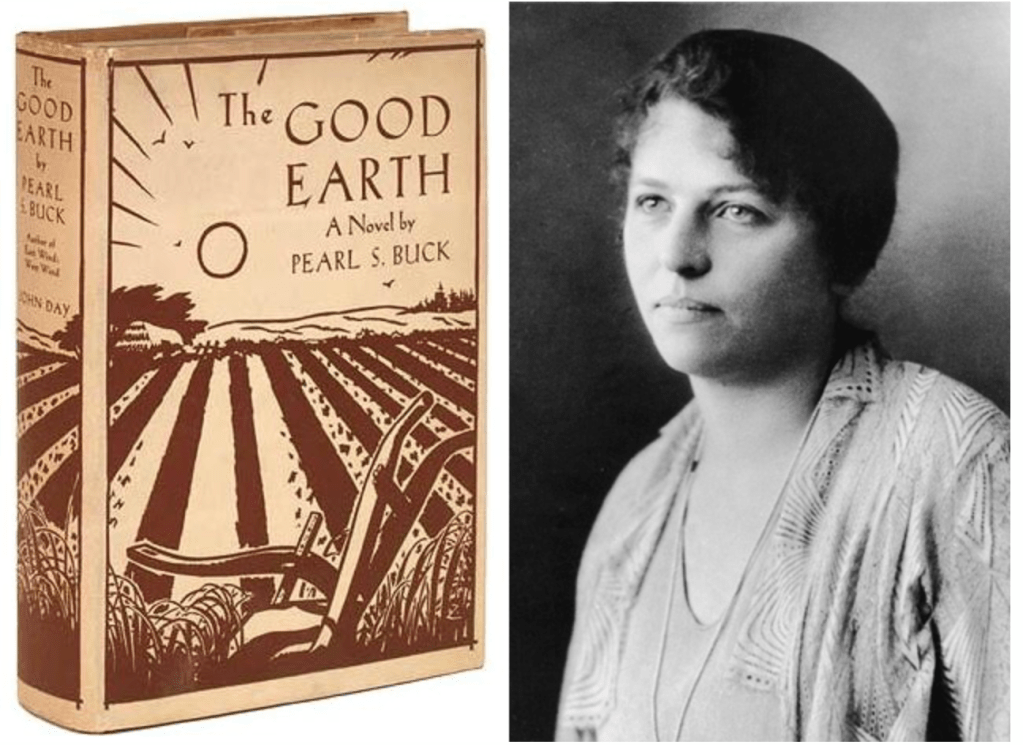
I reread Pearl S. Buck’s novel The Good Earth this month, and was again impressed with how compelling that 1931 classic is. Buck’s depiction of the relationship between Chinese peasant farming couple Wang Lung (hardworking/ambitious) and O-Lan (hardworking/stoic) was something to behold — as was Wang’s eventual, disappointing lack of respect for that marriage as he became more “successful” in life.

Normally I’d consider watching the movie version of a novel, but I’ll take a pass on this one. That’s because The Good Earth film of 1937 stars two white performers — Paul Muni and Luise Rainer — as Wang and O-Lan despite Buck wanting Chinese or Chinese-American performers. (Some lesser roles in the movie went to people of Asian descent.) Of course, Buck was not of Asian descent herself, but did spend many years of her childhood and adulthood in China.

Hollywood’s racist/catering-to-what-much-of-the-public-supposedly-wanted “whitewashing” of characters of color was not unusual back in the day, even as the practice continued here and there in more-recent decades.

For instance, 1994’s The House of the Spirits movie based on Isabel Allende’s terrific 1982 novel of the same name was justly criticized for having non-Hispanic actresses and actors in most of the major roles. Great performers — Meryl Streep, Glenn Close, Jeremy Irons, Winona Ryder, Vanessa Redgrave, etc. — but not the right ethnicity for the parts.

Miscasting also happened when white actor Alec Guinness played Indian character Professor Narayan Godbole in the 1984 film based on E.M. Forster’s 1924 novel A Passage to India.

In 1997, white actor Casper Van Dien was Johnny Rico in a film based on Robert A. Heinlein’s 1959 sci-fi novel Starship Troopers. In the book, the character was Juan “Johnny” Rico, of Filipino descent.

Also, Mexican-American attorney Mickey Haller from Michael Connelly’s 2005 novel The Lincoln Lawyer and its sequels was played in a 2011 movie by white actor Matthew McConaughey. This was rectified in a later TV series starring Manuel Garcia-Rulfo.

In addition, the 2003 film based on Philip Roth’s 2000 novel The Human Stain starred Anglo actor Anthony Hopkins as Professor Coleman Silk, an African American who “passes” as white.

The white Mickey Rooney played an Asian supporting character in the 1961 movie version of Truman Capote’s 1958 novella Breakfast at Tiffany’s.

Returning to the 1930s, white actor Sam Jaffe got the part of the ancient Asian “High Lama” in the Lost Horizon film (1937) based on James Hilton’s mesmerizing 1933 novel of the same name.

The King and I film (1956) based on Margaret Landon’s novel Anna and the King of Siam (1944) starred Yul Brynner, a white actor, as Asian royalty.

William Shakespeare’s character Othello has been played in movie versions by white actors such as Orson Welles (1951) and Laurence Olivier (1965). A shame that renowned African-American actor/singer/activist Paul Robeson — who memorably portrayed Othello on the stage multiple times — wasn’t invited to do a movie version. (Robeson died on January 23, 1976 — 50 years ago as of this past Friday.)

Of course, there have been some instances in recent decades where performers of color have portrayed fictional or real-life white people — including Black actor Morgan Freeman as Red in the 1994 film The Shawshank Redemption based on a Stephen King story, and Black actress Noma Dumezweni as the adult Hermione Granger in the play Harry Potter and the Cursed Child inspired by J.K. Rowling’s Harry Potter novels. This kind of casting also happened in Lin-Manuel Miranda’s blockbuster musical Hamilton and in a production of Arthur Miller’s Death of a Salesman I saw in my town about 15 years ago. I have no problem with these infrequent occurrences; I see them as compensation of sorts for white performers historically getting most of the best roles.

Your thoughts about, and examples of, this topic?

An added, somewhat-related comment: In the United States, “law enforcement” has a vile history of murdering people of color who are either innocent or committed minor infractions. Yesterday, the Trump regime’s Gestapo-like federal agent thugs added to their crimes against innocent non-white Americans by murdering a second innocent white Minnesotan this month — both of whom (Renee Nicole Good and ICU nurse Alex Pretti) tragically found themselves in the “role” of people of color victimized by out-of-control “policing.” If there is any justice, Trump as well as his sociopathic administration appointees and masked “law enforcement” goons will all end up in prison someday.

Misty the cat says: “I will only go out in the snow today if someone gifts me their Nobel Prize.”

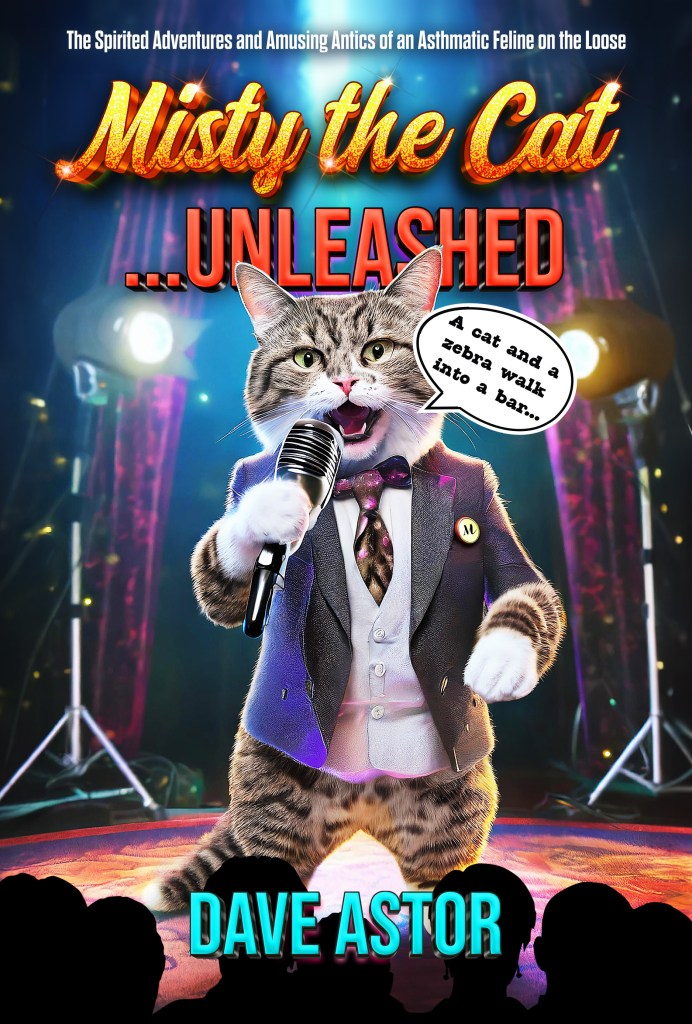
My comedic 2024 book — the part-factual/part-fictional/not-a-children’s-work Misty the Cat…Unleashed — is described and can be purchased on Amazon in paperback or on Kindle. It’s feline-narrated! (And Amazon reviews are welcome. πŸ™‚ )

This 90-second promo video for the book features a talking cat: πŸ™‚

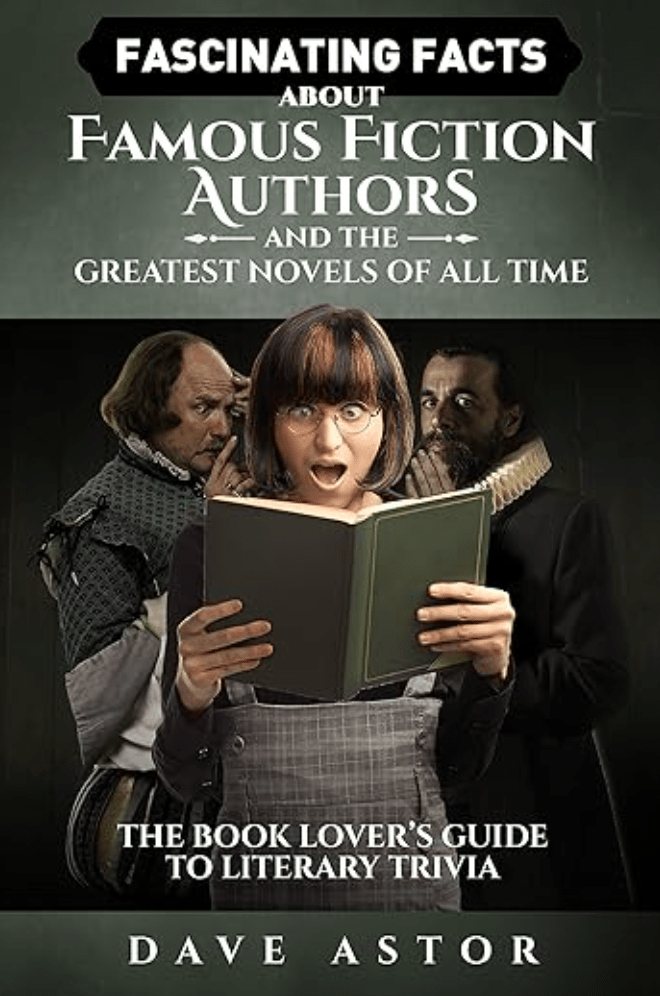
I’m also the author of a 2017 literary-trivia book

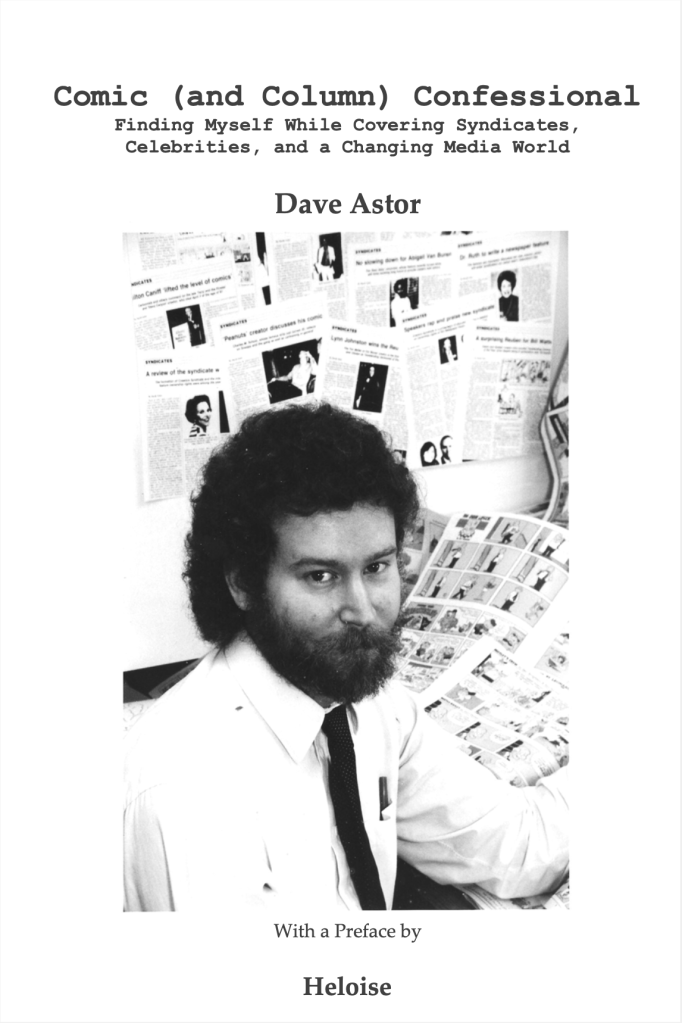
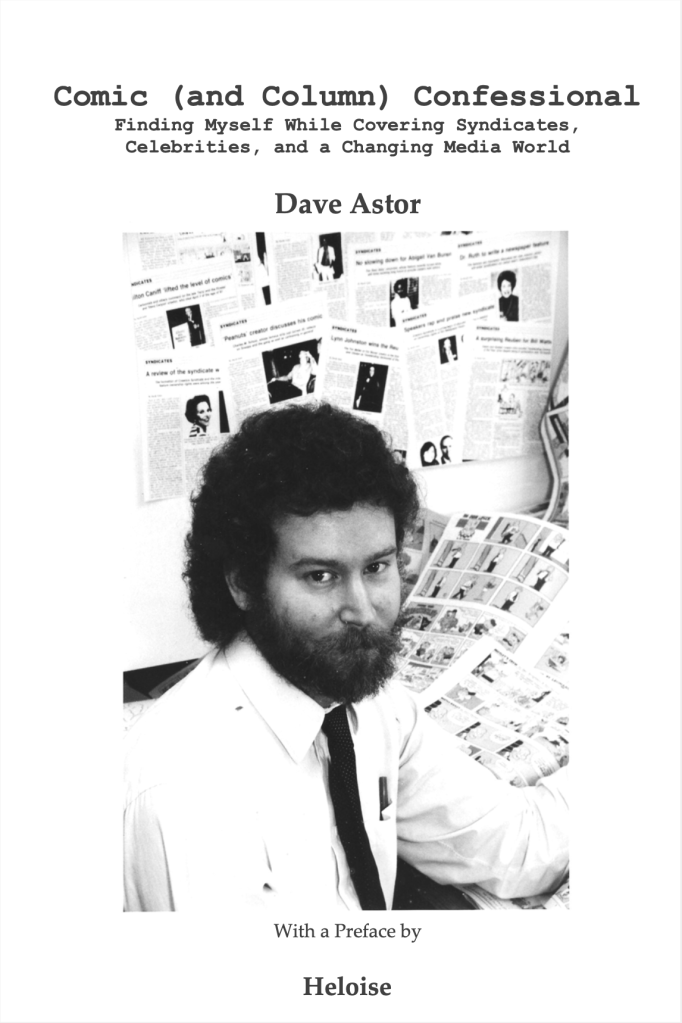
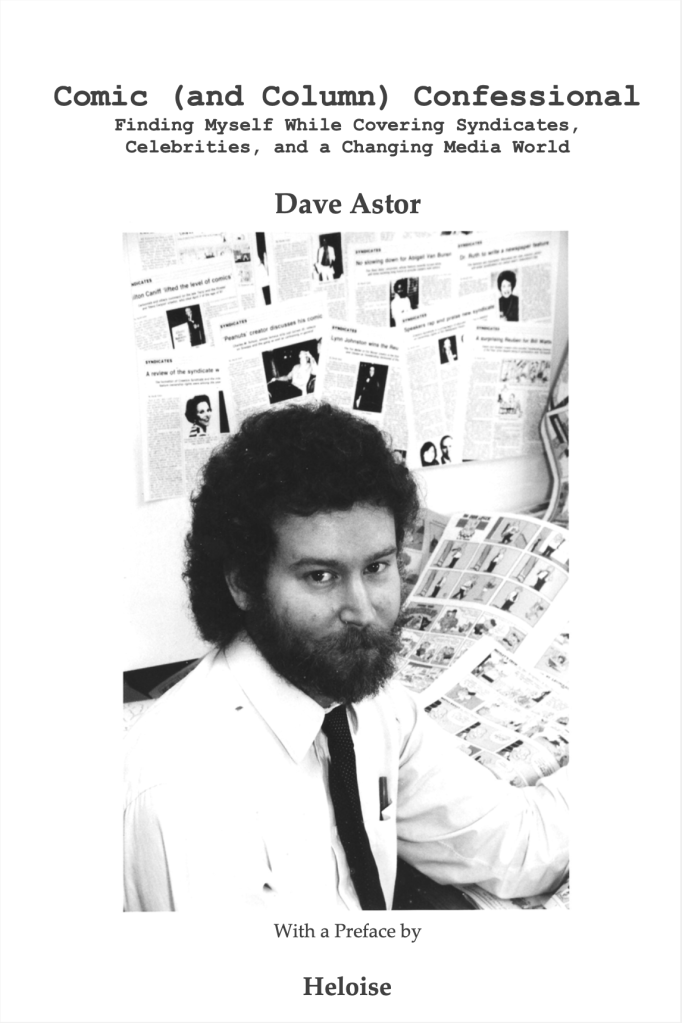
…and a 2012 memoir that focuses on cartooning and more, including many encounters with celebrities.
In addition to this weekly blog, I write the 2003-started/award-winning “Montclairvoyant” topical-humor column every Thursday for Montclair Local. The latest piece — about an upcoming special congressional election and more — is here.

Optimistic Fiction Can Be Optimal

Election Day on November 4 brought some good news during a very dark year for American politics. Various progressive and centrist candidates decisively won state and local races that were in part votes against the cruel, far-right Trump regime — providing some hope for people who want kinder and gentler government.

The highlight for me was the resounding victory of Zohran Mamdani over Andrew Cuomo for mayor of New York City, where I used to live and work — and just 12 miles east of my current apartment in New Jersey. Mamdani ran a masterful campaign focusing on affordability, enabling the 34-year-old Democrat/democratic socialist to become NYC’s youngest mayor in over a century and its first Muslim mayor when he’s sworn in on January 1. Cuomo — who ran as an independent after losing the Democratic primary to Mamdani in June — is a mean-spirited, Trump-like figure (even endorsed by the Republican president!) who resigned in disgrace as New York governor in 2021 after being credibly accused of sexual misconduct by 13 women, after causing many deaths by allowing nursing homes to readmit hospital patients with Covid, etc.

Being in a good mood, I thought I’d write a post about novels that are utopian — or at least contain a lot of hope, feature extraordinarily nice characters, etc. I’ve written before about dystopian novels, so it’s a pleasure to go the opposite route today. πŸ™‚

One utopian novel I thought of is Edward Bellamy’s Looking Backward (1888), in which Boston-based protagonist Julian West travels forward in time from 1887 to 2000 and finds that society is doing pretty well in a democratic socialist sort of way. (Reminded me a bit of the Star Trek franchise’s often sunny view of the future.) We get the added bonus in Looking Backward of the debit card being invented by the author — who, incidentally, was a cousin of “Pledge of Allegiance” writer Francis Bellamy.

I also thought of Island (1962), Aldous Huxley’s final novel. As utopian as the author’s Brave New World was dystopian, Island features a cynical journalist who lands on an…island…and finds himself observing a very appealing society. Not one of Huxley’s best novels, but it was interesting to get a feel-good story from him.

There’s also Lost Horizon, James Hilton’s 1933 novel about a visit to an idyllic place called Shangri-La. The part-utopian tale is mesmerizing.

Both utopian and cautionary is Nathaniel Hawthorne’s A Blithedale Romance (1852), set in a commune that’s not as wonderful as it ideally could be. In fact, the semi-autobiographical novel kind of satirizes would-be utopian life.

Not-utopian novels that are mostly upbeat and/or heartwarming are semi-utopian in a way, as can be books that offer happy endings after the protagonist faces challenges. I’m looking at you, L.M. Montgomery; her novel The Blue Castle (1926) and its Valancy Stirling star are real mood-lifters. There are of course many other nice, kind characters — such as Tiny Tim of Charles Dickens’ A Christmas Carol (1843) — with positive outlooks on life even if life, in some cases, has dealt them a bad hand.

The novel I read most recently, The Chemist (2016) by Stephenie Meyer of Twilight fame, is a page-turning thriller that focuses on the tough, brainy, loner, brave-but-often-insecure female title character who goes by different names. As this small-in-physical-stature former government agent tries to fend off multiple murder attempts, she meets a teacher (Daniel) who is about as sweet and amiable as it gets.

Thoughts about and/or examples of this theme?

My next post will appear either later than usual on Sunday, November 16, or on Monday the 17th.

Misty the cat says: “As leaves turn brown, it’s either autumn or Snickers bars have a new look.”

My comedic 2024 book — the part-factual/part-fictional/not-a-children’s-work Misty the Cat…Unleashed — is described and can be purchased on Amazon in paperback or on Kindle. It’s feline-narrated! (And Amazon reviews are welcome. πŸ™‚ )

This 90-second promo video for the book features a talking cat: πŸ™‚

I’m also the author of a 2017 literary-trivia book

…and a 2012 memoir that focuses on cartooning and more, including many encounters with celebrities.

In addition to this weekly blog, I write the 2003-started/award-winning “Montclairvoyant” topical-humor column every Thursday for Montclair Local. The latest piece — commenting on election results in my town, New Jersey, and New York City — is here.

A Kitty Tries to Be Witty

“Perhaps I should wake up and write a blog post,” says Misty. (Photo by Maria.)

I, Misty the cat, guest-blog for Dave every two months. I last did this on April 13 and today is June 8, so that’s…hmm…actually not quite two months. Reminds me of when Dave returned some novels to the library five days before their due date, and the indignant book drop expelled said novels with such force that they traveled back in time and landed on the heads of the three Karamazov brothers. Fortunately, each of the books was under 400 pages.

But Fyodor Dostoevsky’s 824-page The Brothers Karamazov is even longer than my average nap, during which I experience “Dreams” more often than Fleetwood Mac did at their 1977 concerts. And Dostoevsky’s 1880 novel might have been the first volume of an even longer work if the Russian author hadn’t died in early 1881. Perhaps a trilogy of sorts — like Suzanne Collins’ The Hunger Games (about me nudging my cat-food bowl so that each serving lands in the exact center) and J.R.R. Tolkien’s The Lord of the Rings (about my epic quest to be a male feline version of the Ernestine telephone operator played by Lily Tomlin).

I recommend shopping at Pop Culture R Us for all your celebrity-name-dropping needs.

Speaking of decades-ago entertainment, do you remember the 1978 movie Same Time, Next Year about a married woman and a married man who have a multi-year annual affair? That film partly inspired the long-term romance of Mallory Blessing and Jake McCloud in Elin Hilderbrand’s 2020 novel 28 Summers, which I read last week and found to be a wonderful, poignant book. It’s 422 pages in hardcover, which explains why various other 19th-century Russian fictional characters are donning helmets to avoid concussions. Helmets with stickers saying “Please Don’t Name Your Cat Anna Karenina.”

I’ll add that 28 Summers has an alternate-history element, with Jake’s wife Ursula DeGournsey running for President of the United States in 2020. Reminds me that my aforementioned cat-food bowl is shaped sort of like the Oval Office, and even has a tiny edible desk.

Other novels featuring politicians? Stephen King’s The Dead Zone, Robert Penn Warren’s All the King’s Men, J.K. Rowling’s The Casual Vacancy, Fannie Flagg’s Standing in the Rainbow, and Sinclair Lewis’ It Can’t Happen Here, to name a few. When my cat-food bowl was empty for five seconds, you know what I screamed? Yes, I screamed “It can’t happen here!!!”

A century ago, Lewis had quite a run of notable novels: Main Street (1920), Babbitt (1922), Arrowsmith (1925), Elmer Gantry (1927), and Dodsworth (1929). It Can’t Happen Here was published in 1935, eight decades before my 2015 birth year — which means that in 2025 I’m now…furry.

I’m sometimes asked how I, the kitty Misty, consume literature. Smeared with tasty cat food, of course. But, seriously, I read novels in the traditional print-book format rather than via eBook or audiobook. I guess I’m “old school,” like the 1636-founded Harvard University. I expect only a few members of The Class of 1640 to be at Harvard’s 2040 alumni reunion; they’re the ones who reside with cats, who help humans live longer.

Long-lived humans in literature? The over-2,000-year-old Lazarus Long of five Robert Heinlein novels; Ayesha, who also clocks in at about two millennia in H. Rider Haggard’s She; the 250-year-old High Lama of James Hilton’s Lost Horizon; etc. I assume they had well-funded retirement accounts.

One of the oldest of my fellow cats is Garfield, who has starred in Jim Davis’ 1978-founded comic strip for 47 years! Which reminds me that my next guest blog post will appear in 47 years — minus 46 years and 10 months. So, August 2025. That’s also when my teen human Maria is starting college, which means her bedroom will be…mine!

Dave will reply to any comments because I, Misty the cat, am busy consulting with an interior decorator about changes in Maria’s room (where you see me in the photo atop this post). A kitty can’t have enough scratching posts, treat dispensers, and paintings of hairballs playing poker.

Misty the cat says: “That railing’s shadow means 4,378 more days of spring.”

Dave’s comedic 2024 book — the part-factual/part-fictional/not-a-children’s-work Misty the Cat…Unleashed — is described and can be purchased on Amazon in paperback or on Kindle. It’s feline-narrated! (And Misty says Amazon reviews are welcome. πŸ™‚ )

This 90-second promo video for Dave’s book features a talking cat: πŸ™‚

Dave is also the author of a 2017 literary-trivia book

…and a 2012 memoir that focuses on cartooning and more.

In addition to this weekly blog, Dave writes the 2003-started/award-winning “Montclairvoyant” topical-humor column every Thursday for Montclair Local. The latest piece — about New Jersey’s upcoming primary election and much more — is here.