Observe the Learning Curve

Sometimes, authors dazzle with their debut novels. Mary Shelley and Frankenstein. Emily Bronte and Wuthering Heights. Carson McCullers and The Heart Is a Lonely Hunter. Ralph Ellison and Invisible Man. Arundhati Roy and The God of Small Things. Zadie Smith and White Teeth. Etc.

But more frequently there’s somewhat of a learning curve for authors, which is totally natural — and totally the topic of this post.

I came to this topic via the work of Stephenie Meyer, three of whose novels I recently read in reverse order: first The Chemist (2016), then The Host (2008), and then Twilight (2005). Twilight was of course Meyer’s mega-bestselling debut featuring a teen human and teen vampire who fall in love. An interesting take on the vampire genre that held my interest even as it was too often written in a pedestrian way. Published three years later, The Host turned out to be a fascinating sci-fi story — and more skillfully crafted. Finally, The Chemist thriller about a hunted female ex-government agent was full of superb prose and dialogue. Meyer’s wordsmithing arc was impressive.

It all reminded me a bit of J.K. Rowling’s progression. The first Harry Potter novel was compelling and tons of fun as the author did her world-building, even as the writing itself was not super-scintillating. But Rowling’s prose and dialogue got better and better as her next six wizard-realm books emerged, and continued in that direction with the skillfully written The Casual Vacancy and the riveting crime series starring private investigators Cormoran Strike and Robin Ellacott.

Both Rowling and Meyer can be rather long and wordy in their more recent offerings, but I’m here for it.

Going much further back in time, I liked the feminist idea of Jack London’s early novel A Daughter of the Snows, but the dialogue was laughable and the prose clunky. One year later, London’s pitch-perfect The Call of the Wild was released. I don’t know what writing elixir the author imbibed during those 12 months, but I want it. 🙂

F. Scott Fitzgerald’s college-set debut novel This Side of Paradise is quite uneven, only hinting at the greatness of The Great Gatsby published just five years later.

John Steinbeck’s debut novel Cup of Gold was an okay, rather conventional pirate novel before much of his later fiction became light years better — including, of course, his masterpiece The Grapes of Wrath.

Willa Cather’s first two novels — Alexander’s Bridge and O Pioneers! — exhibited some authorial growing pains before they were followed by her absorbing The Song of the Lark and then the masterful My Antonia.

Dan Brown’s early-career novel The Da Vinci Code was VERY popular and quite ingenious in its way but even more awkwardly written than Stephenie Meyer’s Twilight. I never read Brown again, but I assume his writing improved?

Any comments about, or examples of, this theme?

Misty the cat asks: “How am I supposed to shovel this stuff without opposable thumbs?”

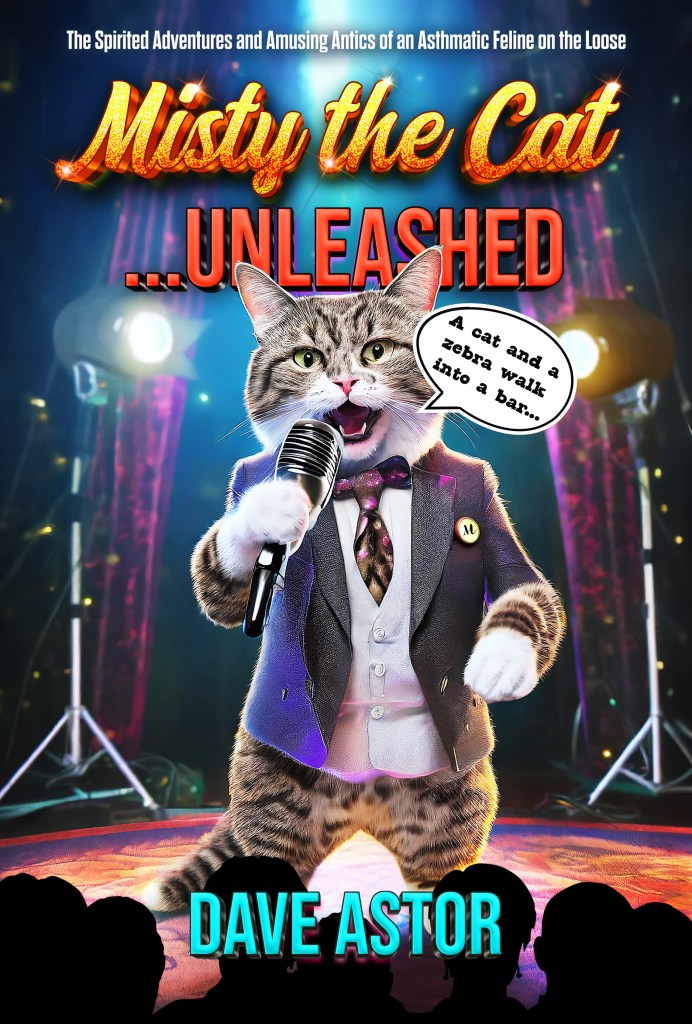
My comedic 2024 book — the part-factual/part-fictional/not-a-children’s-work Misty the Cat…Unleashed — is described and can be purchased on Amazon in paperback or on Kindle. It’s feline-narrated! (And Amazon reviews are welcome. 🙂 )

This 90-second promo video for the book features a talking cat: 🙂

I’m also the author of a 2017 literary-trivia book

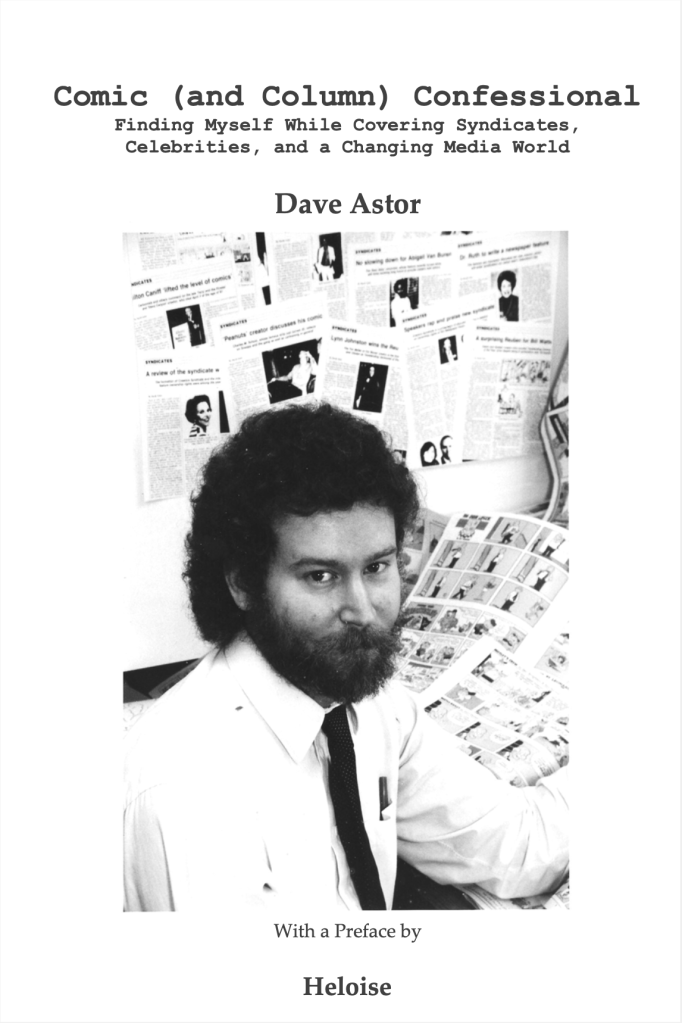
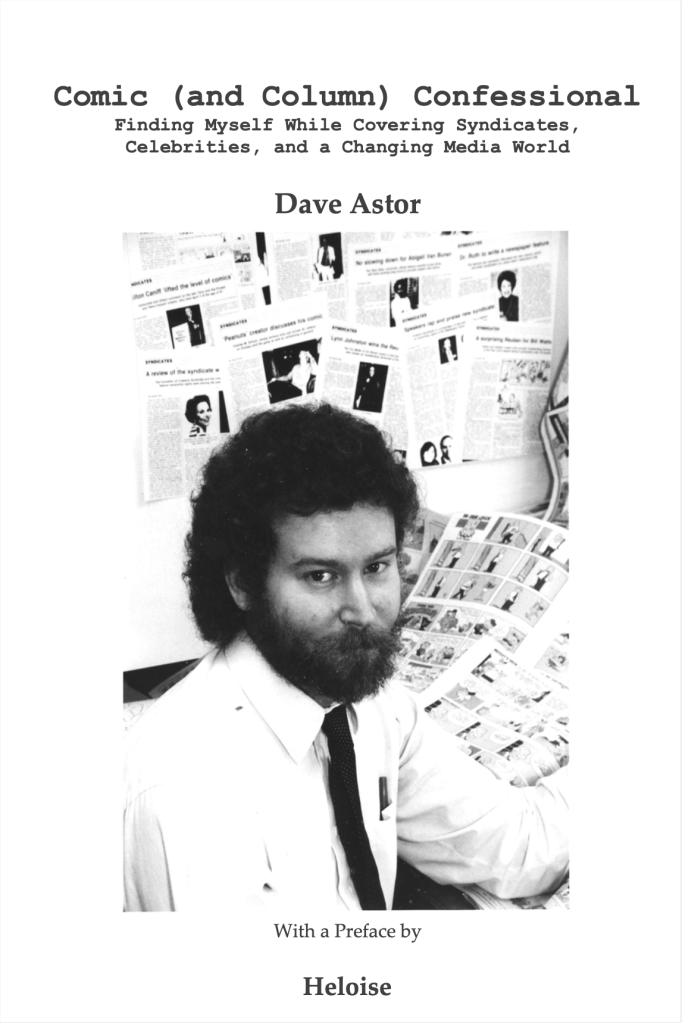
…and a 2012 memoir that focuses on cartooning and more, including many encounters with celebrities.
In addition to this weekly blog, I write the 2003-started/award-winning “Montclairvoyant” topical-humor column every Thursday for Montclair Local. The latest piece — which has “no appeal” appeal — is here.

Books Helped Robert Redford’s Film Career Shine

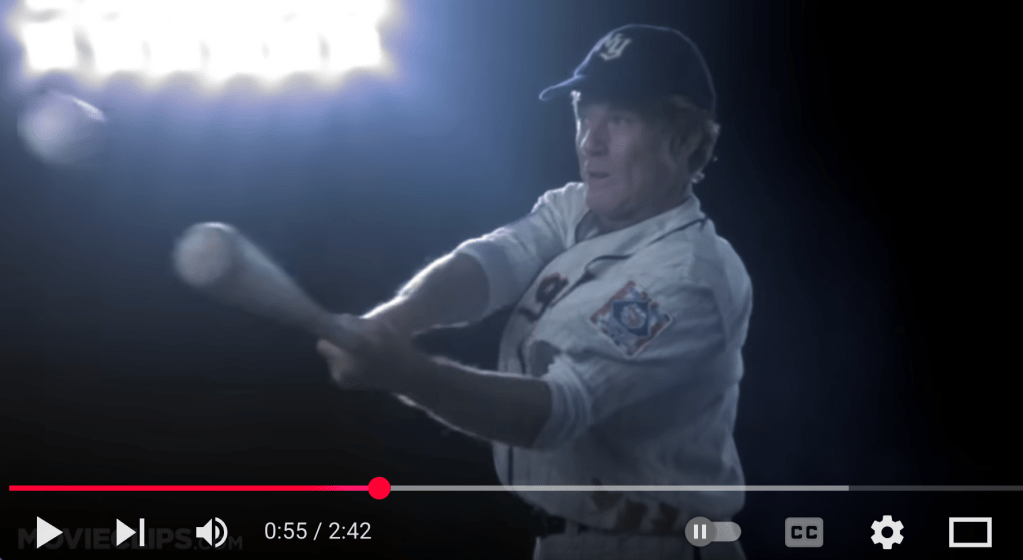
A screen shot from The Natural movie starring a man who hit a home run in life.

Like many other performers, Robert Redford appeared in a number of films inspired by books. I’ll discuss several of those screen adaptations in this post, which appears five days after the sad news of the iconic star’s September 16 death at age 89.

The first movie that came to mind was The Natural (1984), based on Bernard Malamud’s 1952 novel of the same name. Redford starred as baseball player Roy Hobbs, who returns to the game in midlife after being shot as a young man. (The Hobbs name is an amalgam of real-life baseball legends Ty Cobb and Rogers Hornsby.) Quite a compelling and affecting motion picture, which — as is often the case with Hollywood — has a happier ending than the one in the more nuanced book.

A decade earlier, another major role for Redford was in the 1974 movie version of F. Scott Fitzgerald’s 1925 classic The Great Gatsby. Redford was Jay Gatsby to Mia Farrow’s Daisy Buchanan.

I didn’t realize until researching this post that 1973’s The Way We Were movie — in which Redford co-starred with Barbra Streisand — was based on Arthur Laurents’ 1972 novel rather than on a totally original screenplay.

Redford was not only an actor but a director, producer, longtime champion of independent films, and laudable activist for the environment and other causes. Several of those multiple talents came together for the 1988 movie version of John Nichols’ 1974 novel The Milagro Beanfield War. The film — whose cast included Ruben Blades and Sonia Braga — didn’t do well at the box office, but Redford received praise for his direction of it.

I’ve read Nichols’ and Malamud’s books, but not Judith Guest’s 1976 novel Ordinary People, for which Redford won the directing Oscar for the 1980 movie version starring Mary Tyler Moore, Donald Sutherland, and Timothy Hutton. I’ve seen the film, which is excellent.

Redford of course also acted in movies based on notable nonfiction books — including 1937’s Out of Africa memoir by Isak Dinesen (Redford co-starred with Meryl Streep in the 1985 film) and 1974’s Watergate-scandal-focused All the President’s Men by Washington Post reporters Bob Woodward and Carl Bernstein (Redford played Woodward opposite Dustin Hoffman as Bernstein in the 1976 movie). I’ve read both books, and the films did each of them justice even as their main characters were more glamorous than their written-page counterparts.

A great late-career role for Redford was in the 2017 screen adaptation of Kent Haruf’s very poignant 2015 novel Our Souls at Night, about an older couple’s twilight-years romance. He co-starred with Jane Fonda, repeating a charismatic pairing from several earlier films.

I’ll close with this: Redford lived a life that we’ll remember with affection and admiration for his talent, his kindness, and his social conscience. People such as the cruel Trump and his dreadful toadies will be remembered quite differently when they’re gone.

Any thoughts on Redford, the films and books mentioned in this post, or any book-inspired Redford movies I might have missed? (My post included only titles for which I read the book or saw the film or both.)

Misty the LGBTQ-friendly cat says: “I have two mums, and I’m fine with that.”

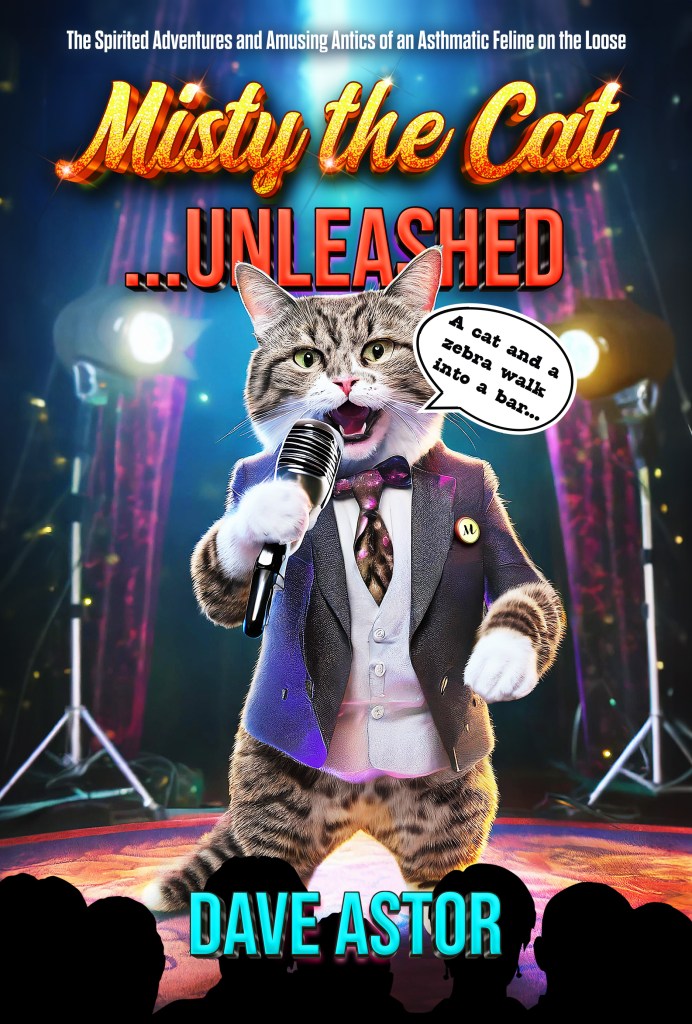
My comedic 2024 book — the part-factual/part-fictional/not-a-children’s-work Misty the Cat…Unleashed — is described and can be purchased on Amazon in paperback or on Kindle. It’s feline-narrated! (And Misty says Amazon reviews are welcome. 🙂 )

This 90-second promo video for the book features a talking cat: 🙂

I’m also the author of a 2017 literary-trivia book

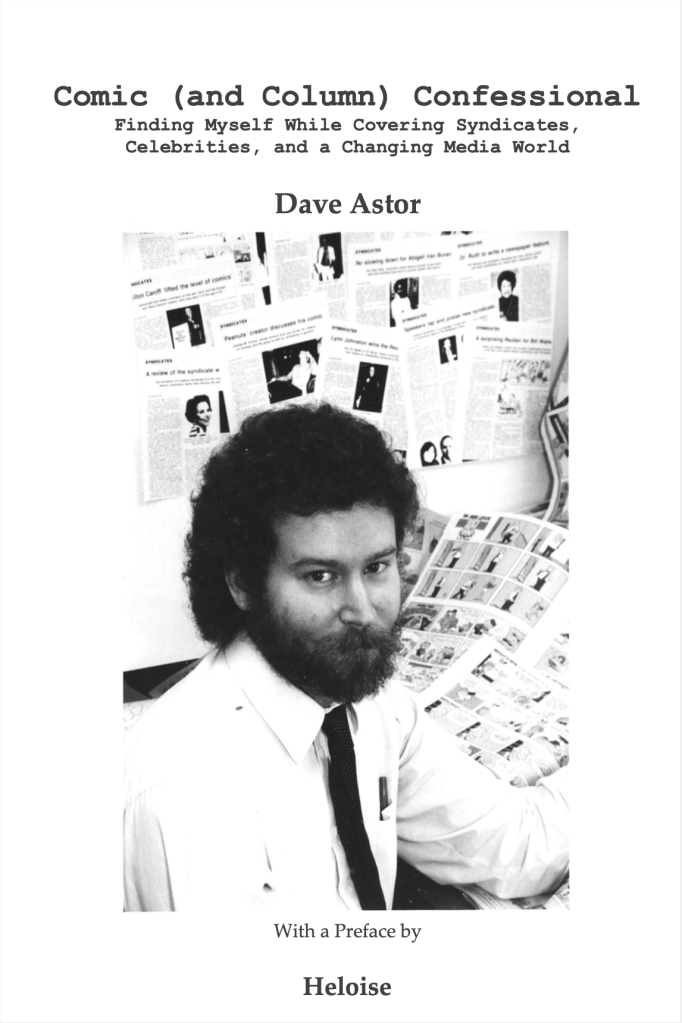
…and a 2012 memoir that focuses on cartooning and more, and includes many encounters with celebrities. (But not Robert Redford. 🙂 )

In addition to this weekly blog, I write the 2003-started/award-winning “Montclairvoyant” topical-humor column every Thursday for Montclair Local. The latest piece — about an exploding school budget deficit and a Township Council member’s sudden resignation — is here.