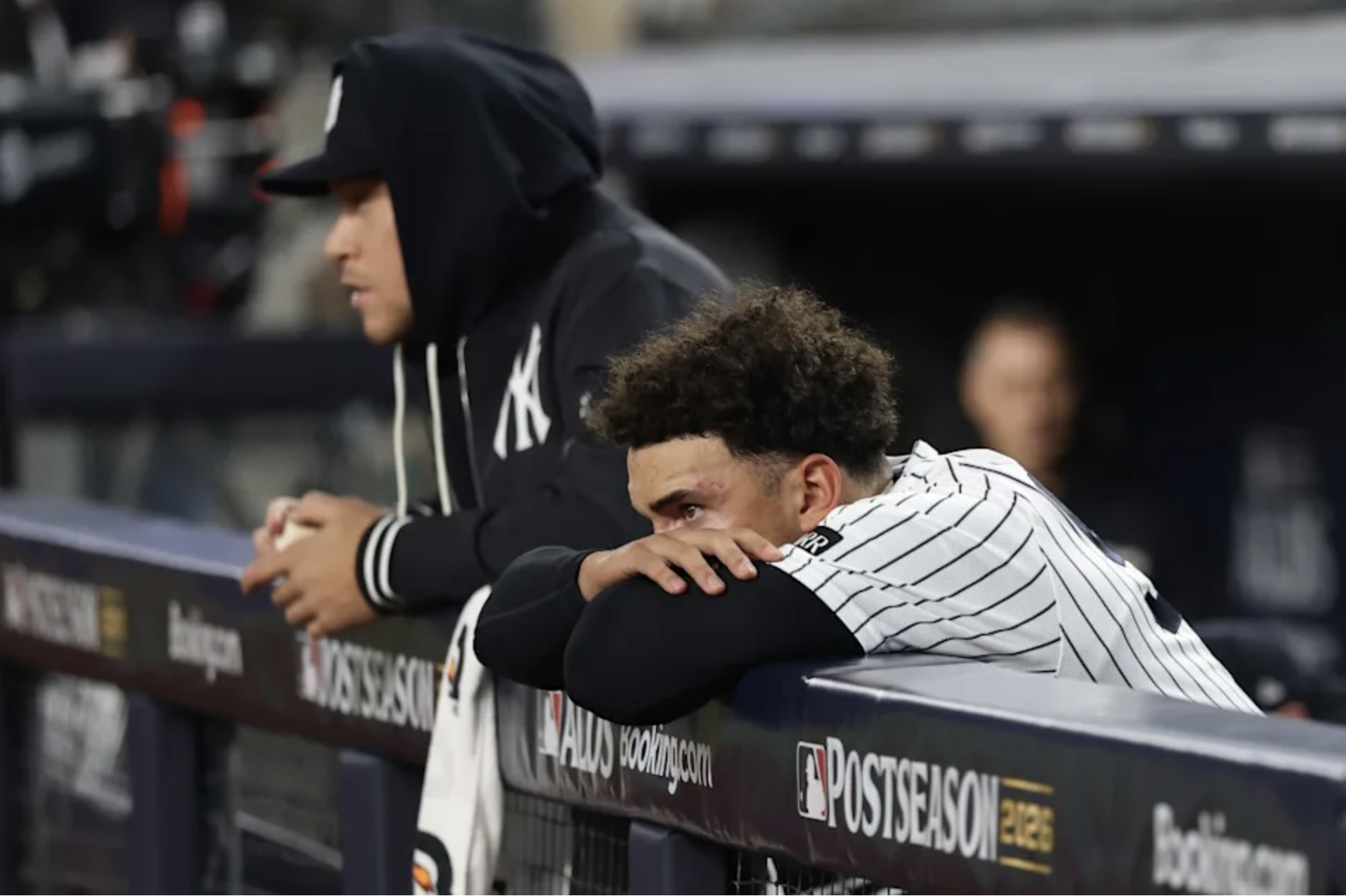
A forlorn Yankees dugout. (Getty Images.)
With the New York Yankees eliminated from the playoffs again last week despite having one of the highest payrolls in baseball, it’s time to take a swing at the topic of underachievers. In literature.
There are various reasons why fictional characters underachieve. Laziness, being spoiled, making dumb decisions, having psychological issues, having some physical or mental disability, etc. And there are cases where underachieving is a good thing – like, say, choosing a more-relaxing lifestyle over a frantic, high-paying job.
Our first underachiever to discuss is Tom Tulliver of George Eliot’s The Mill on the Floss. He’s from an initially affluent family, is favored over his smarter sister Maggie during an ultra-patriarchal 19th century, and so on, but becomes only somewhat successful. Why? For one thing, Tom is not that intelligent despite have some drive and practical skills, and he’s not very capable of “thinking outside the box.”
Another 19th-century character, Isabel Archer of Henry James’ The Portrait of a Lady, also has advantages: smarts, kindness, good looks, an inheritance, some independence. But she gets manipulated into a miserable marriage, and seems too wedded to conventionality to possibly get out of it. Again, a very patriarchal time and place in which to live.
Then there are bright characters whose lives are blighted well into adulthood because of the responsibility they feel, or are browbeaten into feeling, toward problematic parents.
For instance, the title character of Honore de Balzac’s Eugenie Grandet devotes much of her young-adult life to her not-nice, miserly father – essentially assuming the role of her late mother/his late wife.
In Daphne du Maurier’s The Parasites, daughter Celia in the theatrical Delaney family has a lot of drawing talent, but doesn’t pursue that craft as she devotes most of her time to doing stuff for her self-centered, demanding father.
Ignatius J. Reilly of John Kennedy Toole’s A Confederacy of Dunces is a pretty smart guy. But he’s too lazy, too eccentric, and too…various other things to make a success of his life.
Holden Caulfield of J.D. Salinger’s The Catcher in the Rye is also brainy, but drifts through his young life with self-centered and alienated thoughts.
Moving briefly away from novels, famous fictional underachievers include the title character of Herman Melville’s short story “Bartleby, the Scrivener” and Willy Loman of Arthur Miller’s play “Death of a Salesman.”
Of course, novels can feature upward or downward arcs in underachievement and achievement. One upward example is Sydney Carton, of Charles Dickens’ A Tale of Two Cities, who has an unsuccessful life until choosing heroic redemption. One downward example is Gervaise Macquart, of Emile Zola’s The Drinking Den, who painstakingly builds a successful life as a businesswoman until being dragged down by her once-admirable roofer husband after an injury sends him spiraling into alcoholism.
Your thoughts about, and examples of, this topic?
Misty the cat says: “My apartment-complex inspection has turned up no ‘Lord of the Rings’ orcs.”
My comedic 2024 book — the part-factual/part-fictional/not-a-children’s-work Misty the Cat…Unleashed — is described and can be purchased on Amazon in paperback or on Kindle. It’s feline-narrated! (And Amazon reviews are welcome. 🙂 )
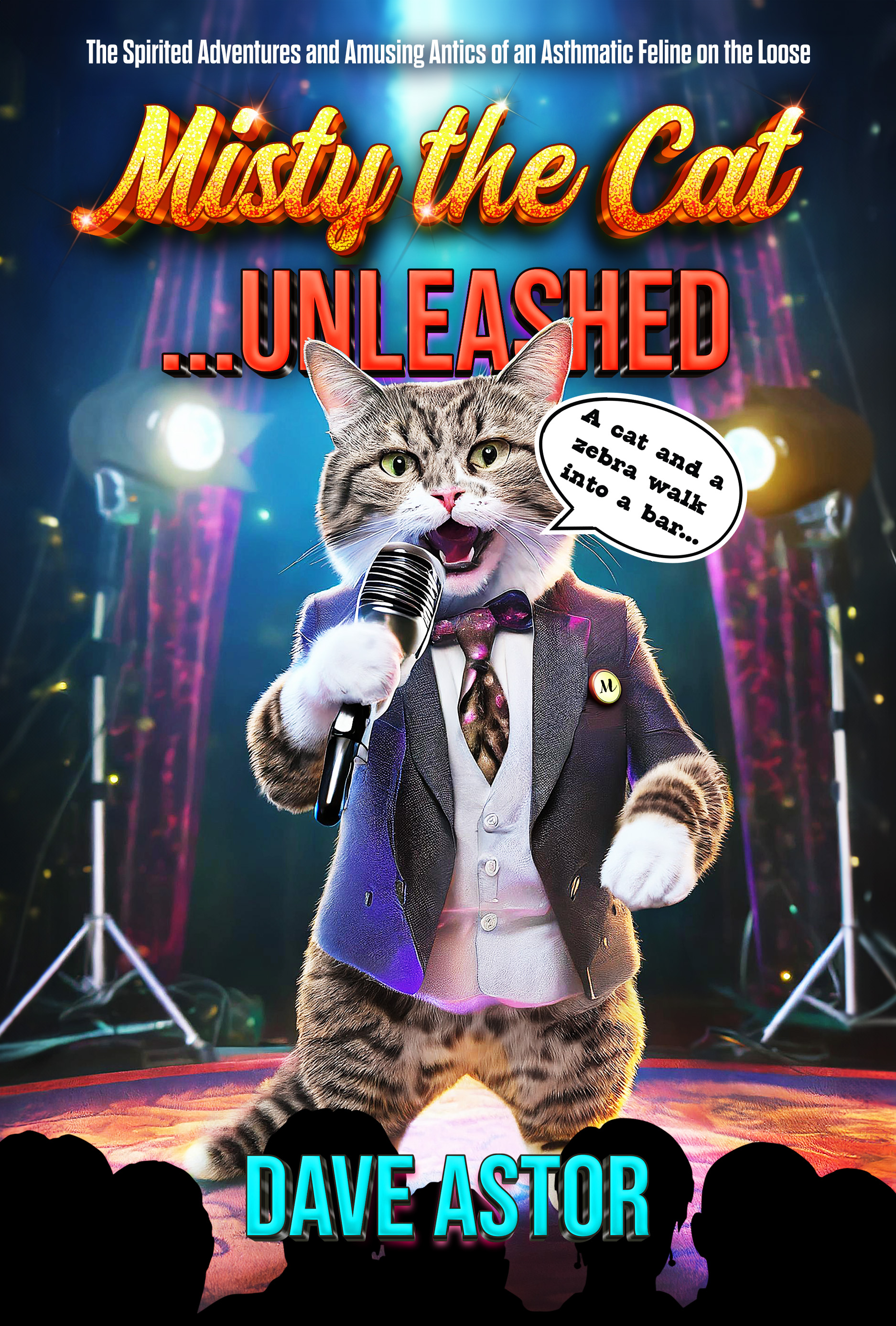
This 90-second promo video for the book features a talking cat: 🙂 (Not my voice. 🙂 )
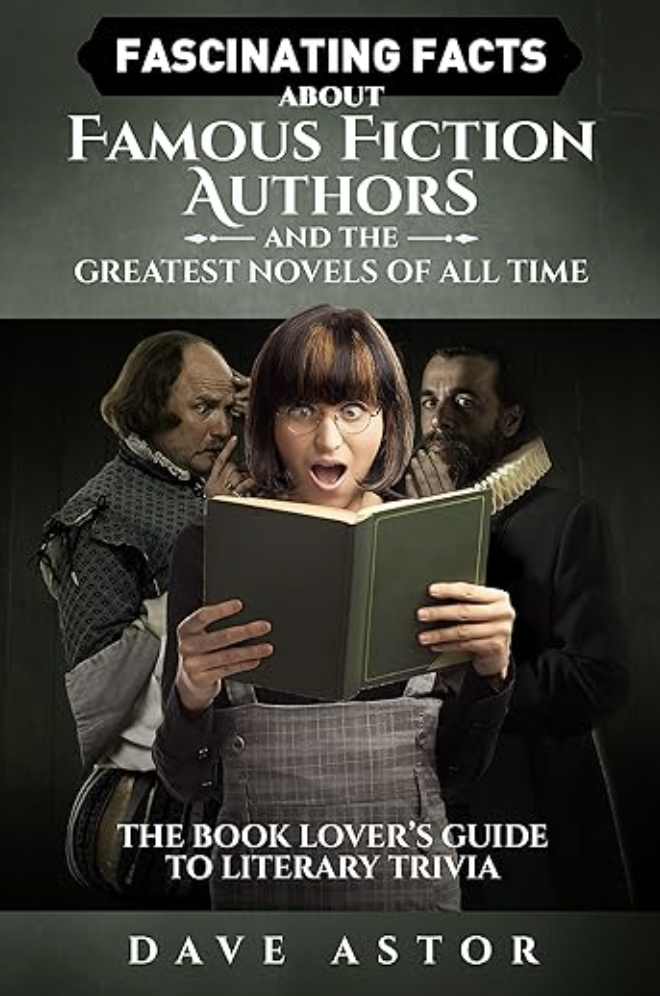
I’m also the author of a 2017 literary-trivia book…
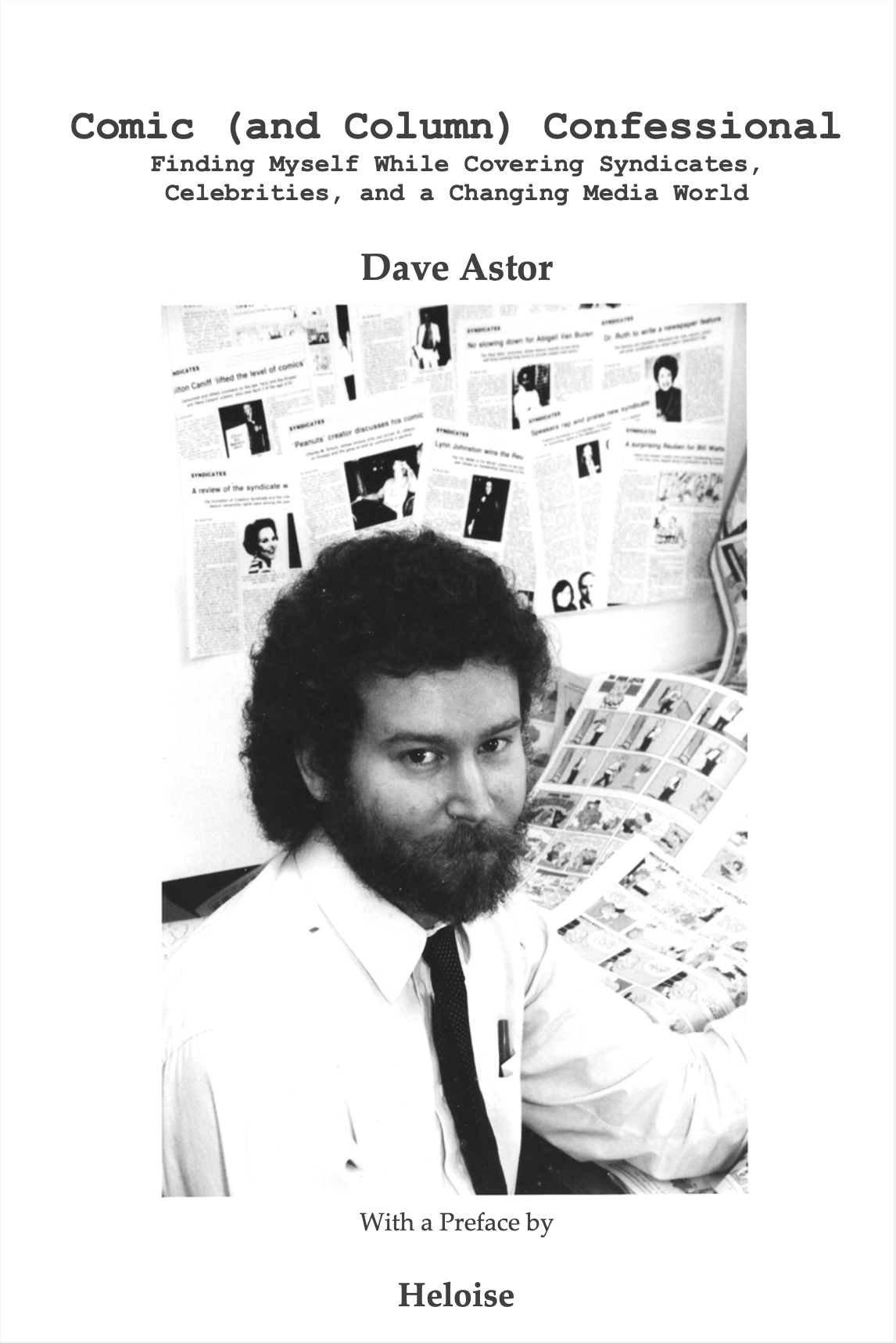
…and a 2012 memoir that focuses on cartooning and more, including many encounters with celebrities.
In addition to this weekly blog, I write the 2003-started/award-winning “Montclairvoyant” topical-humor column every Thursday for Montclair Local. The latest piece – which covers parking, privacy, and polling places — is here.


Dear Dave
Thomas Mann’s “Buddenbooks” is full of underachievers. And of course Ahab in Moby Dick goes down in every respect. Interesting is the case of Dr Hermann Faust in Goethes “Faust”. At least in the end he is saved, the Eternal Feminine draws him upward.
We notice, thinking about it, we remember more protagonists going down than up.
The Fab Four of Cley
🙂 🙂 🙂 🙂
LikeLiked by 2 people
Thank you, Klausbernd! Great mentions! I hadn’t thought of Ahab as an underachiever example, but of course he is; his obsessive mission was a complete failure. And you have a point about many other protagonists also not succeeding as much they’d want.
One of these days I’ll read “Buddenbrooks” and “Faust”…
LikeLike
Hi Dave!
A most unusual post topic this week!
The first thing I thought about fictional underachievers is; will that character be appealing enough to carry the plot?!
Although I’m yet to read, ‘A Tale of Two Cities’, I like the idea of growth in character. That in itself will produce an interesting plot narrative.
Nice post Dave although the majority of the books mentioned I am not familiar with. ‘The Catcher in the Rye’, I have heard mixed reviews on. Some say it’s dull while others say it’s brilliant!
Thanks as always for the books!
Greetings from London!
Sharon 😊
LikeLiked by 1 person
Thank you, Sharon! Yes, some fictional underachievers are more appealing than others. We can sympathize with them, relate to them, root for them, etc., but in some cases we can be bored with them, frustrated with them, very depressed with them, etc.
“A Tale of Two Cities” is definitely a classic; perhaps the best writing Dickens ever did.
You’re right about “The Catcher in the Rye” having mixed popularity. It’s a good novel in its way, but I’m in the camp of not liking it very much. I found the protagonist really annoying — perhaps a reflection of the author not being a likable guy.
LikeLiked by 1 person
Hi Dave!
Thank you for your reply. That’s the thing I think Dave, as long as the character is likeable, then we the readers will follow them along regardless of what they achieve (or not)!
Ah, you have mentioned ‘A Tale of Two Cities’ before. I’m keen to read it! Thanks for that!
‘The Catcher in the Rye’ – given the mixed reviews I’m not that keen to read it! There’s too many books out there that I’m sure I’ll enjoy more!
Thanks once again,
Sharon 🤗
LikeLiked by 1 person
You’re very welcome, Sharon! 🙂
So true that likable characters, whether they achieve a lot or not, draw in readers.
I don’t think anyone should regret skipping “The Catcher in the Rye.” 🙂
LikeLiked by 1 person
Thanks Dave! I very much appreciate your opinion on ‘The Catcher in the Rye’.
And yes, appealing characters is everything in good fiction.
Have a great rest of the week!
Sharon 📚 😊
LikeLiked by 1 person
It’s interesting to read what many consider to be a modern classic — such as “The Catcher in the Rye” — and feel the book doesn’t live up to the hype.
Hope you have a great rest of the week, too, Sharon!
LikeLiked by 1 person
That’s the annoying thing! You rush to read a ‘modern classic’ and then find it disappointing! I find that about a lot of novels now!
Thanks Dave for your kind wishes for the rest of the week.
😊
LikeLiked by 1 person
Yes, Sharon! Some novels definitely disappoint. 😦 Which makes it even more satisfying when other novels turn out to be great. 🙂
LikeLiked by 1 person
Indeed Dave, great novels!! One of life’s little compensations!! 😊
LikeLiked by 1 person
Absolutely, Sharon! 🙂
LikeLiked by 1 person
😀
LikeLiked by 1 person
🙂
LikeLiked by 1 person
The first thing that came to mind was “The Boxer” by S&G:
I am just a poor boy
Though my story’s seldom told
I have squandered my resistance
For a pocket full of mumbles
But reining it in from music, I think one underachiever was Sydney Carton (A Tale of Two Cities, Charles Dickens) who starts as a brilliant man but squanders his abilities…
Interesting post! 😎
LikeLiked by 1 person
Thank you, Darryl! “The Boxer” is a terrific song, and the person in it definitely doesn’t achieve as much as he’d like.
Sydney Carton is indeed also an underachiever, though of course he does something about that at the end of the book.
LikeLiked by 1 person
Hi Dave, an interesting topic. Many of the books I’ve read where women underachieve it was for to the misogynistic family / society they lived in. Examples are the mother and Meggie from The Thorn Birds, Tess of the d’Urbervilles and Hester from The Scarlet Letter. Upward trajectories – Henry from The Red Badge of Courage, Bill Mason from The Day of the Triffids, Ayla from The clan of the cave Bear, Oliver from Oliver Twist. Downward trajectories – Paul from All Quiet on the Western Front. Most of the characters in Carrie, Jack Torrance from The Shining and Neil Perry and Mr Keating from Dead Poets Society.
LikeLiked by 2 people
Thank you, Robbie! Great point about how a misogynistic society and/or a misogynistic family can sadly lead to underachievement for females. Excellent examples from Colleen McCullough, Thomas Hardy, and Nathaniel Hawthorne.
Also excellent examples of upward and downward trajectories. Sometimes those trajectories extend over several books; for instance, Ayla definitely overcame and achieved a lot in “The Clan of the Cave Bear,” but continued to be even more inspirational in the sequels.
LikeLiked by 1 person
Hi Dave, you are right about Ayla. I mentioned the first book because its the one I like the best in the series.
LikeLiked by 1 person
I agree, Robbie, that it’s the best book in the series, though I also liked the other five to varying degrees.
LikeLiked by 1 person
Yes, agreed
LikeLiked by 1 person
🙂
LikeLiked by 1 person
Writers are drawn to underachieving, stuck, and miserable protagonists because perfection is boring, but struggle is universal. While a hero who effortlessly wins is satisfying as wish-fulfillment, a character who is failing at life offers a deep, rich canvas for exploring the human condition.
LikeLiked by 2 people
Thank you, Shaharee! SO true and SO well said! Yes, happy/confident/successful characters might be inspiring by also kind of boring…and might make readers feel jealous and inadequate in comparison. Underachieving characters can also be boring in some cases, and can evoke reader feelings of “why can’t they do better?” But, in general, many are very interesting and relatable — and, as you say, give authors a lot to work with.
LikeLiked by 1 person
Gee, I can’t think of a better example than Sydney Carton. Good one!
So, I’ll offer up Henry in Hollywood by Bukowski. Fiction based in reality, a rummy come poet and writer; it seems Bukowski is the under achiever who achieves both in real life, and in fiction.
You come up with some fab topics Dave… and I’m not just trying to butter you up because I don’t know if my example is a good one. 😉
LikeLiked by 2 people
Thank you, Resa! I appreciate the very kind words. 🙂 And I agree that Charles Bukowki, like his Henry Chinaski alter ego, gives off the vibes of being an underachiever but is actually quite an overachiever in certain ways.
LikeLiked by 1 person
Yay, thanks Dave!
LikeLiked by 1 person
🙂
LikeLiked by 1 person
Another great post, Dave and a nice collection of comments. Beyond the popular books in your list, I’m not familiar with the examples or characters. The only one I do know is A Confederacy of Dunces. That was a gift from a friend who gave it to me because I told him I was interested in writing. I enjoyed it, and I gave one of my main characters the middle name ‘Ignatius’.
I might dip back into Dickens and suggest that Bob Cratchit might be considered by some to be an under achiever. I think he was actually quite successful, but not in a way we might measure success.
LikeLiked by 3 people
Thank you, Dan! “A Confederacy of Dunces” is definitely enjoyable; one of the funnier novels out there. Nice that it inspired a character name for you!
Yes, having a low-level job but having a loving family life makes a person — such as Bob Cratchit — successful in a very important way.
LikeLiked by 1 person
Hi Dave, I can think of just one. It was a lovely book which I borrowed from our library. It’s called “The Elegance of the Hedgehog” by Muriel Barbery. Here’s a little blurb: The book follows events in the life of a concierge, Renée Michel, who deliberately masks her immense intelligence behind a facade of predictable, unachieving mediocrity to preserve her solitary peace. But then she was uncovered by an unstable but intellectually precocious girl named Paloma Josse. Paloma is the daughter of an upper-class family living in the large and beautiful townhouse where Renée works. It’s definitely worth reading this one (I would say).
LikeLiked by 2 people
Thank you, Chris! Great example of underachievement — in this case, underachievement for personal peace purposes. I love the premise of that book! On my to-read list. 🙂
LikeLiked by 1 person
😊
LikeLiked by 1 person
🙂
LikeLiked by 1 person
What a great post; it’s nice to turn the focus onto the underachievers! I’ve always wanted to read Henry James’ The Portrait of a Lady, but forgot to add it to my list (I’ve been meaning to for the past 20 years!).
LikeLiked by 2 people
Thank you, Ada! Yes, underachievers should get the spotlight once in a while. 🙂
Though it’s mostly downbeat, “The Portrait of a Lady” is my favorite Henry James novel. Written before his sentences got too wordy and too convoluted.
LikeLiked by 1 person
Bartleby is a favorite of mine, as I’ve mentioned before. I’m drawing a blank for other underachievers as I so often do when trying to remember things. But, as always, I enjoyed your examples. (K)
LikeLiked by 2 people
Thank you, Kerfe! “Bartleby, the Scrivener” is an amazing short story. I once read a collection of Melville’s short stories, and was pretty impressed; he did well in that format.
LikeLiked by 1 person
I’m late to the party today, Dave, so all I can come up with at present is Kamal, in ‘The Cairo Trilogy’ by Naguib Mahfouz. He’s an intelligent young man, but becomes a lowly teacher in a primary school. He’s capable of so much more, but having grown from religious boy into a sceptical secular man with a philosophical turn of mind, he’s plagued by doubts which translate into inaction on his part. He’s also disappointed in love, falling for a girl who’s far above him socially, so remains a bachelor for his entire life. In short, he’s a massive waste of great potential. On another level of under-achieving in the book is his older half-brother Yasin, who does a desk job which provides him with a living, firstly because he’s too lazy to seek anything better and also because he likes to spend his time in drinking and other baser pursuits of life. If I can think of anyone else I’ll be back, but thanks for a great topic. Have a good week. 🙂
LikeLiked by 2 people
Thank you, Laura! That sounds like a great example; actually, two varied examples in one trilogy! And very well-described. I guess the author Naguib Mahfouz, as a Nobel Prize winner, is NOT an underachiever. 🙂
LikeLiked by 1 person
Absolutely not! An excellent author, sadly deceased.😪
LikeLiked by 1 person
Thankfully, he did live a long life.
LikeLiked by 1 person
Dave, thanks for highlighting the underachievers among our fictional characters. I’ve only read a few of the titles you’ve mentioned. The stories we tell mirror the real world and, sad to say, many of us are underachievers for all kinds of reasons. Even those characters, real and fictional, who may succeed in achieving their dream will lose something or someone along their climb to the top. They may even lose themselves.
By the way, thanks to one of your posts, I’m now reading “The Hunter” by Tana French. I love the way she builds her world and characters. I look forward to reading more of her work.
LikeLiked by 2 people
Thank you, Rosaliene! Excellent thoughts, elegantly expressed! Many of us do see ourselves in fictional underachievers, and, yes, achievers/overachievers often have to give up a lot (including family-related stuff) in order to have the time and energy to achieve a lot.
Great that you’re reading Tana French! She is indeed an extraordinary contemporary author. I’m looking forward to reading the third book (“The Keeper”) in that Cal Hooper trilogy.
LikeLiked by 1 person
I appreciate the work you do in bringing these extraordinary contemporary authors to our attention 🙂 ❤
LikeLiked by 1 person
Thank you very much, Rosaliene!
Meanwhile, I appreciate you bringing great poets from various countries to our attention via your compelling blog. 🙂
LikeLiked by 1 person
Thanks 🙂 ❤
LikeLiked by 1 person
You’re very welcome, Rosaliene! 🙂
LikeLiked by 1 person
Wow…so much to dig into here. Thank you, Dave. Especially because I’ve not read many of the books you’ve referenced. Truly — you amaze me. I don’t know that I have anything compelling to add, but I can say Willy Loman’s character in “Death of a Salesman” stands out as a poignant and painful portrayal of male fragility. I think it was the first ever “script as a book” I read when I was in high school. The raw vulnerability still sticks with me. ❤️
LikeLiked by 2 people
Thank you, Vicki! So hard to read everything we want to read, especially when one has other things going on such as writing and promoting one’s own books! I agree with what you said about “Death of a Salesman.” Such a poignant and powerful play. I also first read it, and then later saw a TV version and a live version.
LikeLiked by 1 person
I soooo look forward to your posts each week because I learn so much. Thanks for taking the time, inviting us in. All the best…to you, Laurel and Misty, most of all! I’m behind in checking out his video escapades! 😎❤️😎 Apologize for me!
LikeLiked by 1 person
I appreciate the very kind words, Vicki! 🙂 As for Misty the cat, he figures that if people don’t watch his videos on, say, October 9th and 10th, they can make that up on October 32nd and 33rd.
LikeLiked by 1 person
Haha! Misty is SO wise! But of course! 🤪❤️🤪
LikeLiked by 1 person
🙂
LikeLiked by 1 person
Speaking of ‘effects on the Reader*’ on me your post was a mix of ‘oh yeah, I read that’ and ‘I’ve heard of that (author or title)… this in the context of one of those time-travel flashes that are as much emotion as intellect (more commonly associated, at leas for me, with music from the before time.
and, predictably (my) follow-up reaction being… “Well, come on! Read it. That’s why god invented kindles.” lol
seriously, my question to myself is “What, did you read like Evelyn Wood back then or maybe time passed differently.”
fun post
*keying off Marie’s comment
LikeLiked by 3 people
Thank you, Clark, for the relatable comment! Yes, the read it/didn’t read it/should I read it/etc. thought process in a world where there are way too many books to get to, even if one is a speed reader.
LikeLiked by 1 person
Dave, another exceptional post!!! This is such an important topic because these characters can teach us something about our own lives. They make us think about whether we are really living in step with ourselves, or simply moving along the path that seems expected of us. Your thoughts brought to mind a book that I just reread a few months ago – Night Train to Lisbon. Raimund Gregorius, the main character, is intelligent and accomplished, yet his life has become so narrow that much of what he might have experienced seems to have passed him by. His journey to Lisbon feels almost like an awakening to the life he had not yet lived. This is one of my takeaway quotes from my reading: “Given that we can live only a small part of what there is in us — what happens with the rest?”
LikeLiked by 4 people
Thank you, Rebecca! So true that the achievements or underachievements of fictional characters can make us think about what we, and people we know, are doing or not doing. And I appreciate the “Night Train to Lisbon” example and quote! That quote is quite something.
LikeLiked by 1 person
It was a great book and I enjoyed watching movie with Jeremy Irons.
LikeLiked by 1 person
A great actor, Rebecca!
LikeLiked by 1 person
Great post, Dave!
When thinking of underachievers in literature, Ivan Goncharov’s Oblomov immediately comes to mind: the ultimate portrait of laziness and missed potential.
Thank you for this wonderful reading list!
LikeLiked by 4 people
Thank you, Luisa! I’ve read a lot of 19th-century Russian literature, but somehow missed “Oblomov.” From your excellent description and then seeing more about the novel on Wikipedia, he does seem like an underachiever’s underachiever. 🙂
LikeLiked by 2 people
I’m so glad you liked the suggestion, Dave! If you ever decide to read it, I’m sure you’ll find his unique “art of doing nothing” both tragic and fascinating.
Have a wonderful week
LikeLiked by 2 people
Luisa, I’ll definitely look for it during my next library visit (which might be at least a month away). Very curious how Ivan Goncharov handles things. 🙂 Have a great week, too!
LikeLiked by 1 person
Great to hear, Dave!
It’s a brilliant masterpiece and I’m sure you’ll find Goncharov’s perspective fascinating.
Enjoy your next library trip whenever it happens, and have a truly great week!
LikeLiked by 1 person
Thank you, Luisa! That’s a high recommendation. 🙂 Fingers crossed that my local library has “Oblomov,” and, if so, I’m greatly looking forward to reading it!
LikeLiked by 1 person
You’re more than welcome, dearest Dave
LikeLiked by 1 person
🙂
LikeLiked by 1 person
The title character in J.P. Dunleavy’s The Ginger Man is an underachiever, including in the area of personal hygiene.
LikeLiked by 4 people
Thank you, Liz, for that excellent underachieving example! Being unsuccessful in personal hygiene is not good… 🙂 😦
LikeLiked by 3 people
You’re welcome, Dave. 🤢 I read that book over forty years ago, and can still remember that nauseating personal hygiene scene.
LikeLiked by 1 person
Over 40 years? That’s a memorable scene! (Albeit negative.)
LikeLiked by 1 person
I won’t repeat it.
LikeLiked by 1 person
A very interesting post Dave. Always good to give the ‘unders’ a shout out.
LikeLiked by 4 people
Thank you, Shehanne! A great point-of-view to think of some underachievers in a positive way. 🙂
LikeLiked by 2 people
Well it was your mention of Sydney Carton that did it. Let’s face it, in that realm of ‘unders’ he is in a class of his own.
LikeLiked by 2 people
True, Shehanne! He is indeed in a class of his own.
LikeLiked by 2 people
Excellent examples! I’m only familiar with a few of the books you mentioned. I guess I’m an underachiever in reading about underachievers. 🙂
LikeLiked by 5 people
Ha, Marie! 😂 Great line. 🙂 Thank you for the comment!
LikeLiked by 2 people