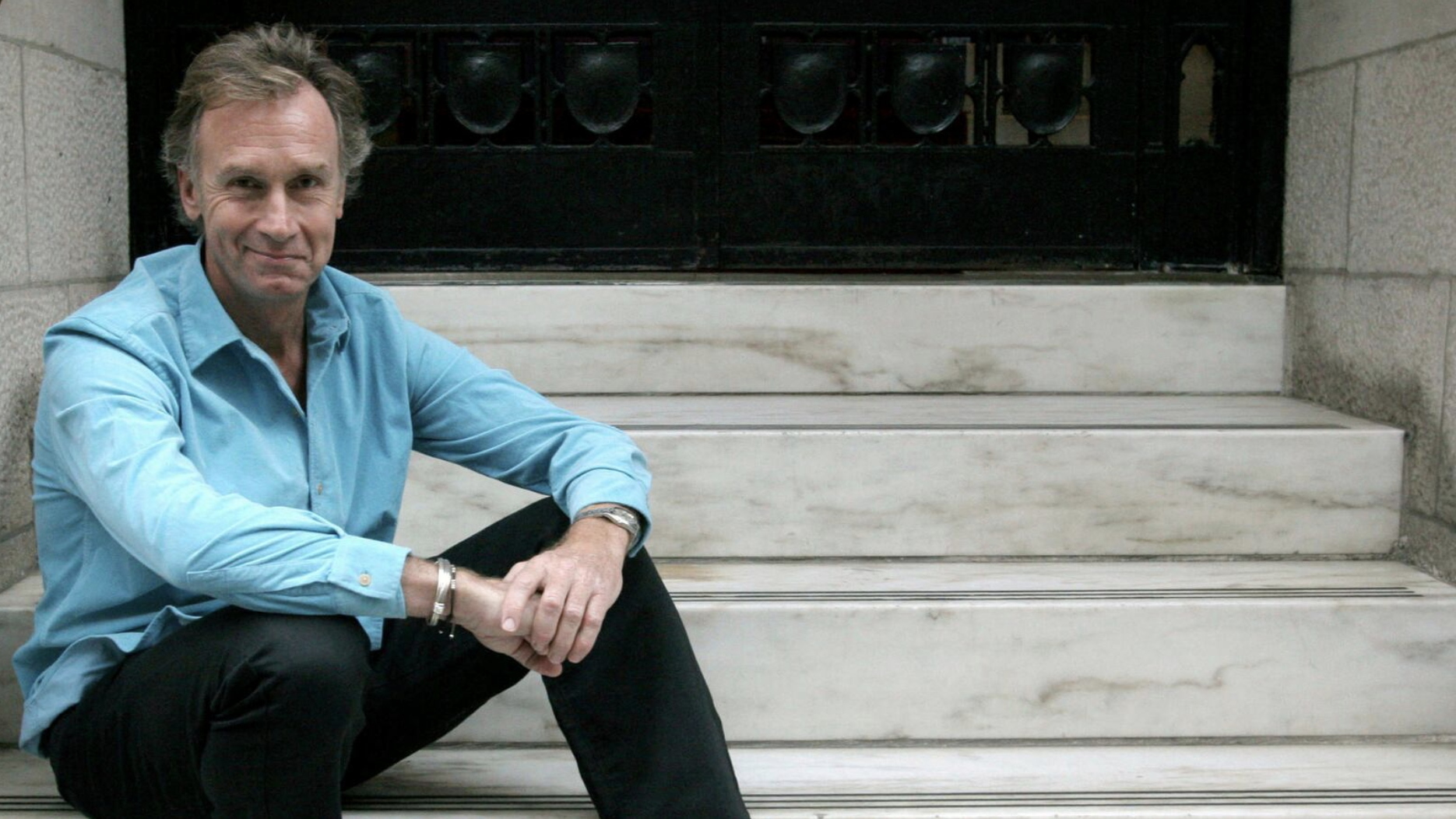
Nicholas Evans (Associated Press photo/Tina Fineberg).
The last time I devoted a whole post to symbolism in novels was in 2014 – the year this blog started. So, I’d like to revisit that topic via some books I’ve read since then or that I read before 2014 but didn’t mention in that previous post.
As I noted 12 years ago, symbolism can make a novel more interesting and evocative. It’s another element in the mix to draw in readers — along with the plot, characters, prose quality, etc.
I recently read Nicholas Evans’ riveting novel The Divide, which offers a compelling mystery, a heartbreaking family saga…and a symbolic title with multiple meanings. In the book, The Divide is the literal name of a Montana vacation spot where a meeting of two characters (one married to someone else) leads to a fateful romance that helps drive the plot. The title also evokes thoughts of the West/East, rural/urban, and ideological divides in the United States – and of “the divide” between women and men that’s a major theme as the storyline unfolds.
John Steinbeck’s East of Eden does the symbolism thing with a number of Biblical references, including the Trask sons Caleb and Aron having a Cain and Abel dynamic along with the same initials. Their father’s first name in the novel? Adam, of course.
The star of Ralph Ellison’s Invisible Man is obviously not literally an invisible man, but he is one figuratively because African-American citizens – especially decades ago — were not truly and truthfully SEEN by many people in a racist majority-white society.
Marcel Proust’s opus In Search of Lost Time features the serving of a delicious madeleine that triggers nostalgic memories. It’s both a cake and a symbol.
The pigs and other creatures in George Orwell’s Animal Farm are obviously symbolic stand-ins for humans.
Gregor Samsa becoming a giant insect in Franz Kafka’s The Metamorphosis symbolizes alienation, dehumanization, loss of identity, and more.
The title character of Herman Melville’s Moby-Dick is a living/breathing huge white whale but its existence also symbolically represents obsessive pursuit that can be pointless.
In Mark Twain’s Adventures of Huckleberry Finn, the Mississippi River is a…river…but also a literal symbol of freedom for the slave Jim and a more figurative symbol of the opening of Huck’s mind as he matures.
Robert Louis Stevenson uses the title character(s) in Strange Case of Dr. Jekyll and Mr. Hyde to shine a symbolic spotlight on the good-evil duality of many humans.
In my 2014 post, among the many novels I mentioned were George Eliot’s Daniel Deronda (which uses recurring water situations in a symbolic way), Barbara Kingsolver’s The Lacuna (whose title is an actual place in the novel but also symbolically has plot significance as a gap/blank space/missing part), and Jhumpa Lahiri’s The Namesake (in which “Gogol” is the actual name of a character even as that name evokes the absurdity of life in its reference to the often-absurdist Russian author Nikolai Gogol).
My 2014 post also noted that symbolism sometimes involves the initials of character names – including Jim Casy, the Jesus Christ figure in Steinbeck’s The Grapes of Wrath; Martin Eden, the semi-autobiographical “me” in Jack London’s Martin Eden; and Undine Spragg, who embodies crass U.S. materialism and ruthless ambition in Edith Wharton’s The Custom of the Country.
Your thoughts about, and examples of, this topic?
Misty the cat says: “I got my steps today, and also got my ladders.”
My comedic 2024 book — the part-factual/part-fictional/not-a-children’s-work Misty the Cat…Unleashed — is described and can be purchased on Amazon in paperback or on Kindle. It’s feline-narrated! (And Amazon reviews are welcome. 🙂 )
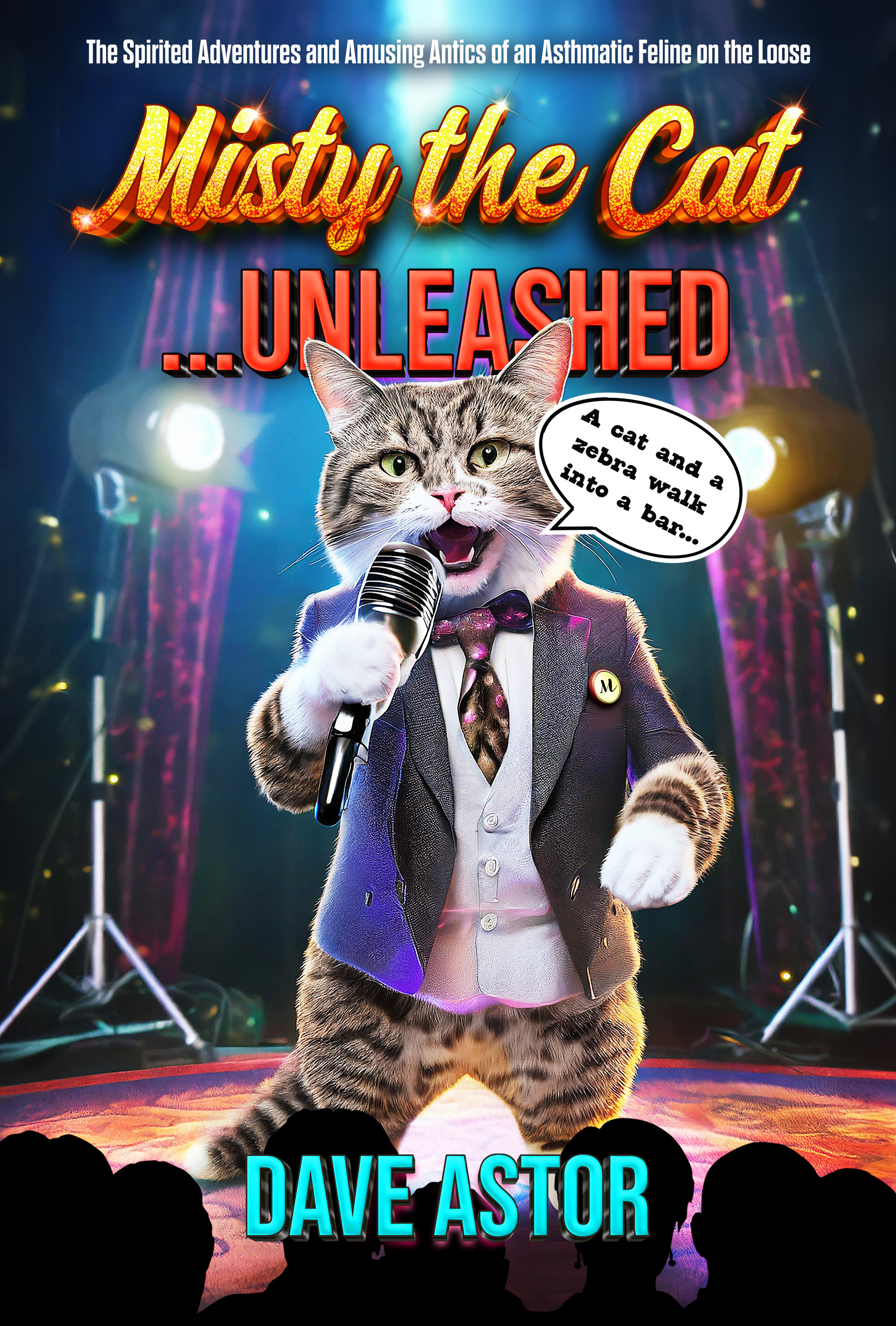
This 90-second promo video for the book features a talking cat: 🙂 (Not my voice. 🙂 )
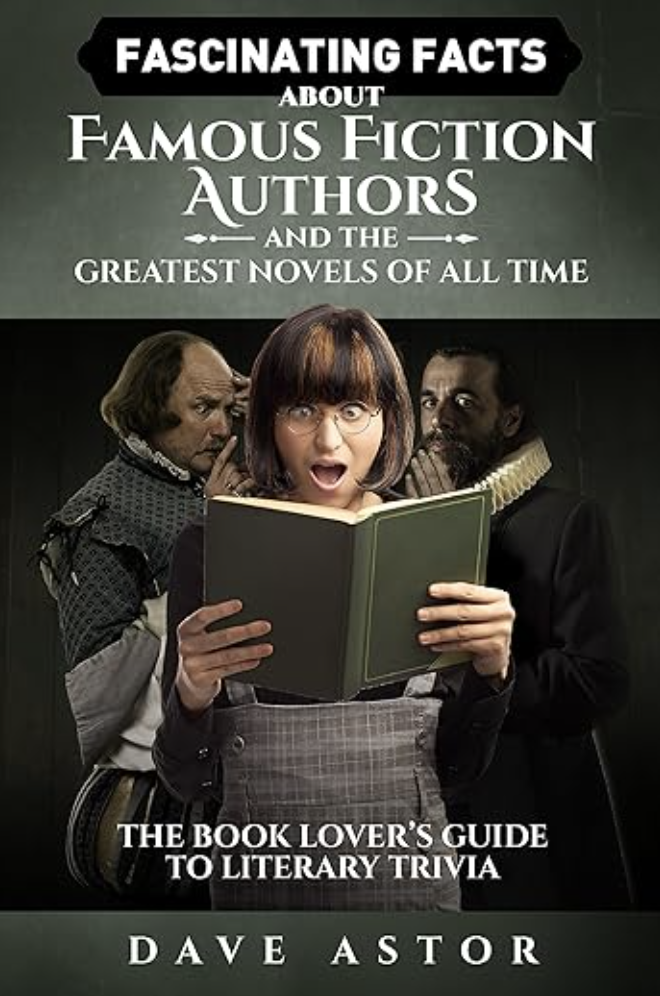
I’m also the author of a 2017 literary-trivia book…
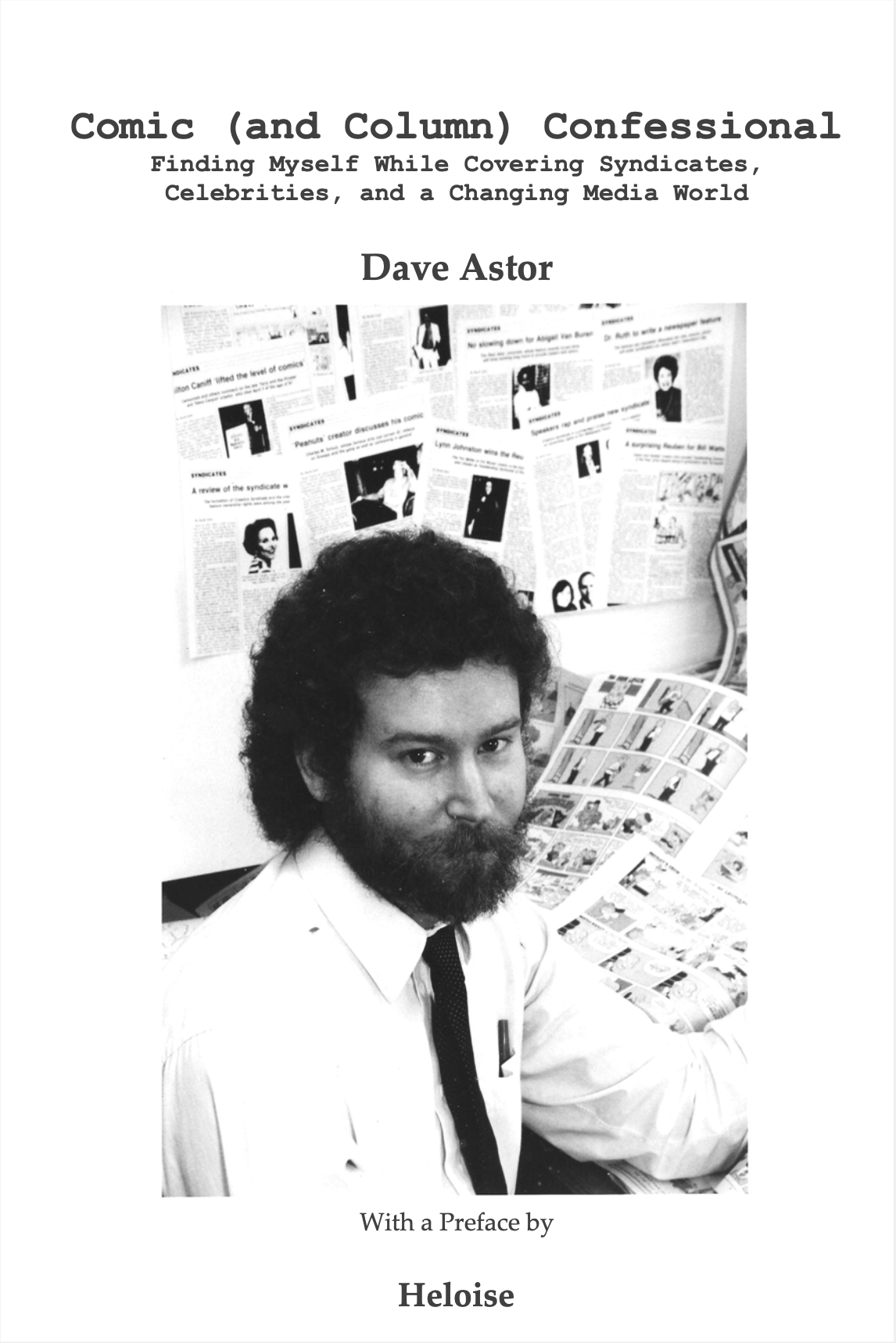
…and a 2012 memoir that focuses on cartooning and more, including many encounters with celebrities.
In addition to this weekly blog, I write the 2003-started/award-winning “Montclairvoyant” topical-humor column every Thursday for Montclair Local. The latest piece – about state school funding and more — is here.


Such an interesting topic.
Don’t tell anyone (lol) but I really enjoyed seeing how many of the books you’ve cited, I’d read. (This joy in the camaraderie of a post/discussion was tempered, however, with coming face-to-face with how long ago it was.)
My recollection of my first encounter with the idea of symbolism in literature time-travels me back to high school. Twain and Stevenson, of coursem and, for god knows what reason my most persistent memory artifact is… Ethan Frome, The Mill on the Floss and, everyone’s favorite ‘The Scarlet Letter. I really enjoyed the classroom discussion of these fun reads. (Never too early in life to practice one’s weird.)
Then, on to college where Metamorphosis and Animal Farm replaced letter sweaters and an interest in mainstream.
The idea of an author factoring in symbolism while crafting such timeless books and stories as are mentioned in your post and the Comments just knocks me out! lol Such talent. ayiiee
(good thing my second WIP went strait for pulp noir. Ain’t nothin’ too ethereal or subtly resonating with the human condition than a strip club owner by the name of Lou Caesare hiring a dancer by the name Rue DeNite. damn! Caesare? no nothing symbolic)
thanks for writing a post I could relate and remember to
LikeLiked by 1 person
Thank you, Clark! I enjoyed your comment! Always fun to have read many of the books a blog post mentions. 🙂 And it’s interesting how many of the same novels are assigned in high school and college (“The Scarlet Letter,” “Animal Farm,” others you listed, etc.). By the way, “Ethan Frome” was the first Edith Wharton novel I read (on my own, not in school) and I think it’s actually quite good. Anyway, it does indeed take skill for authors to include memorable symbolism in novels. And, yes, “pulp noir” and certain other genre books often are pretty much symbol-free.
LikeLike
I was amused to see Dr. Jekyll and Mr. Hyde mentioned, as I just went to Chicago this last weekend and saw the musical adaptation! 🙂 It was pretty good. I love symbolism in literature. When I’m writing my own stories, I try to incorporate it through character names. 🙂
LikeLiked by 1 person
Thank you, M.B.! That’s a dual-personality coincidence. 🙂 Glad the musical adaptation of Robert Louis Stevenson’s novel was enjoyable! And character names are a great way to use symbolism, as you do in your own books. Character nicknames, too; one that comes to mind is The Nightingale in the Kristin Hannah novel of that name.
LikeLiked by 1 person
An excellent book!!
LikeLiked by 1 person
Yes! And an excellent Kristin Hannah novel is excellent indeed!
LikeLike
A theme close to my heart, Dave. As a person who sees symbols everywhere in our day-to-day lives, I use symbols in my writing and enjoy stories rich in symbolism, such as those mentioned in your post. In The Kite Runner by Khaled Hosseini, I saw the kite as a symbol of redemptive power.
LikeLiked by 1 person
Thank you, Rosaliene! Great that you enjoy spotting symbols in real life as well as in books, and that you use them in your writing! I agree that the kite is symbolic in “The Kite Runner” — enough to be part of the title and to be a recurring motif in the novel. It’s been years since I read the book, but I think I remember it even ending with a kite scene.
LikeLiked by 1 person
It’s been too long. I don’t recall the ending 😦
LikeLiked by 1 person
I hear you, Rosaliene. 🙂
LikeLiked by 1 person
I’ve never been a big fan of going on symbol safari; it’s always felt reductive to me. Your post has got me thinking. I would consider the examples you’ve given as metaphors, rather than symbols, but now I’m wondering what’s the difference between a symbol and a metaphor?
LikeLiked by 1 person
Thank you, Liz! “Symbol safari” — ha ha 😂 — love that phrase. 🙂
Great question about the difference between a symbol and a metaphor; not sure I know, either. But if not the same, they’re certainly similar.
LikeLiked by 1 person
😏
LikeLiked by 1 person
🙂
LikeLiked by 1 person
Such a great read, dear Dave.
It’s amazing how a simple madeleine or a river can carry an entire novel’s weight
LikeLiked by 1 person
P.S. Thinking of Italian literature, Luigi Pirandello’s The Late Mattia Pascal is a masterclass in symbolism, where a stolen identity becomes the ultimate symbol of modern alienation
LikeLiked by 1 person
Thank you, Luisa! Glad you enjoyed the post. 🙂
“It’s amazing how a simple madeleine or a river can carry an entire novel’s weight” — great way to put that!
LikeLiked by 1 person
“The Late Mattia Pascal,” Luisa, sounds like a great example of a symbolism-laden book — and intriguing!
LikeLike
Thank you, dear Dave! It’s easy to find the right words when reacting to such an interesting post
LikeLiked by 1 person
Thank you for those kind words, Luisa! 🙂 But all credit for words like that go to you. 🙂
LikeLike
I loved several of the books you mentioned concerning symbolism,Dave, and thank you very much! Another one I could maybe mention is The Great Gatsby, who has a very big dream, or wants to get Daisy back , but these dreams are not always sooo easy to realize!
LikeLiked by 1 person
Thank you, Martina! You’re so right about “The Great Gatsby” having symbolic elements — such as the green light at the end of Daisy’s dock that represents Gatsby’s hope of getting her back, as you noted. Symbolism like that is one of the many reasons that novel is a classic.
LikeLike
So, let’s do our best to reach the green light 🤣👏
LikeLiked by 1 person
Ha ha, Martina! 😂 Daisy Buchanan’s not my type, but… 🙂
LikeLike
Hi Dave, this is most interesting. I feel I have read rather a lot of these kinds of novels, and even if I didn’t realize something more deep in a book, like The Metamorphosis by Franz Kafka which I read in our school library many years ago – I was rather young for that. Still, some other thoughts are these. The wonderful Life of Pi by Yann Matel – the book and the film too. I really enjoyed The Book Thief by Markus Zusak, and I very much liked The Alchemist by Paulo Coelho and I also read it in Spanish, even though that book was originally written in Portuguese.
LikeLiked by 3 people
Thank you, Chris! Interesting and correct observation that we might not pick up on symbolism in a novel if we read it when very young. But when the later reread happens… 🙂
And I appreciate the mentions of those several novels with symbolic elements! I also loved “Life of Pi,” but didn’t like “The Alchemist” as much as I expected — though I know it’s a deep book in its way.
LikeLiked by 2 people
This is something I’ve never considered before, Dave! I have to say, Franz Kafka’s The Metamorphosis definitely stands out in terms of symbolizing alienation. It’s one of my favorite (ever) stories!
LikeLiked by 1 person
Thank you, Ada! I agree that “The Metamorphosis” is amazing in its way, and that it’s totally laden with symbolism. Kafka seems to have been one of the more symbolic writers out there.
LikeLiked by 1 person
Hi Dave, a fascinating post! Dickens used symbolism brilliantly, giving his characters and houses names that reflected the social ills of his time. Lord of the Flies is another compelling novel that makes powerful use of symbolism
LikeLiked by 1 person
Thank you, K. Ravindra! You’re very right that Charles Dickens, and William Golding in “Lord of the Flies,” used symbolism very skillfully. In “Great Expectations,” for instance, Miss Havisham is of course a specific person but also represents things like the awfulness of grief, not getting on with life, and societal decay.
LikeLike
Hi Dave, and yet another thought-provoking post about which I need time for thought. You mention water in ‘Daniel Deronda’, which brings to mind the author’s ‘The Mill on the Floss’, in which the eponymous Mill, a symbol of the means of sustaining life for the Tulluver family which needs water to keep in motion. Starved of water when the latter is diverted upstream it cannot function, causing the collapse of the family too. There’s also the ‘rumour mill’ in which poor Maggie is caught and destroyed socially – although I can’t be sure that Eliot had this in mind. I’ll get back to you if I have more, Dave, but thanks again for the post. 😊
LikeLiked by 2 people
Thank you, Laura! You’re so right that “The Mill on the Floss,” like George Eliot’s later “Daniel Deronda,” has plenty of watery symbolism — and other symbolism. You outlined all that very convincingly. The depth and skill of Eliot’s writing is off-the-charts.
LikeLiked by 1 person
Isn’t it just? One of my favourite authors. 🙂
LikeLiked by 1 person
She’s one of my very favorite authors, too, Laura! 🙂
LikeLiked by 1 person
And that should read ‘Tulliver’; me typing when tired again! 🙂
LikeLiked by 1 person
Not a problem, Laura. 🙂 Fortunately, I’ve never referred to that terrific novel as “The Mall on the Floss.” 🙂
LikeLiked by 1 person
🤣🤣🤣
LikeLiked by 1 person
🙂
LikeLiked by 1 person
I remember reading “The Old Man and the Sea” in HS English class and Mrs Steidly patient unpacking the manifold symbolism and the takeaway of accepting defeat while retaining dignity. The sea, a source of life but also danger; the marlin, not just prey but a worthy adversary; Santiago’s dreams and struggles. And here I thought it was just some dumb book about fishing 😂
I’ve always enjoyed “The Stand”…and the symbolism there is unmistakable… “The Walking Dude” representing evil, Mother Abigail, good; and the survivors coalescing into two huge communities based on their proclivities. Bonus: “Trashcan Man” getting his jollies blowing up oil storage tanks 😮💨😨😂
LikeLiked by 2 people
Thank you, Darryl! Great mention of “The Old Man and the Sea,” which is somewhat similar in its sea-set symbolism to “Moby-Dick.” Funny line: “And here I thought it was just some dumb book about fishing.” 😂
I also appreciate the interesting mention of “The Stand,” which I had not thought of in symbolic terms until seeing your comment.
LikeLiked by 1 person
Hi Dave, an interesting post. Symbolism was used to great effect by Charles Dickens. He used character and house names as symbols for societal issues. The Lord of the Flies is another engrossing read that makes good use of symbolism.
LikeLiked by 2 people
Thank you, Robbie! So true that Dickens used a lot of symbolism in his novels — including with his character names. One example of course being the semi-autobiographical character David Copperfield having the reverse initials of the author. And I very much agree about “Lord of the Flies.”
LikeLiked by 1 person
💜
LikeLiked by 1 person
🙂
LikeLiked by 1 person
I don’t really have anything to add to this excellent topic, Dave. I do remember looking for symbolism in assigned books and stories in school, and I used alchemy as a rather obvious symbol in a couple of my own books.
Blame it on too many elections. We’ve voted in two in as many weeks: municipal a week ago yesterday and provincial yesterday. Plus we Canadians are fretting about your midterm election coming up.
LikeLiked by 2 people
Thank you, Audrey!
Symbolism is very interesting to look for as a reader — and nice that you’ve used that yourself as an author.
Voting can definitely occupy a person’s time and energy, and I totally understand Canadians fretting about the upcoming U.S. midterms. Hoping for a bit more of a legislative check in the next two years on Trump’s countless disgusting actions, including the atrocious way he has treated Canada.
LikeLiked by 1 person
Prince Myshkin in The Idiot by Dostoevsky.
This one stuck with me for good.
LikeLiked by 1 person
Also the picture of dorian gray by Oscar Wilde
LikeLiked by 1 person
Thank you, Milena, for those two excellent examples! I’ve read the Oscar Wilde novel, but not “The Idiot”; I’ve heard that the character you mentioned from the Dostoevsky novel is depicted as a Christ-like figure.
LikeLiked by 1 person
Yes, Dave, Prince is the big naive kid who wants to save every woman promising to marry her, at the end of the day he can’t have anyone and recedes back to his non communicative stage. It’s very sad but also very true, no one can save you unless you are heading towards this goal yourself. Also Prince Myshkin is really trusting and only sees good in everyone, he is true to himself even when he finds out he is a millionaire due to inheritance.
LikeLiked by 1 person
Sounds like a very memorable character, Milena! You described him well.
LikeLiked by 1 person
Thanks , I am a big fan
LikeLiked by 1 person
🙂
LikeLiked by 1 person
Dave, your post made me think immediately of Faust, which I have been reading very slowly this year. I am beginning to realize how much of its power comes from objects that gradually take on meaning beyond themselves. The Easter bells call Faust back to memories of life. The poison vial becomes a threshold he is preparing to cross. And now I have reached the black poodle, which already suggests that what we see on the surface may not be what is really there. I also thought of Night Train to Lisbon. The train journey feels like more than travel to me. Gregorius is leaving the familiar shape of his life and moving toward something within himself that has gone unexplored. What I enjoy most about symbolism is that it allows an ordinary object or place to remain completely real while quietly carrying another story underneath it.
This is a quote from Night Train to Lisbon that made me think “To live for the moment: it sounds so right and so beautiful. But the more I want to, the less I understand what it means.”
LikeLiked by 2 people
Thank you, Rebecca! Sounds like “Faust” (which I have yet to read) has plenty of symbolism! I appreciate hearing the details about that from your current/excellent deep dive into that Goethe classic that we get to experience via your blog posts.
And, yes, journeys can be literally journeys and figuratively more than journeys.
Last but not least, that’s a thought-provoking quote you ended with.
LikeLiked by 1 person
Hi Dave – I’m so glad that you are joining us on Faust. It will be a long journey, but the company is great. I often think of the “There and Back Again, A Hobbit’s Tale”
LikeLiked by 1 person
Long journeys can be VERY worth it, Rebecca! Tolkien definitely spun out his characters’ quests, especially in “The Lord of the Rings”; the delightful “The Hobbit” was of course somewhat shorter. 🙂
LikeLiked by 1 person
You mention a couple I hadn’t considered, Dave. I’ll add Orwell’s The Picture of Dorian Gray. A bit obvious, but…
LikeLiked by 2 people
Thank you, Dan! Great mention! There’s plenty of symbolism in the existence of that revealing picture in “The Picture of Dorian Gray.”
LikeLiked by 1 person
Thank you to “Sharon’s Writers Tidbits” for recommending Nicholas Evans!
LikeLike