Fictional People Are Getting Deported, Too

The Trump regime’s cruel deportation program has extended to fictional characters. And this program is widespread: affecting characters from the United States or other countries, characters who live in the present or lived in the past, etc. Because novels can make readers smarter and more empathetic, most of today’s Republicans feel many characters have to be removed from the pages where they live — including pages in some of my favorite literature.

I first heard about character deportations when The Grapes of Wrath‘s Tom Joad, who develops a stronger class consciousness as John Steinbeck’s book goes on, was yanked from the novel by Trump’s masked ICE agent goons. Determined to find Tom, the rest of the Joad family traveled east instead of west and ended up picking crops in New York City’s Times Square. Needless to say, not much was growing through the pavement.

ICE agents also plucked Jane Eyre from Charlotte Bronte’s novel because she’s a determined young woman too independent-minded for Trump’s taste, and doesn’t have big blonde hair like many Fox News hosts do. So, U.S. Secretary of Education/wrestling biz wacko Linda McMahon substituted for Jane as little Adele’s teacher, and Rochester instead fell in love with a Disney princess.

Of course, characters of color are most at risk of the Trump regime’s deportations, and Bigger Thomas of Richard Wright’s Native Son was no exception. Plus his attorney is a communist! With Bigger no longer around as a client, that lawyer represented Jane Eyre as she tried to return to her novel, but Jane instead got sent to Florida’s “Alligator Alcatraz” two centuries before that repugnant concentration-camp-like jail was built.

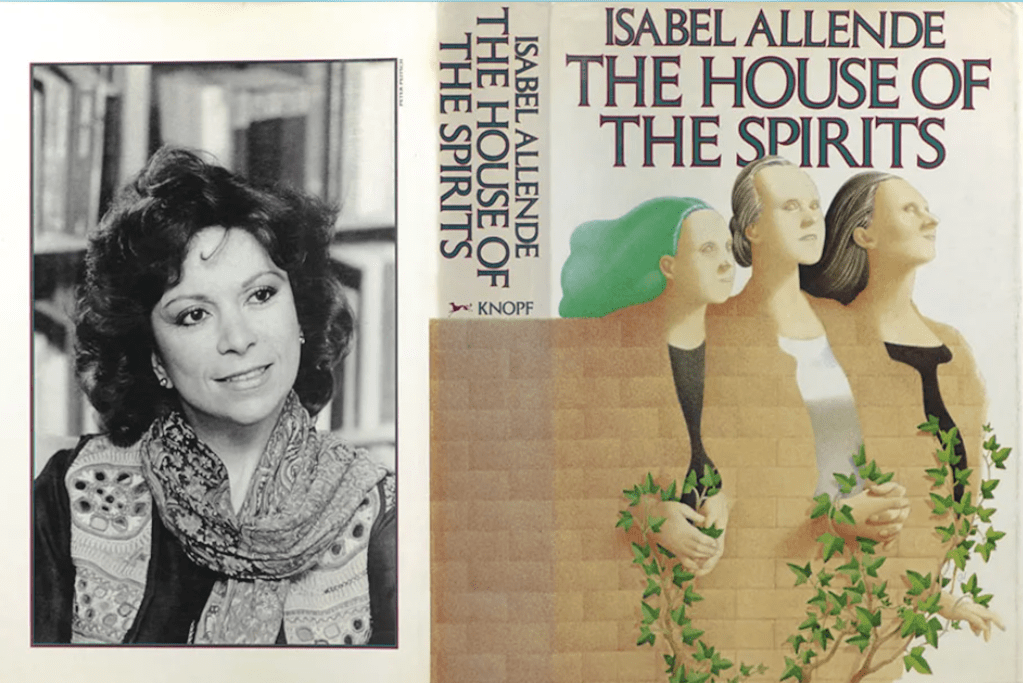
Clara del Valle Trueba was also deported — from The House of the Spirits. After being kicked out of Isabel Allende’s novel, the clairvoyant Clara took her knowledge of Trump’s guilt in the sickening Epstein pedophile scandal and started a blog about that. Because Clara had been in a magic-realism book, the blog levitated out of her computer screen — which puzzled WordPress customer support.

In Daniel Deronda, Daniel D. and Mirah Lapidoth and Ezra Mordecai Cohen are idealistic proto-Zionists rather than the U.S.-armed genocidal Zionists in Israel’s current leadership who are mass-murdering Palestinian civilians, so the three were deported when entering a government office to register as George Eliot characters. That left Gwendolen Harleth wandering around Eliot’s 19th-century novel, searching for a Burger King in which to have lunch.

Atticus Finch? Taken from To Kill a Mockingbird for being an attorney with integrity. This came after some Trump regime hesitation to deport Finch because author Harper Lee had the same last name as Confederate traitor Robert E. Lee, the Civil War general greatly admired by right-wingers for fighting to defend the appalling institution of slavery. But Atticus did ultimately get booted from To Kill a Mockingbird before joining Donna Tartt’s The Goldfinch novel starring a painting of a bird sharing his last name.

In J.K. Rowling’s Harry Potter books, every character except the ultra-evil Lord Voldemort was deported to make the series more palatable for Republican fascists. One of the characters, Nearly Headless Nick, went on to successfully lose 10 pounds by becoming Completely Headless Nick.

But no character was spared from deportation in Arundhati Roy’s The God of Small Things because Trump erroneously thought the title of that novel referred to his fingers and his…

Misty the cat says: “Where’s my teen human? Oh, she went away to college last weekend.”

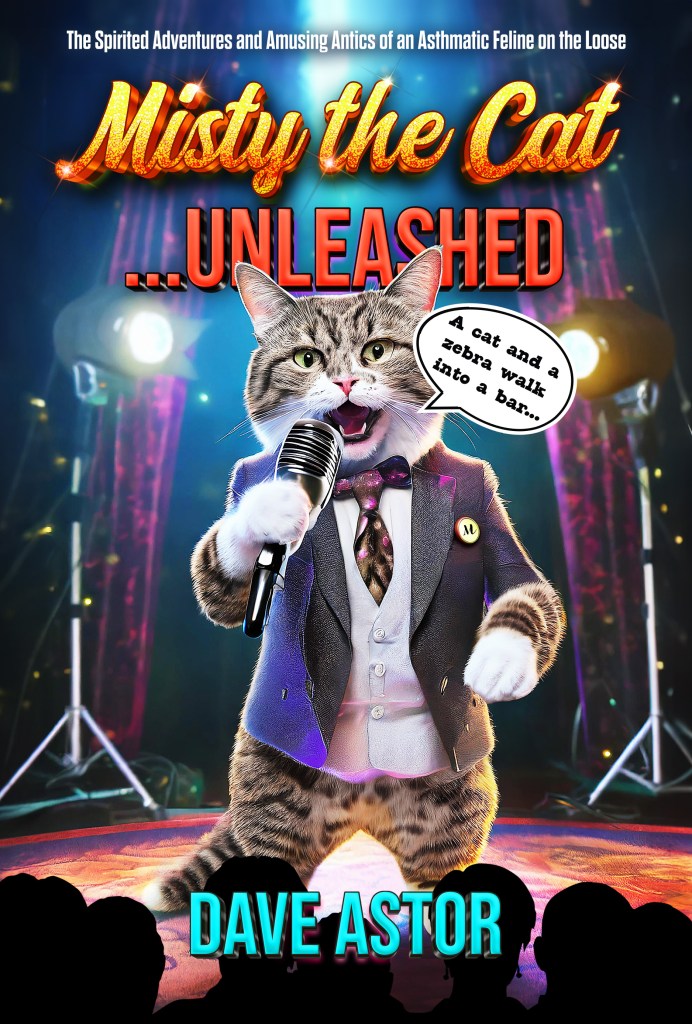
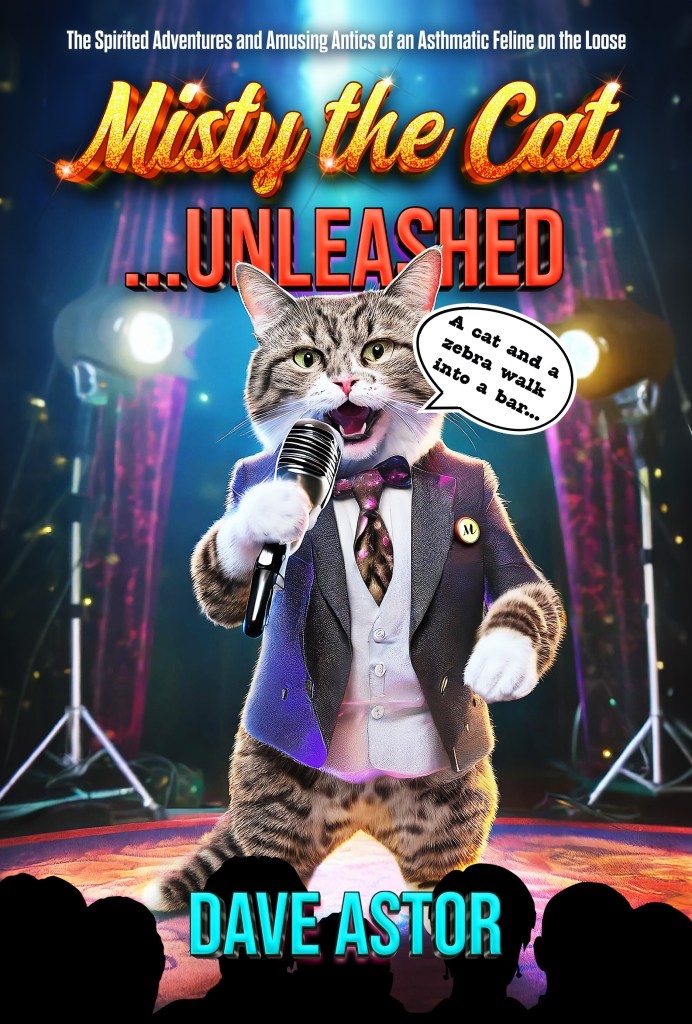
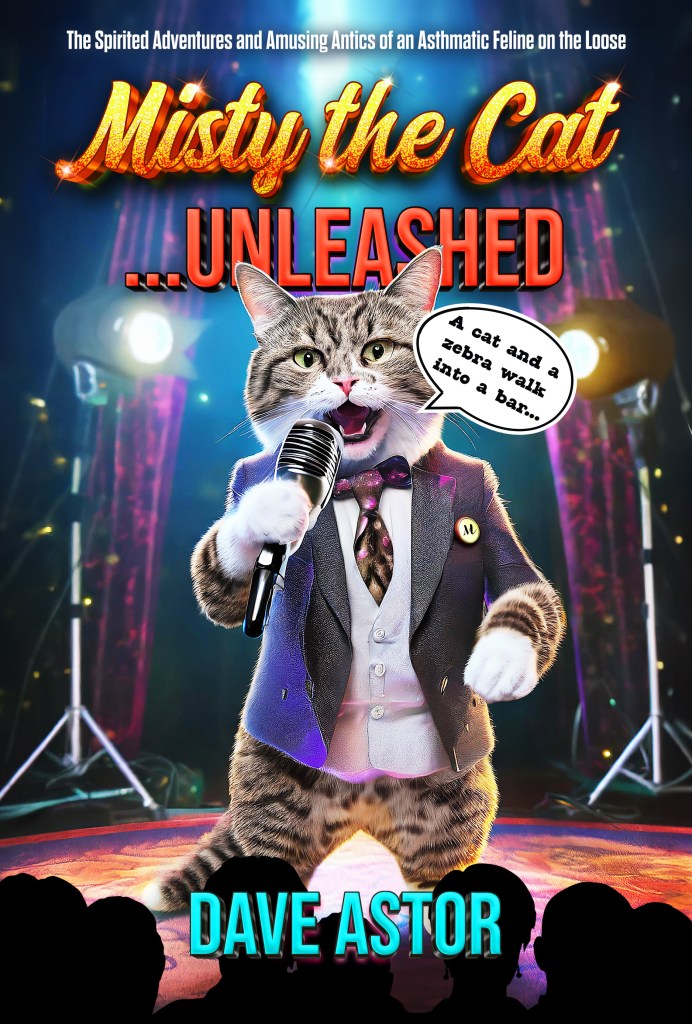
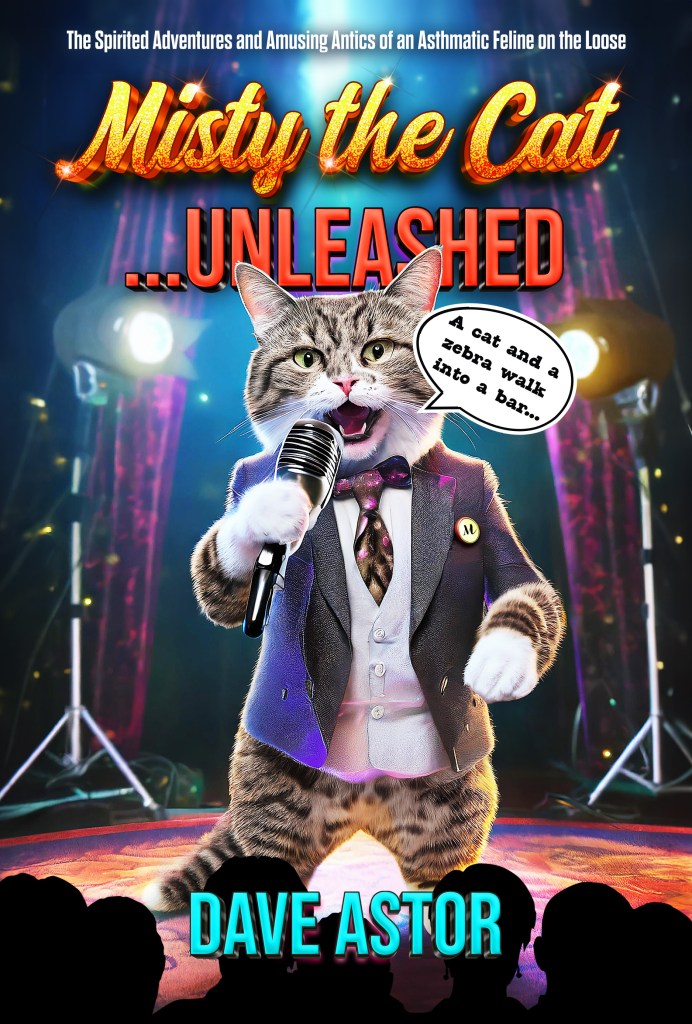
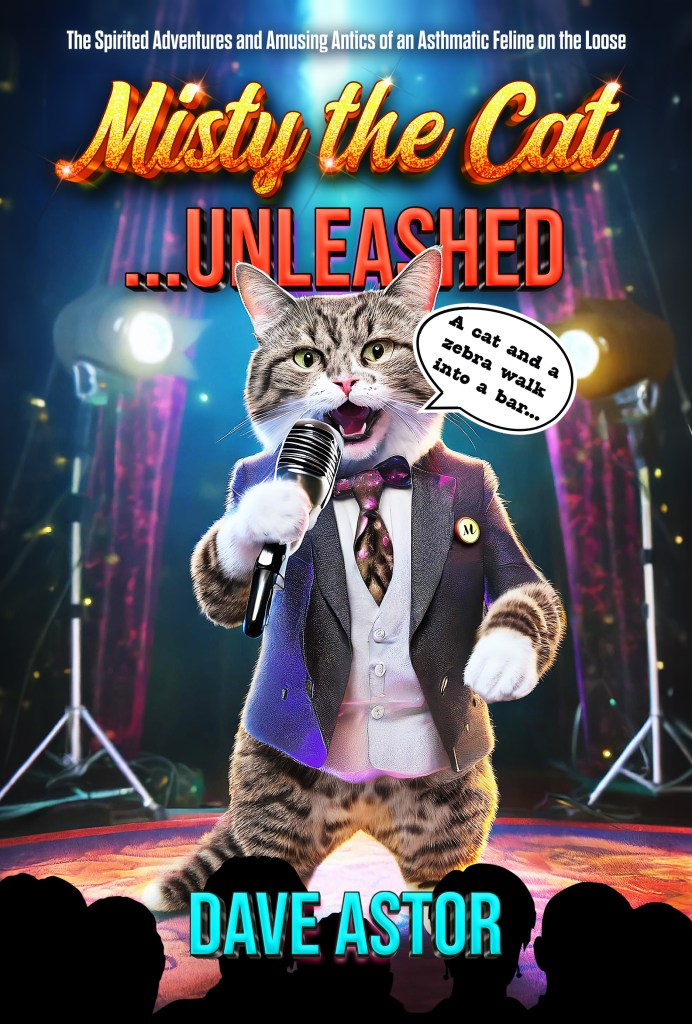
My comedic 2024 book — the part-factual/part-fictional/not-a-children’s-work Misty the Cat…Unleashed — is described and can be purchased on Amazon in paperback or on Kindle. It’s feline-narrated! (And Misty says Amazon reviews are welcome. πŸ™‚ )

This 90-second promo video for the book features a talking cat: πŸ™‚

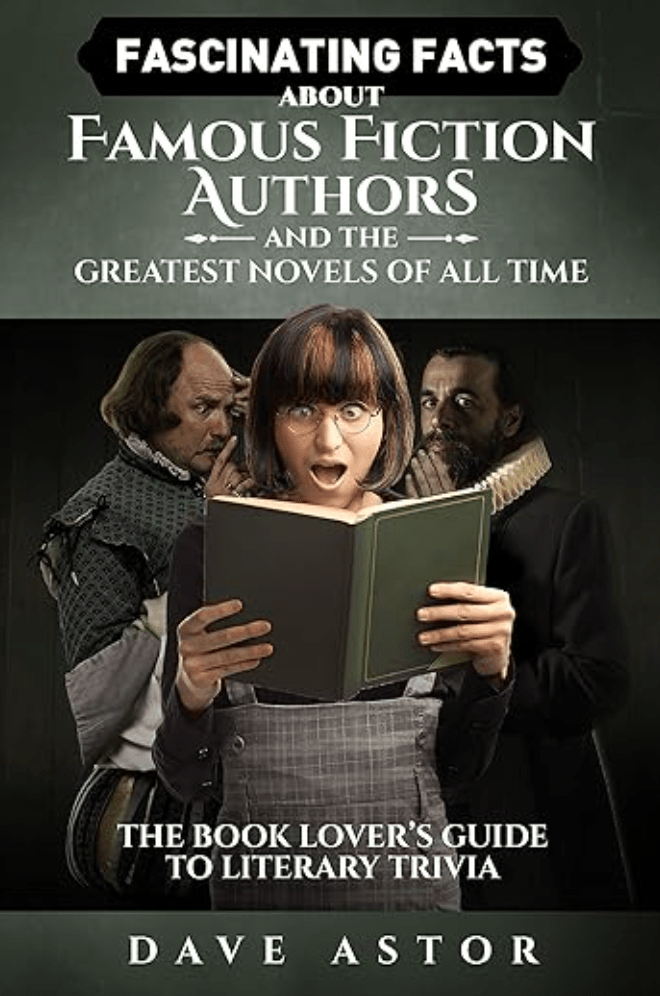
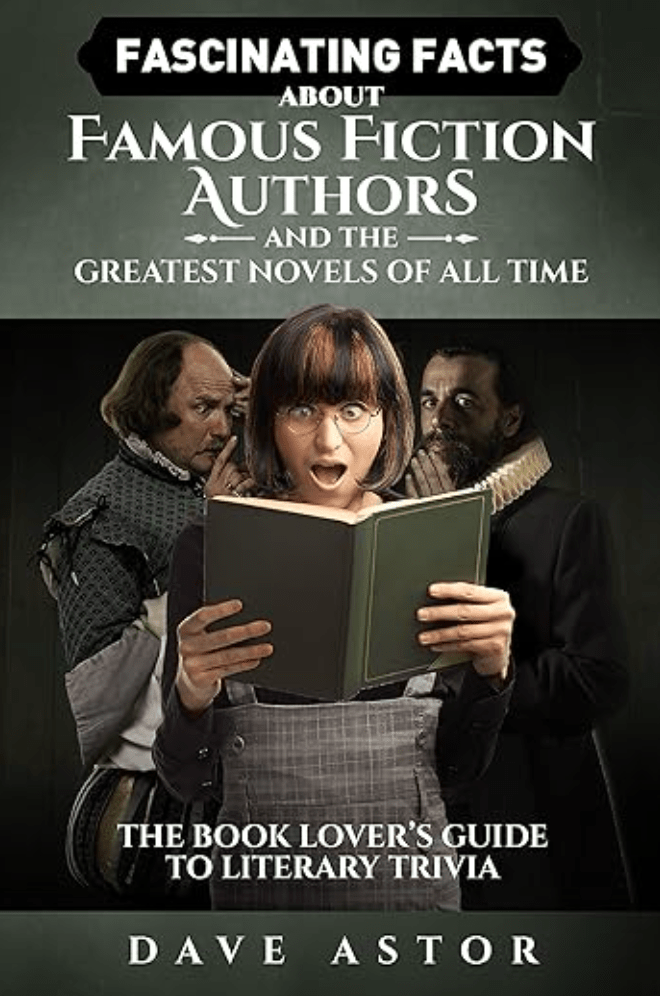
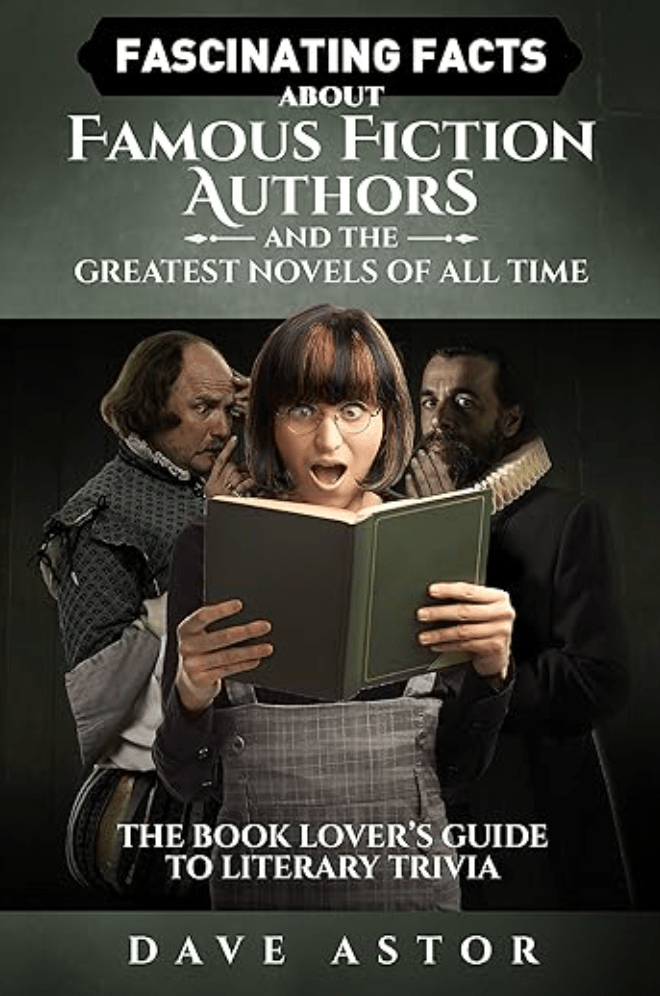
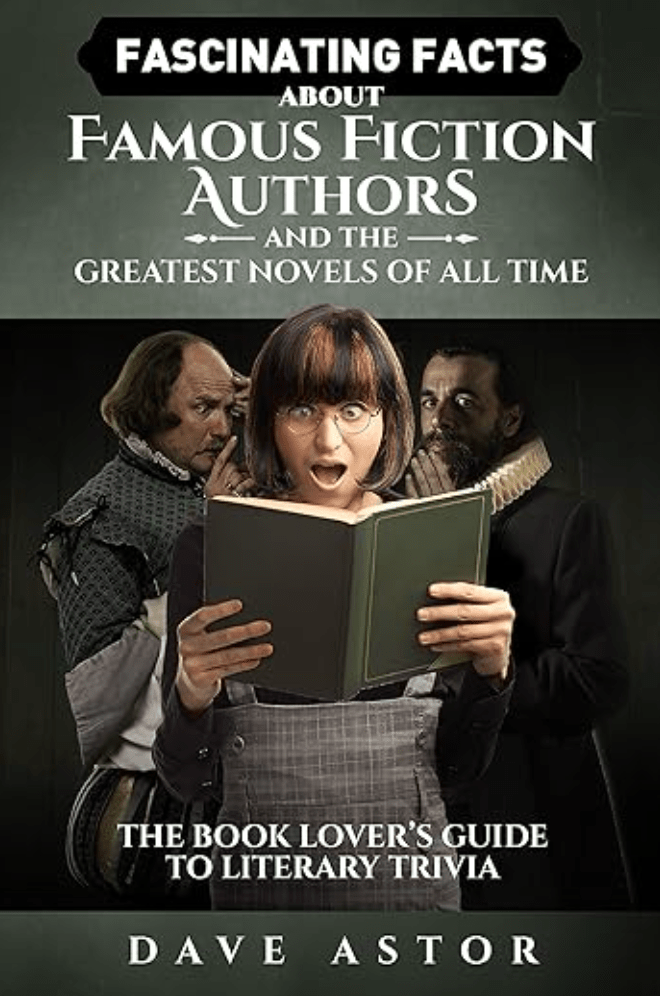
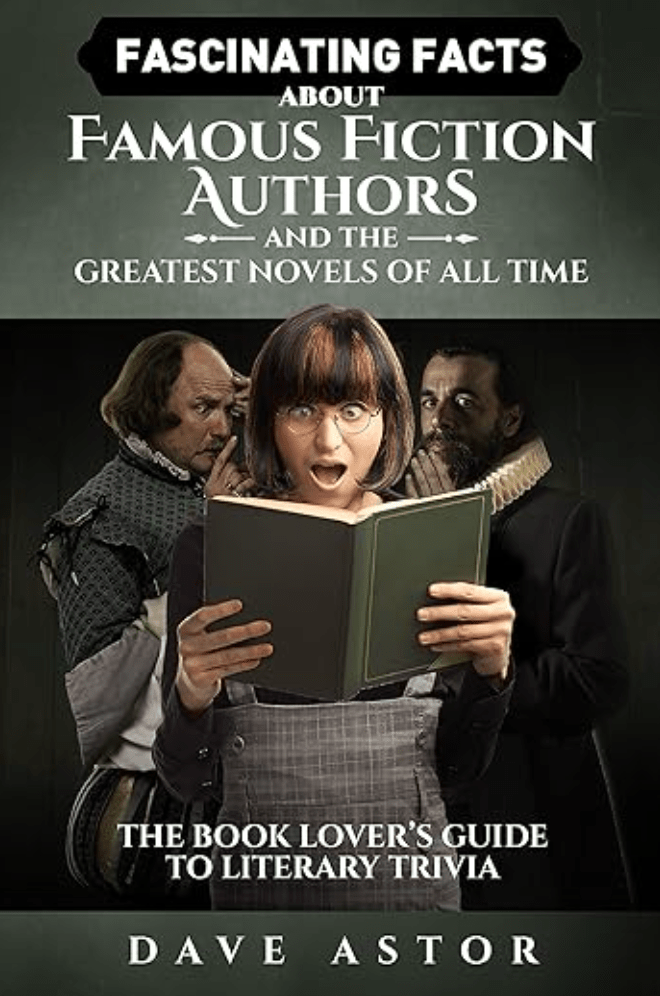
I’m also the author of a 2017 literary-trivia book

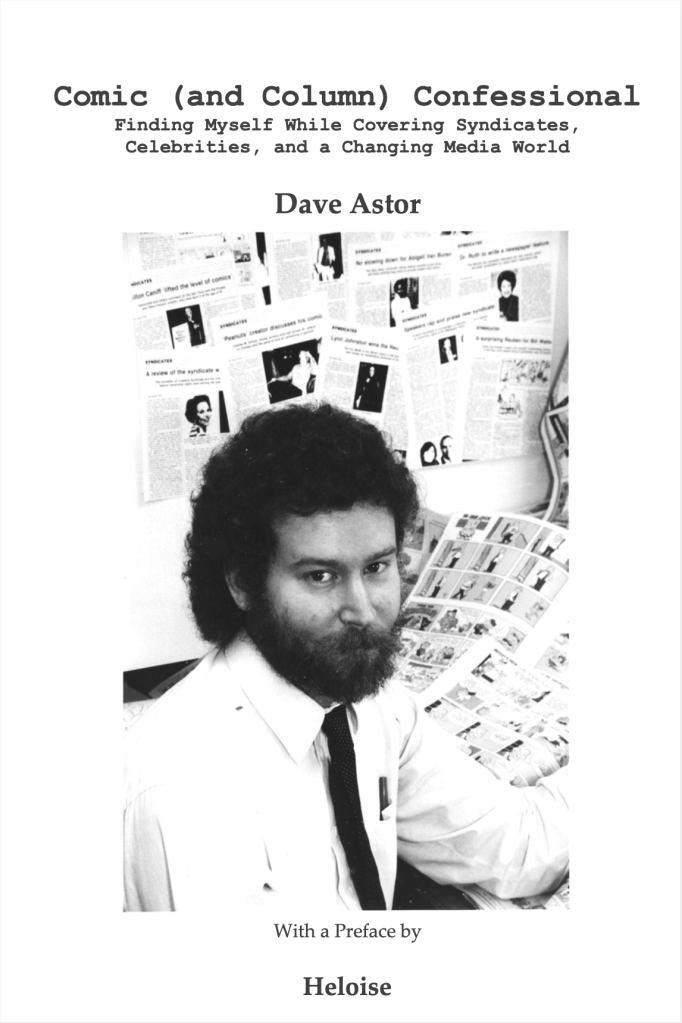
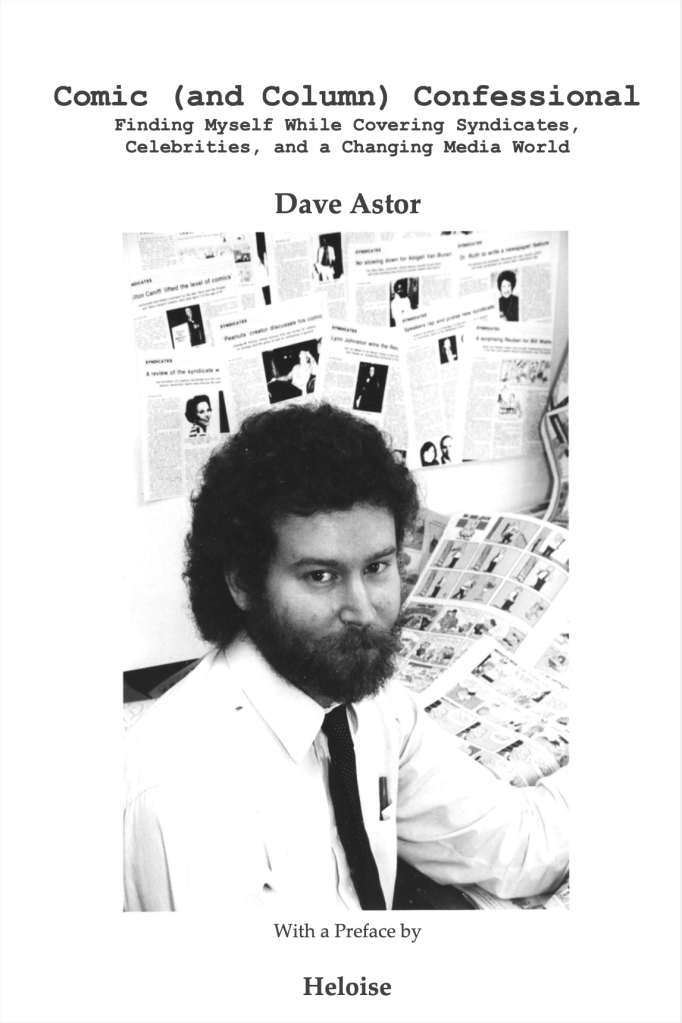
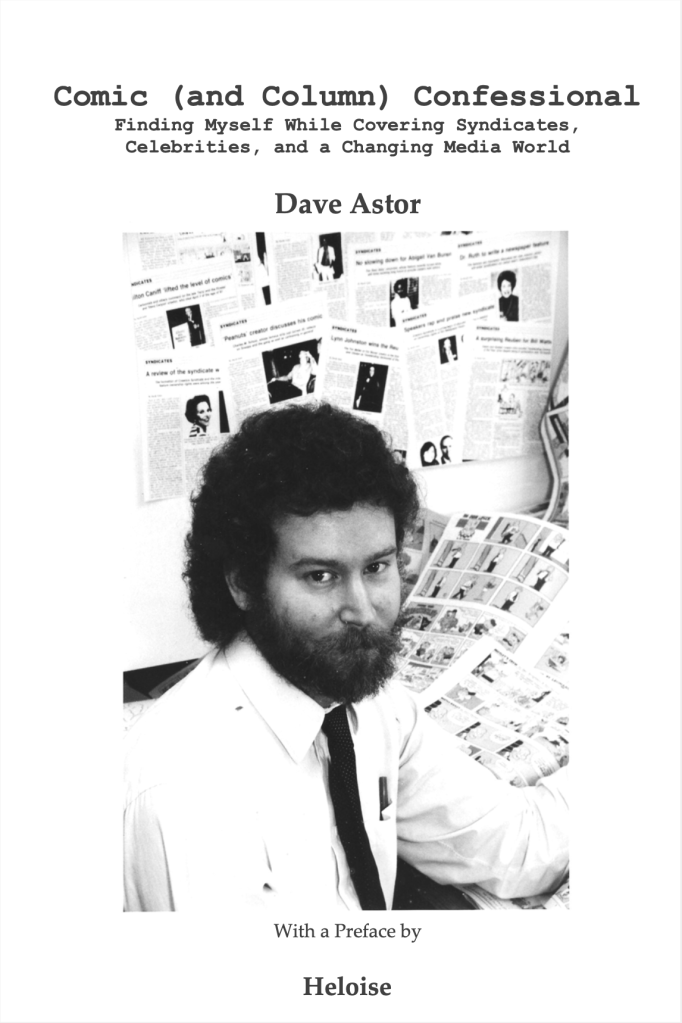
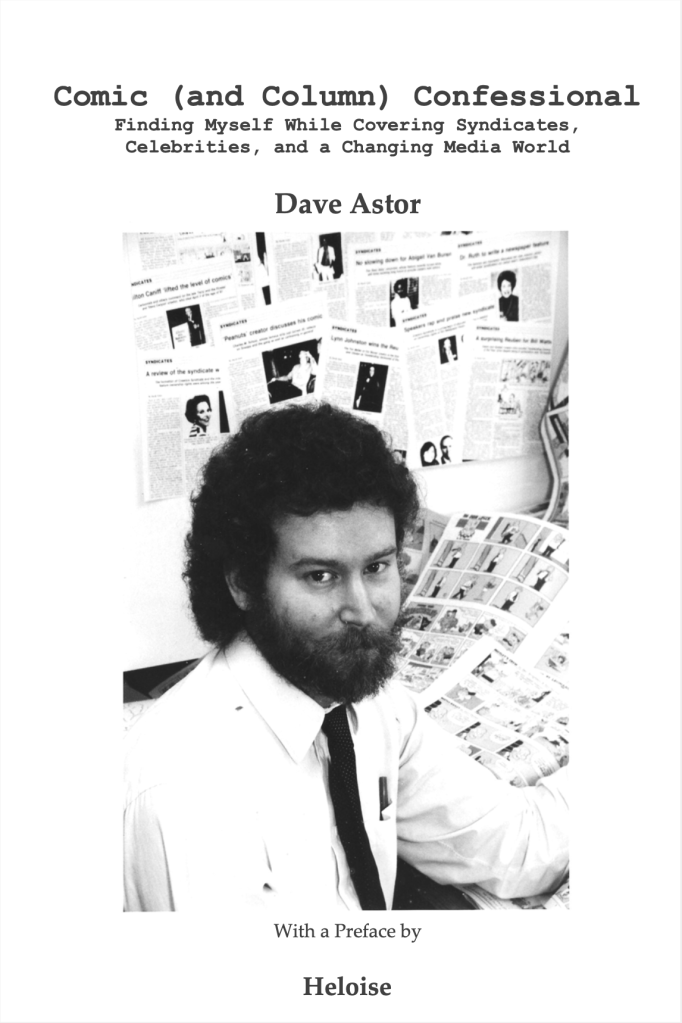
…and a 2012 memoir that focuses on cartooning and more.
In addition to this weekly blog, I write the 2003-started/award-winning “Montclairvoyant” topical-humor column every Thursday for Montclair Local. The latest piece — about the spending to date of money authorized by my town’s massive 2022 school bond referendum — is here.

Summer in the City? No, Summer with a Kitty

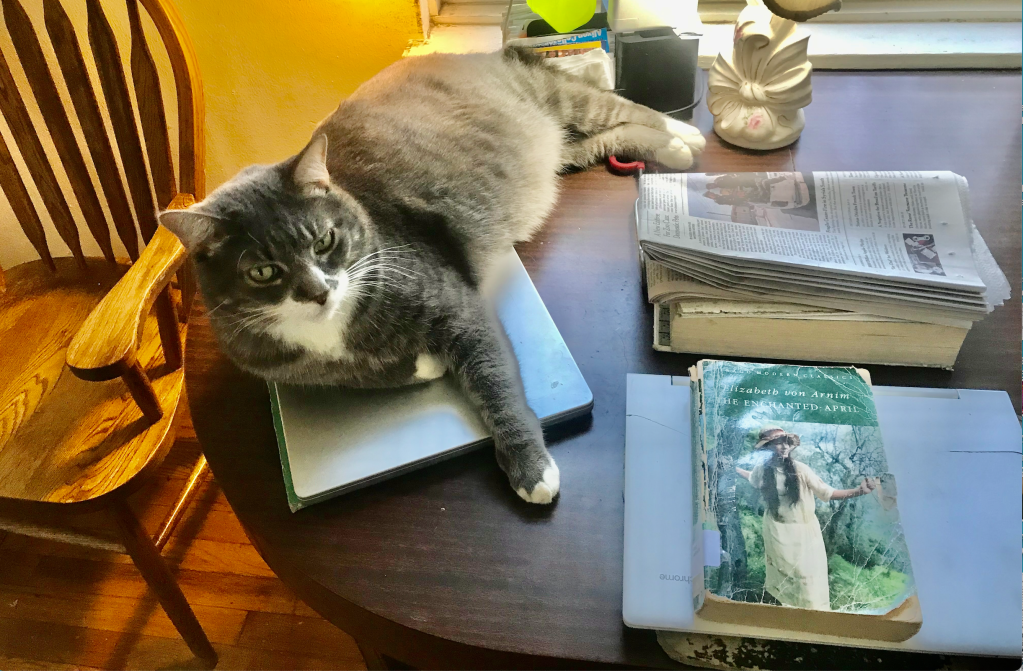
My feline self sprawled next to Elizabeth von Arnim’s The Enchanted April, which I will not discuss today because I haven’t finished reading it yet. The first letters of that novel’s title spell “tea,” which I don’t drink. Thank you for your attention to these two matters. (Photo by Dave.)

Misty the suburban cat here with my every-two-month blog post. My previous guest piece was in June, this one is in August, and the next one will be in October. Except that U2’s October album was released in 1981, so I’m not sure how my next blog post will be in…October. There IS a song on that album called “Stranger in a Strange Land,” which is about me at the vet for my yearly check-up.

Anyway, my adult humans Dave and Laurel saw the Superman movie this month, and enjoyed its thrills, acting, and empathy. But I, Misty, was not allowed in the theater because of being a cat. I was actually kind of relieved, because sitting through 25 minutes of ads and previews would have had me yowling loud enough to be heard on Mars — which billionaire bozo Elon Musk, aka the Tesla dude, wants to not only colonize but have The Martian Chronicles author Ray Bradbury write a 2025 sequel called The SpaceX Chronicles. Given that Bradbury died in 2012, he…missed the pleasure of seeing the catastrophic flop of Musk’s stupid Cybertruck.

The Superman film reminds me and other kitties of Michael Chabon’s The Amazing Adventures of Kavalier & Clay, the 2000 novel partly based on the real-life Jerry Siegel/Joe Shuster duo who created the Superman character for comic books in 1938 — the year the iPhone minus-69 was released.

More generally, the 2025 movie starring the “Man of Steel” also reminds my meowing self of fictional characters possessing abilities beyond the capacity of most mortals. One is the Lee Child-created Jack Reacher — who’s not a superhero but displays unusual strength, incredible fighting abilities, great intellect, and other attributes in the 29-book series that began in 1997. Exactly a century after Bram Stoker’s Dracula (1897), which stars a vampire who acts out in all kinds of ways after Frankenstein defeats him in pickleball. A tip of the hat to Mary Shelley.

Another character who combines exceptional brains with exceptional physical abilities is the prehistoric protagonist Ayla of Jean M. Auel’s The Clan of the Cave Bear and its sequels. Ayla’s many accomplishments included inventing things and being the only person able to ride Baby the lion (a feline like me!), although she never played pickleball with her horse Whinney.

Some fictional people even rise in the air or fly — in magic-realism novels and other books. Among them are Remedios in Gabriel Garcia Marquez’s One Hundred Years of Solitude, Margarita in Mikhael Bulgakov’s The Master and Margarita, and the title character of J.M. Barrie’s Peter Pan — which was first a play, then a novel, then an animated movie, then a live TV film, and finally a jar of peanut butter which also flew when Dave tossed it out the window to compare its hang time with a jar of Skippy peanut butter. Denying me the opportunity to swat both brands off the counter with my cat paws.

There are also characters who might not be extraordinarily adept in a brute physical way but are really, really smart. Hermione Granger of J.K. Rowling’s Harry Potter books, Sherlock Holmes of Arthur Conan Doyle’s detective fiction, Hercule Poirot of Agatha Christie’s mysteries, Lisbeth Salander of Stieg Larsson’s The Girl with the Dragon Tattoo and its sequels, etc. Lisbeth sadly did not have a cat tattoo, but I forgive her because she’s Swedish and thus might toss some Swedish meatballs my way.

Dave will reply to comments so that I have time to eat the aforementioned meatballs. Rest assured that I maintain a balanced diet — one meatball in each side of my mouth.

I, Misty the cat, say: “After years of study, I’m finally qualified to inspect Belgian blocks.”

My and Dave’s comedic 2024 book — the part-factual/part-fictional/not-a-children’s-work Misty the Cat…Unleashed — is described and can be purchased on Amazon in paperback or on Kindle. It’s feline-narrated! (And Misty says Amazon reviews are welcome. πŸ™‚ )

This 90-second promo video for the book features a talking cat: πŸ™‚

Dave is also the author of a 2017 literary-trivia book

…and a 2012 memoir that focuses on cartooning and more.

In addition to this weekly blog, Dave writes the 2003-started/award-winning “Montclairvoyant” topical-humor column every Thursday for Montclair Local. The latest piece — about my school district’s huge, recently discovered deficit — is here.

They’re Serious about Series and Standalone Novels

Some authors are good at two or more things: novels and short stories, fiction and nonfiction, literary fiction and mass-audience fiction, etc. For this post, I’ll add to that by focusing on authors who are good at series as well as standalone novels. It certainly requires some different writing muscles to wrap up things in one book vs. extending things across multiple books.

This topic occurred to me last week as I read Val McDermid’s A Place of Execution, a superb standalone novel with a concluding twist that will knock your socks off. My previous experience with McDermid was with her series fiction, including the books starring “cold case” detective Karen Pirie.

I followed A Place of Execution with Martin Cruz Smith’s Independence Square — his 10th in the series starring Russian investigator Arkady Renko that began with Gorky Park. (Independence Square was okay; not as good as the earlier Renko books.) Smith has also written standalone novels such as Rose.

Sometimes, authors toggle throughout their careers between standalone books and series — as has been the case with Smith and McDermid as well as authors such as Walter Mosley with his Easy Rawlins books and much more. Other times, authors start with standalone novels before hitting on a hit series and focusing on that — as did Sue Grafton, who wrote two standalones before launching her popular Alphabet Mysteries (25 in all; she reached the letter “Y” before she died).

J.K. Rowling has also written many more series novels than standalone ones: seven Harry Potter books, then The Casual Vacancy one-off, then seven Cormoran Strike/Robin Ellacott crime novels (so far).

L.M. Montgomery followed her classic Anne of Green Gables with seven sequels over the years, during which time she also penned the Emily trilogy and standalones such as The Blue Castle.

Stephen King is known mostly for standalone novels, with a sprinkling of sequels and trilogies, but has also written many books in The Dark Tower series.

Some long-ago authors also toggled. For instance, James Fenimore Cooper wrote the five “Leatherstocking” novels (including The Last of the Mohicans) as well as various standalone books. Alexandre Dumas did both as well — many standalones (most famously The Count of Monte Cristo) as well as The Three Musketeers and its five sequels (sometimes published as fewer sequels when certain books were combined into one edition).

Your thoughts about and examples of this topic?

Misty the cat says: “My fitness tracker better record backward steps.”

My comedic 2024 book — the part-factual/part-fictional/not-a-children’s-work Misty the Cat…Unleashed — is described and can be purchased on Amazon in paperback or on Kindle. It’s feline-narrated! (And Misty says Amazon reviews are welcome. πŸ™‚ )

This 90-second promo video for my book features a talking cat: πŸ™‚

I’m also the author of a 2017 literary-trivia book

…and a 2012 memoir that focuses on cartooning and more.

In addition to this weekly blog, I write the 2003-started/award-winning “Montclairvoyant” topical-humor column every Thursday for Montclair Local. The latest piece — about a lot of school news during a non-school time — is here.

A Kitty Tries to Be Witty

“Perhaps I should wake up and write a blog post,” says Misty. (Photo by Maria.)

I, Misty the cat, guest-blog for Dave every two months. I last did this on April 13 and today is June 8, so that’s…hmm…actually not quite two months. Reminds me of when Dave returned some novels to the library five days before their due date, and the indignant book drop expelled said novels with such force that they traveled back in time and landed on the heads of the three Karamazov brothers. Fortunately, each of the books was under 400 pages.

But Fyodor Dostoevsky’s 824-page The Brothers Karamazov is even longer than my average nap, during which I experience “Dreams” more often than Fleetwood Mac did at their 1977 concerts. And Dostoevsky’s 1880 novel might have been the first volume of an even longer work if the Russian author hadn’t died in early 1881. Perhaps a trilogy of sorts — like Suzanne Collins’ The Hunger Games (about me nudging my cat-food bowl so that each serving lands in the exact center) and J.R.R. Tolkien’s The Lord of the Rings (about my epic quest to be a male feline version of the Ernestine telephone operator played by Lily Tomlin).

I recommend shopping at Pop Culture R Us for all your celebrity-name-dropping needs.

Speaking of decades-ago entertainment, do you remember the 1978 movie Same Time, Next Year about a married woman and a married man who have a multi-year annual affair? That film partly inspired the long-term romance of Mallory Blessing and Jake McCloud in Elin Hilderbrand’s 2020 novel 28 Summers, which I read last week and found to be a wonderful, poignant book. It’s 422 pages in hardcover, which explains why various other 19th-century Russian fictional characters are donning helmets to avoid concussions. Helmets with stickers saying “Please Don’t Name Your Cat Anna Karenina.”

I’ll add that 28 Summers has an alternate-history element, with Jake’s wife Ursula DeGournsey running for President of the United States in 2020. Reminds me that my aforementioned cat-food bowl is shaped sort of like the Oval Office, and even has a tiny edible desk.

Other novels featuring politicians? Stephen King’s The Dead Zone, Robert Penn Warren’s All the King’s Men, J.K. Rowling’s The Casual Vacancy, Fannie Flagg’s Standing in the Rainbow, and Sinclair Lewis’ It Can’t Happen Here, to name a few. When my cat-food bowl was empty for five seconds, you know what I screamed? Yes, I screamed “It can’t happen here!!!”

A century ago, Lewis had quite a run of notable novels: Main Street (1920), Babbitt (1922), Arrowsmith (1925), Elmer Gantry (1927), and Dodsworth (1929). It Can’t Happen Here was published in 1935, eight decades before my 2015 birth year — which means that in 2025 I’m now…furry.

I’m sometimes asked how I, the kitty Misty, consume literature. Smeared with tasty cat food, of course. But, seriously, I read novels in the traditional print-book format rather than via eBook or audiobook. I guess I’m “old school,” like the 1636-founded Harvard University. I expect only a few members of The Class of 1640 to be at Harvard’s 2040 alumni reunion; they’re the ones who reside with cats, who help humans live longer.

Long-lived humans in literature? The over-2,000-year-old Lazarus Long of five Robert Heinlein novels; Ayesha, who also clocks in at about two millennia in H. Rider Haggard’s She; the 250-year-old High Lama of James Hilton’s Lost Horizon; etc. I assume they had well-funded retirement accounts.

One of the oldest of my fellow cats is Garfield, who has starred in Jim Davis’ 1978-founded comic strip for 47 years! Which reminds me that my next guest blog post will appear in 47 years — minus 46 years and 10 months. So, August 2025. That’s also when my teen human Maria is starting college, which means her bedroom will be…mine!

Dave will reply to any comments because I, Misty the cat, am busy consulting with an interior decorator about changes in Maria’s room (where you see me in the photo atop this post). A kitty can’t have enough scratching posts, treat dispensers, and paintings of hairballs playing poker.

Misty the cat says: “That railing’s shadow means 4,378 more days of spring.”

Dave’s comedic 2024 book — the part-factual/part-fictional/not-a-children’s-work Misty the Cat…Unleashed — is described and can be purchased on Amazon in paperback or on Kindle. It’s feline-narrated! (And Misty says Amazon reviews are welcome. πŸ™‚ )

This 90-second promo video for Dave’s book features a talking cat: πŸ™‚

Dave is also the author of a 2017 literary-trivia book

…and a 2012 memoir that focuses on cartooning and more.

In addition to this weekly blog, Dave writes the 2003-started/award-winning “Montclairvoyant” topical-humor column every Thursday for Montclair Local. The latest piece — about New Jersey’s upcoming primary election and much more — is here.

When It’s Two or More, Jaws Can Hit the Floor

J.K. Rowling with the screen versions of her Harry Potter, Hermione Granger, Cormoran Strike, and Robin Ellacott characters (Everett/Getty/BBC).

It’s impressive enough when a novelist creates one successful series — as, say, Lee Child did with his Jack Reacher books and Sue Grafton did with her alphabet mysteries. But an author who creates two or more successful series? Wow!

Some writers produce multiple series consecutively — finishing one series before starting another. Other writers tack back and forth between different series. Either way, it takes some impressive and wide-ranging creative talent, and helps “serial” novelists stay fresh. Those authors can also feel good about readers staying with them as they offer something new.

Among the queens and kings of multiple series is J.K. Rowling. She of course penned the seven mega-popular Harry Potter books. Then, after writing The Casual Vacancy standalone novel, Rowling as “Robert Galbraith” launched her crime series starring private investigators Cormoran Strike and Robin Ellacott. I’m currently close to finishing the seventh installment — The Running Grave, in which Robin goes undercover to infiltrate a very problematic cult — and its 945 pages are full of the thrills, humor, suspense, poignancy, complications, excellent prose, and believable dialog Rowling always provides.

Walter Mosley is best-known for his detective series starring Easy Rawlins, who has now starred in 16 novels. But the author has interspersed those books with smaller series such as the King Oliver books and the Socrates Fortlow books. Mosley is always a great read, no matter who the protagonist is.

Val McDermid has gone the several-series route, too, including a compelling saga starring inspector Karen Pirie and another featuring journalist Allie Burns. Also not a clunker in the installments I’ve read.

Leaving contemporary fiction for a minute, L.M. Montgomery wrote Anne of Green Gables and its many sequels while also penning the semi-autobiographical Emily trilogy. (I consider a trilogy to be a series of sorts.)

Returning to a living author, Diana Gabaldon has gone the “sub-series” route by writing nine main Outlander novels (so far) and a number of offshoot books starring the Lord John character who’s a supporting player in the main novels.

Your thoughts about, and examples of, this theme?

Misty the cat says: “Snow means ‘Middlemarch’ author George Eliot wrote ‘Middledecember,’ too.”

My comedic 2024 book — the part-factual/part-fictional/not-a-children’s-work Misty the Cat…Unleashed — is described and can be purchased on Amazon in paperback or on Kindle. It’s feline-narrated! (And Misty says Amazon reviews are welcome. πŸ™‚ )

This 90-second promo video for my book features a talking cat: πŸ™‚

In addition to this weekly blog, I write the 2003-started/award-winning “Montclairvoyant” topical-humor column every Thursday for Montclair Local. The latest piece — which discusses what’s happening with my town’s animal shelter and much more — is here.

Crime: All the Time or Some of the Time

The ever-popular category of crime fiction — which can include detective novels, mysteries, thrillers, etc. — has different categories of authors.

There are those writers — such as Raymond Chandler, Lee Child, Agatha Christie, Michael Connelly, Arthur Conan Doyle, Janet Evanovich, Sue Grafton, Dashiell Hammett, Patricia Highsmith, P.D. James, Walter Mosley, Louise Penny, Dorothy L. Sayers, and Lisa Scottoline — known mostly for their crime fiction, even as they occasionally roam/roamed outside that genre. Then there are authors known more for their non-crime-fiction work, even as they produce/produced some strong offerings in the detective/mystery/thriller realm. This blog post will be about the latter group — which includes people like Wilkie Collins, Charles Dickens, Edgar Allan Poe, J.K. Rowling, and Mark Twain.

I’ll first discuss Rowling, who, as “Robert Galbraith,” writes the series starring fascinating private investigator Cormoran Strike. I read the debut installment, The Cuckoo’s Calling, this week — and was bowled over by how smoothly Rowling moved into crime fiction after conquering the young-adult/magical-fiction world with her iconic Harry Potter series and then writing the compelling general-adult-fiction book The Casual Vacancy. Rowling will always be associated more with Harry Potter than anything else, but her versatility is off-the-charts.

Collins is best known for The Woman in White, an ultra-suspenseful mystery; and The Moonstone, an early example of detective fiction. But most of his novels were in the realm of general fiction.

Poe is of course almost synonymous with horror fiction, but he wrote several earlier-than-The Moonstone detective stories starring C. Auguste Dupin — the most famous of which were “The Murders in the Rue Morgue” and “The Purloined Letter.”

Twain’s late-career novel Pudd’nhead Wilson, with its important plot-solving element of fingerprint analysis, placed that author somewhat in the crime-solving genre. Two years later, Twain came out with Tom Sawyer, Detective — one of his lesser novels.

Dickens turned to the mystery genre with his last, unfinished book — The Mystery of Edwin Drood — after more than 30 years of penning more general literary works.

Obviously, authors who write crime fiction most of the time can really master that genre, but the potential drawback can be a certain sameness in some of their work. Those pros and cons can of course flip for writers who turn to crime fiction only occasionally.

Any thoughts on the two categories of crime-fiction authors discussed in this blog post? Your favorite works in each category?

(BTW, one reason Jim Grant took the name Lee Child was because that alias alphabetically placed his Jack Reacher novels in libraries and bookstores between the works of crime-fiction greats Raymond Chandler and Agatha Christie — just like Child ended up between Chandler and Christie in this blog post’s second paragraph.)

My 2017 literary-trivia book is described and can be purchased here: Fascinating Facts About Famous Fiction Authors and the Greatest Novels of All Time.

In addition to this weekly blog, I write the award-winning “Montclairvoyant” topical-humor column for Baristanet.com. The latest weekly piece — about overdevelopment run amok in my town — is here.

Our Favorite Friendships in Fiction

Perhaps we remember the great romances more, but literature’s great friendships also provide us with many pleasurable reading experiences.

Fictional friendships — which are often more enduring than romances — can teach us, touch us, blunt our cynicism, and remind us of our own longtime pals. And if some of literature’s buddies have a falling out, the silver lining for readers is plenty of dramatic tension.

I love friendships of all types in literature, but my favorites are the ones that cross the lines of race, ethnicity, gender, and class. Those different-background relationships can be tricky in real life, so it’s especially nice to see them succeed in fiction.

One obvious multicultural pairing is Mark Twain’s Huck and Jim — a white boy and a slavery-escaping black man who gradually become close. Heck, Adventures of Huckleberry Finn could have been called The Friendship of Huckleberry Finn — and we’re not talking about Huck’s interactions with the annoying Tom Sawyer!

There are also the unshakable comrades Chingachgook and Natty Bumppo in James Fenimore Cooper’s five absorbing “Leatherstocking” novels. The final The Last of the Mohicans scene between the Native-American chief and the white hunter (aka Hawkeye, Deerslayer, Pathfinder, etc.) is one of the most touching depictions of friendship in literature.

Or how about Uncle Tom and young Eva in Harriet Beecher Stowe’s Uncle Tom’s Cabin? Two admirable people who become interracial and intergenerational friends before circumstances turn tragic for each.

Another great example of friendship across age and class lines — this time with both characters white — is that of the working-class Mary and the older, more-moneyed Elizabeth in Tracy Chevalier’s historical novel Remarkable Creatures. Fossil hunting brings them together.

Mixed-gender friends? They include Jim and Antonia in Willa Cather’s excellent My Antonia, and none other than Harry Potter and Hermione Granger in J.K. Rowling’s mega-popular series.

Of course, many pals are the same gender and socioeconomically similar. One of the most memorable friendships in literature is between Jane Eyre and the sickly, religious, warmhearted Helen Burns (when both are kids) in Charlotte Bronte’s classic novel.

There’s also the prison friendship of Edmond Dantes and Abbe Farina in Alexandre Dumas’ rousing The Count of Monte Cristo, with the latter character doubling as a mentor; and the relationship between Dmitri and destined-for-prison Raskolnikov in Fyodor Dostoyevsky’s masterpiece Crime and Punishment — though Dmitri does most of the heavy lifting after the initial stages of that friendship.

Or how about “kindred spirits” Anne and Diana in L.M. Montgomery’s marvelous Anne of Green Gables?

In novels of more recent vintage, Terry McMillan’s appealing Waiting to Exhale features four friends (Savannah, Bernadine, Robin, and Gloria); John Irving’s A Prayer for Owen Meany depicts a fascinating friendship between John and the very original Owen; Margaret Atwood’s terrific The Robber Bride chronicles the many-year relationship between Roz, Charis, and Tony, all three of whom share an enemy; and Barbara Kingsolver’s Flight Behavior includes the fun, satisfying friendship between Dellarobia and Dovey.

I haven’t even gotten into friendships between humans and animals in novels such as Jack London’s riveting The Call of the Wild and White Fang, Albert Payson Terhune’s poignant His Dog, and William H. Armstrong’s also-poignant Sounder.

Who are your favorite friends in literature?

(The box for submitting comments is below already-posted comments, but your new comment will appear at the top of the comments area — unless you’re replying to someone else’s comment.)

For three years of my Huffington Post literature blog, click here.

I’ve also written more than 50% of a literature-related book, but I’m still selling my often-funny Comic (and Column) Confessional memoir — which recalls 25 years of covering/meeting cartoonists such as Charles Schulz (“Peanuts”) and Bill Watterson (“Calvin and Hobbes”), columnists such as Ann Landers and “Dear Abby,” and other notables such as Hillary Clinton, Coretta Scott King, and various authors. The memoir also talks about the malpractice death of my first daughter, my remarriage, and life in New York City and Montclair, N.J. — where I write the award-winning weekly “Montclairvoyant” humor column for The Montclair Times. I can be contacted at dastor@earthlink.net to buy a discounted, inscribed copy of the book, which contains a preface by “Hints” columnist Heloise and back-cover blurbs by “The Far Side” cartoonist Gary Larson, among others.