A Kitty Tries to Be Witty

“Perhaps I should wake up and write a blog post,” says Misty. (Photo by Maria.)

I, Misty the cat, guest-blog for Dave every two months. I last did this on April 13 and today is June 8, so that’s…hmm…actually not quite two months. Reminds me of when Dave returned some novels to the library five days before their due date, and the indignant book drop expelled said novels with such force that they traveled back in time and landed on the heads of the three Karamazov brothers. Fortunately, each of the books was under 400 pages.

But Fyodor Dostoevsky’s 824-page The Brothers Karamazov is even longer than my average nap, during which I experience “Dreams” more often than Fleetwood Mac did at their 1977 concerts. And Dostoevsky’s 1880 novel might have been the first volume of an even longer work if the Russian author hadn’t died in early 1881. Perhaps a trilogy of sorts — like Suzanne Collins’ The Hunger Games (about me nudging my cat-food bowl so that each serving lands in the exact center) and J.R.R. Tolkien’s The Lord of the Rings (about my epic quest to be a male feline version of the Ernestine telephone operator played by Lily Tomlin).

I recommend shopping at Pop Culture R Us for all your celebrity-name-dropping needs.

Speaking of decades-ago entertainment, do you remember the 1978 movie Same Time, Next Year about a married woman and a married man who have a multi-year annual affair? That film partly inspired the long-term romance of Mallory Blessing and Jake McCloud in Elin Hilderbrand’s 2020 novel 28 Summers, which I read last week and found to be a wonderful, poignant book. It’s 422 pages in hardcover, which explains why various other 19th-century Russian fictional characters are donning helmets to avoid concussions. Helmets with stickers saying “Please Don’t Name Your Cat Anna Karenina.”

I’ll add that 28 Summers has an alternate-history element, with Jake’s wife Ursula DeGournsey running for President of the United States in 2020. Reminds me that my aforementioned cat-food bowl is shaped sort of like the Oval Office, and even has a tiny edible desk.

Other novels featuring politicians? Stephen King’s The Dead Zone, Robert Penn Warren’s All the King’s Men, J.K. Rowling’s The Casual Vacancy, Fannie Flagg’s Standing in the Rainbow, and Sinclair Lewis’ It Can’t Happen Here, to name a few. When my cat-food bowl was empty for five seconds, you know what I screamed? Yes, I screamed “It can’t happen here!!!”

A century ago, Lewis had quite a run of notable novels: Main Street (1920), Babbitt (1922), Arrowsmith (1925), Elmer Gantry (1927), and Dodsworth (1929). It Can’t Happen Here was published in 1935, eight decades before my 2015 birth year — which means that in 2025 I’m now…furry.

I’m sometimes asked how I, the kitty Misty, consume literature. Smeared with tasty cat food, of course. But, seriously, I read novels in the traditional print-book format rather than via eBook or audiobook. I guess I’m “old school,” like the 1636-founded Harvard University. I expect only a few members of The Class of 1640 to be at Harvard’s 2040 alumni reunion; they’re the ones who reside with cats, who help humans live longer.

Long-lived humans in literature? The over-2,000-year-old Lazarus Long of five Robert Heinlein novels; Ayesha, who also clocks in at about two millennia in H. Rider Haggard’s She; the 250-year-old High Lama of James Hilton’s Lost Horizon; etc. I assume they had well-funded retirement accounts.

One of the oldest of my fellow cats is Garfield, who has starred in Jim Davis’ 1978-founded comic strip for 47 years! Which reminds me that my next guest blog post will appear in 47 years — minus 46 years and 10 months. So, August 2025. That’s also when my teen human Maria is starting college, which means her bedroom will be…mine!

Dave will reply to any comments because I, Misty the cat, am busy consulting with an interior decorator about changes in Maria’s room (where you see me in the photo atop this post). A kitty can’t have enough scratching posts, treat dispensers, and paintings of hairballs playing poker.

Misty the cat says: “That railing’s shadow means 4,378 more days of spring.”

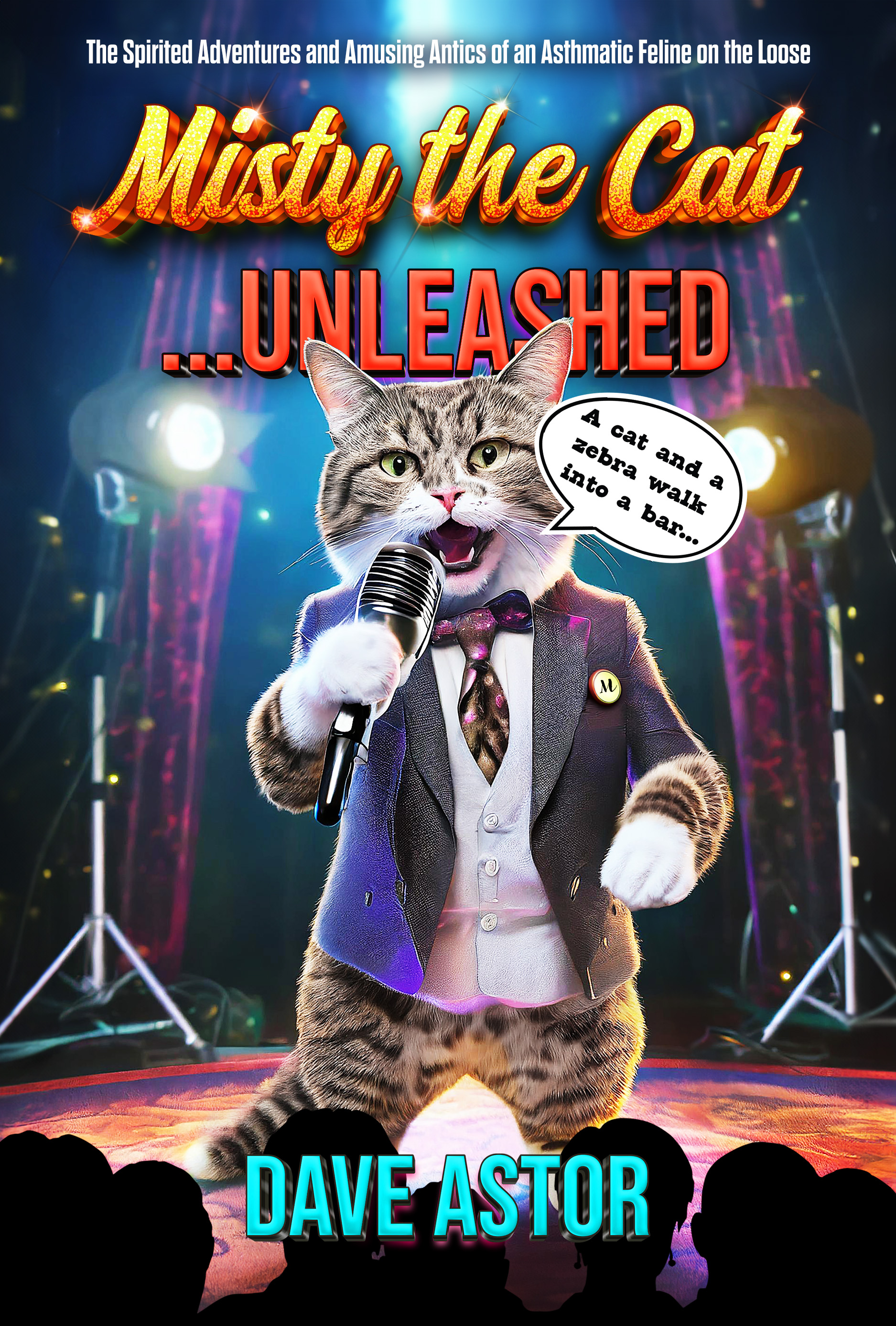
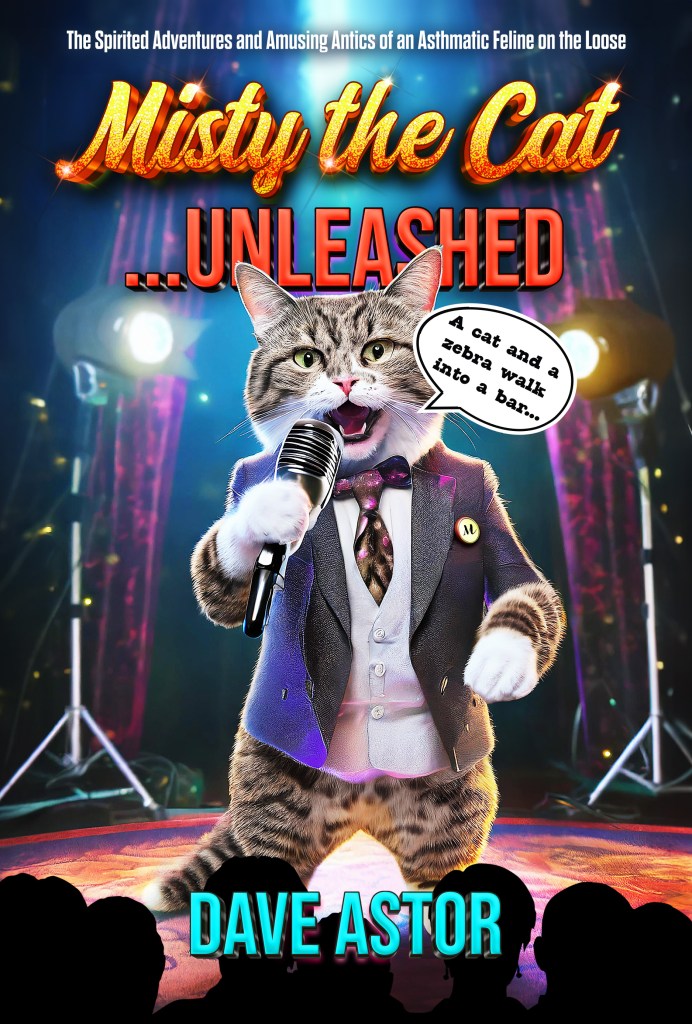
Dave’s comedic 2024 book — the part-factual/part-fictional/not-a-children’s-work Misty the Cat…Unleashed — is described and can be purchased on Amazon in paperback or on Kindle. It’s feline-narrated! (And Misty says Amazon reviews are welcome. 🙂 )

This 90-second promo video for Dave’s book features a talking cat: 🙂

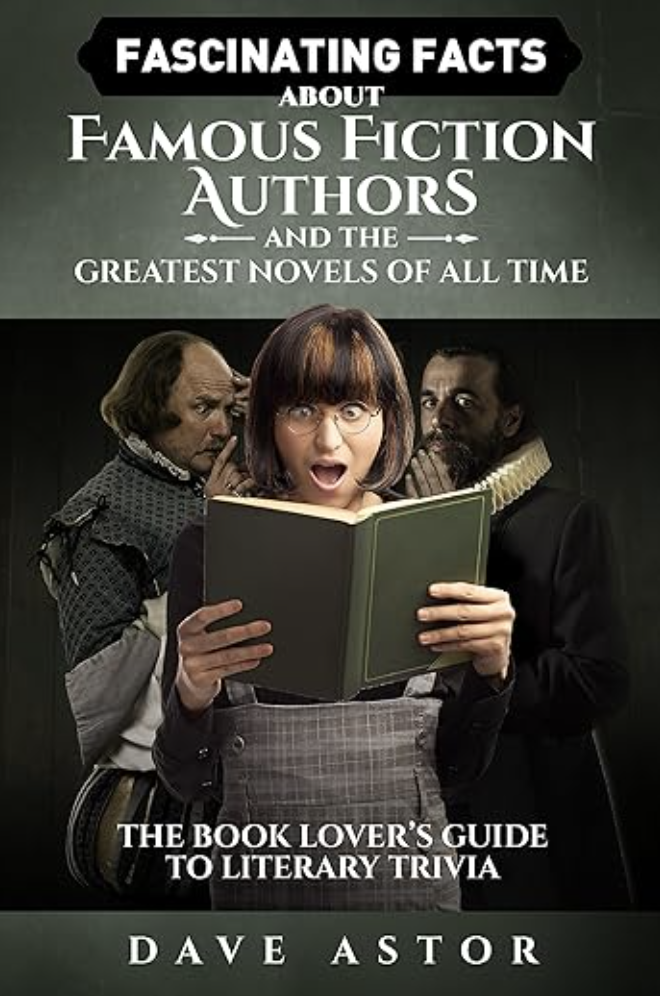
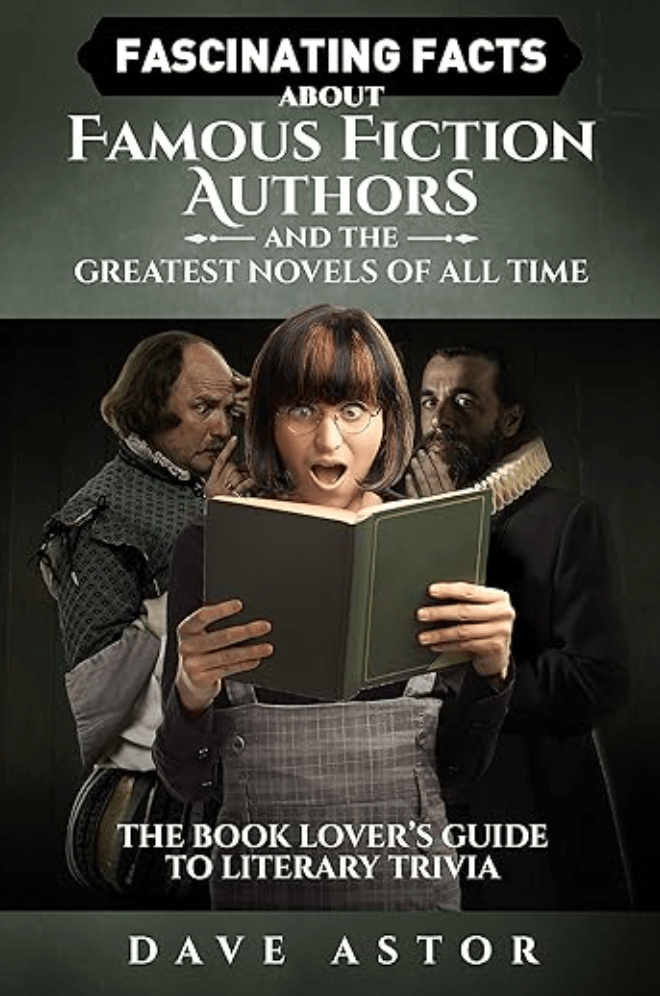
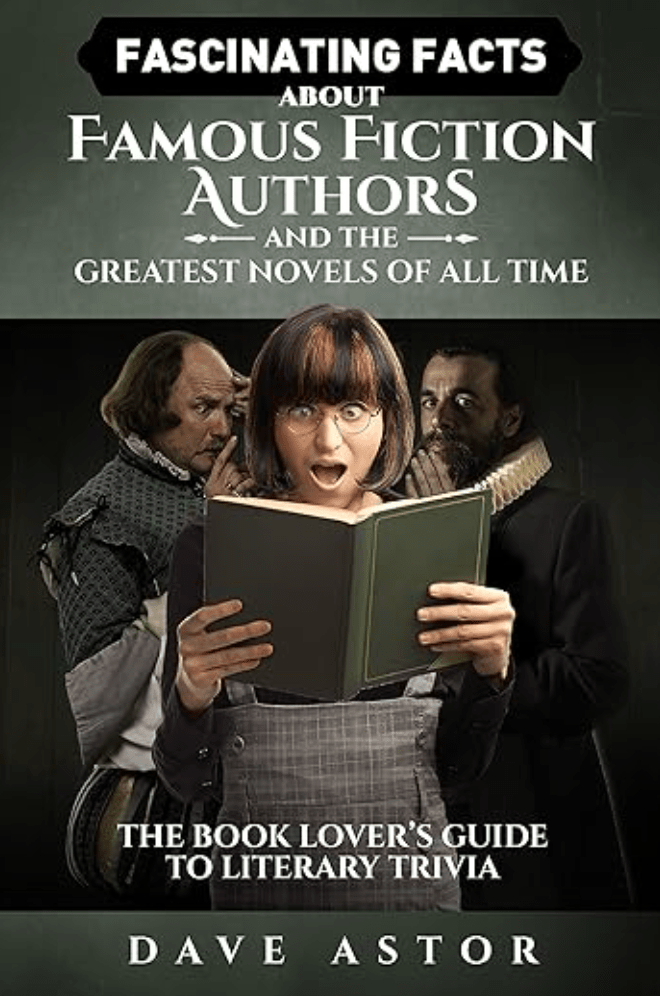
Dave is also the author of a 2017 literary-trivia book

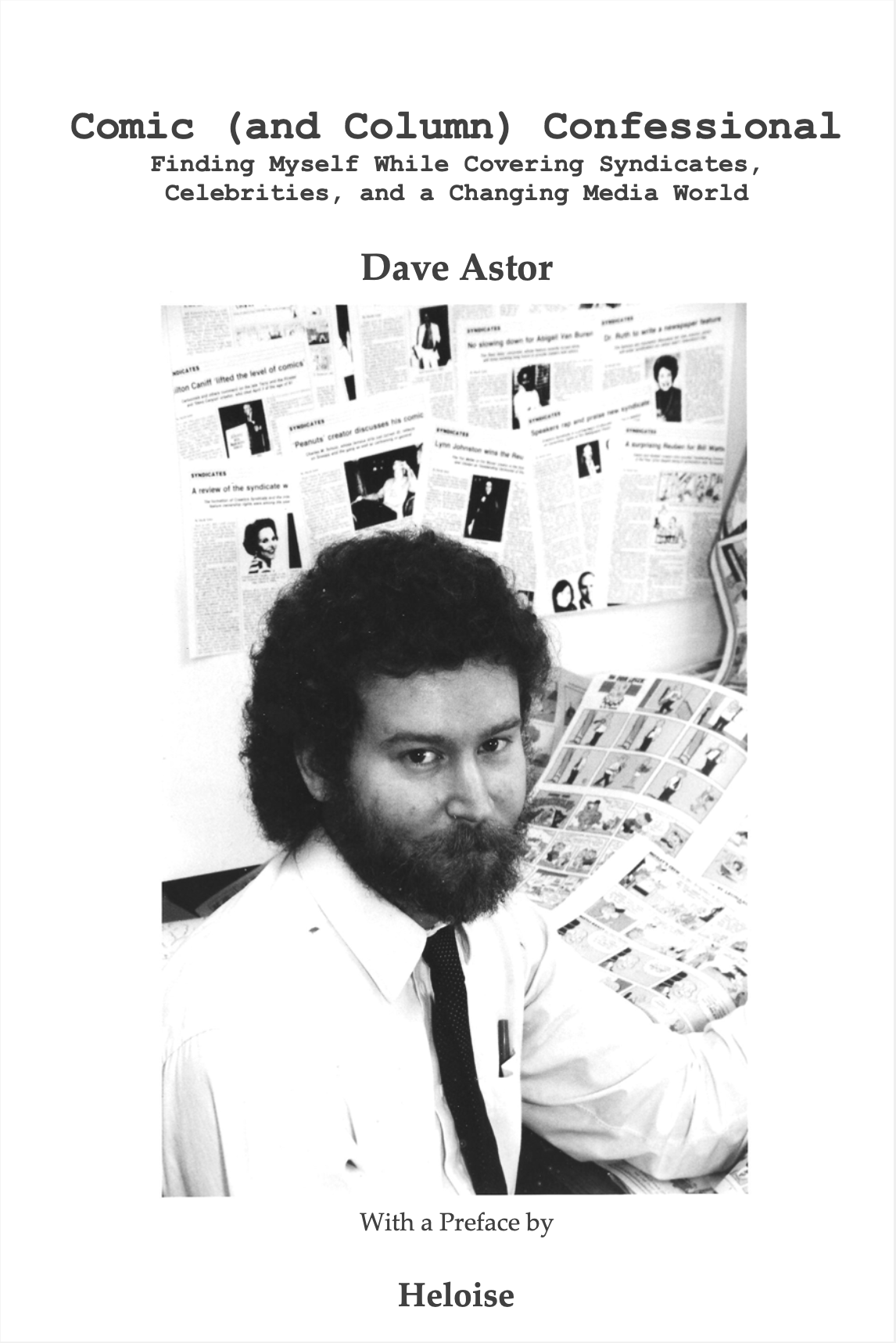
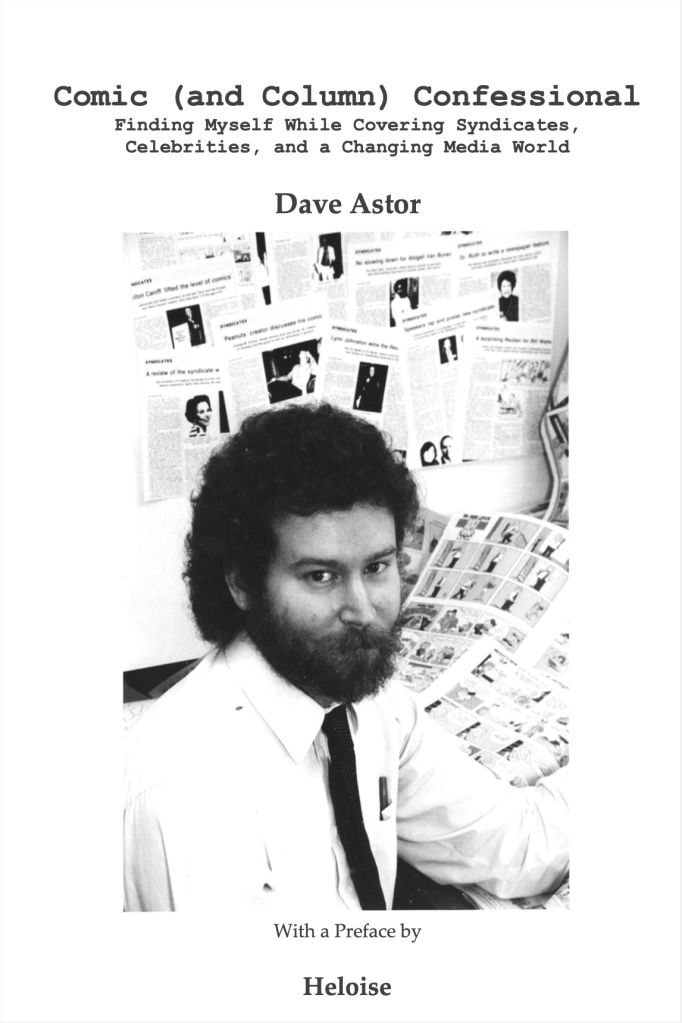
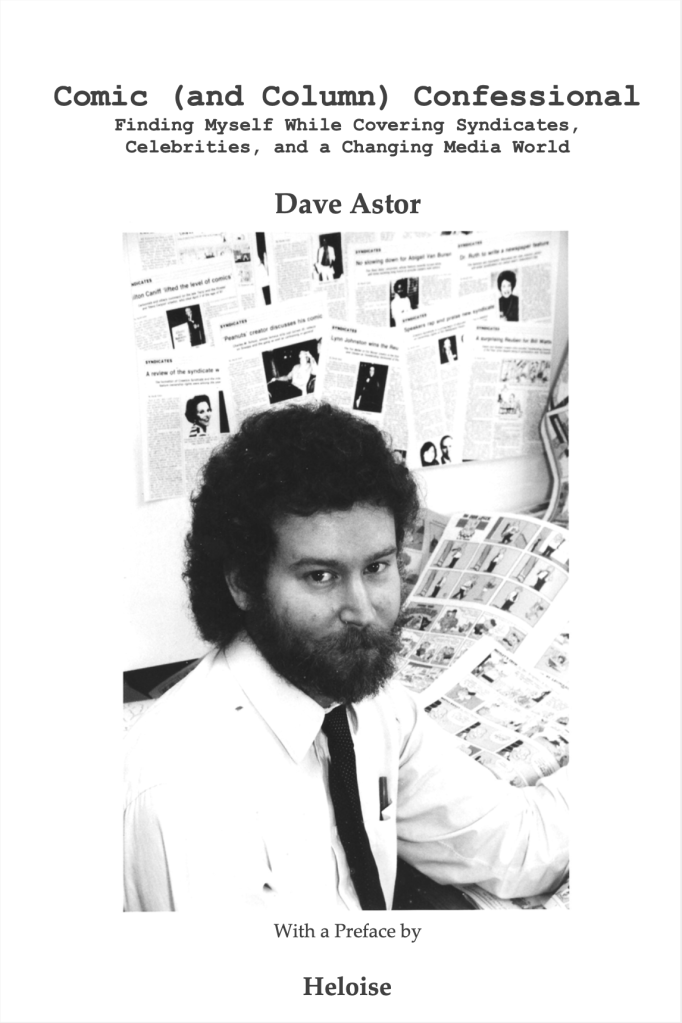
…and a 2012 memoir that focuses on cartooning and more.

In addition to this weekly blog, Dave writes the 2003-started/award-winning “Montclairvoyant” topical-humor column every Thursday for Montclair Local. The latest piece — about New Jersey’s upcoming primary election and much more — is here.

At This Thematic Stop, We Hop on ‘Pop’

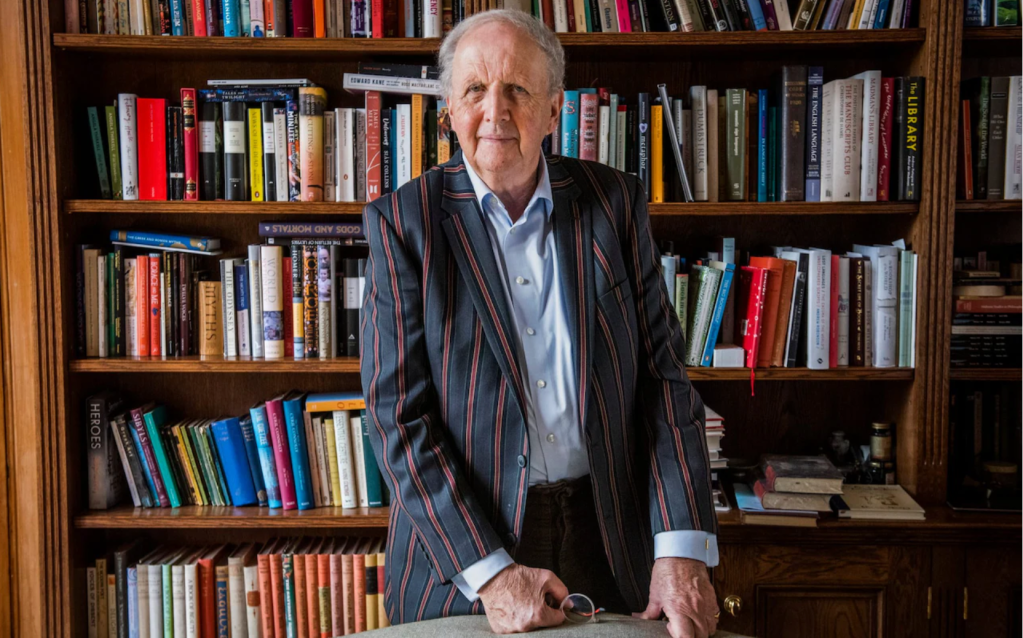
Alexander McCall Smith. (Photo by Chris Watt.)

Being an accomplished author doesn’t mean that every character she or he creates will “pop.”

Novelists are not machines; they don’t operate at 100% capacity with every word. Also, they might be more interested in certain characters than in other ones, perhaps because some characters have elements that are more quirky, unusual, etc. Authors might even make some characters deliberately boring because some people are boring and it might work for the story. And then of course there’s the matter of villains often having a level of charisma that nicer characters might not possess.

A great way to observe this phenomenon is with a novel featuring an ensemble cast in which no one is really the sole star. Such is 44 Scotland Street by Alexander McCall Smith, who populates his first-in-a-series 2005 book with residents of an apartment building (located at the Edinburgh address of the title) and with several other people who are friends or co-workers of said residents.

The “fulcrum” of 44 Scotland Street is probably Pat, a 20-year-old woman who opens the novel visiting the titular address in which she’ll soon share a multi-person apartment. But Pat is not that fascinating a person — partly because of her young age and relatively small amount of life experience. On the other hand, 60-something building resident Domenica is quite memorable, as is her 50-something artist friend — soon also Pat’s friend — Angus. Pat’s narcissistic apartment-mate Bruce is more annoying than interesting.

Of course, someone quite young can also be compelling. In McCall Smith’s novel, that would be five-year-old Bertie — a very precocious kid buckling under the pressure of a “helicopter” mom-from-hell forcing him to learn Italian and play a saxophone almost as big as he is.

Now I’ll fit three classics into this theme, although there are of course many other novels that could also be included.

The “hero” of Wilkie Collins’ 1860 mystery/adventure The Woman in White is the brave and devoted Walter Hartright, who has “the right heart” but doesn’t really “pop” into three-dimensionality. The characters who stand out include the deliciously wicked Count Fosco and the resourceful, not conventionally attractive, possibly lesbian (?) Marian Halcombe.

In Edith Wharton’s 1920 novel The Age of Innocence, protagonist Newland Archer is mildly interesting while his fiancee and subsequently wife May Welland is rather bland and conventional. The character who really “pops” is free-spirited bohemian Ellen Olenska — to whom Newland becomes attracted. This is clearly intentional on Wharton’s part as she sets up Newland’s internal struggle between what he wants and his societal “obligations” as a young man from an upper-class family.

Frodo Baggins might be “first among equals” in J.R.R. Tolkien’s The Lord of the Rings trilogy (published 1954-55). He’s admirable and courageous, but the low-key, earnest hobbit doesn’t “pop” like some other characters such as Frodo’s equally courageous but more spirited and quick-witted “servant” companion Samwise Gamgee and the anguished, part-villainous/part-sympathetic Gollum.

As I’ve written in a couple of past posts, supporting characters can frequently be more interesting than the so-called leads they might bounce off of in novels.

Your thoughts about, and examples of, this topic?

Misty the cat says: “My wagon flipped, so I’m walking the rest of the way to Mars.”
https://www.youtube.com/shorts/jNRBuJU6YFI

My comedic 2024 book — the part-factual/part-fictional/not-a-children’s-work Misty the Cat…Unleashed — is described and can be purchased on Amazon in paperback or on Kindle. It’s feline-narrated! (And Misty says Amazon reviews are welcome. 🙂 )

This 90-second promo video for my book features a talking cat: 🙂

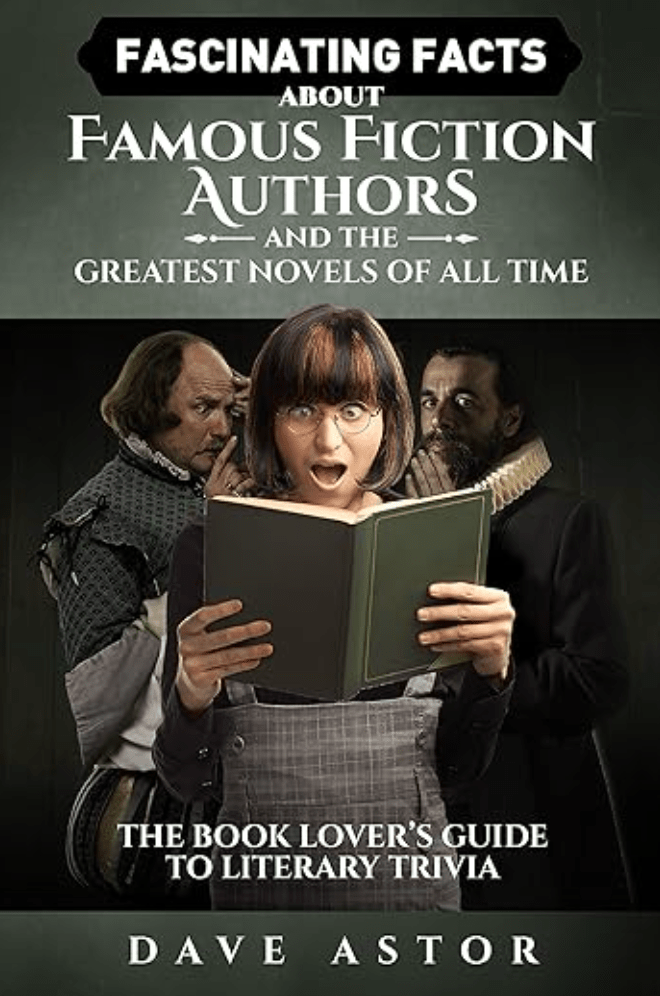
I’m also the author of a 2017 literary-trivia book

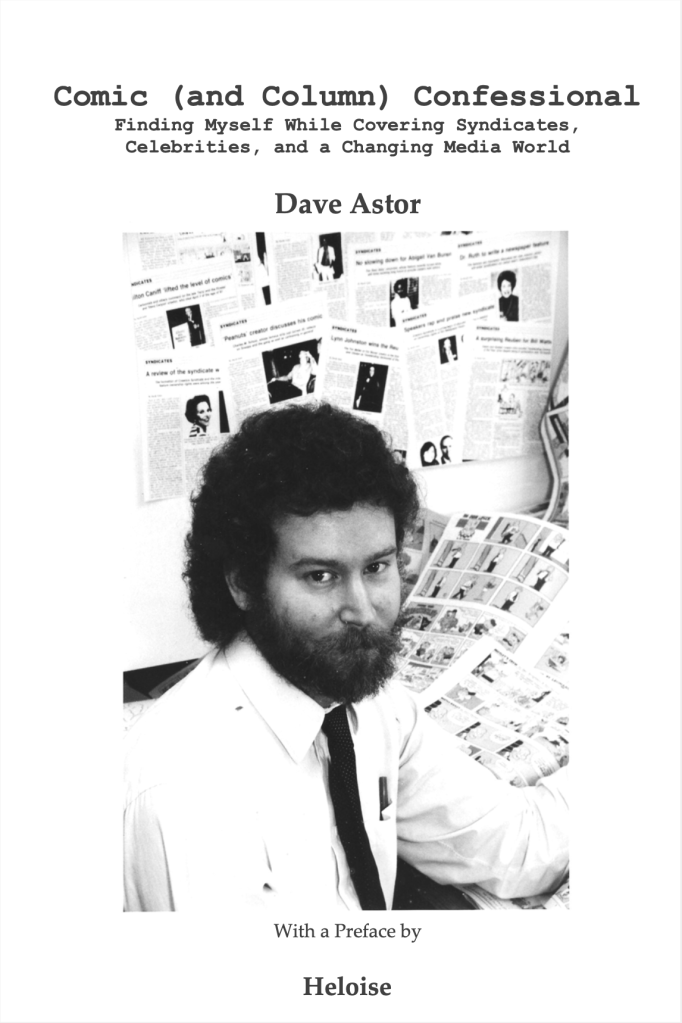
…and a 2012 memoir that focuses on cartooning and more.

In addition to this weekly blog, I write the 2003-started/award-winning “Montclairvoyant” topical-humor column every Thursday for Montclair Local. The latest piece — about my town’s newly appointed schools superintendent — is here.

‘A Game of Thrones’ vs. ‘The Lord of the Rings’

It took me a long time to get to it, but I finally read A Game of Thrones after commenters here recommended it.

The first volume of George R.R. Martin’s “A Song of Ice and Fire” epic fantasy series clocks in at nearly 700 large-size, small-print pages. I almost abandoned the novel after a few chapters, because the author kept jumping to so many different characters that it was hard to get absorbed. But I finally did, and found the book really compelling from then on.

Rather than write a straightforward review of A Game of Thrones — which, along with its sequels, inspired the hit TV series — I thought I’d compare it to the other epic fantasy tour de force read by many people (like me) who usually don’t read fantasy. I’m of course referring to J.R.R. Tolkien’s trilogy The Lord of the Rings, and its prequel The Hobbit.

Overall, Tolkien’s wonderful classic is more of a page-turner — the storytelling is mostly linear, and the quest to destroy that titular ring is riveting. Martin’s most noticeable plot line — various families striving for power — is also exciting but a bit more diffuse. Yet A Game of Thrones (I haven’t read the sequels) surpasses The Lord of the Rings in certain ways.

Both epics have great writing, memorable characters, and excellent humor (though Tolkien is somewhat funnier — at least in The Hobbit). Each also features all kinds of death and war, but Martin’s depiction of violence is much more graphic and realistic. Perhaps partly a product of our current time.

Martin expertly juggles a somewhat larger cast of principal players, and, to his credit, has far more female protagonists in major roles. That might also be partly a product of a later era, but, heck, plenty of novels in Tolkien’s heyday had prominent female characters.

Perhaps most importantly, Martin’s characters are more three-dimensional than the vast majority of those in Tolkien’s cast. Few of the Game of Thrones denizens are all good or all bad — and that kind of moral ambiguity makes things very interesting.

Another interesting difference between the Martin and Tolkien works is that A Game of Thrones is mostly populated by humans, while The Lord of the Rings features a variety of bipeds: humans, hobbits, wizards, elves, orcs, etc.

Also, both series are set in long-ago, pre-modern-technology times. Martin does a better job of depicting the squalor and difficulties of living in such an era; things are more sanitized in The Lord of the Rings.

Will I read more of “A Song of Ice and Fire”? Not sure. A Game of Thrones was a large investment of time (about two weeks), and I’m not a fantasy buff. But I might. The novel ended on a very intriguing note, and I’m curious about what will happen to such characters as Daenerys Targaryen, the timid teen girl who turns into a ruthless dynamo; Arya Stark, the resourceful “tomboy”; Jon Snow, the outcast “bastard” son who makes something of his life; Joffrey Baratheon, the appalling young prince-turned-king; and Tyrion Lannister, the witty/crafty dwarf with perhaps the biggest personality in the book. (Tyrion, as played by Peter Dinklage in the HBO series, is pictured above.)

If you’ve read them, any thoughts on George R.R. Martin’s and J.R.R. Tolkien’s famous creations? (For those counting, that’s four “R” initials you just saw. 🙂 ) What other fantasy works have you enjoyed?

My 2017 literary-trivia book is described and can be purchased here: Fascinating Facts About Famous Fiction Authors and the Greatest Novels of All Time.

In addition to this weekly blog, I write the award-winning “Montclairvoyant” topical-humor column for Baristanet.com. The latest weekly piece — about climate change, a Board of Education resignation, and a school stairway collapse — is here.