Feline Post Includes Mentions of Jane Austen and ‘The Host’

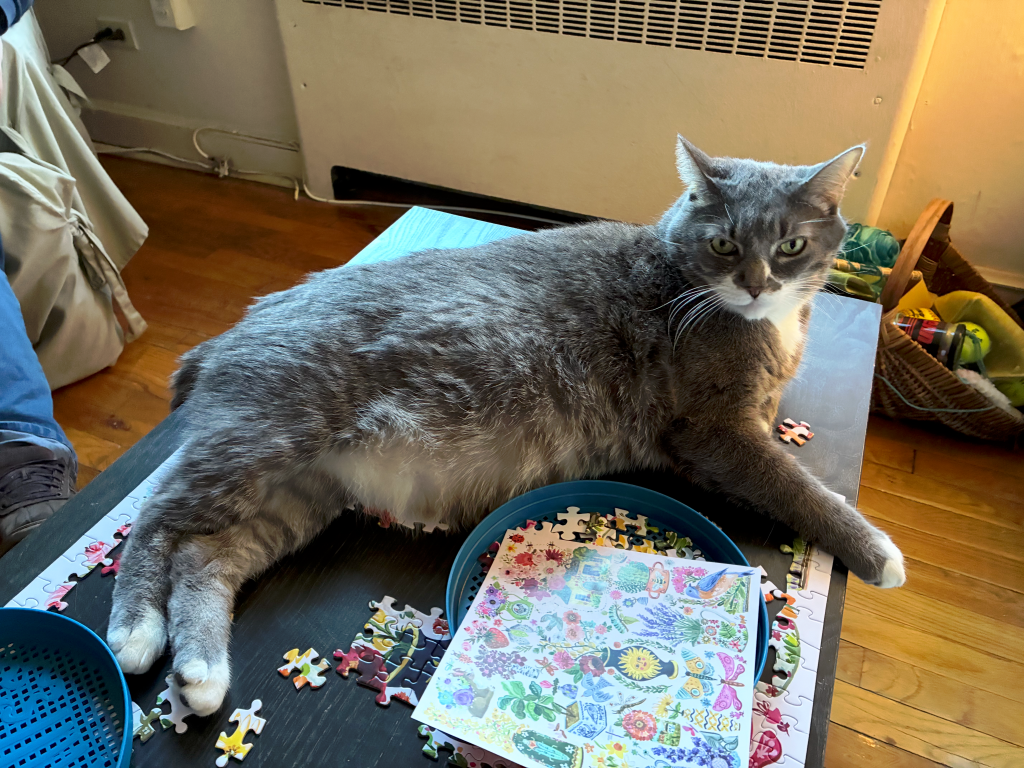
I, Misty the cat, say: “Putting together a guest blog post is like putting together a puzzle.” (Photo of my kitty self taken by my adult female human Laurel.)

Misty the cat here, returning for my every-two-month takeover of Dave’s blog — which I do by gunpoint, minus the gun. This is a particularly memorable time for me to post because tomorrow is the 8th anniversary of my adoption into my forever family, from whom I’ve received everything I could desire except a bed the size and shape of Buckingham Palace. King Chuck III has some ‘splaining to do.

And in nine days — December 16 — there’ll be a milestone moment for literature: the 250th anniversary of Jane Austen’s 1775 birth! Rebecca Budd, who comments here every week, has already posted about that anniversary in one of her great blogs. The year 1775 was also significant for being the start of the American Revolutionary War and for Apple’s rollout of the iMusket 9.

Back to Austen. I’m often (well, never) asked how I rank her six novels, and here’s my kitty answer: 1, 2, 3, 4, 5, 6. Oh, you want titles, too? 1) Persuasion. 2) Pride and Prejudice. 3) Sense and Sensibility. 4) Mansfield Park. 5) Emma. 6) Northanger Abbey. This is also Dave’s order of faves (rhyme alert!), which means we were both bribed by the same literary scholars. Austen’s early 19th-century books have aged well…partly because I keep them in my wine cellar. Actually, I don’t have a wine cellar. No cat does.

And today, December 7, is the 84th anniversary of the 1941 attack on Pearl Harbor, an event vividly depicted near the end of Herman Wouk’s compelling novel The Winds of War. If those winds had become strong enough, Wouk’s book would’ve been titled The Hurricanes of War — storms that fall alphabetically between Hurricane Violin and Hurricane Xylophone.

The Winds of War was followed by Wouk’s epic War and Remembrance — the title of which has the initials “WAR.” Coincidence? Well, Hurricane Coincidence falls alphabetically between Hurricane Bassoon and Hurricane Didgeridoo.

My current reading? I, Misty the cat, recently finished Twilight author Stephenie Meyer’s The Host, an excellent work of sci-fi that stars a being who lives inside a human body. So, no, the book is not a historical novel about Johnny Carson, who was not related to The Heart Is a Lonely Hunter author Carson McCullers, who was a top-notch writer but apparently didn’t know that a heart can’t hunt animals without a permit and that vegans prefer Fannie Flagg’s novel Fried Green Tomatoes at the Whistle Stop Cafe. Also, American frontiersman Kit Carson was not a feline like me.

Natty Bumppo did the frontiersman thing, too, in James Fenimore Cooper’s five “Leatherstocking” novels that included The Last of the Mohicans. Cooper was an American contemporary of aforementioned Englishwoman Jane Austen, and there are even rumors that they collaborated on a novel called The Last of the Emmas. So I’m puzzled (see photo) that we later had people such as actresses Emma Thompson and Emma Watson.

The latter of course played Hermione Granger in the Harry Potter movies based on the J.K. Rowling novels. Seven books, eight movies, and nine lives (experienced by cats like me). Plus there are 10 characters in Agatha Christie’s famed mystery novel And Then There Were None, whose plot focuses on the number of dry-food pellets left in my bowl after I finish eating. No mystery where those pellets went.

Which books do I want for Christmas? Charles Dickens’ A Christmas Carol, Fannie Flagg’s A Redbird Christmas, John Grisham’s Skipping Christmas, Betty Smith’s A Christmas Tree Grows in Brooklyn, Anthony Burgess’ A Christmas Orange, Fyodor Dostoevsky’s Christmas and Punishment, Aldous Huxley’s Brave New Christmas, Barbara Kingsolver’s Demon Christmashead, E.M. Forster’s A Passage to Christmas, Chinua Achebe’s Christmas Falls Apart

Dave will reply to comments as I either finish the puzzle I’m photographed with or swat every piece of that puzzle into January 2026.

I, Misty the cat, say: “There’s gotta be a sidewalk sale around here somewhere.”

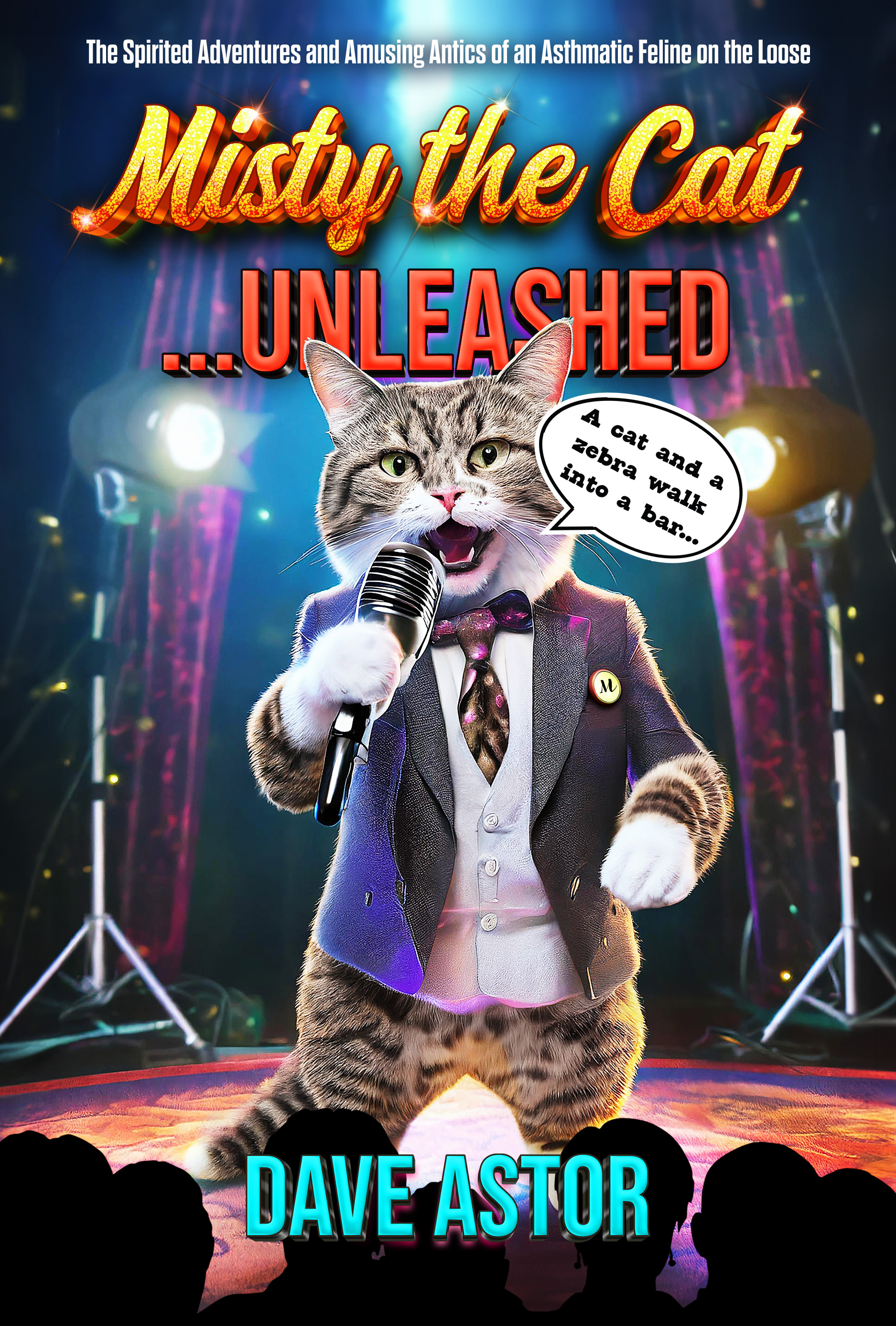
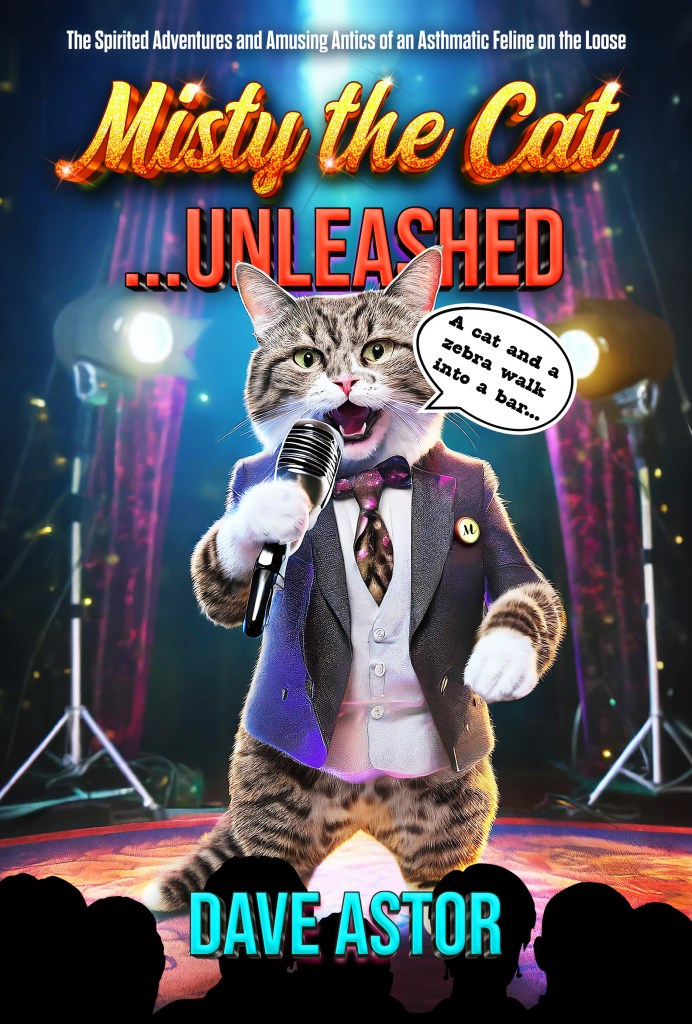
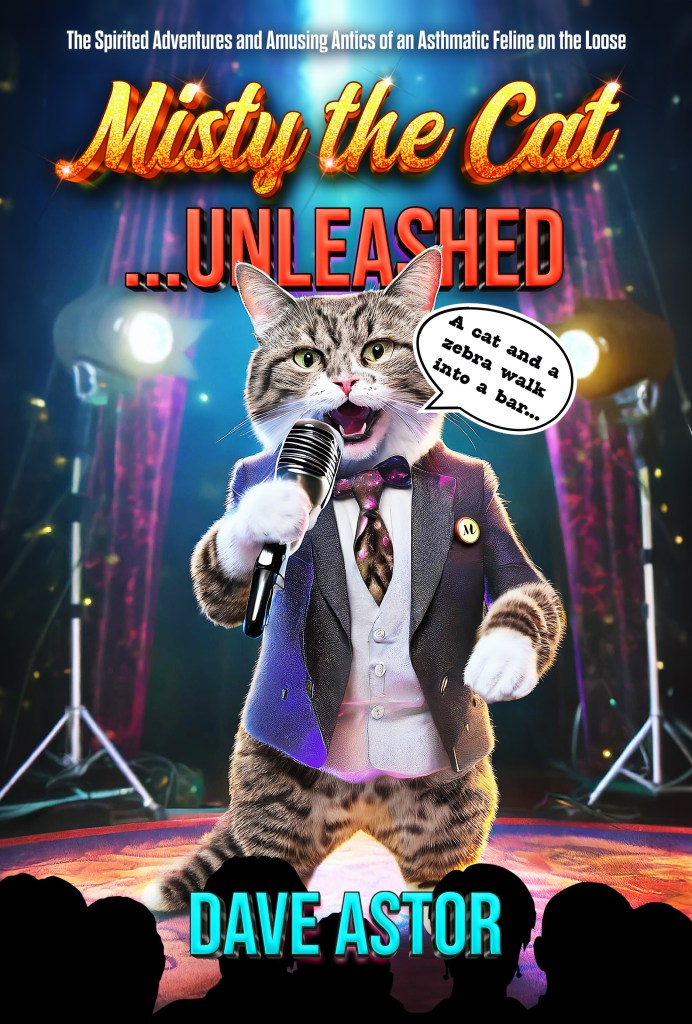
Dave and my comedic 2024 book — the part-factual/part-fictional/not-a-children’s-work Misty the Cat…Unleashed — is described and can be purchased on Amazon in paperback or on Kindle. It’s feline-narrated! (And Amazon reviews are welcome. 🙂 )
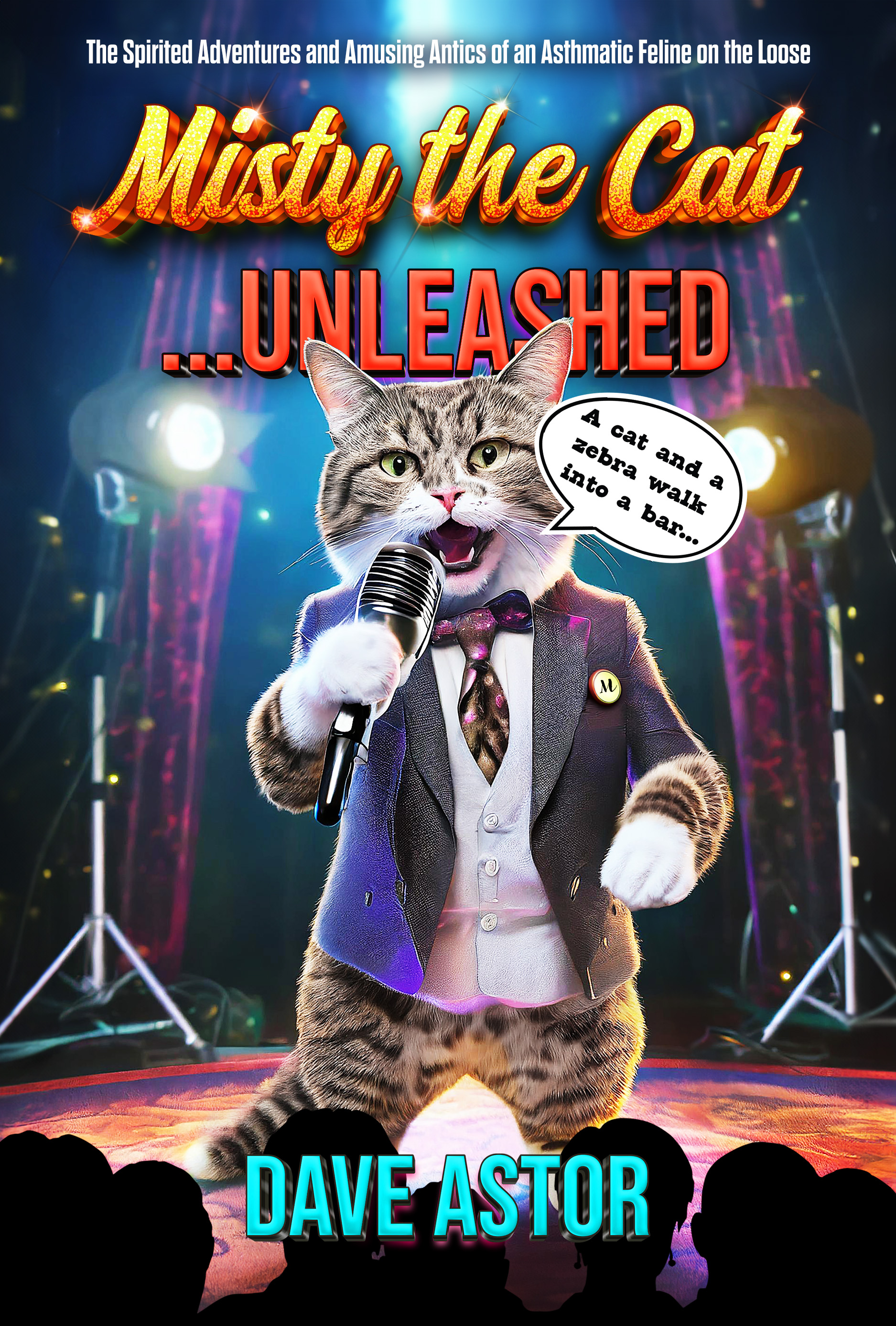
This 90-second promo video for the book features a talking cat: 🙂

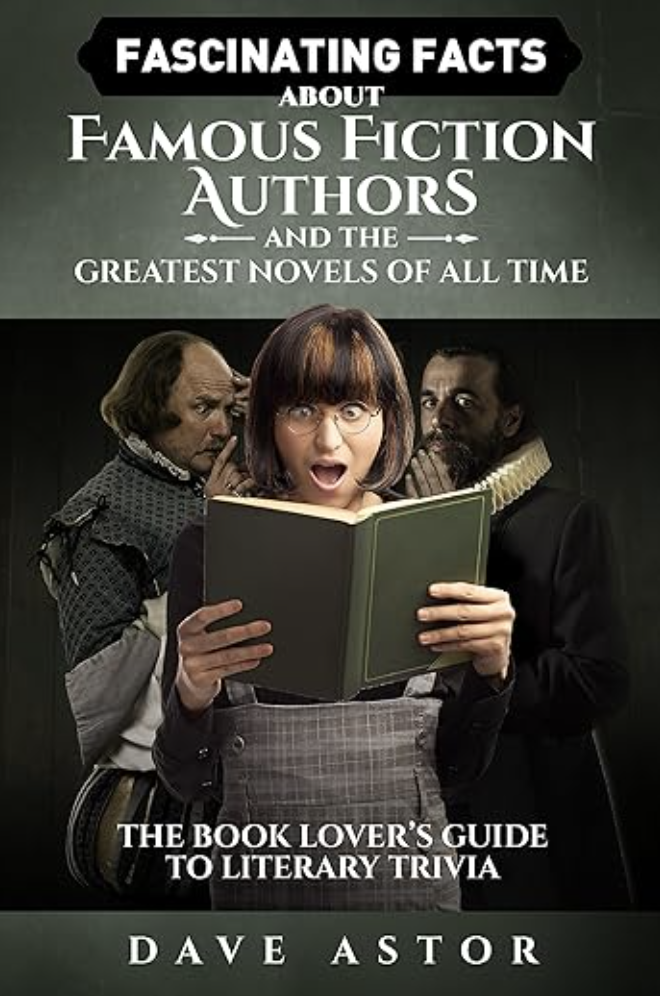
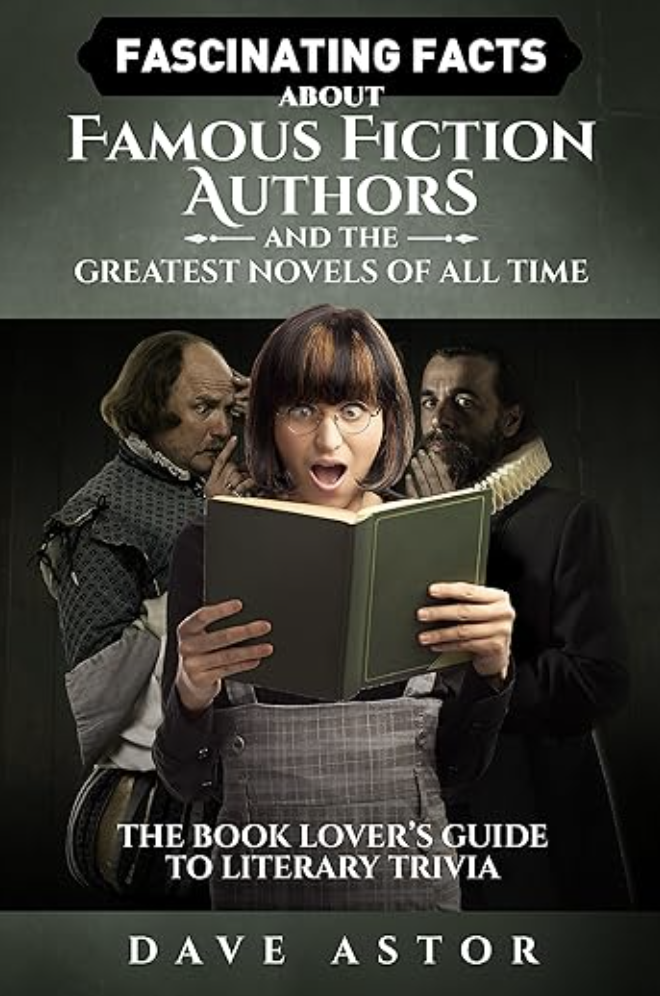
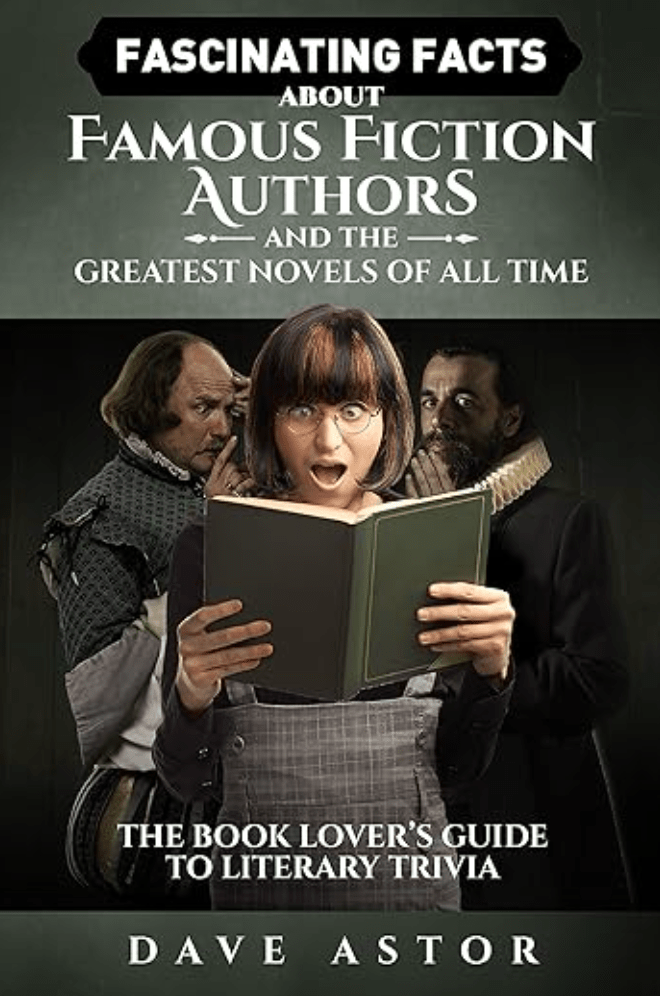
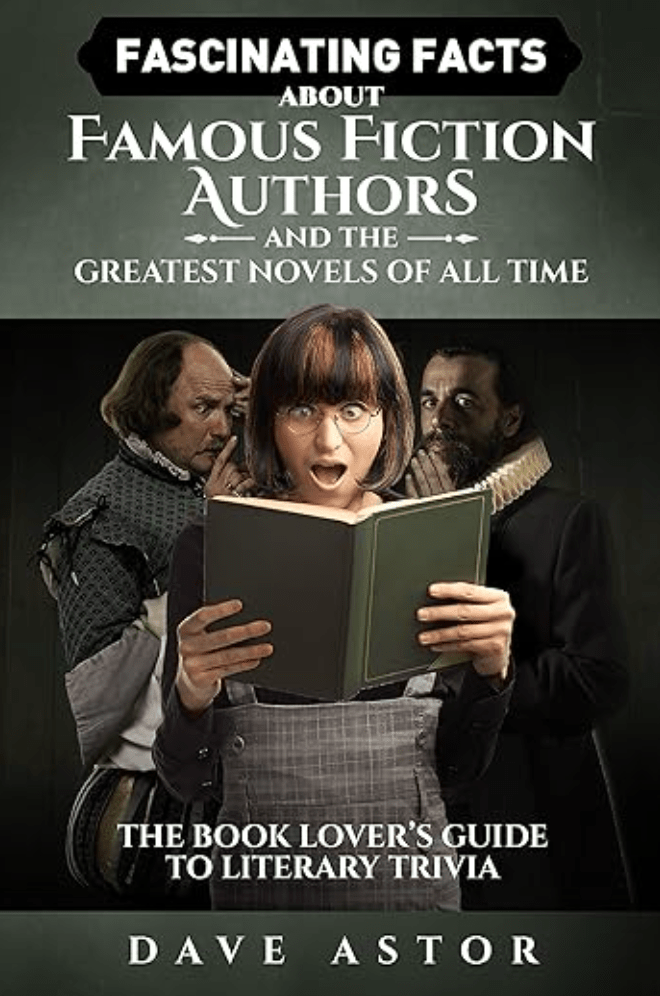
Dave is also the author of a 2017 literary-trivia book

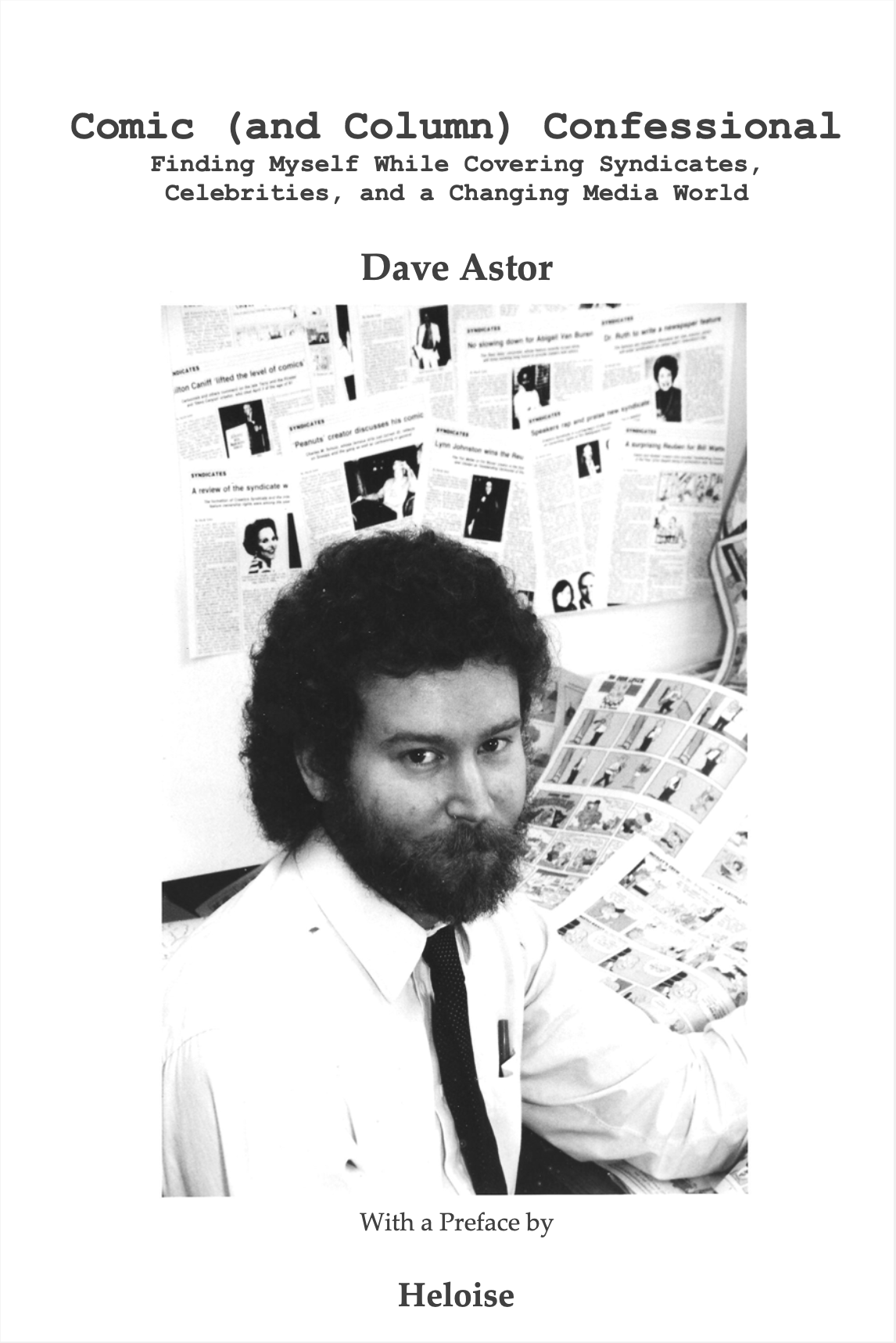
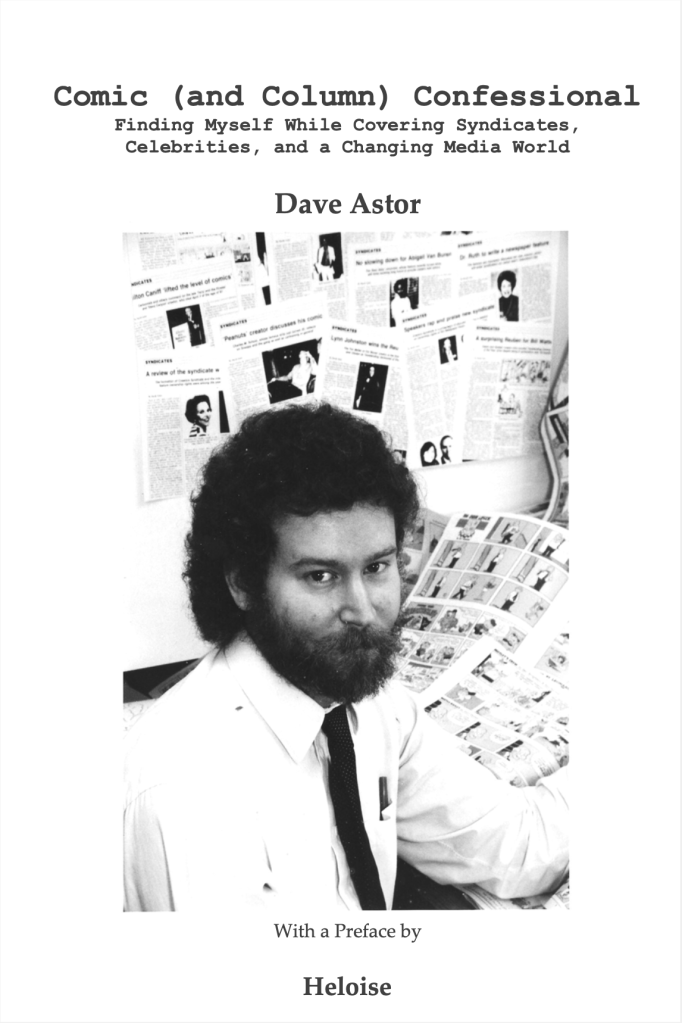
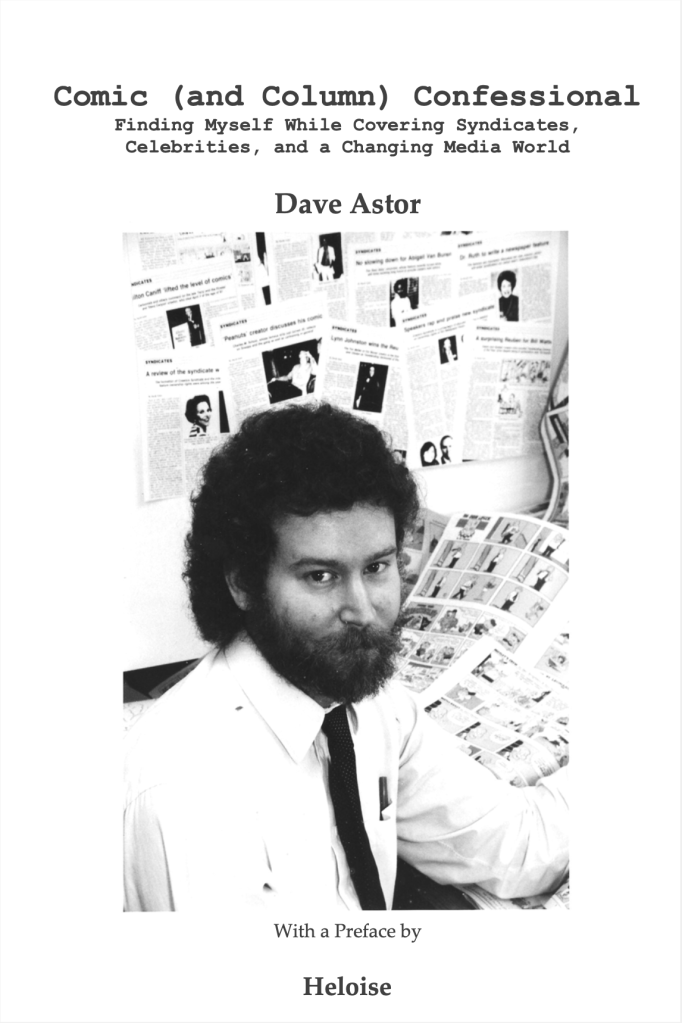
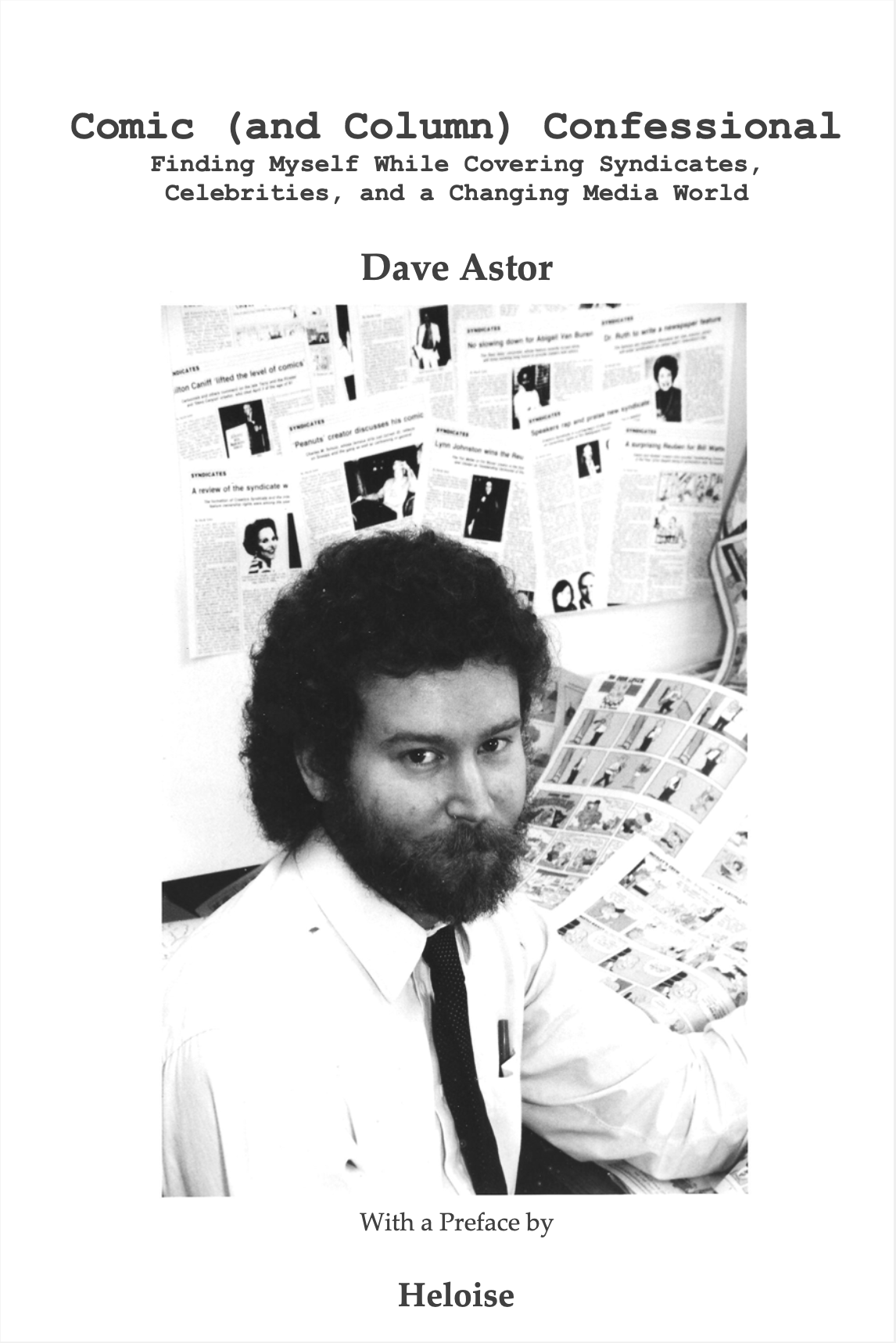
…and a 2012 memoir that focuses on cartooning and more, including many encounters with celebrities.
In addition to this weekly blog, Dave writes the 2003-started/award-winning “Montclairvoyant” topical-humor column every Thursday for Montclair Local. The latest piece — from which Sir Walter Scott should remove himself from discussion of a referendum-halting court decision — is here.

A Cat Named Misty Writes a Post That’s Twisty

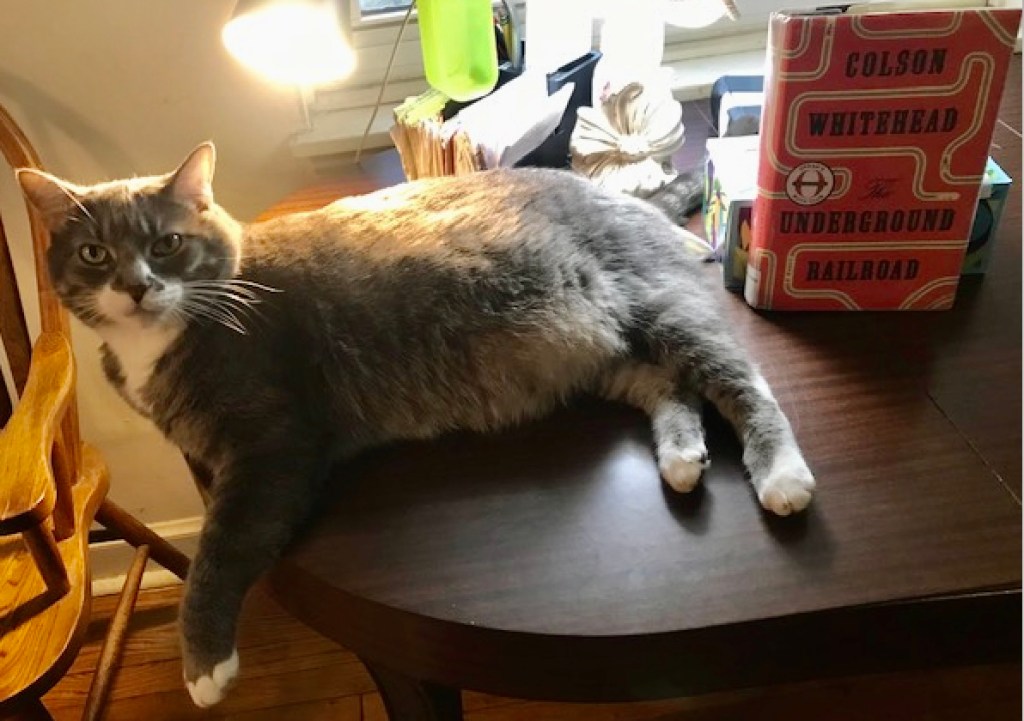
Misty aboveground with The Underground Railroad. (Photo by Dave.)

I, Misty the cat, guest-blog for Dave every two months or so. I last did that on February 9 — after which March winds brought April winds that knocked me from a standing position onto my side. Hence the above photo.

Anyway, as I embody “suburban sprawl” I’m contemplating the just-finished The Underground Railroad. Ouch…a searing novel set during 19th-century slavery times in the U.S. — which now consists of 50 states, only seven of which have cats as governors. One thing Colson Whitehead’s book made me realize is that felines are not as hung up on color as many white humans were and are. Heck, whether a cat is gray or black or orange or another hue, I glare at each one equally if they bother me during my daily leashed walks. After all, I’m the mayor of my apartment complex, though I don’t remember being elected. Maybe it was a coup.

The novel Dave and I read before The Underground Railroad was another installment of Val McDermid’s excellent series starring cold-case detective Karen Pirie, who Dave emulates by bringing home cold cases of cat food every winter. The Pirie novel was Broken Ground — a title that intrigued me because I also broke ground when I vigorously scratched in the dirt, searching for the paperwork certifying my mayoral election win.

Next in my near-future reading queue are the first novels I’ll be trying by Alexander McCall Smith, who makes me also want a multi-part name — perhaps Misty McKitty Bloggerslogger, which would sure beat being known as the title character in Wilkie Colllins’ novel No Name. Anyway, both soon-to-be-read-by-me McCall Smith books — 44 Scotland Street and The Sunday Philosophy Club — kick off respective series, and the latter title has already inspired me not to be philosophical Monday through Saturday. I also want to read another McCall Smith series opener — The No. 1 Ladies’ Detective Agency — but it’s not currently in my local library. As a cat lacking opposable thumbs, I couldn’t have grabbed hold of it anyway.

I do like strolling library aisles on my four paws, and have noticed that novels are shelved alphabetically by author. How Jane Austen shelved her own books — alphabetically or otherwise — in my town’s 1955-built library I have no idea; she passed away in 1817. Maybe she had Charles Dickens do it for her. Or the shelver might have been Dickens’ friend, the aforementioned Wilkie Collins, who also wrote the early detective novel The Moonstone. Dogs howl at its cover.

Dickens was born in 1812, so his and Austen’s lives overlapped for five years — giving them enough time to collaborate on the novel Sense and Nicholas Nickleby. Epic, albeit lacking in Sensibility.

Another writing pair is Vicki Myron and Bret Witter, who co-authored the heartwarming nonfiction book Dewey: The Small-Town Library Cat Who Touched the World. The library my fellow feline Dewey inhabited was in Iowa, one of the 43 states without a feline governor. Iowa has 75% vowels, though.

Returning to discussion of The Underground Railroad, that 2016 novel published a year after my 2015 birth still strongly resonates in 2025 given that the U.S. has a president (Donald Trump), a “co-president” (Elon Musk), and a vice president (JD Vance) so racist they renamed the late Amy Winehouse’s “Back to Black” album “Back to White.” Trump then exempted it from high tariffs.

Dave will respond to comments because I, Misty the cat, will be busy swatting high tariffs off the kitchen counter. They then become lower tariffs.

Misty the cat says: “I’m doing the annual Flower Walk to raise money for the annual Flower Walk.”

I and Dave’s comedic 2024 book — the part-factual/part-fictional/not-a-children’s-work Misty the Cat…Unleashed — is described and can be purchased on Amazon in paperback or on Kindle. It’s narrated by me, Misty! (And I say Amazon reviews are welcome. 🙂 )

This 90-second promo video for my and Dave’s book features a talking cat (sort of me, Misty): 🙂

Dave is also the author of a 2017 literary-trivia book

…and a 2012 memoir that focuses on cartooning and more.

In addition to this weekly blog, Dave writes the 2003-started/award-winning “Montclairvoyant” topical-humor column every Thursday for Montclair Local. The latest piece — about another lawsuit, a large local anti-Trump/Musk rally, and more — is here.

The Ardor Order of Jane Austen

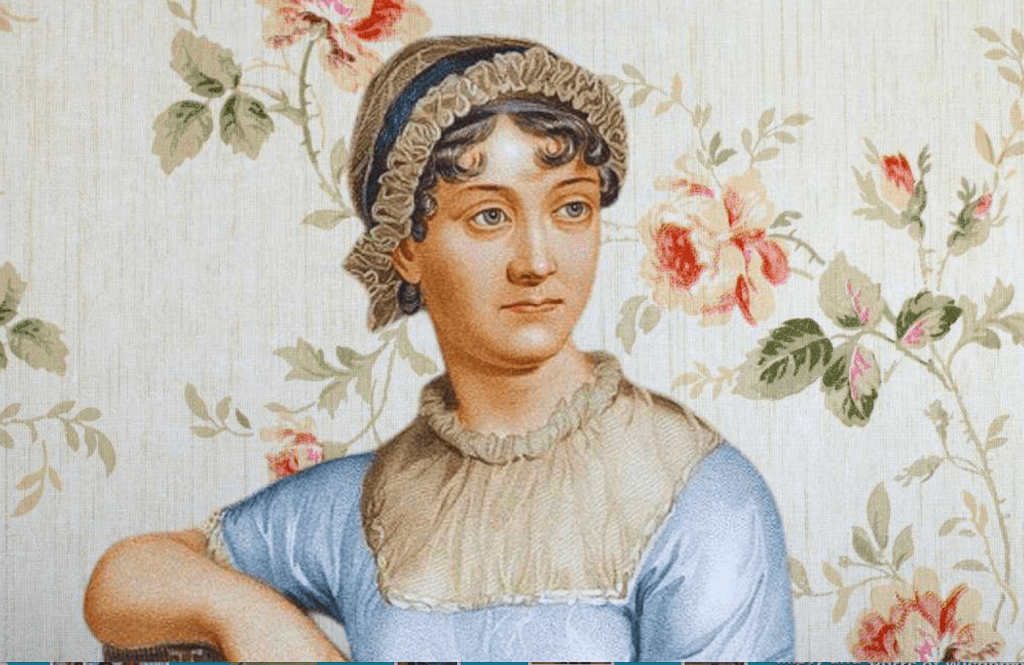
Fellow blogger Rebecca Budd noted in a post last week (see below) that January 28 was the 1813 publication date of Jane Austen’s classic novel Pride and Prejudice. Rebecca’s piece made me think about how I would rank the six books Austen (1775-1817) is most known for. So here I go with a post that will not end with a wedding, but with the Austen novel that is my favorite.

6. Northanger Abbey: A satire of Gothic fiction with both great moments and so-so moments. Though published posthumously, it was the first novel Austen fully completed — so the authorial growing pains are not surprising. The protagonist is Catherine Morland, whose reading of Gothic fiction feeds her rather overactive imagination.

5. Emma: Many readers would undoubtedly rank this well-crafted novel higher in Austen’s canon, but Emma Woodhouse’s meddlesome nature is rather annoying; she really does need to mind her own business. (I’m surprised Harriet Smith didn’t “unfriend” Emma on Facebook. 🙂 ) But, to her credit, Emma eventually does some growing up by the latter part of the novel.

4. Mansfield Park: The “poor relation” protagonist Fanny Price is sympathetic, but probably the most boring and least charismatic of Austen heroines. Still, the story line and how Fanny fares makes for interesting reading. Bonus: J.K. Rowling named a cat in her Harry Potter series after the Mrs. Norris character in Mansfield Park.

3. Sense and Sensibility: An absorbing look at the Dashwood sisters as they and their widowed mother find themselves in reduced economic circumstances. The first Austen novel published, in 1811.

2. Pride and Prejudice: The favorite Austen work of many, and the novel is indeed quite a read. Its characters of course include Elizabeth Bennet (one of five sisters) and Fitzwilliam Darcy as they navigate an initially challenging relationship. The title of this iconic book comes from a phrase in Fanny Burney’s 1782 novel Cecilia.

1. Persuasion: A concise novel featuring what I think is Austen’s most mature heroine: Anne Elliot. Her relationship with Captain Frederick Wentworth is at first thwarted, but she keeps on keeping on with life during the years of separation.

Your Austen favorites?

Misty the cat says: “‘Journey to the Center of the Earth’ starts with stepping off a porch.” Click on brief video here: https://www.youtube.com/shorts/T9c23Mm3eY4

My comedic 2024 book — the part-factual/part-fictional/not-a-children’s-work Misty the Cat…Unleashed — is described and can be purchased on Amazon in paperback or on Kindle. It’s feline-narrated! (And Misty says Amazon reviews are welcome. 🙂 )

This 90-second promo video for my book features a talking cat: 🙂

I’m also the author of a 2017 literary-trivia book...

…and a 2012 memoir that focuses on cartooning and more.

Also, I write the 2003-started/award-winning “Montclairvoyant” topical-humor column every Thursday for Montclair Local. The latest piece — inspired by a January jammed with local news — is here.

The Bicentennial of a Great Year for Literature

We’re living in the bicentennial anniversary of 1818 — a very consequential 12 months in the early days of the modern novel.

Mary Shelley’s Frankenstein came out that year. One of the most important novels ever written when you think of its impact on science fiction, the horror genre, movies, women writing fiction, and more. Published when Shelley was barely in her 20s, it’s a philosophical, page-turning, poignant work about hubris, human cruelty, the meaning of life, and other weighty issues.

Shelley followed Frankenstein with such books as The Last Man (1826), published when the 1797-born author was in her late 20s. That apocalyptic, set-in-the-future novel was also a pioneering tale — as well as a time capsule thanks to the three main characters being based on Mary, her famous poet husband Percy Bysshe Shelley, and their famous poet friend Lord Byron.

Getting back to 1818, that was also when Jane Austen’s Persuasion and Northanger Abbey were released posthumously.

Persuasion is my favorite Austen novel and stars my favorite Austen heroine (Anne Elliot). It has a lot less cachet than Pride and Prejudice, and somewhat less cachet than Sense and Sensibility, Emma, and Mansfield Park, but I think the lean Persuasion is the brightest gem in Austen’s six-novel canon.

Northanger Abbey is my least favorite Austen work, though that love story and satire of Gothic fiction is still an absorbing read.

Austen, of course, is as popular as ever 200 years after 1818. Actually, much more popular given that she had only modest celebrity and sales success before her 1817 death at age 41.

And 1818 saw the publication of The Heart of Midlothian — Sir Walter Scott’s first novel to star a woman, and the first of his to star a protagonist from the “lower classes.” It compellingly chronicles the Jeanie Deans character’s long trek on foot from Scotland to London to try to clear her sister’s name.

The Heart of Midlothian is my favorite Scott novel, though he also authored a number of other excellent ones — including Ivanhoe, Rob Roy, Old Mortality, and Quentin Durward, to name just four. All were written after the 1771-born Scott turned 40; the first part of his writing career was spent as a very widely read poet. (“Oh what a tangled web we weave/when first we practise to deceive.”)

I’ll end this post by also mentioning two great 1918 novels: Willa Cather’s My Antonia and Booth Tarkington’s The Magnificent Ambersons.

Any thoughts on the work of Mary Shelley, Jane Austen, and/or Sir Walter Scott?

My 2017 literary-trivia book is described and can be purchased here: Fascinating Facts About Famous Fiction Authors and the Greatest Novels of All Time.

In addition to this weekly blog, I write the award-winning “Montclairvoyant” topical-humor column for Baristanet.com. The latest weekly piece — about topics such as school tours and March 14’s national student walkout for better gun control — is here.