Books Helped Robert Redford’s Film Career Shine

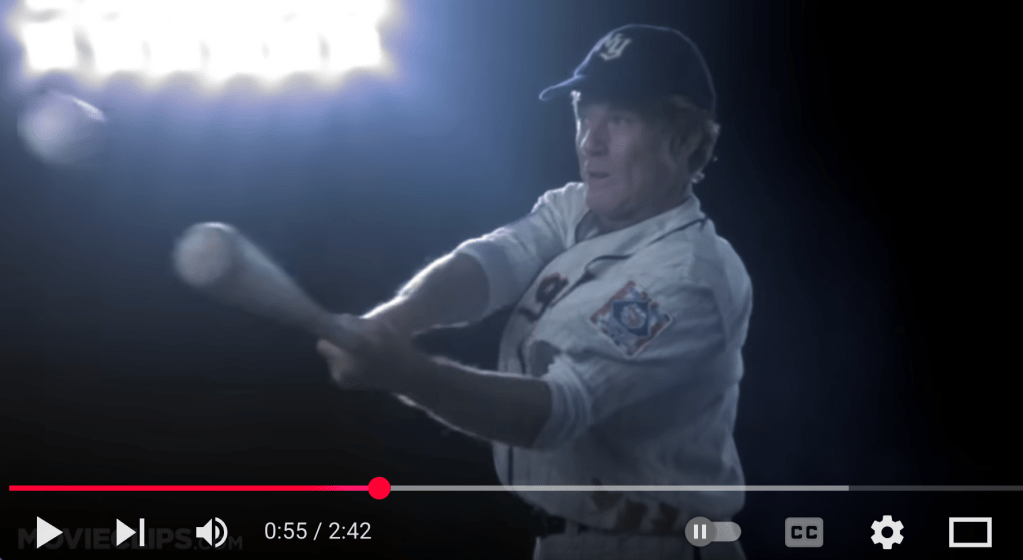
A screen shot from The Natural movie starring a man who hit a home run in life.

Like many other performers, Robert Redford appeared in a number of films inspired by books. I’ll discuss several of those screen adaptations in this post, which appears five days after the sad news of the iconic star’s September 16 death at age 89.

The first movie that came to mind was The Natural (1984), based on Bernard Malamud’s 1952 novel of the same name. Redford starred as baseball player Roy Hobbs, who returns to the game in midlife after being shot as a young man. (The Hobbs name is an amalgam of real-life baseball legends Ty Cobb and Rogers Hornsby.) Quite a compelling and affecting motion picture, which — as is often the case with Hollywood — has a happier ending than the one in the more nuanced book.

A decade earlier, another major role for Redford was in the 1974 movie version of F. Scott Fitzgerald’s 1925 classic The Great Gatsby. Redford was Jay Gatsby to Mia Farrow’s Daisy Buchanan.

I didn’t realize until researching this post that 1973’s The Way We Were movie — in which Redford co-starred with Barbra Streisand — was based on Arthur Laurents’ 1972 novel rather than on a totally original screenplay.

Redford was not only an actor but a director, producer, longtime champion of independent films, and laudable activist for the environment and other causes. Several of those multiple talents came together for the 1988 movie version of John Nichols’ 1974 novel The Milagro Beanfield War. The film — whose cast included Ruben Blades and Sonia Braga — didn’t do well at the box office, but Redford received praise for his direction of it.

I’ve read Nichols’ and Malamud’s books, but not Judith Guest’s 1976 novel Ordinary People, for which Redford won the directing Oscar for the 1980 movie version starring Mary Tyler Moore, Donald Sutherland, and Timothy Hutton. I’ve seen the film, which is excellent.

Redford of course also acted in movies based on notable nonfiction books — including 1937’s Out of Africa memoir by Isak Dinesen (Redford co-starred with Meryl Streep in the 1985 film) and 1974’s Watergate-scandal-focused All the President’s Men by Washington Post reporters Bob Woodward and Carl Bernstein (Redford played Woodward opposite Dustin Hoffman as Bernstein in the 1976 movie). I’ve read both books, and the films did each of them justice even as their main characters were more glamorous than their written-page counterparts.

A great late-career role for Redford was in the 2017 screen adaptation of Kent Haruf’s very poignant 2015 novel Our Souls at Night, about an older couple’s twilight-years romance. He co-starred with Jane Fonda, repeating a charismatic pairing from several earlier films.

I’ll close with this: Redford lived a life that we’ll remember with affection and admiration for his talent, his kindness, and his social conscience. People such as the cruel Trump and his dreadful toadies will be remembered quite differently when they’re gone.

Any thoughts on Redford, the films and books mentioned in this post, or any book-inspired Redford movies I might have missed? (My post included only titles for which I read the book or saw the film or both.)

Misty the LGBTQ-friendly cat says: “I have two mums, and I’m fine with that.”

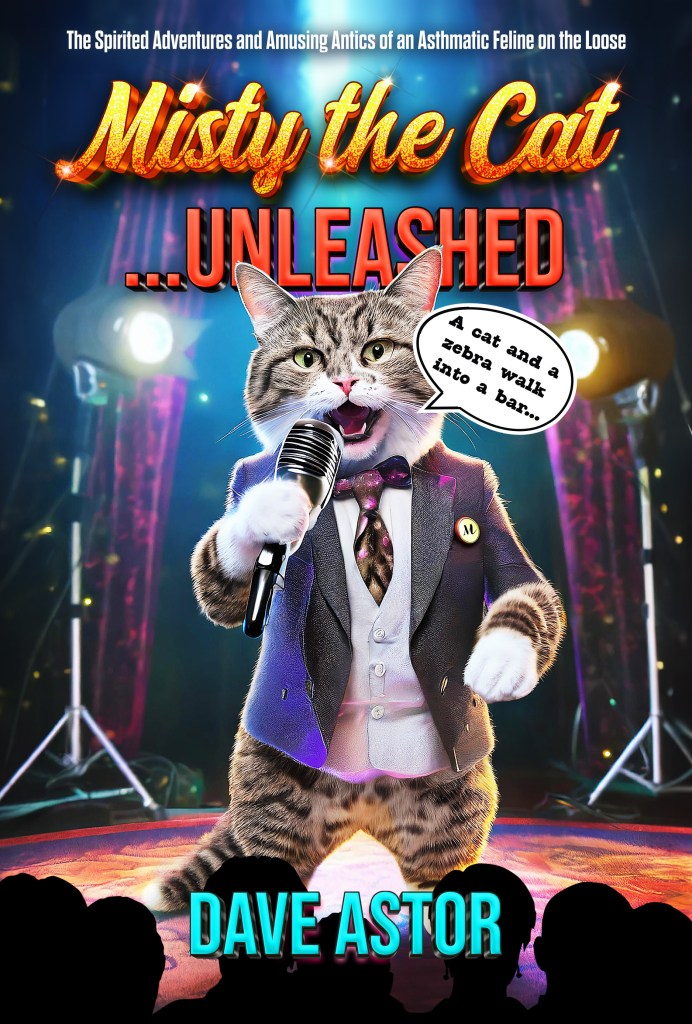
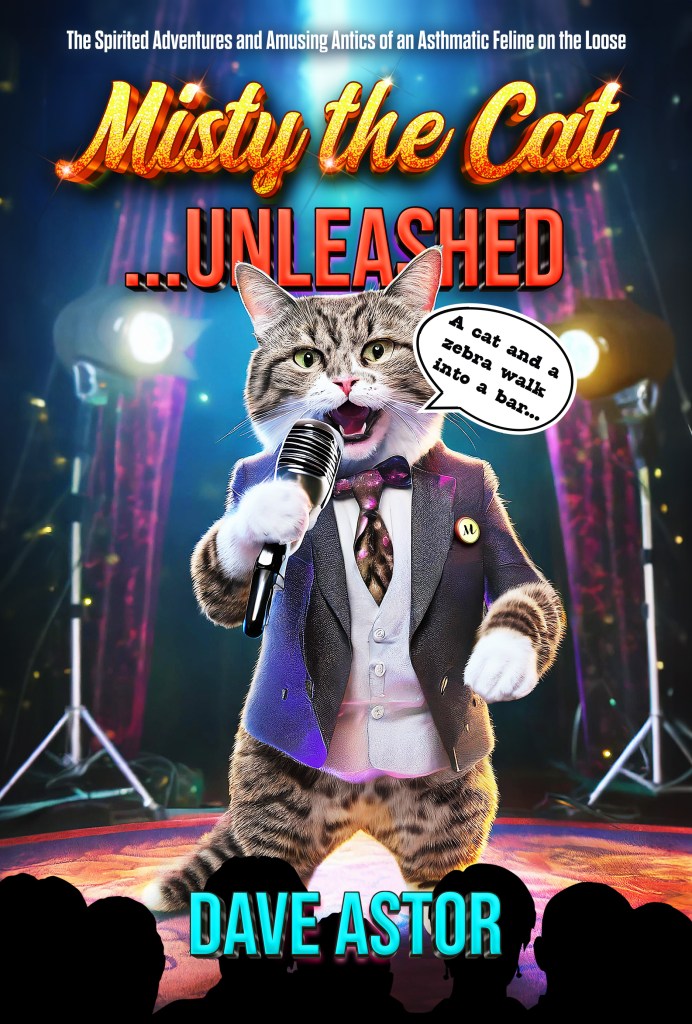
My comedic 2024 book — the part-factual/part-fictional/not-a-children’s-work Misty the Cat…Unleashed — is described and can be purchased on Amazon in paperback or on Kindle. It’s feline-narrated! (And Misty says Amazon reviews are welcome. 🙂 )

This 90-second promo video for the book features a talking cat: 🙂

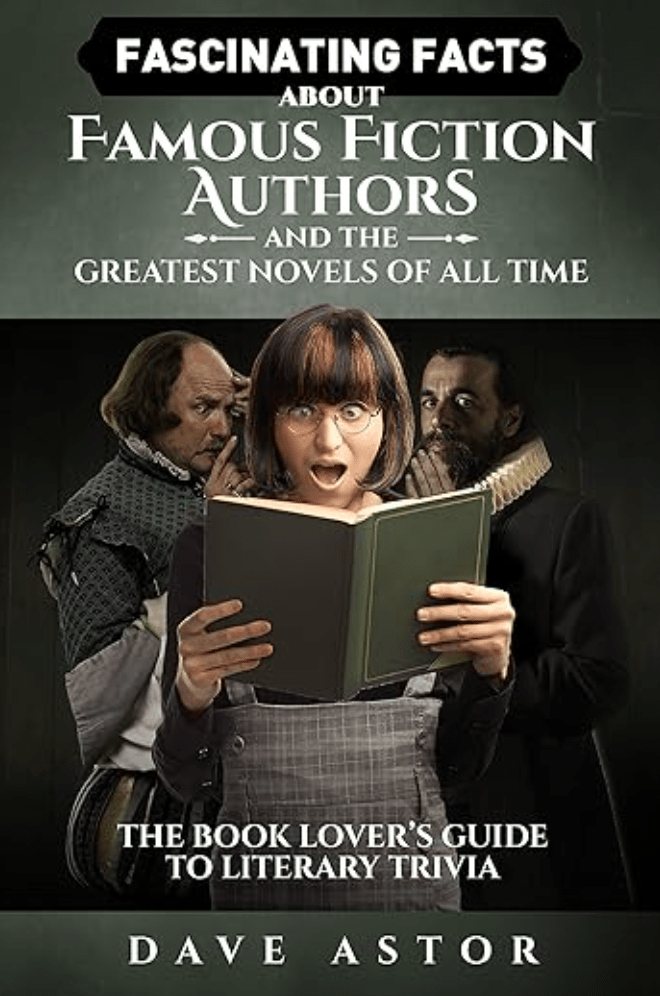
I’m also the author of a 2017 literary-trivia book

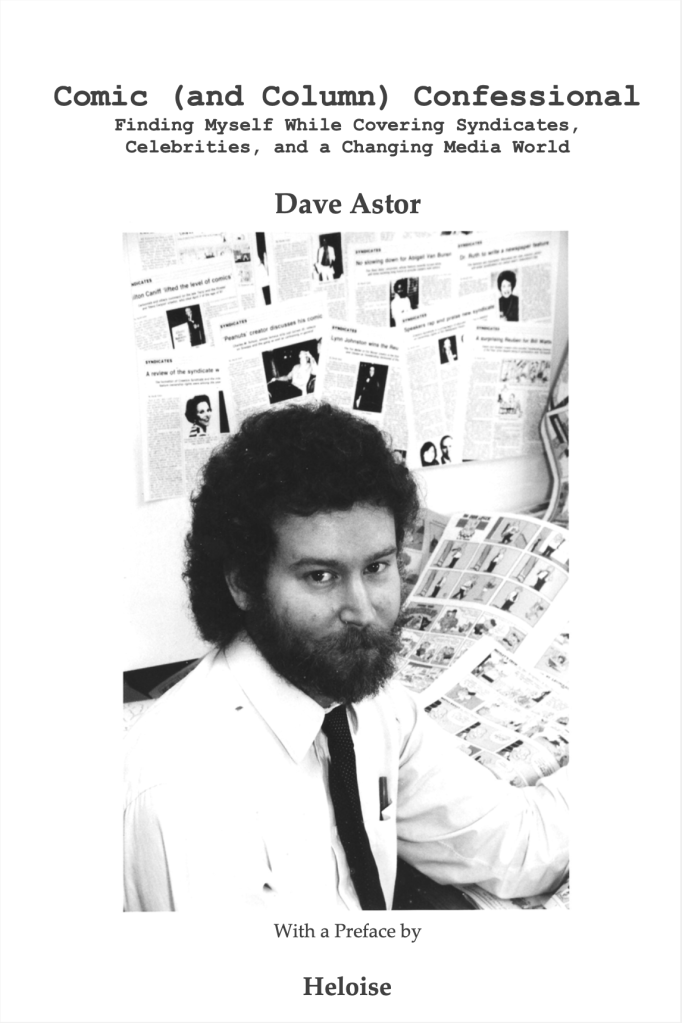
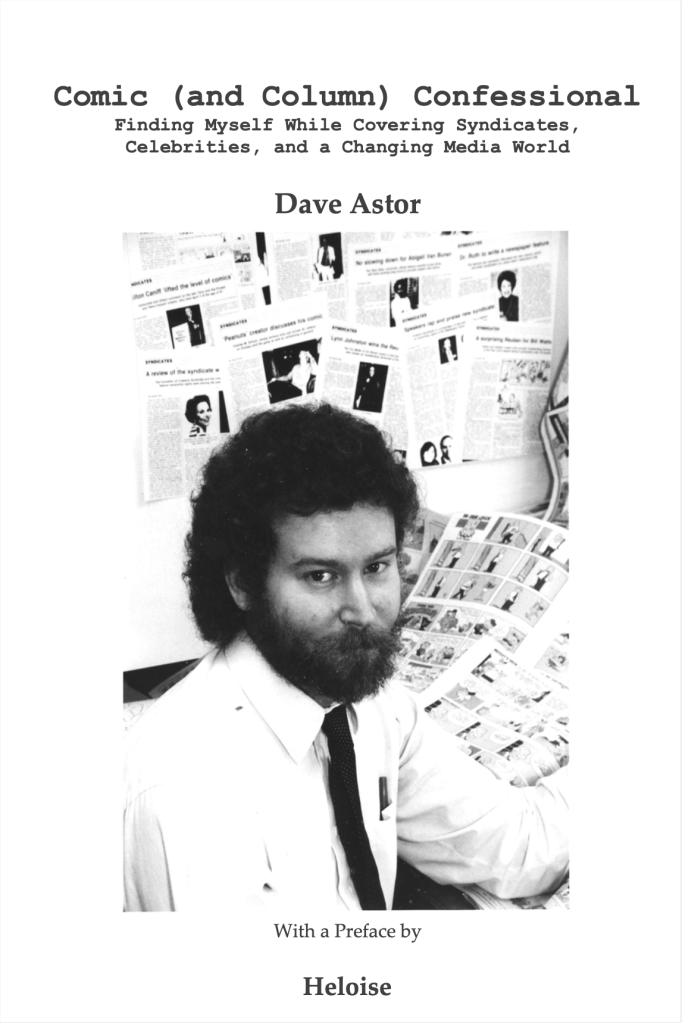
…and a 2012 memoir that focuses on cartooning and more, and includes many encounters with celebrities. (But not Robert Redford. 🙂 )

In addition to this weekly blog, I write the 2003-started/award-winning “Montclairvoyant” topical-humor column every Thursday for Montclair Local. The latest piece — about an exploding school budget deficit and a Township Council member’s sudden resignation — is here.

Literature Gives Us Screen Gems and Screen Duds

I don’t watch many movies or much TV, but I’ve seen enough to have a sense of what it’s like when literature makes it to the screen.

Often, the results are at least a little disappointing. Great literature has a certain “voice” that’s not easy to capture on film, and some content usually has to be left out because of time constraints — even in a miniseries.

Plus there are inevitable revisions — graphic stuff might be sanitized, happier endings might be tacked on, and performers are usually better looking than the fictional characters they play (more on that third point when I mention Jane Eyre later).

In addition, the actress or actor playing a fictional character you love has also played roles in other movies, so it can be hard to suspend belief about the performer being that character.

Then there’s the fact that “seeing” something in one’s imagination (via the printed or eBook page) can be infinitely more interesting than seeing it depicted on a screen.

But sometimes movie or TV treatments of literature almost match the original literary work, or even surpass it. The screenplay writers might improve the weaker parts and/or distill a too-long work into its wonderful essence. Also, the acting and/or direction might be so spectacular that viewers get more than a great story.

Anyway, it’s time to for me to discuss several specific literature-inspired movies and miniseries (the BBC has aired plenty of the latter, with some of course based on Jane Austen novels). And I hope commenters with much more screen knowledge than I will name various other productions.

I recently saw To Kill a Mockingbird for the first time, and — while I missed some of Harper Lee’s earnest/humane/lyrical prose — the 1962 film mostly did justice to a novel in which there’s no justice for its African-American characters. The cinematography is evocative, and the acting terrific. Gregory Peck won an Oscar for his ultra-convincing portrayal of lawyer Atticus Finch, and Mary Badham as his young daughter Scout and Brock Peters as the doomed Tom Robinson are pretty darn good, too.

More great acting, from Jeff Bridges as Rooster Cogburn and Hailee Steinfeld as Mattie Ross, helps make the Coen brothers’ True Grit movie almost as good as the Charles Portis novel. That 2010 film hewed more closely to Portis’ seriocomic western than the 1969 True Grit film starring John Wayne.

Acting also makes the 2002 movie The Hours — from Michael Cunningham’s novel — a pleasure to watch. Julianne Moore, Meryl Streep, and Ed Harris are mesmerizing, and Nicole Kidman isn’t bad as Virginia Woolf.

There’s stellar acting, too, in the pioneering 1977 Roots miniseries — based on Alex Haley’s book — that brought a then-rare black drama to TV. LeVar Burton, Cicely Tyson, Maya Angelou, Ed Asner, and dozens of others!

And let’s go all the way back to 1933, when The Emperor Jones movie based on the Eugene O’Neill play featured a tour de force performance by Paul Robeson that still leaps off the screen eight decades later. (I realize turning a play into a movie is different than turning a novel into a film.)

But then there are cinematic disappointments, whether the letdown is moderate or severe. For instance, the 1955 East of Eden movie — while great in certain ways — leaves out a huge chunk of the novel as well as one of John Steinbeck’s most sublime character creations: the intellectual, compassionate Asian-American servant Lee, who is absolutely central to the book. One wonders if there was some racism in that decision — and in the casting of such movies as 1993’s The House of the Spirits that has so many non-Hispanic performers playing the crucial Hispanic roles in Isabel Allende’s novel.

Speaking of Steinbeck, the 1940 film The Grapes of Wrath starring Henry Fonda is mostly superb, but wrongly concludes in a more upbeat way than the novel. The 1949 movie A Connecticut Yankee in King Arthur’s Court with Bing Crosby loses a lot by being significantly sunnier than Mark Twain’s novel, much of which takes a dim view of humanity and warfare. Bernard Malamud’s novel The Natural is grim and riveting, while the 1984 film version starring Robert Redford is unfortunately more of a gauzy, feel-good baseball tale with a happy ending that’s not in the book and doesn’t fit the story.

The 2002 movie treatment of The Count of Monte Cristo is serviceable while not viscerally capturing the magnificence of Alexandre Dumas’ page-turning revenge novel. But an obviously ill Richard Harris (who would die later that year) is brilliant as Edmond Dantes’ fellow prisoner Abbe Faria.

Harris is also Dumbledore in the first two of the eight Harry Potter films — a cinematic franchise of sustained excellence that features a who’s who of famous British thespians in memorable supporting roles. Yet a portion of the charm in J.K. Rowling’s novels isn’t quite there. Same with The Lord of the Rings movies — impressive and very exciting, but missing some of the intimacy and humor that’s almost as much a part of J.R.R. Tolkien’s trilogy as the epic stuff. Still, the Rings films and especially the Potter productions are pretty terrific.

The 1943 Jane Eyre film with Joan Fontaine as Jane and Orson Welles as Edward Rochester is quite good, but a big problem is the presence of…Fontaine and Welles. Both do admirable acting jobs, but are too good-looking for their roles. The soul-mate relationship Charlotte Bronte created was mostly based on an emotional and intellectual connection between plain Jane and not very handsome Rochester.

Yikes — I haven’t mentioned any Stephen King movies!

I’ll conclude by saying I just read Adam Johnson’s The Orphan Master’s Son, a fascinating 2012 novel set in North Korea that takes an unsparingly look at that harsh country. Given the hacking of Sony due to The Interview movie, I doubt Johnson’s Pulitzer Prize-winning book will soon be filmed…

What are some of your favorite movies based on literary works? And what are some lit-inspired films that disappointed you — and why?

(The box for submitting comments is below already-posted comments, but your new comment will appear at the top of the comments area — unless you’re replying to someone else. Also, please feel free to read through comments and reply to anyone you want; I love not only being in conversations, but also reading conversations in which I’m not involved!)

For three years of my Huffington Post literature blog, click here.

I’m also writing a literature-related book, but still selling Comic (and Column) Confessional — my often-funny memoir that recalls 25 years of covering and meeting cartoonists such as Charles Schulz (“Peanuts”) and Bill Watterson (“Calvin and Hobbes”), columnists such as Ann Landers and “Dear Abby,” and other notables such as Hillary Clinton, Coretta Scott King, and various authors. The book also talks about the malpractice death of my first daughter, my remarriage, and life in New York City and Montclair, N.J. — where I write the award-winning weekly “Montclairvoyant” humor column for The Montclair Times. You can email me at dastor@earthlink.net to buy a discounted, inscribed copy of the book, which contains a preface by “Hints” columnist Heloise and back-cover blurbs by people such as “The Far Side” cartoonist Gary Larson.