Reimagination Actualization

Four years ago, I blogged about fiction that uses previous fiction as a jumping-off point — and perhaps reimagines well-known characters. This post is sort of a sequel to that post, taking a somewhat different angle and including several novels I’ve read since 2021.

In general, I’m not a huge fan of fiction that’s heavily inspired by a famous work; I’d rather writers be more original than that. Still, there have been some excellent novels that offer insights into the previous work and might be great in their own right.

My latest encounter with this reimagining phenomenon was Queen Macbeth, Val McDermid’s 2024 novella that takes a fascinating approach to characters in Shakespeare’s iconic Macbeth play. The book is excellent, giving Lady Macbeth a more positive (and more historically accurate) persona as a compelling plot unfolds in two different timelines.

McDermid’s book reminded me a bit of Margaret Atwood’s 2005 novella The Penelopiad (mentioned in my 2021 post) that gives Penelope a bigger and more feminist role than she had in Homer’s ancient Odyssey poem.

There’s also Demon Copperhead, Barbara Kingsolver’s 2022 tour de force that gives Charles Dickens’ 1850 classic David Copperfield a modern spin in America’s Appalachian region during the opioid epidemic.

Kristin Hannah’s gripping 2021 novel The Four Winds was obviously inspired by John Steinbeck’s The Grapes of Wrath (1939), but it’s still plenty original and differs in featuring a female protagonist. (The title character in Demon Copperhead is male.)

Zadie Smith has described the structure/focus of her novel On Beauty (2005) as an homage to E.M. Forster’s Howards End (1910).

In her also-published-in-2005 novel March, Geraldine Brooks takes the father from Louisa May Alcott’s 1868-released Little Women and gives him his own story.

I haven’t read it yet, but Percival Everett’s acclaimed James (2024) reimagines Mark Twain’s Adventures of Huckleberry Finn (1884) from the perspective of the escaped slave Jim.

In my 2021 post, I mentioned the 1966 novel Wide Sargasso Sea, in which Jean Rhys gives three-dimensionality to the “madwoman in the attic” of Charlotte Bronte’s novel Jane Eyre; Rhys’ creation is in effect a prequel to Bronte’s 1847 book. I also discussed the novel (by Gregory Maguire) and the play Wicked, which sympathetically portray the Wicked Witch from L. Frank Baum’s The Wonderful Wizard of Oz novel (1900) and The Wizard of Oz movie (1939).

Mentioned as well in that post were Isabel Allende’s 2005 novel Zorro, Jasper Fforde’s 2001 novel The Eyre Affair, and Seth Grahame-Smith’s 2009 Jane Austen parody Pride and Prejudice and Zombies — the last of which I haven’t felt the “Persuasion” to read.

Comments about, and examples of, this theme?

Misty the cat says: “My right turn has nothing to do with politics.”

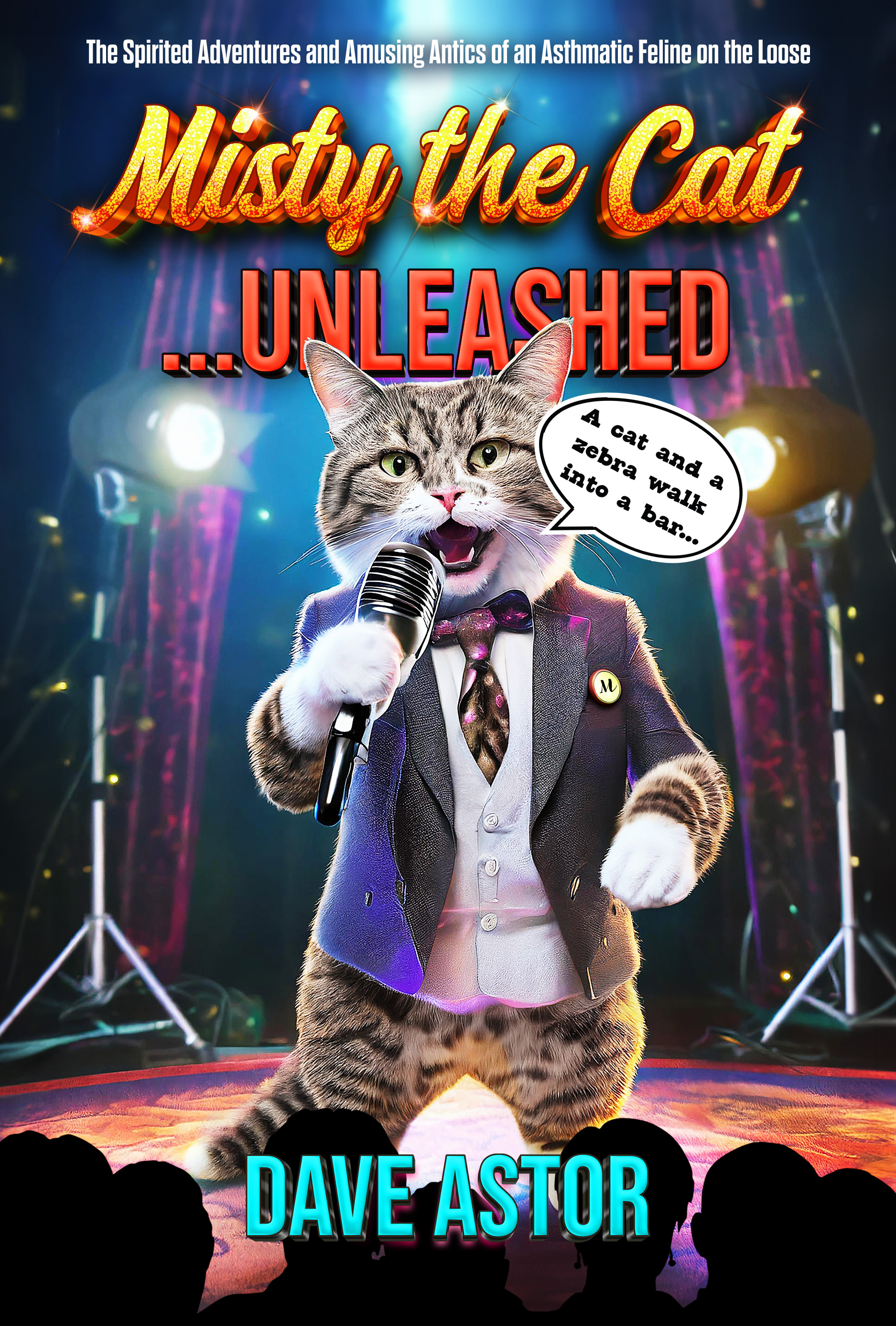
My comedic 2024 book — the part-factual/part-fictional/not-a-children’s-work Misty the Cat…Unleashed — is described and can be purchased on Amazon in paperback or on Kindle. It’s feline-narrated! (And Misty says Amazon reviews are welcome. 🙂 )

This 90-second promo video for the book features a talking cat: 🙂

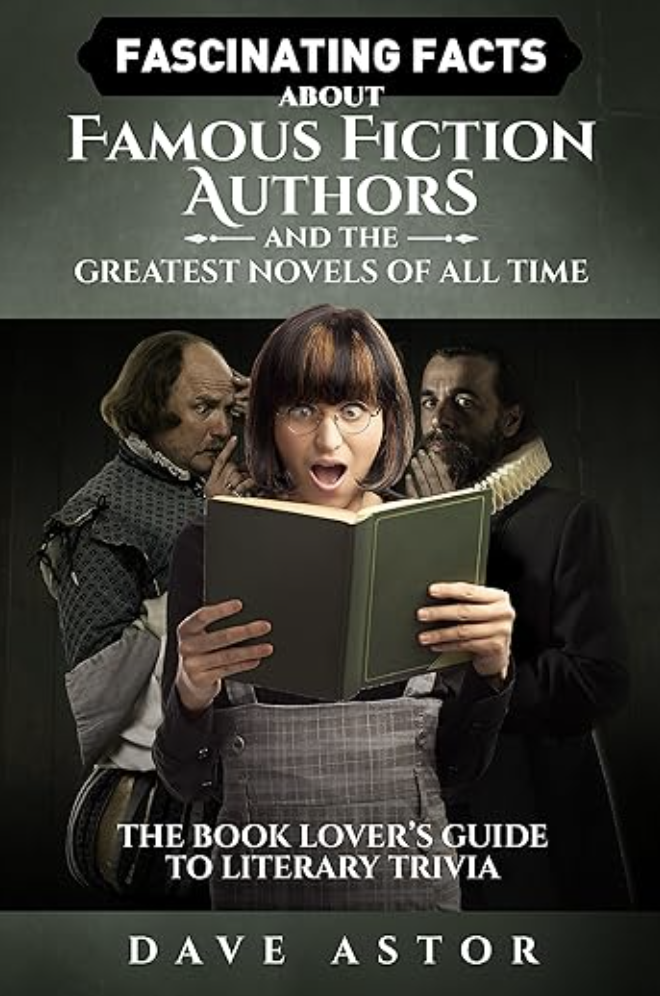
I’m also the author of a 2017 literary-trivia book

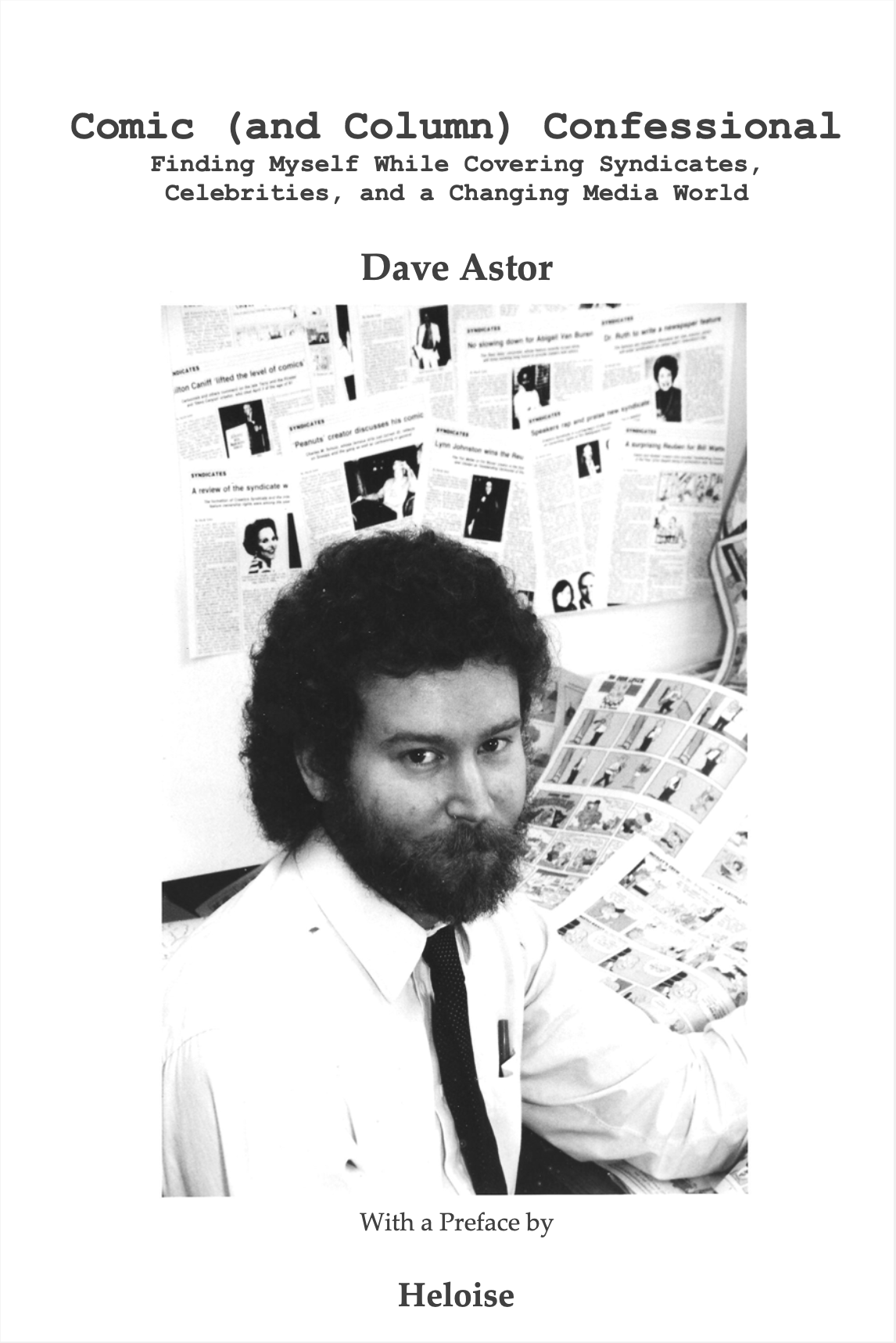
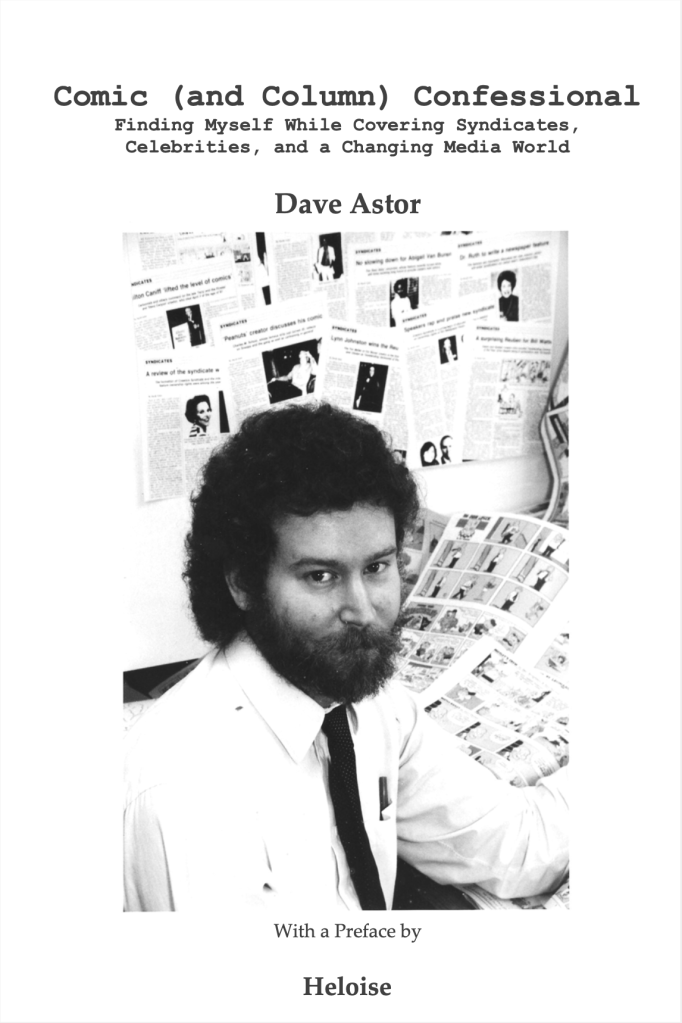
…and a 2012 memoir that focuses on cartooning and more.

In addition to this weekly blog, I write the 2003-started/award-winning “Montclairvoyant” topical-humor column every Thursday for Montclair Local. The latest piece — about a badly maintained lower-income apartment building, a change in venue for a senior center, and more — is here.

An Array of Admirable Activists

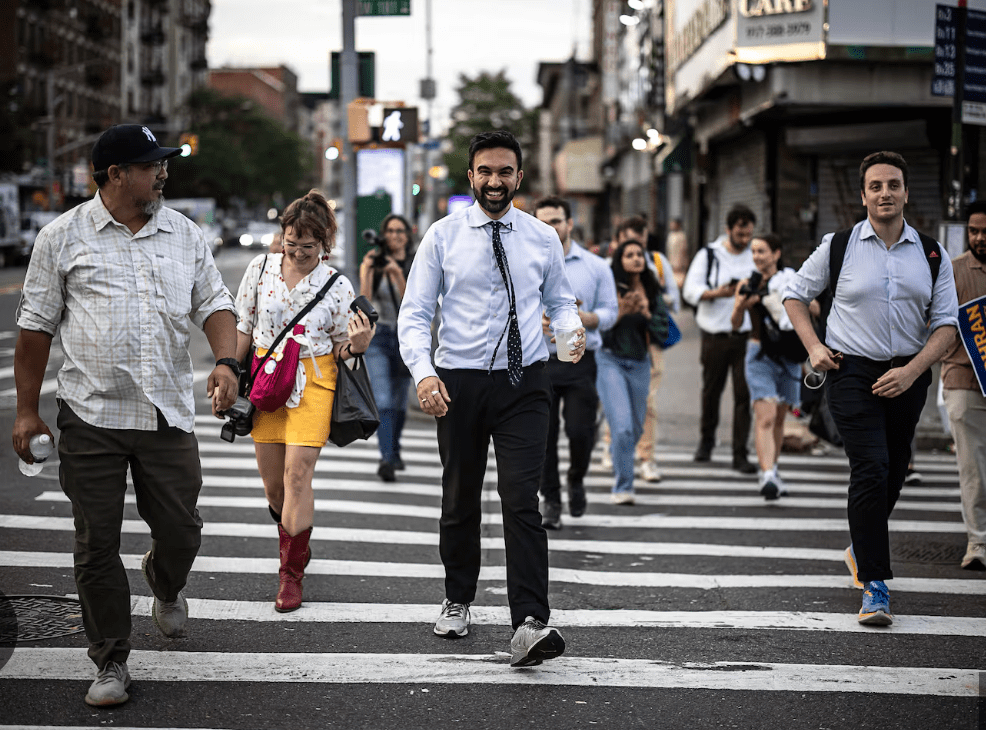
Zohran Mamdani walking New York City’s streets during his mayoral campaign.

I’ve written about activist authors (in 2014) and courageous characters (last year), but as far as I can recall I’ve never written specifically about activist characters in novels. So, today I will. 🙂

My inspiration for this topic was 33-year-old democratic socialist Zohran Mamdani winning last month’s Democratic primary for New York City mayor — and, thrillingly, the results weren’t even close. If Mamdani also wins the general election this fall he’ll become the youngest NYC mayor in more than a century, the city’s first Muslim mayor, and clearly the most progressive mayor the biggest U.S. city has ever had. Among Mamdani’s November opponents will be current NYC mayor Eric Adams, a cartoonishly corrupt politician who escaped multiple criminal charges by making a sell-out deal with Trump’s ghoulish Republican regime.

At a time of ever-growing economic inequality in NYC and the rest of the country, the charismatic Mamdani ran an energetic grassroots campaign that focused on freezing rents, making buses free, offering universal childcare, raising the inadequate minimum wage, and other pocketbook proposals — all to be paid for by raising the too-low taxes on the very rich.

Much of the very rich, of course, went bananas, and many of them during the primary backed Mamdani’s mayoral opponent Andrew Cuomo — the conservative-leaning former New York governor who resigned in disgrace four years ago after causing thousands of deaths by sending COVID patients into nursing homes and after being credibly accused of sexual harassment by 13 women who worked for the state. Plus, plenty of corruption in his administration. Many of those wealthy Cuomo supporters are now backing the aforementioned Adams, a right-wing Democrat who sat out the June primary and is now running as an “independent.”

Mamdani, who has an activist history, is also the rare American politician who supports equal rights for Palestinians and has publicly decried Israel’s genocide of innocent civilians in Gaza — drawing bogus accusations of anti-Semitism from people who wrongly equate being against Netanyahu’s far-right Israeli government with being anti-Semitic. In fact, Mamdani received many Jewish votes amid many votes from young people, Asian-American residents, etc. Also, Mamdani and Jewish mayoral candidate Brad Lander cross-endorsed each other — something they were able to do under the election’s ranked-choice system.

I should mention that I feel a connection to New York City because I lived in its Bronx, Manhattan, Brooklyn, and Queens boroughs for a total of 16 years and worked in Manhattan for 30 years. My current town of Montclair is 12 miles west of NYC in New Jersey.

Anyway, on to some inspiring activist characters in literature!

There’s lapsed preacher Jim Casy, one of the memorable supporting players in John Steinbeck’s The Grapes of Wrath (1939). Casy tries to organize migrant workers after he tags along with the Joad family to California, where conditions for financially struggling newcomers are appalling.

Kristin Hannah’s The Four Winds was clearly inspired by The Grapes of Wrath, though that 2021 novel is original in many ways. It tracks the radicalization of Elsa Wolcott, who’s part of a cast that also includes union organizer Jack Valen.

Kate Quinn’s The Rose Code (also 2021) focuses on a memorable trio of female British code breakers during World War II.

Another compelling historical novel is Leon Uris’ Mila 18 (1961), about the desperate Warsaw Ghetto uprising against the Nazis.

And Julia Alvarez’s In the Time of the Butterflies (1994) features the part-fictionalized sisters who opposed the regime of brutal Dominican Republic dictator Trujillo.

Richard Wright’s Native Son (1940) has a supporting cast that includes radical lawyer Boris Max, who represents protagonist Bigger Thomas.

Margaret Atwood’s The Testaments — the 2019 sequel to The Handmaid’s Tale (1985) — includes the Daisy character (birth name: Nicole) who infiltrates the repressive, patriarchal society of Gilead.

In Barbara Kingsolver’s Flight Behavior (2012), Dellarobbia Turnbow is an initially apolitical young farmer’s wife who joins the fight against climate change.

Then there’s the against-the-odds activism in these two classics: Upton Sinclair’s The Jungle (1906) and George Orwell’s Nineteen Eighty-Four (1949).

While activism occasionally succeeds, many other times it doesn’t — given the formidable/well-funded forces on the other side: powerful politicians, heavily armed military and police, giant corporations trying to increase their already-huge profits, bend-the-knee mainstream media outlets, etc. In fact, some of the fictional characters I mentioned in this post ended up being killed, making for riveting reading but very depressing reading.

Examples of activist characters in novels? Thoughts on this topic?

Misty the cat says: “When I groom myself near a window, it’s ‘A Groom with a View.'”

My comedic 2024 book — the part-factual/part-fictional/not-a-children’s-work Misty the Cat…Unleashed — is described and can be purchased on Amazon in paperback or on Kindle. It’s feline-narrated! (And Misty says Amazon reviews are welcome. 🙂 )

This 90-second promo video for my book features a talking cat: 🙂

I’m also the author of a 2017 literary-trivia book

…and a 2012 memoir that focuses on cartooning and more.

In addition to this weekly blog, I write the 2003-started/award-winning “Montclairvoyant” topical-humor column every Thursday for Montclair Local. The latest piece — about my younger daughter’s June 26 high school graduation (again), a Township Council meeting, and more — is here.