Today is International Women’s Day. Over the years, I’ve written blog posts from various angles about women in literature. This time, I’ll focus on some of my favorite women characters in novels I’ve read (though were not necessarily published) during the past couple of years.
Because of its title, the first book that came to mind was Kristin Hannah’s terrific 2024 novel The Women focusing on Vietnam War combat nurses. It stars Frances “Frankie” McGrath, a somewhat-naive young woman from an affluent family who’s forced to mature very quickly while treating horrendous battle injuries. Her two war-zone mentors — Barb Johnson and Ethel Flint — are also memorable in secondary roles.
Hannah’s previous novel, 2021’s The Four Winds, also has a stirring woman protagonist in Elsa Wolcott. (Her 1930s-set story is clearly influenced by John Steinbeck’s The Grapes of Wrath.)
Elin Hilderbrand’s novels — nearly 30 of which I read in 2024 and 2025 — are teeming with compelling women characters. Among my favorites are teacher Mallory Blessing of 2020’s bittersweet 28 Summers (inspired by Bernard Slade’s Same Time, Next Year) and the strong-willed Irene Steele who moves from Iowa to the Caribbean after her husband dies mysteriously in Hilderbrand’s Paradise trilogy (2018/2020/2020).
I was also drawn to another teacher: Maggie Jones of Kent Haruf’s Plainsong, an affecting 1999 novel that features interlocking stories.
And to the brave/beleaguered former government agent who goes by various aliases in Stephenie Meyer’s 2016 thriller The Chemist.
And to 1950s mathematician/astronaut Elma York of Mary Robinette Kowal’s 2018 alternative-history novel The Calculating Stars.
And to Wall Street attorney-turned-Appalachia legal aid attorney Samantha Kofer in John Grisham’s Gray Mountain (2014).
In the sleuth genre, three impressive yet very human/relatable women I’ve recently mentioned in other posts include Robin Ellacott of J.K. Rowling’s 2013-launched series, cold-case detective Karen Pirie of Val McDermid’s 2003-launched series, and private investigator Kinsey Millhone of the late Sue Grafton’s 1982-2017 alphabet-mystery series I’m currently working through (now enjoying Q Is for Quarry).
Among my favorite women characters in novels (some classic) that I read years ago include Jane Eyre in Charlotte Bronte’s book of the same name, Helen Huntingdon of Anne Bronte’s The Tenant of Wildfell Hall, Anne Elliot of Jane Austen’s Persuasion, Maggie Tulliver of George Eliot’s The Mill on the Floss, Denise Baudu of Emile Zola’s The Ladies’ Paradise, Marian Halcombe of Wilkie Collins’ The Woman in White, Ethelberta Petherwin in Thomas Hardy’s The Hand of Ethelberta, Edna Pontellier of Kate Chopin’s The Awakening, Anne Shirley of L.M. Montgomery’s Anne of Green Gables, Renee Nere of Colette’s The Vagabond, Pilate Dead of Toni Morrison’s Song of Solomon, Imogene “Idgie” Threadgoode of Fannie Flagg’s Fried Green Tomatoes at the Whistle Stop Cafe, Eliza Sommers of Isabel Allende’s Daughter of Fortune, and Dellarobia Turnbow of Barbara Kingsolver’s Flight Behavior, to name a few. (Actually, Anne Shirley is only 16 at the end of Montgomery’s book.)
Your thoughts about this topic, and your favorite women characters?
Misty the cat says: “Last night, clocks and patches of snow both moved one hour ahead.”
My comedic 2024 book — the part-factual/part-fictional/not-a-children’s-work Misty the Cat…Unleashed — is described and can be purchased on Amazon in paperback or on Kindle. It’s feline-narrated! (And Amazon reviews are welcome. 🙂 )
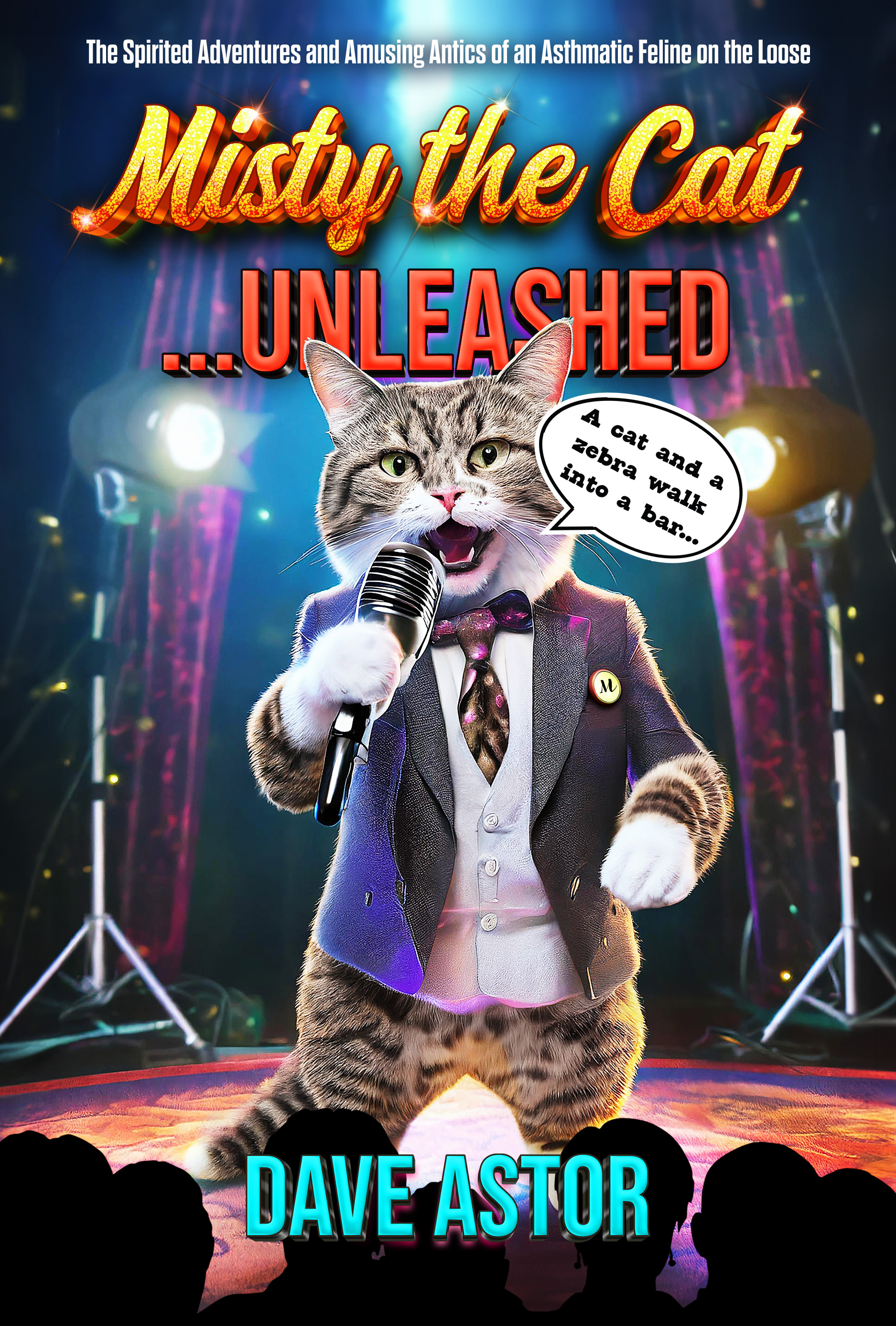
This 90-second promo video for the book features a talking cat: 🙂
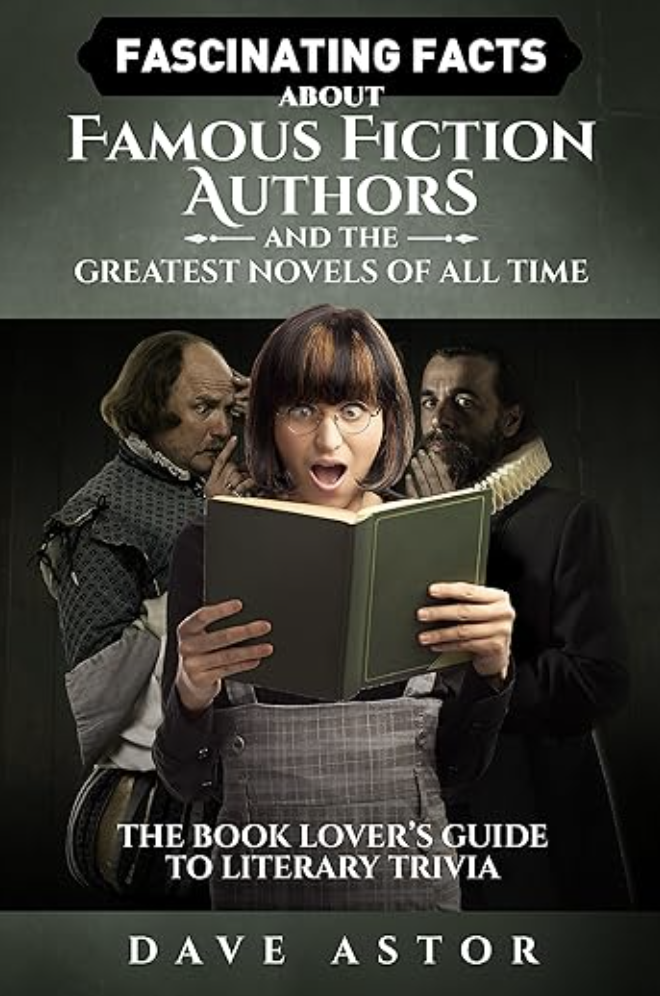
I’m also the author of a 2017 literary-trivia book…
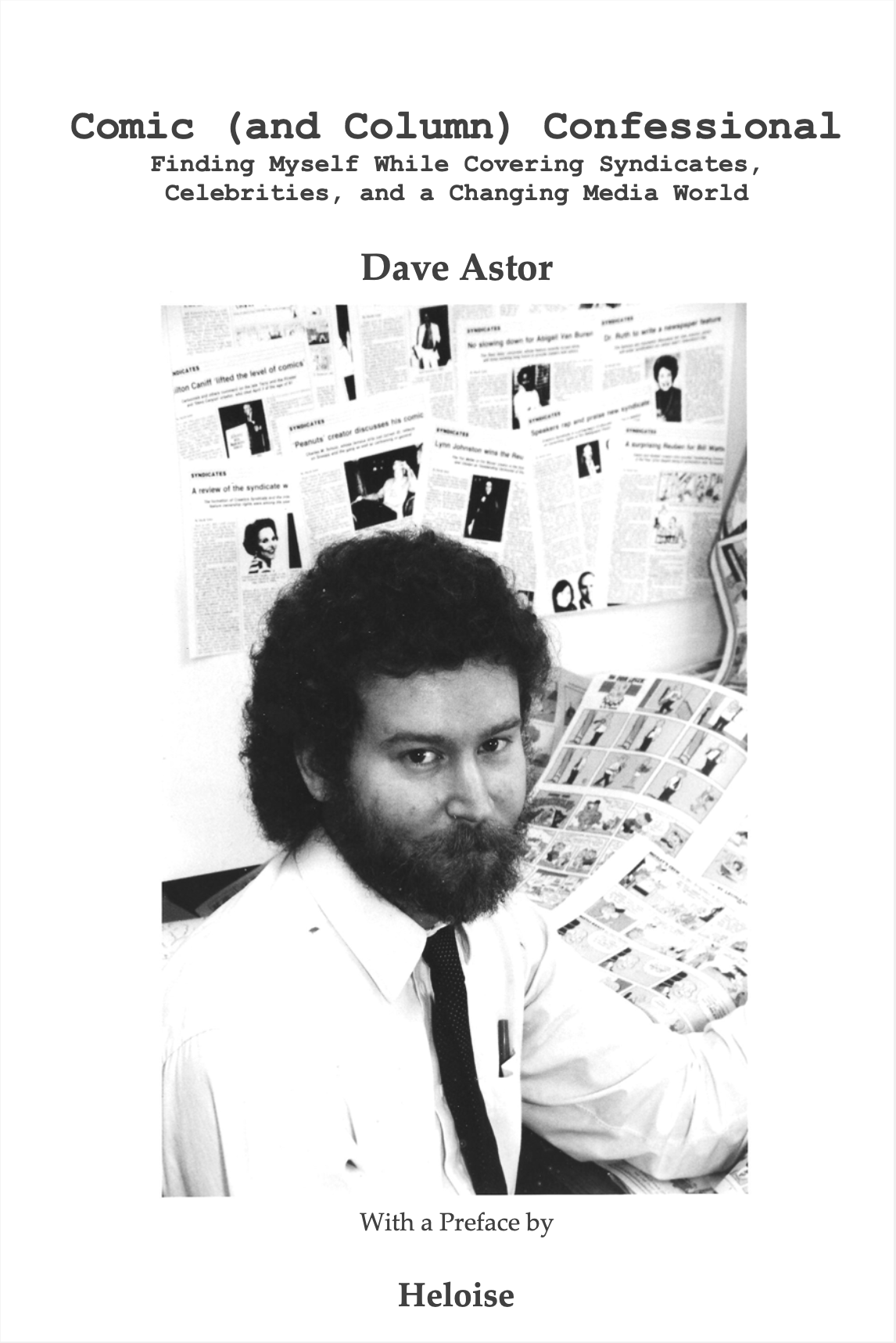
…and a 2012 memoir that focuses on cartooning and more, including many encounters with celebrities.
In addition to this weekly blog, I write the 2003-started/award-winning “Montclairvoyant” topical-humor column every Thursday for Montclair Local. The latest piece — which comments on a fraught upcoming school budget vote — is here.
 Dave Astor on Literature
Then there is Katy from What Katy Did fame, Pollyanna, Sue Barton Student Nurse series, and Sunja from Pachinko. That was a great book.
LikeLiked by 2 people
“Pachinko” definitely wins “most mentioned” book in this week’s comments section, Robbie. 🙂 Greatly looking forward to reading it if my local library has it!
LikeLike
It is a terrific book, Dave. I enjoyed it a great deal. I could have included Maggie from The Thorn Birds too.
LikeLiked by 1 person
Maggie of “The Thorn Birds” is indeed a great character in a great book, Robbie!
LikeLike
💛
LikeLiked by 1 person
🙂
LikeLike
Hi Dave, in South Africa, Women’s Day is in August. I always loved Emily of Emily of New Moon fame and Polly from An Old Fashioned girl. Those two books were by LM Montgomery and Louisa May Alcott, respectively. I preferred these books to their more famous counterparts by the same authors.
LikeLiked by 1 person
Thank you, Robbie! I didn’t know that South Africa has “Women’s Day” in August!
The semi-autobiographical Emily IS a great character in L.M. Montgomery’s trilogy. And I know what you mean about a favorite book by an author not necessarily being their most famous book. Re Montgomery, there are times I think I like her “The Blue Castle” more than “Anne of Green Gables.” (But then I tell myself “maybe not.” 🙂 )
LikeLike
Emily is definitely my favourite of her characters. In fact, Emily is why I started writing poetry as a child.
LikeLiked by 1 person
Wonderful that Emily had such an influence on you, Robbie!
LikeLike
💞
LikeLiked by 1 person
🙂
LikeLike
Hmmm,
So Dave, you’ve already mentioned the women that popped into my mind, especially Anne Shirley. However, as you point out, she’s barely 16.
I’ll give a shout out here to O-Lan, wang Lung’s wife in The Good Earth by Pearl S. Buck.
She may be a subservient person, as a good wife should be in that time and tale, but she is strong of body, will and character. It is Wang Lung who is the weak one.
She is so much more admirable than her husband, to me.
Thanks for the Woman’s Day post!
Is there a Man’s Day?
LikeLiked by 2 people
Thank you, Resa! Great mention of O-Lan, and I totally agree with what you said about her. She’s a strong, hardworking, stoic, common-sensical character within the confines of the dismaying limits that time and place put on women.
Ha — 🙂 — I don’t think men need a day when every day is in effect their day.
LikeLiked by 1 person
Thanks Dave!
Lol…Men’s Day. Well… lots of worms in that can. 🤭
LikeLiked by 1 person
Yes! 😂
LikeLiked by 1 person
😂
LikeLiked by 1 person
🙂
LikeLiked by 1 person
Excellent post Dave. I’ll bung in a certain Scarlett…..
LikeLiked by 2 people
Thank you very much, Shehanne! Ms. O’Hara…indeed!
LikeLiked by 2 people
I just love the writing of her totally dreadful but survival instinct thought process. Especially when she decides Sue Ellen shouldn’t have Mr Kennedy.
LikeLiked by 1 person
She is quite memorable, and depicted quite memorably!
LikeLiked by 1 person
Indeed. Always a survivor.
LikeLiked by 1 person
I loved Julia from Pin to see the Peepshow for the same reason.. except ultimately she wasn’t a survivor. However, it sure wasn’t for want of trying, never more so when she marries this utter twat for the sake of avoiding sharing her bedroom with her cousin and keeping her dog.
LikeLiked by 2 people
People with good survival instincts are not always ultimately survivors, often through no fault of their own. But one admires the trying.
LikeLiked by 1 person
Well in that book it kind of was through a lot of faults of her own, although it was certainly unfair to hang her because her lover topped her hubby on the pavement.
LikeLiked by 1 person
Yikes, Shehanne — sounds like “Pin to See the Peepshow” has quite a plot! 😲
LikeLiked by 1 person
It is based on a true story.
LikeLiked by 1 person
Interesting!
LikeLiked by 1 person
Yeah, the Thompson Bywaters case.
LikeLiked by 1 person
Nowadays, Scarlett O’Hara would do well on the “Survivor” reality-TV show. 🙂
LikeLike
She would indeed.
LikeLiked by 1 person
Hopefully she wouldn’t face a contestant named Tara. 🙂
LikeLike
YES!!!
LikeLiked by 2 people
She’s what we call a ‘belter’ that one.
LikeLiked by 2 people
Yes! New word for Resa – “Belter”
xxxxxx
LikeLiked by 2 people
There’s a song called ‘Belter’ by Gerry Cinnamon. Go to say I rather like it. x
LikeLiked by 2 people
I’ll check it out! xxx
LikeLike
Very rough Scottish sounding, fabulous bouncy beat. I used it in the Wryson’s playlist.
LikeLiked by 2 people
xxxxxxx
LikeLiked by 2 people
Your mention of Plainsong reminds me how bad I want to read it! I’ve read some of Kent Harfuf’s other stuff but this one is always checked out when I try to get it from the library! A great post celebrating some truly wonderful female characters! 🙂
LikeLiked by 1 person
Thank you very much, MB! I think “Plainsong” is Kent Haruf’s best, and that’s saying something; his melancholy writing is beautiful. I understand the frustration of certain books almost always being checked out. 🙂
LikeLiked by 1 person
Thanks for the long list of favorite female characters in the novels you’ve read: I know some of them, the more classic ones, but not many, unfortunately.
Please, tell Misty, the cat, that here in Italy, daylight saving time doesn’t start until the end of the month.⏲️
LikeLiked by 1 person
Thank you, Luisa! None of us can read everything, and you’ve read many books I haven’t. 🙂
Misty was very interested to hear that daylight saving time is still a few weeks away in Italy. After Misty (supposedly) climbed Rome’s Spanish Steps in today’s video, a post-daylight saving time revisit might be in order. 🙂
LikeLiked by 1 person
🙏💗🐾💗🙏
LikeLiked by 1 person
🙂
LikeLiked by 1 person
My favorite female character began years ago with Nancy Drew. Along the way, I met Jack Reacher, but he was definitely male. Now, I enjoy following female mystery solvers “detectives” “cops” and accidental solvers of being thrown into mysteries. I also enjoy Sara Paretsky’s V.I. Warshawski. My next novel, soon to be published, focuses on Faith’s continual drags into uncharted territories as she becomes embroiled in cases to be solved, this one is a missing twin.
LikeLiked by 1 person
Thank you, cupcakecache! Nancy Drew is a great character, and I’m a big Jack Reacher fan. While not a woman, Jack is kind of feminist in his way.
And I appreciate seeing another enthusiastic mention of V.I. Warshawski, who is very popular in this week’s comments section. 🙂
The best of luck with your new novel!
LikeLiked by 1 person
Thank you! Appreciate it!
LikeLiked by 1 person
You’re welcome! 🙂
LikeLiked by 1 person
I, too, loved “The Women” because of…the women, LOL. Frankie and Ethel and Barb…each felt like women I’d met. Distinctive yet original in Hannah’s hands.
Like Chris Hall (comment just before mine!) I love Sara Paretsky’s V.I. Warshawski and had the grand opportunity to meet Sara a couple of months ago at a book talk/signing. Delightful…learning how and what inspired V.I. Thanks for this post, Dave! 💝💝💝
LikeLiked by 2 people
Thank you, Vicki! Ha — “The Women” title says a lot. 🙂 And, yes, the three main women in that Kristin Hannah novel are memorable, relatable, courageous, humane, etc.
In the near future, I’m going to see if my local library has Sara Paretsky’s first novel (“Indemnity Only”) in the V.I. Warshawski series. Fantastic that you recently got to see that author!
LikeLiked by 1 person
Yes!!! It was a treat…she was so forthcoming and open about her process, the ups and downs. 😉❤️😉
LikeLiked by 1 person
Great that she was a great speaker!
LikeLiked by 1 person
Yes!!! ❤️😉❤️
LikeLiked by 1 person
🙂
LikeLiked by 1 person
Well, I’ve plucked a couple of books from my shelf just now. The first one is Jamaica Inn by Daphne du Maurier. An excellent dark and intriguing gothic tale with the young and feisty protagonist, Mary Yellan, plus the helpful Aunt Patience. And looking on the back cover it mentions two other great classics, Jane Eyre by Charlotte Brontë and Wuthering Heights by Emily Brontë (being Catherine Earnshaw, of course) and who doesn’t enjoy both of those.
Much more recently are all these wonderful books – V.I. Warshawski Series by Sara Paretsky. Vic is a private investigator in Chicago, and brilliant. I have read many of these – pure bliss!
LikeLiked by 1 person
Thank you, Chris! I’ve read several of Daphne du Maurier’s novels, but not “Jamaica Inn”; I should try that one! Of course, it’s among the du Maurier works that Hitchcock turned into movies.
And I appreciate the Sara Paretsky mention. When I’m ready to start another detective series… 🙂
LikeLiked by 1 person
Thanks for this tribute to strong, resilient female characters. I would add Lakshmi in The Henna Artist by Alka Joshi, Kya Clark in Where the Crawdads Sing by Delia Owens, Cussy Mary Carter in The Bookwomen of Troublesome Creek by Kim Michele Richardson, and Bella de Costa Greene in The Personal Librarian by Marie Benedict and Victoria Christopher Murray–to name a few. Kristin Hannah’s female characters are often inspiring. Elin Hilderbrand’s as well.
LikeLiked by 2 people
Thank you, Madeline, for those four strong recommendations! And glad to hear that you’re also a fan of the novels by Kristin Hannah and Elin Hilderbrand. 🙂
LikeLike
A really great tribute to female characters in fiction, Dave. You have listed some fantastic books, many of which I am yet to read.
You will love ‘Pachinko’ by Min Jin Lee as Rosaliene Bacchus mentioned in the comments. I have written about ‘Pachinko’ on this site previously.
Thanks Dave, a very enlightening post.
With kindest regards,
Sharon
LikeLiked by 1 person
Thank you very much, Sharon! Glad you liked the post! I am definitely keeping my fingers crossed that my local library has “Pachinko” the next time I visit in a few weeks. Highly recommended by you and several others! 🙂
LikeLiked by 1 person
You are very welcome, Dave! I’ll keep my fingers crossed you can land a copy! It’s a great book!
Thanks again. 📚
LikeLiked by 1 person
Thanks, Sharon! The library in my town usually has a pretty good selection, but of course doesn’t have everything. There are so many novels on my to-read list that when one isn’t at the library, I just start looking for the next one on the list. 🙂
LikeLiked by 1 person
Hi Dave! I can imagine your TBR pile!! There are so many good books out there…
Enjoy! ☺
LikeLiked by 1 person
Sharon, my TBR list is so long I think it’s actually a TBONTBR list. (To Be Or Not To Be Read). 🙂
LikeLiked by 1 person
Good luck!!! 😂
LikeLiked by 1 person
Ha, Sharon! 😂 To you, too. 🙂
LikeLiked by 1 person
Thanks Dave! 📚
LikeLiked by 1 person
🙂
LikeLiked by 1 person
This is a great topic, Dave. I appreciate the books you mentioned and the books and thoughts mentioned in the comments. Most of the women I’ve read about are in non-fiction, including the women mathematicians in Hidden Figures and Radium Girls. There have been some novels and short stories that feature or mention the later group. There have been numerous books about women in the history of computing, including several about Ada Lovelace, although most are non-fiction as well. One novel in that last group is The Thrilling Adventures of Lovelace and Babbage, which is a fun read.
LikeLiked by 1 person
Thank you, Dan! Yes, many amazing women in nonfiction books (which I read many of before returning to mostly novels 🙂 ). And, yes, those real-life women include mathematicians, scientists, computer experts, etc. One memorable fictional computer expert who comes to mind is Lisbeth Salander of Stieg Larsson’s “The Girl with the Dragon Tattoo” and its sequels.
LikeLiked by 1 person
Great topic, Dave, and now I have more to add to my list! I loved both of those by Kristin Hannah, and we read those for my library book club. Remarkable women!
LikeLiked by 2 people
Thank you, Becky! Sounds like you have a great library book club. 🙂 Kristin Hannah is SUCH a good author. I’ve read 15 of her novels, and loved them all (with one exception).
LikeLiked by 1 person
I’ll have to read more of her books!
LikeLiked by 1 person
You have some Kristin Hannah enjoyment ahead, Becky. 🙂 Among my favorites by her, in addition to “The Women” and “The Four Winds,” are “The Great Alone” and “The Nightingale.” The only one I didn’t like was “Fly Away,” a sequel to Hannah’s excellent “Firefly Lane.”
LikeLiked by 1 person
Thanks for the suggestions, Dave!
LikeLiked by 1 person
You’re welcome, Becky! 🙂
LikeLiked by 1 person
An example that comes to mind is the apprentice midwife Dora Rare in Ami Mckay’s The Birth House set in Nova Scotia at the onset of WWI. She and her mentor midwife overcome the new male doctor’s efforts to medicalize childbirth. And of course I’ve previously mentioned how taken I am with Anna Maye Potts in DeWitt Henry’s The Marriage of Anna Maye Potts. Although she appears in memoirs rather than novels, My favorite “female character” is Leora Goff Wilson in Joy Neal Kidney. Leora is by far the strongest woman I’ve encountered in a book.
LikeLiked by 5 people
Thank you, Liz, for those two fictional and one non-fictional mentions! It’s interesting to think that childbirth has been widely medicalized for only 100 years or so, and that the effort behind that was partly patriarchal — to give at-the-time mostly male physicians more sway in that area.
LikeLiked by 2 people
You’re welcome, Dave.
LikeLiked by 1 person
🙂
LikeLiked by 1 person
Anne Shirley is a favorite of many women I know.
I haven’t read much recently, but I really liked Margaret in “Our Missing Hearts”. And all the librarians in the resistance too. (K)
LikeLiked by 3 people
Thank you, Kerfe! Anne Shirley is indeed a delightful character. And I appreciate the mention of Celeste Ng’s dystopian novel.
LikeLiked by 2 people
Dave, this is a wonderful way to mark International Women’s Day. It’s striking how many memorable women characters literature has given us across time and genre.
One woman who has stayed with me recently comes from The Sealwoman’s Gift by Sally Magnusson. The character Asta captures something I find deeply moving about women’s stories throughout history. Resilience in the face of loss, courage in unfamiliar worlds, and the ache of belonging to more than one place at once.
Her life is shaped by separation from her homeland and the struggle to adapt to a completely different culture, yet she carries her identity and memory with her. That sense of being torn between worlds feels like a thread that runs through many women’s lives across history.
For me, characters like that remind us that International Women’s Day isn’t only about achievement. It’s also about endurance, imagination, and the quiet strength that allows women to rebuild their lives again and again. Thank you for sharing such a rich list of literary companions.
And of course, I had to leave a quote from this amazing book: “Wherever we are taken, we carry our stories with us.”
LikeLiked by 8 people
Thank you, Rebecca, for mentioning Asta from “The Sealwoman’s Gift” — and for your thoughts about her. She sounds really impressive. Watching a character navigate the challenge of trying to adapt to a different place and culture can be very compelling. It’s not easy. And that quote you offered at the end is profound.
Novels featuring the immigrant experience — Colm Toibin’s “Brooklyn,” starring a young Irish woman who moves to New York City, is one that comes to mind. Of course, sometimes a move like that is voluntary and sometimes it’s forced.
LikeLiked by 3 people
I agree!!! No it is not easy, Dave! It is difficult to read, but I cannot imagine what it would be like to be in this kind of situation!
LikeLiked by 1 person
Novels that are difficult to read can of be riveting to read; sounds like “The Sealwoman’s Gift” is a great example of that, Rebecca.
LikeLiked by 1 person
Dave, thanks for featuring favorite women characters in novels in honor of International Women’s Day. You’ve presented quite an impressive list. The women in Pachinko by Min Jin Lee have stayed with me for their resilience in the face of adversity.
LikeLiked by 4 people
Thank you, Rosaliene! As I also told Darlene, I’ll be looking for “Pachinko” during my next library visit — probably late this month. Looked for it once before when you recommended it, but it was borrowed at the time. Resilient characters are usually a pleasure to read about!
LikeLiked by 4 people
I recently passed on my copy to my son’s girlfriend.
LikeLiked by 1 person
Nice that you did that, Rosaliene! 🙂
LikeLiked by 1 person
A very interesting post, Dave. That’s a great list. I must recommend John Grisham’s Gray Mountain to by husband; he’s a huge Grisham fan! 😊
LikeLiked by 3 people
Thank you, Ada! When I was on a John Grisham reading binge a while ago, “Gray Mountain” was one of my favorites of that author. Not one of his better-known novels, but definitely worth the read. Hope your husband likes it if he gets to it!
LikeLiked by 2 people
You listed some amazing female protagonists. Most recently I have been impressed by Rachel Kalama in Moloka’i by Alan Brennert and Sunja in Pachinko by Min Jin Lee, both examples of strong young women who have to deal with difficult situations.
LikeLiked by 2 people
Thank you, Darlene, for adding those two female protagonists to the discussion! I’ve had “Pachinko” on my to-read list for a while — it was also recommended by Robbie Cheadle and Rosaliene Bacchus — so it’s time to see if my local library has it. 🙂 Characters dealing with difficult situations is of course what a lot of literature is about.
LikeLiked by 2 people
This is true of course. But I am always impressed with women who, with little resources, opportunity or encouragement overcome, what I consider almost impossible odds, and come out ahead. As for a classic, I would add Scarlet O’Hara to your excellent list. I hope you enjoy Pachinko as much as I did.
LikeLiked by 3 people
Yes, Darlene, that type of novel — in which women triumph over near-impossible odds — is really inspiring.
LikeLiked by 2 people
This is a fun topic! There are so many strong women characters is adult novels that I feel overwhelmed to come up with a list, so I thought I’d mention five strong girl characters in books I loved as a child. I’m SURE they influenced me. One was Dorothy in The Wizard of Oz–and I’ll add that there are lots of strong girl characters in the 14 more L Frank Baum Oz books that follow (including Ozma, who becomes the ruler of Oz) and in the many Oz books by Ruth Plumly Thompson that follow Baum’s. Other girls I loved and identified with in children’s books: Caddie Woodlawn, in the book of the same name, by Carol Ryrie Brink (1961), based on a tomboy living in Western Wisconsin in the 1860s; Dency Coffyn, a Quaker girl in Nantucket, from a book called Downright Dencey by Caroline Dale Snedecker (1927); Lucinda Wyman, who explores New York on roller skates in the 1890s in Roller Skates by Ruth Sawyer (1936); and Miranda Melendy in The Four-Story Mistake by Elizabeth Enright (1955), which is part of a series of four books about the Melendy family.
I don’t know if anyone else has heard of these books, but they were all read to me by my mother and then re-read by me more than once when I was old enough to read them. They are entertaining, but they also involve girls aged around 12 having to make difficult moral decisions. There’s no doubt that they were heroines of mine.
LikeLiked by 2 people
Thank you, Kim! Yes, impossible to pick and choose; one could write a book-length post on fictional women characters. 🙂 Loved the angle you took to name several young protagonists in literature aimed at younger readers (lit that adults can of course also enjoy in many cases). Dorothy Gale IS a strong and memorable female character, in the L. Frank Baum books (I’ve only read the first) and in the iconic movie.
LikeLiked by 3 people
A great and natural topic for the day, Dave. I have to say that I haven’t read many, if any, of the more contemporary books you’ve named up there, although I go with you with many of the female protagonists from the Classics you’ve named. Maggie Tulliver is my favourite by far, she being my introduction to the male/female double-standard and awakening me to adulthood when I was fourteen. I’d add Mary Barton, the eponymous protagonist of Elizabeth Gaskell’s novel, along with Anna Karenina, who Tolstoy punishes far to harshly. Daphne Manners, of Paul Scott’s ‘Raj Quartet’ is similarly punished, but a brave woman nevertheless, and let’s not forget Hester Prynne while we’re with women who broke the patriarchal rules and paid a heavy price. On the other side of the coin there’s Katniss Everdene, and even ‘Offred’ of ‘The Handmaid’s Tale’ who, keeping her head below the parapet, managed to avoide the fate of more visible women like her mother and friend Moira. Did you mention Jo March? She has to be in there, because it would have been so easy to marry Laurie and live in luxury. And what about Ma Joad, from ‘The Grapes of Wrath’? And (almost there) I’d like to add Louise, an older woman, from my friend A.E. Dean’s story of exile and immigration ‘Not My Country’. Almost there; just a bit of self-promotion, with Cressida, who undergoes a massive transformation in my own ‘An Honourable Institution’. Phew. Thanks, as ever, for the workout of my little grey cells. 🙂 🙂
LikeLiked by 3 people
Thank you, Laura, for all the great mentions — with a number of those women appearing in novels that clearly depict the awful double standards in misogynist societies. Maggie Tulliver is also one of my very favorite George Eliot characters (some competition there 🙂 ), and the way that smart/admirable girl-then-woman is treated compared to her not-that-smart/unappealing brother is really depressing. And, yes, women who “stray” often get punished far too harshly; it of course takes two to “stray.” As for “The Handmaid’s Tale,” things went at least a little better for some women in Margaret Atwood’s excellent sequel “The Testaments.”
LikeLiked by 3 people
Some didn’t like ‘The Testaments’, but I wasn’t one of them. After all, the TV series took things further, much further, so I think the author deserves to add a ‘what happened next’ in book form. 🙂
LikeLiked by 3 people
Totally true, Laura, that Margaret Atwood had every right to take that opportunity. “The Testaments” wasn’t top-top Atwood, but I thought it was very good. (I’ve never seen “The Handmaid’s Tale” TV series, except for some clips on YouTube; I’m not much of a TV watcher or moviegoer. 🙂 )
LikeLiked by 3 people
You’re maybe better off without the big or small screens, Dave, although it’s interesting to see what Atwood changed in ‘The Handmaid’s Tale’ to account for time and social attitudes having passed – not to mention having stretched it to five or six seasons to keep people watching and ratings soaring. And no, ‘The Testaments’ wasn’t top notch, but it wasn’t as bad as some painted it. Have a good week, my friend. 🙂
LikeLiked by 3 people
It IS interesting, Laura, how a TV series can stretch out a novel or series of novels — and of course change some elements. Also, as you note, societal/cultural adjustments can be made if the screen adaptation is decades after the novel was published. Glad Atwood is still alive after those decades to have input!
LikeLiked by 3 people
I can see why she’s done what she’s done, but it does rather spoil the integrity of the original story. Making Offred (‘June’ here) into a strong woman with attitude feeds into the current narrative that female protagonists have to be ‘strong’, but it contradicts the book, where she’s a very ordinary young woman who had an affair with a married man who left his wife for her etc. She’s somewhat trivial; when the Commander offers to get somethng for her she asks for face cream! But the fact that she wasn’t an activist like her mother and friend Moira meant she didn’t get noticed and sent to the colonies like her mother, or Jezebel’s like Moira. Plus the society in the TV show – both pre- and post-Gilead – contains people of colour (Luke is a character here, and he’s mixed race, as is the daughter he has with June. Again, it’s understandable in the context of society now, but it goes against the bigoted anti-everything-but straight-white-patriarchy ideology of the Gilead ruling regime. It’s good TV, but a long way from the original story.
LikeLiked by 2 people
Great points, Laura, and I appreciate all those details I wasn’t aware of. Atwood in the original “The Handmaid’s Tale” novel was uncompromising in making things pretty much as dystopian and un-politically correct as can be. But TV is of course different animal, and the production started more than 30 years after the novel, so I guess I’m okay with giving performers of color some roles even if it doesn’t make sense for them to be on the white-supremacist side.
LikeLiked by 2 people
What an extensive list, from a wide variety of genres. I’ll have to add a few to my must read list. Maggie
LikeLiked by 2 people
Thank you, Maggie! Glad you enjoyed the post and found it useful. 🙂
LikeLiked by 1 person