
Laurence Olivier and Joan Fontaine in Alfred Hitchcock’s Rebecca movie from 1940.
What’s a Gothic novel? Definitions I found online include “a literary genre combining fiction, horror, death, and romance” that might be “set in gloomy, decaying locations like castles or ruined mansions” and also might feature “the intrusion of the past upon the present” as well as “dark secrets, supernatural elements” and “a brooding hero” and “a vulnerable female protagonist.”
Those definitions mean books in this category can be compelling, mysterious, haunting, and more. So, all that is an incentive for me to discuss various Gothic novels I’ve read.
I recently reread Daphne du Maurier’s mesmerizing Rebecca (1938), which is one of the first books that come to mind when thinking of the Gothic genre. It’s about an unnamed young woman who marries wealthy widower Maxim de Winter. His first wife? Rebecca, of course. The shy/insecure/inexperienced new spouse compares herself (and is compared by others) to the late Rebecca — whose presence remains palpable at Maxim’s huge Manderley estate. In which we meet sinister housekeeper Mrs. Danvers, who was very attached to the beautiful/charismatic/seemingly admirable Rebecca and treats the second Mrs. de Winter with contempt and cruelty.
After finishing Rebecca, I read for the first time du Maurier’s 1936 potboiler of a novel Jamaica Inn, which also has some Gothic elements (including a remote setting and plenty of terror) but no upper-class characters in the main cast. Not as skillfully composed as Rebecca, but still plenty gripping.
Du Maurier also wrote several other novels considered Gothic or part-Gothic — including 1951’s My Cousin Rachel and 1969’s The House on the Strand.
Going back to 19th-century literature, Charlotte Bronte’s Jane Eyre (1847) included various Gothic elements — a big old home, a mysterious woman in the attic, some disastrous events, an otherworldly occurrence, etc. Its story, several of its characters, and the dynamics of its central romance clearly influenced the Rebecca novel published nearly a century later.
Emily Bronte’s Wuthering Heights (also 1847) has lots of Gothic content, too — obsession, psychological torment, ghostly apparitions, the wild moors…
Almost 30 years earlier, Mary Shelley’s ominous 1818 novel Frankenstein drips with atmosphere while also being an early example of science fiction.
Later in the 19th century, we have Wilkie Collins’ The Woman in White (1860) with its suspense, “insane asylum,” and mistaken identity; Robert Louis Stevenson’s Strange Case of Dr. Jekyll and Mr. Hyde (1886) with its split-personality motif, claustrophobia, and foggy London streets; and Bram Stoker’s Dracula (1897), which I don’t need to summarize but can give many a reader nightmares.
In the realm of 19th-century short stories, a number of Edgar Allan Poe’s tales can be considered Gothic — including “The Fall of the House of Usher” and “The Masque of the Red Death.”
Joining du Maurier in writing 20th-century novels with at least some Gothic elements are authors such as Shirley Jackson (1959’s The Haunting of Hill House), Stephen King (1977’s The Shining), and Toni Morrison (1987’s Beloved).
And I shouldn’t forget to mention Jane Austen’s Northanger Abbey — an 1817-published spoof of Gothic fiction.
It’s pretty much agreed that Gothic novels first appeared in the 1700s, but I haven’t read any from that century (yet). They include Horace Walpole’s The Castle of Otranto (1764) and Ann Radcliffe’s The Mysteries of Udolpho (1794), among others.
There’s also the Southern Gothic genre that includes such novels as William Faulkner’s Light in August (1932), Carson McCullers’ Reflections in a Golden Eye (1941), Flannery O’Connor’s Wise Blood (1952), and Cormac McCarthy’s Outer Dark (1968).
What are your favorite Gothic novels, whether I mentioned them or not? I know there are a number of books in that genre I didn’t name.
Note: My next blog post might publish on Monday, May 4, rather than Sunday, May 3.
Misty the cat says: “When I requested a deck, I meant a deck of cards to play poker.”
My comedic 2024 book — the part-factual/part-fictional/not-a-children’s-work Misty the Cat…Unleashed — is described and can be purchased on Amazon in paperback or on Kindle. It’s feline-narrated! (And Amazon reviews are welcome. 🙂 )
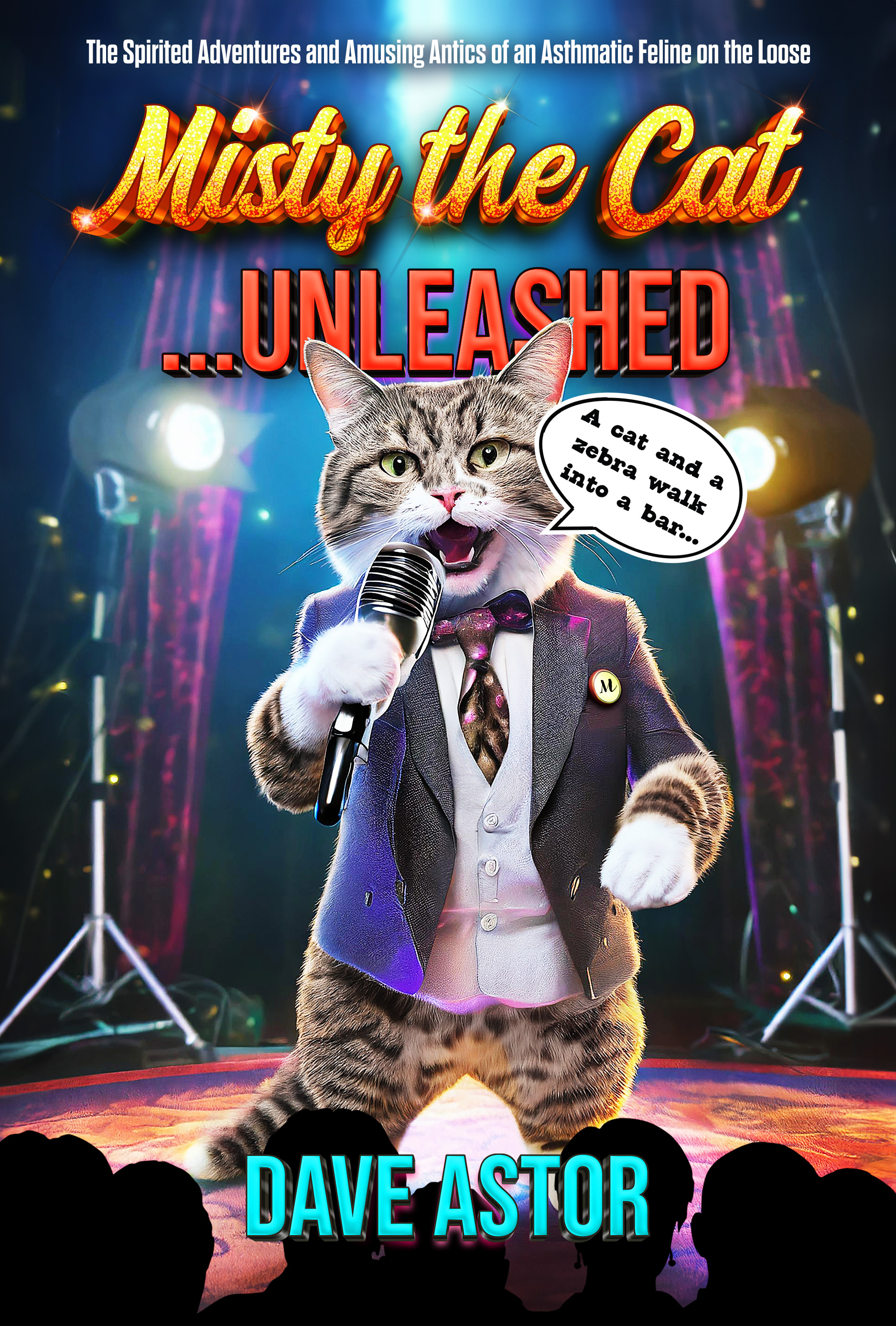
This 90-second promo video for the book features a talking cat: 🙂
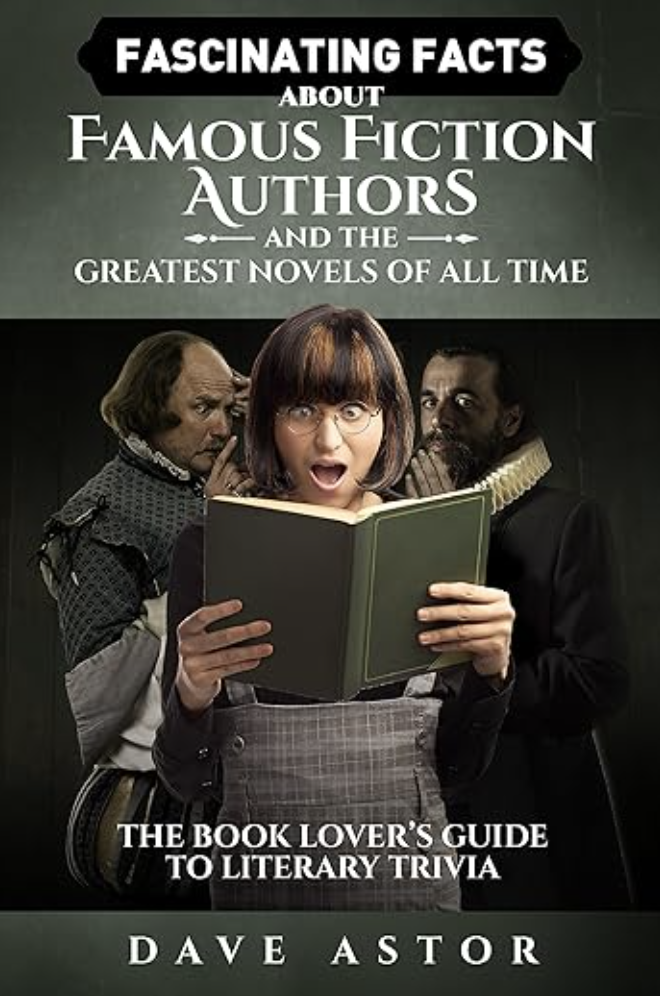
I’m also the author of a 2017 literary-trivia book…
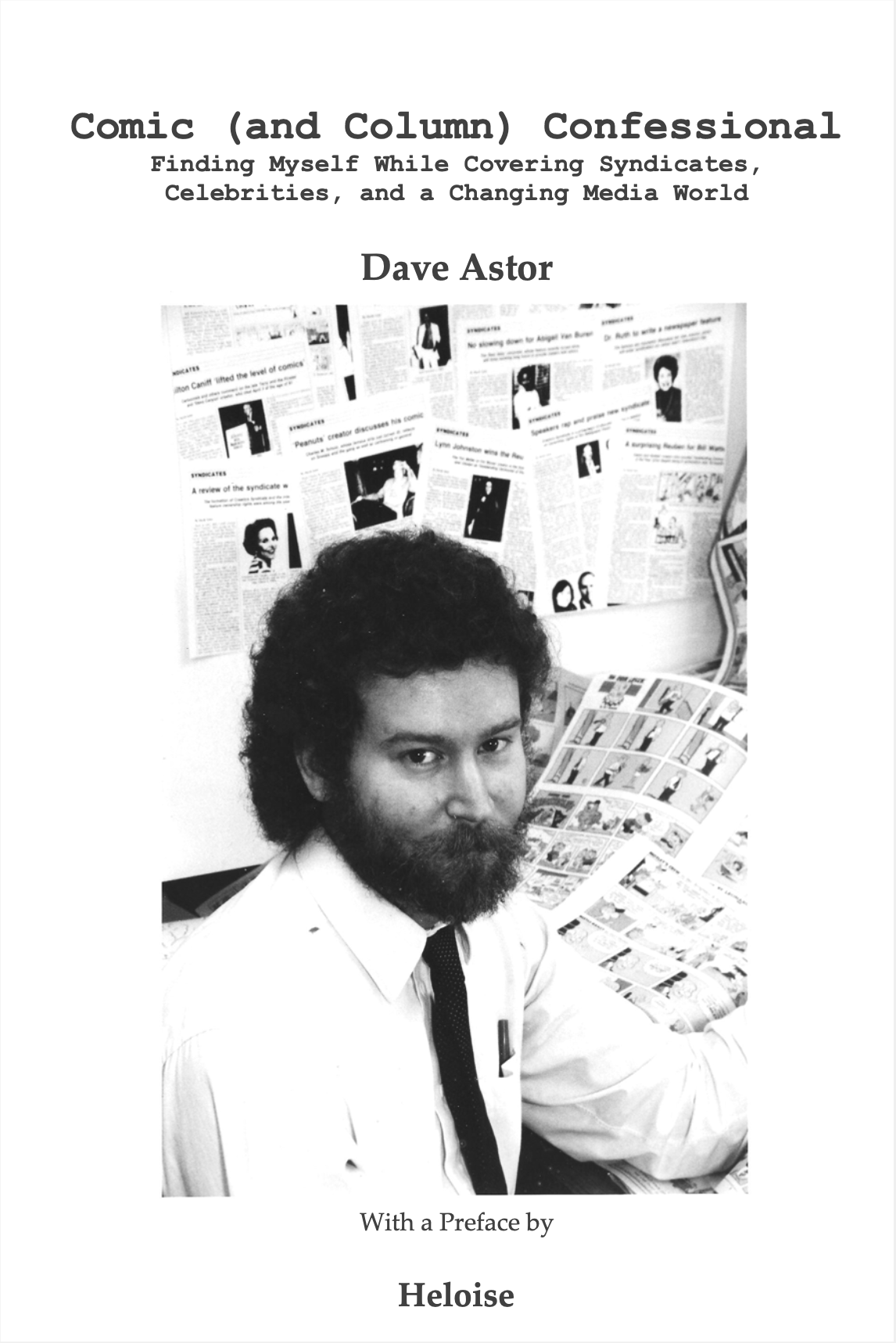
…and a 2012 memoir that focuses on cartooning and more, including many encounters with celebrities.
In addition to this weekly blog, I write the 2003-started/award-winning “Montclairvoyant” topical-humor column every Thursday for Montclair Local. The latest piece — about a welcome election victory and more — is here.
 Dave Astor on Literature
PS, you omitted The picture of Dorian Gray which is quite amazing 😉
LikeLiked by 1 person
True, Robbie! I’ve read that book, and should have mentioned it. My punishment is a blog photo somewhere in which I look much older. 🙂
LikeLike
Oh you are funny. All your photos are very distinguished 😊
LikeLiked by 1 person
I thought of another great gothic story: The Yellow Wallpaper. Have you read it?
LikeLiked by 1 person
I have read “The Yellow Wallpaper,” Robbie. Very powerful/disturbing story, and a feminist statement. Great mention!
LikeLike
Thank you, Robbie! 🙂
LikeLike
I am a fan of gothic novels and have read most of the books you’ve mentioned. I would add Carmilla which was written before Dracula and Salem’s Lot which came after. I’m currently read The Birds and Other Stories by Daphne de Maurier.
LikeLiked by 1 person
Thank you, Robbie, for those great additions with at least some Gothic elements! I should read Daphne du Maurier’s short stories one of these days.
LikeLike
The birds was different to my expectations. Very grim 💖
LikeLiked by 1 person
Interesting, Robbie. I’ve never read “The Birds,” and have never seen the Hitchcock movie. Du Maurier’s writing can often be grim.
LikeLike
Aha, an excellent subject, Dave, since gothic novels are one of my favourites. I scrolled down and grinned as I have read almost all of the ones you have talked about. Here’s a few more, this three are all on my shelf:
The Thirteenth Tale by Setterfield – Pretty creepy, but in a good way, plus the main character is a writer… excellent.
The Bloody Chamber and other Stories by Angela Carter – she rewrote many fairy tales, like Red Riding Hood, Bluebeard, and Puss in Boots, ‘dark, sensual and fantastic’ – wonderful.
Perfume: The Story of a Murderer by Patrick Süskind – I bought this years ago since I got it in order to read it on holiday in Paris (France), and it was perfect for that.
And gosh, next week – May the 4th – already?
LikeLiked by 1 person
Thank you, Chris! I’ve read “The Thirteenth Tale” — excellent and creepy indeed! And I appreciate the other two mentions. Interesting concept to rewrite fairy tales. Why not? 🙂 Yes, hard to believe it’s almost May!
LikeLiked by 1 person
Love Gothic – Ultimate proof ? Bought a fixer upper haunted house – admittedly, didn’t know about the undeclared housemate till we met.
Many favourites already taken, but not The Old Dark House, based on J B Priestley’s Benighted. Totally crazy, includes Boris Karloff, also a psychotic pyromaniac, the weather joins in. Best enjoyed with friends.
Hound of the Baskervilles , of course, so brilliantly Gothic, Holmes had to come back from the dead.
Walking on Dartmoor, a few years ago, I spotted a strip of tablets, retrieved quickly because wild foals seemed too interested. Heart meds for Sir Charles Baskerville was suggested, Heart, definitely, as a quick check confirmed. Hope the owner was OK.
Does The Snake Pit count ? Chilling, beyond most brands of gaslighting, wouldn’t want to watch this again.
Fantasy horror, rather than Gothic, this week, for May Day Eve, our annual date with The Wicker Man.
LikeLiked by 1 person
Thank you! Love your connection between loving Gothic fiction and buying a fixer-upper haunted house! And Arthur Conan Doyle’s “The Hound of the Baskervilles” is a GREAT mention. Perhaps the most Gothic installment of the Sherlock Holmes saga. I appreciate the other mentions, too!
LikeLike
I’m currently reading The Shining, and never actually considered that it had gothic elements; I see what you mean! I do like houses in gothic lit, like the one in Rebecca with its many secrets.
LikeLiked by 1 person
Thank you, Ada! I hesitated to include “The Shining”; I don’t think it’s as Gothic as most of the other novels I mentioned. But it has a big, isolated structure (the hotel) and a few other Gothic tropes. I hope you’re enjoying the book!
LikeLiked by 1 person
Hi Dave!
A great post! I really like the gothic genre of fiction. What I like most about it is the sense of atmosphere and foreboding!
‘Wuthering Heights’, ‘Frankenstein’ and ‘Dr. Jekyll and Mr. Hyde’ are three of my favourites. I haven’t read ‘Rebecca’ but am keen to.
So many great books out there!
Hope your week is going well.
Thanks Dave!
☺
LikeLiked by 1 person
Thank you, Sharon! “…atmosphere and foreboding” — two terrific words to describe elements of Gothic fiction! “Wuthering Heights,” “Frankenstein,” and “Dr. Jekyll and Mr. Hyde” are definitely three great 19th-century novels. Hope your week is going well, too!
LikeLiked by 1 person
Thank you Dave! You have mentioned some great books! As always!
Thanks again, Dave!
☺ 📚
LikeLiked by 1 person
You’re very welcome, Sharon, and thanks again for the comments! 🙂
LikeLiked by 1 person
A pleasure!
LikeLiked by 1 person
Same here. 🙂
LikeLiked by 1 person
☺
LikeLiked by 1 person
🙂
LikeLiked by 1 person
I haven’t read Jamaica Inn but went to the Inn in Cornwall–and that was plenty spooky.
LikeLiked by 1 person
Thank you, Madeline! I’ve read that the real model for Jamaica Inn is quite evocative; it certainly inspired Daphne du Maurier.
LikeLike
Dave, of the novels you’ve mentioned, my favorite are “Strange Case of Dr. Jekyll and Mr. Hyde” and “Beloved.” Another one of my favorites is “The Picture of Dorian Gray.”
LikeLiked by 1 person
Thank you, Rosaliene! Interesting that the “Strange Case of Dr. Jekyll and Mr. Hyde” and “Beloved” novels were published almost exactly 100 years apart. 🙂 And “The Picture of Dorian Gray” is certainly a Gothic work!
LikeLiked by 1 person
Interesting fact: A sign that the gothic novel continues to capture our attention.
LikeLiked by 1 person
Yes, Rosaliene! A genre that seems to have never stopped being popular.
LikeLiked by 1 person
I remember liking Wilkie Collins, but that was a long time ago, so I don’t remember much specific about it. I also like Shirley Jackson’s “We Have Always Lived in the Castle”. Maybe Danielewski’s “House of Leaves”? One of the stranger books I’ve read but it was certainly Gothic. (K)
LikeLiked by 1 person
Thank you, Kerfe!
I think Wilkie Collins is a great author, and kind of underrated. “The Woman in White,” “The Moonstone,” “No Name,” “Armadale”…
I’ve read the compellingly quirky “We Have Always Lived in the Castle”; it IS kind of Gothic.
LikeLiked by 1 person
My favorite Gothic novel is Rebecca. I tend to lean more towards Southern Gothic.
LikeLiked by 1 person
Thank you, Liz! “Rebecca” IS a tremendous book; one of the few novels I’ve liked enough to reread in recent years. (These days, I almost always read novels for the first time.) And, yes, Southern Gothic can be very appealing in its unsettling way. 🙂
LikeLiked by 1 person
You’re welcome, Dave I’ve reread Rebecca several times over the years.
LikeLiked by 1 person
I can understand why! 🙂
LikeLiked by 1 person
Some great gothic books here Dave.
I am currently reading Wuthering Heights..I know 🙄 I perhaps am the only one here not to have read it before 🤭
I am enjoying it !
LikeLiked by 3 people
Thank you, Maggie! I envy you reading “Wuthering Heights” for the first time. 🙂 And it took a while for all of us to get to certain classic novels. 🙂
LikeLiked by 1 person
I thought it might be hard going, but its not.
Have a good week Dave 🙏 and give Misty some gentle strokes from me 🤗
LikeLiked by 1 person
True, Maggie — “Wuthering Heights” is very readable in its tempestuous way. 🙂 Have a good week, too, and thank you for thinking of Misty. 🙂
LikeLiked by 1 person
Very much so Dave 🤗
Thank you, and of course, I can never forget Misty 😉
LikeLiked by 1 person
Misty thanks you, Maggie, and of course as a cat he enjoys all kinds of “Heights.” 🙂
LikeLiked by 1 person
Dave 🤗🤗
LikeLiked by 1 person
🙂
LikeLiked by 1 person
Hi Maggie, I hope you will post your thoughts about Wuthering Heights. I’ve read it twice and Jane Eyre three times.
LikeLiked by 2 people
Hi Robbie.
I saw the film recently, that was what prompted me to read the book..
Of course, they bear no resemblance to each other, and yes, I will do that.
I have not read Jane Eyre.
It may be next on my list 😉
LikeLiked by 1 person
That’s quite a list up there, Dave; you’ve captured most of the gems and I’ll be hard-pressed to add to them. I’ve never read ‘The Turn of the Screw’, but I gather it’s up there with the best, as is ‘The Picture of Dorian Gray’, which I have read but have only a sketchy memory of. Dickens’s unfinished ‘The Mystery of Edwin Drood’ is also supposed to be of the genre, but as I’m not too keen on his finished offerings I’ve never been there either. I think that’s my offering, but if I think of any more please do rest assured that I’ll be back. Thanks for the post, and have a good week. 🙂
LikeLiked by 1 person
Thank you, Laura! I forgot about “The Turn of the Screw” — definitely Gothic. I’ve read it and found it boring; one of my least favorite Henry James novels (I’ve gotten to about 10 of them). I appreciate the other mentions, too. Re Dickens, I suppose Miss Havisham of “Great Expectations” is kind of a Gothic character. Have a good week, too!
LikeLiked by 1 person
Yes to Miss Havisham! I’m quite keen on her. It sounds too like I’m not missing much from Henry James in this particular tome. Thanks, Dave. 🙂
LikeLiked by 1 person
I like “The Portrait of a Lady,” to name one James novel, much more than “The Turn of the Screw.” And, yes, Miss Havisham is quite a memorable creation!
LikeLiked by 1 person
Yes, I get on with ‘The Portrait of a Lady’, although I do find James’s style rather … intense, for want of a better word. 😐
LikeLiked by 1 person
I agree about James’ style, Laura. His later works (such as “The Ambassadors”) can be especially convoluted. But I’ve found some of his early and mid-career work to be relatively readable: “The American,” “Washington Square,” “The Aspern Papers,” etc.
LikeLiked by 1 person
I’ll check those out, Dave; I wouldn’t like to write him off over just one book. Thanks! 😊
LikeLiked by 1 person
I was so scared of Henry James! And then Dave and a few other people convinced me to have a go at “Washington Square” and “The Aspern Papers” and I adored them both; so I thought how bad can “The Turn of the Screw” be? For such a short book it took me a LONG time to read. I feel like I missed something as James knows how to write, but like Dave, I found myself bored. Maybe I’ll have another go one day. I definitely know I’d like to read more Henry James though.
LikeLiked by 2 people
Many thanks for sharing your thoughts on James. It’s good to know that I’m not the only one who’s been a bit daunted by his work. I absolutely have to read the books you and Dave mention. 🙂
LikeLiked by 1 person
Thank you, Susan! We definitely agree about “The Turn of the Screw.” 🙂 Subtle horror can be very effective — Shirley Jackson’s “The Haunting of Hill House” and Stephen King’s “From a Buick 8” are two examples — but perhaps “The Turn of the Screw” was too subtle.
LikeLike
I’ve also written off some famous authors after one book, Laura. 🙂
LikeLiked by 1 person
I’m in good company then! 🙂
LikeLiked by 1 person
Thanks! 🙂
LikeLiked by 1 person
Hi Laura, I’m a big Great Expectations fan too. It’s my favourite Dickens.
LikeLiked by 2 people
That’s good to know, Robbie. I’m not keen on him in general, but there are a few books I’m good with, and this is one of them. Miss Havisham is certainly a favourite character! 🙂
LikeLiked by 1 person
Nice post Dave. Who doesn’t like a good Gothic book? Jean Plaidy, writing as Victoria Holt produced several Gothic style books. Anya Seton dabbled with one. I’ll add Uncle Silas to your list.
LikeLiked by 1 person
Thank you, Shehanne! I must try Jean Plaidy, under one of her authorial names, sometime. Laura Lyndhurst has also recommended her.
“Who doesn’t like a good Gothic book?” No one! 🙂
LikeLiked by 1 person
Plaidy is the kind of author I read a lot of when I was 15. A lot of us did at that age. She will certainly have done a lot of research because her books also certainly were steeped in history. And obviously her historical figures no matter how ugly were always handsome and beautiful. As you not she also churned out books under a ton of other names, Again at 15 I read some of her Victoria Holt ones. However even then I was quite unsure re the behavior of a number of her heroes, so I stopped reading these.
LikeLiked by 1 person
You certainly have me intrigued, Shehanne. And that author must be in the top ten of writers when it comes to number of pen names. 🙂
Interesting the combination of doing a lot of research while also making certain characters better-looking than they were in real life. Hollywood is of course good at that, too.
LikeLiked by 1 person
As Victoria Holt she may well also be in the top 10 for writing rapey coercive heroes . . . . .
LikeLiked by 1 person
Okay…maybe I’ll look for books by her other aliases. 🙂
LikeLiked by 1 person
LOL!!.. yeah. I think her other ones were okay!! We can all we an off alias I guess…
LikeLiked by 1 person
I think “off alias” is a great phrase. 🙂
LikeLiked by 1 person
My net has been playing up a bit this week, sticking and losing the signal…that should HAVE said HAVE an ….etc.
LikeLike
I saw the 2020 remake, it was very good. But somehow, the old B&W with those fedoras, old-fashioned taxis and rapidly spoken lines adds a little additional gothic umph 😎
LikeLiked by 1 person
Thank you, Darryl! I’ve heard about that remake. I agree — an older, black-and-white movie feels more Gothic than a more recent film in color. Well said by you!
LikeLiked by 1 person
The first Gothic novel I ever read remains one of my favorites: Mary Stewart’s NINE COACHES WAITING (1958), about an isolated young woman hired as governess to the young heir to a fortune and a title in a remote French chateau! I first read it when I was 14 and thought it was SOOO exciting and romantic–and I still think so!
LikeLiked by 1 person
Thank you, Kim! From your enthusiastic description, that Mary Stewart novel does sound great! Now on my to-read list. 🙂
LikeLike
A great list and subject, Dave. While considering Poe, I would also include The Raven, although I know it isn’t a novel. I do like the Fall of the House of Usher. I would also mention The Picture of Dorian Gray.
LikeLiked by 3 people
Thank you, Dan! I agree that “The Picture of Dorian Gray” is a Gothic novel. And “The Raven” is definitely a Gothic poem. Quoth the raven, “Fiction…more!”
LikeLiked by 1 person
Thanks Dave.
LikeLiked by 1 person
🙂
LikeLiked by 1 person
Thank you to Chris Hall for recommending “Jamaica Inn”!
LikeLiked by 1 person
Happy to help… pleased that you liked that, Dave.
LikeLiked by 1 person
Yes, quite an interesting novel, Chris! Very readable amid the physical violence and psychological terror. I wish Mary had made a different decision on the last page, but…
LikeLiked by 1 person
May the 4th be with you
LikeLiked by 1 person
LOL, Michael! 😂 Funny response to that scheduling note of mine. 🙂
LikeLiked by 1 person