
After recently reading Truman Capote’s famous 1958 novella Breakfast at Tiffany’s, I realized that my periodic posts over the years about a specific decade of literature had not yet included the 1950s. That will be remedied today faster than an Elvis Presley hip swivel.
Looking back, the ’50s are considered a relatively conventional time in certain ways, but there were definitely signs of change bubbling under the surface that would explode in the following decade – among them pushes for civil rights, women’s rights, and LGBTQ+ rights. So, not surprisingly, many ’50s-released novels contained both conventional and unconventional elements – with the unconventionality also including a bit more candid depiction of sexuality and a bit more use of four-letter words than in prior decades and centuries.
Civil rights and the Black experience in general were reflected in novels such as Ralph Ellison’s Invisible Man (1952), James Baldwin’s Go Tell It on the Mountain (1953), and Chinua Achebe’s Things Fall Apart (1958). Unfortunately, the otherwise pretty open-minded Breakfast at Tiffany’s has some racist elements, whether that involved Capote thinking that way himself or the author just showing what many people’s views openly were back then.
Some non-white ethnic characters were also treated non-stereotypically in some ’50s novels. One who comes to mind is the highly educated Chinese-American cook/housekeeper Lee in John Steinbeck’s East of Eden (1952); he’s that book’s smartest, most ethical, and most relatable person.
Independent or partly independent women appeared in novels such as Breakfast at Tiffany’s (starring the flighty but strong-willed Holly Golightly), Daphne du Maurier’s Mary Anne (1954), Herman Wouk’s Marjorie Morningstar (1955), and Shirley Jackson’s The Haunting of Hill House (1959). There’s also East of Eden’s Cathy Ames — though that evil, driven character is far from a role model.
LGBTQ+ characters, whether closeted or not, in ’50s lit? There were certainly some in Breakfast at Tiffany’s – one of the before-its-time highlights of Capote’s novella. Giovanni’s Room (1956) by James Baldwin comes to mind, too.
Meanwhile, Wouk’s The Caine Mutiny (1951) gave readers food for thought about the necessity to distrust authority when the person in authority isn’t worthy of trust. A sentiment that would become more pronounced in the 1960s and beyond.
Also published in 1951 was J.D. Salinger’s The Catcher in the Rye, with its prescient look at teen angst and alienation through the lens of annoying protagonist Holden Caulfield.
Other ’50s novels of note include, among others, Ray Bradbury’s dystopian Fahrenheit 451 (1953), with its book-burning government’s thought-policing and anti-intellectualism; William Golding’s Lord of the Flies (1954), which explored how things can go bad when “civilization” is lost; and J.R.R. Tolkien’s The Lord of the Rings trilogy (1954-1955), the pioneering fantasy classic that some considered a World War II allegory despite the author’s denial of that.
Major releases that decade, to name some, also included Daphne du Maurier’s My Cousin Rachel and Josephine Tey’s The Daughter of Time (both 1951); Ernest Hemingway’s The Old Man and the Sea, Bernard Malamud’s The Natural, and Flannery O’Connor’s Wise Blood (all 1952); Erich Maria Remarque’s A Time to Love and a Time to Die (1954); Vladimir Nabokov’s Lolita (1955); Saul Bellow’s Seize the Day (1956); Nevil Shute’s On the Beach, Boris Pasternak’s Doctor Zhivago, and Jack Kerouac’s On the Road (all 1957); Giuseppe Tomasi di Lampedusa’s The Leopard and Graham Greene’s Our Man in Havana (both 1958), and Gunter Grass’s The Tin Drum and Philip Roth’s Goodbye, Columbus (both 1959).
The ’50s novels mentioned in this post are ones I’ve read; there are of course many other books from that decade I have not gotten to.
As an aside, I’ll mention a novel I recently read by 1955-born author John Grisham. That book is The Widow (2025), and I must say that, after 50 or so novels, Grisham’s still “got it.” The Widow, about a small-town lawyer falsely charged with murdering the title character, is a riveting page-turner.
Thoughts on this post and the books in it? Any other 1950s novels you’d like to mention?
Misty the cat: “I’m keeping the pillow warm for when my college human comes home for Thanksgiving.”
My comedic 2024 book — the part-factual/part-fictional/not-a-children’s-work Misty the Cat…Unleashed — is described and can be purchased on Amazon in paperback or on Kindle. It’s feline-narrated! (And Amazon reviews are welcome. 🙂 )
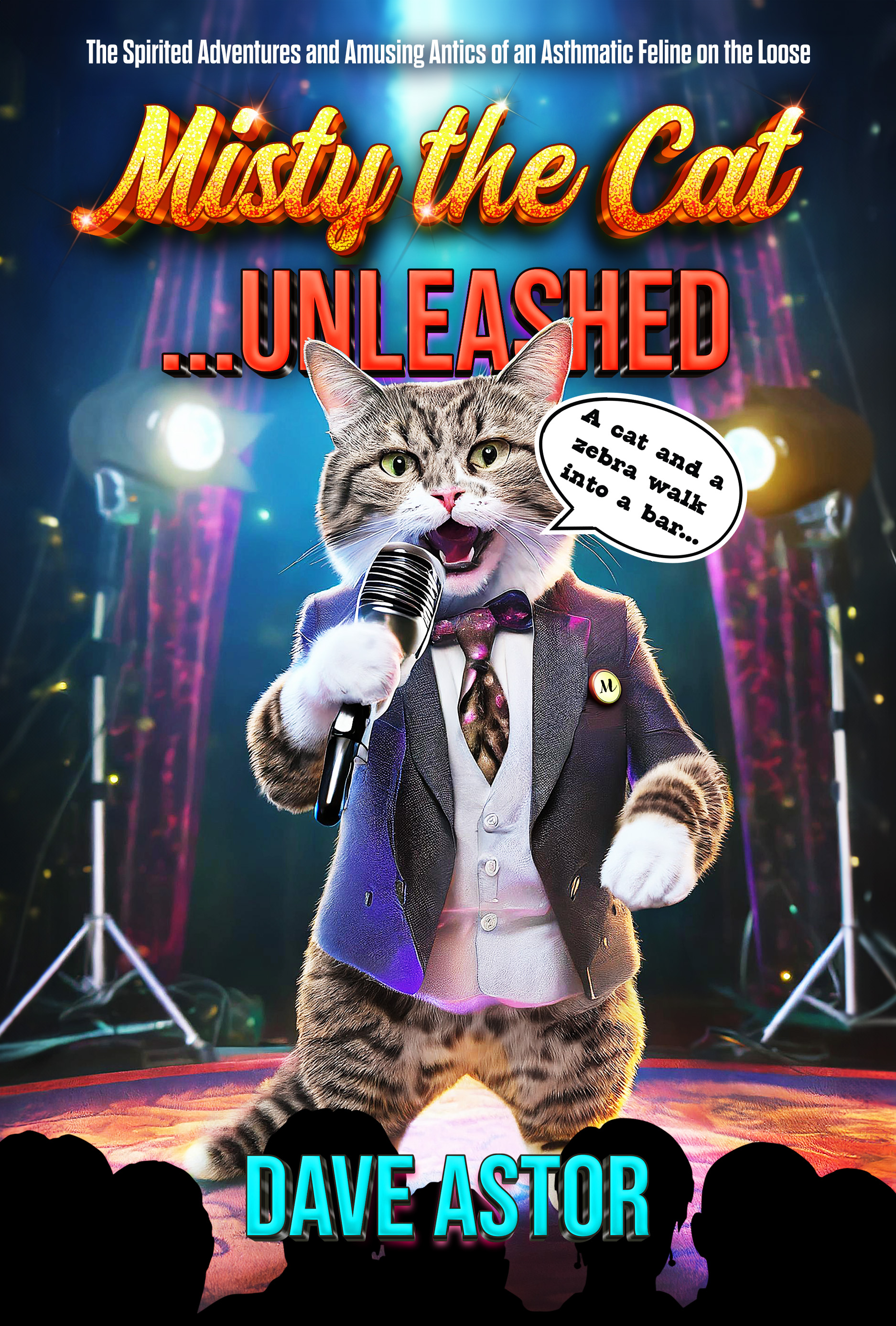
This 90-second promo video for the book features a talking cat: 🙂 Not my voice. 🙂
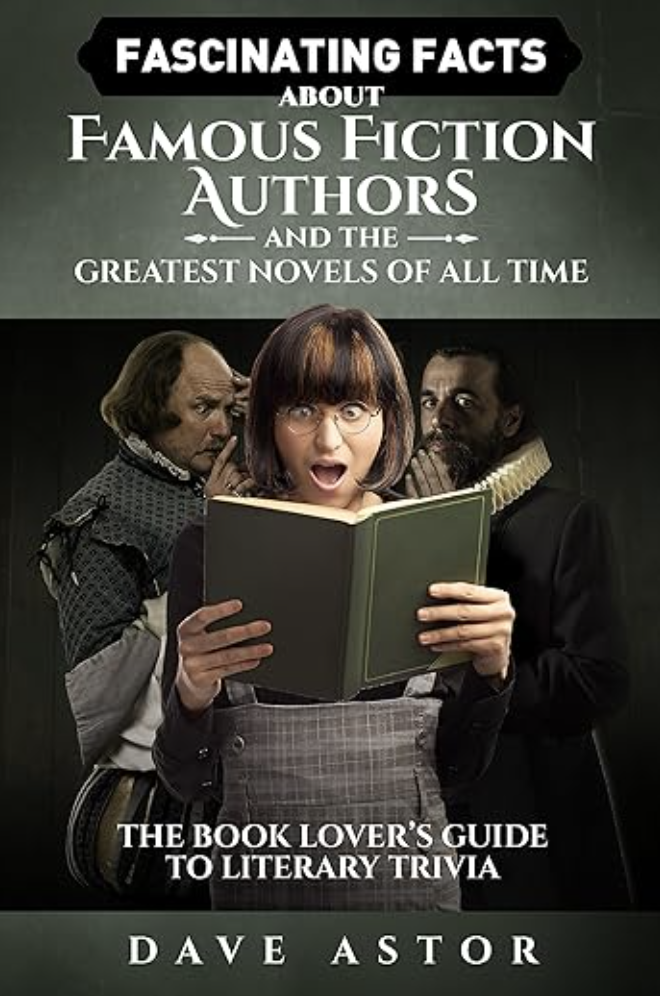
I’m also the author of a 2017 literary-trivia book…
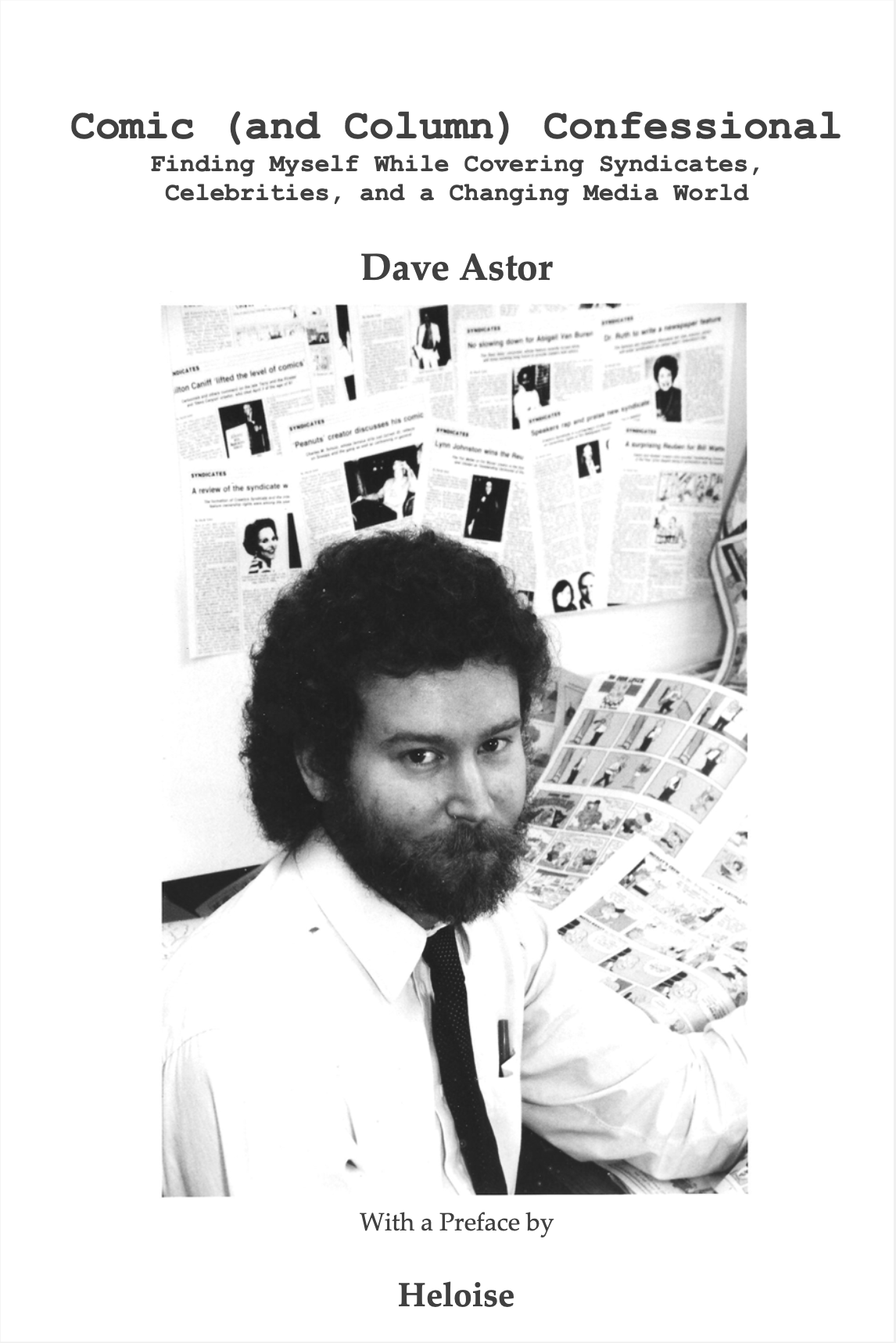
…and a 2012 memoir that focuses on cartooning and more, including many encounters with celebrities.
In addition to this weekly blog, I write the 2003-started/award-winning “Montclairvoyant” topical-humor column every Thursday for Montclair Local. The latest piece – about a very interesting Township Council meeting — is here.


Wow! Quite a list and excellent comments, Dave. I am totally late to this post, but I enjoyed it. Usually, after two days, if I haven’t read a post, I delete it — but not yours.
I read a lot of these, but I’m sure many were assignments in the 60s, and a book report followed. Fahrenheit 451 is one that I read twice for assignments and also read later for pleasure. It was assigned in junior high just because. It was assigned in my senior year by a teacher who is partially responsible for me becoming an author. He wanted us to read it (1972) and relate it to the things going on in the non-fiction world (as he put it). I’m not sure I reread very many of the others. To be honest, I took advantage of Cliff Notes for Catcher in the Rye.
I didn’t start reading Kurt Vonnegut until the early 70s, but as I probably mentioned when you were discussing catalogs a couple weeks ago, I went back and read them all. Player Piano (1952) was his first novel, and I really enjoyed it.
LikeLiked by 1 person
Thank you, Dan, for the kind words! Glad you enjoyed the post!
Interesting to think back to/about which novels we were assigned to read in school, which ones we decided to read on our own, and which ones involved both scenarios. 🙂 Sounds like “Fahrenheit 451” evokes a lot of varied memories for you.
I think “The Catcher in the Rye” is overrated.
When one thinks of Kurt Vonnegut, one thinks of the 1960s and later, but two novels in the 1950s (including the one you mentioned)!
LikeLiked by 1 person
After college, I drifted into non-fiction. I’ve read a lot about WWII and other aspects of history. Way too much technology and just enough SciFi to keep me sane. Now it’s mostly indie authors I’ve met through blogging. Dystopian fiction seems more and more like the authors were prescient rather than talented. I look at how many Twilight Zone episodes are still relevant today. I checked those books out of our junior high library. I finally bought the first book of short stories which was published in 1960.
LikeLiked by 1 person
Great nonfiction is…great! I also went through a period (before this lit blog of course) where I read mostly nonfiction — history, biographies, etc.
And, yes, a lot of dystopian sci-fi of years ago unfortunately feels very prescient and relevant to today. 😦
LikeLiked by 1 person
Roughly equal honours for adult and children’s fiction classics, but am I too late to add The Go Between and every other qualifying L P Hartley ?
Also the Eagle of the Ninth, The Silver Branch and The Lantern Bearers by Rosemary Sutcliff and nuch later, recommended by my Latin teacher.
Presence of Bonjour Tristesse in the school library was never explained, Allowed simply for being in French ?
LikeLiked by 1 person
Thank you, Esther! Never too late. 🙂 And, yes, plenty of memorable children’s literature as well as adult literature published in the 1950s.
Ha — 😂 — I supposed being in French can help put a book under the radar. 🙂
LikeLike
Oh wow Dave! What a tremendous post!
I’ll need until about Christmas to digest this packed post!! So many great titles!
I would be very interested to read all the books you have listed especially; ‘Giovanni’s Room’ and the John Grisham! So pleased to read he has lost none of his style in, ‘The Widow’. I’m a huge fan of Graham Greene. The last thing I read by him many decades ago was, ‘The End of the Affair’, I thought it was excellent.
A lot like this week’s post!
Thank you Dave for the books, as always!
Sharon 😊
LikeLiked by 1 person
Thank you, Sharon, for the very kind words about the post! Glad you liked it! I agree about Graham Greene — quite a writer. In addition to his interesting novels, his brief/macabre tale “Proof Positive” is one of my favorite short stories. I need to read “The End of the Affair”!
LikeLiked by 1 person
You are very welcome, Dave! And thank you for the tip on ‘Proof Positive’. I have not come across that short story before!!
I have to look it up now!!
Thanks again, and have a great Tuesday!
😊🤗
LikeLiked by 1 person
Thanks for the follow-up comment, Sharon, and you’re welcome. 🙂
Hope you’re having a great Tuesday, too!
LikeLiked by 1 person
Thank you so much Dave!
Tuesday is going OK!
With best wishes,
😀
LikeLiked by 1 person
🙂
Tuesday seems to be one of the top seven days of the week. 🙂
LikeLiked by 1 person
Really? I prefer Wednesdays!! For some strange reason! 😃
LikeLiked by 1 person
Ha, Sharon! 😂 Wednesdays for the W (Win)! 🙂
LikeLike
Something like that!!
😀😊
LikeLiked by 1 person
🙂
LikeLiked by 1 person
Hi Dave, I clearly like this era for fiction because I’ve read many of the novels you’ve mentioned here. Somehow Catcher in the Rye has never appealed to me. Two other notable novels published in this era are The Lion, the Witch and the Wardrobe by CS Lewis and Atlas Shrugged by Ayn Rand.
LikeLiked by 2 people
Thank you, Robbie! Nice that you’re a fan of a lot of 1950s fiction! “The Catcher in the Rye” is also not a favorite of mine. A bit puzzled why many people consider it such a classic. And I appreciate the C.S. Lewis and Ayn Rand mentions! I can’t quite bring myself to read Rand.
LikeLiked by 1 person
I read Anthem and I did like it. I read about half of The fountainhead but the weird relationship annoyed me so much I DNFd it.
LikeLiked by 1 person
Well, one out of two isn’t bad. 🙂
LikeLiked by 1 person
💞
LikeLiked by 1 person
🙂
LikeLiked by 1 person
LOL – I laugh because my list is so classic.
Here’s my classic 1950’s list I must mention: Casino Royale, Live and Let Die, Moonraker, Diamonds are Forever, Dr. No, From Russia with Love & Goldfinger.
Yes, I read very James Bond that Ian Fleming wrote.
I’d like to add that I impressed my own self when I realized I have read a majority of the books you listed here.
Thanks Dave!
LikeLiked by 1 person
Thank you, Resa! A very impressive Ian Fleming reading history! The number of Bond books I’ve read? 0. Not so impressive. 🙂 And great that you’ve read many of the novels I mentioned!
LikeLiked by 1 person
YAY!
Yeah.. the Bond books. I read them like drinking water when I was in my teens. Looking back – I liked them more than all those Harold Robbins books.
However, the Harold Robbins books were more exciting, because I had to sneak them from behind mom’s back.
😂
LikeLiked by 1 person
Sneaking does add an excitement element, Resa. 🙂 And perhaps I will be “shaken, not stirred” enough to try a Bond book. 🙂
LikeLiked by 1 person
Hahahaha!
I like “stirred”.
Well, they were more fun to read than the movies… as I recall.
LikeLiked by 1 person
Books are often better than the screen adaptations!
LikeLiked by 1 person
Agree!
LikeLiked by 1 person
🙂
LikeLiked by 1 person
I’m not sure I read all of them, but I read quite a few.
LikeLiked by 2 people
Did you enjoy them, Dan?
LikeLiked by 1 person
I enjoyed most of them. I’m not sure I read any John Grisham books from that time, but I’ve read and enjoyed several since.
LikeLiked by 1 person
Good to hear, Dan!
As for John Grisham, when he’s good, he’s VERY good. A number of ultra-page-turners.
LikeLiked by 1 person
Wow – I had no idea the 50s produced so much iconic literature! Definitely symptomatic of the changes starting to bubble up at that time.
LikeLiked by 1 person
Thank you, M.B.! I was also surprised to see that the 1950s was such a good time for literature, and not a mostly conventional time for lit. I expected to writer a shorter post. 🙂
LikeLiked by 1 person
Hi Dave, there are so many of these which I have read in the past.
First, a couple of books which I read when I was a kid. So I loved all of The Chronicles of Narnia by C.S. Lewis and these were published from 1950 to 1956.
Also a little group of children’s books written by Mary Norton – beginning with The Borrowers (1952), then the sequels are titled alliteratively and alphabetically: The Borrowers Afield (1955), The Borrowers Afloat (1959) plus The Borrowers Aloft (oops too late, 1961).
Later I began to read the excellent sci-fi books like many of John Wyndham’s. Over to the library – The Day of the Triffids (1951), The Chrysalids (1955), The Kraken Wakes (1953) and The Midwich Cuckoos (1957).
I think that’s enough just now, I was still at school while reading all of those up there… and much more too!
LikeLiked by 1 person
Thank you, Chris! That’s a great bunch of 1950s book mentions! Quite a decade for young-person books (that could also be enjoyed by adults) and sci-fi, among other lit. And 1961 is kind of an honorary ’50s year. 🙂
LikeLiked by 1 person
I know I’ve read some of the books you mentioned, but I remember too little of them to comment. I suspect I read them too young, probably because they were “grown up books” and I was trying to be smarter than I was.
Anyway…
It’s hard to think of The Lord of the Rings as a 1950s book. Probably because it’s set in a fictional world, it feels timeless.
LikeLiked by 2 people
Thank you, Audrey! Details of novels we read when very young can indeed be hard to remember.
And, yes, “The Lord of the Rings” — because it’s fantasy and set in a different time and place — feels like it could have been written in any decade. But the unfortunately very male-oriented world of Tolkien’s trilogy does have a ’50s vibe.
LikeLiked by 1 person
Good point about LOTR. Now I think of JRR and the other Inklings (isn’t that what they called themselves) discussing their writings in a pub. All guys.
LikeLiked by 1 person
Yes, all guys, Audrey. Tolkien and “The Lord of the Rings” were of their time and not of their time.
LikeLiked by 1 person
So many of these were on the reading lists of my high school English courses (I graduated in 1970). I wonder, do high school students now read books from the 2010s? Of course from what the media tells us they don’t read anything at all…
I’m going to add Ellie Wiesel’s “Night” (which I also read in high school) and “Waiting for Godot”. (ditto). Not to mention “Charlotte’s Web” which I read as a younger child on my own. (K)
LikeLiked by 1 person
Thank you, Kerfe! Nice to remember some great reading you did as a high school student! Interesting question about whether high school students nowadays read a lot of novels from their previous decade (the 2010s). Anecdotally, my younger daughter — a 2025 high school graduate — read novels from a variety of decades in her lit courses. Offhand, I remember her being assigned “The Great Gatsby” (1920s), “Lolita” (1950s), “The Handmaid’s Tale” (1980s), etc.
And I appreciate those three excellent mentions of three ’50s works you read!
LikeLike
We read “Gatsby” too. And things like “The Scarlet Letter”. I guess it’s hard for me to look at recent books and consider them to already be classics, but that really was what was happening in my classes. One thing we did not do, which hopefully they do now, is read much that would be considered world literature.
I should ask my girls what they remember reading. I remember the older one had an intense dislike of Walt Whitman.
LikeLiked by 1 person
Ah, yes, “The Scarlet Letter.” I also read that in high school and had mixed feelings about it. Reread it many years later and liked it a lot more.
Interesting to think about which recent novels will be considered classics in a century.
I’m also glad that more world literature is read by students and other Americans compared to years ago.
Walt Whitman? Not my favorite poet, either, but he was a game-changer with his more-informal verse.
LikeLiked by 1 person
Such a marvellous decade for books, Dave! I’ve loved most of them.
LikeLiked by 1 person
Thank you, Jennifer! I agree with your opinion about 1950s books. 🙂
LikeLiked by 1 person
When i saw the title, I thought… I think that is a decade Dave hasn’t specifically covered. And there, now you have. Great post.
LikeLiked by 1 person
Thank you, Shehanne! That was an accurate observation on your part. 🙂 I also hadn’t previously covered literature of the 2030s, but there might be an excuse for that. 🙂
LikeLiked by 1 person
LOL…. You could take a stab at what it might be though. Come on Dave. Stop slacking!
LikeLiked by 1 person
Ha ha, Shehanne! 😂 Hopefully not too many more AI-generated novels in that decade…
LikeLiked by 1 person
Well……… Absolutely.
LikeLiked by 1 person
Yes!
LikeLiked by 1 person
Dave, how interesting that you should feature the 1950s, considering that it’s the Golden Age that our current leadership would like our country to return to. You’ve mentioned several great books that I’ve enjoyed over the years. On the Beach by Nevil Shute made an impression on my adolescent mind at the time. Those were the days when the threat of a nuclear war loomed large in our lives. Today, it’s AI gone rogue.
LikeLiked by 1 person
Thank you, Rosaliene! So true that Trump and people like him would like to return to the way things were in the 1950s — the most retrograde part of that decade, not the change-was-in-the-air part.
Astute observation that AI is kind of like the nuclear threat of decades past. Unlike you, I didn’t read “On the Beach” until I was well into adulthood, but it is indeed an eerie, haunting novel. An example of how “less-guilty” countries get the (literal or figurative) fallout from the negative stuff the more powerful nations do. Sort of like the case with climate change today.
LikeLiked by 1 person
While the patriarchy would love to turn back time, the climate-ecological crises and AI are pushing us forward into a new age for humanity.
LikeLiked by 1 person
Yes, Rosaliene, the future is pretty fraught. 😦
LikeLiked by 1 person
Faster than an Elvis hip swivel, you say? No false advertising with your opener! 😎😎😎
What a terrific round up of 50s lit, Dave! And I see your point, about culturally being “ on the cusp” of change. Hadn’t thought about that, but I agree. 😉😉😉
(And…can’t help but mention Misty. He wins the cuteness award, for sure!)
😉❤️😉
LikeLiked by 1 person
Thank you, Vicki! Happy you enjoyed the post! I suppose “no false advertising” differs from the glut of actual (kind of false) advertising in 1950s media. 🙂
I also hadn’t thought much about the ’50s being on the cusp of change; I guess different decades are not islands in themselves.
Misty greatly appreciates being complimented on his cuteness! 😺
LikeLiked by 1 person
Sunday hugs and smiles! 😉❤️😉
LikeLiked by 1 person
Thanks, Vicki! 🙂 The same to you! 🙂
LikeLiked by 1 person
Oh Dave, your post sent me back to my childhood and the wonderful books that were published during the 1950s. These years were the beginning of my reading journey. C. S. Lewis’s The Lion, the Witch and the Wardrobe and Dr. Seuss’s The Cat in the Hat both were part of my reading journey, and I still remember the excitement of entering those imaginative worlds.
When I look back, I see how innovative these books were. Narnia introduced us to some very adult questions about courage and responsibility. The Cat in the Hat turned the experience of learning to read into an adventure filled with humour and mischief. And both introduced me to friendships and working together. There were so many wonderful children’s books (think Charlotte’s Web) published during that decade, but these two have stayed with me. I am not surprised that both have inspired adaptations for new generations? A wonderful decade of reading!! I love this thought: “Once a king or queen of Narnia, always a king or queen of Narnia.” That was very important to me at the time.
LikeLiked by 2 people
Thank you, Rebecca! Nice to think back to one’s reading childhood. 🙂 I must have read a number of 1950s children’s books myself when I was a kid in the ’60s, though I can only remember some of the titles. “…the excitement of entering those imaginative worlds” — yes!!!
Dr. Seuss’ work definitely had different dimensions, and it was more fun and anarchic than some of the more staid children’s-book fare that came before. And, yes, C.S. Lewis was one of those authors who both kids and adults could find enjoyment with and meaning in.
LikeLiked by 2 people
Another great topic of conversation!!!
LikeLiked by 1 person
Many thanks, Rebecca! I appreciate you being part of the conversation. 🙂
LikeLiked by 1 person
📚📚📚
LikeLiked by 1 person
Nine books! One for each cat life. 🙂
LikeLiked by 1 person
😂
LikeLiked by 1 person
🙂
LikeLiked by 1 person
Of the potboiler variety, there is Peyton Place, by NH native Grace Metalious (published in 1956).
LikeLiked by 3 people
Thank you, Liz! Great mention, and good for New Hampshire. 🙂 I had sort of forgotten that the famous “Peyton Place” TV show was based on a novel.
LikeLiked by 2 people
You’re welcome, Dave!
LikeLiked by 1 person
Not by choice. 😁
LikeLiked by 1 person
I thought of Peyton Place too. My mom read it, but kept it under lock and key. She knew I would read anything I got my hands on!
LikeLiked by 3 people
I read it as an adult, just out of curiosity.
LikeLiked by 2 people
I never realised that the TV series was based on a book, Liz. It must have been one of the first soaps to cross the pond. My mother never missed an episode! Now I have to look for the novel. 😊
LikeLiked by 2 people
And I never saw the TV soap opera!
LikeLiked by 2 people
How strange is that! 😂
LikeLiked by 2 people
😁
LikeLiked by 2 people
I saw a very good film called Carol a few years ago,set in 1950’s about two women who fall for eachother based on book by Price of Salt by Patricia Highsmith
Michele E & P way back
LikeLiked by 2 people
Thank you, Michele! Patricia Highsmith definitely wrote some renowned novels in the 1950s — also including “Strangers on a Train” and “The Talented Mr. Ripley.”
LikeLiked by 1 person
A great post! The 1950s produced some very good books, many of which you have mentioned. Doctor Zhivago being one of my favourites. Here are a few others I’ve enjoyed. Charlotte’s Web by EB White, The Chronicles of Narnia by CS Lewis, anything by Dr Suess, The Crucible by Arther Miller, A Town Like Alice by Nevil Shute, and Nine Coaches Waiting by Mary Stewart. (Although I’ve listed some children’s books, I read them as an adult and loved them. You can learn a lot from kid’s books!)
LikeLiked by 3 people
Thank you, Darlene! Glad you enjoyed the post! And those are GREAT and varied additional examples of 1950s-published works! Including “The Cat in the Hat.” 🙂 Many children’s books can indeed be enjoyed by adults. I didn’t read “Charlotte’s Web” until I was an adult. 🙂
LikeLiked by 2 people
What a great era to celebrate with so many great books!!! xx
LikeLiked by 2 people
Thank you, Cindy! The 1950s were a more impressive time for literature than I imagined when I first sat down to do the post. 🙂
LikeLiked by 2 people
XXXX!!!
LikeLiked by 1 person
🙂
LikeLiked by 1 person
It’s incredible how many outstanding books were published in the fifties, Dave! I absolutely adored, for example, the Chinese-American cook in East of Eden. I wanted to add Lolita but you have thought also of that one! Many thanks for all your great proposals.
LikeLiked by 2 people
Thank you, Martina! I share your amazement with how many terrific novels were published in the 1950s. 🙂 I also share your regard for Lee in “East of Eden”! (From what I can remember and from doing some online searching, Steinbeck apparently didn’t mention a last name for Lee in the novel.)
LikeLiked by 2 people
Oh, Dave, I only remember Lee! 😙
LikeLiked by 2 people
Me, too, Martina!
LikeLiked by 1 person
Thank you for this brilliant post, dear Dave! The 1950s were such a rich decade.
Here in Italy, that era brought us incredible works by authors like Alberto Moravia and Cesare Pavese, who were exploring themes of alienation and social shift in parallel with the American scene.
I really enjoyed your analysis!
LikeLiked by 1 person
Thank you, Luisa! Happy you enjoyed the post! I appreciate the mentions of Alberto Moravia and Cesare Pavese; I realize the movements for and references to civil rights, women’s rights, and LGBTQ+ rights were happening in various countries during the 1950s — in many cases in a more advanced way than in the U.S.
LikeLiked by 2 people
Exactly, Dave! In Italy, rather than through theoretical essays, these themes emerged through impactful works of fiction and poetry, often in the face of fierce censorship.
In 1955, for instance, Pier Paolo Pasolini published *Ragazzi di vita*, bringing LGBTQ+ realities into mainstream literature (and sparking a famous trial).
Writers like Alba de Céspedes, with her masterpiece *Quaderno proibito* (1952), masterfully depicted the secret desires of women trapped in patriarchal family roles.
LikeLiked by 2 people
Sounds like the 1950s were a very impactful time for Italian literature — including socially conscious literature, Luisa! Thank you for that very interesting information!
LikeLiked by 2 people
You’re more than welcome, dear Dave
LikeLiked by 1 person
🙂
LikeLiked by 1 person
This post makes me want to dive into 50’s literature as well – great examples!
LikeLiked by 3 people
Thank you very much, Thérèse! Glad you liked the post! It seems to have been a pretty impressive decade for literature, which I didn’t totally realize until researching and writing the piece.
LikeLiked by 3 people
I hadn’t considered that some non-white ethnic characters were treated non-stereotypically in some 1950s novels. I haven’t read much from this era, but have always wanted to read Chinua Achebe’s Things Fall Apart. I might add it to my festive reading list so I can get an idea of books written in this decade of change and transition!
LikeLiked by 3 people
That you, Ada! Not always non-stereotypical character depictions in the 1950s, but nice to see that when it happened.
As for “Things Fall Apart,” for me it turned out to be one of those novels I admired while finding it a bit of a slog to read. But I’m sure many others feel differently.
LikeLiked by 2 people
I loved ‘Breakfast at Tiffany’s’, Dave, although it was a while ago and I’ve forgotten whatever racism was in there; which has to be a good thing, although I remember Mickey Rooney’s terrible portrayal of a Japanese neighbour of Holly’s in the film adaptation. You’ve mentioned so many books here, some I loved, some I did not, but given how bad I am on dates I had to consult a Goodreads list; given the amount of wonderful reads on there I can’t help but wonder if they left us anything at all to write about! To add to your list, however, there Saul Bellow’s pointed ‘Seize the Day’, and Lawrence Durrell’s ‘Alexandria Quartet’, both of which I loved, along with Lawrence’s brother Gerald’s ‘My Family and Other Animals’. Graham Greene’s ‘Our Man in Havana’ can’t be forgotten (loved that) and we’re currently watching a TV adaptation of Asimov’s ‘Foundation’ trilogy – more to Glen’s taste than mine, but he was a big sci-fi reader back in the day. Wyndham’s ‘Day of the Triffids’ and ‘Cat on a Hot Tin Roof’ – Tennessee Williams in great form – can’t be overlooked either. So many more, but I’ll leave it there so other people have some to mention! Many thanks for another great post and have a good week. 🙂
LikeLiked by 4 people
Thank you, Laura!
The racism in “Breakfast at Tiffany’s” wasn’t over the top, but definitely there. Still, Mickey Rooney’s objectionable portrayal of a Japanese character in the movie was his and/or the film’s fault; the character was depicted fairly respectfully in the novel.
“My Family and Other Animals” (that was nonfiction, I think) was a great read! And not a bad title, either. 🙂
The 1950s were definitely a big decade for Isaac Asimov; I forgot to mention in the post the books I’ve read by him. (I met that author in the 1980s, but that’s another story.)
And Tennessee Williams wrote some seriously good plays in the 1950s — after of course doing the same in the 1940s.
LikeLiked by 1 person
Such great writers, Dave; and I’m sure I’m not the only one who’d like to hear about your meeting Isaac Asimov! 🙂
LikeLiked by 1 person
Well, Laura, I had a full-time job covering newspaper syndication for a magazine back then (writing about comic strips, columns, etc.) and the Los Angeles Times Syndicate signed Asimov to write a weekly science-related column. There was an event in New York City to launch the column, and I got to meet Asimov there. (I took a photo of him, too.) Very exciting!
That was quite a fun job — I also got to meet, over the years, other columnists such as Ann Landers, Dear Abby, Erma Bombeck, and Heloise, and cartoonists such as Charles Schulz (“Peanuts”), Bill Watterson (“Calvin and Hobbes”), and Jim Davis (“Garfield”).
LikeLiked by 1 person
You’ve had quite an exciting career, Dave, with those names to your resume! It certainly must have been fun, earning a living doing something that you loved. Many thanks for sharing the details, it’s much appreciated. 🙂
LikeLiked by 1 person
Thank you, Laura! It was a wonderful and kind of unique job. 🙂
LikeLiked by 1 person
a big fan of Bradury, back in the day*
funny, in even at that age, a sense of the lighter touch (would not have used the ‘poetic’ word back then!! lol) but there was a certain, ‘yeah, that’s more about the world than (the others) are about tomorrow’.
fun post to time-travel, if only a brief Sunday morning trip
*served as a bit of an aperitif after too much Heinlein lol (not denigrating the nuts-and-bolts scifi writers of the fities… but even preadolescence can be lightened up without shame
LikeLiked by 3 people
Thank you, clark! I’ve read several books by both Bradbury and Heinlein, and while Heinlein’s pretty good, I totally agree that Bradbury is better and has a bit of a lighter touch.
(Speaking of a lighter touch, I loved Bradbury’s appearance on Groucho Marx’s 1950s “You Bet Your Life” show. 🙂 )
LikeLiked by 4 people
I knew the answer to the question Bradbury missed!
LikeLiked by 3 people
Nice, Liz! 🙂 You know your Henry James. 🙂
LikeLiked by 1 person
Not by choice. 😉
LikeLiked by 1 person
Ha, Liz! 😂 I also have mixed feelings about Henry James, but do like some of his novels — with my favorite “The Portrait of a Lady.”
LikeLiked by 1 person
Portrait of a Lady was tolerable. The Ambassadors was not.
LikeLiked by 1 person
Yes, Liz, “The Ambassadors” did drone on. A kernel of a good story there, but late-career Henry James was SO wordy and run-on-sentence-y.
LikeLiked by 1 person
I haven’t read The Ambassadors, but whatever it was I did read by Henry James made me swear never to read anything by him again. Sentences that ran on for an entire page! I can’t imagine why he is so revered.
LikeLiked by 1 person
I hear you, Audrey. The sentences in his later-career novels are indeed lonnng. Some of his shorter novels — such as “Washington Square” and “The Aspern Papers” — can be more tolerable.
LikeLiked by 1 person
I was assigned the book in grad school. I had to read it in 15-minute intervals. That’s how long it took for me to fall asleep.
LikeLiked by 1 person
Henry James should have followed “The Golden Bowl” with “The Golden Naps.” 🙂
LikeLiked by 1 person
Ha ha, good one!
LikeLiked by 1 person
🙂
LikeLiked by 1 person
Thank you to Liz Gauffreau for recommending “Breakfast at Tiffany’s”!
LikeLiked by 3 people
You’re welcome, Dave! I’m glad you enjoyed the book.
LikeLiked by 1 person
Quite an interesting novella, LIz! I can’t believe I hadn’t read it before. Thanks again for mentioning it a few weeks ago!
LikeLiked by 1 person
My pleasure, Dave!
LikeLiked by 1 person
🙂
LikeLiked by 1 person