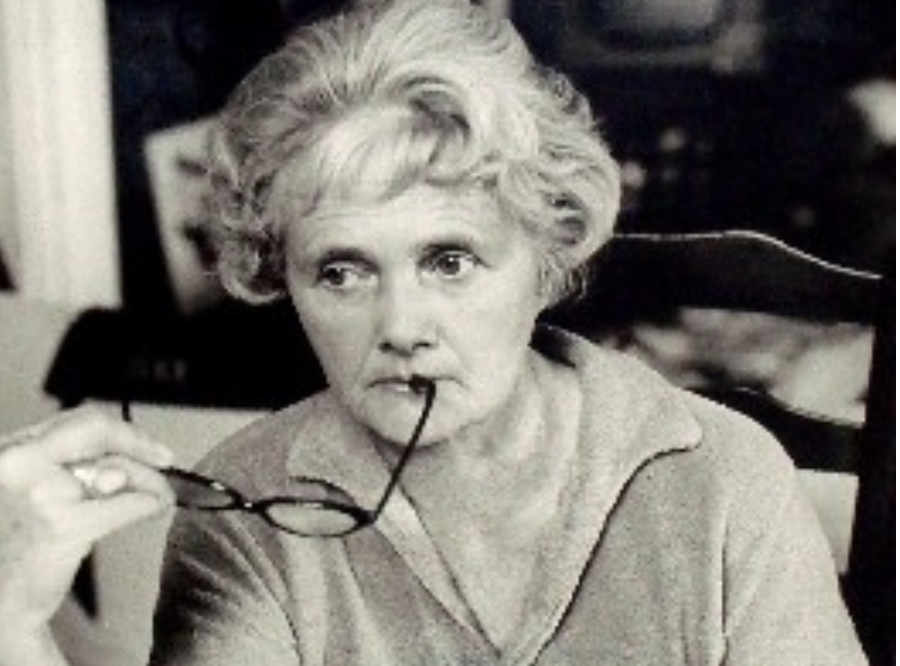
Daphne du Maurier
It’s Halloween month, and thoughts turn to writers skilled at creating scary, spooky, suspenseful fiction.
Those authors who come to mind include Edgar Allan Poe, Stephen King, H.P. Lovecraft, and Shirley Jackson, among others. But what about Daphne du Maurier?
Well…it’s complicated. A number of du Maurier’s novels and short stories indeed have chilling and sinister elements, but some of her books do not. One could say du Maurier was more an author of literary fiction than of Gothic horror fiction, though she of course excelled at both and could effectively combine the two. Let’s take a look at this British author’s stellar writing career after a brief detour into her interesting family lineage.
The 1907-born du Maurier’s mother Muriel was an actress and her father Gerald an actor/stage manager. Daphne’s grandfather George was a cartoonist and writer – including authoring the novel Trilby whose Svengali character had a name that would live on in language as an evil person who manipulates and controls others.
Daphne’s first novel to achieve wide renown was the potboiler Jamaica Inn (1936), which – along with Rebecca (1938) and her story “The Birds” (1952) – would cement the writer’s eerie bona fides by being turned into Alfred Hitchcock movies.
Rebecca is of course du Maurier’s most famous novel – and a classic. As many of you know, it stars the unnamed young bride of Maximilian de Winter, whose first wife (the title character) died under mysterious circumstances in the water bordering their Manderley estate. The book also features creepy housekeeper Mrs. Danvers, who’s intensely loyal to the late Rebecca and threateningly hostile to the new bride.
While the second Mrs. de Winter is initially shy and timid, her eventual turn into a more determined and self-assured person is an example of how du Maurier created a number of strong, feminist women in her fiction.
One of them is Frenchman’s Creek protagonist Dona – a married, upper-class, 17th-century English mother who daringly has an affair with a French pirate and even becomes a pirate herself for a while. In a 1941 novel of adventure and general fiction that’s not in the Gothic horror genre.
Among other du Maurier novels with little or no hint of the spooky and supernatural were 1949’s The Parasites (about an eccentric theater family) and 1954’s Mary Anne (a fictionalized look at du Maurier’s brainy and ambitious great-great grandmother navigating initial poverty and a patriarchal society).
In-between was 1951’s My Cousin Rachel, a mystery/romance with haunting elements.
The author was still going strong in 1969, when her time-travel novel The House on the Strand was published. The way du Maurier moves her protagonist repeatedly from the 20th to 14th century, and the eye-opening experiences he has in the 1300s, make that book one of the cleverer examples of the time-travel genre also explored by H.G. Wells, Mark Twain, Octavia Butler, Diana Gabaldon, Jack Finney, Edward Bellamy, Audrey Niffenegger, and others.
Short stories were a du Maurier strength, too. “The Birds,” of course, but also her later-career 1971 collection featuring “Don’t Look Now” and other memorable tales; a collection I just read for the first time. The “Don’t Look Now” story’s shocking manipulation-of-time conclusion is a wondrous thing to behold.
Among the works by du Maurier – who died in 1989 – that I haven’t read are a few of her other novels as well as her plays and nonfiction.
Any thoughts on this post and du Maurier’s writing?
Misty the cat says: “When that chipmunk writes its memoir, I can narrate the audiobook.”
My comedic 2024 book — the part-factual/part-fictional/not-a-children’s-work Misty the Cat…Unleashed — is described and can be purchased on Amazon in paperback or on Kindle. It’s feline-narrated! (And Amazon reviews are welcome. 🙂 )
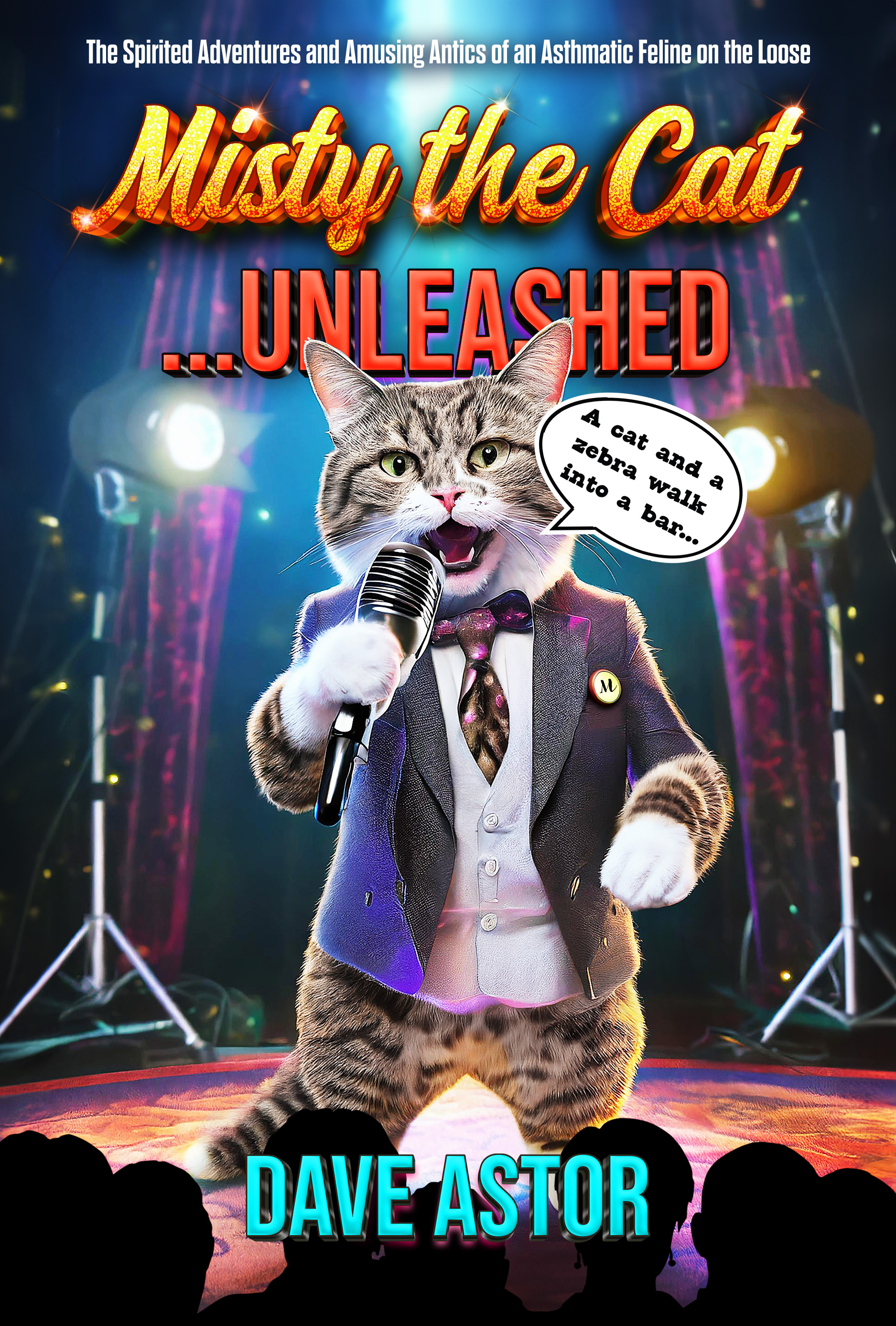
This 90-second promo video for the book features a talking cat: 🙂 (Not my voice. 🙂 )
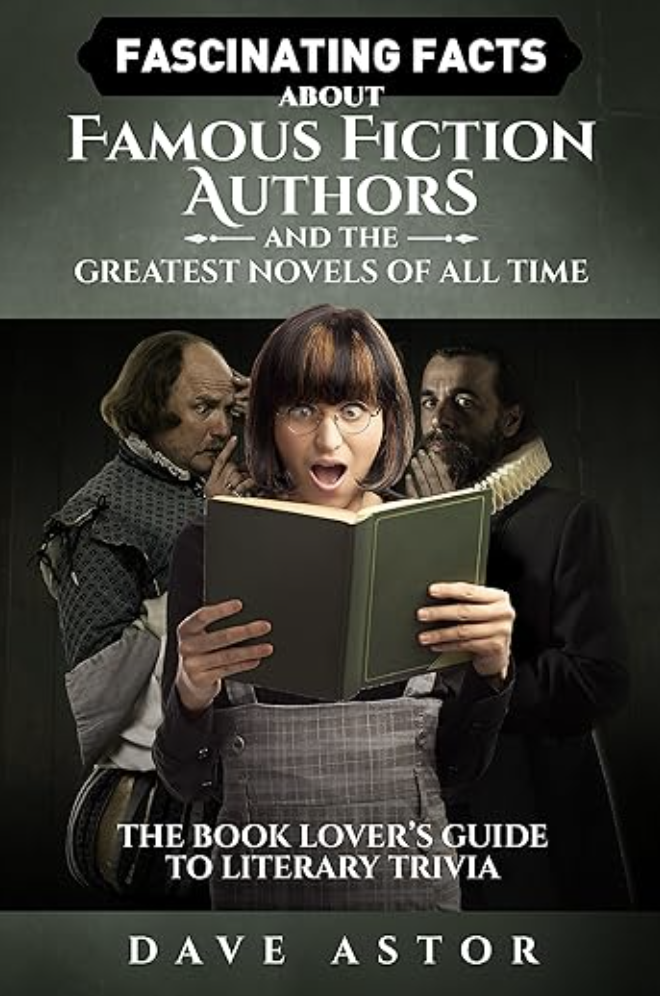
I’m also the author of a 2017 literary-trivia book…
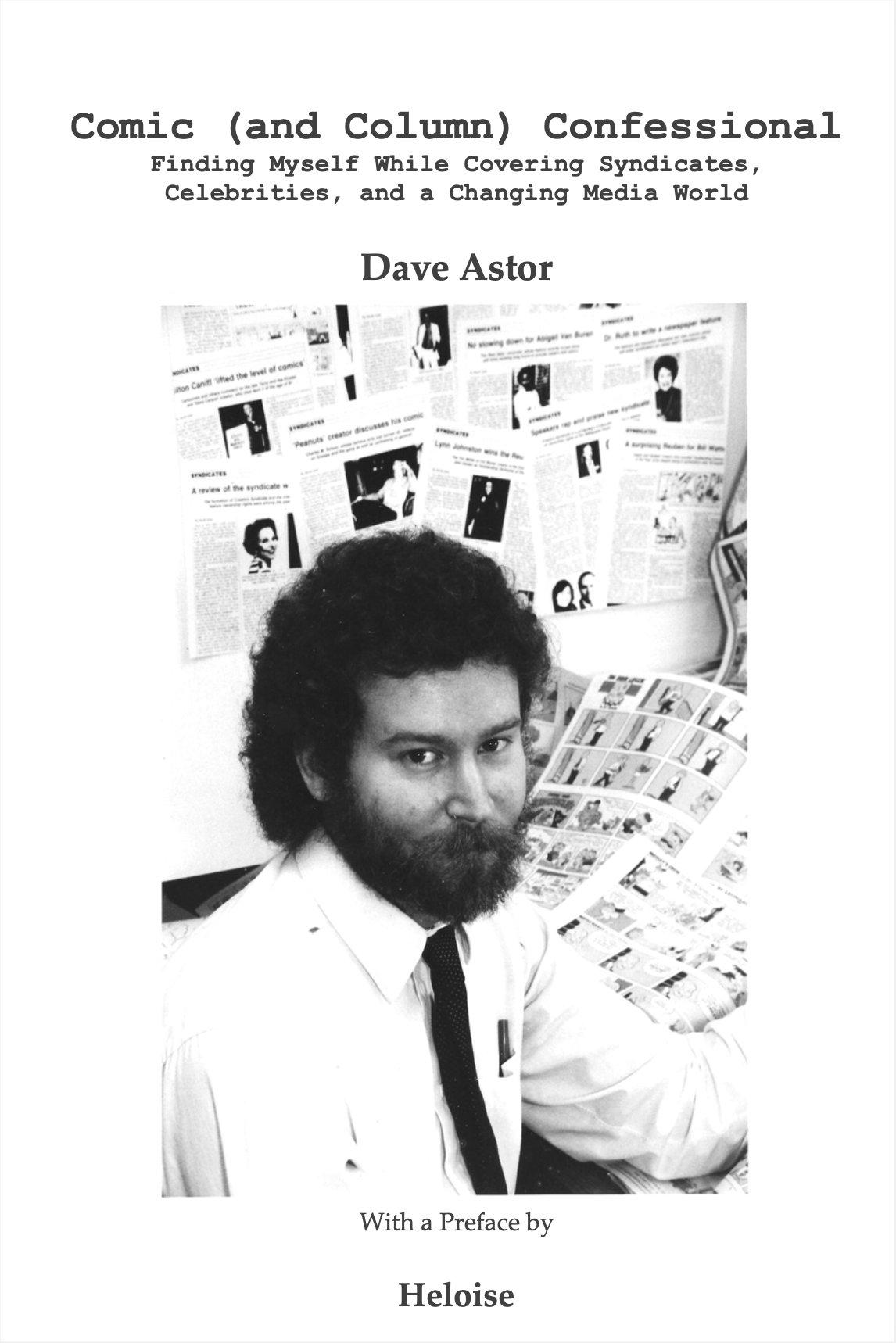
…and a 2012 memoir that focuses on cartooning and more, including many encounters with celebrities.
In addition to this weekly blog, I write the 2003-started/award-winning “Montclairvoyant” topical-humor column every Thursday for Montclair Local. The latest piece – which includes a movie theme — is here.


I like time-travel books, and I never knew Daphne du Maurier wrote one; I’m going to buy it.
I’m a fan of a mystery writer named Nicola Upson whose detective is a fictionalized version of a real person, Josephine Tey, an outstanding mystery writer (and well-known playwright of her day), whose books were written between 1929 and 1952 (I love them all, but I recommend starting with BRAT FARRAR if you want to read one.) Anyway, Upson’s 2023 book SHOT WITH CRIMSON is about Hitchcock’s filming of “Rebecca” and includes a scene or two with a fictional version of a young du Maurier.
LikeLike
Fantastic analysis, Dave.
It’s truly difficult to pigeonhole du Maurier, and that’s precisely what makes her brilliant. She manages to blend literary fiction with an unsettling atmosphere like no one else. The housekeeper, Mrs. Danvers, still gives me the creeps! Thanks a lot!
LikeLiked by 1 person
Thank you, Luisa! Glad you liked the post! Yes, hard to pigeonhole Daphne du Maurier’s fiction, which certainly helped make her a brilliant and interesting writer. Unsettling is a great word to describe some of her work!
LikeLike
Anna Massey’s Mrs Danvers is one of the creepiest film portrayals of creepy housekeepers of all time I think.
LikeLiked by 1 person
Thank you, volatilemuse! I’ve seen Judith Anderson’s creepy portrayal of Mrs. Danvers in the 1940 Hitchcock movie, but hadn’t been aware of the 1979 miniseries until seeing your comment. Just watched a clip that included Anna Massey as Mrs. Danvers; she is indeed great in that role!
LikeLike
Wait! What? How have I missed this… du Maurier also authored a time-travel novel??? The House on the Strand? Oh my gosh. Adding to my list. And I just noticed Darlene’s praise in an earlier comment. So exciting! 💝💝💝
LikeLiked by 1 person
Thank you, Vicki! Yes, sort of out left field for du Maurier, plus the novel had a partly “1960s sensibility” one doesn’t associate with that author. And the way the book’s protagonist went back in time, and the fact that he was in the same place in the past as he lived in his present, was quite fascinating. Hope you enjoy “The House on the Strand”!
LikeLiked by 1 person
Can’t wait to read it! Thanks so much, Dave! ❤️😉❤️
LikeLiked by 1 person
You’re very welcome, Vicki! Let me know what you think of it. 🙂
LikeLiked by 1 person
Will do! ❤️😉❤️
LikeLiked by 1 person
🙂
LikeLike
⭐️⭐️⭐️⭐️⭐️
LikeLiked by 1 person
Thank you, Philip! 🙂
LikeLiked by 1 person
The first book of her’s a read was The House on the Strand and I was hooked. I’ve always loved time travel and that book was so well done. I also read Jamaica Inn, and saw the inn she based the story on when visiting Cornwall.
LikeLiked by 2 people
Thank you, Darlene! “The House on the Strand” is definitely an underrated time-travel classic. I’m also a big fan of that genre. 🙂 Great that you got to see the inspiration for the notorious “Jamaica Inn” inn!
LikeLiked by 2 people
Well, now I want to read all her books. Right now!!
LikeLiked by 1 person
Ha, Liz! 😂 Could be a busy day. 🙂 Thank you for the comment!
LikeLike
One of my favourite authors. I really should read her short stories.
LikeLiked by 1 person
Thank you, Jennifer! Glad you’re a Daphne du Maurier fan. 🙂 I waited too long to read her short stories — they’re quite good!
LikeLiked by 1 person