Yesterday was December 25, so I’m offering Christmas-time song snippets with silly revised lyrics about literature. 🙂
Sung to the tune of “The Twelve Days of Christmas”:
On the first day of Christmas
My book love sent to me
The Thorn Birds in a…trade paperback
Sung to the tune of “I’ll Be Home for Christmas”:
I’ll be Sherlock Holmes for Christmas
Because I have multiple personalities
Please leave clues and booze by the tree
And money to pay my therapy fees
Sung to the tune of “Frosty the Snowman”:
There must have been some magic (realism)
In that Isabel Allende book they found
For when they put it on their sled
They were House of the Spirits-bound
Sung to the tune of “The Christmas Song”:
Chestnuts roasting on an open fire
Herm Hesse nipping at some prose
The Steppenwolf in his character choir
Was not a wolf who hung with Eskimos
Sung to the tune of “Rudolph the Red-Nosed Reindeer”:
Rudolph the red-nosed reindeer
Co-starred in The Red and the Black
And if you ever read it
Stendhal was clearly not a hack
Sung to the tune of “I Saw Mommy Kissing Santa Claus”:
I saw Mommy kissing Outlander book nine
Underneath the mistletoe last night.
She didn’t see me creep
Through time-travel stones so steep
She thought I was watching reruns of Veep
Sung to the tune of “All I Want for Christmas Is My Two Front Teeth”:
All I want for Christmas is Zadie Smith’s White Teeth
Her novel White Teeth…
Sung to the tune of “Hark! The Herald Angels Sing”:
Hark! The Los Angeles Angels sing
Their player Mike Trout has a better swing
Than Vonnegut’s Kilgore Trout…d’oh
And John Grisham’s Calico Joe
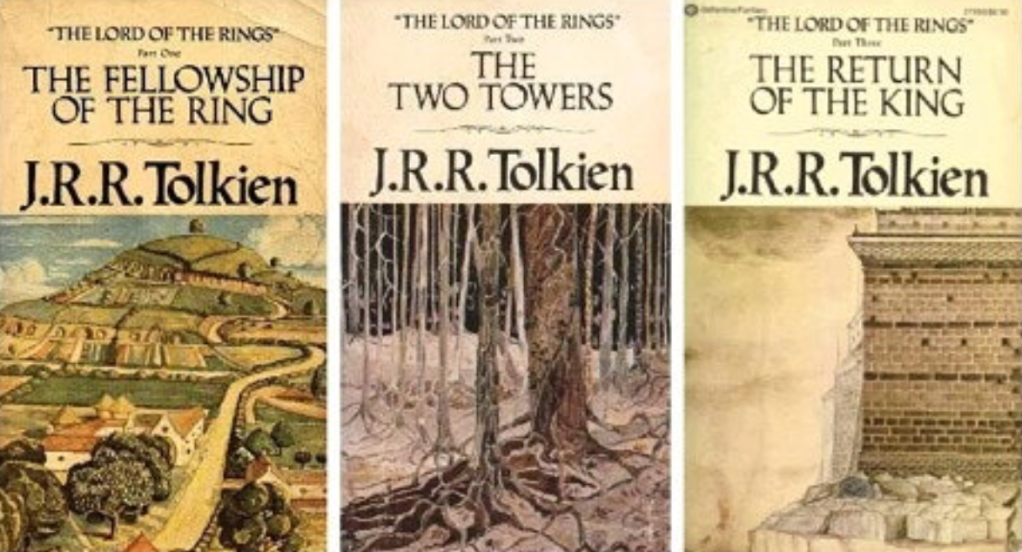
Sung to the tune of “Jingle Bells”:
Dashing through the shelves
In your local library palace
The Lord of the Rings has elves
And hobbits with no malice
Sung to the tune of “Jingle Bell Rock”:
What a bright time, it’s the right time
To read more Reacher novels
Reacher book time, getting hooked time
As in left hook, right hook, villain grovels
Sung to the tune of “It’s the Most Wonderful Time of the Year”:
It’s the most wonderful time of the year
With must-read-book gifts
You shouldn’t drop in snow drifts
Because if you try to retrieve them
Your hands will be The Color Purple, I fear
Sung to the tune of “Have Yourself a Merry Little Christmas”:
Have yourself a merry little Christmas
Let your Middlemarch paperback be light
From now on
The hardcover version’s out of sight
Sung to the tune of “It’s Beginning to Look a Lot Like Christmas”:
It’s beginning to look a lot like Tolstoy
Everywhere you go
There’s war and there’s peace
And a train that didn’t cease
Anna Karenina…NO!
Sung to the tune of “Christmas Wrapping”:
So deck those halls, trim those trees
Raise a cup of Christmas cheer
Just don’t spill it on your Kindle
Dousing To Eternity, From Here
Sung to the tune of “Walking in a Winter Wonderland”:
Later on, we’ll perspire
As we dream of the fires
In Fahrenheit 451
Burning books isn’t fun
Squawking in a quite asunder land
Sung to the tune of “White Christmas”:
I’m dreaming of a Woman in White Christmas
Reading the best book Wilkie Collins would write
May your novels be classic and long
And better than this badly revised song
Sung to the tune of “Santa Claus Is Coming to Town”:
Making a TBR list
And checking it twice,
No one can read enough in their lives
Before The Grim Reaper is coming to town
Sung to the tune of “Happy Xmas (War Is Over)”:
So this is Christmas, and what have you done?
Another year over, a new book just begun…
Any lyrics you’d like to offer? 🙂
My literary-trivia book is described and can be purchased here: Fascinating Facts About Famous Fiction Authors and the Greatest Novels of All Time.
In addition to this weekly blog, I write the 2003-started/award-winning “Montclairvoyant” topical-humor column for Baristanet.com every Thursday. The latest piece — about my town’s new mask mandate and more — is here.