A 1987 photo I took of ‘Peanuts’ cartoonist Charles M. Schulz (1922-2000) on the right, ‘Terry and the Pirates’/’Steve Canyon’ cartoonist Milton Caniff (1907-1988) on the left, and Snoopy.
Today, I’m doing something different in this usually literature-focused blog of mine. 🙂 I was surprised and pleased to see on the Bluesky social-media platform three days ago that my Canadian writer friend Dan St.Yves had re-posted a filmed interview he did with me almost exactly ten years ago, so I decided to re-post it again here instead of going with a more typical lit post.
In that summer of 2015 conversation, we talked about various syndicated cartoonists and columnists I had met and covered while working for Editor & Publisher magazine from 1983 to 2008 — before I started blogging on literature. Among the creators discussed: Charles M. Schulz (“Peanuts”), Jim Davis (“Garfield”), Lynn Johnston (“For Better or for Worse”), Bill Watterson (“Calvin and Hobbes”), Stan Lee (“Spider-Man”), humor columnist Dave Barry, and twin-sister advice columnists Abigail Van Buren (“Dear Abby”) and Ann Landers.
When Dan and I had our conversation, we were in Indianapolis attending the 2015 conference of the National Society of Newspaper Columnists — for which I was a board member from 2009 to 2023.
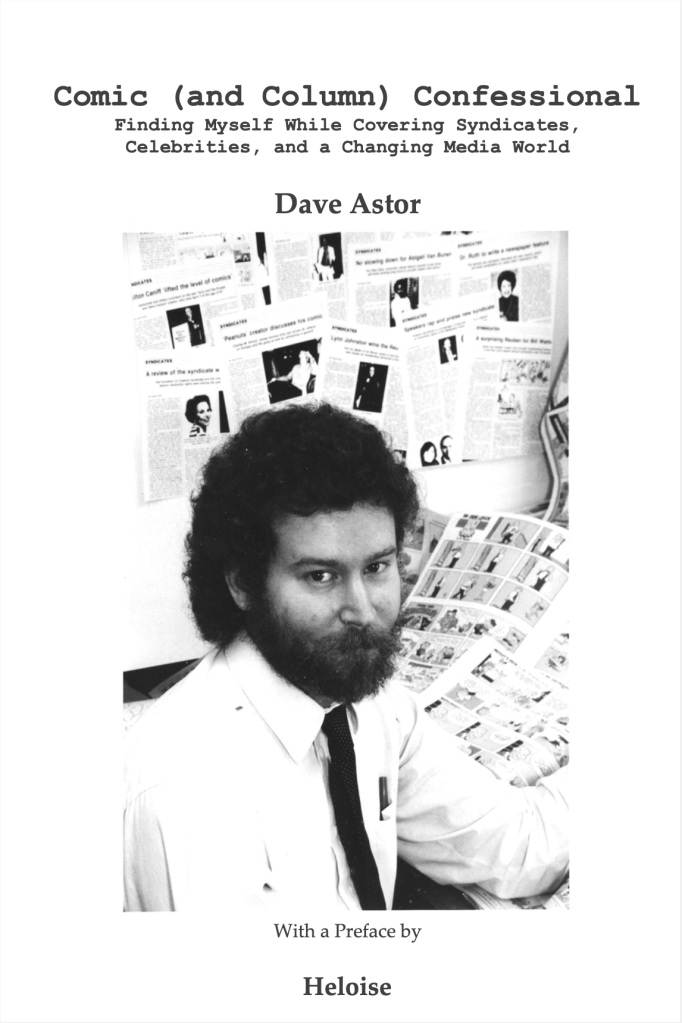
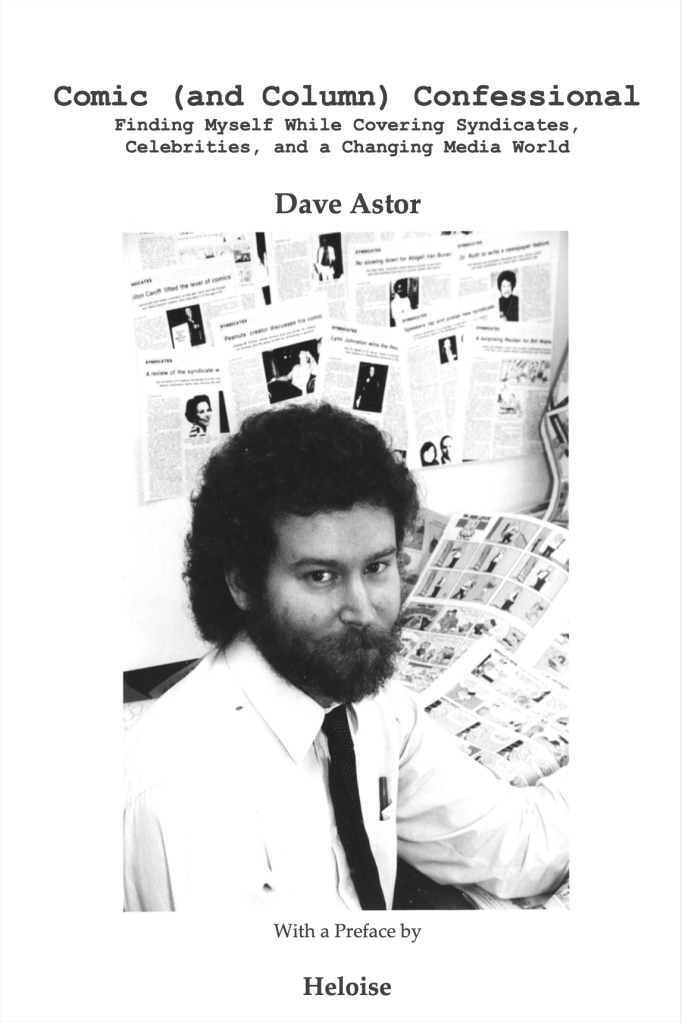
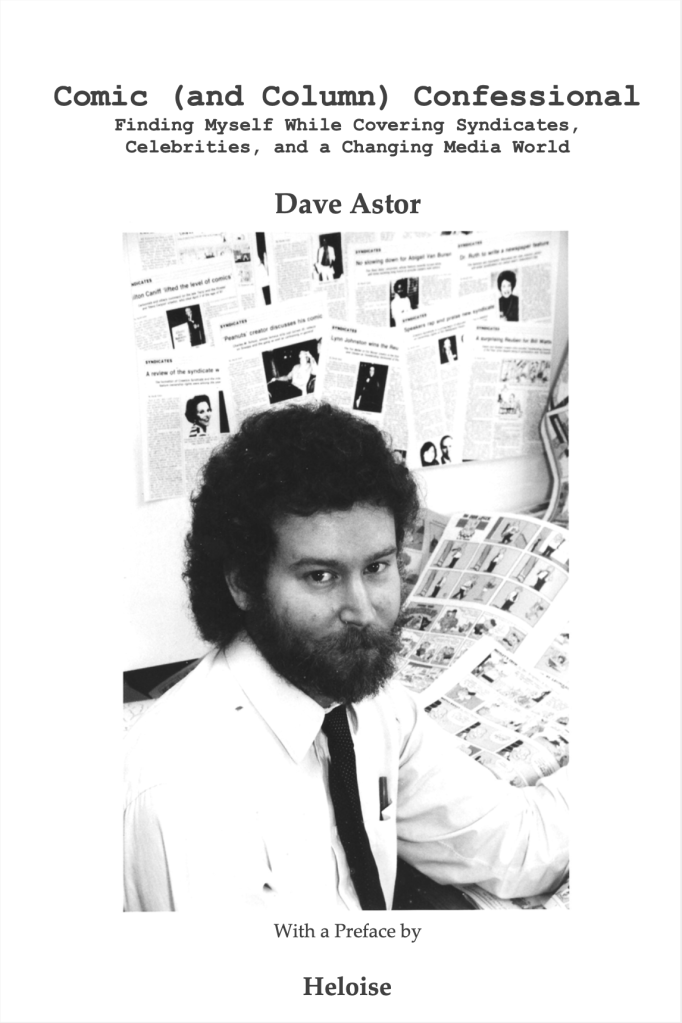
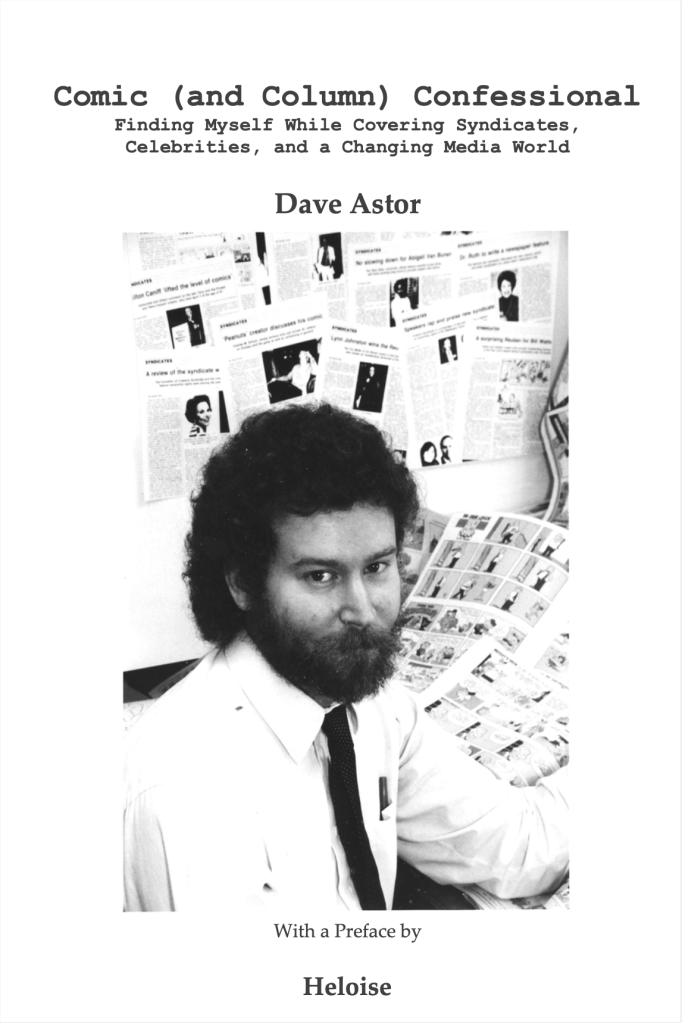
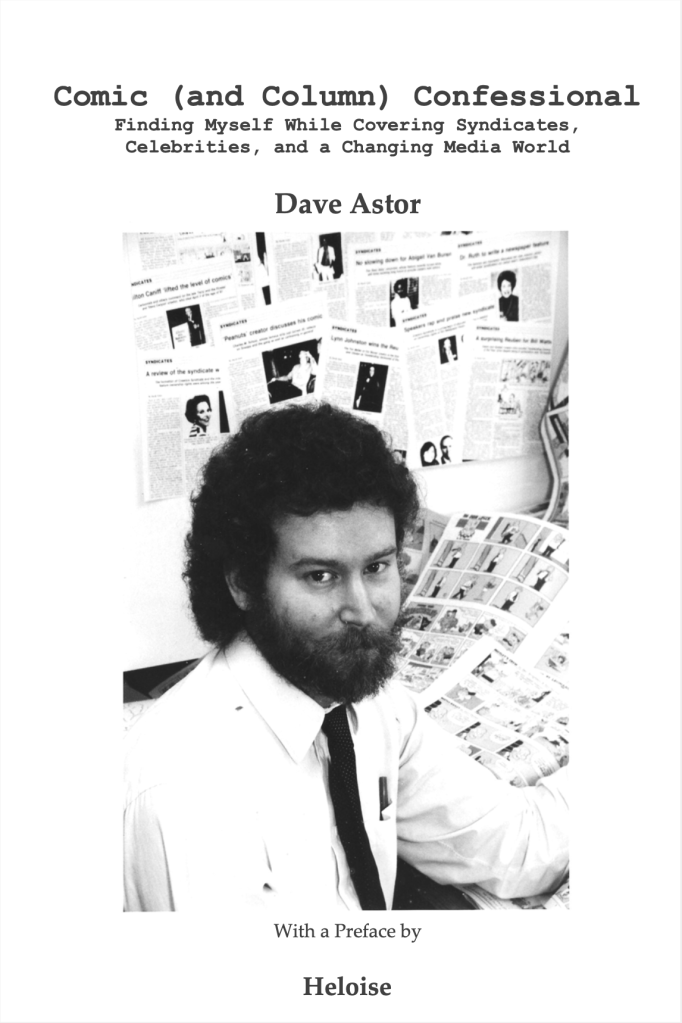
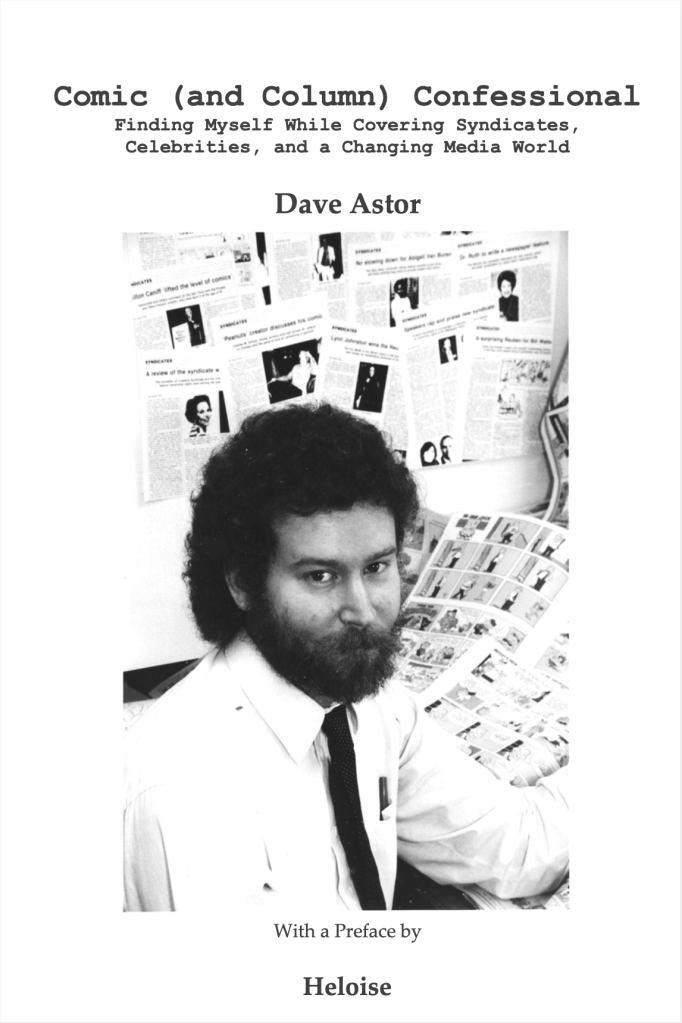
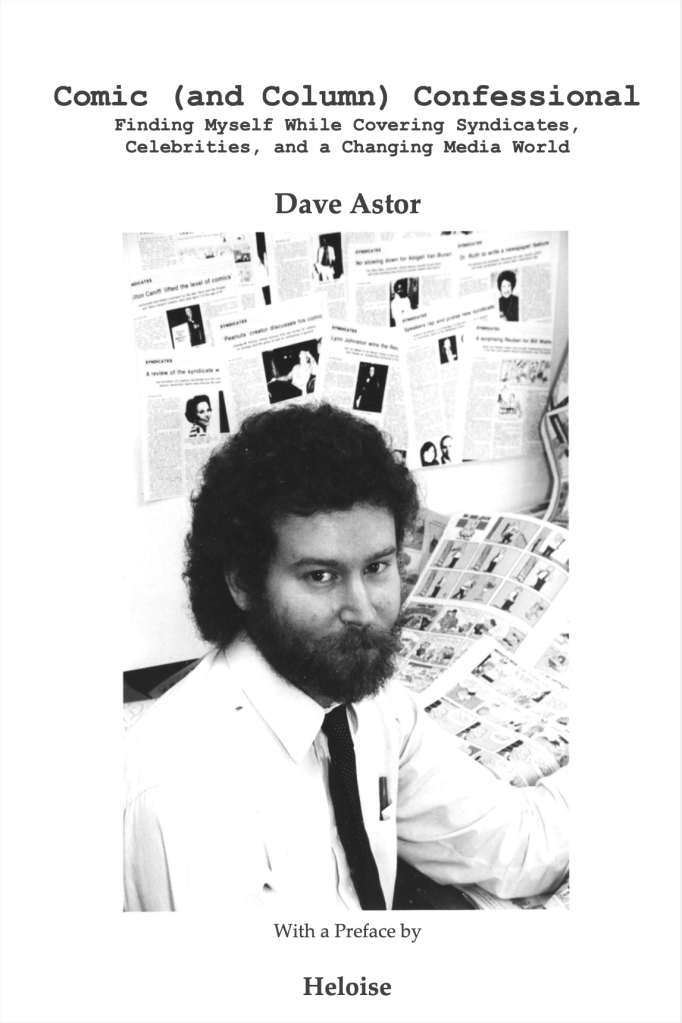
Again, this is not a typical book post for me, although all the cartoonists and columnists mentioned above have seen MANY sales of paperback (and in some cases hardcover) collections featuring their work, and some have written some non-collection books as well. (For instance, Dave Barry has authored and co-authored a number of novels.) Also, the 2012 Comic (and Column) Confessional memoir I wrote about my time at Editor & Publisher comes up during the interview. I could add that Alexandre Dumas wrote an 1845 sequel to his famous 1844 novel The Three Musketeers titled Twenty Years After — twice the length of time since this post’s 2015 video of ten years ago. So, if one read half of Twenty Years After…
Anyway, below is a link to the video, which lasts a bit over 20 minutes. Whether you watch it or not (no obligation!), I’ll be back with a more normal literature post next week. Actually, Misty the cat is soon due for another guest blog effort here to discuss books from his feline perspective, but he’s not sure yet if that will be on August 3 or sometime later in the month. In the meantime, Misty is reading Marcel Proust’s In Search of Lost Treats and hoping for a happy ending.
Misty the cat asks: “Why is there smoke in July when the new Pope was chosen in May?”
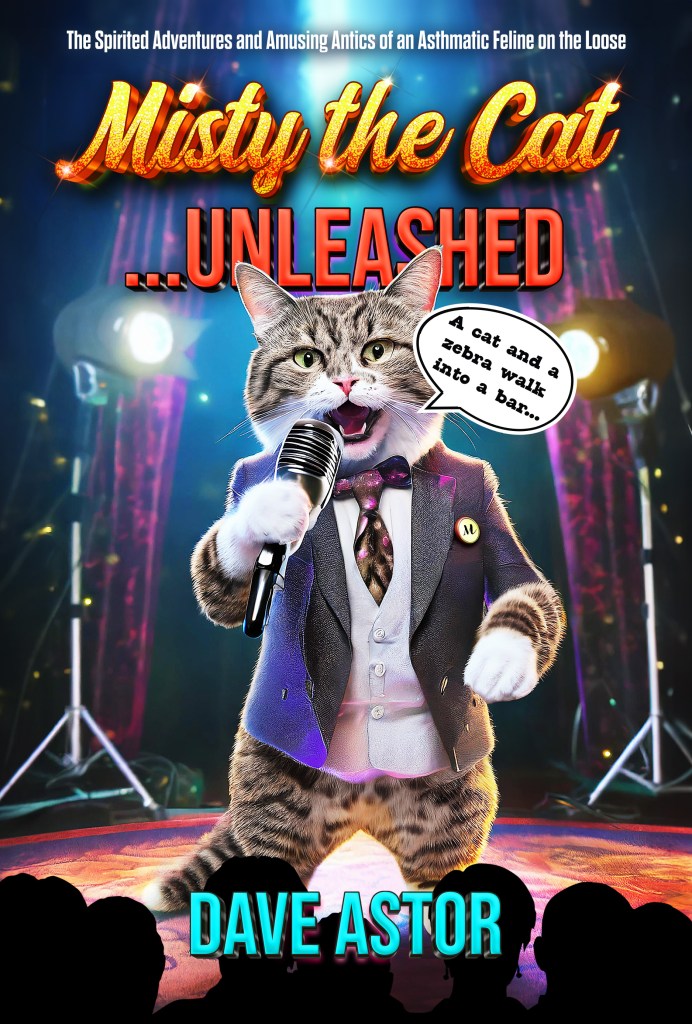
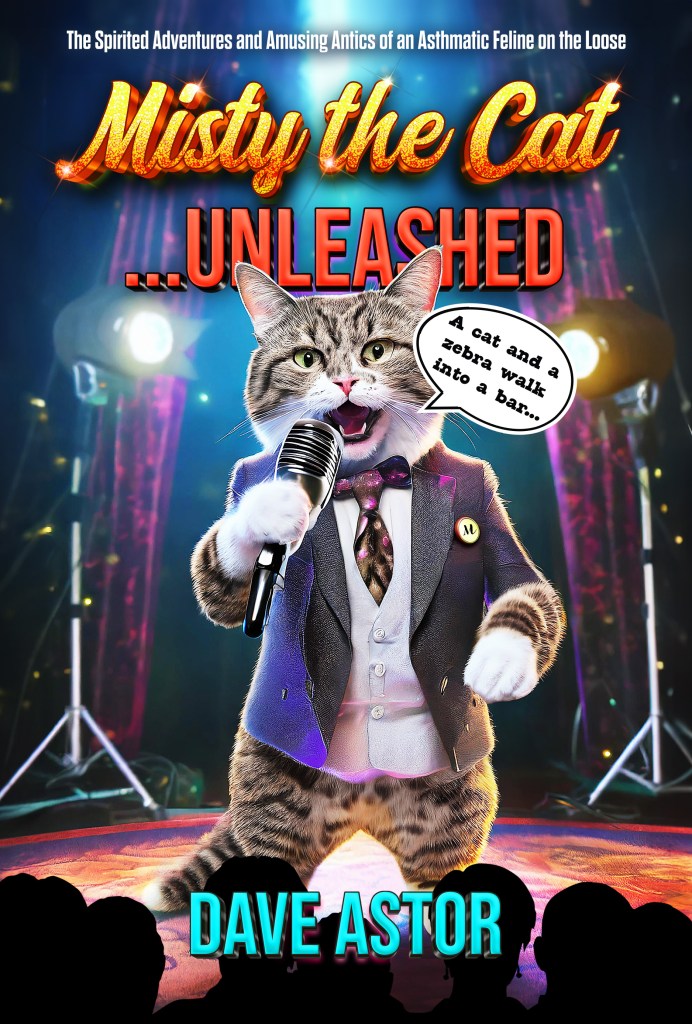
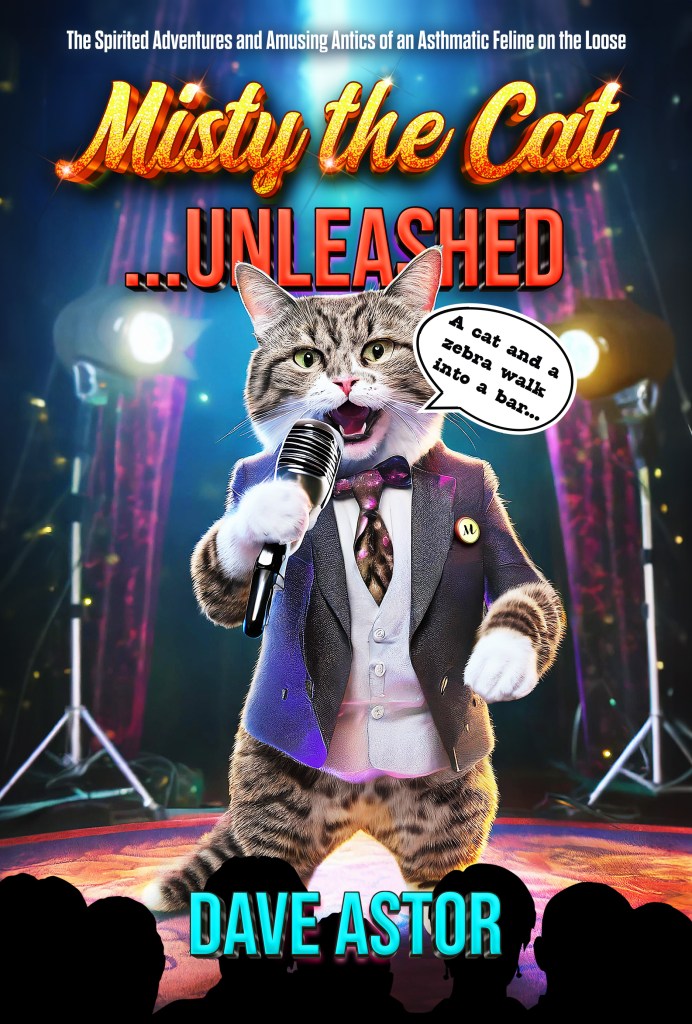
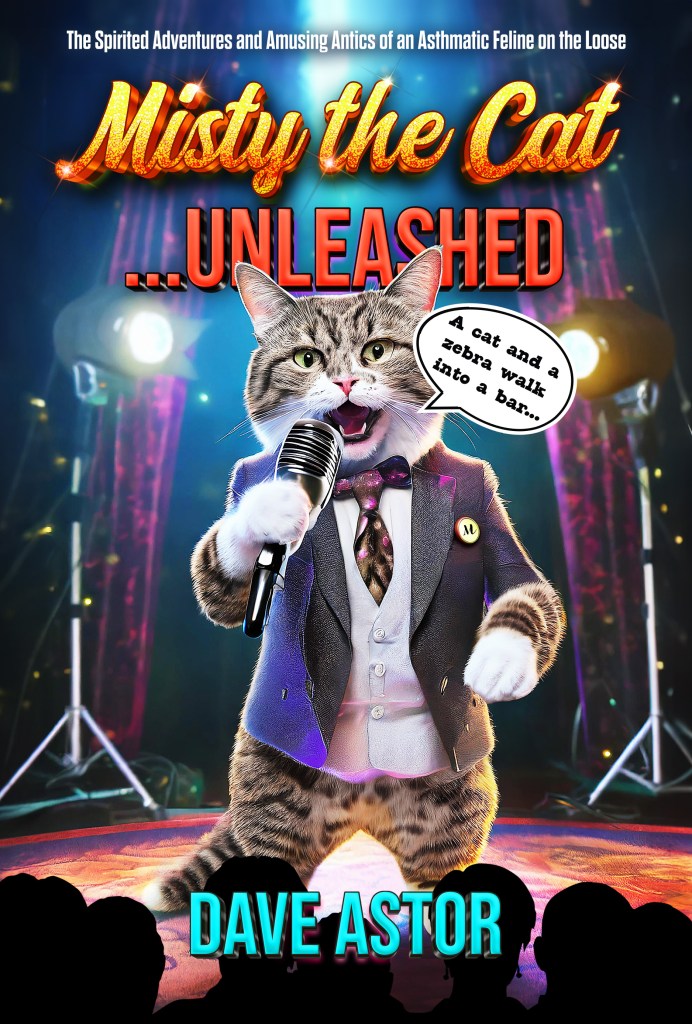
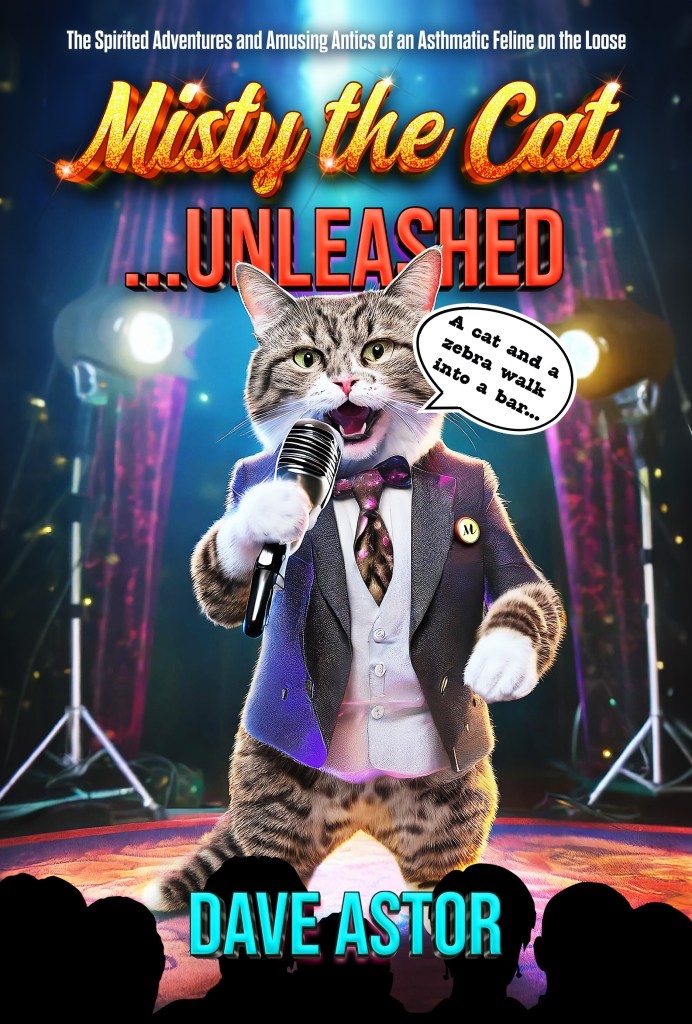
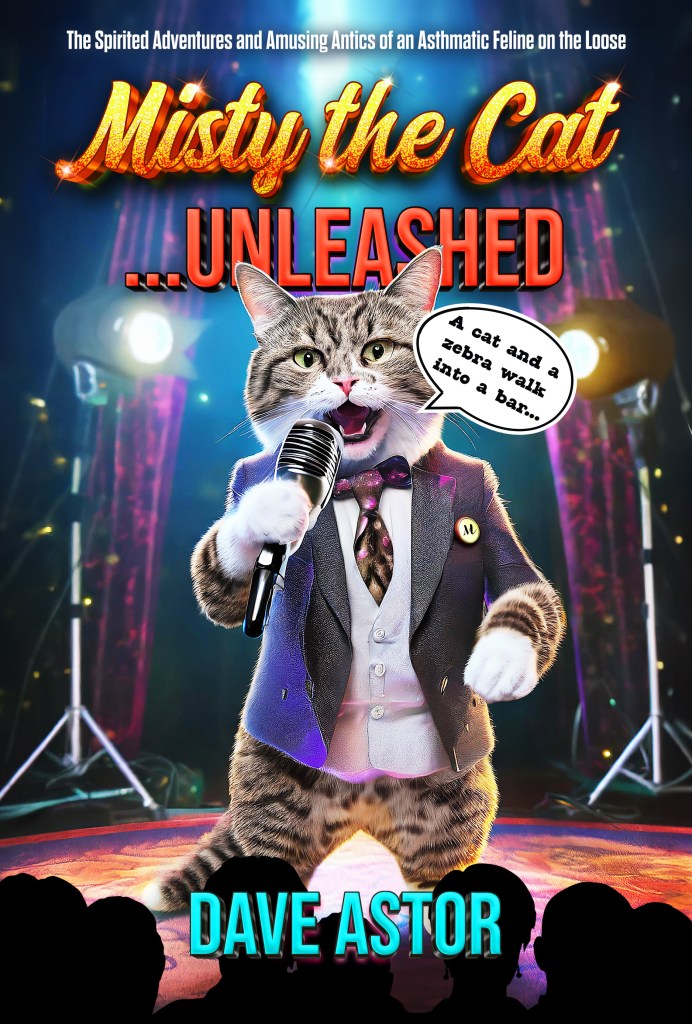
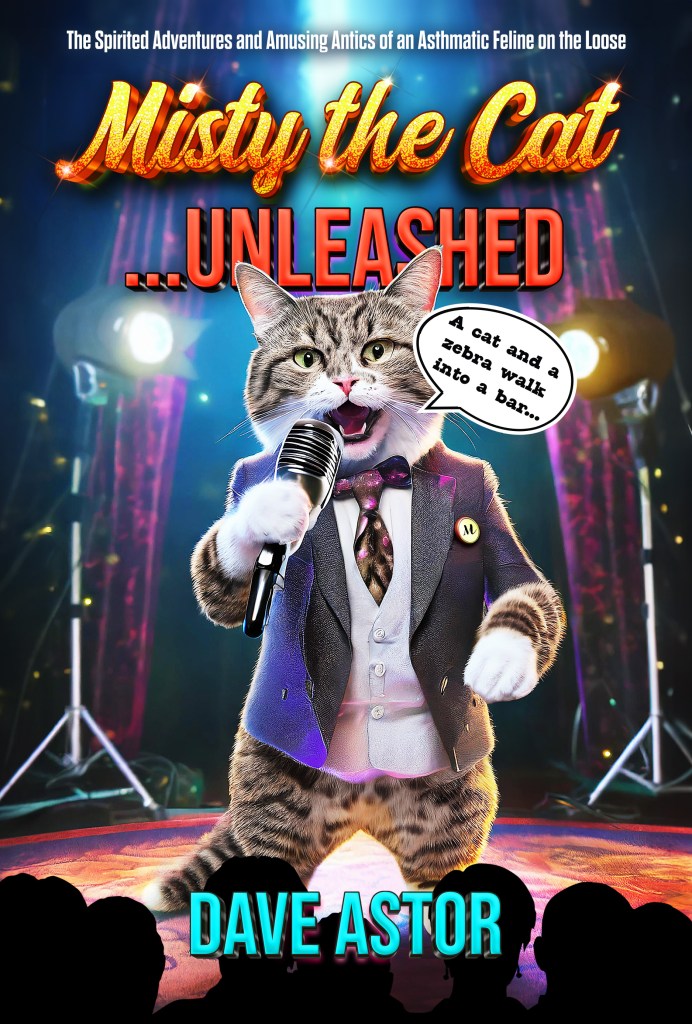
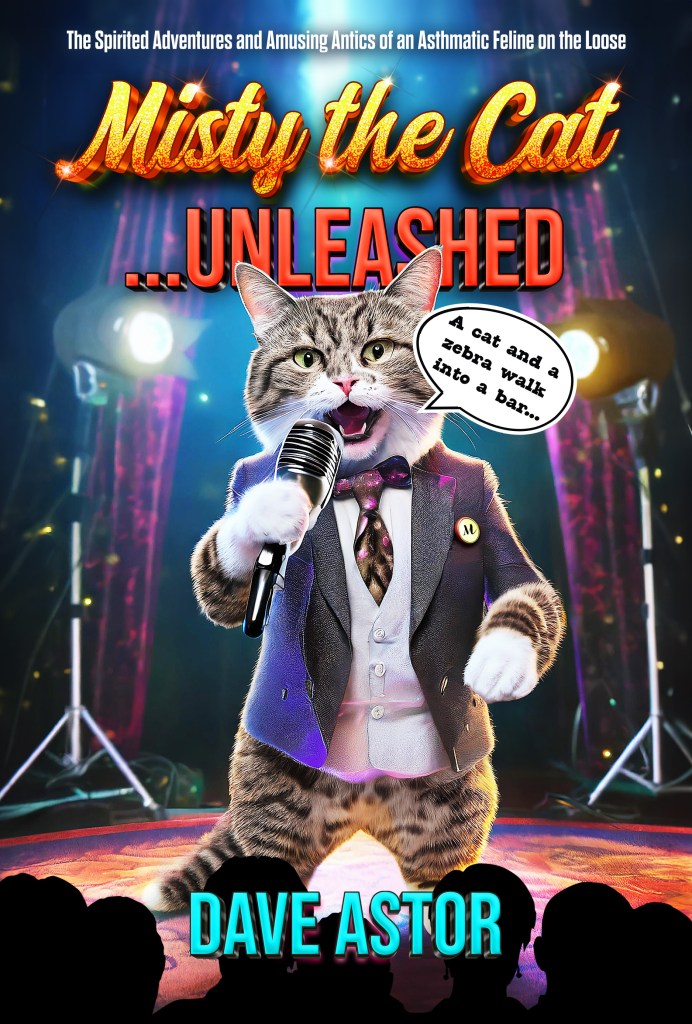
My comedic 2024 book — the part-factual/part-fictional/not-a-children’s-work Misty the Cat…Unleashed — is described and can be purchased on Amazon in paperback or on Kindle. It’s feline-narrated! (And Misty says Amazon reviews are welcome. 🙂 )
This 90-second promo video for my book features a talking cat: 🙂
In addition to this weekly blog, I write the 2003-started/award-winning “Montclairvoyant” topical-humor column every Thursday for Montclair Local. The latest piece — about the cancellation of “The Late Show,” whose host Stephen Colbert is a resident of my town — is here.
Sometimes, novels are semi-autobiographical confessionals and/or expressions of authors’ repressed thoughts and/or a way for them to “work out issues” and/or a way of reckoning with their past and/or an exercise in wish-fulfillment, etc. Sort of self-therapy by book.
I thought about this when recently reading Thomas Mann’s novellas Tonio Kroger (1903) and especially Death in Venice (1912), and seeing that there was a whole lot of male longing for other males by the protagonists. Sure enough, a little online exploring showed that Mann — the father of six with wife Katia — was sexually attracted to men, though there’s no conclusive evidence he acted on that during a more homophobic time. But he sure made his feelings known in some of his writing, as when middle-aged Death in Venice protagonist Gustav von Aschenbach (a famous author…hmm) becomes obsessed with a teen boy he finds very good-looking.
Several years later, in 1918, Willa Cather wrote perhaps her best novel: My Antonia. In it, male protagonist Jim Burden holds Antonia in such high regard that he might well be a stand-in for Cather, who was probably gay. Meaning she could have narrator Jim (i.e. Willa) express some feelings the author might have found more difficult to express if that character were a woman.
While sexual orientation isn’t a subtext (as far as I know) in Mary Shelley’s apocalyptic 1826 novel The Last Man, the author did base the male protagonist Lionel Verney on herself despite the different gender and modeled two other characters — Adrian and Lord Raymond — on her late husband Percy Bysshe Shelley and their late friend Lord Byron, respectively. So, Mary was kind of remembering and analyzing her relationships/interactions with the two famous poets.
Charlotte Bronte’s Villette (1853) also has a semi-autobiographical element: characters Lucy Snowe and Paul Emanuel are partly based on Charlotte and the real-life Constantin Heger, who Charlotte fell in love with (?) while enrolled in the Belgian boarding school run by Heger and his wife Zoe. And the downbeat tone of some of Villette was shaped to a degree by the 1848 and 1849 deaths-before-their-time of Charlotte’s younger novelist sisters Emily and Anne.
The Brontes’ contemporary Charles Dickens used a number of his novels to indirectly work through the childhood trauma that would help shape his social conscience. The future author’s father was sent to a debtors’ prison, and 12-year-old Charles had to leave school to work in a miserable factory to help support his family. Echoes of that can be found in the impoverished young characters Dickens created in David Copperfield (1850), Oliver Twist (1838), The Old Curiosity Shop (1841), and other works.
Amid the compulsive plot of his 1940 novel Native Son, Richard Wright wrestled with such matters as racism (which he experienced plenty of as a Black person) and his complicated feelings about the Communist Party USA (which he joined but later broke from).
Some authors who served in the military and were perhaps wounded in action indirectly worked through that trauma in war novels they would later write. Erich Maria Remarque — in books such as 1929’s All Quiet on the Western Front — is one prominent example of that.
Also, authors’ unrequited “crushes” in real life can provide rather intense fodder for novels, as was the case with Mann in his aforementioned Death in Venice and with Goethe in his The Sorrows of Young Werther (1774).
Thoughts about and examples of this topic?
Misty the cat says: “Halley’s Comet won’t be back until 2061, so you may not see it in this video.”
My comedic 2024 book — the part-factual/part-fictional/not-a-children’s-work Misty the Cat…Unleashed — is described and can be purchased on Amazon in paperback or on Kindle. It’s feline-narrated! (And Misty says Amazon reviews are welcome. 🙂 )
This 90-second promo video for my book features a talking cat: 🙂
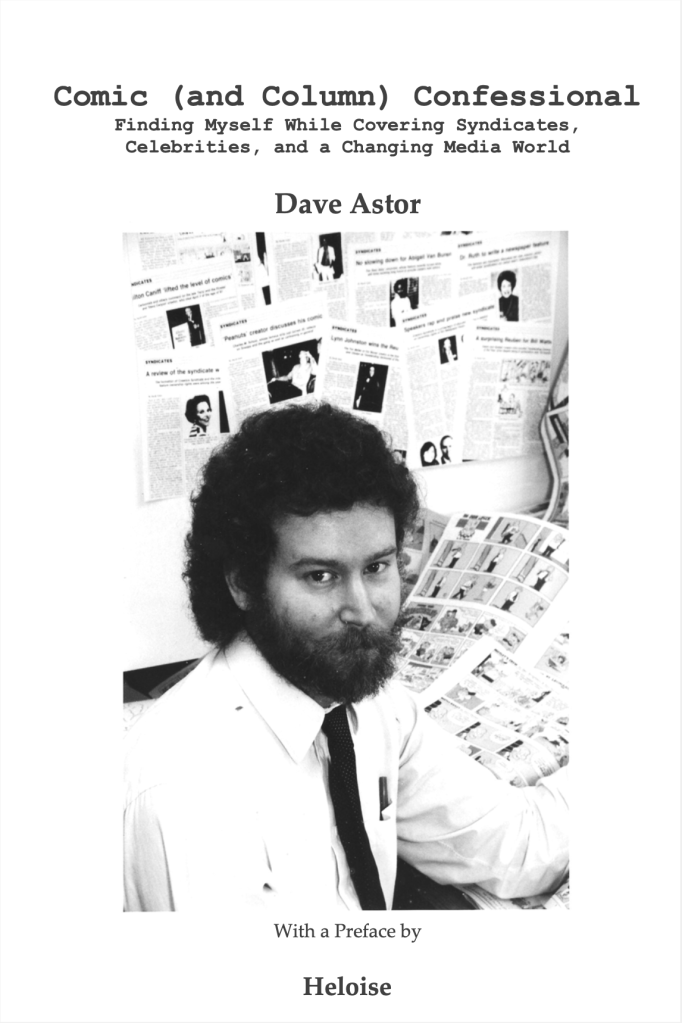
…and a 2012 memoir that focuses on cartooning and more.
In addition to this weekly blog, I write the 2003-started/award-winning “Montclairvoyant” topical-humor column every Thursday for Montclair Local. The latest piece — a time-warped look at a long-closed movie theater that might open again — is here.
Some authors are good at two or more things: novels and short stories, fiction and nonfiction, literary fiction and mass-audience fiction, etc. For this post, I’ll add to that by focusing on authors who are good at series as well as standalone novels. It certainly requires some different writing muscles to wrap up things in one book vs. extending things across multiple books.
This topic occurred to me last week as I read Val McDermid’s A Place of Execution, a superb standalone novel with a concluding twist that will knock your socks off. My previous experience with McDermid was with her series fiction, including the books starring “cold case” detective Karen Pirie.
I followed A Place of Execution with Martin Cruz Smith’s Independence Square — his 10th in the series starring Russian investigator Arkady Renko that began with Gorky Park. (Independence Square was okay; not as good as the earlier Renko books.) Smith has also written standalone novels such as Rose.
Sometimes, authors toggle throughout their careers between standalone books and series — as has been the case with Smith and McDermid as well as authors such as Walter Mosley with his Easy Rawlins books and much more. Other times, authors start with standalone novels before hitting on a hit series and focusing on that — as did Sue Grafton, who wrote two standalones before launching her popular Alphabet Mysteries (25 in all; she reached the letter “Y” before she died).
J.K. Rowling has also written many more series novels than standalone ones: seven Harry Potter books, then The Casual Vacancy one-off, then seven Cormoran Strike/Robin Ellacott crime novels (so far).
L.M. Montgomery followed her classic Anne of Green Gables with seven sequels over the years, during which time she also penned the Emily trilogy and standalones such as The Blue Castle.
Stephen King is known mostly for standalone novels, with a sprinkling of sequels and trilogies, but has also written many books in The Dark Tower series.
Some long-ago authors also toggled. For instance, James Fenimore Cooper wrote the five “Leatherstocking” novels (including The Last of the Mohicans) as well as various standalone books. Alexandre Dumas did both as well — many standalones (most famously The Count of Monte Cristo) as well as The Three Musketeers and its five sequels (sometimes published as fewer sequels when certain books were combined into one edition).
Your thoughts about and examples of this topic?
Misty the cat says: “My fitness tracker better record backward steps.”
My comedic 2024 book — the part-factual/part-fictional/not-a-children’s-work Misty the Cat…Unleashed — is described and can be purchased on Amazon in paperback or on Kindle. It’s feline-narrated! (And Misty says Amazon reviews are welcome. 🙂 )
This 90-second promo video for my book features a talking cat: 🙂
…and a 2012 memoir that focuses on cartooning and more.
In addition to this weekly blog, I write the 2003-started/award-winning “Montclairvoyant” topical-humor column every Thursday for Montclair Local. The latest piece — about a lot of school news during a non-school time — is here.
Zohran Mamdani walking New York City’s streets during his mayoral campaign.
I’ve written about activist authors (in 2014) and courageous characters (last year), but as far as I can recall I’ve never written specifically about activist characters in novels. So, today I will. 🙂
My inspiration for this topic was 33-year-old democratic socialist Zohran Mamdani winning last month’s Democratic primary for New York City mayor — and, thrillingly, the results weren’t even close. If Mamdani also wins the general election this fall he’ll become the youngest NYC mayor in more than a century, the city’s first Muslim mayor, and clearly the most progressive mayor the biggest U.S. city has ever had. Among Mamdani’s November opponents will be current NYC mayor Eric Adams, a cartoonishly corrupt politician who escaped multiple criminal charges by making a sell-out deal with Trump’s ghoulish Republican regime.
At a time of ever-growing economic inequality in NYC and the rest of the country, the charismatic Mamdani ran an energetic grassroots campaign that focused on freezing rents, making buses free, offering universal childcare, raising the inadequate minimum wage, and other pocketbook proposals — all to be paid for by raising the too-low taxes on the very rich.
Much of the very rich, of course, went bananas, and many of them during the primary backed Mamdani’s mayoral opponent Andrew Cuomo — the conservative-leaning former New York governor who resigned in disgrace four years ago after causing thousands of deaths by sending COVID patients into nursing homes and after being credibly accused of sexual harassment by 13 women who worked for the state. Plus, plenty of corruption in his administration. Many of those wealthy Cuomo supporters are now backing the aforementioned Adams, a right-wing Democrat who sat out the June primary and is now running as an “independent.”
Mamdani, who has an activist history, is also the rare American politician who supports equal rights for Palestinians and has publicly decried Israel’s genocide of innocent civilians in Gaza — drawing bogus accusations of anti-Semitism from people who wrongly equate being against Netanyahu’s far-right Israeli government with being anti-Semitic. In fact, Mamdani received many Jewish votes amid many votes from young people, Asian-American residents, etc. Also, Mamdani and Jewish mayoral candidate Brad Lander cross-endorsed each other — something they were able to do under the election’s ranked-choice system.
I should mention that I feel a connection to New York City because I lived in its Bronx, Manhattan, Brooklyn, and Queens boroughs for a total of 16 years and worked in Manhattan for 30 years. My current town of Montclair is 12 miles west of NYC in New Jersey.
Anyway, on to some inspiring activist characters in literature!
There’s lapsed preacher Jim Casy, one of the memorable supporting players in John Steinbeck’s The Grapes of Wrath (1939). Casy tries to organize migrant workers after he tags along with the Joad family to California, where conditions for financially struggling newcomers are appalling.
Kristin Hannah’s The Four Winds was clearly inspired by The Grapes of Wrath, though that 2021 novel is original in many ways. It tracks the radicalization of Elsa Wolcott, who’s part of a cast that also includes union organizer Jack Valen.
Kate Quinn’s The Rose Code (also 2021) focuses on a memorable trio of female British code breakers during World War II.
Another compelling historical novel is Leon Uris’ Mila 18 (1961), about the desperate Warsaw Ghetto uprising against the Nazis.
And Julia Alvarez’s In the Time of the Butterflies (1994) features the part-fictionalized sisters who opposed the regime of brutal Dominican Republic dictator Trujillo.
Richard Wright’s Native Son (1940) has a supporting cast that includes radical lawyer Boris Max, who represents protagonist Bigger Thomas.
Margaret Atwood’s The Testaments — the 2019 sequel to The Handmaid’s Tale (1985) — includes the Daisy character (birth name: Nicole) who infiltrates the repressive, patriarchal society of Gilead.
In Barbara Kingsolver’s Flight Behavior (2012), Dellarobbia Turnbow is an initially apolitical young farmer’s wife who joins the fight against climate change.
Then there’s the against-the-odds activism in these two classics: Upton Sinclair’s The Jungle (1906) and George Orwell’s Nineteen Eighty-Four (1949).
While activism occasionally succeeds, many other times it doesn’t — given the formidable/well-funded forces on the other side: powerful politicians, heavily armed military and police, giant corporations trying to increase their already-huge profits, bend-the-knee mainstream media outlets, etc. In fact, some of the fictional characters I mentioned in this post ended up being killed, making for riveting reading but very depressing reading.
Examples of activist characters in novels? Thoughts on this topic?
Misty the cat says: “When I groom myself near a window, it’s ‘A Groom with a View.'”
My comedic 2024 book — the part-factual/part-fictional/not-a-children’s-work Misty the Cat…Unleashed — is described and can be purchased on Amazon in paperback or on Kindle. It’s feline-narrated! (And Misty says Amazon reviews are welcome. 🙂 )
This 90-second promo video for my book features a talking cat: 🙂
…and a 2012 memoir that focuses on cartooning and more.
In addition to this weekly blog, I write the 2003-started/award-winning “Montclairvoyant” topical-humor column every Thursday for Montclair Local. The latest piece — about my younger daughter’s June 26 high school graduation (again), a Township Council meeting, and more — is here.
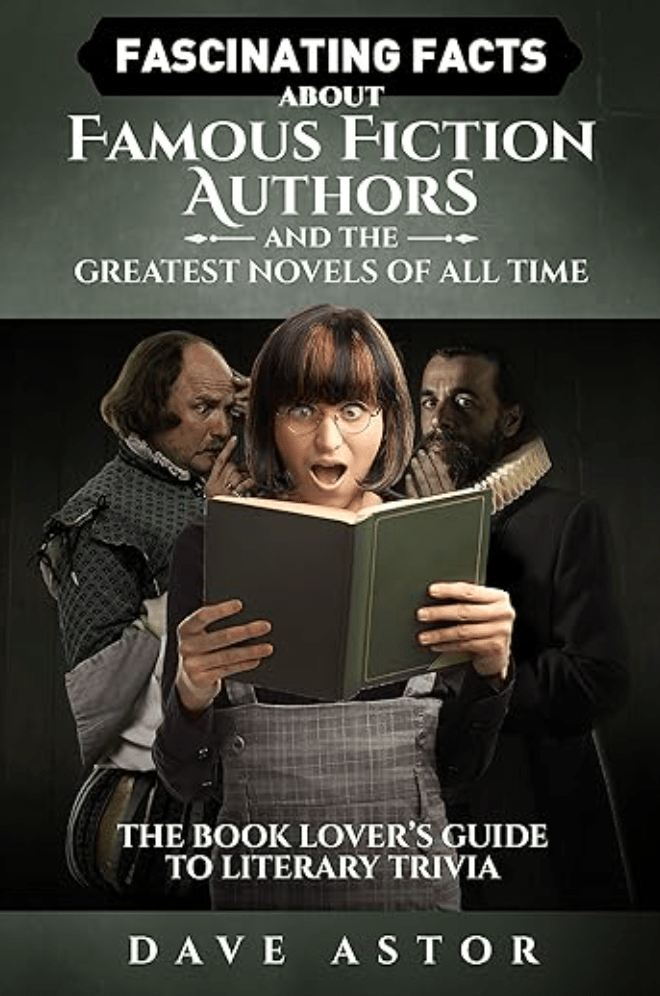
Once in a while we’re surprised to read a not-great book by a great novelist.
My latest experience with this: Here One Moment by Liane Moriarty. The Australian writer is one of my favorite living authors (along with Margaret Atwood, Lee Child, John Grisham, Kristin Hannah, Elin Hilderbrand, Barbara Kingsolver, Val McDermid, Walter Mosley, Kate Quinn, and J.K. Rowling, to name a few). I loved Moriarty’s Big Little Lies, Nine Perfect Strangers, Apples Never Fall, The Husband’s Secret, and The Hypnotist’s Love Story — all A+ or A novels “in my book.” 🙂 Then came 2024’s Here One Moment, which I finished a few days ago.
Or, rather, struggled to finish. Here One Moment features an off-putting premise — a woman having a “mental episode” walks down the aisle of a packed in-flight plane telling passengers and crew members when and how they’re going to die. (Among the recipients of these unwanted predictions are children and 20-something adults informed that their lives will end in a few months or a few years — especially alarming news for young people.) Then, as the novel goes on, some of the seeming prophecies start to come true.
Another reason I wasn’t a huge fan of Here One Moment is that it jumps around to focus on quite a few characters, so it’s hard to get invested in them. Ambitious fiction, but scattered fiction. The only person who gets the full treatment is the supposed psychic, who has had a difficult life. So this repressed, not particularly likable woman is “humanized” more than the rest of the book’s cast.
Still, Here One Moment is very well-written, has some compelling sections, offers a “live life to the fullest because you never know when it might end” message, and does get better as it goes on. Also, I have to give some props to Moriarty for coming up with such a wild story line.
Despite the negatives, I’ll read the next Moriarty book when it’s published. No author writes a masterpiece each time; inspiration can come and go, life events can interfere, etc. And I should add that other readers might of course have different feelings about a novel; Here One Moment has a pretty high average of 4.3 stars (out of 5) on Amazon. Some of the 1- and 2-star reviewers who didn’t like the book sounded rather incredulous about all the positive ratings. 🙂
As I’ve mentioned in a couple of years-ago posts, there are other examples of past and present authors I love who’ve written what I consider not-great novels. Among them (with their disappointing books in parentheses) are Willa Cather (Sapphira and the Slave Girl), Wilkie Collins (A Rogue’s Life), James Fenimore Cooper (The Spy), the aforementioned John Grisham (Skipping Christmas), Stephen King (Cell), Jack London (A Daughter of the Snows), Carson McCullers (The Member of the Wedding), Herman Melville (Mardi), Richard Russo (Chances Are…), Erich Maria Remarque (Shadows in Paradise), Martin Cruz Smith (The Siberian Dilemma), and Edith Wharton (The Touchstone).
Sometimes the misfire is a debut novel as the author is trying to gain their creative footing. Sometimes it’s a final novel when the author is in ill health or perhaps low on ideas. Sometimes a disappointing novel happens in mid-career. And, again, people might differ and be fans of books others don’t like so much.
Any novels, written by favorite authors, that you weren’t thrilled about?
Misty the cat says: “The 5th Dimension sang ‘let the sunshine in’ in 1969, and it’s still here!”
My comedic 2024 book — the part-factual/part-fictional/not-a-children’s-work Misty the Cat…Unleashed — is described and can be purchased on Amazon in paperback or on Kindle. It’s feline-narrated! (And Misty says Amazon reviews are welcome. 🙂 )
This 90-second promo video for my book features a talking cat: 🙂
…and a 2012 memoir that focuses on cartooning and more.
In addition to this weekly blog, I write the 2003-started/award-winning “Montclairvoyant” topical-humor column every Thursday for Montclair Local. The latest piece — about my younger daughter’s June 26 high school graduation and more — is here.
Inside my local library in Montclair, New Jersey. (Photo by me.)
You know you’re a book addict when…
…despite a broken big toe, you make a hobbling visit to the library to borrow a new bunch of novels. (Which I did on June 13.)
…you read while waiting in line (at a store, the post office, etc.) even though you might be also holding something else (a purchase, a package, etc.).
…you uncomfortably grasp a large hardcover to read while on an exercise bike.
…you read even if you’re in a room with poor lighting.
…you read while a passenger in a car even though that makes you feel kind of sick.
…you bring a novel to a doctor’s appointment and are almost disappointed on the rare occasion when you’re summoned from the waiting room on time.
…you try to read in an eye doctor’s waiting room after your pupils have been dilated.
…you read almost as much as you usually do despite an eye infection. (Happened to me last year.)
…you read a novel while watching something on YouTube even though splitting one’s attention in half is not wise, so you only do this for a little while.
…you know the year of birth for many novelists.
…you know the year of death for many novelists. (I don’t think this includes living authors, but I’ll ask the supposed psychic in Liane Moriarty’s Here One Moment novel. 🙂 )
…your brain practically breaks when you’re forced to reduce your book collection by two-thirds because of moving from a house to an apartment. (As I did in 2014.)
…you’re upset when a screen adaptation doesn’t do a novel justice.
…you exult when a screen adaptation DOES do a novel justice.
…you’re chagrined on the rare occasion when a screen adaptation is better than the book(s) it’s based on.
…you continue reading a compelling novel late at night even though you’re tired and should go to sleep.
…you delay posting on your literature blog for an hour or two because you’re so engrossed in a book.
Any additions or comments? 🙂
Last-minute postscript, after last night’s disgusting/dangerous/unprovoked bombing of Iran by the United States: You know you’re a book addict when you wish Trump and the officials in his administration were also avid novel readers — which would perhaps give them a bit more empathy, decency, common sense, and historical knowledge. Actually, perhaps not. 😦
Misty the cat says: “I’ve used an inhaler since 2018, a year after asthma was invented.”
My comedic 2024 book — the part-factual/part-fictional/not-a-children’s-work Misty the Cat…Unleashed — is described and can be purchased on Amazon in paperback or on Kindle. It’s feline-narrated! (And Misty says Amazon reviews are welcome. 🙂 )
This 90-second promo video for my book features a talking cat: 🙂
…and a 2012 memoir that focuses on cartooning and more.
In addition to this weekly blog, I write the 2003-started/award-winning “Montclairvoyant” topical-humor column every Thursday for Montclair Local. The latest piece — which includes an election postmortem, discussion of a large local “No Kings” protest against the Trump regime, and more — is here.
It feels like a dystopian time as we witness the dictatorial Trump regime’s multiple vile actions, Israel’s unprovoked attack on Iran (probably with U.S. approval and U.S. weapons), Israel’s 20-month genocidal war (again with U.S. backing) on innocent Gazan civilians after the horrors of October 7, Russia’s continuing war on Ukraine, yesterday’s assassination of a liberal Minnesota politician by a right-winger, the existential threat of climate change, and more.
Trump this month of course sent over-the-top military force into Los Angeles against the wishes of California’s governor (despite Republicans often blathering about “states’ rights”) to crack down on a small, mostly peaceful resistance to his administration’s brutal roundup of people of color — whether they’re undocumented immigrants, documented immigrants, or longtime American citizens. Which has broken up families, and served as another test for Trump to see how far he can install his Republican brand of fascism. U.S. Sen. Alex Padilla, a California Democrat who’s the son of Mexican immigrants, was even thrown to the ground and handcuffed by agents for trying to ask a question of Homeland Security secretary Kristi Noem, the Trump cabinet member best known for heartlessly shooting her 14-month-old dog. Then came yesterday’s grotesque (and grossly expensive) military parade in Washington, DC, that was held partly to “celebrate” the cruel Trump’s birthday. A parade, by the way, that drew many fewer spectators than Trump wanted — though his constantly lying administration is already inflating the numbers.
All quite convenient for distracting Americans from things like Trump’s support of a Republican congressional tax bill that would mostly benefit the already wealthy and tech billionaire Elon Musk’s recent post on X (formerly Twitter) saying Trump is in the Epstein files for repugnant past pedophile behavior with underage girls.
Anyway, my thoughts in our ultra-depressing era naturally turned to dystopian fiction and a desire to do a post about that genre — which can also include apocalyptic novels. But there was the nagging recollection that I had focused on dystopian literature before, and, sure enough, a search turned up a piece by me for The Huffington Post book section way back in 2012 — two years before starting this WordPress blog. So, I decided to post a revised/updated version of that 13-year-old piece today. Here goes:
War. Death. Despair. Oppression. Environmental ruin. Yup, when it comes to demoralizing literature, dystopian literature is a downer of downers. Yet some of us find that genre soberly appealing. Why?
For one thing, we read about rather than live through dystopian lit’s fictional bad stuff — though real life is plenty negative now (as this post has noted) and fictional bad stuff is often an extrapolation of a troubled actual world. Still, many 2025 readers are not as much “in the arena” as the beleaguered characters in Suzanne Collins’ dystopian The Hunger Games.
And there’s a certain “rightness” in reading about a harrowing society. Why? Because we know that politicians, military leaders, and corporate moguls are capable of doing awful things — meaning dystopian novels feel kind of honest.
In addition to The Hunger Games, excellent dystopian/semi-dystopian novels filled with carnage, inhumanity, hopelessness, and more include (among others) Aldous Huxley’s Brave New World, George Orwell’s 1984, H.G. Wells’ The Time Machine, Mary Shelley’s The Last Man, Stephen King’s The Stand, Octavia E. Butler’s Parable of the Sower, (Ms.) Lionel Shriver’s The Mandibles, Lois Lowry’s The Giver, Cormac McCarthy’s The Road, Ray Bradbury’s Fahrenheit 451, Anthony Burgess’ A Clockwork Orange, William Golding’s Lord of the Flies, Sinclair Lewis’ It Can’t Happen Here, Kazuo Ishiguro’s Never Let Me Go, Albert Camus’ The Plague, Franz Kafka’s The Trial, Nevil Shute’s On the Beach, Kurt Vonnegut’s Slaughterhouse-Five, Jack London’s The Iron Heel, and Margaret Atwood’s The Handmaid’s Tale, The Testaments, Oryx and Crake, The Year of the Flood, and MaddAddam.
The above books of course take different approaches — some very dramatic, others understated, some set in the near future, others in the distant future, etc., etc.
Sometimes, authors of dystopian literature temporarily ease the tension a bit with humor, as Atwood does with the clever genetic-engineering terms she coined for Oryx and Crake. And dystopian books can have seemingly utopian elements — with things appearing not too bad even though they ARE bad; Brave New World is a perfect example. There are even novels, such as H.G. Wells’ The Shape of Things to Come, that mix dystopian and utopian elements.
We admire the best dystopian novels because they’re written well and depict people with whom we can relate. We can be fascinated by the terrible things those characters face, and by how some react bravely and some react cowardly or with resignation. We, as readers, have a hard time averting our eyes from the misery even as we’re enraged by what despots and other vicious officials are doing to citizens. And we’re compelled to turn the pages as we wonder if rebels and other members of the populace can somehow remake a wretched society into something more positive. We also wonder who will survive and who won’t.
Last but not least, some of us might admire dystopian fiction because, by giving us worst-case scenarios of the future, we have a smidgen of (in vain?) hope that our current society can be jolted enough to avoid those scenarios starting or continuing in real life. Like some of the characters in dystopian novels, we might feel a little halting, against-all-odds optimism — such as that inspired by yesterday’s 2,000 or so anti-Trump-regime “No Kings” protests attended by millions of Americans in all 50 states, the resistance of politicians such as Bernie Sanders and Alexandria Ocasio-Cortez, the resistance of institutions such as Harvard University, the holding to a belief in the rule of law by some judges (including a percentage of those appointed by Trump), and so on. But it’s a difficult fight against very powerful forces.
All that said, I don’t blame anyone for preferring escapist fiction during a time like this. I’ve upped my quota of those kinds of books myself, while making sure to still read some weightier literature.
Any favorite dystopian novels? Why do you like or not like that genre? Thoughts about the current situation in the world?
Misty the U.S. cat: “I nap in the morning near an Australian novel because it’s night in Australia.”
My comedic 2024 book — the part-factual/part-fictional/not-a-children’s-work Misty the Cat…Unleashed — is described and can be purchased on Amazon in paperback or on Kindle. It’s feline-narrated! (And Misty says Amazon reviews are welcome. 🙂 )
This 90-second promo video for my book features a talking cat: 🙂
…and a 2012 memoir that focuses on cartooning and more.
In addition to this weekly blog, I write the 2003-started/award-winning “Montclairvoyant” topical-humor column every Thursday for Montclair Local. The latest piece — containing election results, news about smartphones in classrooms, and more — is here.
“Perhaps I should wake up and write a blog post,” says Misty. (Photo by Maria.)
I, Misty the cat, guest-blog for Dave every two months. I last did this on April 13 and today is June 8, so that’s…hmm…actually not quite two months. Reminds me of when Dave returned some novels to the library five days before their due date, and the indignant book drop expelled said novels with such force that they traveled back in time and landed on the heads of the three Karamazov brothers. Fortunately, each of the books was under 400 pages.
But Fyodor Dostoevsky’s 824-page The Brothers Karamazov is even longer than my average nap, during which I experience “Dreams” more often than Fleetwood Mac did at their 1977 concerts. And Dostoevsky’s 1880 novel might have been the first volume of an even longer work if the Russian author hadn’t died in early 1881. Perhaps a trilogy of sorts — like Suzanne Collins’ The Hunger Games (about me nudging my cat-food bowl so that each serving lands in the exact center) and J.R.R. Tolkien’s The Lord of the Rings (about my epic quest to be a male feline version of the Ernestine telephone operator played by Lily Tomlin).
I recommend shopping at Pop Culture R Us for all your celebrity-name-dropping needs.
Speaking of decades-ago entertainment, do you remember the 1978 movie Same Time, Next Year about a married woman and a married man who have a multi-year annual affair? That film partly inspired the long-term romance of Mallory Blessing and Jake McCloud in Elin Hilderbrand’s 2020 novel 28 Summers, which I read last week and found to be a wonderful, poignant book. It’s 422 pages in hardcover, which explains why various other 19th-century Russian fictional characters are donning helmets to avoid concussions. Helmets with stickers saying “Please Don’t Name Your Cat Anna Karenina.”
I’ll add that 28 Summers has an alternate-history element, with Jake’s wife Ursula DeGournsey running for President of the United States in 2020. Reminds me that my aforementioned cat-food bowl is shaped sort of like the Oval Office, and even has a tiny edible desk.
Other novels featuring politicians? Stephen King’s The Dead Zone, Robert Penn Warren’s All the King’s Men, J.K. Rowling’s The Casual Vacancy, Fannie Flagg’s Standing in the Rainbow, and Sinclair Lewis’ It Can’t Happen Here, to name a few. When my cat-food bowl was empty for five seconds, you know what I screamed? Yes, I screamed “It can’t happen here!!!”
A century ago, Lewis had quite a run of notable novels: Main Street (1920), Babbitt (1922), Arrowsmith (1925), Elmer Gantry (1927), and Dodsworth (1929). It Can’t Happen Here was published in 1935, eight decades before my 2015 birth year — which means that in 2025 I’m now…furry.
I’m sometimes asked how I, the kitty Misty, consume literature. Smeared with tasty cat food, of course. But, seriously, I read novels in the traditional print-book format rather than via eBook or audiobook. I guess I’m “old school,” like the 1636-founded Harvard University. I expect only a few members of The Class of 1640 to be at Harvard’s 2040 alumni reunion; they’re the ones who reside with cats, who help humans live longer.
Long-lived humans in literature? The over-2,000-year-old Lazarus Long of five Robert Heinlein novels; Ayesha, who also clocks in at about two millennia in H. Rider Haggard’s She; the 250-year-old High Lama of James Hilton’s Lost Horizon; etc. I assume they had well-funded retirement accounts.
One of the oldest of my fellow cats is Garfield, who has starred in Jim Davis’ 1978-founded comic strip for 47 years! Which reminds me that my next guest blog post will appear in 47 years — minus 46 years and 10 months. So, August 2025. That’s also when my teen human Maria is starting college, which means her bedroom will be…mine!
Dave will reply to any comments because I, Misty the cat, am busy consulting with an interior decorator about changes in Maria’s room (where you see me in the photo atop this post). A kitty can’t have enough scratching posts, treat dispensers, and paintings of hairballs playing poker.
Misty the cat says: “That railing’s shadow means 4,378 more days of spring.”
Dave’s comedic 2024 book — the part-factual/part-fictional/not-a-children’s-work Misty the Cat…Unleashed — is described and can be purchased on Amazon in paperback or on Kindle. It’s feline-narrated! (And Misty says Amazon reviews are welcome. 🙂 )
This 90-second promo video for Dave’s book features a talking cat: 🙂
…and a 2012 memoir that focuses on cartooning and more.
In addition to this weekly blog, Dave writes the 2003-started/award-winning “Montclairvoyant” topical-humor column every Thursday for Montclair Local. The latest piece — about New Jersey’s upcoming primary election and much more — is here.
Authors dealing with restrictions can find their literary creativity stifled or stimulated. This post will discuss several examples of the latter.
Some fiction fans know the story behind the iconic Green Eggs and Ham. Dr. Seuss was challenged to do a children’s book containing a maximum of 50 different words (albeit all of which could be used more than once). The author struggled with that parameter, but eventually created what has been an enduring bestseller since 1960.
Moving to adult novels, Margaret Atwood was asked to write a book retelling a classic myth of her choosing — so the Canadian author obviously had a limitation on subject matter. She decided to do a feminist take on Homer’s Odyssey, focusing on Odysseus’ wife Penelope and other women. The result was 2005’s The Penelopiad. Not one of Atwood’s most compelling novels, but worth reading.
Another way of working within a framework is writing a novel in verse. Such was the case with Eugene Onegin (1833) by Russian author Alexander Pushkin, whose titular protagonist is a young, selfish, arrogant dandy. While one wouldn’t expect an all-poetry work to be as gripping as a more traditional prose novel, Eugene Onegin holds one’s interest and then some.
Russian-turned-American author Vladimir Nabokov also gave himself a challenge with Pale Fire (1962), which contains a lengthy poem along with prose. A brilliant novel, but not exactly a warm novel — despite having fire in its title. 🙂
Then there are novels written in countries ruled by dictatorial regimes, meaning that if the authors want to satirize said regimes they need to be indirect and allegorical to try avoid possible prison or death. One example is The Master and Margarita, a rollicking novel that Mikhail Bulgakov wrote between 1928 and 1940 in the Stalin-led Soviet Union.
There are also the creative restrictions involved with co-authoring a novel, because it’s not “the baby” of just the usual solo writer. Among such books is 1873’s The Gilded Age by Charles Dudley Warner and Mark Twain. Each man mostly wrote separate chapters, though they reportedly jointly penned a few. The result was an awkward fit; one could tell that the satirical chapters were Twain’s, although Warner’s serious/more-conventional sections weren’t bad.
Finally, I recently read Past Lying (2023), the seventh installment of Scottish author Val McDermid’s series starring cold-case detective Karen Pirie. McDermid imposed restrictions of a sort on herself by setting the novel during 2020’s Covid lockdown, which gave Pirie and her police colleagues quite a logistical challenge investigating a twisty case of murder committed by a crime author. But McDermid pulled it off; I think Past Lying is the best of the Pirie series.
Any comments about, and/or examples of, this topic?
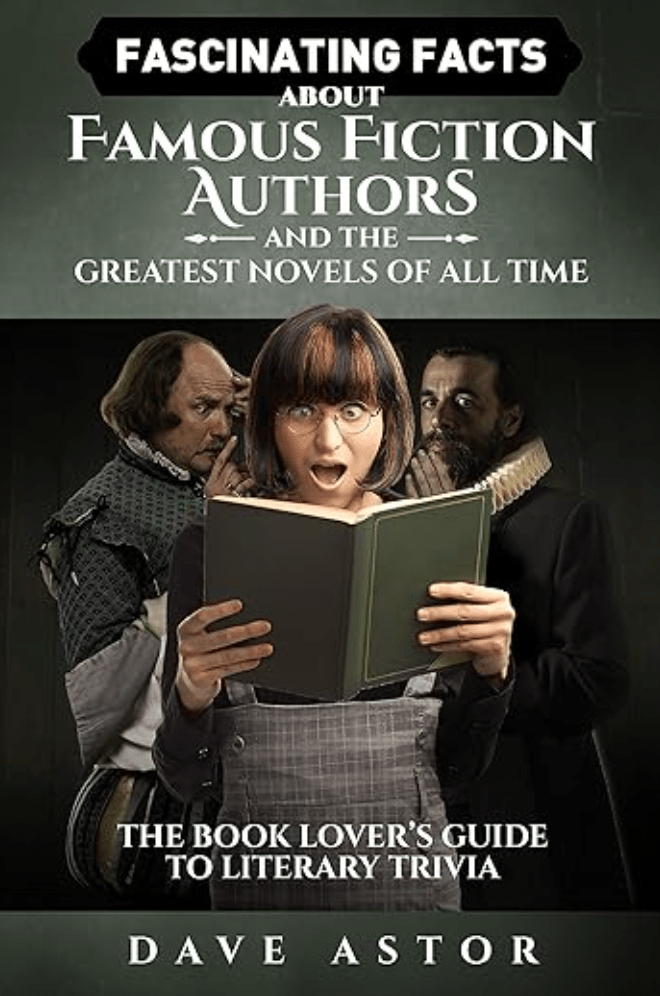
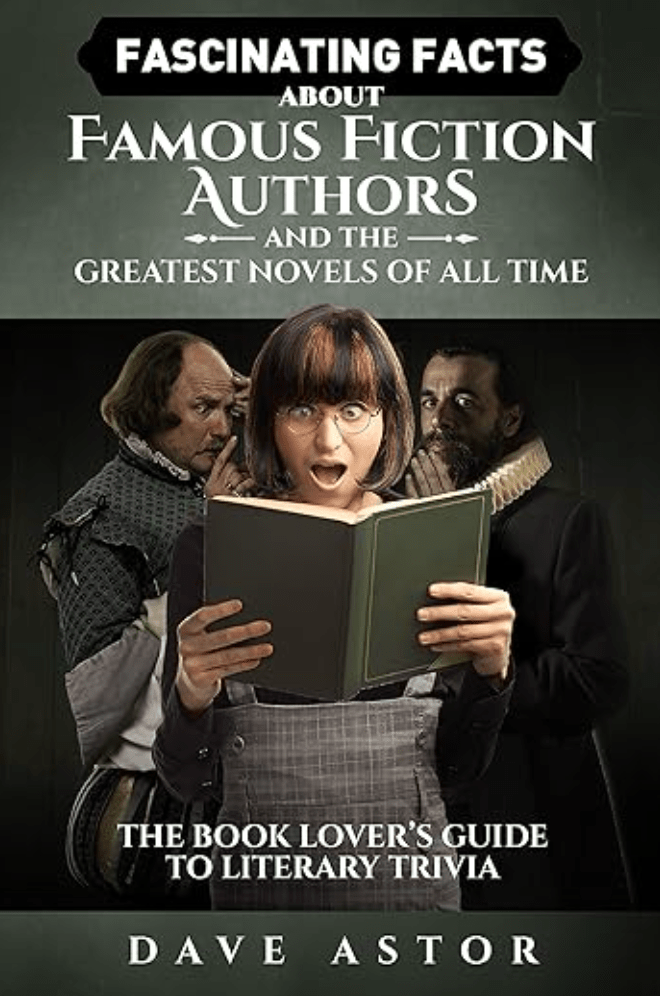
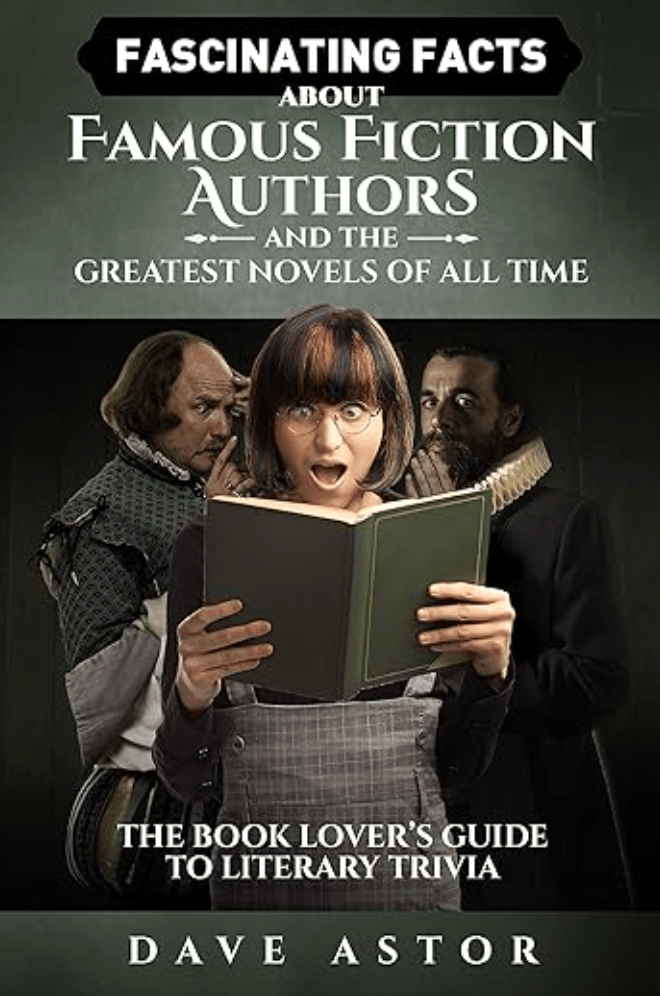
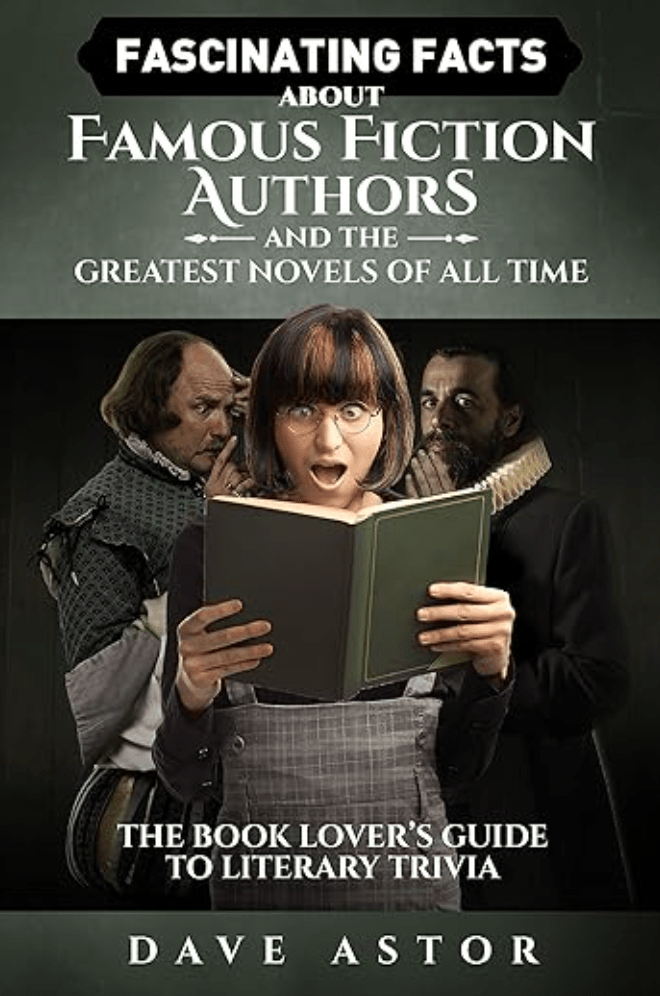
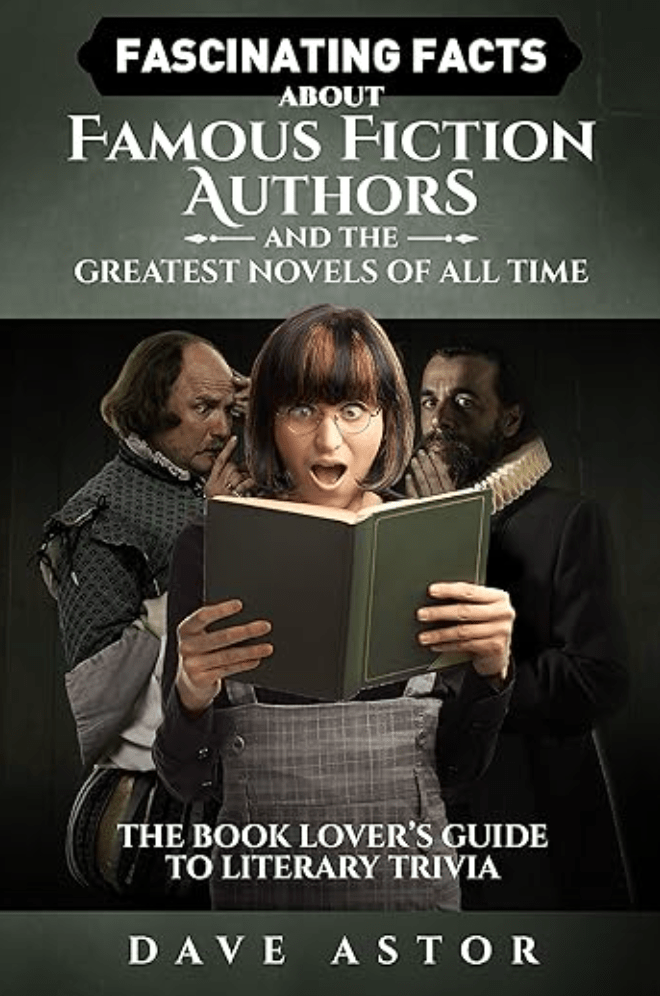
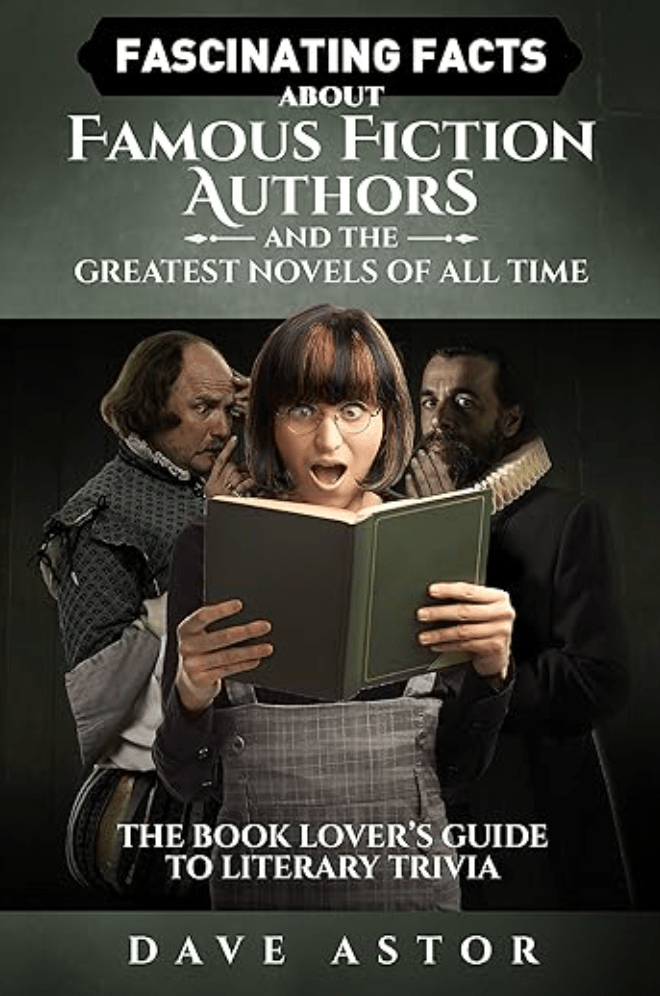
Many thanks to “The Introverted Bookworm” — talented blogger/author Ada Jenkins — for the wonderful review of my 2017 literary-trivia book she posted this past Tuesday, May 27. Very, very appreciated! 🙂
Misty the cat says: “Every cat needs a vacation home.”
My comedic 2024 book — the part-factual/part-fictional/not-a-children’s-work Misty the Cat…Unleashed — is described and can be purchased on Amazon in paperback or on Kindle. It’s feline-narrated! (And Misty says Amazon reviews are welcome. 🙂 )
This 90-second promo video for my book features a talking cat: 🙂
…and a 2012 memoir that focuses on cartooning and more.
In addition to this weekly blog, I write the 2003-started/award-winning “Montclairvoyant” topical-humor column every Thursday for Montclair Local. The latest piece — about Memorial Day, a local food pantry, and more — is here.
My screen grab from the 2011 Jane Eyre movie shows the injured Rochester just after he struggles back onto his horse.
As I recover from a broken toe, I’ve thought about injuries in literature — many of them more serious than a broken toe. What first came to mind was Annie Proulx’s short story “Broketoe Mountain.” 🙂 Or was that “Brokeback Mountain”? 🤔
Injuries in fiction (whether accidental or deliberately caused by a malicious person) are often more than incidental elements in story lines. They can help shape a plot, offer insight into how stoic and resilient the injured character might or might not be, give a hurt character more time to do other things and think about things, etc.
Now I’ll offer a few examples, some of which I’ve mentioned in past posts.
There are two significant injuries in Charlotte Bronte’s Jane Eyre. Fairly early in the 1847 novel, Edward Rochester’s spooked horse stumbles when its rider first encounters new governess Jane, throwing him to the ground and badly spraining his ankle. Jane’s immediate reaction to this incident shows her skill as well as calmness under pressure, and Rochester being homebound during his subsequent recuperation gives him and Jane a chance to get to know each other — which leads to subsequent dramatic events. I’ll refrain from discussing the book’s second set of injuries to avoid a spoiler for anyone who has yet to read Bronte’s iconic British novel.
Across “the pond” four years later, American author Herman Melville’s Moby-Dick was published. In the novel’s back story, Captain Ahab had part of his leg chomped off by the white whale of the title, and his obsessive pursuit of revenge against the massive sea creature is what drives the 1851 book’s plot.
In the much-more-recent Demon Copperhead (2022), the very-challenged-by-life title character of Barbara Kingsolver’s modern-day take on Charles Dickens’ David Copperfield (1850) suffers a severe knee injury while playing high school football — which becomes a big factor in his spiraling into the opioid addiction also afflicting many of his fellow residents of America’s Appalachian region.
U.S. soldier Joe Bonham of Dalton Trumbo’s Johnny Got His Gun (1939) is horrifically/permanently injured by an exploding artillery shell during World War I, and his bitter thoughts in the time after that make for a devastating anti-war argument.
In Scottish author Josephine Tey’s 1951 novel The Daughter of Time, 20th-century police inspector Alan Grant is confined to a hospital bed with a severely broken leg. That enforced inactivity gives him the time and the avoid-boredom desperation to investigate the alleged 15th-century crimes of King Richard III.
Near the start of Edith Wharton’s Ethan Frome, we see that the title character had been badly injured at some point. The 1911 novel goes on to heartbreakingly explain the love story leading to that.
When 20th-century Claire first meets 18th-century Jamie in Diana Gabaldon’s first Outlander book (1991), the Scottish warrior’s shoulder is dislocated. The time-traveling Claire, a nurse who later becomes a physician, expertly snaps the stoic Jamie’s shoulder back into place — illustrating the advances of modern medicine while getting the epic Claire/Jamie relationship started on the basis of mutual respect.
Parts of limbs are lost — in various tragic scenarios — in novels such as Octavia Butler’s Kindred (1979), Alex Haley’s Roots (1976), Stephen King’s Misery (1987), and J.K. Rowling’s seven (so far) Cormoran Strike/Robin Ellacott crime books published between 2013 and 2023. Those grievous injuries are all very relevant to the respective plots and shaping of the affected characters.
Physical injuries caused by domestic violence are a way for authors to convey how awful this violence is — with what happens in Kristin Hannah’s The Great Alone (2018) just one of countless examples. And of course there’s also the psychological trauma inflicted by domestic abusers.
Two more book mentions:
I recently read Val McDermid’s Still Life (2020), the sixth installment of the excellent series starring brilliant, dogged cold-case detective Karen Pirie. In this installment, her nice/loyal/not-super-bright-but-learning assistant investigator Jason Murray is injured by a criminal suspect and ends up trapped in a locked basement.
And my own fiction/fact hybrid, Misty the Cat…Unleashed, includes some pages about my teen daughter Maria tearing her ACL in 2022 and getting reconstructive surgery because of a gymnastics accident. While the 2024 book was published before all the ramifications of this mishap would unfold, the tear/operation/rehab changed the course of Maria’s life: which sport she would switch to (crew), which university she would enter this fall because of getting recruited for that sport (Boston University), and which career path she would choose (the health-care field). Major injuries can do that.
Any comments about, and/or examples of, this topic?
Misty the cat says in 2020: “This is not your typical municipal library.”
My comedic 2024 book — the part-factual/part-fictional/not-a-children’s-work Misty the Cat…Unleashed — is described and can be purchased on Amazon in paperback or on Kindle. It’s feline-narrated! (And Misty says Amazon reviews are welcome. 🙂 )
This 90-second promo video for my book features a talking cat: 🙂
…and a 2012 memoir that focuses on cartooning and more.
In addition to this weekly blog, I write the 2003-started/award-winning “Montclairvoyant” topical-humor column every Thursday for Montclair Local. The latest piece — about too many topics to list 🙂 — is here.