Some authors are good at two or more things: novels and short stories, fiction and nonfiction, literary fiction and mass-audience fiction, etc. For this post, I’ll add to that by focusing on authors who are good at series as well as standalone novels. It certainly requires some different writing muscles to wrap up things in one book vs. extending things across multiple books.
This topic occurred to me last week as I read Val McDermid’s A Place of Execution, a superb standalone novel with a concluding twist that will knock your socks off. My previous experience with McDermid was with her series fiction, including the books starring “cold case” detective Karen Pirie.
I followed A Place of Execution with Martin Cruz Smith’s Independence Square — his 10th in the series starring Russian investigator Arkady Renko that began with Gorky Park. (Independence Square was okay; not as good as the earlier Renko books.) Smith has also written standalone novels such as Rose.
Sometimes, authors toggle throughout their careers between standalone books and series — as has been the case with Smith and McDermid as well as authors such as Walter Mosley with his Easy Rawlins books and much more. Other times, authors start with standalone novels before hitting on a hit series and focusing on that — as did Sue Grafton, who wrote two standalones before launching her popular Alphabet Mysteries (25 in all; she reached the letter “Y” before she died).
J.K. Rowling has also written many more series novels than standalone ones: seven Harry Potter books, then The Casual Vacancy one-off, then seven Cormoran Strike/Robin Ellacott crime novels (so far).
L.M. Montgomery followed her classic Anne of Green Gables with seven sequels over the years, during which time she also penned the Emily trilogy and standalones such as The Blue Castle.
Stephen King is known mostly for standalone novels, with a sprinkling of sequels and trilogies, but has also written many books in The Dark Tower series.
Some long-ago authors also toggled. For instance, James Fenimore Cooper wrote the five “Leatherstocking” novels (including The Last of the Mohicans) as well as various standalone books. Alexandre Dumas did both as well — many standalones (most famously The Count of Monte Cristo) as well as The Three Musketeers and its five sequels (sometimes published as fewer sequels when certain books were combined into one edition).
Your thoughts about and examples of this topic?
Misty the cat says: “My fitness tracker better record backward steps.”
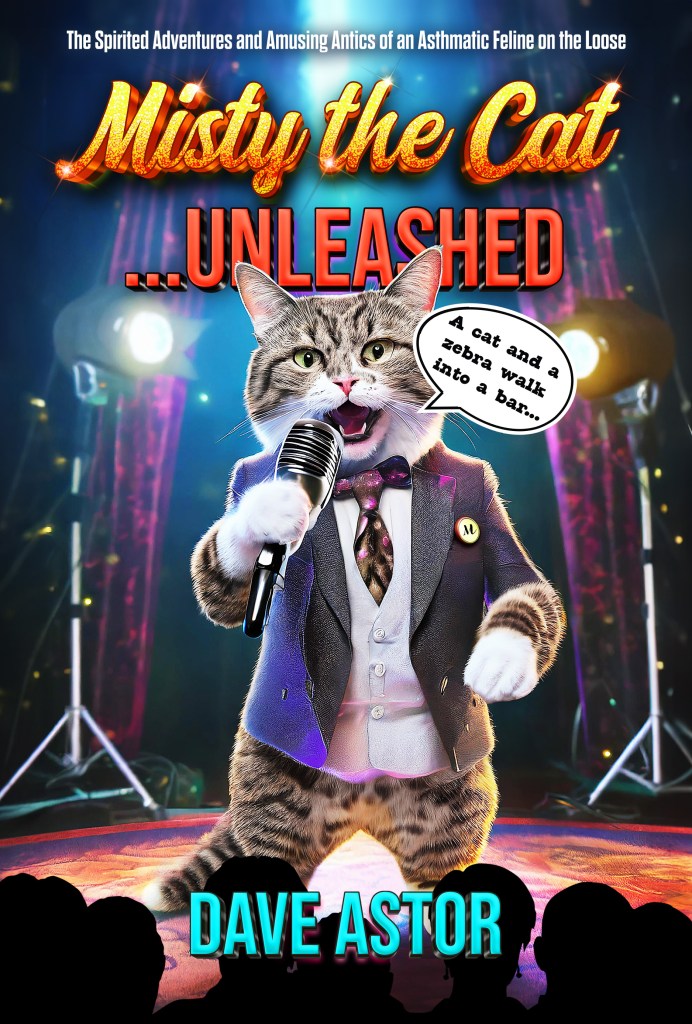
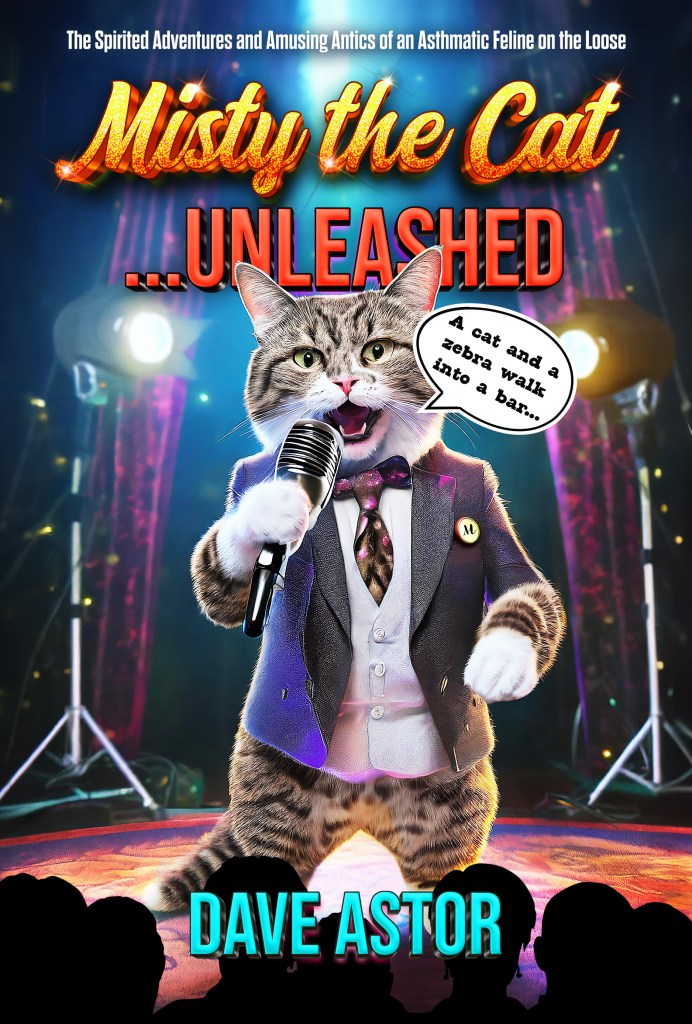
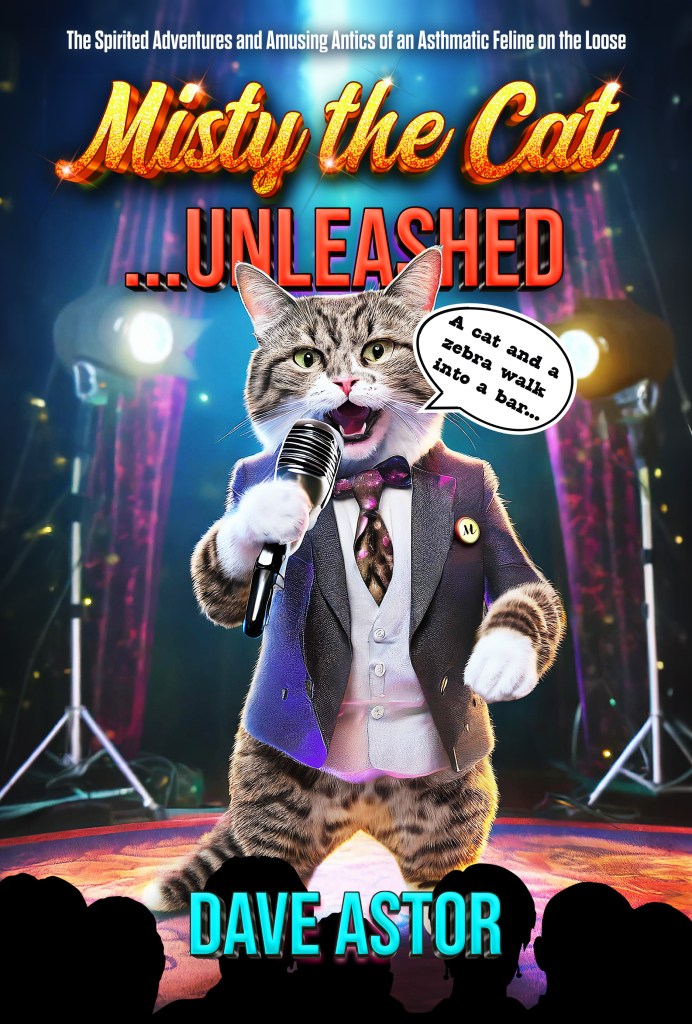
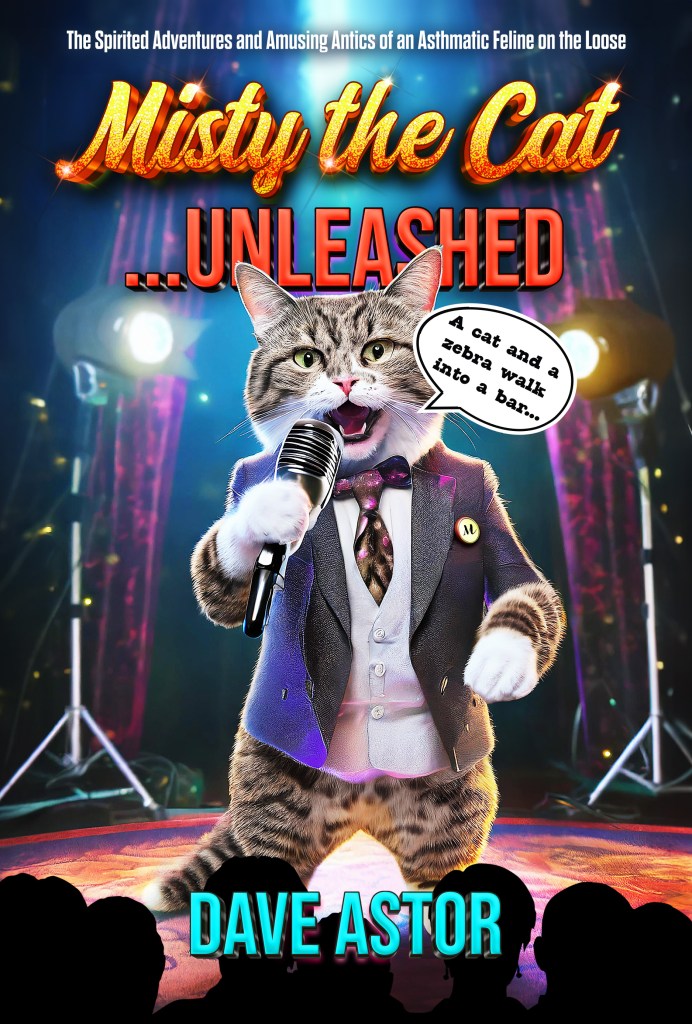
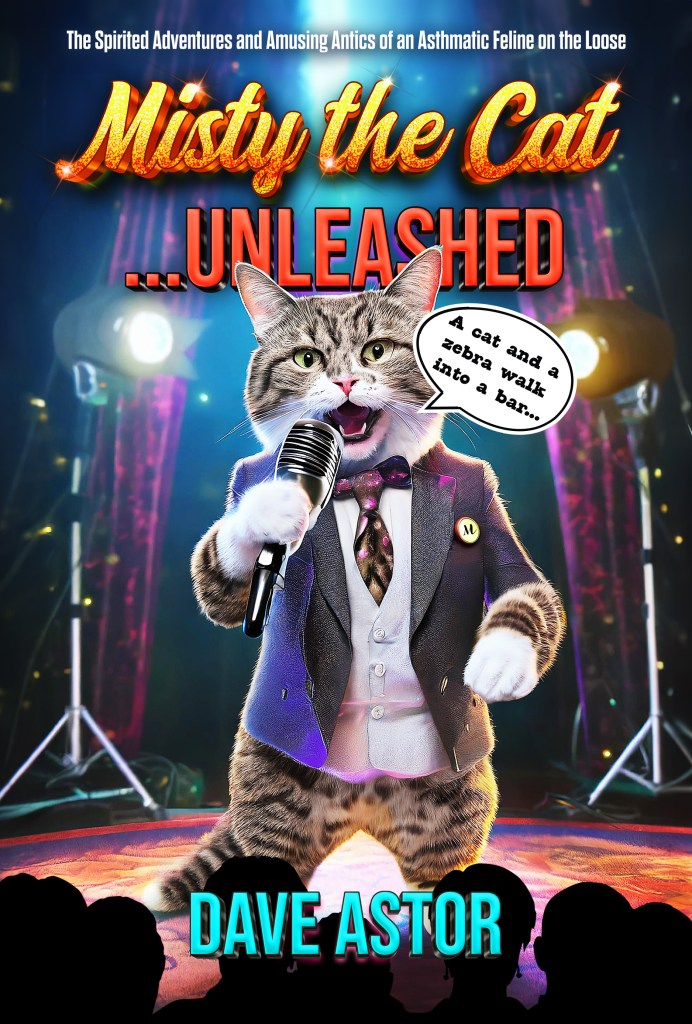
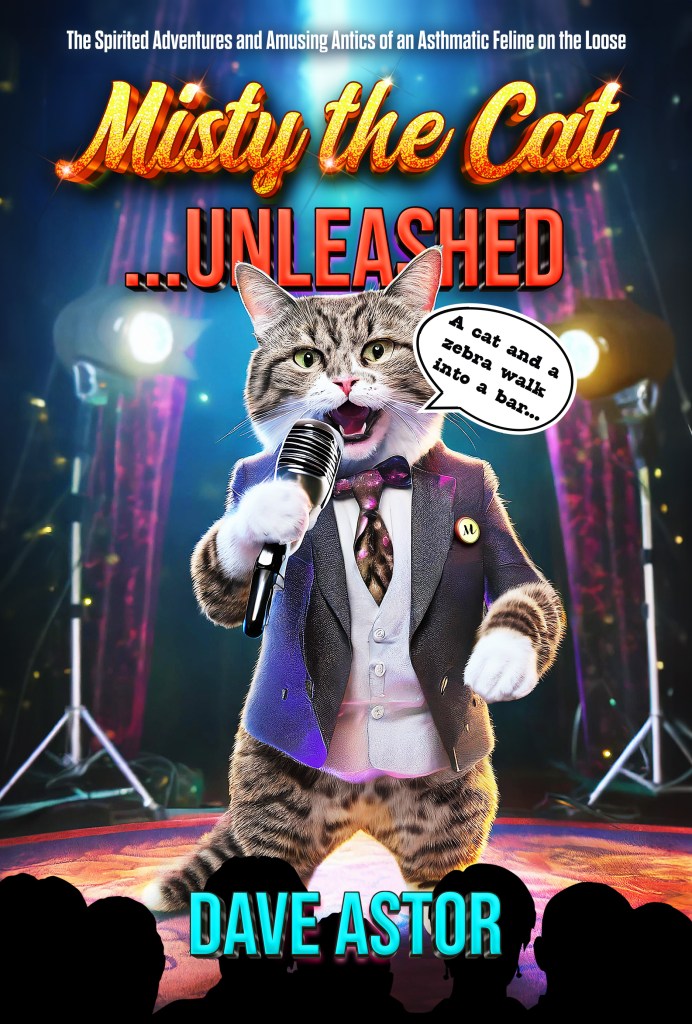
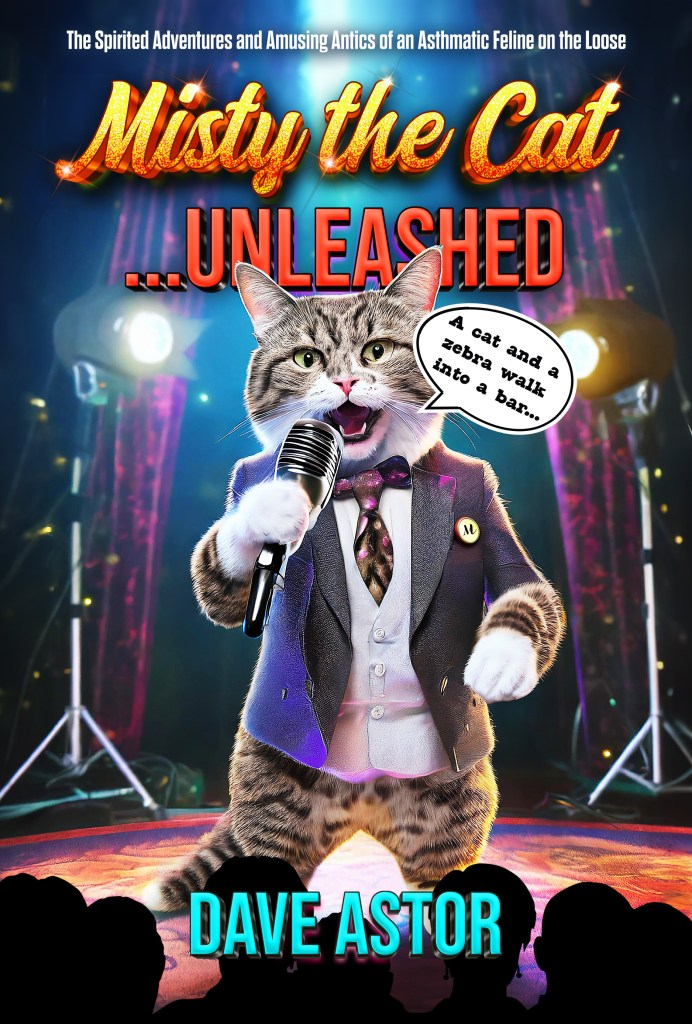
My comedic 2024 book — the part-factual/part-fictional/not-a-children’s-work Misty the Cat…Unleashed — is described and can be purchased on Amazon in paperback or on Kindle. It’s feline-narrated! (And Misty says Amazon reviews are welcome. 🙂 )
This 90-second promo video for my book features a talking cat: 🙂
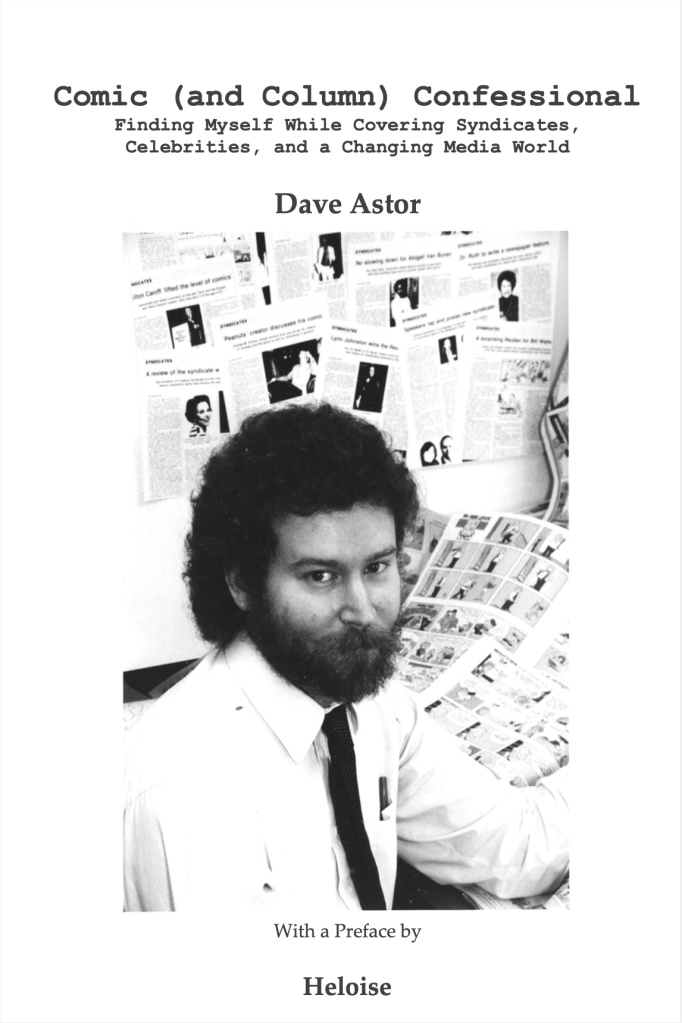
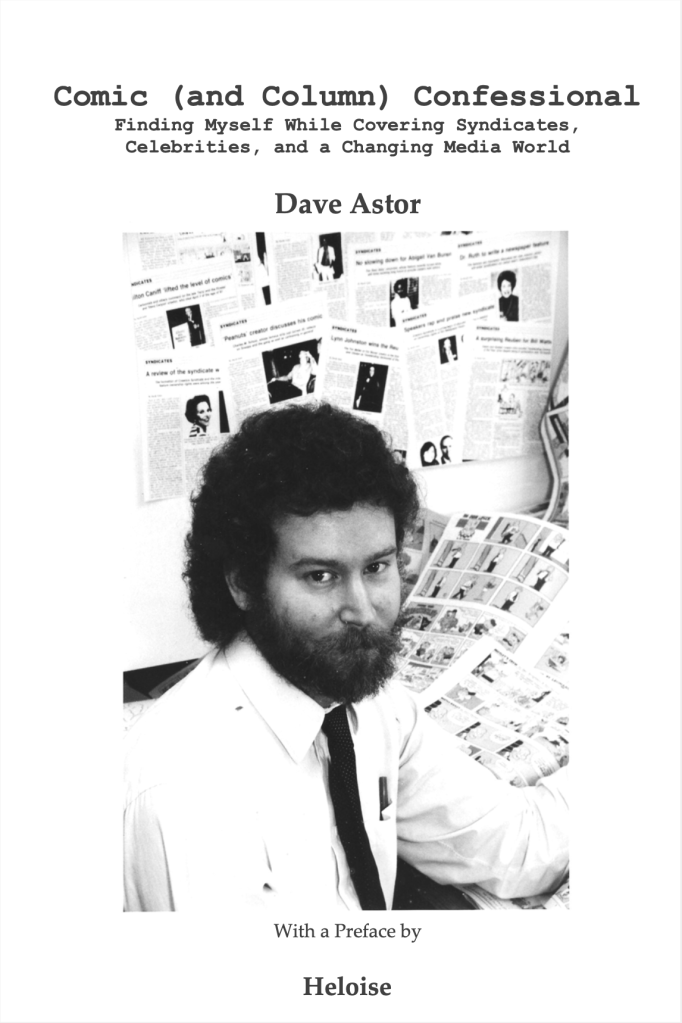
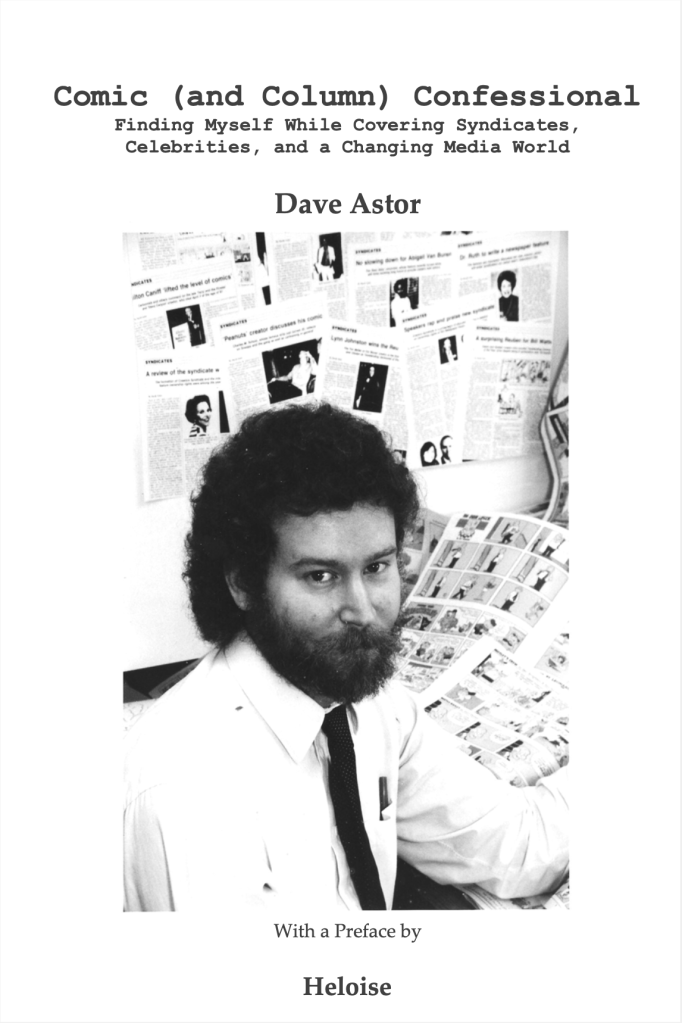
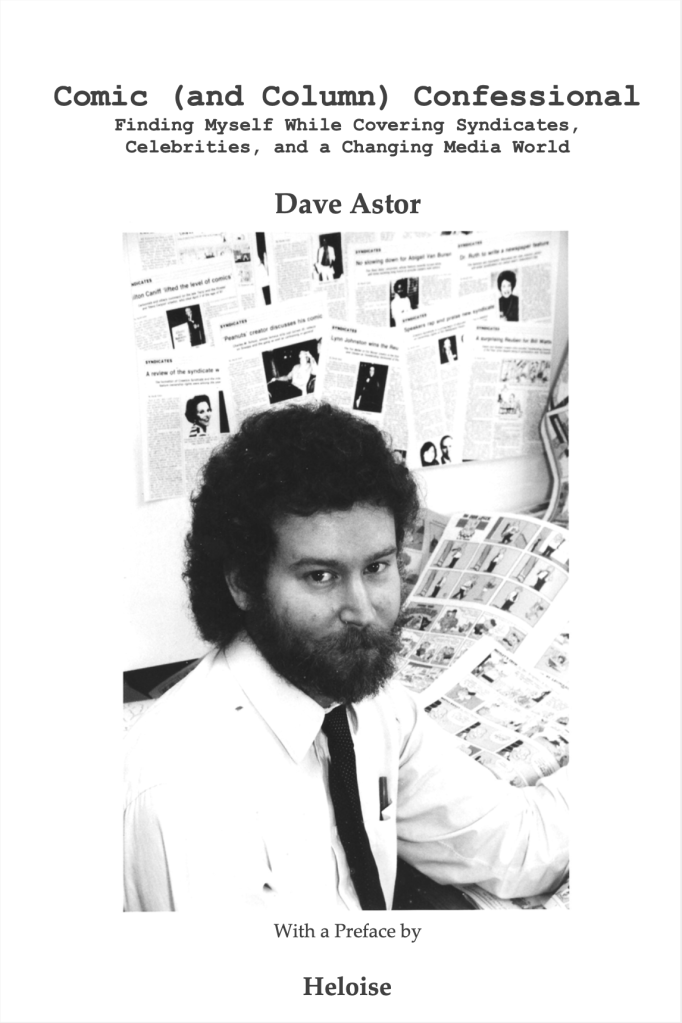
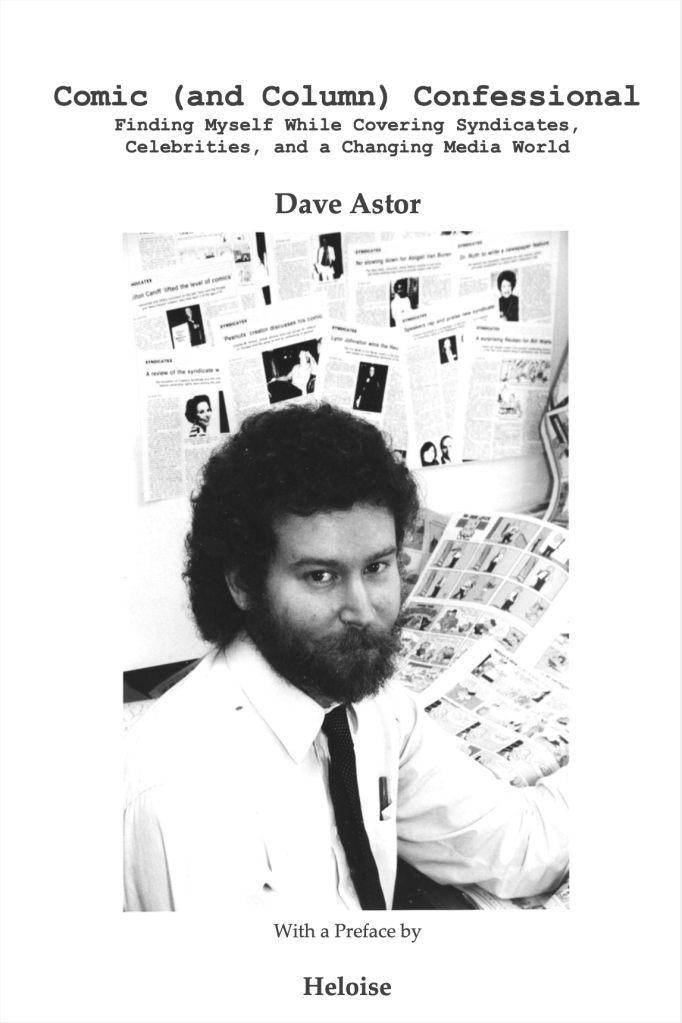
…and a 2012 memoir that focuses on cartooning and more.
In addition to this weekly blog, I write the 2003-started/award-winning “Montclairvoyant” topical-humor column every Thursday for Montclair Local. The latest piece — about a lot of school news during a non-school time — is here.
Once in a while we’re surprised to read a not-great book by a great novelist.
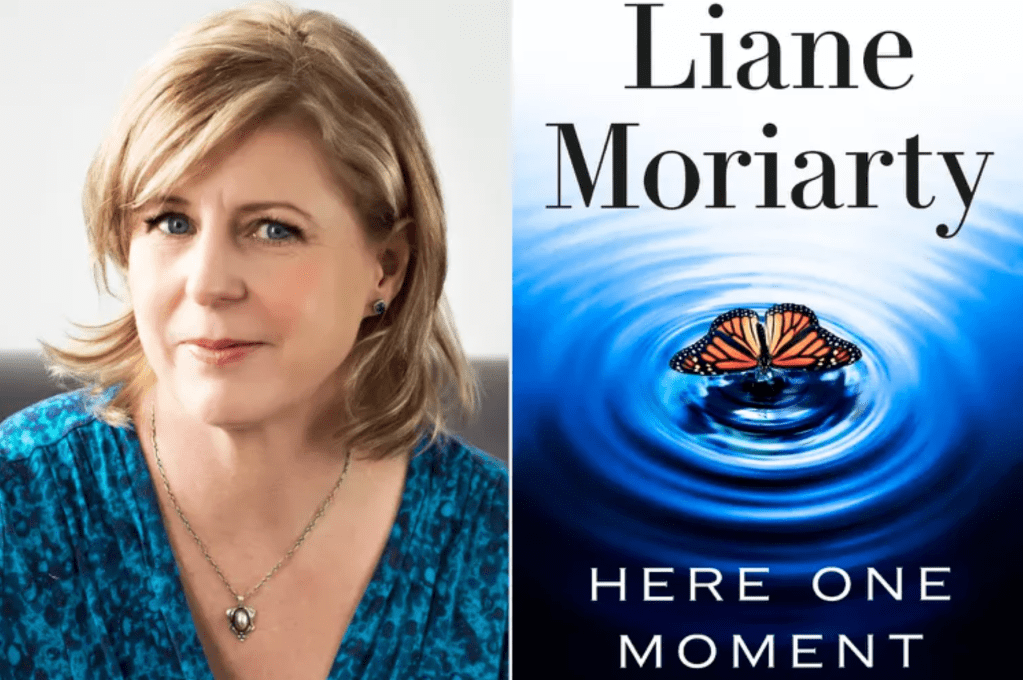
My latest experience with this: Here One Moment by Liane Moriarty. The Australian writer is one of my favorite living authors (along with Margaret Atwood, Lee Child, John Grisham, Kristin Hannah, Elin Hilderbrand, Barbara Kingsolver, Val McDermid, Walter Mosley, Kate Quinn, and J.K. Rowling, to name a few). I loved Moriarty’s Big Little Lies, Nine Perfect Strangers, Apples Never Fall, The Husband’s Secret, and The Hypnotist’s Love Story — all A+ or A novels “in my book.” 🙂 Then came 2024’s Here One Moment, which I finished a few days ago.
Or, rather, struggled to finish. Here One Moment features an off-putting premise — a woman having a “mental episode” walks down the aisle of a packed in-flight plane telling passengers and crew members when and how they’re going to die. (Among the recipients of these unwanted predictions are children and 20-something adults informed that their lives will end in a few months or a few years — especially alarming news for young people.) Then, as the novel goes on, some of the seeming prophecies start to come true.
Another reason I wasn’t a huge fan of Here One Moment is that it jumps around to focus on quite a few characters, so it’s hard to get invested in them. Ambitious fiction, but scattered fiction. The only person who gets the full treatment is the supposed psychic, who has had a difficult life. So this repressed, not particularly likable woman is “humanized” more than the rest of the book’s cast.
Still, Here One Moment is very well-written, has some compelling sections, offers a “live life to the fullest because you never know when it might end” message, and does get better as it goes on. Also, I have to give some props to Moriarty for coming up with such a wild story line.
Despite the negatives, I’ll read the next Moriarty book when it’s published. No author writes a masterpiece each time; inspiration can come and go, life events can interfere, etc. And I should add that other readers might of course have different feelings about a novel; Here One Moment has a pretty high average of 4.3 stars (out of 5) on Amazon. Some of the 1- and 2-star reviewers who didn’t like the book sounded rather incredulous about all the positive ratings. 🙂
As I’ve mentioned in a couple of years-ago posts, there are other examples of past and present authors I love who’ve written what I consider not-great novels. Among them (with their disappointing books in parentheses) are Willa Cather (Sapphira and the Slave Girl), Wilkie Collins (A Rogue’s Life), James Fenimore Cooper (The Spy), the aforementioned John Grisham (Skipping Christmas), Stephen King (Cell), Jack London (A Daughter of the Snows), Carson McCullers (The Member of the Wedding), Herman Melville (Mardi), Richard Russo (Chances Are…), Erich Maria Remarque (Shadows in Paradise), Martin Cruz Smith (The Siberian Dilemma), and Edith Wharton (The Touchstone).
Sometimes the misfire is a debut novel as the author is trying to gain their creative footing. Sometimes it’s a final novel when the author is in ill health or perhaps low on ideas. Sometimes a disappointing novel happens in mid-career. And, again, people might differ and be fans of books others don’t like so much.
Any novels, written by favorite authors, that you weren’t thrilled about?
Misty the cat says: “The 5th Dimension sang ‘let the sunshine in’ in 1969, and it’s still here!”
My comedic 2024 book — the part-factual/part-fictional/not-a-children’s-work Misty the Cat…Unleashed — is described and can be purchased on Amazon in paperback or on Kindle. It’s feline-narrated! (And Misty says Amazon reviews are welcome. 🙂 )
This 90-second promo video for my book features a talking cat: 🙂
…and a 2012 memoir that focuses on cartooning and more.
In addition to this weekly blog, I write the 2003-started/award-winning “Montclairvoyant” topical-humor column every Thursday for Montclair Local. The latest piece — about my younger daughter’s June 26 high school graduation and more — is here.
Inside my local library in Montclair, New Jersey. (Photo by me.)
You know you’re a book addict when…
…despite a broken big toe, you make a hobbling visit to the library to borrow a new bunch of novels. (Which I did on June 13.)
…you read while waiting in line (at a store, the post office, etc.) even though you might be also holding something else (a purchase, a package, etc.).
…you uncomfortably grasp a large hardcover to read while on an exercise bike.
…you read even if you’re in a room with poor lighting.
…you read while a passenger in a car even though that makes you feel kind of sick.
…you bring a novel to a doctor’s appointment and are almost disappointed on the rare occasion when you’re summoned from the waiting room on time.
…you try to read in an eye doctor’s waiting room after your pupils have been dilated.
…you read almost as much as you usually do despite an eye infection. (Happened to me last year.)
…you read a novel while watching something on YouTube even though splitting one’s attention in half is not wise, so you only do this for a little while.
…you know the year of birth for many novelists.
…you know the year of death for many novelists. (I don’t think this includes living authors, but I’ll ask the supposed psychic in Liane Moriarty’s Here One Moment novel. 🙂 )
…your brain practically breaks when you’re forced to reduce your book collection by two-thirds because of moving from a house to an apartment. (As I did in 2014.)
…you’re upset when a screen adaptation doesn’t do a novel justice.
…you exult when a screen adaptation DOES do a novel justice.
…you’re chagrined on the rare occasion when a screen adaptation is better than the book(s) it’s based on.
…you continue reading a compelling novel late at night even though you’re tired and should go to sleep.
…you delay posting on your literature blog for an hour or two because you’re so engrossed in a book.
Any additions or comments? 🙂
Last-minute postscript, after last night’s disgusting/dangerous/unprovoked bombing of Iran by the United States: You know you’re a book addict when you wish Trump and the officials in his administration were also avid novel readers — which would perhaps give them a bit more empathy, decency, common sense, and historical knowledge. Actually, perhaps not. 😦
Misty the cat says: “I’ve used an inhaler since 2018, a year after asthma was invented.”
My comedic 2024 book — the part-factual/part-fictional/not-a-children’s-work Misty the Cat…Unleashed — is described and can be purchased on Amazon in paperback or on Kindle. It’s feline-narrated! (And Misty says Amazon reviews are welcome. 🙂 )
This 90-second promo video for my book features a talking cat: 🙂
…and a 2012 memoir that focuses on cartooning and more.
In addition to this weekly blog, I write the 2003-started/award-winning “Montclairvoyant” topical-humor column every Thursday for Montclair Local. The latest piece — which includes an election postmortem, discussion of a large local “No Kings” protest against the Trump regime, and more — is here.
It feels like a dystopian time as we witness the dictatorial Trump regime’s multiple vile actions, Israel’s unprovoked attack on Iran (probably with U.S. approval and U.S. weapons), Israel’s 20-month genocidal war (again with U.S. backing) on innocent Gazan civilians after the horrors of October 7, Russia’s continuing war on Ukraine, yesterday’s assassination of a liberal Minnesota politician by a right-winger, the existential threat of climate change, and more.
Trump this month of course sent over-the-top military force into Los Angeles against the wishes of California’s governor (despite Republicans often blathering about “states’ rights”) to crack down on a small, mostly peaceful resistance to his administration’s brutal roundup of people of color — whether they’re undocumented immigrants, documented immigrants, or longtime American citizens. Which has broken up families, and served as another test for Trump to see how far he can install his Republican brand of fascism. U.S. Sen. Alex Padilla, a California Democrat who’s the son of Mexican immigrants, was even thrown to the ground and handcuffed by agents for trying to ask a question of Homeland Security secretary Kristi Noem, the Trump cabinet member best known for heartlessly shooting her 14-month-old dog. Then came yesterday’s grotesque (and grossly expensive) military parade in Washington, DC, that was held partly to “celebrate” the cruel Trump’s birthday. A parade, by the way, that drew many fewer spectators than Trump wanted — though his constantly lying administration is already inflating the numbers.
All quite convenient for distracting Americans from things like Trump’s support of a Republican congressional tax bill that would mostly benefit the already wealthy and tech billionaire Elon Musk’s recent post on X (formerly Twitter) saying Trump is in the Epstein files for repugnant past pedophile behavior with underage girls.
Anyway, my thoughts in our ultra-depressing era naturally turned to dystopian fiction and a desire to do a post about that genre — which can also include apocalyptic novels. But there was the nagging recollection that I had focused on dystopian literature before, and, sure enough, a search turned up a piece by me for The Huffington Post book section way back in 2012 — two years before starting this WordPress blog. So, I decided to post a revised/updated version of that 13-year-old piece today. Here goes:
War. Death. Despair. Oppression. Environmental ruin. Yup, when it comes to demoralizing literature, dystopian literature is a downer of downers. Yet some of us find that genre soberly appealing. Why?
For one thing, we read about rather than live through dystopian lit’s fictional bad stuff — though real life is plenty negative now (as this post has noted) and fictional bad stuff is often an extrapolation of a troubled actual world. Still, many 2025 readers are not as much “in the arena” as the beleaguered characters in Suzanne Collins’ dystopian The Hunger Games.
And there’s a certain “rightness” in reading about a harrowing society. Why? Because we know that politicians, military leaders, and corporate moguls are capable of doing awful things — meaning dystopian novels feel kind of honest.
In addition to The Hunger Games, excellent dystopian/semi-dystopian novels filled with carnage, inhumanity, hopelessness, and more include (among others) Aldous Huxley’s Brave New World, George Orwell’s 1984, H.G. Wells’ The Time Machine, Mary Shelley’s The Last Man, Stephen King’s The Stand, Octavia E. Butler’s Parable of the Sower, (Ms.) Lionel Shriver’s The Mandibles, Lois Lowry’s The Giver, Cormac McCarthy’s The Road, Ray Bradbury’s Fahrenheit 451, Anthony Burgess’ A Clockwork Orange, William Golding’s Lord of the Flies, Sinclair Lewis’ It Can’t Happen Here, Kazuo Ishiguro’s Never Let Me Go, Albert Camus’ The Plague, Franz Kafka’s The Trial, Nevil Shute’s On the Beach, Kurt Vonnegut’s Slaughterhouse-Five, Jack London’s The Iron Heel, and Margaret Atwood’s The Handmaid’s Tale, The Testaments, Oryx and Crake, The Year of the Flood, and MaddAddam.
The above books of course take different approaches — some very dramatic, others understated, some set in the near future, others in the distant future, etc., etc.
Sometimes, authors of dystopian literature temporarily ease the tension a bit with humor, as Atwood does with the clever genetic-engineering terms she coined for Oryx and Crake. And dystopian books can have seemingly utopian elements — with things appearing not too bad even though they ARE bad; Brave New World is a perfect example. There are even novels, such as H.G. Wells’ The Shape of Things to Come, that mix dystopian and utopian elements.
We admire the best dystopian novels because they’re written well and depict people with whom we can relate. We can be fascinated by the terrible things those characters face, and by how some react bravely and some react cowardly or with resignation. We, as readers, have a hard time averting our eyes from the misery even as we’re enraged by what despots and other vicious officials are doing to citizens. And we’re compelled to turn the pages as we wonder if rebels and other members of the populace can somehow remake a wretched society into something more positive. We also wonder who will survive and who won’t.
Last but not least, some of us might admire dystopian fiction because, by giving us worst-case scenarios of the future, we have a smidgen of (in vain?) hope that our current society can be jolted enough to avoid those scenarios starting or continuing in real life. Like some of the characters in dystopian novels, we might feel a little halting, against-all-odds optimism — such as that inspired by yesterday’s 2,000 or so anti-Trump-regime “No Kings” protests attended by millions of Americans in all 50 states, the resistance of politicians such as Bernie Sanders and Alexandria Ocasio-Cortez, the resistance of institutions such as Harvard University, the holding to a belief in the rule of law by some judges (including a percentage of those appointed by Trump), and so on. But it’s a difficult fight against very powerful forces.
All that said, I don’t blame anyone for preferring escapist fiction during a time like this. I’ve upped my quota of those kinds of books myself, while making sure to still read some weightier literature.
Any favorite dystopian novels? Why do you like or not like that genre? Thoughts about the current situation in the world?
Misty the U.S. cat: “I nap in the morning near an Australian novel because it’s night in Australia.”
My comedic 2024 book — the part-factual/part-fictional/not-a-children’s-work Misty the Cat…Unleashed — is described and can be purchased on Amazon in paperback or on Kindle. It’s feline-narrated! (And Misty says Amazon reviews are welcome. 🙂 )
This 90-second promo video for my book features a talking cat: 🙂
…and a 2012 memoir that focuses on cartooning and more.
In addition to this weekly blog, I write the 2003-started/award-winning “Montclairvoyant” topical-humor column every Thursday for Montclair Local. The latest piece — containing election results, news about smartphones in classrooms, and more — is here.
“Perhaps I should wake up and write a blog post,” says Misty. (Photo by Maria.)
I, Misty the cat, guest-blog for Dave every two months. I last did this on April 13 and today is June 8, so that’s…hmm…actually not quite two months. Reminds me of when Dave returned some novels to the library five days before their due date, and the indignant book drop expelled said novels with such force that they traveled back in time and landed on the heads of the three Karamazov brothers. Fortunately, each of the books was under 400 pages.
But Fyodor Dostoevsky’s 824-page The Brothers Karamazov is even longer than my average nap, during which I experience “Dreams” more often than Fleetwood Mac did at their 1977 concerts. And Dostoevsky’s 1880 novel might have been the first volume of an even longer work if the Russian author hadn’t died in early 1881. Perhaps a trilogy of sorts — like Suzanne Collins’ The Hunger Games (about me nudging my cat-food bowl so that each serving lands in the exact center) and J.R.R. Tolkien’s The Lord of the Rings (about my epic quest to be a male feline version of the Ernestine telephone operator played by Lily Tomlin).
I recommend shopping at Pop Culture R Us for all your celebrity-name-dropping needs.
Speaking of decades-ago entertainment, do you remember the 1978 movie Same Time, Next Year about a married woman and a married man who have a multi-year annual affair? That film partly inspired the long-term romance of Mallory Blessing and Jake McCloud in Elin Hilderbrand’s 2020 novel 28 Summers, which I read last week and found to be a wonderful, poignant book. It’s 422 pages in hardcover, which explains why various other 19th-century Russian fictional characters are donning helmets to avoid concussions. Helmets with stickers saying “Please Don’t Name Your Cat Anna Karenina.”
I’ll add that 28 Summers has an alternate-history element, with Jake’s wife Ursula DeGournsey running for President of the United States in 2020. Reminds me that my aforementioned cat-food bowl is shaped sort of like the Oval Office, and even has a tiny edible desk.
Other novels featuring politicians? Stephen King’s The Dead Zone, Robert Penn Warren’s All the King’s Men, J.K. Rowling’s The Casual Vacancy, Fannie Flagg’s Standing in the Rainbow, and Sinclair Lewis’ It Can’t Happen Here, to name a few. When my cat-food bowl was empty for five seconds, you know what I screamed? Yes, I screamed “It can’t happen here!!!”
A century ago, Lewis had quite a run of notable novels: Main Street (1920), Babbitt (1922), Arrowsmith (1925), Elmer Gantry (1927), and Dodsworth (1929). It Can’t Happen Here was published in 1935, eight decades before my 2015 birth year — which means that in 2025 I’m now…furry.
I’m sometimes asked how I, the kitty Misty, consume literature. Smeared with tasty cat food, of course. But, seriously, I read novels in the traditional print-book format rather than via eBook or audiobook. I guess I’m “old school,” like the 1636-founded Harvard University. I expect only a few members of The Class of 1640 to be at Harvard’s 2040 alumni reunion; they’re the ones who reside with cats, who help humans live longer.
Long-lived humans in literature? The over-2,000-year-old Lazarus Long of five Robert Heinlein novels; Ayesha, who also clocks in at about two millennia in H. Rider Haggard’s She; the 250-year-old High Lama of James Hilton’s Lost Horizon; etc. I assume they had well-funded retirement accounts.
One of the oldest of my fellow cats is Garfield, who has starred in Jim Davis’ 1978-founded comic strip for 47 years! Which reminds me that my next guest blog post will appear in 47 years — minus 46 years and 10 months. So, August 2025. That’s also when my teen human Maria is starting college, which means her bedroom will be…mine!
Dave will reply to any comments because I, Misty the cat, am busy consulting with an interior decorator about changes in Maria’s room (where you see me in the photo atop this post). A kitty can’t have enough scratching posts, treat dispensers, and paintings of hairballs playing poker.
Misty the cat says: “That railing’s shadow means 4,378 more days of spring.”
Dave’s comedic 2024 book — the part-factual/part-fictional/not-a-children’s-work Misty the Cat…Unleashed — is described and can be purchased on Amazon in paperback or on Kindle. It’s feline-narrated! (And Misty says Amazon reviews are welcome. 🙂 )
This 90-second promo video for Dave’s book features a talking cat: 🙂
…and a 2012 memoir that focuses on cartooning and more.
In addition to this weekly blog, Dave writes the 2003-started/award-winning “Montclairvoyant” topical-humor column every Thursday for Montclair Local. The latest piece — about New Jersey’s upcoming primary election and much more — is here.
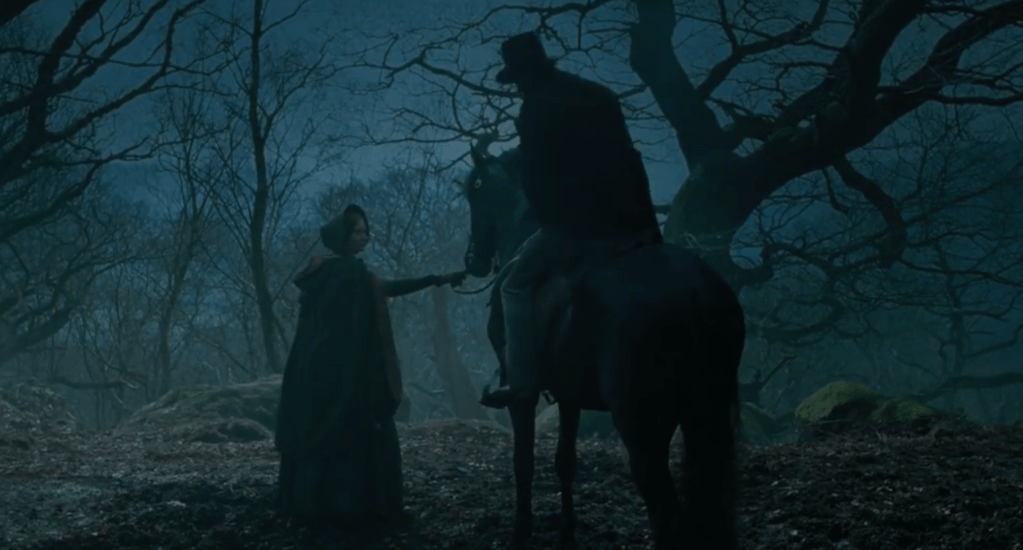
My screen grab from the 2011 Jane Eyre movie shows the injured Rochester just after he struggles back onto his horse.
As I recover from a broken toe, I’ve thought about injuries in literature — many of them more serious than a broken toe. What first came to mind was Annie Proulx’s short story “Broketoe Mountain.” 🙂 Or was that “Brokeback Mountain”? 🤔
Injuries in fiction (whether accidental or deliberately caused by a malicious person) are often more than incidental elements in story lines. They can help shape a plot, offer insight into how stoic and resilient the injured character might or might not be, give a hurt character more time to do other things and think about things, etc.
Now I’ll offer a few examples, some of which I’ve mentioned in past posts.
There are two significant injuries in Charlotte Bronte’s Jane Eyre. Fairly early in the 1847 novel, Edward Rochester’s spooked horse stumbles when its rider first encounters new governess Jane, throwing him to the ground and badly spraining his ankle. Jane’s immediate reaction to this incident shows her skill as well as calmness under pressure, and Rochester being homebound during his subsequent recuperation gives him and Jane a chance to get to know each other — which leads to subsequent dramatic events. I’ll refrain from discussing the book’s second set of injuries to avoid a spoiler for anyone who has yet to read Bronte’s iconic British novel.
Across “the pond” four years later, American author Herman Melville’s Moby-Dick was published. In the novel’s back story, Captain Ahab had part of his leg chomped off by the white whale of the title, and his obsessive pursuit of revenge against the massive sea creature is what drives the 1851 book’s plot.
In the much-more-recent Demon Copperhead (2022), the very-challenged-by-life title character of Barbara Kingsolver’s modern-day take on Charles Dickens’ David Copperfield (1850) suffers a severe knee injury while playing high school football — which becomes a big factor in his spiraling into the opioid addiction also afflicting many of his fellow residents of America’s Appalachian region.
U.S. soldier Joe Bonham of Dalton Trumbo’s Johnny Got His Gun (1939) is horrifically/permanently injured by an exploding artillery shell during World War I, and his bitter thoughts in the time after that make for a devastating anti-war argument.
In Scottish author Josephine Tey’s 1951 novel The Daughter of Time, 20th-century police inspector Alan Grant is confined to a hospital bed with a severely broken leg. That enforced inactivity gives him the time and the avoid-boredom desperation to investigate the alleged 15th-century crimes of King Richard III.
Near the start of Edith Wharton’s Ethan Frome, we see that the title character had been badly injured at some point. The 1911 novel goes on to heartbreakingly explain the love story leading to that.
When 20th-century Claire first meets 18th-century Jamie in Diana Gabaldon’s first Outlander book (1991), the Scottish warrior’s shoulder is dislocated. The time-traveling Claire, a nurse who later becomes a physician, expertly snaps the stoic Jamie’s shoulder back into place — illustrating the advances of modern medicine while getting the epic Claire/Jamie relationship started on the basis of mutual respect.
Parts of limbs are lost — in various tragic scenarios — in novels such as Octavia Butler’s Kindred (1979), Alex Haley’s Roots (1976), Stephen King’s Misery (1987), and J.K. Rowling’s seven (so far) Cormoran Strike/Robin Ellacott crime books published between 2013 and 2023. Those grievous injuries are all very relevant to the respective plots and shaping of the affected characters.
Physical injuries caused by domestic violence are a way for authors to convey how awful this violence is — with what happens in Kristin Hannah’s The Great Alone (2018) just one of countless examples. And of course there’s also the psychological trauma inflicted by domestic abusers.
Two more book mentions:
I recently read Val McDermid’s Still Life (2020), the sixth installment of the excellent series starring brilliant, dogged cold-case detective Karen Pirie. In this installment, her nice/loyal/not-super-bright-but-learning assistant investigator Jason Murray is injured by a criminal suspect and ends up trapped in a locked basement.
And my own fiction/fact hybrid, Misty the Cat…Unleashed, includes some pages about my teen daughter Maria tearing her ACL in 2022 and getting reconstructive surgery because of a gymnastics accident. While the 2024 book was published before all the ramifications of this mishap would unfold, the tear/operation/rehab changed the course of Maria’s life: which sport she would switch to (crew), which university she would enter this fall because of getting recruited for that sport (Boston University), and which career path she would choose (the health-care field). Major injuries can do that.
Any comments about, and/or examples of, this topic?
Misty the cat says in 2020: “This is not your typical municipal library.”
My comedic 2024 book — the part-factual/part-fictional/not-a-children’s-work Misty the Cat…Unleashed — is described and can be purchased on Amazon in paperback or on Kindle. It’s feline-narrated! (And Misty says Amazon reviews are welcome. 🙂 )
This 90-second promo video for my book features a talking cat: 🙂
…and a 2012 memoir that focuses on cartooning and more.
In addition to this weekly blog, I write the 2003-started/award-winning “Montclairvoyant” topical-humor column every Thursday for Montclair Local. The latest piece — about too many topics to list 🙂 — is here.
Being an accomplished author doesn’t mean that every character she or he creates will “pop.”
Novelists are not machines; they don’t operate at 100% capacity with every word. Also, they might be more interested in certain characters than in other ones, perhaps because some characters have elements that are more quirky, unusual, etc. Authors might even make some characters deliberately boring because some people are boring and it might work for the story. And then of course there’s the matter of villains often having a level of charisma that nicer characters might not possess.
A great way to observe this phenomenon is with a novel featuring an ensemble cast in which no one is really the sole star. Such is 44 Scotland Street by Alexander McCall Smith, who populates his first-in-a-series 2005 book with residents of an apartment building (located at the Edinburgh address of the title) and with several other people who are friends or co-workers of said residents.
The “fulcrum” of 44 Scotland Street is probably Pat, a 20-year-old woman who opens the novel visiting the titular address in which she’ll soon share a multi-person apartment. But Pat is not that fascinating a person — partly because of her young age and relatively small amount of life experience. On the other hand, 60-something building resident Domenica is quite memorable, as is her 50-something artist friend — soon also Pat’s friend — Angus. Pat’s narcissistic apartment-mate Bruce is more annoying than interesting.
Of course, someone quite young can also be compelling. In McCall Smith’s novel, that would be five-year-old Bertie — a very precocious kid buckling under the pressure of a “helicopter” mom-from-hell forcing him to learn Italian and play a saxophone almost as big as he is.
Now I’ll fit three classics into this theme, although there are of course many other novels that could also be included.
The “hero” of Wilkie Collins’ 1860 mystery/adventure The Woman in White is the brave and devoted Walter Hartright, who has “the right heart” but doesn’t really “pop” into three-dimensionality. The characters who stand out include the deliciously wicked Count Fosco and the resourceful, not conventionally attractive, possibly lesbian (?) Marian Halcombe.
In Edith Wharton’s 1920 novel The Age of Innocence, protagonist Newland Archer is mildly interesting while his fiancee and subsequently wife May Welland is rather bland and conventional. The character who really “pops” is free-spirited bohemian Ellen Olenska — to whom Newland becomes attracted. This is clearly intentional on Wharton’s part as she sets up Newland’s internal struggle between what he wants and his societal “obligations” as a young man from an upper-class family.
Frodo Baggins might be “first among equals” in J.R.R. Tolkien’s The Lord of the Rings trilogy (published 1954-55). He’s admirable and courageous, but the low-key, earnest hobbit doesn’t “pop” like some other characters such as Frodo’s equally courageous but more spirited and quick-witted “servant” companion Samwise Gamgee and the anguished, part-villainous/part-sympathetic Gollum.
As I’ve written in a couple of past posts, supporting characters can frequently be more interesting than the so-called leads they might bounce off of in novels.
My comedic 2024 book — the part-factual/part-fictional/not-a-children’s-work Misty the Cat…Unleashed — is described and can be purchased on Amazon in paperback or on Kindle. It’s feline-narrated! (And Misty says Amazon reviews are welcome. 🙂 )
This 90-second promo video for my book features a talking cat: 🙂
…and a 2012 memoir that focuses on cartooning and more.
In addition to this weekly blog, I write the 2003-started/award-winning “Montclairvoyant” topical-humor column every Thursday for Montclair Local. The latest piece — about my town’s newly appointed schools superintendent — is here.
Lists of the best books ever, the best books from a certain time period, etc., can be many things — including fun, annoying, puzzling, interesting, and valuable for nudging us to read or reread certain novels. (Though I prefer the great recommendations I get via the comments under this weekly blog. 🙂 )
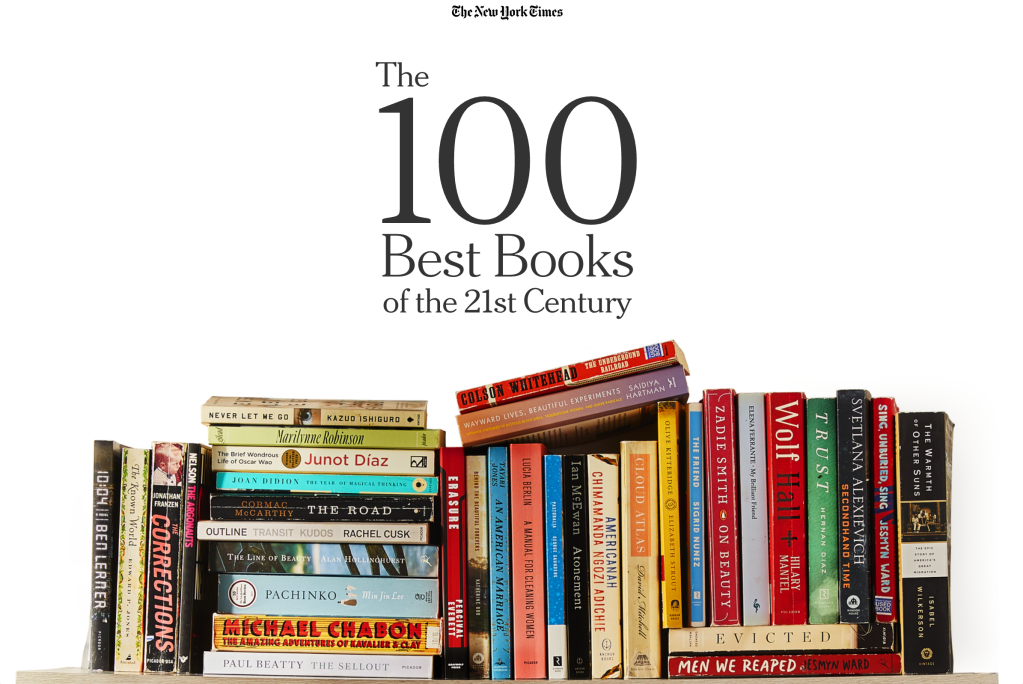
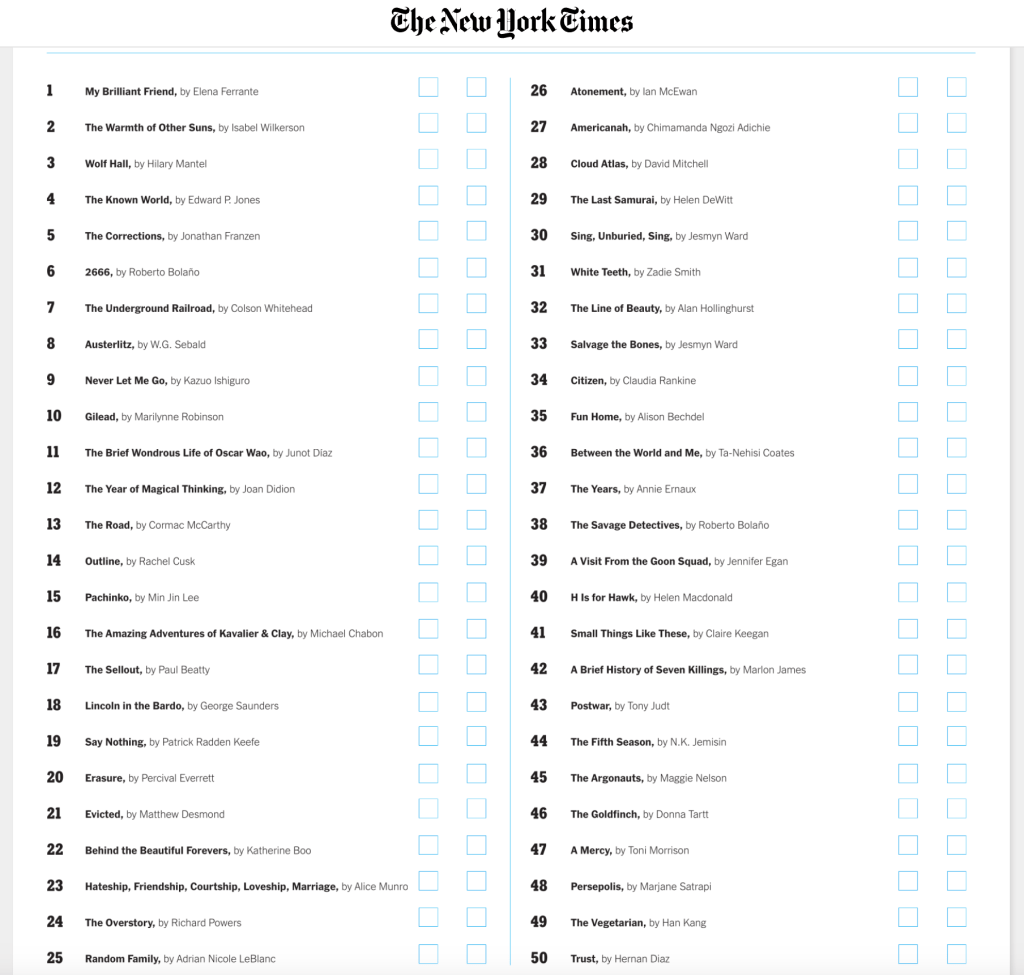
So, I had the usual mixed emotions about the list I most recently saw: “The 100 Best Books of the 21st Century,” re-highlighted on The New York Times website a week or so ago. (The link is here. If you end up hitting a paywall, the list also appears in two screen shots I placed below.)
The NYT’s methodology? “As voted on by 503 novelists, nonfiction writers, poets, critics, and other book lovers — with a little help from the staff of The New York Times Book Review.”
There are many excellent titles on the Times list, of course, and it turned out that I’ve read 24 of them. But, as with other rankings I’ve seen over the years, I thought there were a number of books that shouldn’t have been there but were or should have been there but weren’t. Not surprising given that we all have different opinions — one reason why “best” lists can be fascinating.
Among the novels I was happy to see — even as I might have put them higher or lower on the Times list — were Jonathan Franzen’s The Corrections (5th), Michael Chabon’s The Amazing Adventures of Kavalier & Clay (16th), Richard Powers’ The Overstory (24th), Chimamanda Ngozi Adichie’s Americanah (27th), Zadie Smith’s White Teeth (31st), Donna Tartt’s The Goldfinch (46th), Jeffrey Eugenides’ Middlesex (59th), Barbara Kingsolver’s Demon Copperhead (61st), Viet Thanh Nguyen’s The Sympathizer (90th), and Ann Patchett’s Bel Canto (98th).
Among the novels I thought were ranked too high were Marilynne Robinson’s Gilead (10th), George Saunders’ Lincoln in the Bardo (18th), Ian McEwan’s Atonement (26th), and Kate Atkinson’s Life After Life (51st). Why? I found the first book boring, the second highly original but at times tedious, the third marred by what I thought was an awful ending, and the fourth rather confusing. Other readers might feel differently. 🙂
Then there are authors and novels I felt should have been on the Times list. Where was Kristin Hannah? (The Great Alone would have been one possibility). Liane Moriarty? (Perhaps with Big Little Lies.) Amor Towles? (A Gentleman in Moscow.) Richard Russo? (Empire Falls.) Lionel Shriver? (So Much for That.) Lisa Genova? (Still Alice.) Margaret Atwood? (The Blind Assassin and/or Oryx and Crake.) J.K. Rowling? (Maybe one of her Harry Potter novels published post-2000, though it can be hard to choose one book from a series. And if you wanted to name the whole Potter series, the first three books were pre-2000, in the latter 1990s.)
Also, at least one other Barbara Kingsolver novel — I’d pick Unsheltered — deserved to be on the Times list.
Any 21st-century novels you’d like to mention/discuss? Thoughts on the Times top-100? General thoughts on “best” book lists?
Misty the cat says: “Fannie Flagg wrote ‘A Redbird Christmas,’ meaning this redbird is months late.”
My comedic 2024 book — the part-factual/part-fictional/not-a-children’s-work Misty the Cat…Unleashed — is described and can be purchased on Amazon in paperback or on Kindle. It’s feline-narrated! (And Misty says Amazon reviews are welcome. 🙂 )
This 90-second promo video for my book features a talking cat: 🙂
…and a 2012 memoir that focuses on cartooning and more.
In addition to this weekly blog, I write the 2003-started/award-winning “Montclairvoyant” topical-humor column every Thursday for Montclair Local. The latest piece — which names many famous songs — is here.
Was W. Somerset Maugham relaxing after appearing in his own book? Maybe. 🙂
Our attention is definitely captured when authors directly or indirectly refer to themselves and their own books in their novels.
This can give readers an additional sense of a writer’s personality, and provide other extra elements to a book — including humor. On the possibly negative side, “self-insertion” can puncture fiction’s illusory world and remind readers that there’s an authorial presence pulling the strings.
The example of “self-insertion” I noticed most recently was when Elin Hilderbrand had one of her fictional characters in The Five-Star Weekend buy a Hilderbrand novel while in a Nantucket bookstore. Some delightful authorial self-mocking was part of the scene as another character tried to ply the Hilderbrand-interested character with more “serious” literature.
In Miguel de Cervantes’ Don Quixote novel, the title character has Cervantes’ debut book in his library. Also, another character in the classic 17th-century work says he’s a friend of Cervantes.
Then there’s John Steinbeck’s East of Eden, which was partly inspired by the author’s own family history. So it’s not a total surprise when Steinbeck himself pops up for a brief cameo in the novel.
W. Somerset Maugham put somewhat more of his actual self in his latter-career novel The Razor’s Edge when his searching-for-meaning-in-life protagonist — the fictional Larry Darnell — has a deep discussion about spirituality and more in a Paris cafe with…Maugham. (Of Human Bondage, the Maugham novel considered that author’s masterpiece, is actually more semi-autobiographical than The Razor’s Edge.)
And Emile Zola put a LOT of himself in his novel The Masterpiece; the book’s fictional author Pierre Sandoz is clearly based on Zola himself, who had a long real-life friendship with painter Paul Cezanne. The Masterpiece‘s protagonist — painter Claude Lantier — is partly based on Cezanne as well as Claude Monet and Edouard Manet.
In Kurt Vonnegut’s Slaughterhouse-Five, the narrator character is obviously Vonnegut himself. There are even these lines: “That was I. That was me. That was the author of this book.”
Herman Melville did a self-reference variation by having the title character in Pierre write a book that appalled its would-be publisher. This plot twist was a way for Melville to vent about the poor critical and commercial reception for Moby-Dick, released the previous year. Pierre — which, like Moby-Dick, was ahead of its time in various ways — would also sell badly, and cause lots of controversy with its implied-incest element.
Of course, as several early commenters rightly note below, most novelists put something of themselves in the books they write — even if subconsciously. My post mostly focused on when writers do this in a pretty overt way. 🙂
Your thoughts on, and examples of, this topic?
Misty the cat says: “I’m on the windswept moors of ‘Wuthering Heights.'”
My comedic 2024 book — the part-factual/part-fictional/not-a-children’s-work Misty the Cat…Unleashed — is described and can be purchased on Amazon in paperback or on Kindle. It’s feline-narrated! (And Misty says Amazon reviews are welcome. 🙂 )
This 90-second promo video for my book features a talking cat: 🙂
…and a 2012 memoir that focuses on cartooning and more.
In addition to this weekly blog, I write the 2003-started/award-winning “Montclairvoyant” topical-humor column every Thursday for Montclair Local. The latest piece — about past-due school district bills, a township manager payout, diminished mass transit, and more — is here.
Every one of us can relate to looking back at our younger years and remembering the highs and lows of that time. Feeling nostalgia or regret or embarrassment, etc., from an adult perspective. And perhaps getting insight into what helped make us what we are today.
Among the many authors who have explored a fictional character’s past is Haruki Murakami in the rather lengthily titled Colorless Tsukuru Tazaki and His Years of Pilgrimage, which I read last week. As a teen two decades earlier, Tsukuru had been part of a group of five close friends when the other four suddenly and completely cut him off without explanation. Tsukuru was devastated, and never quite got over it even into his 30s. Finally, his girlfriend insists that the Tokyo-based Tsukuru try to find out what happened — which leads him to revisit his Japanese hometown of Nagoya and even take a trip to Finland.
Revisiting/analyzing one’s younger years is also a major theme of Cat’s Eye by Margaret Atwood. In that novel, celebrated Canadian painter Elaine Risley is invited back to her Toronto hometown for a retrospective show of her art. That visit brings to the surface many memories of her childhood — which included negative experiences (such as being bullied) and more positive ones.
Harper Lee’s renowned To Kill a Mockingbird novel has its Scout Finch character recount her childhood from an adult vantage point. Nicholas Sparks does something similar in A Walk to Remember, as the middle-aged Landon Carter recalls his teen romance with the gravely ill Jamie Sullivan. In both cases, virtually the whole book takes place in the past, except for the brief later-life framing.
Many other novels chiefly focus on a protagonist in adulthood while offering brief childhood flashbacks to more fully flesh out the character. Elin Hilderbrand’s The Blue Bistro, a book I just finished set mostly in a Nantucket restaurant, does that well.
The recollection-of-childhood approach is different in Charlotte Bronte’s Jane Eyre, as the title character uses a first-person narrative to chronologically chronicle her life from girlhood into adulthood. George Eliot does a third-person version of that in The Mill on the Floss as she tells the life story of Maggie Tulliver (and to a lesser extent Maggie’s brother Tom).
A chronological kid-to-adult story line can of course be extended into a series, as is the case with J.K. Rowling’s Harry Potter books and Jean M. Auel’s Earth’s Children books (The Clan of the Cave Bear, etc). In those two series, the sagas end in early adulthood for the young protagonists.
Another type of approach is in Jamie Ford’s Hotel on the Corner of Bitter and Sweet, which features Henry Lee in parallel story lines — as a 56-year-old adult in the 1980s, and as a 12-year-old kid seeing his friend Keiko Okabe relocated to a harsh Japanese-American internment camp in Idaho in the 1940s.
Then there’s F. Scott Fitzgerald’s short story “The Curious Case of Benjamin Button,” in which the title character ages in reverse — from old to young. Kind of a different category. 🙂
Your thoughts about, and examples of, this theme?
Misty the cat says: “Thomas Wolfe wrote ‘You Can’t Go Home Again.’ I’m proving him wrong.”
My comedic 2024 book — the part-factual/part-fictional/not-a-children’s-work Misty the Cat…Unleashed — is described and can be purchased on Amazon in paperback or on Kindle. It’s feline-narrated! (And Misty says Amazon reviews are welcome. 🙂 )
This 90-second promo video for my book features a talking cat: 🙂
…and a 2012 memoir that focuses on cartooning and more.
In addition to this weekly blog, I write the 2003-started/award-winning “Montclairvoyant” topical-humor column every Thursday for Montclair Local. The latest piece — about affordable housing, flooding, public libraries in need of work, a schools superintendent search, and more — is here.













 Dave Astor on Literature