On the way to Boston this past Friday, May 8, from New Jersey. (Photo by me.) Unsurprisingly, we were behind a car with Massachusetts plates…I think.
My wife Laurel and I were in Boston the past couple days picking up our younger daughter Maria from her first year of college, meaning I didn’t have a lot of time to write. Because of that, I figured I’d rerun a post…and it seemed appropriate to have that literature piece be about educators — whether professors or teachers of younger students. But I’ve done several posts over the years featuring fictional (and actual) educators, so I decided to reference all of them.
In 2023, I discussed real-life authors who also are or were professors.
“And why not?,” I wrote back then. “Teaching uses different creative muscles, is a source of additional income (not all well-known novelists are rich), gets authors away from their solitary writing desks into some semblance of the real world, enables them to help budding writers, gives them insight into what young people are thinking, etc. Perhaps their teaching also indirectly infuses their own writing, or even directly if a book they pen has an academic setting. On the other hand, teaching time does take away from writing time.”
I added, “In some cases, dual-duty authors were professors who later became novelists. But perhaps in more cases, they first gained some renown as novelists — after which universities came a-calling.”
The living and deceased authors/professors I named in that 2023 post included Jhumpa Lahiri (Barnard College); Toni Morrison (Princeton University, Rutgers University, etc.); Joyce Carol Oates (Princeton, University of California, Berkeley); Jeffrey Eugenides (Princeton, New York University); Zadie Smith (also NYU); Viet Thanh Nguyen (University of Southern California); Junot Diaz (Massachusetts Institute of Technology); Kent Haruf (Nebraska Wesleyan University); Vladimir Nabokov (Wellesley College, Cornell University); and J.R.R. Tolkien (University of Oxford).
In 2021, 2015, and 2012 posts (the earliest one for The Huffington Post two years before this blog’s 2014 launch), I discussed fictional educators. Many who are as smart, hardworking, and compassionate as some of our favorite real-life teachers we might fondly recall when reading about fictional ones.
Literature’s memorable educators include — among others — Anne Shirley in Anne of Avonlea, the first sequel to L.M. Montgomery’s Anne of Green Gables; Charles Chipping of James Hilton’s Goodbye, Mr. Chips; Ricky Braithwaite of E.R. Braithwaite’s autobiographical novel To Sir, With Love; Dan Needham of John Irving’s A Prayer for Owen Meany; and Jane Eyre, briefly a teacher in Charlotte Bronte’s novel after that character spent a longer time as a teacher of another sort: being a governess.
Children’s fiction also has some great teachers — with one I mentioned in a previous post being Ms. Frizzle of The Magic School Bus books written by Joanna Cole and illustrated by Bruce Degen.
Of course, not all teachers are terrific and/or admirable. In past posts I cited the bumbling Gilderoy Lockhart of J.K. Rowling’s Harry Potter series; the charismatic but fascist-leaning title character in Muriel Spark’s The Prime of Miss Jean Brodie; the means-well-but-overwhelmed Ida Ramundo of Elsa Morante’s novel History; and the comedic-but-a-bit-irresponsible Aimee Lanthenay of Colette’s Claudine at School.
When previously naming fictional professors, I noted that a number of them are quirky — which obviously can make for interesting reading. I added: “There can be drama in their interactions with students, in their competitive relationships with fellow profs, in their sometimes-fraught encounters with university administrators, in their quests for tenure, and in the whole publish-or-perish thing. All that makes up for the fact they are (usually) not the heroic, adventurous sorts who can make readers turn pages faster than tuition payments drain a bank account.”
Among literature’s other fictional profs are Howard Belsey and Monty Kipps of Zadie Smith’s On Beauty; Gauri Mitra of Jhumpa Lahiri’s The Lowland; William Stoner of John Williams’ Stoner; Virginia “Vinnie” Miner and Fred Turner of Alison Lurie’s Foreign Affairs; Tony Fremont (a woman) of Margaret Atwood’s The Robber Bride; Humphrey Clark of Margaret Drabble’s The Sea Lady; Grady Tripp of Michael Chabon’s Wonder Boys; and Godfrey St. Peter of Willa Cather’s The Professor’s House.
I asked this before in previous posts on this topic, but you’re welcome to again name some of your favorite fictional educators.
Happy Mother’s Day to my wife Laurel, who is…a professor. 🙂 This photo of her was taken last month in New York City.
Misty the cat says: “My teen human is home from college, so I sleep extra in celebration.”
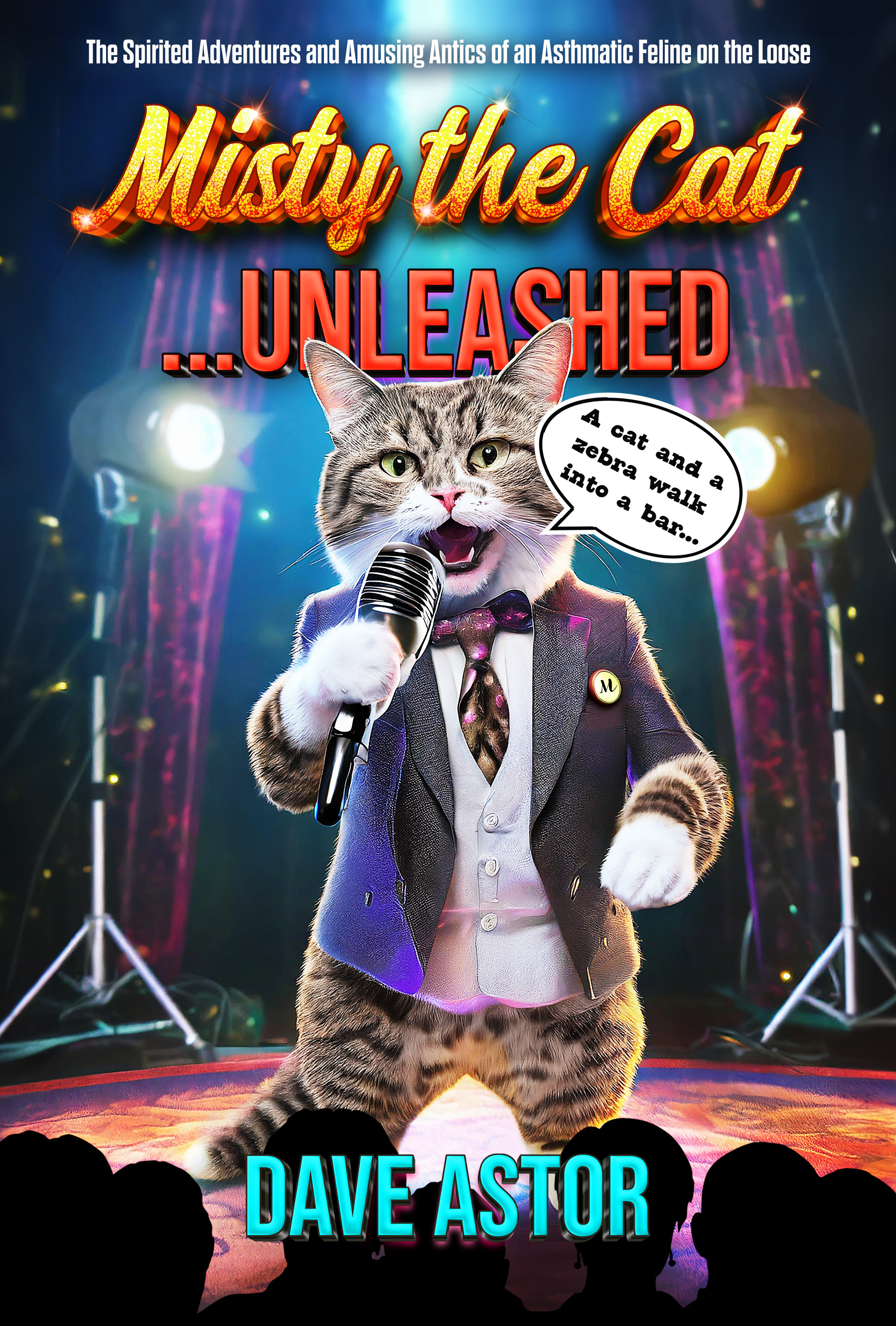
My comedic 2024 book — the part-factual/part-fictional/not-a-children’s-work Misty the Cat…Unleashed — is described and can be purchased on Amazon in paperback or on Kindle. It’s feline-narrated! (And Amazon reviews are welcome. 🙂 )
This 90-second promo video for the book features a talking cat: 🙂
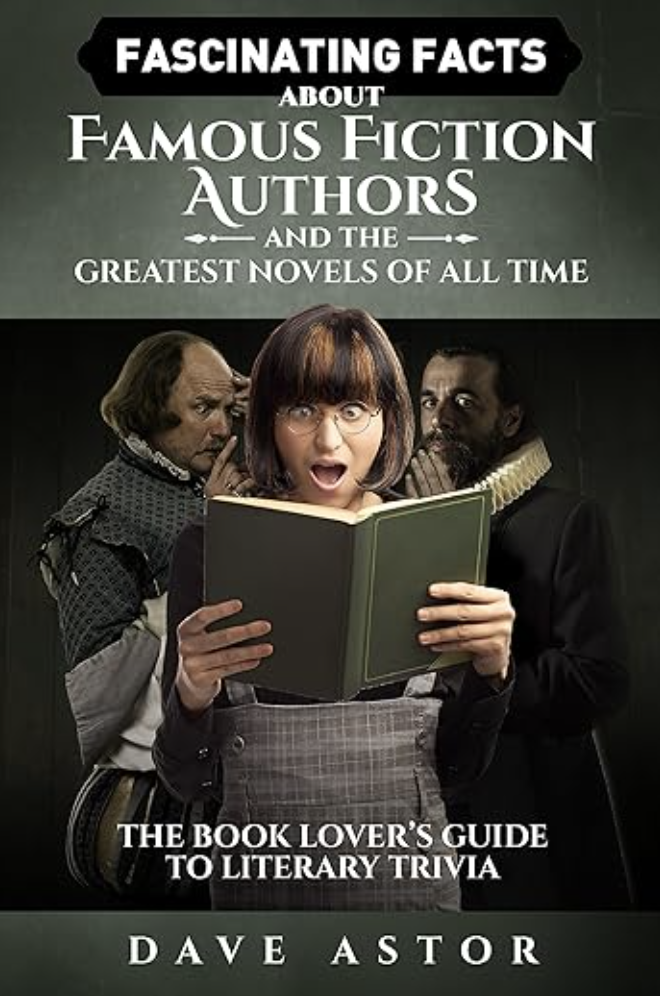
I’m also the author of a 2017 literary-trivia book…
…and a 2012 memoir that focuses on cartooning and more, including many encounters with celebrities.
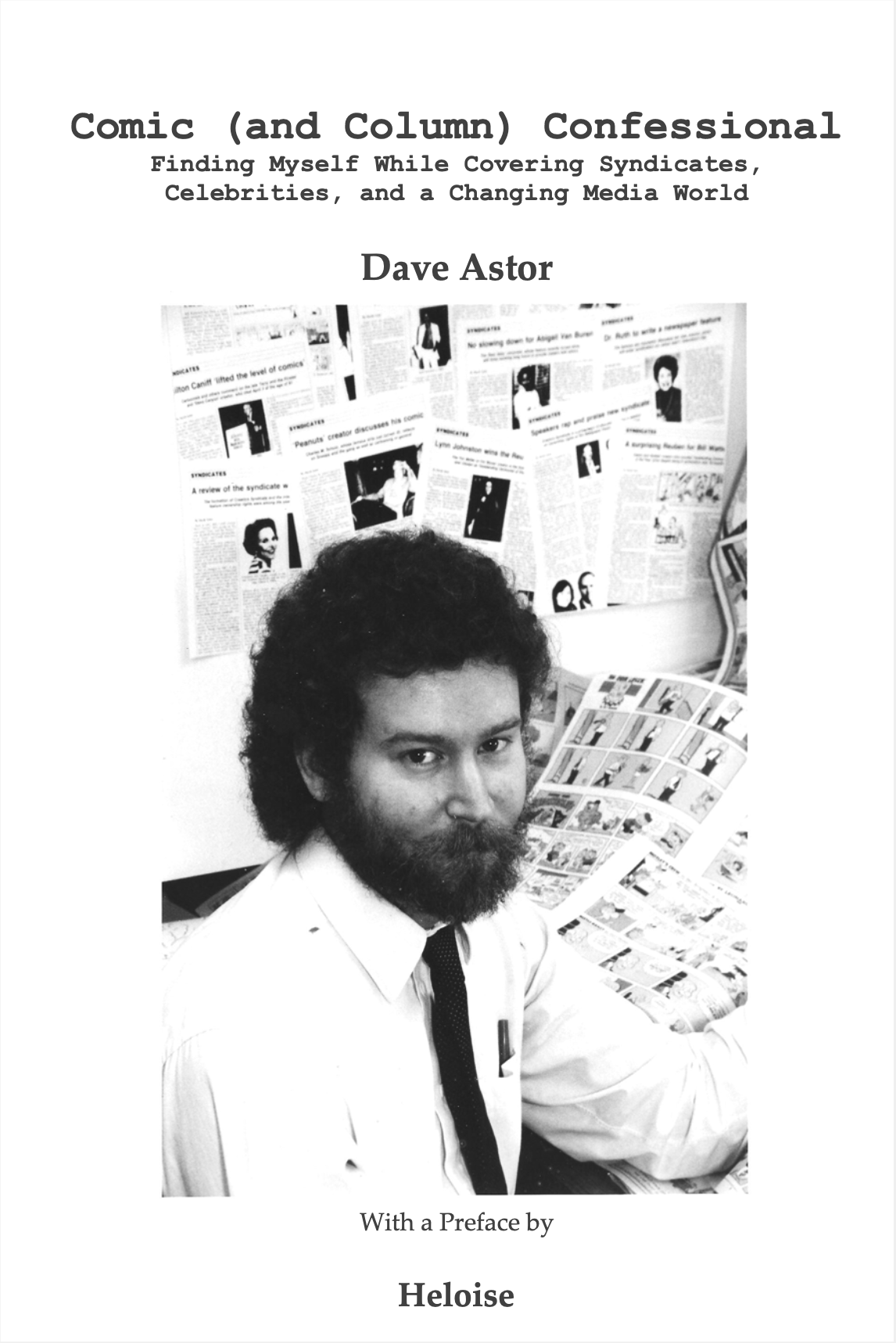
In addition to this weekly blog, I write the 2003-started/award-winning “Montclairvoyant” topical-humor column every Thursday for Montclair Local. The latest piece — which discusses my town’s grim school budget and more — is here.
 Dave Astor on Literature
Hi Dave, this is a lovely post about teacher and professors who also write. We have several in our WP community that I can think of off the top of my head. Laura Ingalls Wilders was a teacher in her Little House series of books.
LikeLiked by 1 person
Oops it’s Robbie
LikeLiked by 1 person
Thank you, Robbie! Glad you liked the post! And thanks for mentioning “Little House” and that a number of members of our blogging community write and teach.
LikeLiked by 1 person
I should also add the music teacher from The Last of the Mohicans and Jack Torrence from The Shining.
LikeLiked by 1 person
I appreciate those educator additions, Robbie, from two memorable books! I’ve read all five of James Fenimore Cooper’s “Leatherstocking” novels (including “The Last of the Mohicans”) and thought they were excellent.
LikeLiked by 1 person
I’m ashamed to admit I didn’t love The Last of the Mohicans. I did, however, enjoy The World According to Garp and there are lots of teachers in that book. It’s partially set in a school.
LikeLiked by 1 person
I liked “The Last of the Mohicans,” Robbie, but it wasn’t my favorite of Cooper’s five “Leatherstocking” novels; that was “The Deerslayer.”
Glad you enjoyed “The World According to Garp,” and, yes, it has teachers! 🙂
LikeLiked by 1 person
🌷💞
LikeLiked by 1 person
🙂
LikeLiked by 1 person
Wow Dave! I had to blow off the cobwebs from my own brain!! 😆 . ‘Goodbye, Mr Chips’?! I remember watching the film decades ago, it was really enjoyable. I’m so delighted to learn from your post that it’s based on a book, by James Hilton! I wonder if I can land a copy?!
Great post Dave! Educators in fiction! Very fascinating!
With kindest regards
🙂
LikeLiked by 1 person
Thank you, Sharon! James Hilton is an excellent author; I also loved “Lost Horizon,” among other novels of his. I’ve never seen the “Goodbye, Mr. Chips” film; glad you enjoyed it!
LikeLiked by 1 person
Thank you Dave! I have never heard of James Hilton but will be looking him up!
I love discovering new authors!
Thanks once again.
Hope your week is going well.
Sharon ☺️
LikeLiked by 1 person
You’re very welcome, Sharon! I also love discovering new authors (whether living or from the past). 🙂 Hope your week is going well, too!
LikeLiked by 1 person
Thank you Dave!
My week is going OK!
📚 🙂
LikeLiked by 1 person
Good to hear, Sharon. 🙂
LikeLiked by 1 person
😊
LikeLiked by 1 person
🙂
LikeLiked by 1 person
First, I am absolutely exhausted from watching Misty working out on the bed. All that watching you film does require a nap.
How about Professor Moriarity from Sherlock Holmes?
Or, from Jules Verne’s Twenty Thousand Leagues Under the Seas – Professor Pierre Aronnax and Journey to the Centre of the Earth – Professor Otto Liedenbrock?
Jean Brodie is a great example. Thanks Dave!
LikeLiked by 2 people
Thank you, Resa, for those great examples from Arthur Conan Doyle and Jules Verne!
Ha ha! 😂 Misty enabling exhaustion. 😂 Perhaps he was pre-napping yesterday in preparation for the claw trim and monthly arthritis shot he got this morning.
LikeLiked by 2 people
Oh wow! No wonder. He was banking sleep. Smart cat. 😼
LikeLiked by 2 people
Banking sleep might be the only kind of banking worth admiring. 🙂
LikeLiked by 2 people
😂😹
LikeLiked by 1 person
🙂
LikeLiked by 1 person
Belated Mother’s Day greetings to Laurel! 💝
I’m glad you shared this post again…so good! I just finished reading “Midnight on the Potomac”, by Dr. Scott Ellsworth who is a history professor at the University of Michigan and couldn’t have enjoyed it more. I learned more about the Civil War from Ellsworth’s book than I did in any conventional classroom! And what a treat to meet him recently at a book signing, too, and hear him speak about his book and writing journey, balancing with his academic work. Once again…thank you for a thoughtful post! 😊😊😊
LikeLiked by 2 people
Thank you, Vicki! A belated Happy Mother’s Day to you, too!
Great that you’ve read and got to meet Dr. Scott Ellsworth; he sounds like a fantastic author/educator. (Laurel is a University of Michigan alum, after having grown up in Ann Arbor.) It’s wonderful how some writers/academics make history come alive.
LikeLiked by 2 people
Oh my goodness – I don’t think I knew any of that about Laurel! How fun. Please give her my best…good people associated with a terrific school! 💝😊💝
LikeLiked by 2 people
Thanks, Vicki! Yes, the University of Michigan is quite impressive! Laurel was a Midwesterner for decades — early childhood in Illinois; rest of childhood in Ann Arbor; also attended other colleges/universities in Iowa and Indiana; taught in Indiana, Ohio, and Wisconsin; etc.
LikeLiked by 2 people
Oh my goodness….my Midwest roots are tingling! Please give Laurel my best…we’ve surely traversed some of the same paths over the years! ❤️😊❤️
LikeLiked by 2 people
Sounds like some similar paths, indeed, Vicki! 🙂
LikeLiked by 2 people
Happy Monday to both of you, Dave! xo! 💝
LikeLiked by 2 people
Thanks, Vicki! Hope you’re having a good Monday, too!
LikeLiked by 2 people
I am, I am…I love the chunks of “desk time” I reserve on Mondays when I can. I feel caught up and at ease when my task list is under control. xo! 💝
LikeLiked by 2 people
Having a to-do list under control IS a good feeling!
LikeLiked by 2 people
Especially for some of us, LOL! 😁💝😁
LikeLiked by 2 people
Yes, Vicki! I’m also one of that “some of us.” 🙂
LikeLiked by 2 people
I knew it! My people! I love finding my people! ❤️🤣❤️
LikeLiked by 2 people
Finding one’s people is also a good thing. 🙂
LikeLiked by 2 people
Indeed! 😉❤️😉
LikeLiked by 2 people
🙂
LikeLiked by 2 people
Great examples, by you and the other people in the comments, Dave. I’m going to step away from stories, and go with an episode of the Twilight Zone. It was written by Rod Serling. The Changing of the Guard is a poignant episode about a college professor who feels he has contributed nothing in his career. Not surprisingly, he learns otherwise.
The episode is wonderful and made better by the fact that the Professor Fowler is played by Donald Pleasence. Oddly enough, the setting Serling chose was Antioch College (his alma mater), and he accepted a teaching post there after completing this script. So, it kinda-sort fits.
Nice to meet Laurel.
LikeLiked by 2 people
Thank you, Dan! I somehow missed watching that “Twilight Zone” episode you skillfully described back when I used to watch reruns of the show; it sounds excellent and poignant. (As “TZ” episodes often were.) I think I mentioned this before, but I have a paperback collection of “TZ” stories Rod Serling wrote, so he was a book author as well as a TV person.
LikeLiked by 2 people
I have two of his books. I checked and this one isn’t in either (but there is a third)
LikeLiked by 2 people
Not in mine, either. Given how many “TZ” episodes there were, I suppose some didn’t make it into book form. And of course various writers, not only Serling, wrote various episodes.
LikeLiked by 2 people
I think he wrote about half of them. There were over 160 spread over five seasons. That’s a lot of production. Even some that he didn’t write, he tweaked the screenplay.
LikeLiked by 2 people
Wow, Dan! Didn’t know he wrote as many as that! He worked VERY hard.
LikeLiked by 2 people
I looked it up, Dave. Serling wrote or adapted 92 of the 156 episodes of the original The Twilight Zone. Meanwhile, I’m struggling to complete five short stories before the end of May.
LikeLiked by 2 people
VERY impressive! But you’re pretty prolific yourself with your books, short stories, daily blog posts, woodworking, etc.!
LikeLiked by 2 people
Thanks Dave. I enjoy what I’m doing, but it’s a good thing I’m retired.
LikeLiked by 2 people
Not having a full-time office job does free up time for other things!
LikeLiked by 2 people
What a lovely post, Dave! An example of a teacher in books I admire is Miss Jean Brodie, the iconic Edinburgh schoolmistress! Although she’s a controversial character indeed!
LikeLiked by 2 people
Thank you, Ada! Jean Brodie is indeed controversial. Very skilled and charismatic, but she could have better politics. 🙂 😦
LikeLiked by 2 people
I’m so glad you posted a photo of Laurel, Dave–nice to “meet” her. What does she teach?
I thought of two examples of teachers in books I like. One is a book I read in my early teens by Irene Hunt, UP A ROAD SLOWLY, which won a Newbery medal in 1967, the year after it was published. When Julie is seven, her mother dies, and her father sends her to live with her aunt Cordelia, who is, on the surface, a stereotypical prim and proper spinster schoolteacher. However, as Julia spends the next ten year living with her aunt, she comes to love her very much and learns a great deal from her.
Codi, the heroine of one of my favorite Barbara Kingsolver books, ANIMAL DREAMS, comes back to the small town where she grew up when she learns her father has dementia. To support herself while she looks after her father and decides what to do next, she reluctantly becomes a high school science teacher, only to discover how much she enjoys it.
LikeLiked by 2 people
Thank you, Kim! Laurel is a French professor at one of New York City’s community colleges.
Two excellent examples, well-described, of fictional teachers! I’ve read and enjoyed “Animal Dreams” (and everything else Barbara Kingsolver has written). And I love the thought of admirable (whether that’s immediately apparent or not) educators in books aimed at younger readers.
LikeLiked by 2 people
John Dobbyn taught at Villanova Law School (where I worked for a few years), and he also wrote novels. I have read the first three, which were set in Boston and featured different criminal gangs.
LikeLiked by 2 people
Thank you, Madeline, for the interesting mention! I hadn’t heard of John Dobbyn until seeing your comment. Nice that you worked at Villanova Law School! (I did a Villanova college visit with my younger daughter a couple years ago but she decided not to apply.)
LikeLiked by 1 person
Two books I read long ago about teachers–“Up the Down Staircase” by Bel Kaufman and “Christy” by Catherine Marshall. I would also add Donna Tartt’s The Secret History”. (K)
LikeLiked by 2 people
Thank you, Kerfe, for those three great mentions! I’ve read “Up the Down Staircase” (which I found to be very funny and “teacher-y”) and “The Secret History” (which I think is outshone by Donna Tartt’s later/fantastic “The Goldfinch”).
LikeLiked by 1 person
Miss Jean Brodie was the teacher who immediately jumped to mind. Ann Beattie is a professor and had a number of professor characters (and not in a good way, as far as I’m concerned). And of course all four of my fiction-writing profs were novelists: Tony Ardizzone, Mark Smith, Tom Williams, and John Yount. John Gardner is another one.
LikeLiked by 2 people
Thank you, Liz, for the mention of various characters and real-life authors/professors! Great that all of your fiction-writing profs were novelists; that’s an impressive four for four! As for fascist-sympathetic Jean Brodie, she would unfortunately still find much to admire if she had lived in the 2020s rather than the 1930s. 😦
LikeLiked by 2 people
Yes, Jean Brodie was a twisted individual.
LikeLiked by 2 people
Very!
LikeLiked by 2 people
Not surprisingly, I’ve only read a few of the books you’ve mentioned. As happened in my own life, teachers can greatly influence the course of our lives. As a Dan Brown fan, I find the adventures of his character Robert Langdon, a Harvard University professor of Religious Iconology and Symbology, especially intriguing and thought-provoking. Though he initially dreamed of pursuing a career as a singer-songwriter, Dan Brown became an English and Spanish language teacher. Life has a way of changing our course.
LikeLiked by 3 people
Thank you, Rosaliene! I totally agree that “teachers can greatly influence the course of our lives.” And thanks for that interesting info about Dan Brown having been an educator as well as the creator of an educator character.
LikeLiked by 2 people
🙂 ❤
LikeLiked by 2 people
🙂
LikeLiked by 2 people
Glad you’re getting your beauty rest, Misty.🥰
LikeLiked by 3 people
Ha, Melissa! 😂 Thank you! Misty seems to have a one-third stake in Bed Bath & Beyond. 🙂
LikeLiked by 2 people
That’s a beautiful photo of Laurel, Dave, to go with a beautiful topic for a post. While you’re on real-life teachers who became authors, don’t forget C S Lewis, Oxford professor and member of the ‘Inklings’ along with Tolkein, as well as author of ‘The Chronicles of Narnia’ which includes the best-known ‘The Lion, The Witch and The Wardrobe’. On the subject of ‘Jane Eyre’, let’s not forget that Charlotte Bronte herself spent time as a teacher in Belgium – accompanied for a short time by her sister Emily – at the Pensionnat Héger in Brussels, leading to her writing ‘The Professor’ and ‘Villette’, the former based around Constantin Héger, the professor on whom she had a bit of a crush, the latter about Lucy Snowe, who also goes to teach in Belgium. Anne Bronte was also both teacher and governess, as well as author. In George Gissing’s ‘New Grub Street’ the impoverished author Harold Biffen makes a meagre living by tutoring while engaged on writing his magnum opus. And you beat me to Miss Jean Brodie, a favourite. Many thanks for the brain workout, Dave; have a good week. 🙂
LikeLiked by 2 people
Thank you, Laura! Glad you liked the photo, and I appreciate all the real-life and fictional educator mentions! The Brontes could have formed their own teachers’ union. 🙂 When I mentioned Tolkien, C.S. Lewis would have been logical to mention at the same time. 🙂 As for Jean Brodie, one of the more memorable and subtle part-villains in lit. Have a good week, too!
LikeLiked by 2 people
Currently in NYC, I’m reading Edward Said’s classic (but stubbornly scholarly) study “Orientalism”. Said was a literature professor at Columbia. For those who are daunted by the complexity and density of this book, I recommend the preface to the 25th edition, written by Said in 2003, the year of his passing. It’s hugely relevant to what’s happening in the present day and time.
LikeLiked by 2 people
Thank you, Dingenom! Continued good luck getting through the challenging “Orientalism”! I’ve only read a little of Edward Said’s work, but he had a great reputation as a scholar, activist, etc. I admire him for his pro-Palestinian, anti-Zionist, and general anti-colonialist beliefs — and, yes, all that is very relevant in 2026.
LikeLiked by 2 people
What a wonderful tribute to educators!
This reminds me of my own English Literature professor, Tomaso Kemeny, with whom I discussed my thesis on Byron.
Not only was he an incredible teacher, but he was also one of the most original voices in contemporary Italian poetry.
It’s so true how teaching and creative writing can feed into each other.
Also, a very Happy Mother’s Day to your wife Laurel
LikeLiked by 2 people
Thank you, Luisa! Your English literature professor sounds amazing, both as an educator and as a writer. How lucky to have been a student of his, and fantastic that you did a thesis on Byron! My favorite college professor (Barry Qualls) also taught English lit; I was in a “Dickens” class of his. He made things so interesting as we managed to read at least a half-dozen of that author’s novels.
LikeLiked by 2 people
He was truly special! Six Dickens novels in one semester is no small feat: your professor must have been incredible, too.
A great teacher, and not just of English literature, may remain in our memory forever.
LikeLiked by 2 people
Definitely some eye strain with the longer Dickens novels we read. 🙂
And your comment’s last line is SO true, Luisa!
LikeLiked by 2 people
👍👍👍
LikeLiked by 2 people
🙂
LikeLiked by 2 people
Just a few thoughts. First off, the wonderful Matilda by Roald Dahl. There is the gentle, empathetic teacher called Miss Honey and the abusive one called Miss Trunchbull, the headteacher. I was lucky to go and see that play in Artscape in Cape Town – brilliant actors!
Now there is Mr (John) Keating – Dead Poets Society by Nancy H. Kleinbaum. Never read it (shame), but the movie was great – starring Robin Williams. We all remember: “Carpe Diem” (Seize the Day).
Finally, I just remembered this book (on my shelf) it’s The Lake of Dead Languages by Carol Goodman. An excellent book – who wouldn’t like to be a Latin teacher? Like she did – called Jane Hudson in that book. Hmm, does it exist anymore? (I did Latin at school from 2nd year to 6th form – posh eh? Grammar School for Girls!)
LikeLiked by 2 people
Thank you, Chris, for all those excellent examples! I read “Matilda” years ago; definitely quite a contrast between those two teachers.
One of these days I should read and/or see “Dead Poets Society”!
Unlike you, I never did Latin in any way, shape, or form. Not sure if that makes me lucky or not. 🙂
LikeLiked by 2 people
I think Stephen King started out as a teacher. Many of his novels and stories have teachers and students as characters and show a familiarity with high school culture.
LikeLiked by 3 people
Thank you, Audrey! You’re right about Stephen King starting out as a teacher, and about a number of (believable) teacher and student characters in his novels. In “Carrie,” “The Dead Zone,” etc.!
LikeLiked by 2 people