
All authors write some novels that are better than others, but occasionally there’s an unusually large gap in quality between a specific author’s books.
(At least in my opinion; a book I dislike might of course be liked by others, and vice versa. 🙂 )
I thought about this when recently reading Jeffrey Eugenides’ 2011 novel The Marriage Plot until giving up on it after about 100 pages. I loved that author’s 2002 novel Middlesex – which I thought was a brilliant look at a gender-confused character, the immigration experience, and more. It deservedly won a Pulitzer Prize.
The Marriage Plot? Almost plot-less as well as boring – and filled with spoiled, whiny, unlikable, pretentious, annoying characters at an Ivy League university. One Amazon reviewer drolly and accurately described these fictional collegians as “self-absorbed, over-educated noodles with cartoon parents.” Also, through his characters, Eugenides did way too much name-dropping of authors and books to beat us over the head with how well-read he was.
In short, I found the gap between those two novels astonishing – though, as I said before, others might feel differently.
Other huge gaps I’ve found in books by the same author? The first example that came to mind was between Jack London’s A Daughter of the Snows (1902) and London’s The Call of the Wild (1903). In the first novel, I admired London’s attempt to create a strong female protagonist, but the writing in general and the dialogue in particular were laughably clunky. Then, a year after that amateurish effort, came a stone-cold classic that couldn’t have been written better. Here was a case, also seen with some other authors, of a young novelist struggling to find writing confidence and a distinct writing voice before those both kick in – which can happen gradually or, as with London, seemingly overnight.
Large quality gaps between an author’s books can also have a late-career element. For instance, the chasm between Willa Cather’s exquisitely written My Antonia (1918) or Death Comes for the Archbishop (1927) and her abysmal Sapphira and the Slave Girl (1940) is stunning. Something like that can be caused by factors such as ill health or running out of ideas after penning many novels.
I also noticed this late-career phenomenon with Martin Cruz Smith: his Gorky Park (1981) and its first seven sequels are excellent, but eighth sequel The Siberian Dilemma (2019) is…ugh. It didn’t help that the author was dealing with advanced Parkinson’s disease at that point.
And with Jack Finney: Time and Again (1970) is a riveting time-travel classic, but its sequel From Time to Time (1995) is pretty bad. Perhaps not a coincidence that Finney was in his mid-80s in 1995 and died that same year.
Of course, other reasons for a great author writing a bad book – say, in mid-career – could include a temporary health crisis, other challenging stuff going on in her or his life, having to rush a book for some reason, etc. Or sometimes a dud happens inexplicably; authors are human like everyone else. (So I’m told. 🙂 )
Staying with a novel and a sequel, Kristin Hannah released the terrific Firefly Lane – about two very different friends – in 2008. Then came the 2013 follow-up Fly Away, which I found to be a yawn (though not awful). I’ve read 17 novels by Hannah – one of my favorite contemporary authors — and Fly Away is the only one I didn’t love. (My very favorites of hers are the most recently published four: The Women, The Four Winds, The Great Alone, and The Nightingale.)
And Darryl Brock came out with the fabulous, should-be-better-known baseball/time-travel novel If I Never Come Back in 1990. Twelve years later, his Two in the Field sequel was a near-dud.
Going back to the 19th-century, Wilkie Collins wrote lengthy superb novels such as 1860’s The Woman in White. One rare Collins misstep was A Rogue’s Life, which I struggled to get through despite it being short. But I did finish it, unlike The Marriage Plot. 🙂
Your thoughts about, and examples of, this topic?
Misty the cat says: “This is fan fact, not fan fiction. It’s hot in August.”
My comedic 2024 book — the part-factual/part-fictional/not-a-children’s-work Misty the Cat…Unleashed — is described and can be purchased on Amazon in paperback or on Kindle. It’s feline-narrated! (And Amazon reviews are welcome. 🙂 )
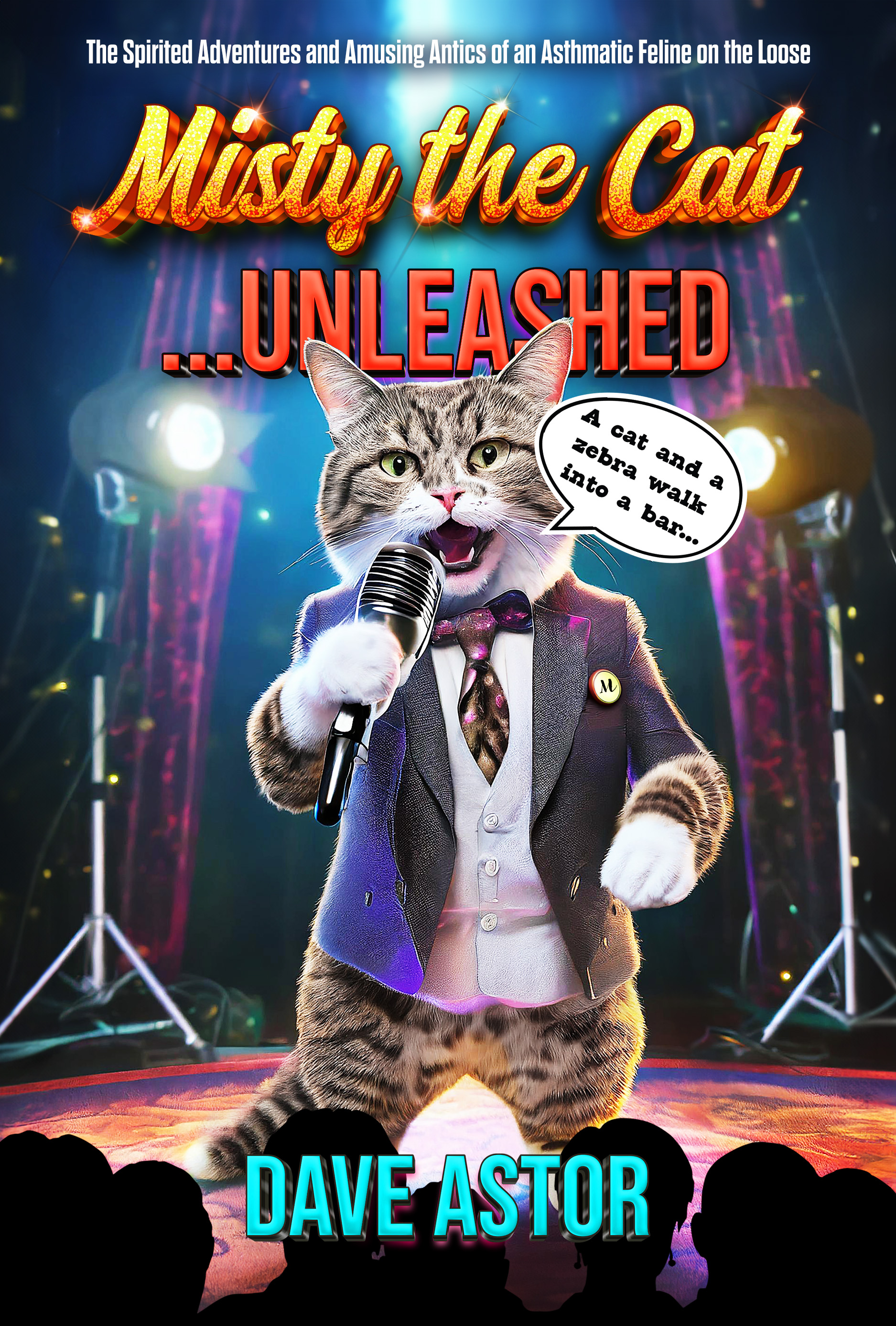
This 90-second promo video for the book features a talking cat: 🙂
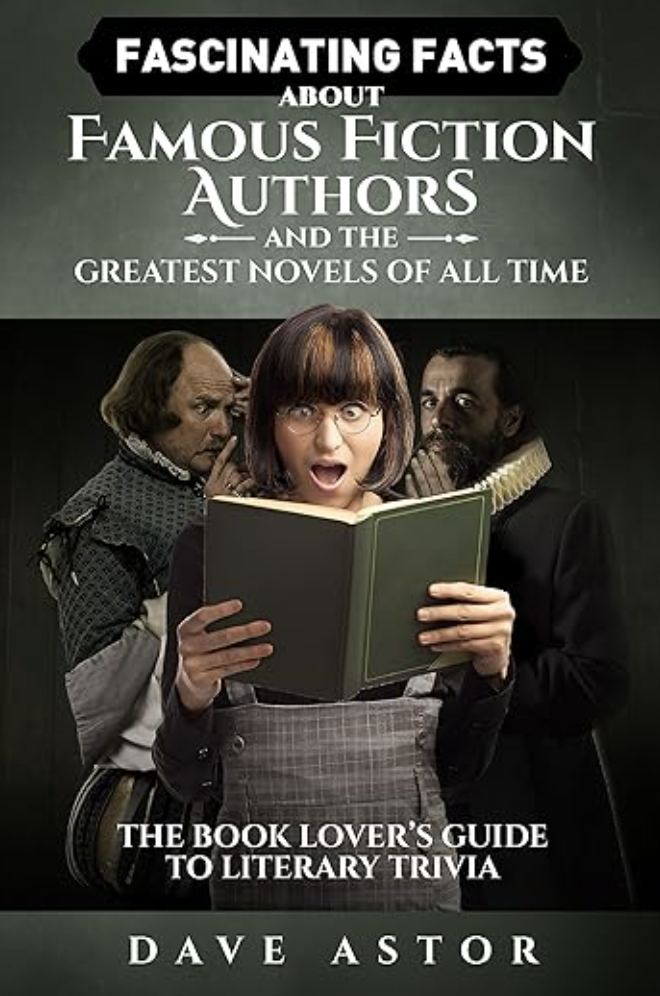
I’m also the author of a 2017 literary-trivia book…
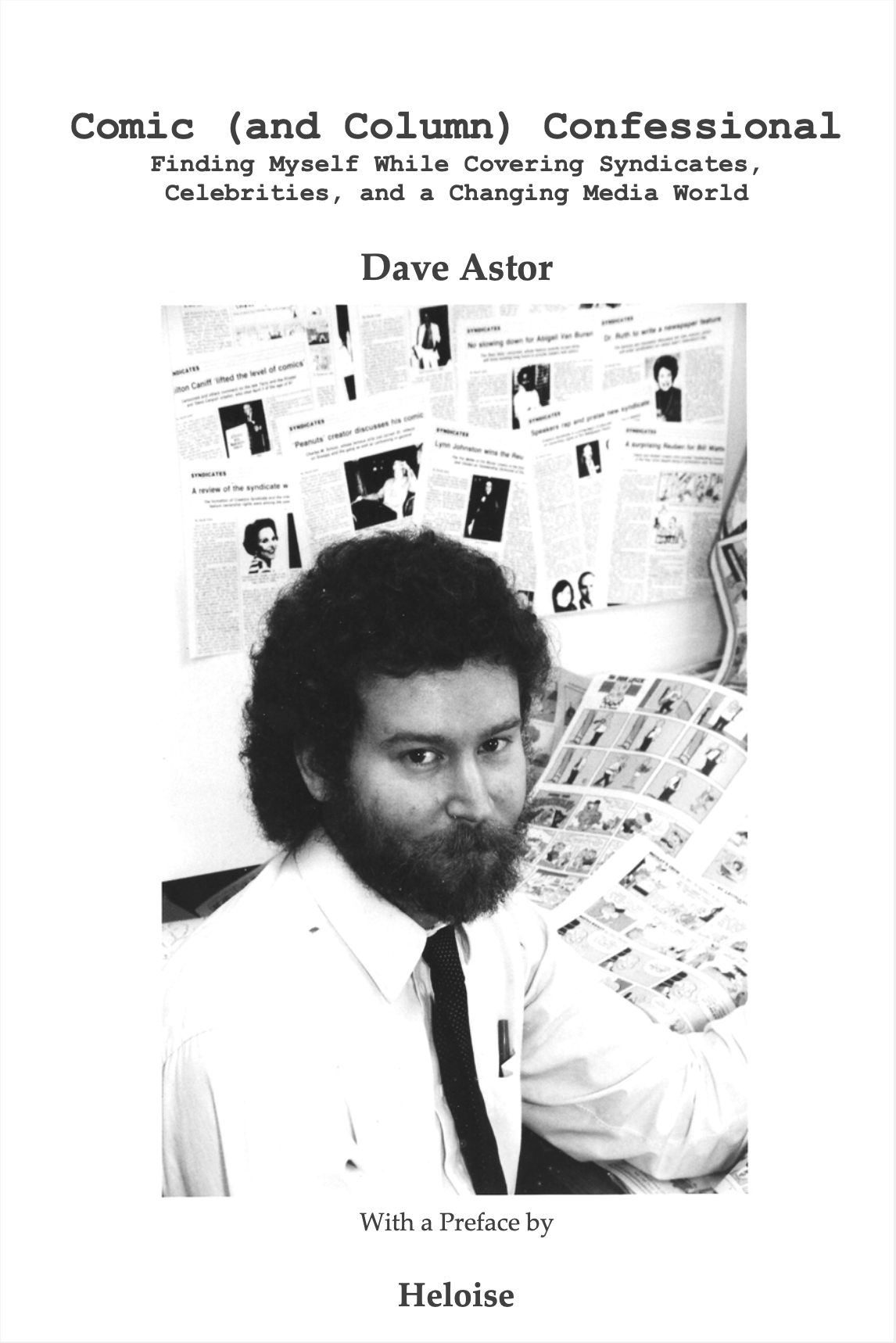
…and a 2012 memoir that focuses on cartooning and more, including many encounters with celebrities.
In addition to this weekly blog, I write the 2003-started/award-winning “Montclairvoyant” topical-humor column every Thursday for Montclair Local. The latest piece – about a tone-deaf hire and a long-overdue audit — is here.


Isn’t that so interesting that some books can be great and others not so much from the same author. I’ve read several authors that I absolutely loved my first introduction to them, and then really disliked the second I read and haven’t gone back. It definitely makes sense that not every novel will be a homerun and everybody likes different things. I read The Nightingale from Kristin Hannah, but now I’ll have to go read the other books you recommended from her. I loved The Nightingale so much I’m worried that the others won’t live up to the expectation, but I’ll have to give them a try.
LikeLiked by 2 people
Thank you, Alex! I agree — definitely interesting how varied in appeal some books by the same author can be.
As for Kristin Hannah, I thought her “The Women,” “The Four Winds,” and “The Great Alone” were just as good as (albeit quite different from) “The Nightingale.” Hopefully, you’d feel the same way if you get to one or more of them. 🙂
LikeLike
Wow, Misty is in heaven there.
LikeLiked by 2 people
Thank you, Edward! Yes, a fan and a nice open window can make a big difference. 🙂
LikeLiked by 1 person
You’re welcome, and absolutely. It shows.
LikeLiked by 1 person
🙂
LikeLiked by 1 person
Misty!!!
Lol.. you look simply marvellous!
Second time here, Dave. I just can’t think of an author. I think I’m burnt out from watching TV shows for the Emmys.
Hmmm… I like your Jack London example. Call of the Wild is an amazing book. Its feeling lingers in me to this day, yet I read it in my teens. But, I did not read the first novel you mentioned. I guess his strength was writing about a dog, not simply writing a dog.
Yet more bad jokes from the corners of my mindless!
Perhaps next week I’ll have a better comment!
LikeLiked by 1 person
“I guess his strength was writing about a dog, not simply writing a dog” and “the corners of my mindless” — ha ha, Resa! 😂
Jack London definitely had a way of writing about canines (also in “White Fang”) but I’m a fan, too, of his non-animal novels such as “The Sea-Wolf” (no actual wolf in that book) and “Martin Eden.”
Thank you for the kind comment about Misty, and I hope your TV watching is over soon!
LikeLiked by 1 person
LOL!~ Sigh!
Sorry for the tardy reply.
If I had known what I was doing when I started blogging I would have made 1 blog. However, I just kept making more blogs. 1 for each creative idea.
Anyway, it’s down to 2.
Finally checking in on Art Gowns, again.
TV watching is done! I am finished voting as of last night!
LikeLiked by 1 person
Glad your TV watching is finally done, Resa!
Two blogs are manageable. 🙂
LikeLiked by 1 person
…barely! LOL
BUT I have a new Art Gown finished. I’ve taken the pics.
Working on the post, and it is for/dedicated to Rebecca!
LikeLiked by 1 person
I hear you. 🙂
Looking forward to seeing that dedicated-to-Rebecca post!
LikeLiked by 1 person
The thing is though Dave, how much longer will mainstream publishers remain ‘the holy grail’? Nicely put! They have had their day, surely, for churning out the old same stuff!
I’m getting behind self-publishing if it means you can have more control of what you write and publish. Furthermore, any profits made will go into your own pocket. Quite right too!
😊
LikeLiked by 1 person
Good question, Sharon! Publishing companies are certainly becoming less holy grail-ish than they used to be. And you wisely noted the advantages of independent publishing for authors!
LikeLiked by 1 person
Thanks Dave! We are in agreement, once again! I predict traditional publishing will become the second option in the future!
Hope your week is going well.
😊
LikeLiked by 1 person
I think you’re right, Sharon!
Hope you’re having a good week, too!
LikeLiked by 1 person
Thank you, Dave! 🙂
LikeLiked by 1 person
You’re very welcome, Sharon! 🙂
LikeLiked by 1 person
Hello Dave!
A very interest topic, which I can definitely relate to!
Sometimes authors release the odd dud book, which is always a disappointment. Or you read a novel that has been hyped as amazing, but you don’t see it!!
Thanks for the books Dave, most of which I have not come across before.
Ps: Misty seems to have found his sweet spot in the line of the cooling fan!! Isn’t that just like a cat!! 😺
😊
LikeLiked by 2 people
Thank you, Sharon! Great point about some novels not living up to the hype. They might not be bad, but they could seem that way when they don’t meet expectations.
Yes, Misty, like other cats, is a cool-seeking missile. 🙂 I placed the fan there for when he jumps on that at-the-window box (which has my printer underneath it 🙂 ).
LikeLiked by 1 person
Hi Dave!
I’ve just noticed my typo! I meant *interesting* topic!! 🫢
That’s exactly me Dave! Failed expectations when it comes to hyped novels is miserable! 😃. And as you rightly pointed out, everyone has different tastes when it comes to books and the arts in general (I might add).
A great post, made even more poignant when you consider the amount of money some books are making nowadays!
Please tell Misty to keep cool!! 😸
Thank you, Dave!
LikeLiked by 1 person
Yes, Sharon! And sometimes novels are hyped for very wrong reasons — because they’re flashy, they’re trendy, they don’t question the status quo, they feature affluent characters, they’re by a famous author, etc. — even when they might not be great books.
LikeLiked by 1 person
I hear all of that Dave! Writing a novel more to fulfil a contact than as you rightly say; to question the status quo!! Spot on!
Many famous authors are definitely guilty of fulfilling contacts and stuffing their pockets with even more money!!
Don’t forget Dave, publishing is a business like any other business, so the publishers simply want known, bankable writers. You can see it when you go into bookshops or the library! Not good!
I really appreciate your feedback.
😐😊
LikeLiked by 1 person
You’re so right, Sharon, that publishing is a business — with the big publishing companies usually very profit-conscious and some famous authors money-oriented and others not so much. Meanwhile, there are certainly many independently published authors who write books for the love of it — hoping to make a decent amount of money, but realizing that that’s a long shot.
LikeLiked by 1 person
That’s just the thing, Dave! I have more respect for independently published writers who are more interested in getting their work/message out there over mega profit! Besides, traditional publishing is so selective you might NEVER become published at all! And that would be a shame!
😐🙂
LikeLiked by 1 person
Like you, Sharon, I have a LOT of respect for independently published authors. They write for various reasons other than monetary ones (though a little bit of earnings is a nice bonus). And, yes, traditional publishers are VERY selective (while still periodically not making the right choices of who to sign).
LikeLiked by 1 person
You are exactly right again Dave! Mainstream publishers often get it wrong with who they sign! Their mistakes tend to end up in discount bookshops!! 😅
I agree! Independent authors write for many reason but I think financial reward is important. It still takes money to produce and publish a book so financial rewards is a rightful recognition of that effort.
Thanks Dave
Sharon 📚
LikeLiked by 1 person
So true, Sharon! Mainstream publishers often get it wrong, but remain desirable because they’re “the holy grail” for many authors and of course give authors a better chance for better sales.
And, yes, getting some financial reward helps — especially given that, as you rightly note, it costs money to self-publish. So there’s the matter of recouping one’s investment even before hopefully making a little profit.
LikeLike
As. General rule I only read any authors most famous book/s so I don’t experience this often. I don’t finish books I don’t like either and then I don’t review them. Life’s too short for bad books. I didn’t like The Sun also Rises by Hemingway and it put me off his books for years. I didn’t like Shirley by Charlotte Brontë that much either. Not all of Agatha Christie’s books are equally clever and I prefer Hercule Poirot to Miss Marple.
LikeLiked by 1 person
Thank you, Robbie! Reading an author’s most-known novels is definitely a partial “cure” for large quality gaps. 🙂 And I agree that “life’s too short for bad books.”
I was also not a fan of “The Sun Also Rises” and didn’t try Hemingway again for a while; still, “For Whom the Bell Tolls” is the only novel by him that I really love. “Shirley” doesn’t pack the punch of the almost-perfect “Jane Eyre” and even the mixed-bag “Villette.” And, yes, a few of Agatha Christie’s many mysteries are so-so. I like Hercule Poirot and Miss Marple in different ways. 🙂
LikeLiked by 1 person
My favourite Hemingway’s are A Farewell to Arms, The old man and the Sea and For whom the bell tolls in that order. I liked the first four of the Earth child series by Jean Auel and the first four of Harry Potter. I didn’t finish the last book in either series.
LikeLiked by 1 person
Interesting how series can evolve. The later “Harry Potter” novels were longer, more involved, scarier, etc., but lost some of their fun and whimsy. I did like all seven, though. I also liked all of Jean Auel’s books, but agree that the earlier ones were better. Jondalar got even more annoying after a while, but Ayla remained a great character until the end.
LikeLiked by 1 person
Agreed about Ayla 😊
LikeLiked by 1 person
🙂
LikeLike
I agree on all fronts about your Kristin Hannah thoughts. Fly Away just didn’t have the same emotional impact as the first one. I also have to admit that (although I know I’m in the minority here), I expected a bit more out of the Women as well. But the Nightingale and the Great Alone are like… peak reading. Amazing!
LikeLiked by 1 person
Thank you, M.B.! You are definitely a Kristin Hannah expert. 🙂 Yes, “Fly Away” is the one Hannah novel for which she seemed to “phone it in.” I guess I like “The Women” more than you do, but agree that “The Great Alone” and “The Nightingale” are superb. (Of course, the wartime setting of “The Nightingale” is a setting that you’re very familiar with as a reader and a writer. 🙂 )
LikeLiked by 1 person
I’ve heard about My Antonia (1918) but never read it! I guess a gap helps writers to rethink their own stance and ideas, so can help with creativity. I guess it can also create a kind of performance anxiety, too, though!
LikeLiked by 1 person
Thank you, Ada! I think it’s no coincidence that the words “author” and “anxiety” start with the same letter. 🙂
“My Antonia” is my favorite Willa Cather novel. Somewhat autobiographical, although Cather is “represented” by a male character (which might reflect the author being LGBTQ+ in real life at a time when it was difficult to live openly with that orientation).
LikeLike
Dave, great discussion topic and lots of good thoughts. Bookmarked 😎. I’m really interested in the depth of an author’s creative well… If they’re drawing on their own experiences, or observations of friends and family, I guess it really depends on the breadth/depth of them and whether or not there’s something even storyworthy (vs sponge worthy 😉) to write about let alone produce more. “Write what you know” ~ Hemingway
I think this spills over into other creative fields… Like Christopher Cross’s 1980 debut album when he burst on the scene with four top 20 songs, Album of the Year and Song of the Year… and then what…Or M Night Shyamalan with “The Sixth Sense.” Orson Welles and “Citizen Kane.” Must be hard to set the high water mark on your first foray…and everything else is judged by the first.
LikeLiked by 2 people
Ah, Darryl, I see the comment of yours I answered below was incomplete. I guess all authors write what they know to a certain degree, but some do that more than others — and some have pretty extensive imaginations to conjure up stuff that’s not in their own experience.
And, yes, some authors, musicians, and other creative people hit a home run the first time and can’t duplicate that. You offered some great examples, though Orson Welles, for instance, did do some excellent movies post-“Citizen Kane” even though they weren’t similarly groundbreaking, A+ films.
LikeLiked by 1 person
Dave, fair enough. You’re writing a whodunit about a Hannibal Lecter type who’s into Lepidopterology … ehh… learn a few basics about monarchs vs viceroys, go with that 😂
LikeLiked by 2 people
😂
That would get a reader’s attention. 🙂
LikeLiked by 2 people
And sorry, typing on the beach, hard to see…guess I hit the submit button by accident!
LikeLiked by 1 person
Less apocalyptic to type on the beach than read “On the Beach.” 🙂
LikeLiked by 2 people
Go Set A Watchman may apply. Yet I read that its not a true sequel rather was a initial draft of To Kill A Mockingbird. ?
Michele
E @ P way back
LikeLiked by 3 people
Thank you, Michele! I’ve never read “Go Set A Watchman,” but I’ve also heard it was an early draft of “To Kill A Mockingbird” (with that draft depicting Atticus Finch in a less-flattering light).
LikeLiked by 1 person
An excellent topic, Dave, but I have to admit that I’m failing to come up with anyone at present. Off to bed, so I may wake up with examples overflowing! Catch you on the other side. 🙂
LikeLiked by 1 person
Thank you, Laura! I look forward to what you have to say tomorrow, if examples occur to you. 🙂
LikeLiked by 1 person
Dave, great thought-provoking topic and lots of good answers. Bookmarked 😎.
I’m interest in the well concept… if stories are based on an author’s own experiences or observations, is there a finite amount of content that can be retained., or enough there that’s even story worthy? (vs sponge worthy😉)? Certainly characters can be based on people we know, but they’re fixed with respect to the plot… so for example, James Michener has a big a
LikeLiked by 1 person
Thank you, Darryl! Very interesting to think about whether authors have a certain well of ideas that, if it runs dry, forces them to repeat themselves/write lesser books (if they continue to write).
LikeLiked by 1 person
So interesting, Dave! I’ve not read either of the Eugenides books, but your thoughts give me pause. How IS it that one book can be so, so stellar and another oh-so lacking? Curious. I wonder if there’s some backstory about the process Eugenides undertook in writing “The Marriage Plot”, some hint about the slippage in its appeal? When you say you called it quits after 100 pages, I know something’s amiss. My sense of you is that you are a generous reader, willing to hang in…as long as possible. Oh – and one more thing! This made me giggle:
One Amazon reviewer drolly and accurately described these fictional collegians as “self-absorbed, over-educated noodles with cartoon parents.”
Enough said. “over-educated noodles”. I get the picture.
Thanks as always, for providing Sunday enjoyment! 💝💝💝
LikeLiked by 3 people
Thank you, Vicki!
A great question about whether there’s some backstory to why “The Marriage Plot” isn’t very good. Might be an article or two somewhere on the Internet about that, though I didn’t find anything in a search I just did. Of course, that Eugenides novel did get a number of good reviews, so maybe I’m crazy. 🙂
I do try to finish every novel I start, but I have less patience than I used to for that. Years ago, I might have “dropped” one or two books a year. Now, maybe three or four.
“Over-educated noodles” definitely is in the running for “Phrase of the 21st Century.” 🙂
LikeLiked by 3 people
I don’t think you’re crazy! Not one bit!
And I love the honor you’re bestowing on my new favorite phrase! 🤣❤️🤣
LikeLiked by 1 person
Thanks, Vicki! 🙂 It IS quite a phrase. 🙂 Perhaps it’s no coincidence that I’m about to make pasta for dinner. 🙂
LikeLiked by 1 person
Haha! Same! That’s what’s on the stove here! 🤣❤️🤣
LikeLiked by 1 person
😂 🙂 😂
LikeLiked by 1 person
Dave – a fabulous topic and great follow-up discussion. Your post made me think about why we return to particular authors in the first place. Years ago I read several of Leon Uris’s novels, each taking me into a very different period of history. That’s when I began to feel that an author we read again and again becomes something of a reading companion. I think that we come to recognize the voice and trust the storyteller, which makes the “disappointing book” all the more surprising.
I also wonder how much a writer’s circumstances shape each book. That is age, health, experience, deadlines and even the expectations of readers and publishers enter the equation. Fitzgerald once wrote, “You don’t write because you want to say something, you write because you have something to say.” Perhaps what a writer has to say, and how successfully they can say it, changes throughout a lifetime.
I am learning not to expect consistency from writers when I don’t expect it from my life. We change, our circumstances change, and the world around us changes. The books themselves become markers of where a writer happened to be, creatively and personally, at different moments along the way. Just a few thoughts!!!
LikeLiked by 7 people
Thank you, Rebecca! Many great — and tolerant — thoughts! So true that authors, like non-authors, aren’t machines that are completely consistent each time. (Even machines can have consistency problems. 🙂 ) It’s impressive when some novelists come within shouting distance of doing excellent work each and every time. And of course the occasional so-so book by a top-notch author might still be better than a lot of other books.
LikeLiked by 5 people
Thank you, Dave. I think that is why I remain loyal to certain authors even when an occasional book doesn’t quite work for me. Over the years, they have given me the gift of time well spent in their company. And increasingly I think about the other side of that relationship too. That is whenever someone chooses to read something I have written, they are giving me something they can never get back, their time. So it is a gift that I treasure.
LikeLiked by 2 people
Beautifully said, Rebecca! Yes, it’s a mutual experience between author and reader. And I totally agree that it’s easy and right to remain loyal to an author who gives one a lot of reading pleasure even if an occasional book misfires.
LikeLiked by 2 people
I loved The Thorn Birds but did not enjoy Colleen McCullough’s other books.
LikeLiked by 4 people
Thank you, Darlene! I also loved “The Thorn Birds,” and liked Colleen McCullough’s “Morgan’s Run” a lot — the only two novels of hers I’ve read. I did hear that her “The Ladies of Missalonghi” was consciously or subconsciously plagiarized from L.M. Montgomery’s wonderful novel “The Blue Castle.”
LikeLiked by 2 people
An interesting theme for consideration, Dave. When I read novels by my favorite authors, I tend to be forgiving if the storyline is not as good as an earlier novel. Not every book can be a bestseller. Not every story impacts readers in the same way. For me, getting past their first book that I read is the real test.
LikeLiked by 3 people
Thank you, Rosaliene! That’s a great attitude; not every book by an excellent author is going to be top-notch. It’s when an occasional novel by an excellent writer feels really sub-par that I get surprised.
LikeLiked by 2 people
Perhaps we expect too much from our great writers and other creative artists.
LikeLiked by 1 person
That’s a great observation, Rosaliene!
LikeLiked by 1 person
🙂 ❤
LikeLiked by 1 person
🙂
LikeLiked by 1 person
I guess sometimes on a later novel the well can dry, equally as you say there’s wells that are dry already at book one but the second book is like the well is overflowing. Maybe in these latter instances it just takes time for a voice to be found.
LikeLiked by 4 people
Thank you, Shehanne! Your well analogy (or is that metaphor? 🙂 ) is a good one!
Yes, finding one’s voice very early in a writing career is not always the case.
LikeLiked by 2 people
I usually find series that keep milking out a good pilot book returning to a predictable and, in the end, boring plotting schedule. I blame partially the publishers for this phenomena: they had a bestseller and they know they have a buying public, so they pressure the writer to produce one more, and then another one,… up to the point that when the same writer comes with a fresh idea for another novel, they just point blanc refuse to have a look at it. That’s probably the moment when writers fall out with their agents and publishers.
LikeLiked by 5 people
Thank you, Shaharee! Yes, some series shouldn’t be series or go on for too many books, but you’re right that most publishing companies are money-focused and a number of authors are tempted to go with a proven formula. I do think some series maintain their quality or even get better as they go along (among those that come to mind are series by J.K. Rowling, Val McDermid, and Sue Grafton).
LikeLiked by 2 people
Now that I come to think of it, Stephen King is usually a resourceful (bestselling) writer but I found that the Black Tower series declined towards the end. Books 1 through 4 are a cohesive, tight blend of dark fantasy and Western tropes while books 5, 6, and 7 alienated me from the tale. He inserted himself into the narrative as a literal character (excessively self-indulgent), rushed the plot with Anticlimactic Villain Resolutions, and after spending over 20 years waiting for the conclusion, the ending felt like an ultimate punch to the face that lacked true finality or closure.
LikeLiked by 2 people
I haven’t read that Stephen King series, Shaharee, but it does sound like it eventually went downhill.
I’m a fan of much of King’s work, but did think his 2006 “Cell” novel was pretty awful.
LikeLiked by 1 person
In the case of professional writers who need to generate income, it’s understandable that some of their work would be substandard. Maybe their hearts aren’t always into what they are writing.
I love to write and have been doing so since my early teens. I’m also an amateur author. My only published novel received very complimentary reviews, and I have been urged to write a sequel. I did try once, but soon realized that I just didn’t have it in me. Either I didn’t want to put in the necessary effort, or the storyline didn’t captivate me. Maybe both were true. Anyway, it has been collecting dust ever since.
I did learn something, though. A cousin of mine, a retired commercial airline pilot, asked me for some advice about writing. He had been interviewed in a podcast, and the story he shared was both fascinating and intriguing. I told him that it was great material for a nonfiction book, and that I would help him with his writing. But to consider such a project, I suggested he look deeply into himself to see if he had the desire. From the heart comes great stories. The written text can always be cleaned up later.
LikeLiked by 4 people
Thank you, Robert! Excellent point about a writer having to make a living. Those authors who take, say, a decade to complete a novel (such as Donna Tartt) often have the luxury of a good income from an earlier book or books, a day job, or a spouse helping to support them.
And I appreciate you sharing your experience — what you’ve done and decided not to do. If an author isn’t “feeling” a sequel, perhaps it’s best for it not be published.
LikeLiked by 4 people
Very interesting, dear Dave!
That qualitative gap is always evident, whether it’s a decline in quality after the second book, a hastily written sequel, or a decline in the final stages of a career.
To add another example to your list, in Italian literature, Carlo Collodi is the author of The Adventures of Pinocchio, an impeccable and universally beloved masterpiece. Yet, almost no one remembers his other works, such as Giannettino’s Journey Through Italy (Il viaggio per l’Italia di Giannettino).
They were written as government-commissioned school textbooks, and are are incredibly dry, moralistic, and boring, showing a huge gap compared to the dark, magical humor of Pinocchio.
LikeLiked by 6 people
Thank you, Luisa! That’s a fascinating example! I know nothing about Carlo Collodi’s career other than him writing the iconic “Pinocchio.” Government-commissioned stuff seemingly doesn’t have much of a chance of being compelling. Reminds me a bit of Nathaniel Hawthorne authoring a campaign biography of his friend Franklin Pierce when Pierce was running for President of the U.S. in the 1850s. Never read that book, but I’ve heard it’s boring and made Pierce into a more interesting person than he actually was in real life.
LikeLiked by 2 people
Great point, Dave!
Government-commissioned work definitely lacks that organic creative spark.
LikeLiked by 1 person
Exactly, Luisa! “…organic creative spark” — great phrase!
LikeLiked by 1 person
🤗💙🤗
LikeLiked by 1 person
🙂
LikeLiked by 1 person
Very many thanks, Dave for your excellent comparisons of novels:) I have just realized that I may have read a book and liked it very much, such as “Middlesex” by Geffrey Eugenides, but afterwards not have read other books by the same writer.I am therefore unable to make these difficult distinctions! I remember, however, that one of the books I very much loved is “The Hare with Amber Eyes” by Edmund de Waal ( A rich tale of the pleasure and pains of what it is to be human)and I therefore think to read one of this writer’s other books to find out more.
LikeLiked by 5 people
Thank you, Martina! Yes, if a person has read only one novel by an author, it’s hard to compare that book to another book by the same author. 🙂 But one always hopes, as I hope another book by Edmund de Waal isn’t disappointing for you.
It feels kind of unusual to love an author’s work in general while disliking one of their books in particular, but it happens…
LikeLiked by 1 person
Yes, of course, Dave, and let’s hope, as you say!
Everything is possible, but not probable!
LikeLiked by 2 people
“Everything is possible, but not probable” — great line, Martina! 🙂
LikeLiked by 2 people
Hi Dave, a quick note about this. I would mention Dan Brown, since I have several of his. I enjoyed The Da Vinci Code and Angels and Demons, but Digital Fortress and Deception Point were rather boring I felt, although I did finish both. Now I wonder why I finish those. I wouldn’t bother now. I think it is about age… hmm.
LikeLiked by 5 people
Thank you, Chris! An interesting example! I read “The Da Vinci Code” and found it ingenious but at times badly written, so I never tried more of Dan Brown’s work.
I hear you about finishing or not finishing novels. I used to almost always slog on to the end, but, like you, I now drop books more quickly. (Figuratively drop books; my toes are safe. 🙂 )
LikeLiked by 4 people
I’ve probably mentioned this before, but I had a hard time finishing the final book in Mervyn Peake’s Gormenghast books, Titus Alone. Titus was never a likeable character, and once he’s left Gormenghast Castle, which is fascinating, I found little to interest me.
LikeLiked by 3 people
Thank you, Audrey! It can be especially a shame when a book in a trilogy (or longer series) is disappointing. Sounds like you had a good reason for feeling disappointed.
LikeLiked by 4 people
It was a complete change of scene, and I gather Peake’s health was in decline when he wrote that last book.
LikeLiked by 1 person
Those two things would explain a lot, Audrey!
LikeLike
I think Misty is going to have words with you when she wakes and sees this video! I can almost hear her asking, “How would you like it if I posted a video of you completely relaxed, sound asleep?”
Walter Mosley’s Devil in a Blue Dress was a winner (for me), and I liked some of his others, but Every Man a King had too many twists, turns and subplots. More is not always better.
LikeLiked by 4 people
Thank you, Madeline! Excellent point about Misty; I invaded his privacy. 😐
I appreciate the Walter Mosley mention! I’ve read both those novels, and, like you, did enjoy “Devil in a Blue Dress” more. But I also kind of enjoyed “Every Man a King” (and the first book in that series, “Down the River unto the Sea”). People can definitely react to books differently. 🙂
LikeLiked by 3 people
Two books I recently thought were ok but several friends loved were Theo of Golden (the mentally ill woman who was living on the streets and is remarkably transformed by Theo’s kindness?) and Remarkably Bright Creatures (I wish I had an octopus who would find my lost keys). I guess I am too pragmatical/realistic for some authors.
LikeLiked by 3 people
Thanks for the follow-up comment, Madeline! I hear you about friends (or family members) having widely divergent feelings about a book. 🙂
LikeLiked by 2 people
I would cite that quality gap between Larry McMurtry’s “The Last Picture Show” and “Texasville.” The writing in the latter was much more polished than “The Last Picture Show,” but Texasville felt contrive and was completely lacking in heart.
LikeLiked by 5 people
Thank you for that example, Liz! I guess polished writing doesn’t guarantee a great novel. I need to read “The Last Picture Show” (and “Lonesome Dove”) one of these days. 🙂
LikeLiked by 3 people
I never read The Last Picture Show, but the movie was superb!
LikeLiked by 2 people
I’ve heard that about the movie, Robert! (But have never seen it.)
LikeLiked by 2 people