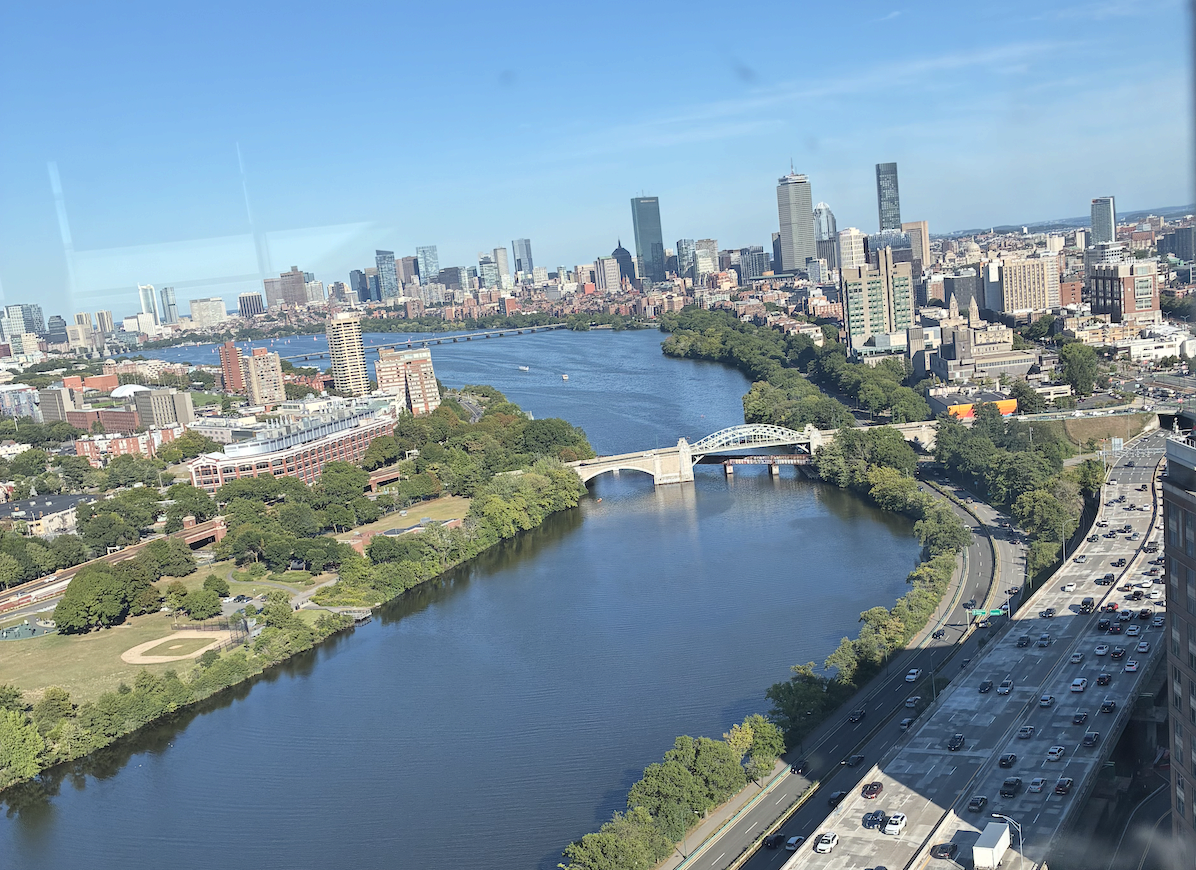
A view of Boston and the Charles River from the 26th floor of my daughter Maria’s sophomore-year dorm. (Photo by me, taken yesterday.)
My wife Laurel and I were in Boston from Friday to this afternoon moving in our daughter Maria for her second year of college. Not as much time as usual to think of and write my weekly Sunday book post, so I decided to stick with a second theme and write about some of my favorite second novels by authors. I’ll also mention a few not-favorite second novels.
A second novel can be excellent because an author has “practiced” with one published novel and is perhaps ready to move on to greater things. Or, in some cases, an author has been working up to that first novel for years and poured all kinds of effort and pent-up elements into it – creating the conditions to maybe disappoint somewhat with the next book.
I’ll only be mentioning authors whose first and second novels I’ve both read, so these will be my personal opinions and not necessarily the overall critical opinions. 🙂
One great second novel was Anne Bronte’s proto-feminist The Tenant of Wildfell Hall – whose quality was just a step below the Jane Eyre and Wuthering Heights classics written by her sisters Charlotte and Emily. Unfortunately, The Tenant of Wildfell Hall would be Anne’s last novel because of her early death.
Nathaniel Hawthorne also hit a home run with his second novel: The Scarlet Letter. That came out a whopping 22 years after his little-known first novel Fanshawe; during the time between the two books, Hawthorne focused on writing short stories.
George Eliot? Her very good first novel Adam Bede was followed by her brilliant The Mill on the Floss. Some consider that semi-autobiographical work to be her best book, though fans of Middlemarch and Daniel Deronda might have something to say about that.
Mark Twain co-wrote his uneven debut novel The Gilded Age with Charles Dudley Warner. Twain’s second novel, The Adventures of Tom Sawyer, of course became a classic.
J.R.R. Tolkien’s debut novel The Hobbit is delightful, even as his iconic follow-up The Lord of the Rings trilogy nearly two decades later has more sweep and depth.
In the not-great-but-very-good category of second novels, we have Charles Dickens’ Oliver Twist. It’s certainly well-done and memorable, but a bit of a letdown after Dickens entered the fiction realm with his hilarious The Pickwick Papers.
Carson McCullers’ novel The Heart Is a Lonely Hunter was a stunning debut for an author in her early 20s, but her somewhat-less-impressive (and much shorter) second novel Reflections in a Golden Eye is still quite riveting in its quirky way.
Your favorite second novels? Any you’re not particularly fond of?
Misty the cat asks: “If this bouquet is from 1-800-Flowers, where are the other 799?”
My comedic 2024 book — the part-factual/part-fictional/not-a-children’s-work Misty the Cat…Unleashed — is described and can be purchased on Amazon in paperback or on Kindle. It’s feline-narrated! (And Amazon reviews are welcome. 🙂 )
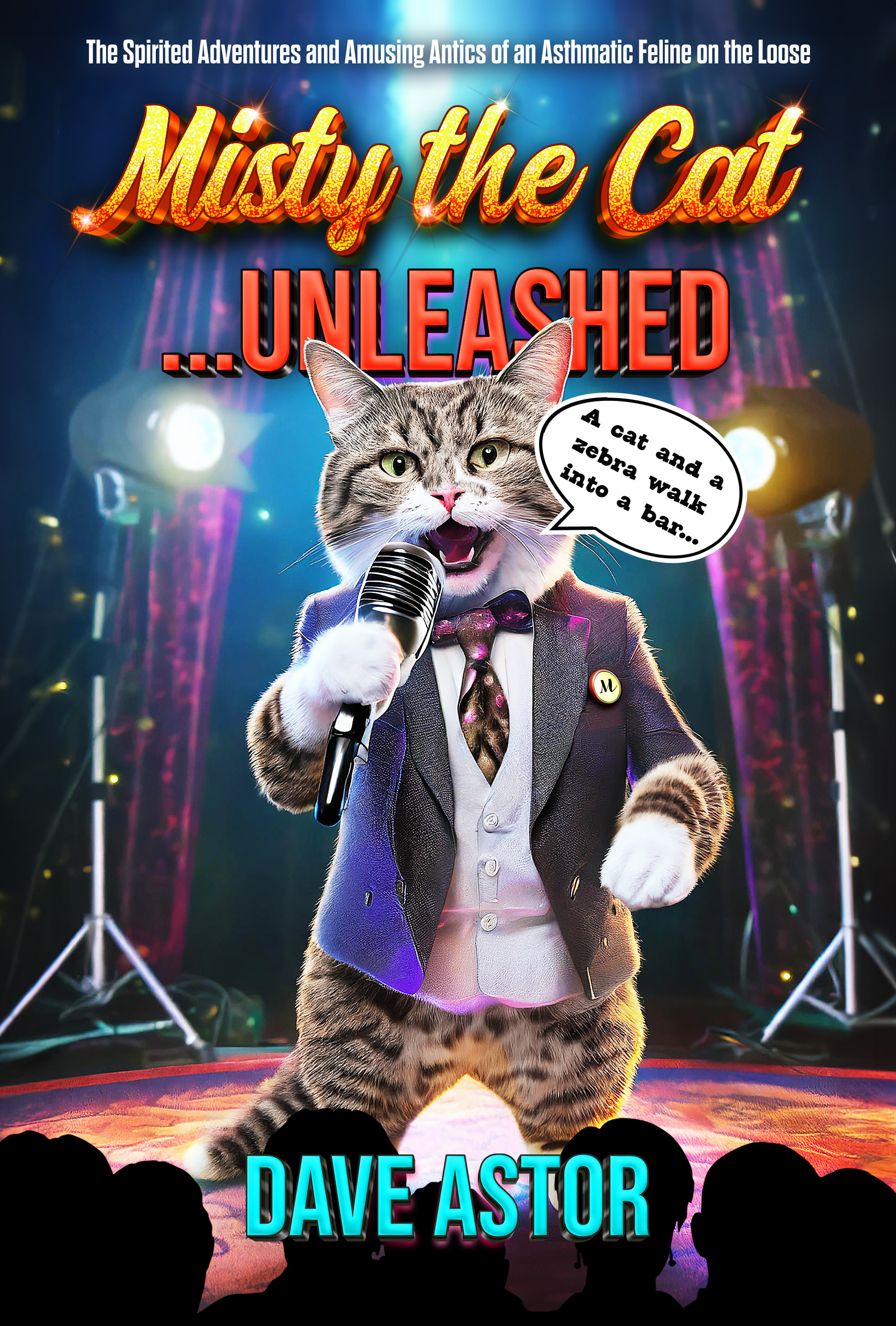
This 90-second promo video for the book features a talking cat: 🙂 Not my voice. 🙂
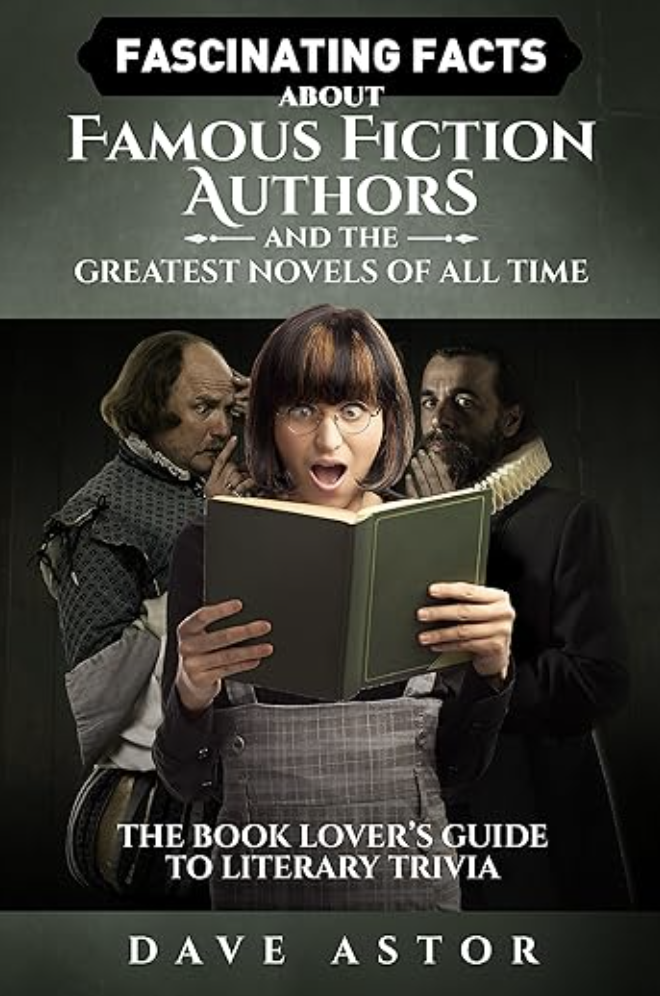
I’m also the author of a 2017 literary-trivia book…
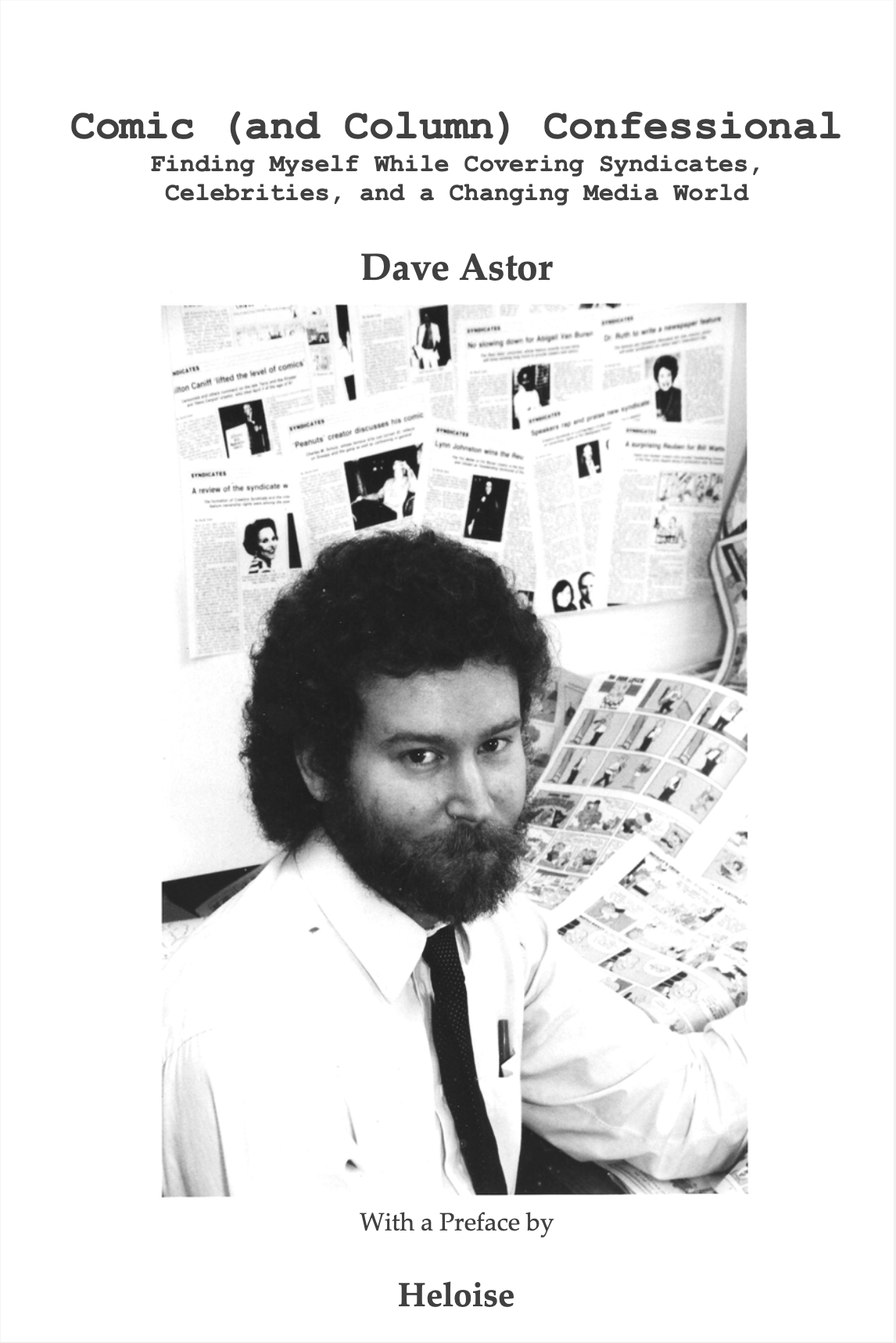
…and a 2012 memoir that focuses on cartooning and more, including many encounters with celebrities.
In addition to this weekly blog, I write the 2003-started/award-winning “Montclairvoyant” topical-humor column every Thursday for Montclair Local. The latest piece – about the vicious ICE agency detaining two restaurant employees who worked in my town — is here.
 Dave Astor on Literature
⭐️⭐️⭐️⭐️⭐️
LikeLiked by 1 person
Thank you very much, Philip! 🙂
LikeLiked by 1 person
Congratulations on your daughter being a sophomore. Hard work does pay off 🙂 and I love her view! She can certainly aim high 😉
Book-wise, I will move from your literary fiction examples to crime writers if that’s okay as the only examples I can think of right now are by Romanian authors.
Tess Gerritsen has at least two series I’ve read. In The Rizzoli and Isles books (nothing like the TV series that’s based on her work), I liked books 2, 3, and so on much more than the first one where she introduces the main characters. Her other book series is The Martini Club. Here book 1 was engaging and I found is surprisingly exciting to discover new characters and a whole new premise (for me) in crime fiction, but I found book 2 not rising to my expectations. I’m still debating book 3.
LikeLiked by 1 person
Thank you, Patricia! I appreciate the congratulations for my daughter, and I agree about the view from the top of her dorm building. 🙂 Her actual room is on the third floor, with the 26th floor a wonderful study area.
Crime writers are welcome in this discussion! I agree with what you’re alluding to; the first in a crime series can sometimes be a bit clunky as the author introduces characters, the setting, etc. — and then things often kick into higher gear in subsequent books. But there are of course exceptions, as you note with “The Martini Club.” 🙂
LikeLiked by 1 person
I loved The Red Tent by Anita Diamant but was not as impressed with Good Harbour or The Last Days of Dogtown. Perhaps after the first book, we have high expectations of something similar.
LikeLiked by 1 person
Thank you, Darlene! I agree that “The Red Tent” is excellent — a very interesting novelistic look at Biblical characters. It’s the only Anita Diamant book I’ve read; sorry that it seems like that author couldn’t match it with her other work.
LikeLiked by 1 person
You know… I’ve only thought that once.
Kiss Mommy Goodbye was the first novel of Joy’s that I read. Until recently, I thought it was the first novel she ever wrote. Turns out it was her 4th.
To me, when I read it, I thought it was a good story, but felt a bit short… undeveloped.
The 2nd novel I read was her 9th – See Jane Run. I was blown away at the difference.
Her 5th novel The Deep End was the 3rd one I read, and the story is a lot more developed than the 4th.
So, as usual, I am in a scattered order, but the out come is what you are talking about here. The writer got better with each book.
Of course not every book is better than the one before, but when the catalogue is as large as Joy’s, it’s hard to keep track.
WOW! Second year of college. Congrats Dad!
LikeLiked by 1 person
Thank you, Resa! I totally understand that we often don’t read authors in the same order as they wrote their books. I’m often one of those people, as with reading Joy Fielding’s 14th novel (“Grand Avenue”) first. 🙂 (On your recommendation 🙂 ). In general, I agree that, with some exceptions, authors do get better as they write more books (with perhaps a downturn toward the end of their careers).
I appreciate the college congratulations. 🙂
LikeLiked by 1 person
Interesting that there is sometimes a downturn near the end of their careers.
Have you done a post on authors whose last book, was their best? 🤔
LikeLiked by 1 person
I think I did a post on final novels a number of years ago, Resa, but don’t remember if I took the angle you mentioned. Will look. Off the top of my head, an argument could be made that Robert Louis Stevenson’s unfinished last novel “Weir of Hermiston” was his best. And Dostoevsky’s last novel “The Brothers Karamazov” certainly gave “Crime and Punishment” a run for its money for that author’s best, though I prefer “C&P.”
LikeLiked by 1 person
https://daveastoronliterature.com/2024/03/03/last-novels-that-last-in-our-memories/
LikeLike
https://daveastoronliterature.com/2018/02/04/authors-who-save-their-best-or-their-near-best-for-last/
LikeLike
Interesting.
I read lots of R.L. Stevenson, but not “Weir of Hermiston”.
Never read any Dostoevsky, but am interested in “The Idiot” translated by Anna Brailovsky.
Fitzgerald never finished his last novel.
I wonder how many authors died with an unfinished novel, good or bad? And how many of those got published posthumously?
LikeLiked by 1 person
Well, Resa, another past post of mine… 🙂
https://daveastoronliterature.com/2015/07/26/deceased-before-released-novels-published-posthumously/
I don’t know the number of posthumously published novels, but it must be a lot.
Dostoevsky is definitely worth the time, and his novels are more “readable” than many people think.
LikeLiked by 1 person
Wow! You have been coming up with topics since 2015!!!!
My respects!
Okay… I will try some Dostoevsky during the winter!
LikeLiked by 1 person
Thank you, Resa! It has been a while… 🙂
LikeLiked by 1 person
🌟
LikeLiked by 1 person
🙂
LikeLike
Hi Dave!
Your post this week has me scratching my head a bit! Very curious!
Like some of the other comments I don’t often think in terms of second novels by authors. I’m not that consistent! That said, I have read most novels by Nicholas Evans, the writer of ‘The Horse Whisperer’, and found that he wrote to a standard that did not fail to engage me! I can recommend, ‘The Smoke Jumper’.
Interestingly, I don’t know which scenario would be preferable: to write a first novel that is considered their best work, or to steadily improve with each subsequent offering! I hope this makes sense 😀
A very interesting post, with some great classic books I’m yet to read!
Ps: A very lovely family affair moving your daughter back to college for another year! Hasn’t September crepted up fast!!
Thanks Dave,
😊
LikeLiked by 2 people
Thank you, Sharon! September did creep up fast; always seems to do that. 🙂
After seeing your enthusiasm about Nicholas Evans’ books, I’m going to have to try to read his work! Will see what my local library has.
I suppose the ideal scenario would be to write a great debut novel to get on readers’ radar, and then follow that up with an equally great second novel. 🙂
LikeLiked by 1 person
You are right about that Dave, September definitely seems to come around fast!
Please do let me know if you manage to find anything by Nicholas Evans. It was sad when he died.
I like your idea about writing great first novels to get on the radar, then followed by good second novels! I think most successful writers aim for that. It’s certainly the ideal!
Incidentally Dave, have you read ‘Carrie’ by Stephen King? I haven’t so far.
Thank you for your feedback, it’s much appreciated.
Happy September!
😊
LikeLiked by 1 person
Thank you for the reply, Sharon! Happy September to you, too!
I should get to the library sometime this month. Fingers crossed that they have a book by Nicholas Evans. 🙂
I read “Carrie” a LONG time ago. From what I can remember, a very compelling novel from Stephen King’s early career.
LikeLiked by 1 person
Good morning Dave! I can’t imagine how early it must be in America, it’s only mid-morning here in the UK!
Thank you for your kind September wishes.
I hope your library has something by Nicholas Evans, he is one of my favourites.
‘Carrie’ sounds like it would be engrossing!
Thanks again Dave,
Have a great day!
Sharon 🙂
LikeLiked by 1 person
Good afternoon, Sharon! Yes, it was quite early in the U.S. when I wrote the previous comment. 🙂 Misty the cat tends to wake me up around 5 a.m., seeking his breakfast. 🙂
Most Stephen King novels are engrossing, and “Carrie” was the one that started it all.
Hope you’re having a great day, too!
LikeLiked by 1 person
Hi Dave!
I’m laughing because I thought to myself that all cat owners get up early! And yes, demanding their breakfast! 😺 Lovely Misty being no exception!! 😆
Engrossing Stephen King! Makes perfect sense to me given his fifty-year track recored of writing bestsellers!!
Apart from paying a rip-off price for a new laptop charger my day is going fine! 😐🙂
LikeLiked by 1 person
Cat meals are more important than human sleep.
😂
Sorry about the cost of that laptop charger, Sharon. 😦 Tech companies and related firms are much too interested in maximizing profits. 😦
LikeLiked by 1 person
The funny thing is Dave, cats get their owners up at the crack of dawn and then themselves nap for the rest of the day!! Meanwhile, your own sleep has been cut short!!! 😄 It’s a cats life!! 😆
I know, these tech companies and associated people are making a fortune!! Pure greed Dave! So very unnecessary. I wonder how long this new charger will last for?? 🤨
LikeLiked by 1 person
A great cat/human sleep observation, Sharon! The irony… 🙂
Big tech and big greed go together. 😦 Hope your charger lasts a decent amount of time.
LikeLiked by 1 person
Thank you Dave, I appreciate that! I also hope the charger lasts for a while or replacements could get costly… And my moaning get louder…😐
I know, the irony with cats and their early rising is ironic. Consider them as a kind of fluffy alarm clock! 😺
Thanks again Dave,
🙂🤗
LikeLiked by 1 person
“…a kind of fluffy alarm clock” — love it!!!😂
LikeLiked by 1 person
😁
LikeLiked by 1 person
🙂
LikeLiked by 1 person
I didn’t realise that ‘The Mill on the Floss’ was Eliot’s second novel, Dave, but it’s up there at the top of my list as a book that gave me a watershed moment, as well as wringing more emotion out of me than any book had done before – all at the tender age of 14! I still re-read it periodically, and the ending still has me in floods – which can’t be bettered by a book, film or anything, in my view. I don’t have any particular thoughts on second novels; I tend to read books without looking to see where they come in the author’ list. I do know that my own 2nd novel was and still is the favourite of many of my readers, which is gratifying as it’s possibly my favourite too! Sorry I’m not too on-topic today, too much else going on and scrambling my brain! Have a good week. 🙂
LikeLiked by 1 person
Thank you, Laura! Yes, quite a second novel by George Eliot. I can imagine how much impact it would have on an age-14 reader, especially a female. For some reason, I didn’t read it until maybe 15 years ago, and it is indeed riveting, heartbreaking, psychologically brilliant, etc. — with that unforgettable ending.
Glad your second novel is a reader favorite. 🙂
Have a good week, too!
LikeLiked by 1 person
My brain is not working well at the moment. But you give some very good examples.
I did like Colson Whitehead’s John Henry Days better than The Intuitionist. But I think in many cases for contemporary writers I may not have read their first or second books at all. (K)
LikeLiked by 1 person
Thank you, Kerfe! Nice to have you back here. 🙂
Sounds like Colson Whitehead did better with his second book than his first book! The two novels of his I’ve read were later ones: “The Underground Railroad” and “The Nickel Boys.”
LikeLiked by 1 person
That’s true of me with most authors I thought about–I’ve only ready their later works.
LikeLiked by 1 person
Makes sense. Many authors get better as they write more books.
LikeLiked by 1 person
Great list, Dave! I’d add The Talented Mr. Ripley by Patricia Highsmith—a second novel that may be even more intriguing than the first. Tom Ripley is unforgettable. 😃💕
LikeLiked by 1 person
Thank you, Carolyn! That’s a memorable second novel by quite a writer! I agree that Tom Ripley is superb character creation.
LikeLiked by 1 person
Hmmm….I’ll need to think about your question about other examples, Dave. I had no idea
Mark Twain co-wrote The Gilded Age with Charles Dudley Warner. I love all the tidbits I pick up from you — so much I have no clue about!
All the best to you, Laurel and Maria. College move-in weekends can be exhausting, but that view?
Wowza! 💝💝💝
LikeLiked by 1 person
Thank you, Vicki! 🙂
Even though “The Gilded Age” was an uneven book (Twain’s chapters were more satirical/Dudley Warner’s chapters were more conventional), that novel certainly had a VERY iconic title.
Yes, an exhausting but fun couple of college-move-in days — and I agree about the incredible view! (Maria’s dorm room is on the 3rd floor, but still an excellent view. 🙂 )
LikeLiked by 1 person
Well done — sending good wishes to Maria for a great fall term! ❤️😉❤️
LikeLiked by 1 person
Much appreciated, Vicki! 🙂
LikeLiked by 1 person
❤️😉❤️
LikeLiked by 1 person
🙂
LikeLiked by 1 person
Fun twist on this – I actually wrote my second published novel lonnnng before I wrote my debut published novel! 🙂 I wonder how often that’s the case with other authors. I think the only “second” that I’ve read of those you mentioned was LOTR. Which I did like a bit better than the Hobbit, although all four books are fabulous.
LikeLiked by 1 person
Thank you, M.B.! Interesting question about how many authors, such as yourself, wrote their “second” books before their “first” ones. I guess Harper Lee is vaguely in that category, although her “second” novel “Go Set a Watchman” was probably an early draft of “To Kill a Mockingbird.”
Yes, “The Hobbit” was wonderful — a little more comedic/less serious than the deeper “The Lord of the Rings.”
LikeLiked by 1 person
Hi Dave, because I don’t always read an authors lesser known works, I haven’t read that much that fits into this topic. I can add that Jane Eyre was Charlotte Bronte’s second novel. The first, the professor, being unsuccessful. In my experience the first book in a series is usually the best which is why I generally don’t read series. The Clan of the cave Bear was the best Earth Child series book. The same can be said for Anne of Green Gables and Emily of New Moon in my opinion. The Scarlet Letter was certainly amazing.
LikeLiked by 1 person
Thank you, Robbie! Great mention related to Charlotte Bronte; “The Professor” was her first novel but it was indeed rejected and not published until after she died.
I agree about “The Clan of the Cave Bear” and “Anne of Green Gables” being the best of their respective series. The stand-alone “The Blue Castle” was the one L.M. Montgomery novel I found came closest to “Anne of Green Gables” in appeal.
LikeLiked by 1 person
Hi Dave, I haven’t read The Blue Castle. I’ll look for it. Thanks 🥰
LikeLiked by 1 person
It’s quite a novel, Robbie — funny and poignant, with a great plot premise. Pretty short, too…maybe 200 pages or so. One of L.M. Montgomery’s few novels aimed at adults rather than teens and adults.
LikeLiked by 1 person
Thank you 🙏🩵
LikeLiked by 1 person
You’re very welcome, Robbie! 🙂
LikeLike
The Blue Castle is amazing. I only just read it a couple of years ago. I think you will like it, Robbie.
LikeLiked by 2 people
Totally agree about “The Blue Castle” being amazing, Darlene!
This year is that novel’s 100th anniversary. 🙂
LikeLiked by 1 person
Thank you, Darlene 🙏🩵
LikeLiked by 2 people
Great view from Maria’s dorm. I agree with you that the success of a second novel can be quite tricky for the reasons you’ve stated. I haven’t read some of the first classics you’ve mentioned, but have enjoyed their second novels. It’s been several years since I’ve read Khaled Hosseini’s second novel “A Thousand Splendid Suns” (2007). While it was well written and an engaging read, I did not enjoy it as much as his debut novel “The Kite Runner” (2003). I suppose, not every great story has the same appeal.
LikeLiked by 1 person
Thank you, Rosaliene! I agree about the view (wish I had that when I was in college 🙂 ) and about the trickiness of second novels.
I haven’t read “A Thousand Splendid Suns,” but, like you, enjoyed “The Kite Runner” (enjoyed it overall, even as there were some things in that debut novel I didn’t like). Impressive the way Khaled Hosseini went from being a medical doctor to an excellent novelist.
LikeLiked by 1 person
I also read his third novel “And the Mountains Echoed” (2013). Amazing how our lives can take unusual turns. After his success with “The Kite Runner,” he started the Khaled Hosseini Foundation to deliver humanitarian aid to Afghanistan.
LikeLiked by 1 person
Didn’t know about that foundation, Rosaliene! Quite a creation for someone originally from Afghanistan!
LikeLiked by 1 person
Indeed!
LikeLiked by 1 person
🙂
LikeLiked by 1 person
I loved The Heart is a Lonely Hunter! I didn’t read her second one.
LikeLiked by 1 person
Thank you, Jennifer! I agree that “The Heart Is a Lonely Hunter” is a great novel. Her first and her best. The third Carson McCullers novel I read was “The Member of the Wedding,” which I found kind of boring.
LikeLiked by 1 person
Ok, I won’t bother with that one either. Life’s too short!
LikeLiked by 1 person
Yes! 🙂
LikeLiked by 1 person
What a fascinating post! It’s a great reflection on the ‘second novel’ challenge.
Speaking of brilliant second novels, Italy’s Umberto Eco did it perfectly: after the massive success of The Name of the Rose, his second novel Foucault’s Pendulum was another absolute masterpiece!
LikeLiked by 1 person
Thank you, Luisa! Glad you liked the post. 🙂
I loved “The Name of the Rose”! A compelling mystery, and I really enjoyed the long-ago setting. “Foucault’s Pendulum” was impressively written and learned, but I found it difficult to get through. 😦 Maybe I didn’t read an edition with a good translation.
LikeLiked by 1 person
I completely understand, Foucault’s Pendulum is definitely a dense and complex read!
LikeLiked by 1 person
“Dense and complex” — yes!
LikeLiked by 1 person
👍💙
LikeLiked by 1 person
🙂
LikeLiked by 1 person
Well, I was thinking about your books, Dave. Okay, I have not read your first one, although I should put this in my list. I certainly enjoyed your second one (v. nice). But that third one is defo the best, but of course, Misty mostly wrote it anyway. Are we all in agreement? Hey Misty, you are right, eh?
LikeLiked by 1 person
Thank you, Chris! I appreciate very much the kind words about those books. 🙂 Yes, Misty mostly wrote the third one. 😂 He used Word software, and thought he was being adventurous when keyboarding more than one Word…
LikeLiked by 1 person
I hope your daughter’s settling in well for her next year at college, Dave. I love George Eliot’s work, but had no idea Adam Bede was her first book before Mill on the Floss! That’s really intriguing; maybe I’ll try to find a copy!
LikeLiked by 1 person
Thank you, Ada! Maria seems to be settling in well; the second year is of course less of a culture shock than the first year. 🙂
“Adam Bede” is a VERY good book for a debut novel, and among its memorable characters is a woman preacher — unusual profession at the time for someone of her gender.
LikeLiked by 1 person
Good luck to your daughter Maria in her 2nd year, Dave. I must say Boston looks a nice place to visit. I’ve friends going there on Friday.
LikeLiked by 1 person
Thank you, Shehanne, for the good-luck wishes! Boston is indeed a great place to visit — and the Charles River winding through it doesn’t hurt visually. 🙂 Hope your friends enjoy their stay there!
LikeLiked by 1 person
I am sure they will.
LikeLiked by 1 person
🙂
LikeLiked by 1 person
My reading is pretty random, so most of the time I don’t know whether a book is its author’s first, second, or subsequent. And even when I do, those details don’t stay in my memory in the long term.
It’s not surprising that second novels are often disappointing if the first is considered brilliant. Three-book publishing contracts must feel like both a blessing and a curse to authors “lucky” enough to snare them.
LikeLiked by 2 people
Thank you, Audrey! I’m also not super-conscious of what order books are in an author’s canon; had to do some research for this post. 🙂
Yes, hard to top a brilliant debut novel with a better novel!
LikeLiked by 1 person
Dave, great post. I didn’t know about Nathaniel Hawthorne! Guess those years of short stories really honed the young man’s craft 😉
Geez unreal view. My dorm view from the third floor was … shall we say … somewhat less spectacular. The garbage dumpsters with the attendant FL heat (and no A/C) drive me to the library for study time 😂 Really breathtaking.
LikeLiked by 1 person
Thank you, Darryl! Yes, an odd career arc for Nathaniel Hawthorne. Some of his short stories were pretty amazing, and did seem to “prepare” him for “The Scarlet Letter.”
I hear you; I also never had a view like that when I was in college (in New Jersey and Illinois). Florida weather can be beastly when it gets really hot.
LikeLiked by 1 person
Charles River in Boston for rowing!
Michele
E @ P way back
LikeLiked by 1 person
Thank you, Michele! Yes, Maria has spent a lot of time on that river for the crew team. 🙂
LikeLike
A safe, successful sophomore year for Maria in Boston!
LikeLiked by 1 person
Much appreciated, Michele! 🙂
LikeLike
I’m coming up dry on this one, I’m afraid. I know that one of a writer’s worst fears is the curse of the “sophomore effort.”
LikeLiked by 3 people
Thank you, Liz! The “sophomore jinx” can definitely be on the minds of some authors (and some musicians and some baseball players, etc.).
LikeLiked by 3 people
You’re welcome, Dave!
LikeLiked by 1 person
🙂
LikeLiked by 1 person
I have never heard of the effect before – very interesting!!!
LikeLiked by 2 people
Maybe it’s not talked about anymore!
LikeLiked by 2 people
Dave, what a magnificent view Maria has of Boston and the Charles River! It immediately made me think of Emerson, Thoreau and the Transcendentalists and all that wonderful literary history associated with the area. What a place for Maria to spend her sophomore year!
Your question also had me thinking about books that continue beyond a first or second novel. The Adventures of Tom Sawyer was wonderful but my heart belongs to Huckleberry Finn. Lately I’ve become particularly interested in series and trilogies, where a writer has the opportunity to deepen a story over several books. Peter May’s Lewis Trilogy, set in the Outer Hebrides, is one I especially enjoyed. Sometimes I think we need more than one book to fully enter a writer’s world. Another wonderful discussion, Dave! I’m looking forward to coming back and reading the follow-up discussion.
“When you are young a year is a big part of your life and seems to last for ever. When you are old, there have been too many of them gone before and they pass all too fast. We move so slowly away from birth, and rush so quickly to death”. Peter May, “The Lewis Man” (Lewis Trilogy # 2)
LikeLiked by 2 people
Thank you, Rebecca! I agree about the amazing 26th-floor view from Maria’s dorm building. That entire floor is a study area — not a bad place to do homework and such. 🙂
Yes, “Huckleberry Finn” — a sort of sequel to “Tom Sawyer” of course — is a much deeper novel. Twain obviously became a more mature fiction writer as he continued the story of those two characters, although Tom was a rather annoying presence in his minor “Huckleberry Finn” role. So true that “sometimes…we need more than one book to fully enter a writer’s world.”
I read the first two novels in the Peter May trilogy you mentioned, and they were riveting. That’s a terrific/profound passage you cited from that author!
LikeLiked by 2 people
Maria is going to have a great year!! Every September I feel like going back to school!!!
LikeLiked by 1 person
Thanks, Rebecca! I think she will have a great year. 🙂 And I hear you about how part of us wants to relive our undergraduate college years. Quite a time in a person’s life!
LikeLiked by 1 person
You just reminded me of a quote that I keep close by. “What a wonderful life I’ve had! I only wish I’d realized it sooner.” Colette. I did not know how exciting those days were. Great memories, great times, great friends.!!
LikeLiked by 1 person
Great observation, Rebecca, on how we often don’t fully appreciate a time in our lives (such as college years) until that time is over…perhaps long over. That quote from Colette (a terrific writer) hits the nail on the head.
LikeLiked by 1 person
Ken Keesy wrote One Flew Over the Cuckoo’s Nest first. I enjoyed that very much. His second book, Sometimes a Great Notion, was widely acclaimed but I found it hard to read. I’m not sure I finished it.
Welcome home, and good luck to your daughter on year two. Is she still part of the crew?
LikeLiked by 2 people
Thank you, Dan! I agree that “One Flew Over the Cuckoo’s Nest” was better. “Sometimes a Great Notion” had a number of great moments, but was kind of uneven.
Maria will continue on the crew team, and she’s actually in a suite in her dorm with seven rowing teammates. 🙂 Thanks for the good-luck wishes for her!
LikeLiked by 2 people
Wow! that sounds like a fun year ahead for Maria. I was in a hotel once overlooking the Charles during the annual regatta. It was fun to watch.
LikeLiked by 1 person
Yes, a fun (and busy) year ahead, Dan. 🙂 The annual “Head of the Charles” regatta in October is an amazing event, and it sounds like you had a great view of it!
LikeLiked by 1 person