
Parties in fiction! They can be wild, weird, fun, entertaining, stressful, somber, tragic, etc. These gatherings can tell us a lot about the characters as well as put a spotlight on the culture and customs of their time. Meanwhile, those in attendance might meet for the first time, reunite, break up, and experience many other things. Parties can advance a novel’s plot, too.
Among the craziest parties I’ve encountered in a book is the 1983-set one in Taylor Jenkins Reid’s excellent 2021 novel Malibu Rising, which I read last week. The California shindig features plenty of drugs and sex, couples starting and ending relationships, changes in the lives of the Riva family members who star in the novel, celebrity cameos, police called to the door, and a mind-boggling conclusion. The novel basically alternates between that all-night party and various chapters fleshing out the backstories of the Rivas: rock star father Mick and the wife (June) and four now-adult children (Nina, Jay, Hud, and Kit) he abandoned.
Other novels with memorable parties? Let’s go chronologically back in time (of publishing date) to some examples.
In Zadie Smith’s London-set White Teeth, one of that 2000 novel’s main characters (Archie) is thinking of suicide but decides to go to a party instead – where he meets his future second wife (Clara). There is also much more to the book, which might be the most multicultural novel I’ve ever read.
Don DeLillo’s ambitious Underworld (1997) includes a scene at a real-life party: Truman Capote’s famous 1996 “Black-and-White Ball” at New York City’s Plaza Hotel. A rather high-profile guest list: Lauren Bacall, Irving Berlin, Leonard Bernstein, Johnny Carson, Walter Cronkite, Ralph Ellison, Mia Farrow, Henry Fonda, Joan Fontaine, Katharine Graham (the Washington Post publisher), Lillian Hellman, Lady Bird Johnson, Harper Lee, Norman Mailer, Arthur Miller, Frank Sinatra, John Steinbeck, Andy Warhol, etc. As one can see, some prominent writers attended in addition to host Capote.
The first book (1954) of J.R.R. Tolkien’s iconic The Lord of the Rings trilogy opens with a massive party for the aged Bilbo Baggins, star of The Hobbit (1937). It’s a party that also serves to introduce Bilbo’s much younger adopted relative Frodo Baggins, who goes on to co-star in the trilogy.
Hermann Hesse’s existential 1927 novel Steppenwolf features a lavish masquerade ball, after which we witness the Harry Haller character’s famous visit to the fantastical “Magic Theatre.”
Two years earlier, in 1925, saw the release of Virginia Woolf’s masterful Mrs. Dalloway – which unfolds in one day as the title character prepares to host a party that then happens. But there is plenty of backstory and profound stuff going on in a book set soon after the trauma of World War I.
Emile Zola’s tragic The Drinking Den (1877) features a Paris wedding party that’s way too expensive for the bride (Gervaise) and groom (Coupeau). The extended scene depicts some happiness but mostly portends the doom to come.
Charlotte Bronte’s classic Jane Eyre (1847) includes a high-society gathering at Thornfield Hall in which Rochester dresses as a gypsy fortune-teller to question governess Jane, with whom he has been falling in love.
The orgy scene in The Magic Skin certainly has a big impact on things in Honore de Balzac’s 1831 novel.
Short stories of course also feature their share of parties, with two of many examples being James Joyce’s poignant “The Dead” (1914) and Edgar Allan Poe’s macabre “The Masque of the Red Death” (1842).
Thoughts about, and examples of, this topic?
Misty the cat says: “I’m where ‘the deer and the antelope play,’ minus the antelope.”
My comedic 2024 book — the part-factual/part-fictional/not-a-children’s-work Misty the Cat…Unleashed — is described and can be purchased on Amazon in paperback or on Kindle. It’s feline-narrated! (And Amazon reviews are welcome. 🙂 )
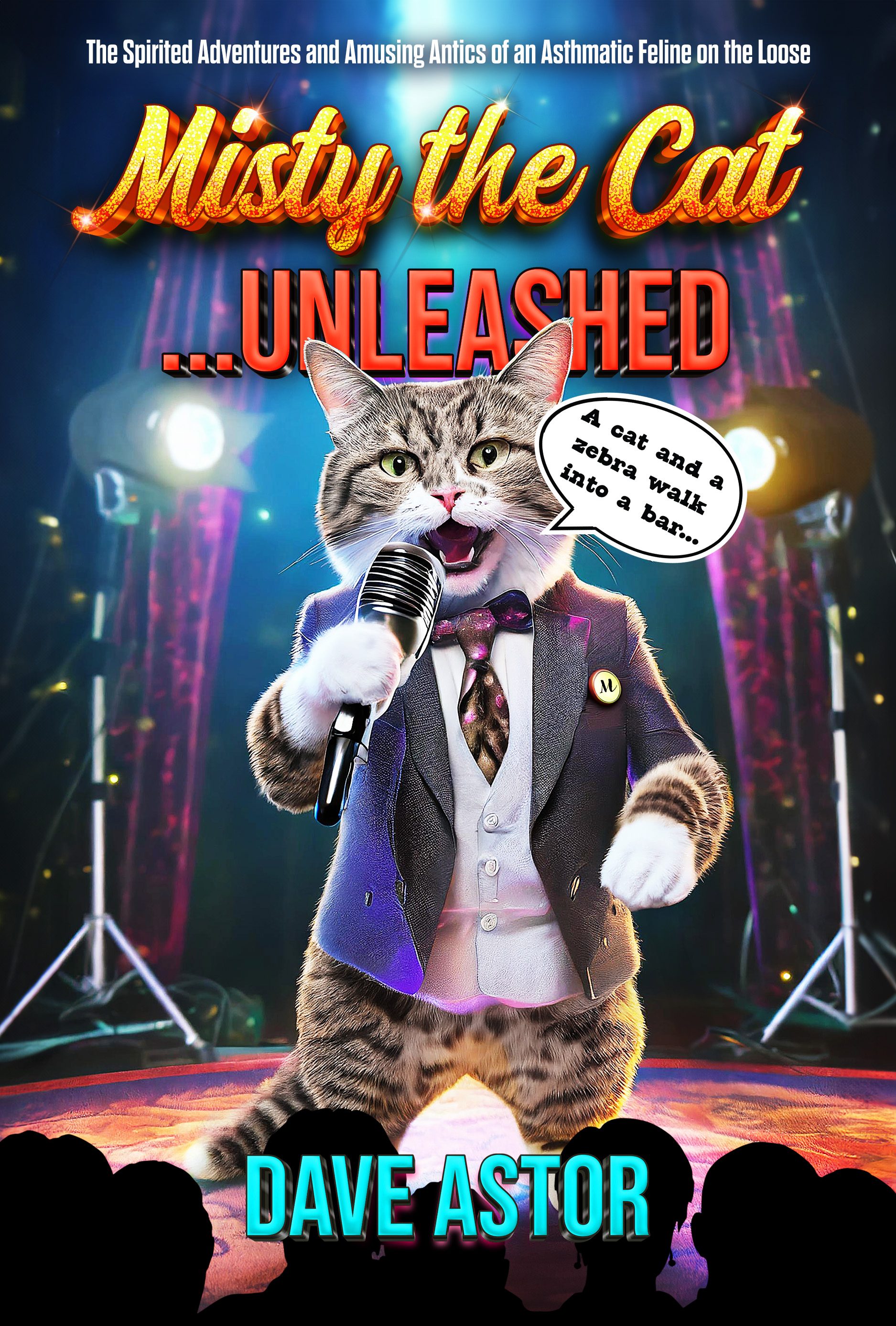
This 90-second promo video for the book features a talking cat: 🙂 Not my voice. 🙂
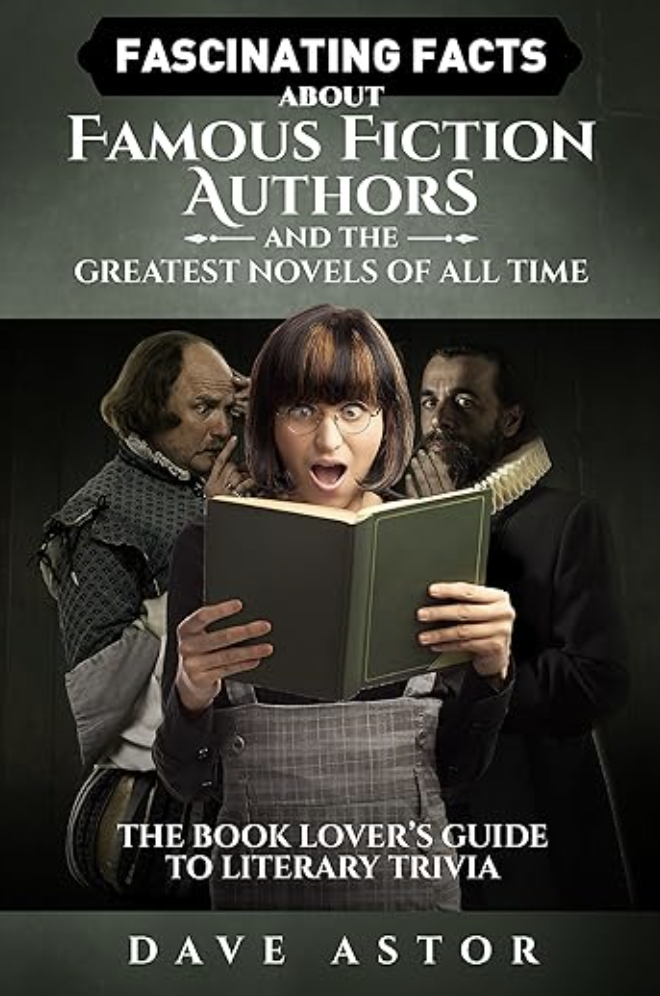
I’m also the author of a 2017 literary-trivia book…
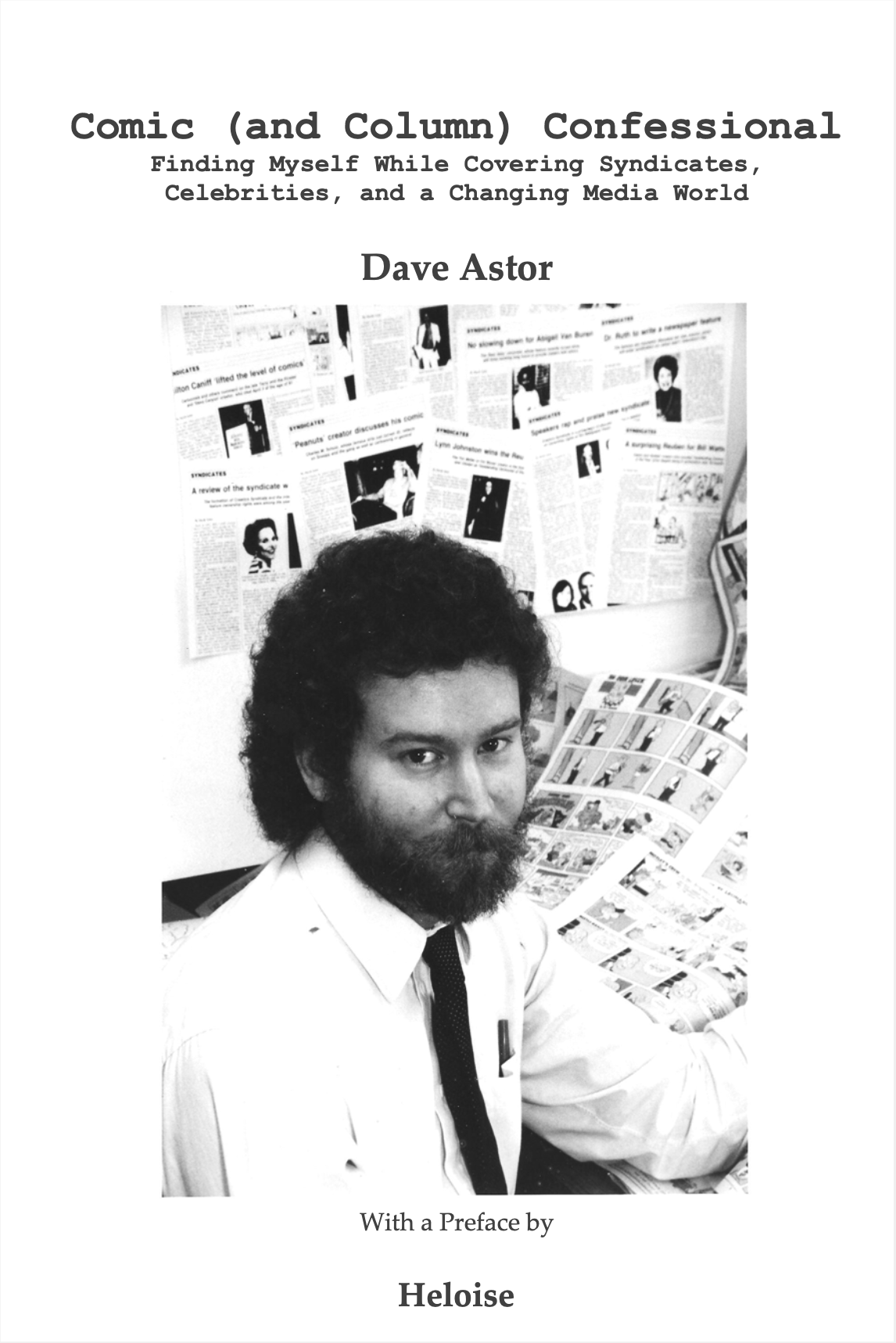
…and a 2012 memoir that focuses on cartooning and more, including many encounters with celebrities.
In addition to this weekly blog, I write the 2003-started/award-winning “Montclairvoyant” topical-humor column every Thursday for Montclair Local. The latest piece – my 500th column for that website! — is here.
 Dave Astor on Literature
Abigail’s Party, originally a stage play but available as a book. Darkly comic! A satire of manners and social pretentions in 1970’s Britain. I recommend it if you haven’t seen it.
LikeLiked by 1 person
Thank you, Ezekiel! When “party” is actually in the title, it can’t help but be a great example of this topic. 🙂 And Mike Leigh is brilliant.
LikeLiked by 1 person
Plus there a couple of parties in ‘Timon of Athens’ and the final horrific feast in ‘Titus Andronicus’. 🙂
LikeLiked by 1 person
Good to see Shakespeare could include parties even in his “lesser” plays, Laura. Thank you!
LikeLiked by 1 person
You’re welcome, Dave. 🙂
LikeLike
Me again. How about the dinner party in ‘Macbeth’, where Banquo’s ghost turns up? The sheep-shearing feast in ‘The Winter’s Tale’, where Florizel and Perdita are denied marriage? The ball where Romeo and Juliet meet? So many parties in literature! 🙂
LikeLiked by 1 person
Shakespeare could definitely write a party, Laura! And if a ghost shows up, even better. 🙂 Excellent mentions!
LikeLiked by 1 person
Thanks, Dave. 🙂
LikeLike
A fascinating theme, Dave. Wish I could add to your list of memorable parties in fiction.
LikeLiked by 1 person
Thank you very much, Rosaliene! Glad you liked the post. 🙂
LikeLike
What a wonderful topic, Dave! Parties in literature can reveal so much about the characters and often become some of the most memorable scenes in a story. I really enjoyed your examples and reflections such a fun and thoughtful read! 📚✨
LikeLiked by 1 person
Thank you, mihrankalaydjianblog! I appreciate your kind words about the post, and am glad you enjoyed it. 🙂 I agree that parties in fiction can be memorable and revealing.
LikeLike
Hi Dave, this is a great theme. People’s behaviour at parties tells the reader a great deal about them. The first scene that jumps into my mind is the dancing bear part in War and Peace where Pierre tries to copy Dolokhov’s dangerous stunt and gets very drunk , ending up dancing around with the pet bear. Meg gets to know Laurie’s rotor, Mr Brooke, at a picnic party in Little Women. Mary Lennox’s parents die of cholera after attending a party in India in The Secret Garden. There is also the ghostly masquerade party in The Shining where Jack is served alcohol by Lloyd and meets Grady who urges him to correct his family. Finally, there is the meeting of Romeo and Juliet when he sneaks into a masked ball hosted by the Capulets.
LikeLiked by 2 people
Thank you, Robbie! “People’s behaviour at parties tells the reader a great deal about them” — totally agree! And I appreciate all the excellent examples from older literature and early Stephen King. That scene in “War and Peace”!!! Speaking of Russian fiction, I just remembered the very weird devil-hosted gathering in Mikhail Bulgakov’s “The Master and Margarita.”
LikeLiked by 2 people
I have not read that one. Should I? 😉
LikeLiked by 1 person
I liked it more than loved it, Robbie, but it’s quite original and fantastical. As well as being satirical of the Soviet Union.
LikeLike
The Bonfire of the Vanities by Thom Wolfe has some parties, if memory serves. Couples by John Updike does, too, if I recall. (*shudder*), Breakfast at Tiffany’s by Truman Capote.
LikeLiked by 2 people
Thank you, Liz, for the excellent examples! Somehow I have not read any of those three works. 🙂 😦
LikeLiked by 1 person
You’re welcome, Dave! I can recommend Bonfire of the Vanities, although it may be a bit dated by now. Breakfast at Tiffany’s is a must-read; it was much darker than the movie. Couples is a must-avoid. Unpleasant people doing unpleasant things of a sexual nature.
LikeLiked by 1 person
I appreciate the recommendations, Liz! Will look for “Bonfire” and/or “Breakfast at Tiffany’s” during my next library visit. Happy to avoid John Updike; I’m not a fan of his. Writes well, but his work feels sexist — and off-putting in other ways, too. (I’ve heard both Wolfe and Updike speak in person during the 1990s when they were given awards, for having been amateur cartoonists, at National Cartoonists Society dinners I covered for a magazine.)
LikeLiked by 1 person
My literary theory prof in college always referred to John Updike as “John Upchuck.”
LikeLiked by 1 person
The Great Gadsby was the first one that came to mind. There are parties in some Agatha Christie novels too. Parties can tell the reader a lot about the characters. A super topic.
LikeLiked by 1 person
Thank you, Darlene! As I also mentioned to Martina in another reply, “The Great Gatsby” (which I’ve read) was a great omission by me. 🙂 And, yes, some important gatherings in Agatha Christie’s mysteries — like the one where “attendees” awaited a murder in “A Murder Is Announced.”
LikeLiked by 1 person
I omitted The Great Gatsby too, Dave. It’s a good mention.
LikeLiked by 2 people
🙂
LikeLiked by 1 person
Dave, what a great theme today, especially since we are heading into Labour Day. Parties in fiction reveal far more than the food, music and people gathered in a room. As you note, gatherings can expose both character and culture. Sometimes a party in fiction is not really about celebration at all. And that is when I thought of Animal Farm. At the end of the novel, the pigs entertain the neighbouring human farmers in the farmhouse. There is drinking, toasting, speeches and card-playing while the other animals watch from outside. To me, this is the most chilling moment in the book because the animals suddenly realize they can no longer tell the pigs from the men.
“The creatures outside looked from pig to man, and from man to pig, and from pig to man again; but already it was impossible to say which was which.” George Orwell, Animal Farm
LikeLiked by 4 people
Thank you, Rebecca! “Parties in fiction reveal far more than the food, music, and people gathered in a room” — nicely stated and so true! And, yes, some gatherings can be downbeat and downright miserable.
LikeLiked by 2 people
🎉🎉🎉🥳🥳🥳
LikeLiked by 1 person
The perfect emojis for this! 🙂
LikeLiked by 1 person
Great topic, Dave. How about when Meg goes to stay with rich friends in ‘Little Women’, and allows the other girls to dress her in their finery, rather than her own rather worn dress? Or the disastrous dinner party in ‘The Life and Loves of a She-Devil’, when Ruth’s efforts to feed her parents-in-law goes wrong? Or Scarlett O’ Hara, meeting Rhett Butler for the first time at the Wilkes’ BBQ; how she scandalously dances with him in her widow’s weeds at the Confederacy fundraiser? Or how she goes to Melanie’s reception on the evening after Ashley comforting her has been seen and mistaken for something more intimate? I’m sure there are loads more, but these are good starters! 🙂 PS: My own ‘The Guilty Party’ begins with a reunion of old friends. 🙂
LikeLiked by 3 people
Thank you, Laura! Many great examples, well-described, of novels with parties! It’s been so long since I read “Little Women” that I forgot about Meg’s experience. As for Scarlett O’Hara…she was indeed quite social at times. Last but not least, a reunion is an excellent way to start of book — like you did in “The Guilty Party”!
LikeLiked by 1 person
Thank you, Dave – and I’ve already added a few more in another comment. 🙂
LikeLiked by 1 person
Will look now, Laura! 🙂
LikeLiked by 1 person
Gone with the Wind is a great mention, Laura.
LikeLiked by 2 people
Thanks, Robbie. 🙂
LikeLiked by 1 person
Dave, I just love your this week’s post and the many novels you mention where parties play an important role:) In this sense I would like to mention “The Great Gatsby” by Scot Fitzgerald. Many thanks
LikeLiked by 3 people
Thank you, Martina! Glad you enjoyed the post. 🙂 “The Great Gatsby” — of course! I should have thought of that. 🙂 Partying was a big element in F. Scott Fitzgerald’s novel.
LikeLiked by 1 person
👍🌻
LikeLiked by 2 people
🙂
LikeLiked by 1 person
The Great Gatsby is the novel that immediately sprang to mind for party scenes.
LikeLiked by 2 people
Thank you, Liz! “The Great Gatsby” — definitely! I immediately thought of that well-known photo of Leonardo DiCaprio as Gatsby raising a glass of champagne. 🙂
LikeLiked by 2 people
You’re welcome, Dave!
LikeLiked by 1 person
🙂
LikeLiked by 1 person
What a pleasure, Liz, so we can go through those party scenes together!!
LikeLiked by 2 people
😃🥳
LikeLiked by 1 person
The granddaddy of all party scenes in novels is Trimalchio’s feast in The Satyricon by the Roman author Petronius.
LikeLiked by 2 people
Thank you! Great mention of what sounds like quite an event! (I haven’t read “The Satyricon.”)
LikeLiked by 1 person
As you can tell from the title, it’s a satire. Trimalchio, the host of the feast, is a nouveau riche, and his party is over the top.
LikeLiked by 1 person
A satire? Even better!
LikeLike