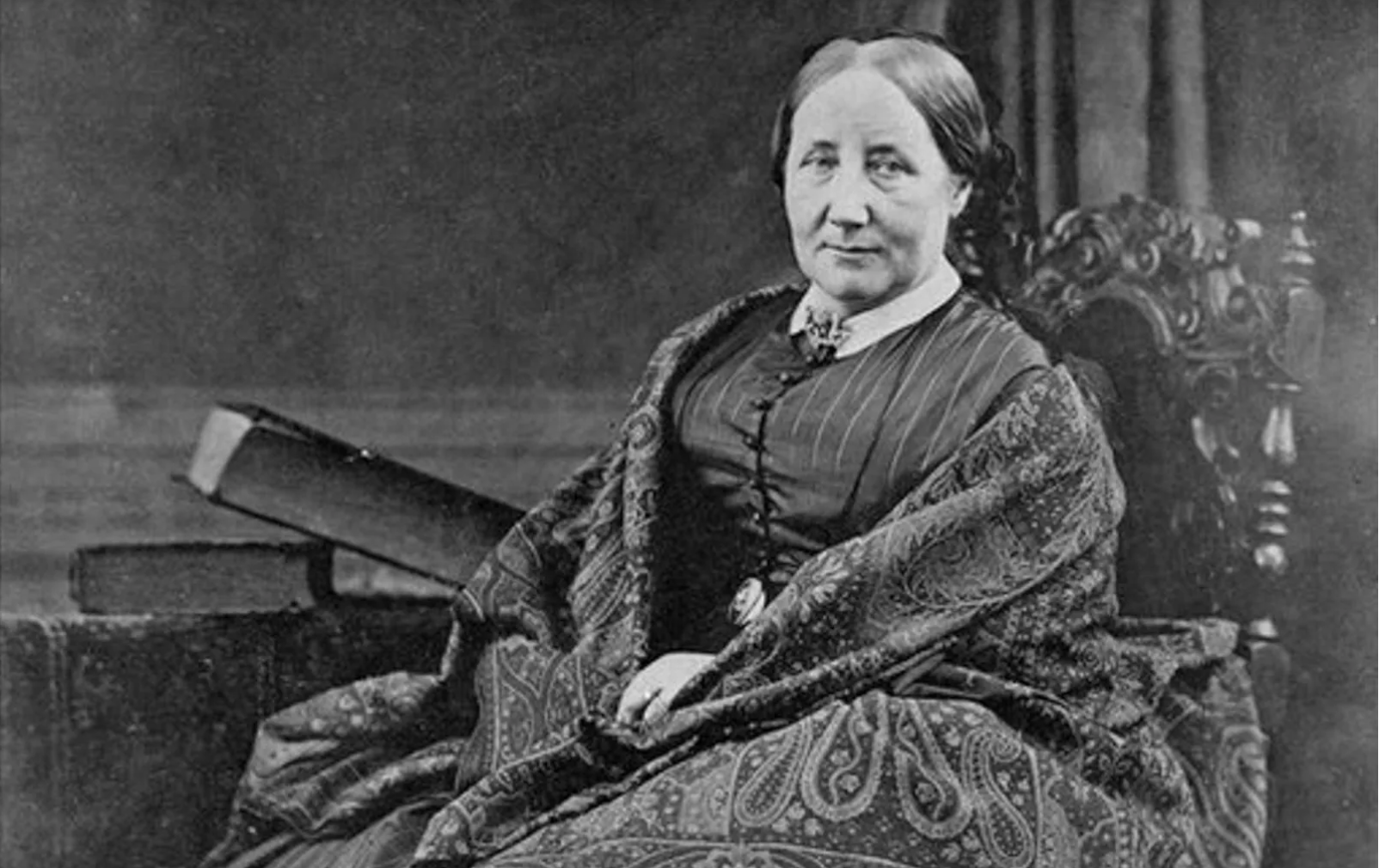
Elizabeth Gaskell
As I currently read Elizabeth Gaskell’s very good but not great 1848 book Mary Barton, I thought about the hierarchy of fiction authors in a 19th century that saw the blossoming of the novel as a form of writing.
There were of course the no-brainer superstars (whether fame came during or after their lives) who each wrote three, four, or in some cases many more memorable novels — including Jane Austen, Wilkie Collins, Charles Dickens, George Eliot, and Thomas Hardy of England; Walter Scott of Scotland; Honore de Balzac, Alexandre Dumas, Victor Hugo, and Emile Zola of France; Fyodor Dostoevsky and Leo Tolstoy of Russia; Nathaniel Hawthorne, Herman Melville, and Mark Twain of the United States; and Henry James of the U.S. and England.
There were also the excellent 19th-century authors who each wrote perhaps only one or two truly great novels, but those books were stone-cold classics. Among them were the Bronte sisters (Charlotte, Emily, and Anne), Louisa May Alcott, Gustave Flaubert, Nikolai Gogol, Alexander Pushkin, George Sand, Mary Shelley, Harriet Beecher Stowe, William Thackeray, and Ivan Turgenev.
Then there were the 1800s writers who were at times excellent, but might be classified in a tier slightly or significantly below the above authors. They included R.D. Blackmore, Lewis Carroll, Kate Chopin, Joseph Conrad, James Fenimore Cooper, William Dean Howells, Stendhal, Robert Louis Stevenson, Anthony Trollope, Oscar Wilde, and the aforementioned Gaskell, to name a few.
Mary Barton was Gaskell’s debut novel, and it takes a searing look at harsh working-class life and wide class divisions in 1839-1842 England while also offering some romantic intrigue. Why did I find the often-compelling book very good but not great? Well, it’s kind of wordy even by 19th-century-novel standards, and all the caused-at-least-partly-by-poverty death depicted in it – while realistic – can be overwhelming.
Before I go further, I should say that where I rank 19th-century novelists is strictly my own personal opinion; where you place them would likely differ. Heck, should I even be ranking authors? 🙂
Of course, there were also 1800s writers who were great in mostly a genre sort of way – whether that genre was sci-fi, horror, detective fiction, adventure, youth-oriented fiction, and so on. I’m thinking Arthur Conan Doyle, H. Rider Haggard, Edgar Allan Poe, Johanna Spyri (Heidi), Bram Stoker, Jules Verne, H.G. Wells, etc.
I’ll conclude by noting that this post only mentioned 19th-century novelists I’ve read. Some of them (such as Nikolai Gogol and Oscar Wilde) were also famous or more famous for short stories, plays, and/or other non-novel forms of writing. And the work of several of the included authors spilled at least somewhat into the 20th century.
Your thoughts on this topic? Agree or disagree with my rankings? Other 19th-century novelists you’d like to mention?
A final note: It was very sad to hear about the October 28 death of Patrick Stewart, 86, the magnificent actor whose wide range of roles included various Shakespeare characters and Captain Jean-Luc Picard on Star Trek: The Next Generation (one of my very favorite TV series). Relating to this week’s post, Stewart starred as well in a 1975 miniseries based on Elizabeth Gaskell’s 1855 novel North and South and as Ebenezer Scrooge in a 1999 TV production of Charles Dickens’ 1843 novella A Christmas Carol. Stewart also played every character in that Dickens book in an acclaimed one-man stage production.
Misty the cat asks: “Why am I moving forward when the clocks just went back?”
My comedic 2024 book – the part-factual/part-fictional/not-a-children’s-work Misty the Cat…Unleashed – is described and can be purchased on Amazon in paperback or on Kindle. It’s feline-narrated! (And Amazon reviews are welcome. 🙂 )
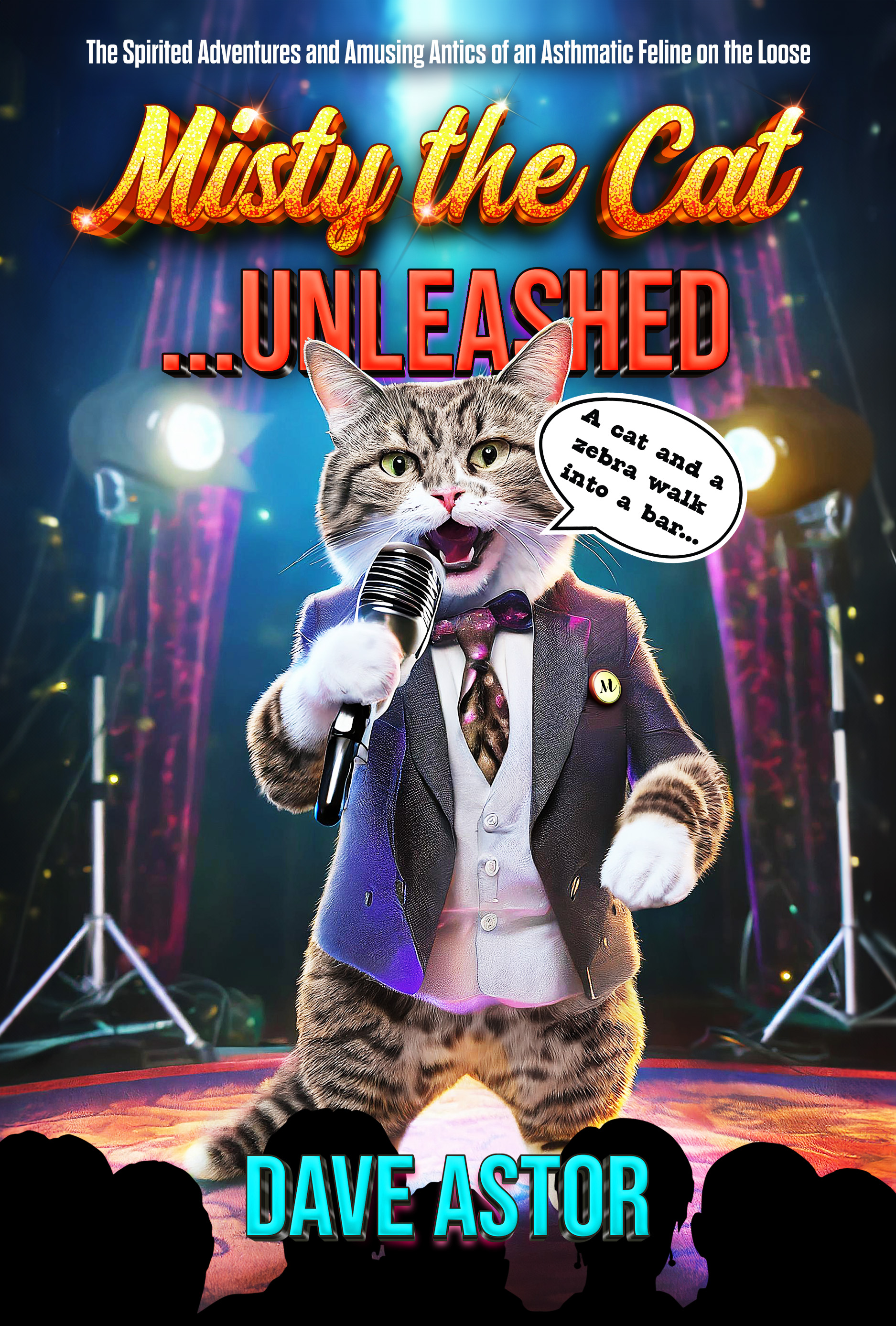
This 90-second promo video for the book features a talking cat: 🙂 (Not my voice. 🙂 )
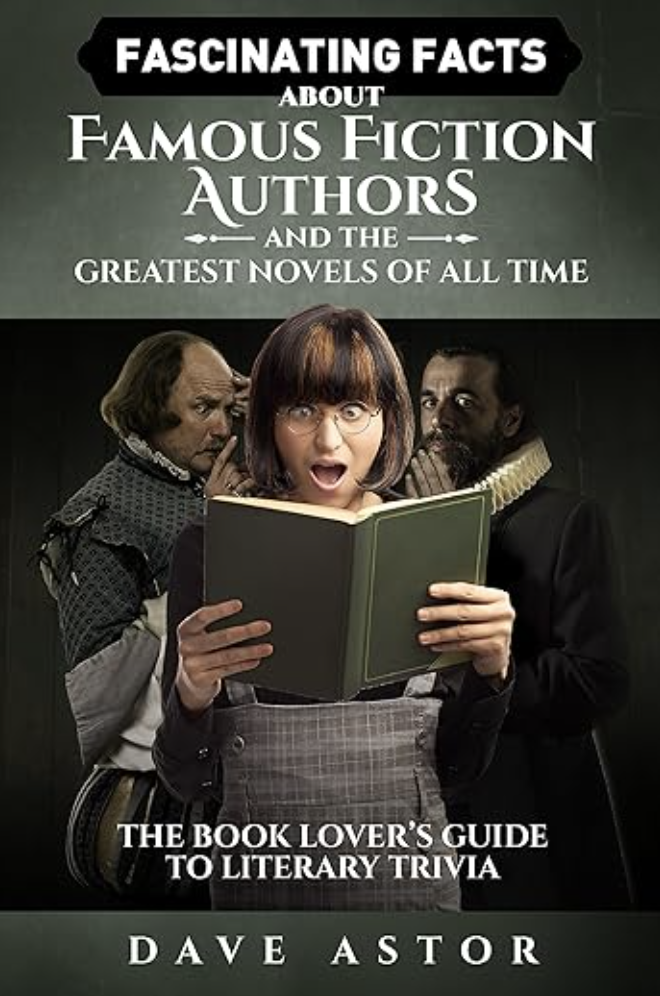
I’m also the author of a 2017 literary-trivia book…
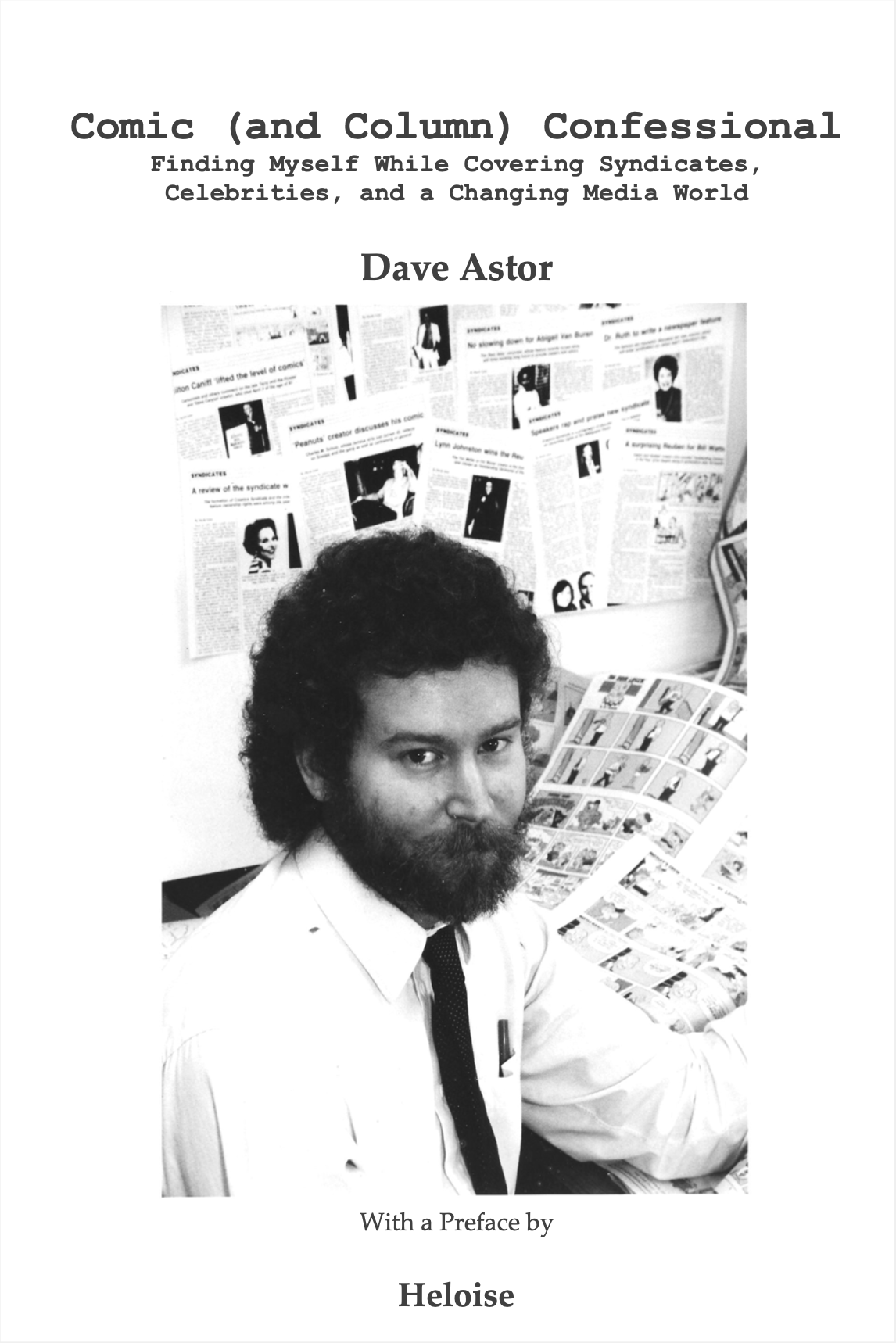
…and a 2012 memoir that focuses on cartooning and more, including many encounters with celebrities.
In addition to this weekly blog, I write the 2003-started/award-winning “Montclairvoyant” topical-humor column every Thursday for Montclair Local. The latest piece – about the upcoming November elections in my town and the U.S. – is here.


I absolutly love Gaskell, but “Mary Barton” is definitely the weakest novel she wrote, in my opinion (it was also her first, so I cut her some slack for that). So glad to see her get mentioned!! As for your rankings, I would put Joseph Conrad in the first tier, because he produced his great works in a language he learned only in his 20s . . . that’s an astonishing achievement.
LikeLiked by 1 person
Thank you, RussophileReads! Interesting to hear that “Mary Barton” might be Elizabeth Gaskell’s weakest book. As you note, that can be the case with debut novels. One can almost feel her struggling with the writing of the “Mary Barton” story, even as the novel is pretty good overall. I’ve read Gaskell’s “Cranford,” and it was definitely a “smoother” experience.
I did debate whether to put Joseph Conrad higher. Ultimately, part of my thinking was that a number of his novels were published in the 20th century. Also, I personally liked but didn’t love the novels of his I’ve read (“Heart of Darkness,” “Lord Jim,” and “The Secret Agent”). But I can definitely see why he was a much-admired author, and you’re right that writing so well in what was not his native language is astounding. (Nabokov was of course another example of that.)
LikeLike
Hi Dave!
I think what has changed in writing from the 19th to early 20th century is a shift in reader’s expectations.
There has been a move away from ‘wordy’ works from that era to the more plot-driven writing of contemporary authors!
I appreciated what you said about the Elizabeth Gaskell book, “Mary Barton” being a bit overwhelming on the depiction of working-class life and conditions. It looks to me Dave that writers of that time used their books to make a social statement. I’m including Dickens too.
I actually haven’t read “Mary Barton”, but I have a copy of “North and South” right here.
I like your tier system and instinctively I am not about to disagree with your choices. Quite frankly some novels are better than others, although it can come down to individual taste.
Great post and as always fantastic books.
😊
LikeLiked by 1 person
Thank you, Sharon! I think your take on the differences between 19th-century novels and post-19th-century novels is spot-on! Of course, there were some exceptions (concise/plot-driven 1800s novels and wordy ones in the ensuing two centuries).
You’re right that Gaskell and Dickens were both very socially conscious writers. The Barbara Kingsolver, Margaret Atwood, etc., of their day. 🙂 I haven’t read “North and South,” but have heard great things about it.
LikeLike
This is a great post, Dave, and showing up late (as I often am) puts me in a position to enjoy the comments and not be left with much to add. I am impressed with the century for having so many authors who are still considered important reading today. No doubt, some junior high or high school kid is asking AI to summarize one of those books for a book report that’s due on Wednesday. At least we had to read Cliff Notes if we tried to cheat.
Patrick Stewart is a huge loss. If you want to see something a bit out of the ordinary, watch his Shakespearean soliloquy on the letter “B“, that he performed on Sesame Street. He was as perfect for that role, as he was for Captain Picard.
Thanks for another wonderful post.
LikeLiked by 1 person
Thank you, Dan! Glad you enjoyed the post!
Yes, quite a few 19th-century authors have more than stood the test of time. Heck, some, like Jane Austen, are more popular now than they were in the 1800s.
Ha ha! 😂 Yes, AI today is sort of like Cliff Notes used to be. (Though I think Cliff Notes are still around.)
I watched Patrick Stewart’s letter B “Sesame Street” bit yesterday for the first time, and absolutely loved it!!!
LikeLike
My goodness, I couldn’t possibly even start to rank those authors, although your post is most interesting, Dave. Of course, it has been rather sad that Patrick Stewart is no longer around. I have to say I did enjoy several clips on the TV a couple of days ago, and I think my fav was Waiting for Godot with PS and Ian McKellen – both Sirs by then, although that play was too late for this post, since Sam Beckett was 20th C.
LikeLiked by 1 person
Thank you, Chris! Yes, ranking authors can be fraught. 🙂
In addition to performing together here and there, Patrick Stewart and Ian McKellen apparently had a wonderful decades-long friendship. Two amazing actors. Interesting that McKellen (from what I read) advised Stewart not to take the “Star Trek” role because it was too popular-culture-ish, but McKellen would go on to play Gandalf the wizard in the later “Lord of the Rings” movies.
LikeLiked by 1 person
A very good point about the difference between plays and series/movies, and those two.
LikeLiked by 1 person
Seems like mixing serious theatrical roles (Shakespeare, etc.) with more “mass audience” stuff is ideal for performers. 🙂
LikeLike
Great article! You are my role model
LikeLiked by 1 person
Thank you, I’M ME! Glad you liked the post. 🙂
LikeLike
You are welcome.☺️
LikeLiked by 1 person
🙂
LikeLike
Dave, great list and I’m in agreement with much of them! The one author who never did it for me was James Joyce… ugh… struggling through “Ulysses” in school was not unlike trying to get into an advanced yoga pose on your first night… (grunt)… can’t… quite… oof (crash in disgrace on mat).
I think another class might be YA authors, who piqued our curiosity about reading and opened other worlds to us… Beverly Cleary, Franklin W. Dixon, Jean Craighead George, Sterling North.. “…fill my head [with dreams] and lead me on” per Jackson Browne.
Bummer about Stewart and Koenig. Both were superb and I think I might be a bit partial to Chekov in ST TOS … him and bestie Sulu at the controls while JTK gazed majestically at the passing stars, Spock fiddled with the computer, Uhuru battled “subspace interference” and Bones… well, never did understand why the good doc spent so much time on the bridge 😂😎👌
LikeLiked by 1 person
Thank you, Darryl! I haven’t had the courage to tackle “Ulysses,” though I did like James Joyce’s much more straightforward “Dubliners” collection (“The Dead,” etc.). I enjoyed your droll description of your “Ulysses” attempt, as well as your take on characters in the original “Star Trek” series. Yes, didn’t Dr. McCoy have non-bridge crew members to attend to? 🙂
LikeLiked by 1 person
I read Ulysses in college, and class discussions kept the novel moving forward (plus a trip to Ireland to walk Bloom’s path through Dublin). I consider Joyce the standard in Irish writing (just my opinion) and rank other Irish authors in comparison.
Your list is a extensive, and I have only read a handfull of the authors you mention. I did love Kate Chopin’s The Awakening, though so she would move up on my list.
On another note, when I see Misty turn the corner and move out of sight-and then hear a bird singing, I wonder what is he up to???
LikeLiked by 1 person
Thank you, Madeline! Glad you had a great experience with “Ulysses”! He’s certainly a towering figure among Irish writers, and all writers. Among the Irish writers I’ve enjoyed over the years are Tana French, Bram Stoker, Jonathan Swift, Colm Toibin, Oscar Wilde, Yeats, etc.
Kate Chopin’s “The Awakening” IS a great/before-its-time novel, and I also love her short story “The Story of an Hour.”
As for Misty, when he turned that corner he was heading back to his apartment building. 🙂 No birds were harmed. 🙂
LikeLike
Have you read Niall Williams? I think he is a lovely Irish writer.
Thank goodness no birds were harmed.
LikeLiked by 1 person
I haven’t read Niall Williams, Madeline. Will put him on my list!
LikeLike
I think it’s a great post Dave. Difficult when there were so many and you ahve covered them all to make it completely indepth pieces but you ahve, so well done you!
LikeLiked by 1 person
Thank you for the kind words, Shehanne! Glad you liked the post! Yes, there were quite a few prominent 19th-century authors; the 1800s were kind of a golden age for novels.
LikeLiked by 1 person
They were indeed.
LikeLiked by 1 person
🙂
LikeLike
Another great post, Dave, and I’ll begin at the end by adding my sorrow to yours over the passing of the excellent Patrick Stewart. I loved him in ‘A Christmas Carol’ and of course as Jean-Luc Picard, as well as the old BBC ‘I, Claudius’ dramatisation of the Robert Graves novels; Stewart had a small part as Sejanus, who comes to a sticky end after a plot against the Emperor, and also sported a full head of hair for a change! He also starred later in ‘Moby Dick’ as Ahab, and we were privileged to see him with Ian McKellan in ‘No Man’s Land’ by Harold Pinter. May he live long and prosper in the undiscovered country, now discovered by him. Incidentally, Walter Koenig, who played Chekhov alongside Stewart, passed a couple of days before him, but hasn’t received such widespread accolade, which is a shame. Who didn’t love his ‘Guess who’s coming to dinner?’ line when the Klingons were coming, or his search for ‘the nuclear wessels’ in the film with the whales? What else? Oh yes, those authors. I read and love ‘Mary Barton’ at university, although I took on board the warning in the Preface that the book wasn’t one of the best, being bifurcated between the story of Mary and Jem and that of John Barton and his murder of Henry Carson. No matter, I loved the use of vernacular diction, Mary’s grumpy aunt – made so by her accident when working in a factory as a girl – and her damning speech against married women going out to work. I did wonder how the young girls managed to sit up all night straining their eyes sewing and still manage to do a day’s work at the factory, but I guess that was a contributory factor in the industrial accidents which occurred. I was also told that Dickens’s ‘Hard Times’ was the superior story of working life in Manchester, and that may be so; but I came down firmly on the side of Gaskell, who lived and worked with the poor of that town, against Dickens, who just visited for a few weeks. In the final analysis I believe readers find their own favourites, despite what the ‘experts’ consider to be the superior works; rather like Rita, of Willy Russell’s ‘Educating Rita’, telling how she ‘put right’ a boy who’d declared a preference for a book considered as inferior to another. Getting above herself, Rita totally forgets that ‘superiority’ or ‘inferiority’ in the eyes of the critics plays little part in the personal preferences of readers; and that’s the hill where I take my stand. Good to talk (rant?) Dave; have a good week and see you next time. 🙂
LikeLiked by 2 people
Thank you, Laura!
Glad you mentioned Patrick Stewart’s role in “Moby-Dick”; that should have been another screen adaptation of a 19th-century novel mentioned in the “final note” of my post. 🙂
Yes, Walter Koenig died just a few days before Stewart. He was great as Chekov in the original “Star Trek” series and in the movies that eventually followed. His “nuclear wessels” line was a classic!
As for “Mary Barton,” Elizabeth Gaskell did use vernacular well, and some of the characters are quite memorable.
I read “Hard Times” many years ago, and all I remember was that it was one of Dickens’ shortest novels. Good to hear that Gaskell as an adult had more direct experience with working people than Dickens, who, for his novels, probably drew a lot on his impoverished childhood; he of course became very wealthy as an author.
Have a good week, too!
LikeLiked by 1 person
‘Hard Times’ was my favourite novel by Dickens. Apparently he wrote it in a sparse style at odds with his usual flowery manner in order to criticise Utilitarianism, the main theme of the story. Says much about my tastes! 😂
LikeLiked by 1 person
Interesting, Laura! I remember being surprised that Dickens was so unusually un-wordy in one of his novels. 🙂
LikeLiked by 1 person
A reminder of how many great authors there were, plenty I have read or have come to us via television, films and radio serials. They could not have imagined how their written words would be re imagined, for better or worse.
LikeLiked by 1 person
Thank you, tidalscribe.com! Yes, LOTS of great 19th-century authors — many of whom, as you noted, had their novels adapted for the screen long after most of these writers had died. They indeed could not have imagined that. (Well, maybe Jules Verne could have imagined that in his prescient sci-fi novels. 🙂 )
LikeLiked by 1 person
1. Oh, Misty! He asks good questions, doesn’t he, Dave? Love his musings!
2. I think you can (and should!) do rankings as you please. I always learn from your insights and marvel at how impeccably well read you are! I have nothing to add…other than admiration! ❤️
3. And… I agree. Still a gut punch for me…the Patrick Stewart loss. Somehow he seemed ageless…Picard magic? The Next Generation was a beloved series. ❤️
LikeLiked by 1 person
Thank you, Vicki! And Misty “unquestionably” thanks you, too. 🙂
It’s wonderful to have a thing — reading novels — that’s so enjoyable.
Patrick Stewart did seem ageless in a way; for instance, doing the three-year “Picard” TV series in his 80s. Great to have seen the “Next Generation” cast reunite in the third “Picard” year. (I don’t watch TV anymore, but did see that reunion in a YouTube clip. Back when I did watch TV, I almost never missed an episode of “Next Generation” or the subsequent “Star Trek” series “Deep Space Nine” and “Voyager.”)
LikeLiked by 1 person
I hear you…it was a Saturday night thing for us and two other couples…. gathering to watch “Next Generation” and enjoy dinner together. Back when you needed to “tune in” at a specific time–when TV watching was an event! 😉😉😉
LikeLiked by 1 person
Yes, Vicki! One had to plan TV watching around specific times. (In the 1990s I finally got a VCR, so would record some “Star Trek” episodes for when I wasn’t home.) Sounds like those Saturday nights were memorably enjoyable!
LikeLike
They sure were…good times, indeed! 💝
Give my best to Laurel…and Misty, too! 💝
LikeLiked by 1 person
Thank you, Vicki! My best to your family, too!
“Appointment television” could be nice. 🙂
LikeLiked by 1 person
I like it!!!! 😉❤️😉
LikeLiked by 1 person
🙂
LikeLiked by 1 person
Dave, I leave the hierarchy of fiction authors in a 19th century to experts like you 🙂 Some of the authors you mention were required reading in high school English literature class. As a young reader, the works of Robert Louis Stevenson and Arthur Conan Doyle captivated my imagination. I don’t recall reading any of Elizabeth Gaskell’s novels.
LikeLiked by 1 person
Thank you, Rosaliene! Well, let’s go with “would like to be an expert”; there are a ton of 19th-century novels I’ve yet to read. 🙂 Robert Louis Stevenson and Arthur Conan Doyle are definitely catnip to many younger readers (and of course older ones, too). As for Elizabeth Gaskell, I don’t get the sense that her work is or has been a part of a lot of high school English literature classes — unlike novels such as “Jane Eyre,” “The Scarlet Letter,” “Silas Marner,” “The Great Gatsby,” “The Grapes of Wrath,” “Native Son,” “Animal Farm,” “Lord of the Flies,” “To Kill a Mockingbird,” etc.
LikeLiked by 1 person
So many great books; so little time for reading them all 😦
LikeLiked by 1 person
That is the truth, Rosaliene. 🙂 😦
LikeLike
I’ve never read Mary Barton before and am intrigued! Bram Stoker is one of my favorite authors. For me, whether or not I can reread a novel a few times over the course of my life is a sure sign that it’s a book written by a great author!
LikeLiked by 1 person
Thank you, Ada! “Mary Barton” is worth reading, even as it can be a bit of a slog. And while the only work of Stoker’s I’ve read is “Dracula,” it’s quite a book! Finally, the desire to reread a novel is indeed a sign that it’s great!
LikeLiked by 1 person
This is my stance on ranking 19th-century novels: “Heck, should I even be ranking authors?” 😏
LikeLiked by 2 people
Thank you, Liz! Fair enough. 🙂 I needed a blog topic this week. 🙂
LikeLiked by 1 person
You’re welcome, Dave. 😉I understand.
LikeLiked by 1 person
🙂
LikeLiked by 1 person
Great post, dear Dave! I love your classification of 19th-century novelists. It’s a wonderful reading checklist.
I was also deeply saddened to hear about Patrick Stewart; he was really great!
PS . Misty is adorable pondering daylight saving time!
LikeLiked by 2 people
Thank you, Luisa! Happy you enjoyed the post! Sorry I didn’t include any 19th-century Italian novelists; all the ones I’ve read so far wrote in the 20th and 21st centuries.
Patrick Stewart was indeed great, and it’s interesting that he came from a working-class background; he sounded so “upper class,” even as his politics remained ideologically left. As you probably know, Stewart could also skillfully play villains, as in “I, Claudius.”
Misty appreciates your PS! Given that I take him out just after the sun rises, he was a bit confused by this morning’s time change. 🙂
LikeLiked by 2 people
I remember Stewart’s appearance in I, Claudius. His role was relatively short. There was that murder thing going on.
LikeLiked by 1 person
Definitely a murder thing going on, Liz.
LikeLiked by 1 person
😀😀😀
LikeLiked by 1 person
No worries about the Italian novelists, dear Dave! Patrick Stewart was truly versatile: his role in ‘I, Claudius’ was unforgettable.
Give a big hug to Misty from me; the time change always confuses our furry friends! 🙂
LikeLiked by 1 person
Yes, Luisa, Patrick Stewart was very versatile! I watched a YouTube clip of him in “I, Claudius” yesterday; his acting was GREAT.
You’re so right about time changes confusing our furry friends. At least it gave Misty material for his social media post today. 🙂
LikeLiked by 1 person
🙏😘🙏
LikeLiked by 1 person
🙂
LikeLike
Hi Dave, I like your ranking. I’m not sure how I would rank them, the thing is I read some of them, not all in different ages and states of mind, so I like to think of reading those authors as three different people, I’m not a trinity obviously, but it feels like my life is divided so drastically that I can’t tell I’m the same person throughout the course of the last 40 years.
I would like to read them as one person so that I could compare and do my own ranking. I would definitely put Jane Eire up there in my list and the French writers you have mentioned, it was my early days of literary interest age 10 to 20. Later from 20 to 30 – English and Russian writers. 30 to 40 – American writers and now I’m pretty much in German mood.
LikeLiked by 2 people
Thank you, Milena! Totally hear you about relating differently to novels at different points of one’s life.
“Jane Eyre” is actually my very favorite novel. It hurt not to put Charlotte Bronte in my first ranking paragraph, but I don’t think she wrote another novel that approached “JE.” I found her “Villette” to be great in some parts of that book but not great in other parts, and thought her other two novels — “Shirley” and “The Professor” were so-so.
LikeLiked by 1 person
I agree, it feels like she said it all in JE.
LikeLiked by 1 person
That’s a great way of putting it, Milena! “Jane Eyre” is a masterpiece, and quite a page-turner for a 19th-century novel.
LikeLiked by 1 person
I have to reread it for sure
LikeLiked by 1 person
Definitely a re-readable novel. 🙂 I’ve read it maybe 5 times, but not for at least 15 (?) or so years.
LikeLiked by 1 person
What a coincidence; my next classic to read is Cranford by Mrs. Gaskell. (Yes, that is how it was published!) I’ll let you know what I think.
LikeLiked by 1 person
Thank you, Darlene! I liked “Cranford,” which, as you probably know, is basically a collection of related short stories as novel. And, yes, that “Mrs. Gaskell” author name. Feels kind of cringe now, but it was a different time…
LikeLiked by 1 person
I remember my mother getting letters in the mail to Mrs. Herbert Frisch. Even as a child, I questioned why it was dad’s name and not hers. I look forward to reading Cranford.
LikeLiked by 1 person
My mother received letters addressed like that, too!
LikeLiked by 1 person
Good question about ranking authors. I think it’s a natural inclination. Actors get ranked, why not authors, too?
LikeLiked by 1 person
Thank you, Marie! Yes, ranking can be enjoyable and hard to resist — and it helps if one is totally open to the fact that other people will give authors, actors, and others different rankings. 🙂
LikeLiked by 1 person